Introduction
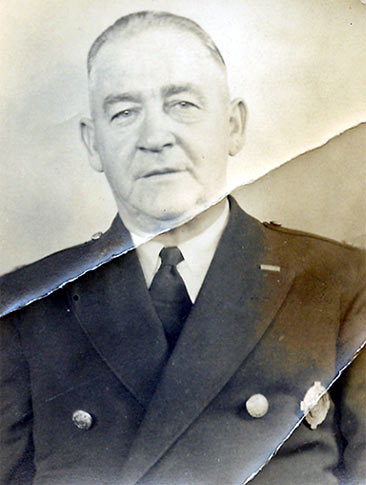
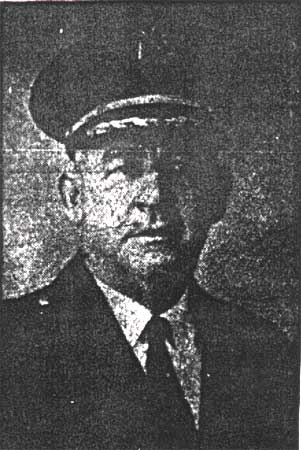
Charles T. Humes Jr., Captain of Police
CHARLES TAYLOR HUMES JR. was born in Camden NJ to Charles T. and Mary Humes. Four years of age at the time of the 1880 Census, he was the oldest child, his brother George having been born in 1879. The elder Humes worked as a spar maker, lumber and shipbuilding both being major sources of employment in Camden at the time. The Humes family lived at 907 Front Street at the time, and would through at least 1889. During the late 1880s the elder Humes worked as a ship's carpenter for Rufus G. Wilkins, a Philadelphian who ran a boats for hire business at the foot of York Street, a stone's throw from the Humes residence. The 1890–1891 Camden City Directory shows that Charles T. Humes Sr. had become a ship's pilot, and that the family had moved to 90 Erie Street.
Charles T. Humes Jr. joined the Camden police force, and by 1920 had risen to the rank of Captain. At the time of the 1920 Census he lived with his wife Lydia and son Charles L. Humes at 907 North 3rd Street, in the same North Camden neighborhood in which he had grown up. His brother George lived around the corner at 908 North 2nd Street with his wife Ivy and their 10 children. It is likely that the brothers could walk to each others homes by going out their back doors.
In the 1920s, Captain Humes worked in the Camden Police Department's traffic bureau. In the spring of 1928 he took ill. He spent a month at West Jersey Hospital, and after a two month recuperation he returned to the police force.
When the census was taken in April of 1930, Captain Charles T. Humes wad become a widower. His son, Charles L. Humes had married, was working as a reporter, and then lived with his in-laws at 203 Byron Street. Captain Humes, then 54, was still working as an inspector with the traffic bureau. Brother George, now the father of thirteen children, still lived at 918 North 2nd Street. By May of 1934, he had retired from the police force.
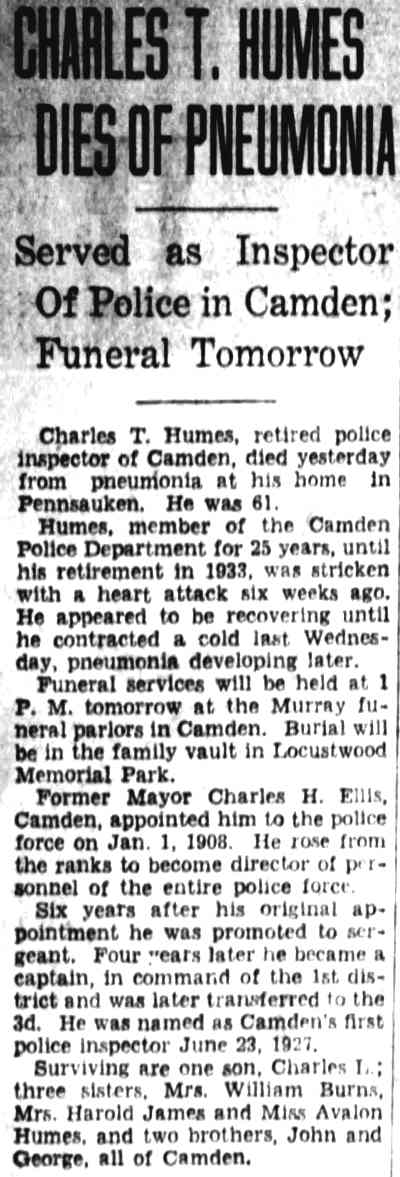
Captain Charles T. Humes died on November 4, 1937. He had been living at 4115 Myrtle Avenue in East Camden. When the 1947 Camden City Directory was compiled his son Charles L. Humes, a journalist, was living at 2924 North Constitution Road in the Yorkship Square neighborhood of Camden. Daughter-in-law Nina Humes was then the secretary to Camden's Chief of Police. George and Ivy Humes were still at 908 North 2nd Street, a block away from where the Humes brothers were born in the 1870s.
Charles L. Humes had a long and distinguished career as a reporter and columnist for the Camden Courier-Post.
Camden Increases Its Police Force
Philadelphia Inquirer –
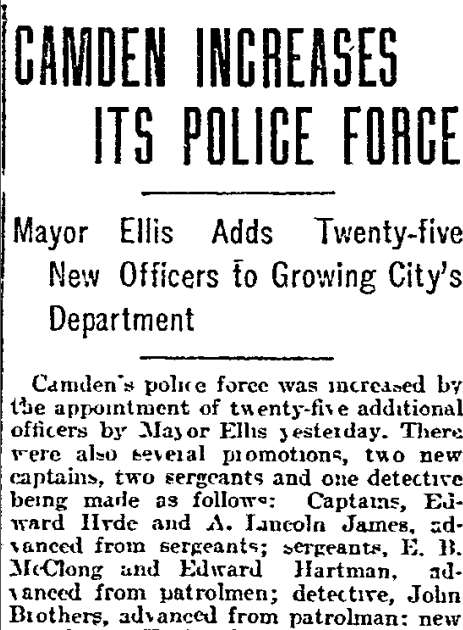
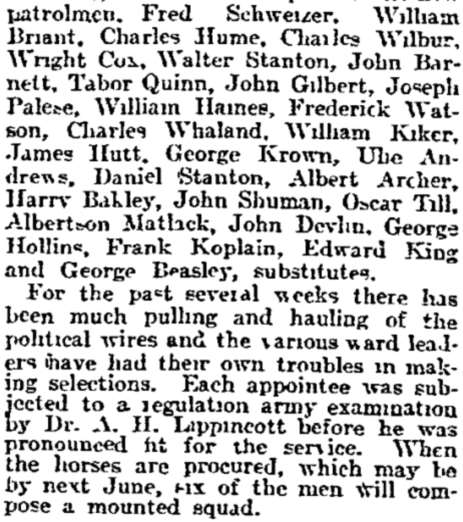
Camden’s police force was increased by the appointment of twenty-five additional officers by Mayor Ellis yesterday. There were also several promotions, two new captains, two sergeants and one detective being made as follows: Captains, Edward Hyde and A. Lincoln James, advanced from sergeants; sergeants, E. B. McClong and Edward Hartman, advanced from patrolmen; detective, John Brothers, advanced from patrolman; new patrolmen, Fred Schweizer, William Briant, Charles Humes, Charles Wilbur, Wright Cox, Walter Stanton, John Barnett, Tabor Quinn, John Gilbert, Joseph Palese, William Haines, Frederick Watson, Charles Whaland, William Kiker, James Hutt, George Krown, Ube Andrews, Daniel Stanton, Albert Archer, Harry Bakley, John Shuman, Oscar Till, Albertson Matlock, John Devlin, George Hollins, Frank Koplain, Edward King and George Beasley, substitutes.
For the past several weeks there has been much pulling and hauling of the political wires and the various ward leaders have had their own troubles in making selections. Each appointee was subjected to a regulation army examination by Dr. A. H. Lippincott before he was pronounced fit for the service. When the horses are procured, which may be by next June, six of the men will compose a mounted squad.
Philadelphia Inquirer, June 23, 1911
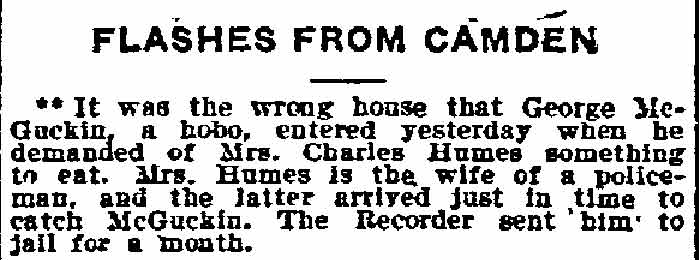
Charles T. Humes — George McGuckin
Murderer and Forger Escape Jail After Shooting Keepers, Killing One
Camden Post-Telegram –
Wilson Ashbridge, Who Shot and Killed Mrs. Elizabeth Dunbar and George E. Thompson, Check Swindler, Trap Jailor Hibbs by a Ruse and After Slaying Him Shoot Joe Ellis Who Intercepted Them in Flight. Used Revolver Smuggled Into Prison by Confederates and Leave Jail Wide Open in Their Flight, a General Delivery Being Averted by Police Who Were Summoned by the Wounded Men.
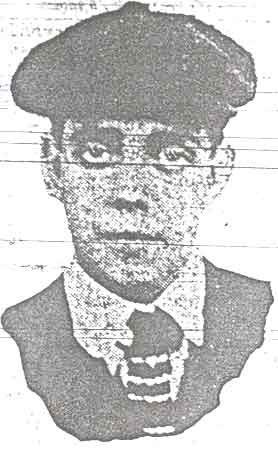
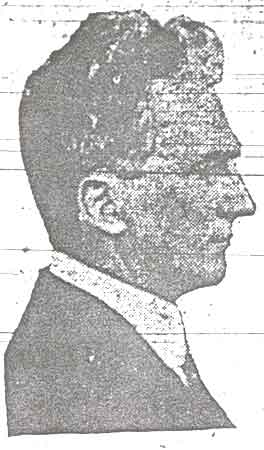
Wilson Ashbridge — George E. Thompson
Murdering one jailor and wounding another with a revolver that had been smuggled into them by outside confederates, Wilson T. Ashbridge, slayer of Mrs. Elizabeth Dunbar, and Francis Murphy, alias George E. Thompson, a check forger, made their escape from the county jail a few minutes before seven o'clock last night.
Ashbridge with his wife was caught at noon in the Keystone Hotel in Chester PA where they registered at one o'clock this morning.
Thompson is still at liberty but from the confident manner of Prosecutor Kraft his early arrest seems assured.
The murdered jailor was Isaac Hibbs, aged 65 years of 913 South 8th Street. The wounded keeper is Joseph Ellis, aged 45 years, of 416 Carteret Street. Shot twice, he is in Cooper Hospital. His condition today is very satisfactory.
Thompson, who is 41 years old, forged a check for $650 which he gave to V.M. Fulton as part of the purchase price of an automobile. The forgery was discovered before the deal was completed and his arrest followed on June 8. he also passed a forged check for $15 on State Motor Vehicle Agent Kraft. He, too, was awaiting trial. In spite of the positive evidence against him Thompson had spurned all efforts to have him plead guilty and it is now believed that he was sparring for time while hatching a plan to escape. He s no doubt the master mind.
R.L. Hunter, a farmer of Bensalem Township, Bucks County PA, about four miles above Torres dale, reported to the Philadelphia police the morning that he had seen a man answering Ashbridge's description on the Bucks Road at daylight. The man asked the way to Riegelsville.
According to Hunter, the man was dressed in a dark suit, and had no hat. His clothing was wet. Hunter did not see anything suspicious in his actions, and after giving him directions, they parted.
Upon seeing the paper with a picture of Ashbridge, the farmer was struck by its resemblance to the man with whom he had talked. He hurried to Tacony and notified the police.
The State police, who patrol that section of the county, and who have an office at Langhorne, were immediately notified as were the surrounding towns.
The shootings took place in different parts of the jail. Hibbs was murdered in the exercise room just outside the cell room on the Sixth and Arch corner of the building. Ellis was shot down in the corridor just outside the Market Street end of the building when he heroically grappled with Ashbridge after the latter had pointed a gun at his head. In spite of his wounds Ellis dragged himself to a telephone and after notifying Police Headquarters of what had happened he collapsed.
Only one of the two bullets is still in Ellis. It entered the groin on the right side and is buried in the muscles of the leg, having taken a downward course for seven or eight inches. The other bullet struck Ellis in the right breast and came out in the left breast, traversing the upper fleshy parts of the body.
Hibbs was almost instantaneously killed by a bullet that went within an inch of his heart, producing a hemorrhage. The bullet was extracted this morning from the body early this morning in an autopsy performed at the morgue by County Physician Stem. In spite of the fact that it is pretty well established that three shots were fires in the attack on Hibbs, only one of the bullets took effect.
“But it makes little difference which of the two men handled the gun” said Prosecutor Kraft this morning. “Both are equally guilty of this murder and what we are concerned about now is the recapture of the gunmen.” Mr. Kraft added that it his purpose to examine all of the prisoners in that part of the jail where Hibbs was murdered to determine fully who fired the fatal shot.
The escape had been carefully planned and timed to the minute. Of course the desperate prisoners were aided by confederates on the outside and it is the general belief that a high powered motor car was in waiting for them not far from the jail. They are known to have been in possession of money and openly boasted yesterday that it was their intention to leave the prison last night. These boasts were made to two young ladies connected with a religious organization who called on the tom men yesterday to offer spiritual reconciliation. The girls are frequent visitors to the jail and naturally their efforts at evangelization were directed in the main toward Ashbridge, because of the fact that he was accused of murder. These girls, whose identity officials will not disclose, were closeted with Prosecutor Kraft until one o'clock this morning. Both declared that on their visit yesterday they were told by Ashbridge and Thompson that it was the last day they expected to spend in jail.
“We are going to get away from here tonight and we've got money to help us after we are out ” said Ashbridge, who further told the girls he had considerable cash sewed up in the waistband of his trousers. The girls begged the prisoners not to do anything that would cause them more trouble and they told the Prosecutor that Ashbridge and Thompson promised them that they would not make any effort to escape. In their talks with the girls neither of the prisoners said a word that would indicate that they would kill if necessary to escape. The full force of their boast did not dawn on the religious workers and for this reason it never occurred tot hem to inform the Sheriff of what the prisoners had in said.
A general jail delivery of at least all the men confined in hat is known as the untried department, where the two were held, was only averted by the prompt arrival of the police on their beat, which was made easy by means of the keys taken from the prostrate body of Hibbs. Ashbridge and Thompson left all of the doors open and the vanguard of the inrushing police found the prisoners swarming all over the corridors on the east side of the prison. In the wild excitement following the double shooting and escape none else thought of freedom and a checking up of the inmates after they had been herded in the exercise room of the untried department accounted accounted for all but the fugitive slayers.
The department, in which the two men were confined is the same one which William Brown and Charles Berger made their sensational escape several years ago by sawing away the bars on the Federal Street front of the jail. Thrilling as it was, the former escape was insignificant in comparison with last night's tragic event.
With the full force of the keepers out of the way- one dead and the other suffering from gunshot wounds at first supposed to have been fatal- Ashbridge and Thompson had nothing between them and freedom but the door entering from the spiral stairway leading to the narrow entrance of the Sixth and Market Streets end of the Court House, With the keys taken from Hibbs they opened the door and in a few seconds were breathing the free air. It was still daylight when the daring murderers walked from the building and although they were no doubt seen by some of the scores of persons passing it is certain that they managed to control themselves to such an extent as not to arouse any undue suspicion. The exit they used to escape is that used by the general public and therefore persons passing calmly in and out of the door would not in any manner be thought to have been connected with a jail delivery. However the shots which had laid low the keepers had been plainly heard on all four sides of the building and it is strange that no one has yet been found who can give positive information as to what course the fleeing men took and whether they were aided in their flight by an automobile.
While the police and detectives of Camden and all other cities in the East are watching railroad terminals, steamship lines, and all other avenues of travel in response t the general alarm sent out last night, Prosecutor Kraft is bending all his energies to learn who smuggled in the revolver which the fugitives used. Thus far this feature of the case is as complete a mystery as it was last night. Mr. Kraft and Sheriff Haines are satisfied, however, that only one gun was used for both shootings. It was at first thought that each man had a pistol when they left the jail; that one of them armed himself with the gun that Hibbs was supposed to have carried, but it was determined that Hibbs was not armed when he went into the jail last night. There was no occasion for him to come in contact with any of the prisoners and for that reason he left his revolver in his desk in the office. even had he carried it he would have little chance to use it, so cold-bloodedly was he slain as he unsuspectingly fell into the trap laid for him by the desperate gunmen. There is also some conflict as to how at least on of the fugitives was dressed. Alfred Williams, who witnessed the murder of Hibbs, said that Ashbridge was without coat or ha when he dashed out of the cell-room, and that Thompson carried his coat and hat under his arm. However in a description of the two men given at the Prosecutor's office it was set forth that Ashbridge wore a bue serge suit and a checkered cap. The coat that he is supposed to have taken bore the mark of “Tull- the Tailor,” of Jacksonville, Florida. ad had been borrowed by him from another prisoner. He wore tan shoes. Ashbridge is 27 years old, 5 feet 7-1/2 inches in height and weighs 137 pounds. He has brown hair, smooth face and is of light complexion.
Thompson wore a brown suit and a Panama hat. He is 41 years old 5 feet seven inches in height, and weighs 175 pounds. He has brown bushy hair, is minus one of the fingers on his left hand, and is light complexioned.
The tan shoes worn by Ashbridge were also borrowed from one of the prisoners. He got them on Saturday and remarked that he wanted to look neat.
Keepers Ellis and Hibbs were reading in the prison office last evening when Hibbs glanced up at the clock and noticed that it was a few minutes of seven. “Joe, I'm going back and out the boys in their cells,” he said to Ellis and with his keys in his hand he started for the cell room in the untried department. A thirty foot long corridor runs from the office to the barred and grated door opening into the department in which the cells are situated. This department is about the size of three ordinary school rooms and in the southeastern corner of the jail are the cells, in two tiers.
Around the cells is a three foot corridor into which all the cells doors open and in which all the prisoners are permitted to walk when they are not allowed out in the main room. When the inmates are ordered into their cells and their doors closed the doors are locked from the outside of the steel cage by means of a lever worked by the jailor. Thus every cell door can be made secure without the keepers coming into actual contact with the prisoners. In addition to the bars around the corridor fronting on the double tier of cells there is a fine mesh heavy wire screening.
As Hibbs approached the lever which is operated to shut the cell doors after the prisoners have retired from the corridors, Ashbridge was leaning against the grating of his cell, Number 18. Thompson was lounging a few feet away.
“Daddy, open the door, I want you to see this note,” said Ashbridge to the keeper, at the same time displaying a piece of paper which he had in his hand. Never giving a thought that he was about to perform an act that which was absolutely necessary for the carrying-out of the well laid plot, or that he was going to his doom, or was even in danger, “Daddy,” as the aged keeper was known to all the prisoners, opened the door without hesitation.
As he swung wide the big steel frame, Ashbridge quickly stepped out and the next instant was pressing a gun against the abdomen of the jailor.
“Throw up your hands, you ___ ___ ___” he commanded.
“What are you up to, what's this mean, asked the keeper, apparently not realizing he had been trapped.
For reply Thompson jumped out the door, wrenched the gun from Ashbridge's grasp and with an oath began firing at Hibbs, who sank to the floor at the first shot. Only a few feet away and the only other person in the exercise room, although the shooting could have been seen by any other prisoners who had not retired to their cells, Alfred Williams, trusty, is emphatic in his assertion that Thompson fired the shot that killed Hibbs and that he fired three times.
“It's a wonder they did not get me,” said Williams. “Ashbridge and I could not hit it and in his desperate mood I am surprised he didn't kill me, too.” Williams, who has just completed a six months' sentence for obtaining money from Italian grocers by falsely representing himself as an agent for a wholesale house in Chicago and who is wanted in the Windy City for the same offense, says the whole transaction took less than a minute and that the moves came so fast he and the other prisoners were powerless to aid.
“It was like a flash of lightning” said Williams, “and before I could fully understand what had happened Ashbridge had grabbed Daddy's keys' which had fallen to the floor, and was off like a deer for the barred door. Ashbridge had taken the smoking gun from Thompson, who had his hat and coat under his arm and who was right behind the other one.
“As they hurried through the door after Ashbridge had opened it with Daddy's keys Daddy called to me to raise him. I put my arm under his head and lifted him slightly from the floor. 'Hold my hands' he sad to me. I took hold of his hands and the next minute he died in my arms. Then I heard two more shots and I knew they got Joe Ellis.”
Startled by the shots, and he is emphatic there were three in rapid succession, Ellis leaped to his feet and without taking the time to arm himself ran from the office and turned into the corridor just as Ashbridge, wild-eyed and gun in his hand, came running toward him. Halting three yards away Ashbridge pointed the revolver at Ellis' head and ordered him to throw up his hands.
For reply and without fear of himself the keeper dashed at the murderer and the next instant they wee locked in each others embrace. Working loose the hand which held the gun, Ashbridge pulled the trigger. The bullet struck Ellis in the breast, but the wound was not sufficient to render him helpless. However, before he could grip the pistol arm, Ashbridge fired again and the keeper fell back with a bullet in his groin.
“The second shot got me,” said Ellis to Prosecutor Kraft and Assistant Prosecutor Butler at the hospital. “The first one wasn't bad but my strength left me when the second bullet struck. Ashbridge was the only one I saw. I did not see Thompson.”
“Dragging himself to the office Ellis managed to reach a telephone and called up the police.
“This is Ellis at the county jail; come quick. Ashbridge has shot me” he weakly said over the phone to Captain Hyde. Then the receiver fell from his hand and he dropped to the floor, but after a minute or two managed to climb into chair.
While patrol loads of policemen where being hurried to the Court House from the First and Second District station houses, Reserve Officer Charles Hose, on duty at Broadway and Federal Street, who had heard the shots, ran to the Court House and from the office of Assistant Custodian John Lack phoned up to the jail. Ellis managed to answer and in a few word told what had happened. They ran up to the jail and were admitted by Ellis, who was rapidly growing weaker from loss of blood, the trail of which plainly showed just where the injured keeper had moved.
“I guess Ashbridge got away and the jail is all open, you had better take care of the rest of the prisoners,” said Ellis to Hose and Lack. The fugitive-murderers had left all doors open and the other occupants of the untried department were swarming through the corridors. Their curses and yells and the shrieks and cries of the female prisoners had turned the place into a perfect bedlam. With the aid of other policemen who swarmed into the Court House like bees, the prisoners were soon herded into the exercise room, where Trusty Williams checked the up and accounted for all but Ashbridge and Thompson.
With the faint hope that the missing pair had not risked leaving the building but had secreted themselves in the structure, the courthouse was searched from pit to dome, but no trace of the men were found.
Detective Doran was the first of the Prosecutor's staff to reach the scene. Mr. Kraft and the balance of the staff soon followed. In the lower end of the county, on official business, Sheriff Haines was reached by phone and Under Sheriff Hewitt was summoned from Pitman and until an early hour this morning the officials were is conference and examining numerous prisoners.
State Detective Walter Le Torneau furnished Prosecutor Kraft with a promising “tip” this morning when he learned that Thompson gave a letter to Freeholder Howard Marshall, of the Eighth Ward, to mail on Sunday. Mr. Marshall states that the letter was addressed to a woman by the name or Mrs. Shelton, in Baltimore MD.
Marshall was attending religious service in the jail when Thompson approached him.
“Put this is your pocket and mail it it for me when you go out,” said Thompson to Mr. Marshall, who agreed to carry out the request. Dropping the letter in the mail box Marshall allowed the incident to pass without further notice.
Detective Le Torneau learned this morning that Marshall had spoken to the incident to a friend and the sleuth notified the Prosecutor, The tip will be run down the Prosecutor stated.
Funeral services for Hibbs will be held on Thursday from his late residence. The body will be taken to Langhorne PA where interment will be made in the Friends' Cemetery under the direction of the Schroeder-Kephart Company. Services will be conducted Wednesday evening by Reverend Henry Bradway, pastor of the Eighth Street Methodist Episcopal Church.
POLICE QUICKLY AT WORK
Although the murderous prisoners made their escape, it was no fault of the local police department, which threw out a “dragnet system” that covered practically every outlet fropm the city. as soon as the call reached headquarters the red lights were flashing and every officer and detective who could be reached was sent out on the “man hunt” which was pursued with vigor.
Passing automobiles were pressed into service by the detectives and officers and all haste was made for the ferries, railroad yards, terminals, and trolley points. Citizens cooperated with the police in their efforts to run down the escaping prisoners.
Assistant Chief Hyde received the call from Jailor Ellis, who though wounded himself summoned strength enough to reach the phone.
“This is Jailor Ellis. Hibbs and me have been shot by that man Ashbridge and help quick!” was the startling message which came over the phone to Chief Hyde about one minute past seven.
It was just at the time the shifts were going on and off at the local station houses. Chief Hyde lost no time. he called to machine operator “Eddie” King to send the message to the station houses and flash the red lights. This was done and as fast as the men could run they covered the various points.
The auto patrols were dispatched with all hands to the Court House and the wounded men hurried to the hospital. Coroner Robert G. Schroeder reached the hospital as Hibbs and Ellis were being admitted and he tool charge of the situation and got in touch with Prosecutor Kraft and County Physician Stem.
Detective Captain Schregler was hurriedly summoned, and his men were sent in all directions. Detective Brothers boarded a waiting automobile and a record run was made for the Federal Street ferry. Sergeant Humes was picked up and in four minutes after the call was received from Ellis Detective Brothers had the ferry covered.
Detectives Troncone, Painter and Murry and Captain Schregler covered the Kaighn Avenue, Vine Street, and Cramer Hill ferry lines.
Detective Brothers got in touch with the Pennsylvania Railroad officials who put their detective force to work searching freight and passenger cars. The orders were sent out from the railroad office to stop and search every fright train. Dispatches were also sent to Trenton, Mount Holly, and Burlington and it was not long before the news of the atrocious deed had spread throughout the country and many distant places.
Trolley cars were stopped and searched by the police, but not the slightest trace could be found of the escaped prisoners. The police left nothing undone in the “man-hunt.”
When news of the affair spread through the city phone calls began to come in to headquarters. Over fifty persons called up to tell the police that they had seen the two men at various places. The “tips” were all run down but none materialized.
Officers arthur colsey and Theodore Guthrie, who were on their vacations. lent their aid to Chief Hyde. Policeman Colsey pressed his automobile into service and carried the police to various parts of the city.
Co-operating closely with Prosecutor Kraft's detectives the city officials formed a combination which in nine times out of ten would have been successful, but the escaped men cleverly eluded their pursuers.
Assisted by Coroner Schroeder, County Physician Stem held a post mortem examination on Hibbs' body. The bullet which caused the death was located in the region of the heart, It passed through the victim's lung, causing a hemorrhage, which resulted in death. Following the examination the body was taken by the Schroeder-Kephart Company at the family's orders to be prepared for burial.
ASHBRIDGE'S FIRST CRIME
The brutal crime for which Ashbridge stood indicted but untried was committed on the night of January 22 at Ninth and Market Streets. It developed that the murderer had followed his intended victim from the morning hours. He trailed her to the home of her sister, a Mrs. Meredith, of 911 Market Street, and laid in wait in the darkness of a building that fatal Saturday night.
Mrs. Dunbar came out of the house and stood on the northeast corner while waiting for a ferry-bound trolley car. She intended going to Sicklerville that night to visit her relatives. With her at the time was her 7-year-old daughter, Eleanor, and her father, Charles Dunbar. Ashbridge advanced toward the woman, who was startled when she saw him. She called to her father that she “didn't want anything to do with Ashbridge.”
Before the father could interfere the young murderer whipped out a revolver and covered the father and the woman. He then struck the woman violently in the face with his fist and as she was reeling under the force of the brutal blow Ashbridge fired, the first bullet taking effect in the woman's chest. The brutal murderer then stood over his prostrate victim and holding the revolver less than five inched from his victim's body he pumped four more shots into her.
Policeman Howard Smith and Policeman Taylor were a square distant. Smith saw the entire proceedings and screamed at Ashbridge to stop shooting. A crowd quickly gathered and Dr. Maldeis, who lives nearby, came running to the scene to aid the stricken woman.
Officer Taylor espied Ashbridge in the crowd, The murderer made no effort to run, but stood his ground. Detecting the murderer trying to slip something up his sleeve, Taylor pounced upon him and bore him to the ground, at the same time taking the gun away from him and slipping the handcuffs over the murderer's wrists. Policeman Taylor had to draw his revolver to keep back the large crowd that was threatening. Showing no concern whatever, Ashbridge calmly waited until the police auto arrived. In the meantime the murdered woman's still warm body was placed in a “jitney” and with Officer Smith and Dr. Maldeis a hurry run was made for Cooper Hospital but when the institution was reached, Mrs. Dunbar was pronounced dead.
Ashbridge was taken to the hospital by Policeman Taylor in the police auto. He asked “how she is.” Informed that he had accomplished his purpose, the young murderer asked to see the woman. When the white sheet covering the still form of the murdered woman was drawn from the face Ashbridge leaned over and kissed the forehead of the woman. He was then taken to the County jail and locked up. Before Recorder Stackhouse on the following Monday Ashbridge pleaded guilty.
Ashbridge was infatuated with the woman, who was a member of the Temple Theater chorus. Because of Ashbridge's persistent attentions she was compelled to give up her position. Mrs. Dunbar had previously accepted Ashbridge's attentions, thinking that he was unmarried, but upon learning that he had a wife and child she informed him that it would be best for them not to see each other, but the young man refused to discontinue his attentions.
On the day of the shooting Ashbridge was seen in various places. He is said to have followed the woman to the Federal Street ferry, but lost track of her. Around noon he was seen at Front and Pearl Streets by Policeman Boyd, who ordered him to move on. Boyd was about to arrest him as a suspicious character, but Ashbridge pleaded that he was looking for a friend. All that day Ashbridge followed the woman until night, when he cruelly murdered her.
The murderer came from a respectable family. Dissipation is thought to have caused the young man to lose his sense of reasoning. Rather good-looking, Ashbridge had tender baby-like eyes and his case excited sympathy among the more tender-hearted people.
Sweetmeats, tasty sandwiches, and other small luxuries were said to have been given the young murderer while he languished in his cell. He had many visitors. Recently Ashbridge was taken violently ill after eating some crabs which were given him by a friend. He and Jailor Hibbs were very friendly.
THOMPSON A CLEVER FORGER
Thompson, or Murphy, was a self-styled lawyer and was committed by Recorder Stackhouse in June3 for forging checks to the amount of $1,055. The worthless checks were “worked” on the McClelland-Fulton Auto Company and Motor Vehicle Agent A.C. Kraft.
When a check for $150 presented to the automobile company by Thompson and drawn to the order of “G.E. Thompson” on the Harrisonburg, Virginia National Bank came back from the home office of the Studebaker Company as worthless, Mr. Fulton called in the police.
Thompson had previously presented a check for $890 as payment on an automobile. This check was drawn on Thompson's favor on the Coatesville National Bank and was purported to have been signed by Louis L. Gibney, a hotel man of Downington PA. This check was still in the possession of Mr. Fulton when Thompson was arrested after the first check was returned marked “no funds.”
The clever swindler also presented a bad check to Agent Kraft for $15 for which he received the license to operate the automobile which he proposed buying.
Detective Troncone arrested Thompson at Fifth and Market Streets on June 2. The defendant had been living in a room at 220 North Fifth Street.
Giving his home address as Daytona, Florida, Thompson represented himself as a lawyer. well dressed and wearing nose glasses, Thompson was an intelligent appearing man, he had a bushy pompadour which was streaked with gray and talked in a persuasive manner. His forgeries on Mr. Gibney's signature were so clever that Gibney himself could not tell the difference.
After Thompson's arrest Detective Captain Schregler sent out notices to several southern cities. He received responses from Harrisonburg, Norfolk, and Petersburg Virginia and that Thompson was wanted in all three cities for check forgeries.
Bert Hibbs, a city foreman and a son of the slain jailor, was murdered early Sunday morning, December 25, 1910 when his throat was cut by Charles Ridgway, a negro, aged 22 years, of Seventh and Sycamore Streets. It was about 12:20 on Christmas morning that Hibbs while crossing the lots at Seventh and Sycamore was accosted by Ridgeway, who wanted to shake hands with Hibbs. The latter refused, a quarrel ensued and Ridgeway whipped out a razor and slashed Hibbs across the throat with such violence that his head was nearly severed. Hibbs died while on the way to the hospital. Ridgway was arrested after a battle by Detectives Schregler, Painter and Brothers and several officers at his home, 1207 Lilly Row.
Indicted for murder Ridgway pleaded non vult. On April 24, 1911, to a charge of murder in the second degree, he was sentenced to 25 years in state Prison at hard labor.
SECOND MURDER IN JAIL
This is the second murder and second escape from the present jail. The first murder took place in November, 1907, when George Stewart, a young negro, stabbed to death John Snell, who was awaiting trial for carrying in the business of fortune telling. Stewart was in jail on a charge of dealing in opium and cocaine. He had a complete opium layout in his cell. He and Snell had a quarrel and he stabbed Snell to death in his cell. He was tried and convicted and sentenced to be electrocuted during the week of February 8, 1908. He was electrocuted on February 4, being the first man to suffer the death penalty by electrocution.
On July 13, 1910 William T. Brown, alias Gillespie, who had been sentenced to seven years on a charge of forgery, and Charles Berger, who was under sentence for picking pockets, made their escape from jail after sawing the bars on the Federal Street front. They climbed over the balustrade to the roof, descended through a trapdoor, climbed down stairs and walked leisurely through the Court House building and out into the street unnoticed. They entered an automobile and were driven away. They crossed to Philadelphia on a North Cramer Hill Ferry boat.
Several weeks later Brown was arrested in New York City and was sentenced to Auburn Prison on an old charge. His term will expire shortly and he has also applied to the Court of Pardons of this State for a parole. A detainer has been lodged against him at the State prison where he his located and he will; be brought back and resentenced. Berger was captured in Chicago and was brought back and served a term at Trenton.
Camden Post-Telegram, September 1, 1917
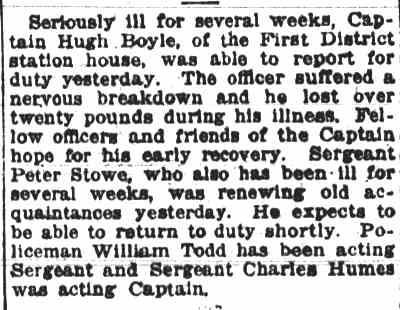
Named: Harris “Pete” Stow, William Todd, Charles Humes, and Hugh Boyle.
Camden Post-Telegram, November 1, 1917
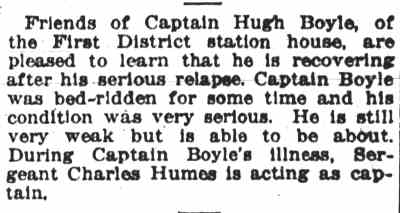
Charles Humes — Hugh Boyle
Police Elect Officers
Philadelphia Inquirer –
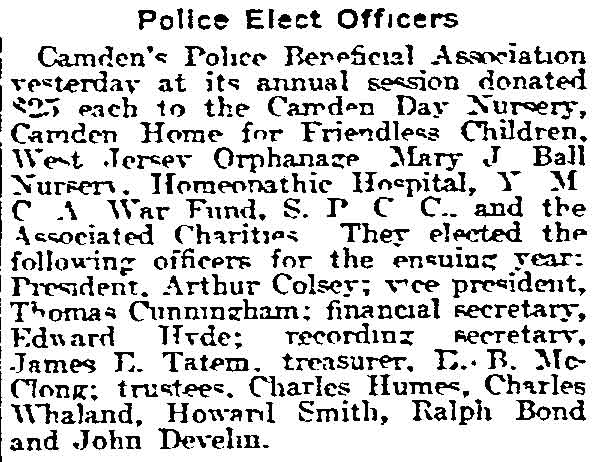
Camden’s Police Beneficial Association yesterday at its annual session donated $25 each to the Camden Day Nursery, Camden Home for Friendless Children, West Jersey Orphanage, Mary J. Ball Nursery, West Jersey Hospital, Y. M. C. A. War Fund, S. P. C. C., and the Associated Charities.
They elected the following officers for the ensuing year: President, Arthur Colsey; vice president, Thomas Cunningham; financial secretary, Edward Hyde; recording secretary, James E. Tatem; treasurer, E. B. McClong; trustees, Charles Humes, Charles Whaland, Howard Smith, Ralph Bond and John Develin.
Camden Post-Telegram, December 28, 1917
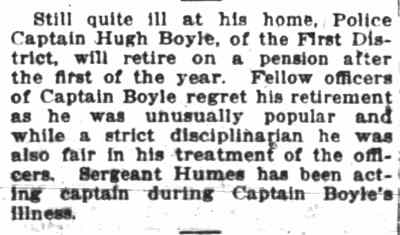
Charles Humes — Hugh Boyle
'Booze' Mystery Soon Cleared Up
Camden Post-Telegram –
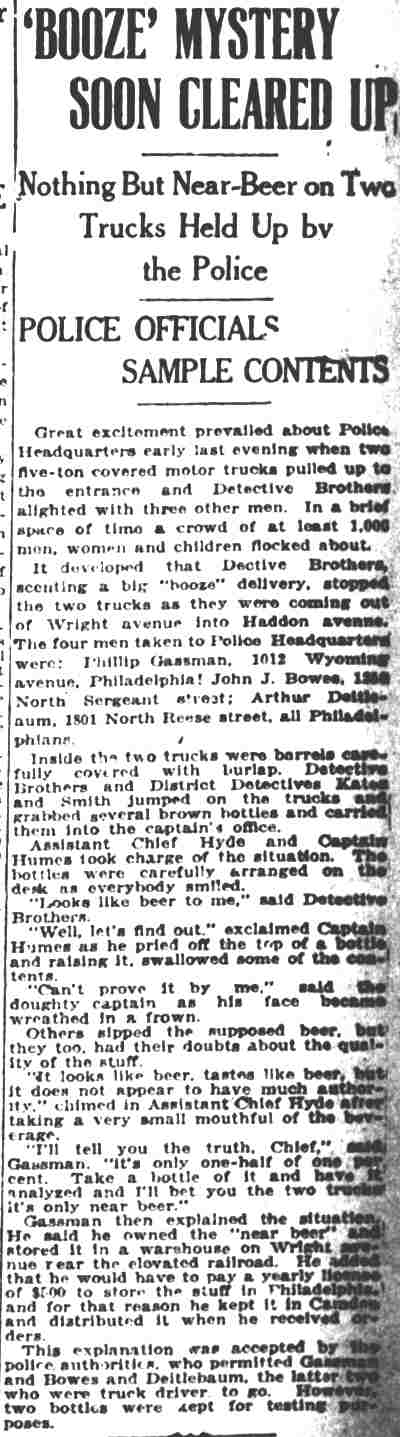
Nothing But Near-Beer on Two Trucks Held Up by the Police
Police Officials Sample Contents
Great excitement prevailed about Police Headquarters early last evening when two five-ton covered motor trucks pulled up to the entrance and Detective Brothers alighted with three other men. In a brief space of time a crowd of at least 1,000 men, women and children flocked about.
It developed that Detective Brothers, scenting a big “booze” delivery, stopped the two trucks as they were coming out of Wright avenue into Haddon avenue. The four men taken to Police Headquarters were: Phillip Gassman, 1012 Wyoming avenue, Philadelphia; John J. Bowes, 1360 North Sergeant street; Arthur Deitlbaum, 1801 North Reese street, all Philadelphians.
Inside the two trucks were barrels carefully covered with burlap. Detective Brothers and District Detectives Kates and Smith jumped on the trucks and grabbed several brown bottles and carried them into the captain’s office.
Assistant Chief Hyde and Captain Humes took charge of the situation. The bottles were carefully arranged on the desk as everybody smiled.
“Looks like beer to me,” said Detective Brothers.
“Well, let’s find out,” exclaimed Captain Humes as he pried off the top of a bottle and raising it, swallowed some of the contents. “Can’t prove it by me,” said the doughty captain as his face became wreathed in a frown.
John Brothers — Charles T. Humes — Edward S. Hyde
David P. Kates — Walter Smith
Distillery Is Raided, 9 Arrested, Barrels of Mash Confiscated
Camden Daily Courier –
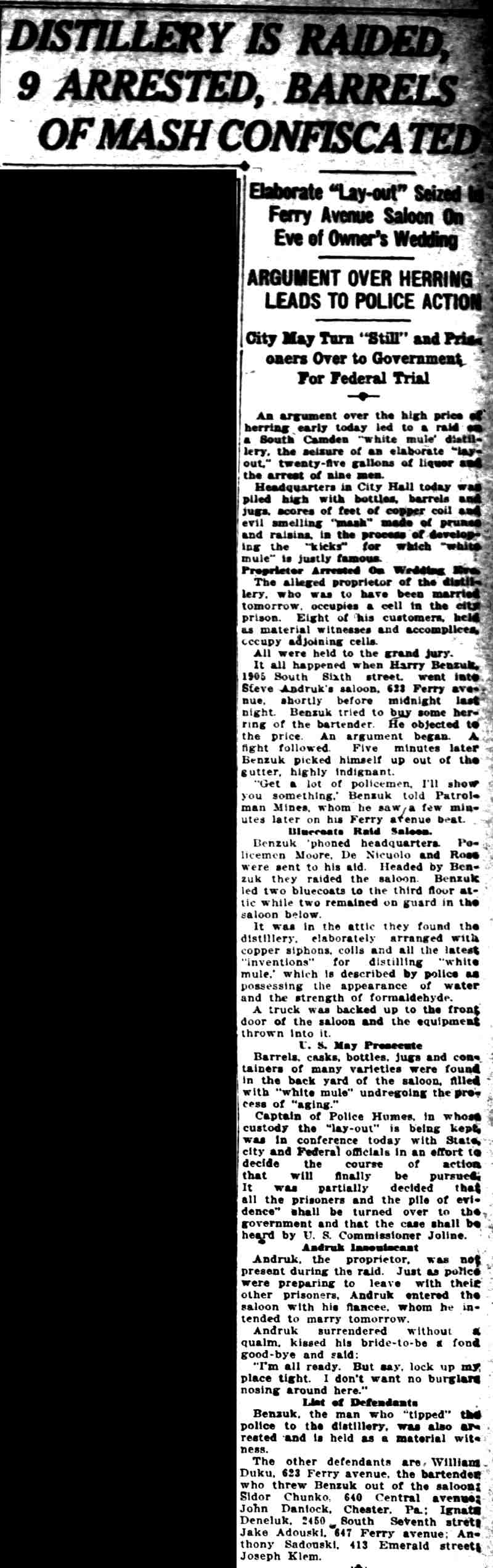
Elaborate “Lay-out” Seized at Ferry Avenue Saloon On Eve of Owner’s Wedding
Argument Over Herring Leads to Police Action
City May Turn “Still” and Prisoners Over to Government For Federal Trial
An argument over the high price of herring early today led to a raid on a South Camden “white mule” distillery, the seizure of an elaborate “lay-out,” twenty-five barrels of liquor and the arrest of nine men.
Headquarters in City Hall today was piled high with bottles, barrels and jugs, scores of feet of copper coil and all smelling “mash” of grain, prunes and raisins, in the process of developing the “kick” for which “white mule” is justly famous.
Proprietor Arrested On Wedding Day
The alleged proprietor of the distillery, who was to have been married tomorrow, occupies a cell in the city prison. Eight of his customers, held as material witnesses and accomplices, occupy adjoining cells.
All were held to the grand jury.
It all happened when Harry Benzuk, 1961 South Sixth street, went into Steve Andruk’s saloon, 647 Ferry avenue, shortly before midnight last night. Benzuk tried to pay some herring of the bartender. He objected to the price. An argument began. A fight followed. Five minutes later Benzuk pulled himself up out of the gutter, highly indignant.
“Get a lot of policemen, I’ll show you something.” Benzuk told Patrolman Mines, whom he saw a few minutes later on his Ferry avenue beat.
Discovers Real Saloon
Benzuk phoned headquarters. Patrolmen Moore, De Angelo and Rose were sent to his aid. Headed by Benzuk they raided the saloon. Benzuk led two bluecoats to the third floor attic while two remained on guard in the saloon below.
It was there they discovered the distillery, elaborately arranged with copper siphons, coils and all the latest “inventions” calling for “white mule” which is described by police as “stronger” than the acidity of water and the strength of formaldehyde.
A truck was backed up to the front door of the saloon and the equipment brought down it.
U. S. May Prosecute
Barrels, casks, bottles, huge containers of many varieties were found in the back yard of the saloon alike with “white mule” undergoing the process of “aging.”
Captain of Police Humes, in whose platoon the “lay-out” is being kept, was in conference today with State, City and Federal officers in an effort to decide the course of action that will finally be pursued. It was partially decided that all the prisoners and the pile of “evidence” shall be turned over to the government and that the case shall be heard by U. S. Commissioner Jollee.
Andruk Innocent
Andruk, the proprietor, was not present during the raid. Police were preparing to leave with their other prisoners. Andruk came to the saloon with his fiancee, whom he intended to marry tomorrow.
Andruk surrendered without a qualm, kissed his bride-to-be a fond good-bye and was arrested.
Benzuk, author of the tip, took his place. “I don’t want no burglars nosing around here.”
List of Defendants
Benzuk, the man who “tipped” the police to the distillery, was not arrested and is held as a material witness.
The other defendants are: William Aduki, 623 Ferry avenue; the bartender who threw Benzuk out of the saloon; Bibor Cherako, 413 Central avenue; John Danilock, Chester, Pa.; Ignatz Denediak, 2486 South Seventh street; Jake Akowski, 647 Ferry avenue; Anthony Sadowski, 413 Emerald street; Joseph Klim.
New Street Lights
Camden Courier-Post –
City Workers Start Laying Out System of “Safety Islands” on Cooper Street
City employees today started installing a new system of traffic lights and laying out six “safety islands” on Cooper Street, under the direction of James A. Howell, acting chief of electrical bureau, and Charles Humes, captain of police.
The traffic lights are known as the “three-way auto signal” type and are expected to speed up traffic. They can be operated from a central point, in unison, or separately by hand. City officials say the may eventually be placed also on Penn and Linden Streets.
The safety islands, which will be concrete elevations in the middle of the street, will be placed at Fourth, Fifth, Sixth, Broadway, Seventh, and Eighth Streets. These will make possible safer crossing of the street by pedestrians. The street between Fourth and Ninth is 64 feet wide..
Camden Courier-Post, January 27, 1928
Camden Courier-Post, September 20, 1928
2 Police Officers Made Lieutenants
Camden Courier-Post –
Rhone Reported Ready to Make Five Patrolmen Sergeant
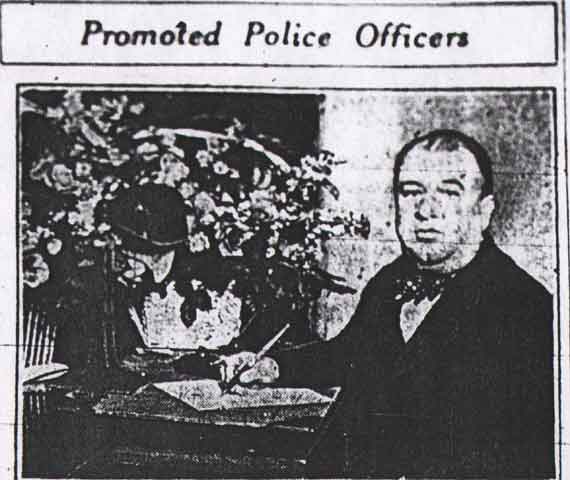
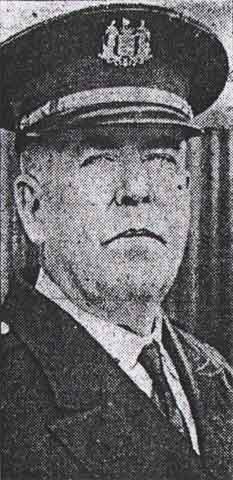
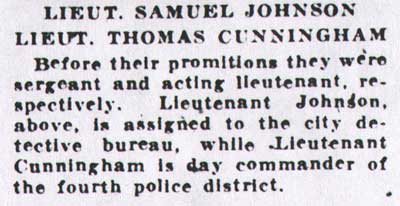
Reports that five members of the Camden police department will be promoted to sergeants tomorrow were circulated, today after announcement that two sergeants had been appointed lieutenant.
Those who, according to rumors, will be elevated to sergeant are Nathan Petit, of the second police district, to be assigned to the traffic squad; Gus Koerner, detective bureau; Walter Rowand, first district; Frank Truax, Second district, and Edward Hahn, third district.
The two new lieutenants who took oath of office yesterday are Samuel Johnson and Thomas Cunningham. The former was a sergeant of police attached to the detective bureau and will continue in that department, while Cunningham, while a sergeant, was acting lieutenant in day command at the fourth district. He remains in that district, The appointments were announced yesterday by Commissioner David S. Rhone, director of public safety.
Both were immediately administered oaths of office by Dr. Rhone's secretary, Bayard M. Sullivan, at the director's office, Lieutenant Cunningham is already eligible for retirement, having served more than 20 years on the city police force.
The two appointments complete the seven lieutenancies created n by a city ordinance. Ten members of the police department passed civil service examinations for the post, which pays an annual salary of $2500. Each must serve one year as lieutenant before becoming eligible to take examination for captaincy.
The five previously appointed lieutenants are George Frost, now night commander of the fourth district; Walter Welch, third district; Charles Laib, a sub-commander of the traffic bureau under Captain Charles T. Humes, traffic Inspector; Ralph Bakley, second district; and George Ward, first district.
The other three candidates who passed the examination, Sergeants John Potter, Herbert Anderson and Harry I. Newton, did not receive lieutenancies, although Potter had the highest percentage in the tests.
Police Escort Funeral of Former Chief Hyde
Camden Courier-Post –
A police motorcycle squad under the command of Inspector Humes acted as escort today at the funeral service of Edward S. Hyde, former police chief and a. member of the board of freeholders, who died Sunday.
Services took place at the home, 832 Haddon Avenue, and burial was in Harleigh Cemetery. Members of the police detail were Sergeant jefferson kay, patrolmen Thomas Kauffman, William Moll, John Stanton, Thomas Welch and James Wilson.
Hyde was appointed to the police force in April, 1894, and pensioned July, 1923. He succeeded Chief Gravenor when the latter resigned in 1922. Long interested in politics, he was elected freeholder two years ago. He is survived by his widow, Mina B. Hyde, and three daughters, Mrs. Marion Garlan, Mrs. Mary Van Hart and Emma Hyde..
Camden Evening Courier, December 3, 1930
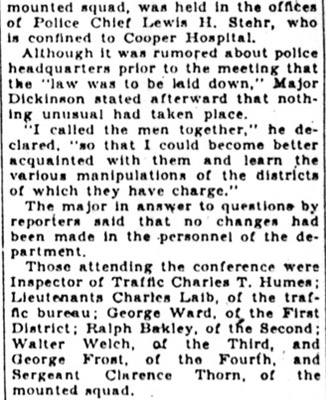
Named: Ralph Bakley, Charles V. Dickinson, George Frost
Charles T. Humes, Charles Laib, Clarence Thorn
Lewis H. Stehr, George Ward, and Walter Welch.
Camden Evening Courier, December 5, 1930
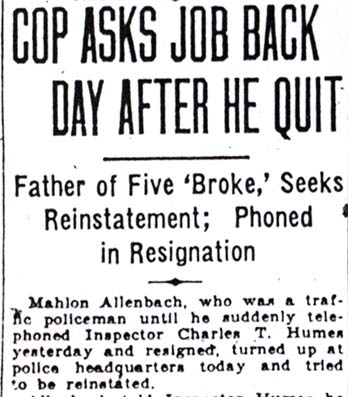
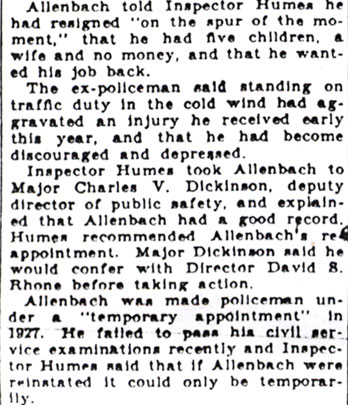
Named: Dr. David S. Rhone, Charles V. Dickinson, and Charles T. Humes
Mahlon Allenbach.
Camden Morning Post, December 12, 1930
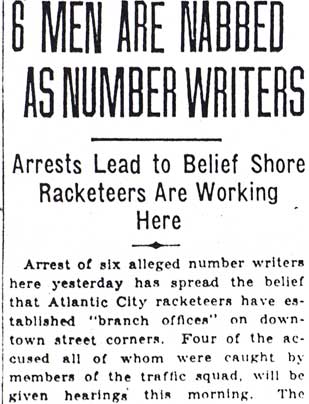
6 MEN ARE NABBED AS NUMBER WRITERS
Arrests Lead to Belief Shore Racketeers Are Working Here
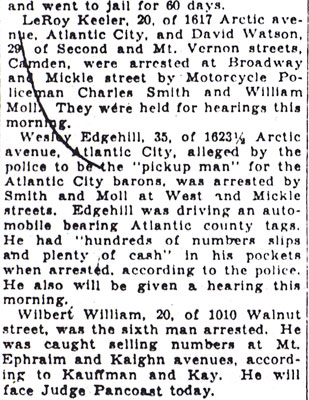
Arrest of six alleged number writers here yesterday has spread the belief that Atlantic City racketeers have established “branch offices” on downtown street corners. Four of the accused all of whom were caught by members of the traffic squad, will be given hearings this morning. The [remainder cut off]
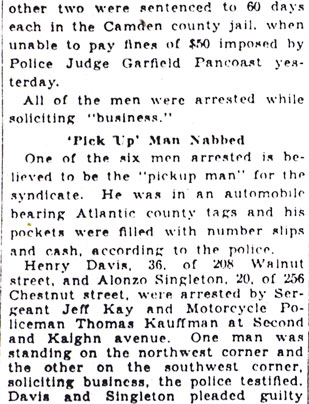
other two were sentenced to 60 days each in the Camden county jail, when unable to pay fines of $50 imposed by Police Judge Garfield Pancoast yesterday.
All of the men were arrested while soliciting “business.”
’Pick Up’ Man Nabbed
One of the six men arrested is believed to be the “pickup man” for the syndicate. He was in an automobile bearing Atlantic county tags and his pockets were filled with number slips and cash, according to the police.
Henry Davis, 36, of 208 Walnut street, and Alonzo Singleton, 20, of 256 Chestnut street, were arrested by Sergeant Jeff Kay and Motorcycle Policeman Thomas Kauffman at Second and Kaighn avenue. One man was standing on the northwest corner and the other on the southwest corner, soliciting business, the police testified. Davis and Singleton pleaded guilty
and went to jail for 60 days.
LeRoy Keeler, 20, of 1617 Arctic avenue, Atlantic City, and David Watson, 29, of Second and Mt. Vernon streets, Camden, were arrested at Broadway and Mickle street by Motorcycle Policeman Charles Smith and William Moll. They were held for hearings this morning.
Wesley Edgehill, 35, of 1623½ Arctic avenue, Atlantic City, alleged by the police to be the “pickup man” for the Atlantic City barons, was arrested by Smith and Moll at West and Mickle streets. Edgehill was driving an automobile bearing Atlantic county tags. He had “hundreds of numbers slips and plenty of cash” in his pockets when arrested, according to the police. He also will be given a hearing this morning.
Wilbert William, 20, of 1010 Walnut street, was the sixth man arrested. He was caught selling numbers at Mt. Ephraim and Kaighn avenues, according to Kauffman and Kay. He will face Judge Pancoast today.
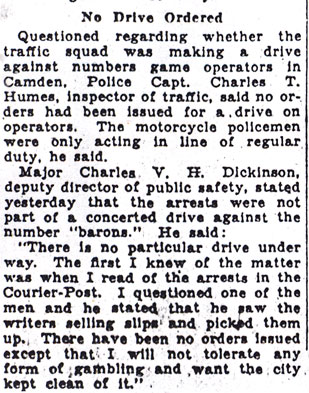
No Drive Ordered
Questioned regarding whether the traffic squad was making a drive against numbers game operators in Camden, Police Capt. Charles T. Humes, inspector of traffic, said no orders had been issued for a drive on operators. The motorcycle policemen were only acting in line of regular duty, he said.
Major Charles V. H. Dickinson, deputy director of public safety, stated yesterday that the arrests were not part of a concerted drive against the number “barons.” He said:
“There is no particular drive under way. The first I knew of the matter was when I read of the arrests in the Courier-Post. I questioned one of the men and he stated that he saw the writers selling slips and picked them up. There have been no orders issued except that I will not tolerate any form of gambling and want the city kept clean of it.”
Camden Evening Courier, December 15, 1930
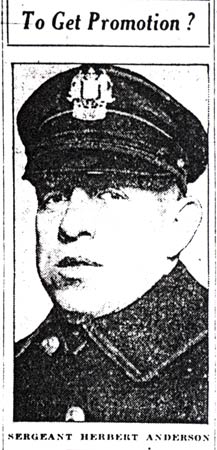
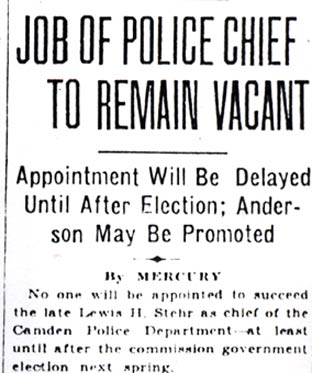
Named: Herbert Anderson, Charles V. Dickinson
George Frost, Charles T. Humes
Lewis H. Stehr, George Ward, and Walter Welch
Thomas Cunningham.
Camden Courier-Post, April 3, 1931

30 Cops Shifted Today in Opening of New District
Shake-Up in Camden Force is Most Drastic in History
SMITH AT CITY HALL
Drastic shifts in the Camden police department, affecting more than 30 members of the force became effective at 8 a.m. today.
The shake-up, announced yesterday by Commissioner David S. Rhone, director of public safety, is the result of creation of a fourth police district.
The outstanding changes are the promotion of Sergeant of Detectives George Ward to acting lieutenant in the First district, supplanting Sergeant Samuel Nayler, who is sent to headquarters, and the return to the city detective bureau of Acting County Detective Howard Smith.
Smith was detailed to the second district today and was assigned to a robbery investigation in the thirteenth ward.
District Captaincies Abolished
With the shifts, the rank of district captain is abolished. Instead, lieutenants will be in charge of the districts. Captains will be in charge only of the traffic and detective bureaus and headquarters, Commissioner Rhone said.
The removal of Sergeant Nayler from the First District was not unexpected, since he had been “on the carpet” last October as a result of a speakeasy shooting in his district. Nayler, though holding the rank of sergeant, was acting captain of the district.
He was threatened with dismissal by Chief Stehr and Commissioner Rhone if the vice conditions in the First District were not cleaned up. The situation came to a climax with the wounding of Charles Arini in Louis Del Duca in a speakeasy at Third and Mickle streets in October. It was reported Naylor was to be removed from the district several times since.
Ward Again Promoted
Ward was promoted to sergeant of detectives two months ago. Under the transfer, he is promoted again, remaining as acting lieutenant for a year, until he takes an examination for a lieutenancy.
Other police officers now acting-lieutenants will become lieutenants after examination.
Nayler, who was in charge of the First district for several years, will serve as desk sergeant under Capt. A. Lincoln James.
The return of Smith to the city detective bureau is required by Prosecutor Clifford A. Baldwin, it is understood. Smith has been a county detective for more than eleven years. He first was transferred to the prosecutor’s office at the request of Prosecutor Charles A. Wolverton. Although a Republican, he was retained there under Prosecutor Ethan P. Wescott. Although some surprise was occasioned by the announcement of Smith’s return to the city force, inasmuch as the new prosecutor is a Republican, it was said that Baldwin wished to begin his term with an entire new force.
Worked For City Also
Although Smith acted for the county and was paid by the county, he received a salary of $1 a year to retain him in the city so that he could be recalled at any time.
Through the shift, Sergeant Charles Laib, serving under Traffic Inspector Charles T. Humes, is elevated to acting captain of the traffic department. In the future all motorcycle men will report direct to Humes and Laib instead of to headquarters.
Ralph Bakley, who has been acting lieutenant of the First District, has been named acting lieutenant of the Second District, and Thomas Cunningham, who was acting captain of the Second District, becomes acting lieutenant of the Third. William Horner, who has been acting captain of the Third District, is elevated to the rank of acting lieutenant and remains in charge of that.
Jinxed Motor Cop Gets New Break When Hit by Auto
Camden Courier-Post –
Officer Shapiro Suffers Fractured Arm in Traffic Mishap
Hard Luck “'Eddy.”
That's what edward shapiro, 27, of 901 Kaighn Avenue, is being called at police headquarters.
Shapiro, a motorcycle policeman, was riding north on Haddon Avenue late yesterday afternoon. At Wildwood avenue the traffic light was red. A car had stopped for the light. Another car, driven by Stephen Baxindine, 78, of 146 Hopkins avenue, also going north on Haddon avenue, turned to the left to avoid hitting the one that was stopped and instead struck Shapiro's motorcycle, knocking him to the ground. Shapiro got up and, drove to city hall with Baxindine. At City Hall Captain Charles L. Humes sent Shapiro to West Jersey Homeopathic Hospital, where It was found he had suffered a fractured right arm,
No charges were made against Baxindlne.
On August 17, last year, Shapiro suffered a fractured right leg when he was knocked off his motorcycle by a hit·and-run driver at Seventh Street and Kaighn Avenue.
Camden Courier-Post, June 7, 1932
COP SHAKEUP TODAY; AX FOR 4TH DISTRICT
Humes Due to Be Personnel Inspector, Replaced by Ward or Anderson
A resolution abolishing the fourth police district will be adopted by the City Commission Thursday at its semi-monthly meeting.
A general shakeup in the police department is scheduled for announcement immediately after the meeting by Mayor Roy R. Stewart, director of public safety.
Chief among the scheduled changes is appointment of Inspector Charles T. Humes, now stationed at police headquarters, to inspector in charge of personnel of the entire department.
Humes would be succeeded at police headquarters by either Lieut. Herbert Anderson or Lieut. George Ward.
Anderson commands the fourth district, which will merge with the second police district under command of Lieut. Ralph Bakley.
Ward heads the first district police. In the event he replaces Humes, he will be succeeded by Anderson.
A number of sergeants also will be shuffled. Sergt. Edward Hahn, now stationed in the third district, and Sergt. John Garrity, of the fourth, will be transferred to the traffic squad. Two acting sergeants now in the traffic bureau, George Jefferis and James Wilson, will be patrolmen.
Sergt. Edward Carroll, of the fourth, will go to the third district to replace Hahn. The other sergeant from the fourth district, John Skolski, will become a desk sergeant at headquarters.
Skolski will replace Sergt. Stiles Whitaker, now a headquarters desk sergeant. Whitaker will return to his former post, duty at the city banks.
Camden Courier-Post, December 31, 1932
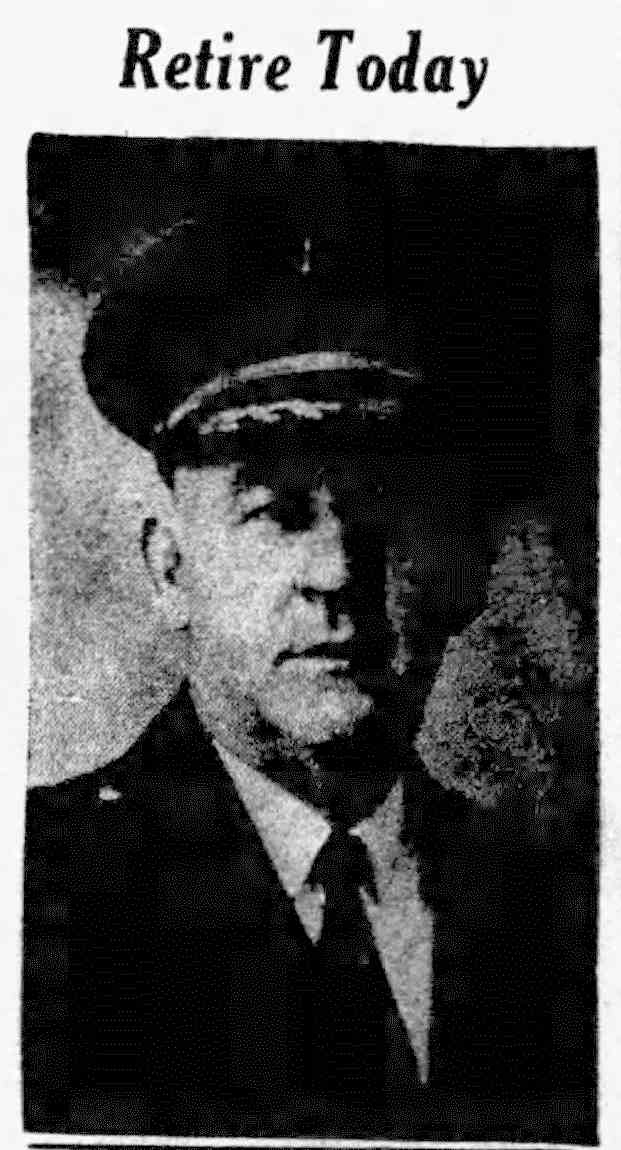
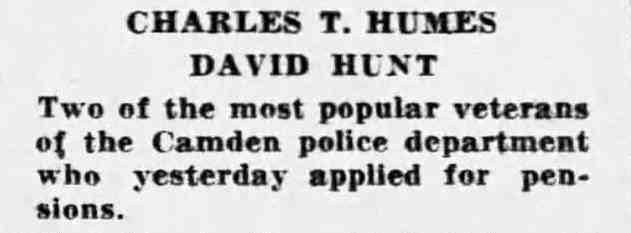
Charles T. Humes — David Hunt. Two of the most popular veterans of the Camden police department who yesterday applied for pensions.
Pensions Awarded 6 Cops, 17 Firemen
Camden Courier-Post –

Inspector Humes Refuses to Withdraw Application in Spite of Requests
Pensions for six policemen and 17 firemen took effect with the dawn of the New Year yesterday.
Proposed Salary reductions from five to 30 percent prompted the wholesale requests for pensions which were approved Saturday at noon by the Police and Firemen’s Pension Commission, of which Mayor Roy R. Stewart is chairman.
The proceedings were delayed one hour while efforts were being made by political leaders and friends to have Inspector Charles T. Humes reconsider his application. But he refused to withdraw his application and it was approved.
Two sergeants, a city detective and four captains of the fire department were included in the list of applicants.
Sergeants Albert York and Clarence Thorn, Detective David Hunt and Fire Captains Harry Haines, John Lutts, James R. White and William H. Miller, Jr., were included among the pensioners.
Major W. Greenwood and Adrian Bateman, two patrolmen, completed the list from the police department, while the others receiving pension awards who are members of the fire department were:
Elmer Burkett, 66; Robert M. Coffman, 57; Howard E. Currie, 52; James E. Navin, 67; George W. Hollins, 64; Richard S. Marter, 60; Arthur A. Wingate, 64; Joseph T. Earnest, 63; Samuel E. Harring, 64; Andrew Miller, 73; Stewart Bakley, William K. Buzine, 63, and Daniel Grimes.
Mayor Stewart and Commissioner Bennett, both members of the commission, said they regretted so many “young men” were asking to be pensioned at this time.
Roy R. Stewart — Charles T. Humes — Albert York — Clarence Thorn — David Hunt — Harry Haines Sr.
John Lutts — James R. White — William H. Miller Jr. — Major W. Greenwood — Adrian Bateman
Elmer Burkett — Robert M. Coffman — Howard L. Currie — James E. Navin — George W. Hollins
Richard S. Marter — Arthur A. Wingate — Joseph F. Ernst — Samuel E. Harring — Andrew “Fritz” Miller
Steward Bakley — William K. Buzine — Daniel Grimes — William H. Bennett
Richards Opens Camden Quarters
Camden Courier-Post –
Jack Weinberg in Charge of Senator’s Campaign for Governor Here
Camden campaign headquarters for State Senator Emerson L. Richards, one of the four candidates seeking the Republican nomination for governor, was opened yesterday in the Hotel Walt Whitman building on the Broadway side.
At the same time, Jack Weinberg, who is supervising the campaign of Senator Richards in Camden, announced a committee of 50 business and professional men of Camden county who will aid him. Weinberg stated a similar committee of women will be announced later this week.
A speakers’ committee is being formed by Edward Martino, Camden attorney, and will meet at headquarters Friday morning. Distribution of Richards campaign material has been started and speakers will begin a tour of the city and county this weekend.
Weinberg has been an active figure in Republican politics in this city for many years. In 1927, he took a prominent part in settling factional differences that existed between the followers of Senator Albert S. Woodruff, former U. S. Senator David Baird, Jr., and Mrs. Elizabeth C. Verga. Weinberg was in charge of the Republican headquarters in that campaign which resulted in the election of the Price-Smith-Sayrs-Reesman-Rhone ticket. He has been an adherent of the Republican organization all his life.
It was because of his personal friendship with Senator Richards that Weinberg agreed to supervise his campaign here. It was at Weinberg’s request that Senator Richards introduced the Sunday sports and amusements bill in the 1933 legislature.
Richards will make two or three speeches in Camden county next week. Noon-day meetings also will be held in the headquarters every day beginning Monday, according to Weinberg.
Weinberg announced the personnel of the general committee as follows: Former Assistant Prosecutor Rocco Palese, Jack Reiners, L. Scott Cherchesky, Carl Kisselman, Barney Brown, Benjamin Asbeil, Eugene Verga, Jay Remington, William D. Sayrs, Jr., Neil Deighan, John Hanlon, John Charles T. Humes, Meyer Adelman, James Roberts, Neil Zeidman, Dr. Marvin Segal, Byron Edwards, Ellis Goodman, Edward Callow, Morris Bloom, Milton D. Sweiger, Horace Acco, Abe Lippman, William Mead, Ellis Kircher, George B. Ulizio, R. L. Brest, Henry Jones, Samuel Lippman, John McCarroll, Anthony Balatesta, William Kelly, E. L. Kappel, William Feit, James McCarroll, Herman Greenberg, John Sappio, Benjamin Hardy, Joseph Fuhrman, Harry Chew, George Maggee, John Frost, George Smith, John Weber, Frank Evans, R. Radcliff, John Plum and William Udell.
Philadelphia Inquirer, November 5, 1937
Named: Roy R. Stewart, Charles T. Humes, and Charles L. Humes.