H. Frank Pettit
H. FRANK PETTIT was born Harry Frank Pettit on February 8, 1859 to William H. Pettit and the former Abigail Ward. He rarely if ever used his full name; most records and news articles refer to him as H. Frank Pettit or Frank Pettit. His father was a farmer. The 1870 Census shows the family living near Blackwood, New Jersey, where William H. Pettit engaged in farming. The family came to Camden in the 1870s. The 1878 City Directory shows them living at 1234 South 3rd Street, where William Pettit had a grocery store. The Pettits were in Camden’s Eighth Ward when the 1880 Census was taken, doing some farming, with no specific address given.
H. Frank Pettit had wed prior to the 1880 Census enumeration. He and his young wife Deborah lived with his parents. William Pettit left Camden for Woodbury, where he passed away in 1885. H. Frank Pettit stayed in Camden. The 1884 and 1885 City Directories show him farming on the “Haddonfield Pike” in 1884 and on the “Haddonfield Pike below Kaighn Avenue” in 1885. At some point in the 1880s his marriage to Deborah ended, probably with her passing. He soon however would remarry and change careers.
On February 1, 1887 H. Frank Pettit married Anna Margaret Weber. A daughter, Mabel E. Pettit was born on June 23, 1889 in Camden. Active in the 1880s in fraternal circles through his membership in the Improved Order of Red Men and the Knights of the Golden Eagle, H. Frank Pettit also became involved in local politics. When a son was born on April 19, 1894 the Pettits named the boy Maurice Alexander Rogers Pettit, after Maurice A. Rogers, state senator from Camden in the 1890s.
The 1887 City Directory shows H. Frank Pettit living at 1538 Kaighn Avenue and working as a salesman, a trade he would follow up until 1895. The 1891 City Directory shows him living at 410 Royden Street, the 1892 and 1893 editions at 614 West Street, and the 1894 and 1895 directories show him at 618 West Street. He also became involved in local politics in Camden.
H. Frank Pettit’s political activities resulted in him being given a position as a Lieutenant on the Camden Police Department in 1895 and later promoted to Captain. He was demoted from this post by Chief of Police John Foster and Mayor Cooper B. Hatch in February of 1899 and shortly after was dismissed from the Police Department.
H. Frank Pettit and his family are listed in Camden City Directories from 1896 through 1898 at 445 Line Street. The 1900 City Directory and Census shows H. Frank Pettit at 457 Berkley Street; the family lived there as late as 1908. By 1909 they moved to 758 Wright Avenue in Camden’s Ninth Ward. H. Frank Pettit was elected to City Council from the Ninth Ward in 1915. The Pettits lived at the Wright Avenue address as late as 1918. After leaving the police department, H. Frank Pettit worked as a traveling salesman, and spent a number of years pursuing that line of work in the lumber trade.
The 1920 Census, taken in January of that year, shows H. Frank and Anna Pettit living with relatives at 4 Springfield Avenue in Merchantville, New Jersey. H. Frank and Anna Pettit bought a home in Manasquan, New Jersey in the 1920s. H. Frank Pettit became active in local politics and served for a decade or so as Justice of the Peace in Manasquan. He passed away on March 27, 1935. Anna Pettit joined him in 1940.
Maurice Pettit stayed in Merchantville into the 1940s. He worked for the State of New Jersey for many years. When he passed in 1955 he had recently been appointed head of the Division of Motor Vehicles agency in Westfield, New Jersey.
George Reeser Prowell's History of Camden County, New Jersey — 1886
Lenni Lenape Tribe, No. 2
In 1886 George Reeser Prowell wrote the following about Lenni Lenape Tribe, No. 2:
LENNI LENAPE TRIBE, No. 2, is the oldest existing tribe of the order in the State, and in numbers and wealth the strongest and richest in the United States. It was instituted May 10, 1850, by Great Incohonee William B. Davis, assisted by Francis Fullerton, of Lenni Lenape Tribe, No. 8, of Pennsylvania, and Great Chief of Records of the United States. These were the charter members: Nathaniel Chew, William F. Colbert, John T. Davis, Timothy C. Moore, Sylvester Rainhard, Joseph Shipley, Daniel S. Garwood, William Beckett, George Wood, E.D. Brister, John Wood, Joseph Myers, Albert Robertson, John W. Hoey, James B. Richardson, Robert Maguire, Joseph B. Hawkins, James O. Stillwell and Anthony Joline. The officers were as follows: P., Timothy C. Moore; S., Nathaniel Chew; S.S., John Wood; J.S., William F. Colbert; C. of R., Joseph Myers; K. of W., Albert Robertson.
Lenni Lenape has had an eventful career, at times flourishing and at other times so short of funds that a few faithful members paid expenses and benefits out of their private purses, but persistence won at last and a flood tide of prosperity set in, which has continued until the Lenni Lenapes number seven hundred and thirty-two and the wampum belt contains $21,370.89.
Among its members are these Past Great Sachems: George W. Watson, John T. Davis, Charles H. Gordon, Thomas J. Francis and Daniel M. Stevens; and of its Past Sachems these are living: Timothy C. Moore, Henry A. Breyer, Lewis Zeigler, Samuel J. Fenner, Edward J. Steer, William F. Farr, Samuel D. Watson, George Horneff, George A. Cairoli (Brother of Mrs. Emma Horneff—PMC), Thomas J. Rowand, Samuel A. Owens, Benjamin M. Braker, Lambert Banes, George Pfeiffer, William Sheridan, Thomas F. Muckelson, Hope Sutton, James P. Moore, D.D. Worts, Leonard L. Roray, Benjamin J. Price, John A. Hall, B.S.M. Branning, Abraham Davis, Harry B. Garrison, Walter E. Garwood, George A. Rogers, William C. Davis, Frank P. Jackson, H. Frank Pettit, John A. Harbeson, John Quick, Angus B. Cameron, Lewis Z. Noble, George Leathwhite, Conrad F. Austermuhl, John K. Seagrove, Charles L. Vansciver, Harry Hoffman, Harry B. Tyler, James H. Reeve and George W. Davis. The officers are: P., G.W. Davis; S., Edward Francis; S.S., Samuel Baker; J.S., Joseph Watson; C. of R., L.Z. Noble; K. of W., C.F. Austermuhl; Trustees, T.J. Francis, T.F. Muckelson, J.K. Reeve, Leonard L. Roray and H.F. Pettit.
George Reeser Prowell's History of Camden County, New Jersey — 1886
Knights of the Golden Eagle
George Reeser Prowell wrote the following about this organization:
KNIGHTS OF THE GOLDEN EAGLE.
The Knights of the Golden Eagle is a secret benevolent institution, founded in Baltimore, Md., February 6, 1873, and is now in successful operation in the States of Maryland, Pennsylvania, Massachusetts, Delaware, New Jersey, California, Ohio, New York, Iowa, Georgia, Connecticut, West Virginia, Indiana, Michigan, Missouri, Colorado, Virginia, Illinois, Alabama and the District of Columbia. It is based upon the most liberal principles consistent with future prosperity, and has for its motto, “Fidelity, Valor and Honor,” a trinity of graces which are taught in its ritual.
The order has for its main object the promotion of the principles of true benevolence, associating its members together for purposes of mutual relief against the trials and difficulties which attach to sickness, distress and death, so far as they may be mitigated by sympathy and pecuniary assistance. It studiously avoids all sectarian and political controversy, and aims to cultivate the social, moral and intellectual feelings of its members, and to promote their welfare in all the walks of life.
The Order of the Knights of the Golden Eagle was introduced into the State of New Jersey in the summer of 1883, Camden Castle, No. 1, being instituted in August of that year with twenty-four members. During the year 1884 four new castles were instituted, at Millville, Camden, Mount Holly and Salem, respectively. The membership, at the close of the year, being five hundred and eighty-four. In 1886 the number of castles was increased to ten, with a membership of one thousand and one, and from January 1, 1886, to the present time thirteen new castles have been formed, and the membership increased to over two thousand.
The Grand Castle of New Jersey was instituted July 16, 1884, the officers at institution being: Past Grand Chief, John P. Price; Grand Chief, Joseph H. Minnett; Grand Vice-Chief, William A. Garrison; Grand Master of Records, Daniel M. Stevens; Grand Keeper of Exchequer, P. P. Achenbach; Grand Sir Herald, George J. Robertson; Grand High Priest, Henry F. Bacon; Grand First Guardsman, S. Luther Richmond; Grand Second Guardsman, George W. Stevens.
The present officers are: Past Grand Chief, William A. Garrison, Westville; Grand Chief, Henry P. Bacon, Salem (P. O. Box 200); Grand Vice-Chief, Irving W. Kelly, Perry and Montgomery Streets, Trenton; Grand Sir Herald, P. P. Achenbach, 712 Carman Street, Camden; Grand High Priest, John S. Broughton, Trenton; Grand Master of Records, E. D. Senseman, 580 Clinton Street, Camden; Grand Keeper of Exchequer, F. A. Buren, Merchantville; Grand First Guardsman, George Williams, Wrightsville; Grand Second Guardsman, William F. Perry, Quinton.
The next annual session will be held in Camden on the first Wednesday in March, 1887.
Camden Castle, No. 1, was instituted August 9, 1883, with the following officers: P. C., Joseph T. Fortiner; N. C., Charles Brown; V. C., Joseph Rubicam; H. P., John C. Newhouse; V. H., Watson Stevens; K. of E., Charles Aston; C. of E., Herman Rosade; M. of R., E. D. Senseman; Sir H., Joseph C. Madara; W. B., William B. Vannaman; W. C., John J. Pierson, Jr.; Ens., George A. Bingham; Esq., William S. Caume; 1st G., John J. Pierson, Sr.; 2d G., Thomas T. Madara. The present officers are: P. C., Robert F. Stockton; N. C., Birtus A. Wagner; V. C., Edwin F. Jones; H. P., William S. Carels; V. H., George Cook; M. of R., Howard M. Sexton; C. of E., Herman Rosade; K. of E., Charles Brown; S. H., William P. Fowler.
The lodge meets every Friday evening at Lincoln Hall, Third and Market Streets. The membership is three hundred and forty.
Washington Castle, No. 3, was instituted April 4, 1884. The officers at institution were: P. C., John N. Madara; N. C., Daniel M. Stevens; V. C., H. Frank Pettit; V. H., Andrew G. Vannaman; H. P., James H. Reeves; K. of E., Elmer E. Cox; C. of E., Samuel A. Barto; M. of R., George W. Stevens; Sir H., George S. Fox; W. B., C. O. Pedrick; W. C., James Hoagland; Ensign, Lemuel Pike; Esq., James Hartley; 1st G., John Allen; 2d G., W. B. Waters. The present officers are: P. C., Joseph W. Jackson; N. C., James Spence; V. C., William B. Gibbs; H. P., H. W. Howland; V. H., John P. R. Carney; M. of R., George W. Stevens; C. of E., Charles Sayre; K. of E., Elmer E. Cox; S. H., William B. Slocum.
The lodge meets every Friday night, at Wildey Hall, Fifth and Pine Streets. The number of members is two hundred and thirty-three.
Red Cross Castle, No. 6, was instituted January 28, 1885, with the following officers: P. C., W. H. Tyler; N. C., F. T. Steinbach; H. P., Adam Hoffman; V. H., Hiram Walton; M. of R., Geo. S. Bundick; C. of E., Isaac Buzby. The present officers are: P. C., Frederick Fearn; N. C., Adam Hoffman; V. C., Joseph M. Taylor; H. P., E. O. Smith; M. of R., Walter Hart; C. of E., John Neff; K. of E., Moses Gour; S. H., D. Ewan.
The lodge meets every Monday night, at Gour’s Hall, 249 Kaighn Avenue. The number of members is seventy-five.
White Cross Castle, No. 19, was instituted August 20, 1886, with the following officers: P. C., William H. Snyder; N. C., Richard Twelves; V. C., W. D. Reel; H. P., Morris E. Michel; V. H., Joseph Engard; M. of R., W. H. Wagoner; C. of E., Richard A. Outwater; K. of E., Frank Mester; Sir H., George W. Reese; W. B., E. W. Shallcross; W. C., Harry E. Horner; Ens., Morris Odell; Esq., C. E. Swaney; First Guard, W. H. Strang; Second Guard, C. E. Bowker.
The lodge meets every Monday night at the northwest corner of Second and Federal Streets, Camden. The present membership is ninety.
Monarch Castle, No. 9, was instituted November 11, 1886, the officers at institution being: P. C., George L. Frazee; N. C., Charles E. Lane; V. C., Samuel R. Murray; H. P., N. N. Wentz; V. H., J. K. Hibbs; M. of R., Frank S. Fithian; C. of E., Abram H. Allen; K. of E., Thomas B. Woolston; S. H., James Rudolph; W. B., Horace J. Parks; W. C., C. P. Baker; Ens., William H. Smith, Jr.; Esq., George Ewan; First Guard, Charles H. Savidge; Second Guard, George Ewan. The present officers are: P. C., John W. Mickle; N. C., George C. Vankirk; V. C., Edwin S. Titus; H. P., R. M. Coffman; V. H., D. P. Steiner; M. of R., E. D. Senseman; C. of E., Abram H. Allen; K. of E., Washington Bucknell; Sir H., William M. Callingham; W. B., Charles Kain; W. C., Theo. Austermuhl; Ens., William M. Strohl; Esq., John F. Wilkins; First Guard, Jacob E. Miller; Second Guard, William P. Riker.
Meetings are held every Wednesday night at the northwest corner of Fourth and Federal Streets. The present membership is one hundred and thirteen.
Philadelphia Inquirer — April 23, 1888
Knights of the Golden Eagle, Monarch Castle
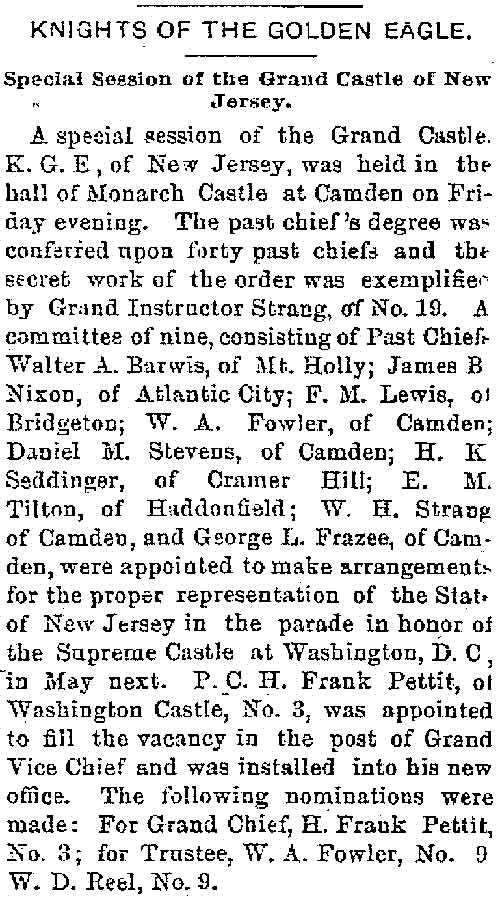
Philadelphia Inquirer, April 23, 1888 — H. Frank Pettit, W.H. Strang, Daniel M. Stevens, W.A. Fowler, H.K. Seddinger, George L. Frazee
Philadelphia Inquirer — November 8, 1889
Knights of the Golden Eagle
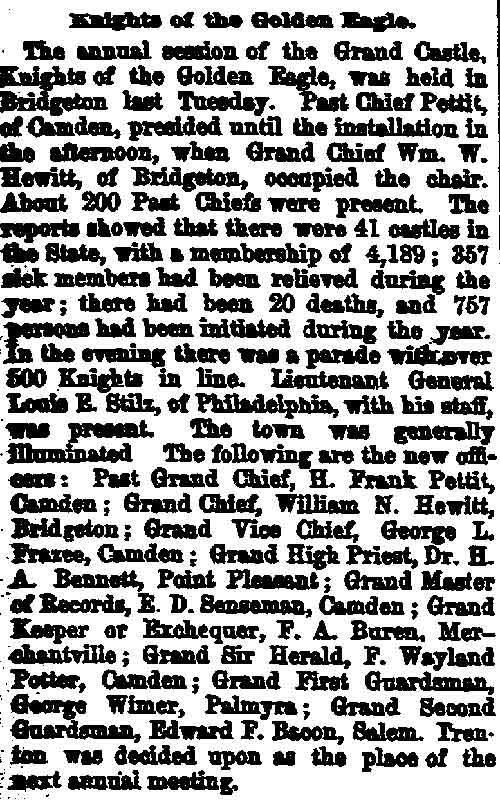
Philadelphia Inquirer, November 8, 1889 — H. Frank Pettit, E.D. Senseman, George L. Frazee, F. Wayland Potter
Philadelphia Inquirer — December 8, 1896
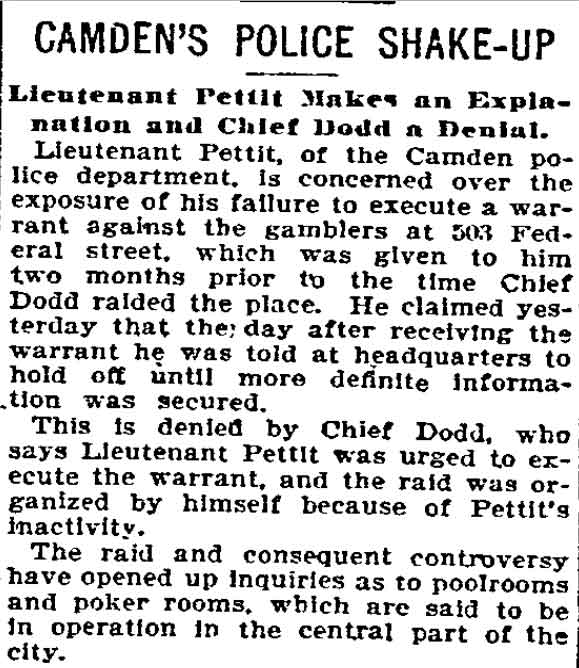
Philadelphia Inquirer, December 8, 1896 — H. Frank Pettit, Samuel Dodd, Federal Street
Philadelphia Inquirer — February 24, 1897
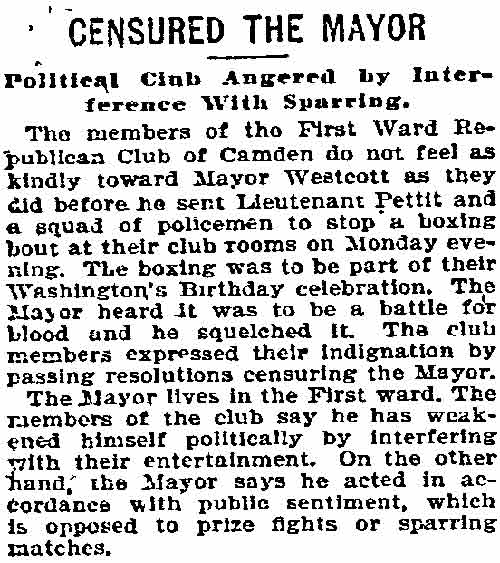
Philadelphia Inquirer, February 24, 1897 — H. Frank Pettit, John L. Westcott
Camden’s Tragedy Still a Mystery
Philadelphia Inquirer —
Two Men Arrested In Stockton, But They Easily Prove an Alibi.
POLICE ARE PUZZLED
Officials Believe the House Was Entered By a Burglar.
MRS. ZANE’S WILL FOUND
Her Son Questioned and the Police Start On a New Clue—Eli Shaw Reticent.
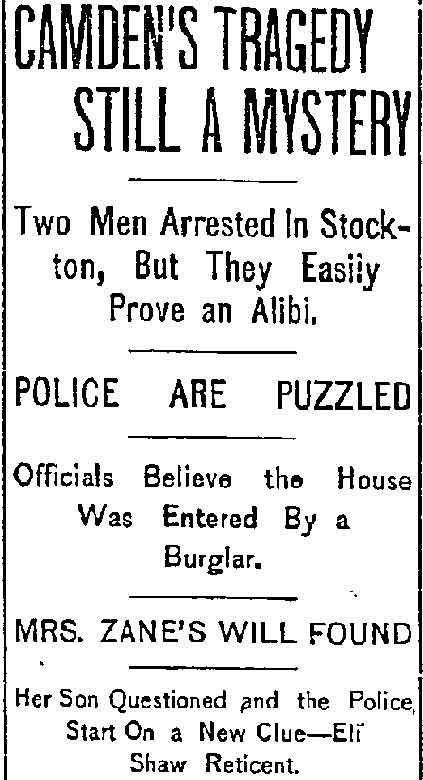
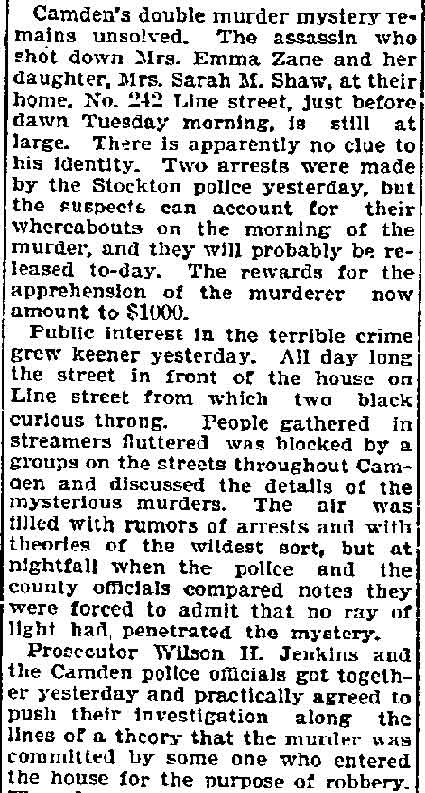
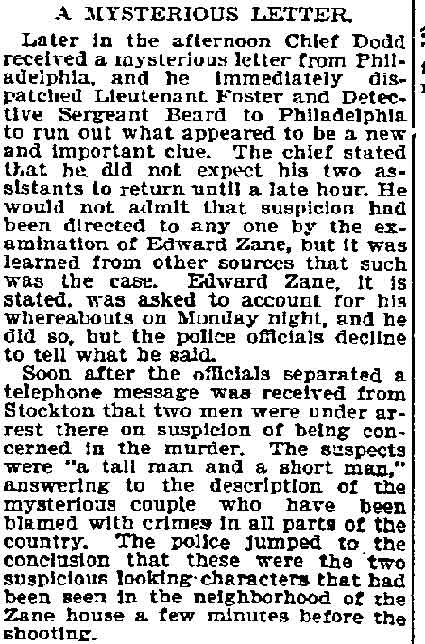
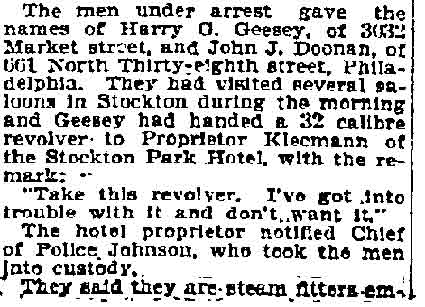
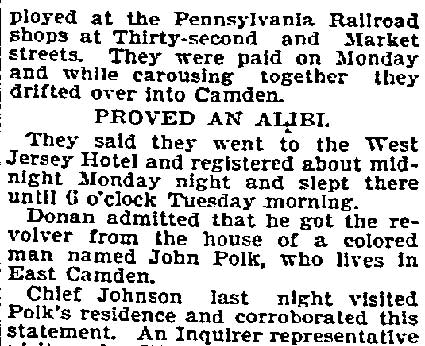
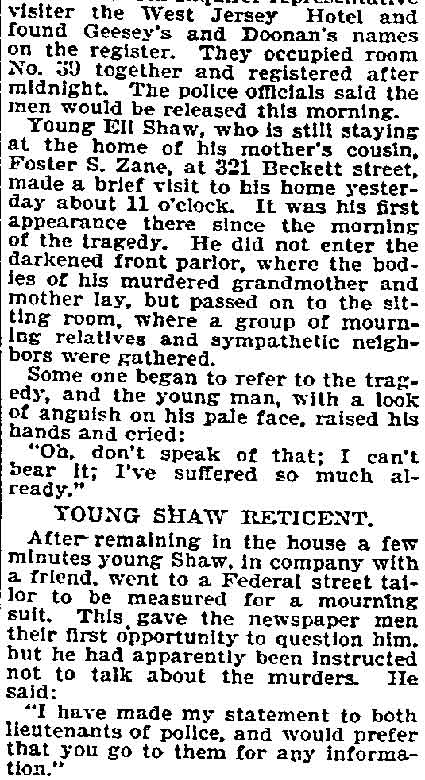
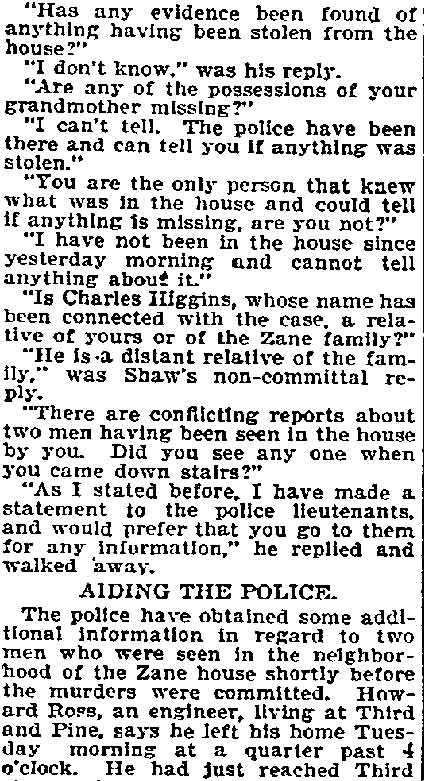
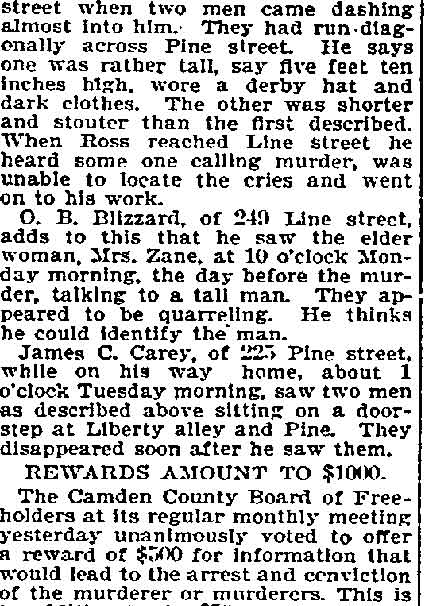
Camden's Tragedy Still a Mystery
Camden's Tragedy Still a Mystery
Two Men Arrested In Stockton, But They Easily Prove an Alibi.
POLICE ARE PUZZLED
Officials Believe the House Was Entered By a Burglar.
MRS. ZANE'S WILL FOUND
Her Son Questioned and the Police Start On a New Clue—Eli Shaw Reticent.
Philadelphia Inquirer — October 30, 1897
Eli Shaw Trial Coverage
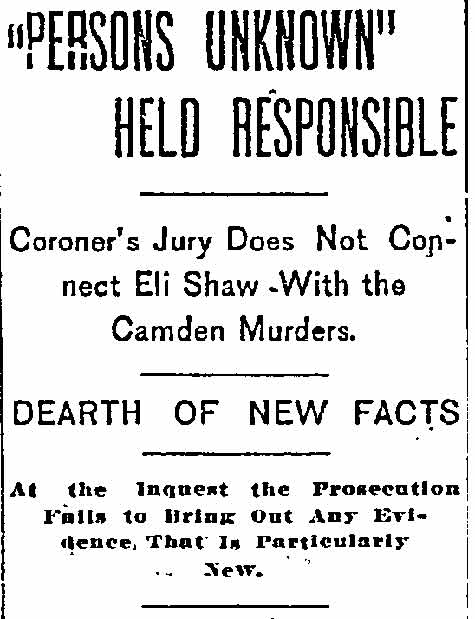
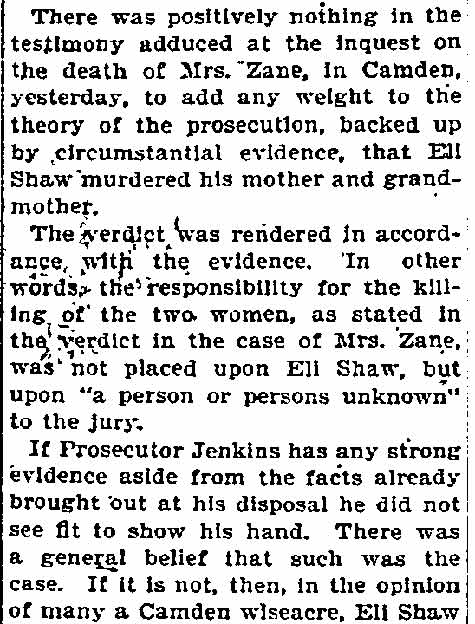
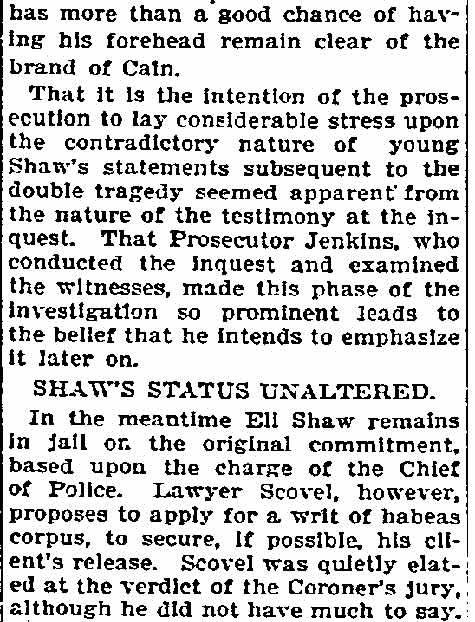
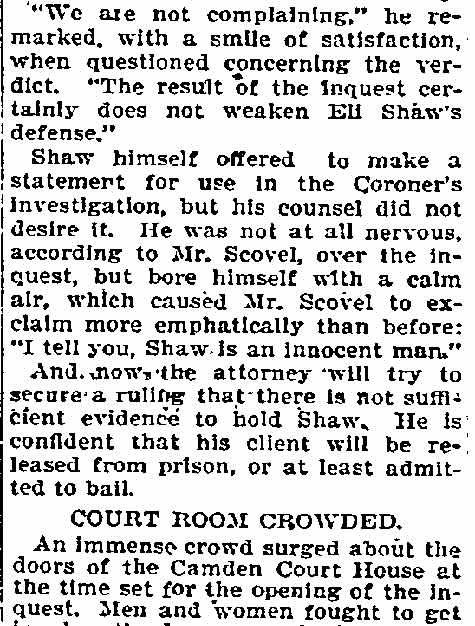
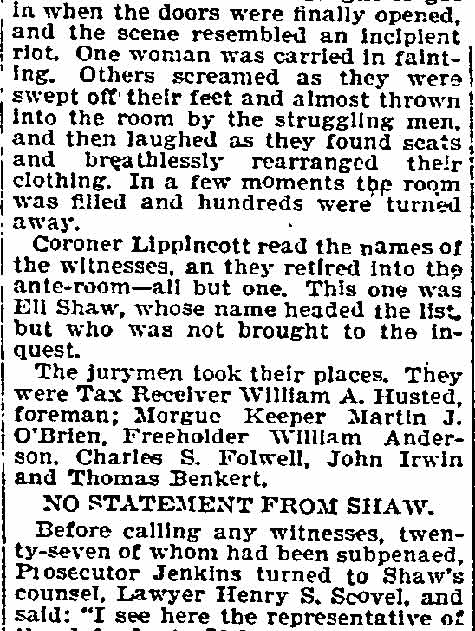
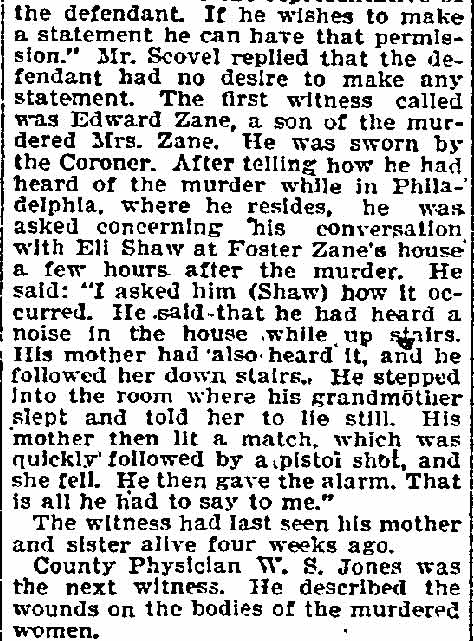
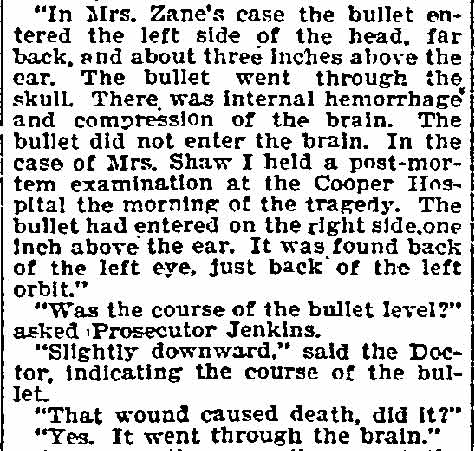
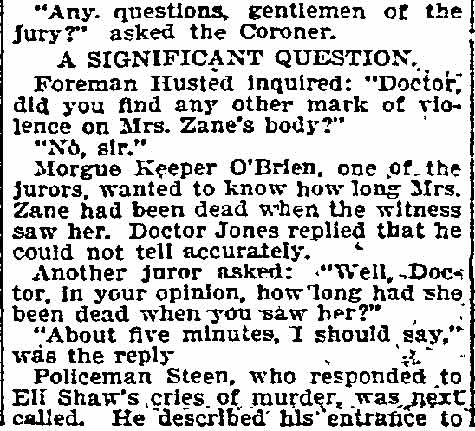
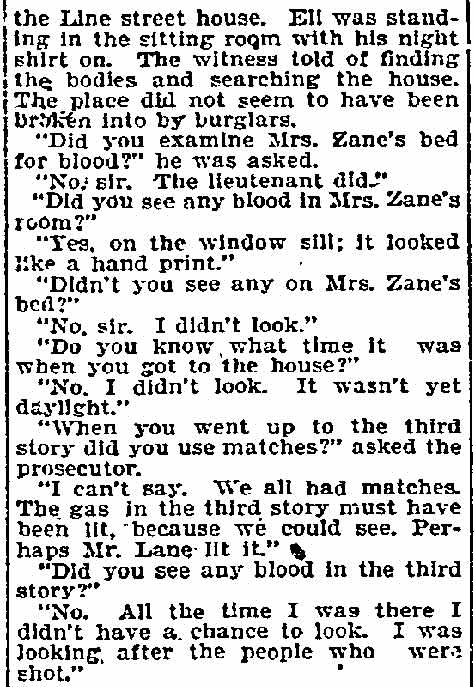
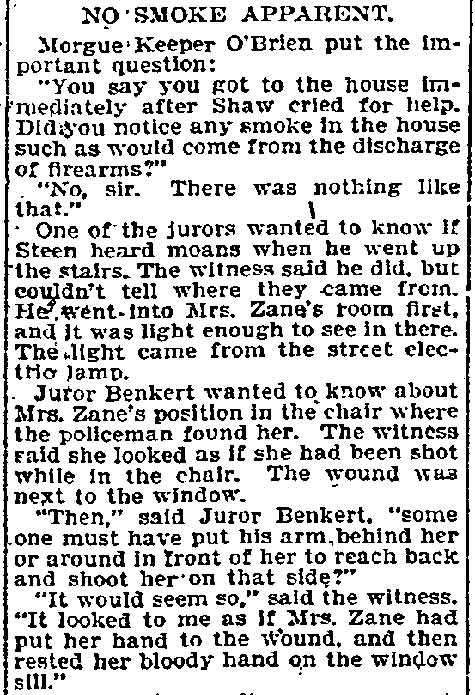
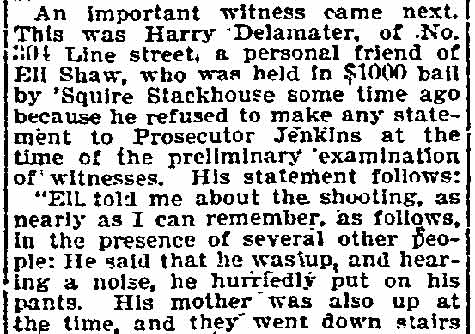
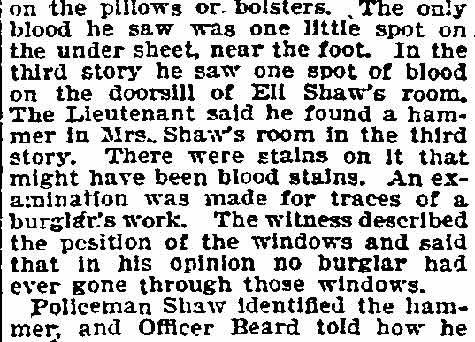
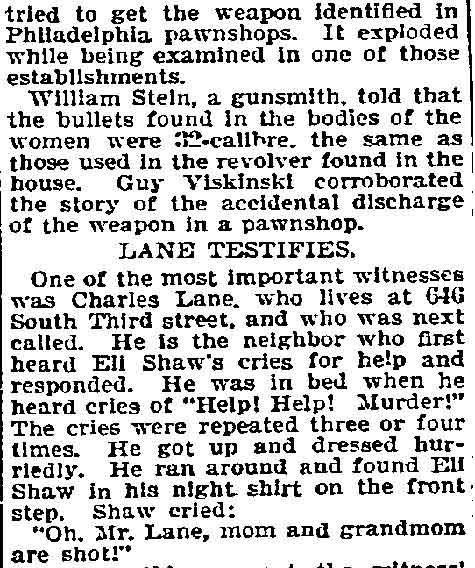
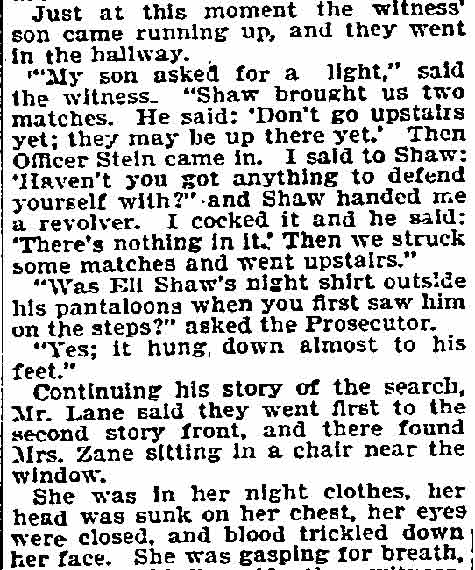
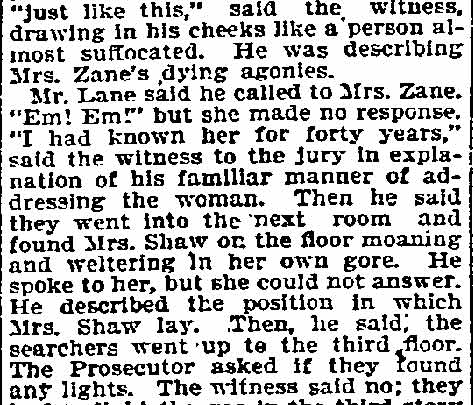
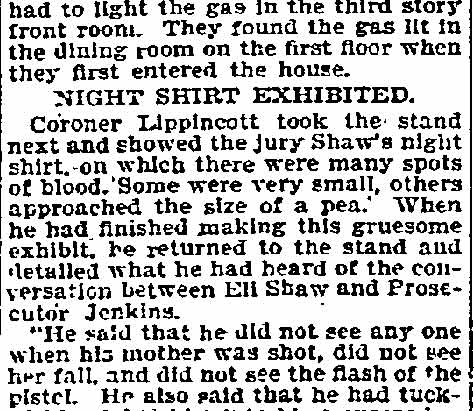
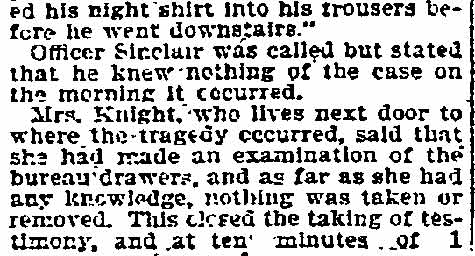
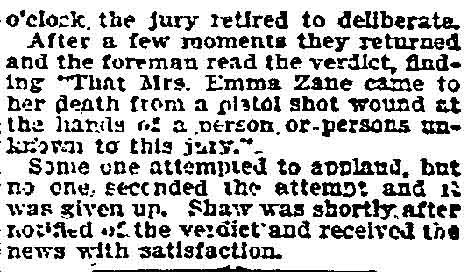
Philadelphia Inquirer, October 30, 1897 — Emma Zane, Eli Shaw, Wilson H. Jenkins, Henry S. Scovel, Dr. William S. Jones, Dr. A. Haines Lippincott, Harry Delameter, O. Glen Stackhouse, John Foster, H. Frank Pettit, James E. Tatem, John Painter, Charles M. Lane, Elwin Steen, John Sinclair, Mrs. Anna Knight
Philadelphia Inquirer — December 22, 1897
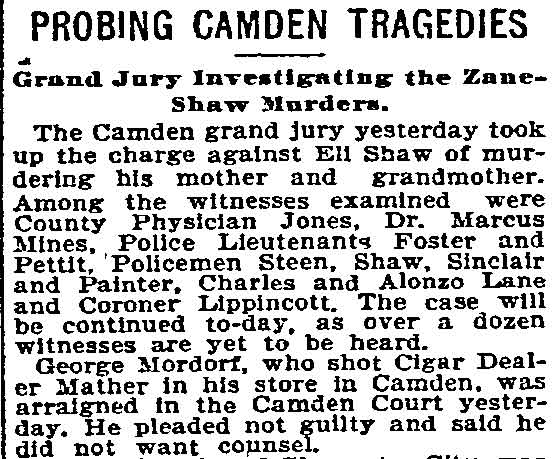
Philadelphia Inquirer, December 22, 1897 — Eli Shaw, Dr. William S. Jones, Dr. Marcus K. Mines, Dr. A. Haines Lippincott, John Foster, H. Frank Pettit, John Painter, Charles M. Lane, Albert Shaw
Here’s Camden’s Finest, With Whiskers, in 1898
Camden Courier-Post —
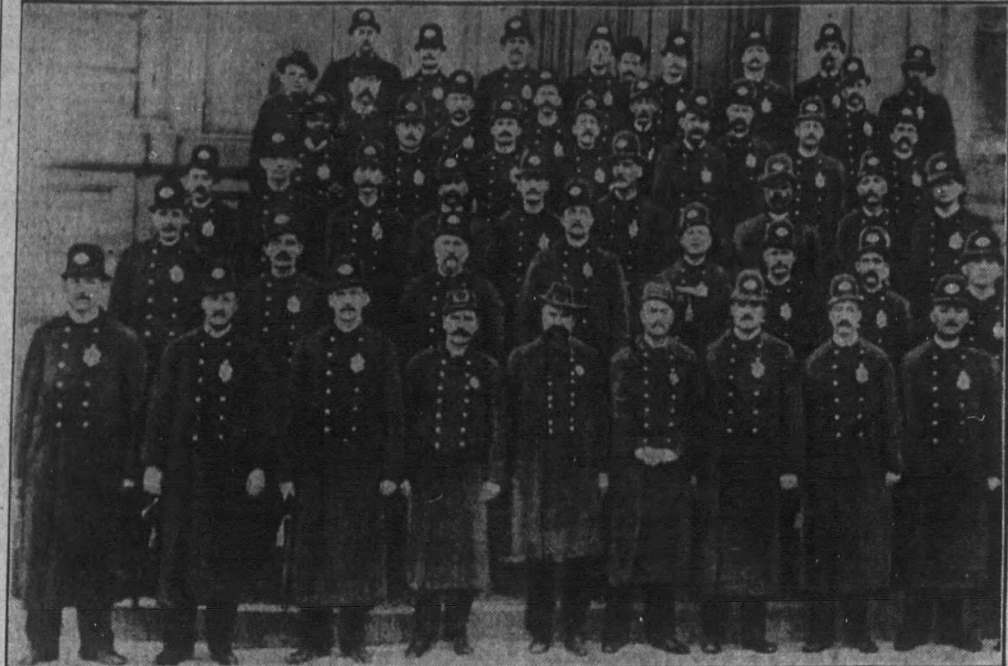
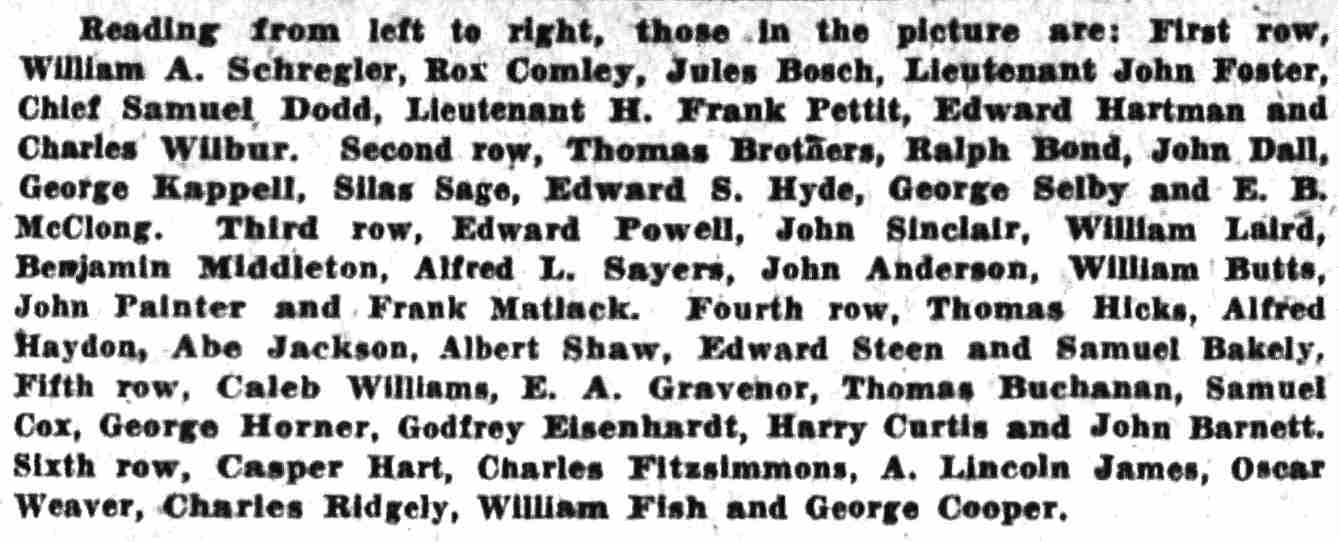
Harry Mines, not named above, is in the first row between H. Frank Pettit and Edward Hartman. In the fifth row, at the far right, “John Barnett” was a guess on the part of A. Lincoln James. Another person guessed George Johnson. Both were wrong and it is not known who that policeman is.
Philadelphia Inquirer — January 16, 1898
Jack the Hugger
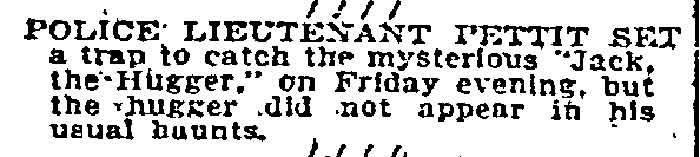
Philadelphia Inquirer, January 16, 1898 — “Jack the Hugger”
Philadelphia Inquirer — March 15, 1898
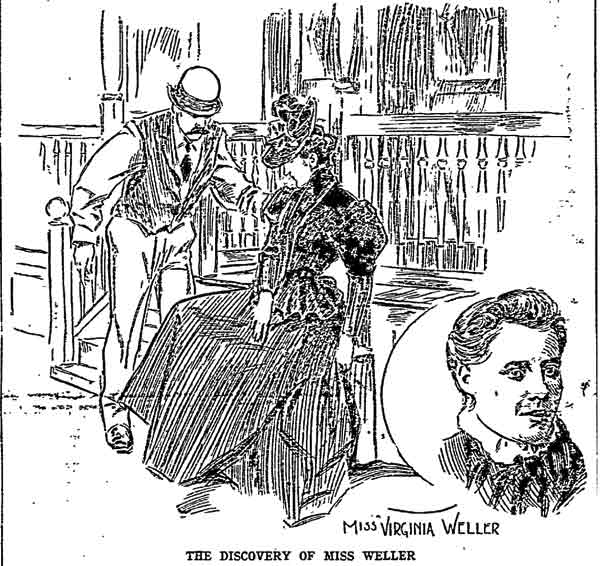
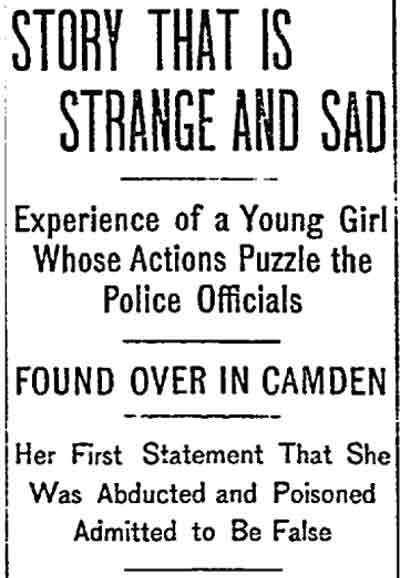
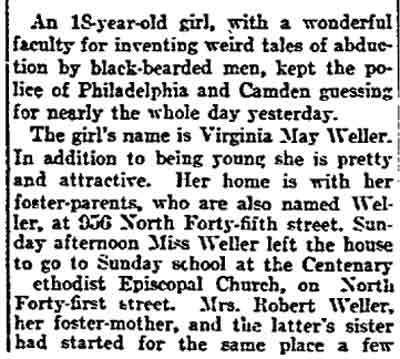
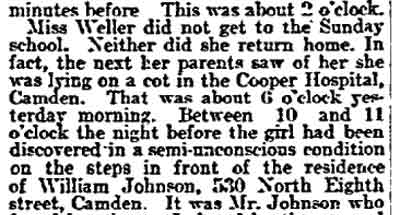
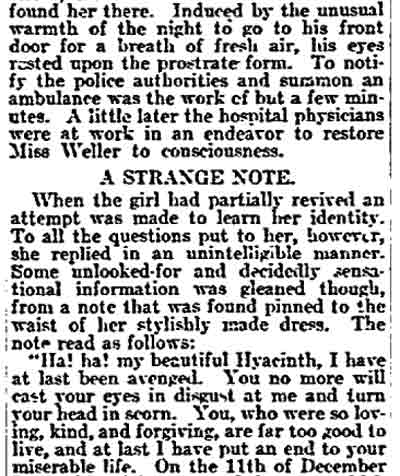
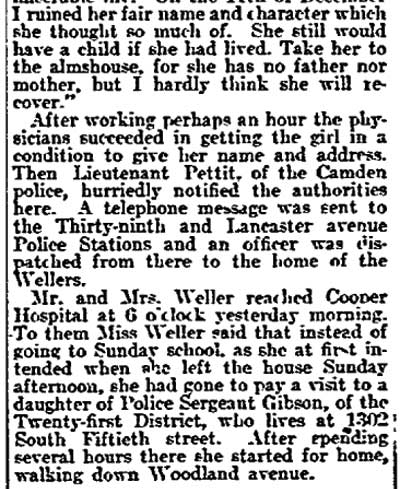
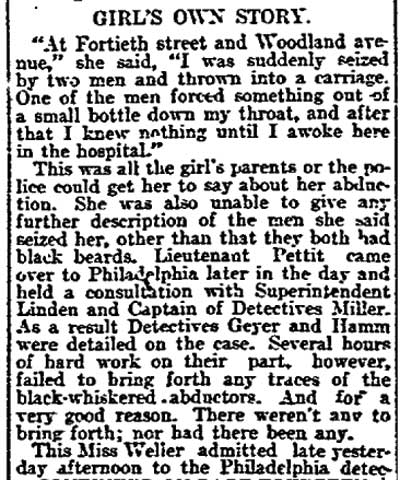
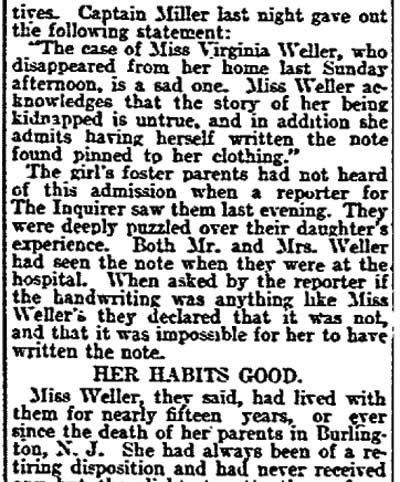
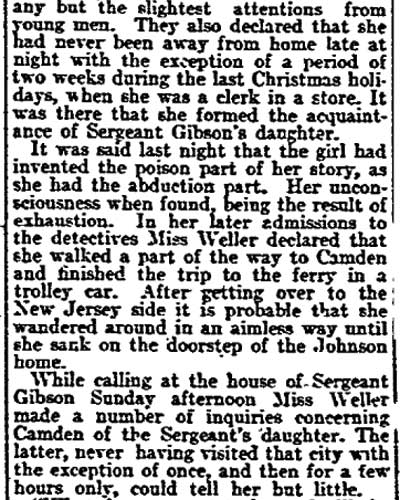
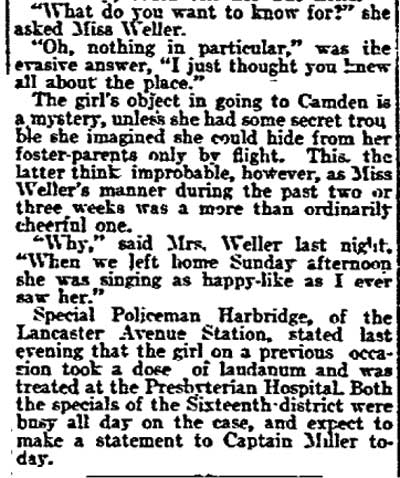
Philadelphia Inquirer, March 15, 1898 — Emma Zane, Sarah Shaw, Eli Shaw, Wilson H. Jenkins, Line Street, Samuel Dodd, John Foster, John H. Beard, Edward Zane, Harry G. Geesey, John J. Doonan, Charles Kleeman, Stockton Park Hotel, West Jersey Hotel, John Polk, East Camden, Foster S. Zane, Beckett Street, Charles Higgins, Howard Ross, South 3rd Street, Pine Street, O.B. Blizzard, James H. Carey, Liberty Alley, Dr. A. Haines Lippincott, William A. Husted, Thomas Benkert, Martin J. O’Brien, William Anderson, Charles Folwell, John Irwin, Rev. John W. Marshall, Broadway M.E. Church, Rev. William A. Massey, Wiley M.E. Church, James Hough, Policeman Albert F. Meyer
Camden’s Council Guarded by Police
Philadelphia Inquirer —
Their Services Were Not Needed, However, as the Crowd Was Orderly
A BRIEF SESSION HELD
President Taylor Names Four Committees—Roberts and Shafer Were Absent
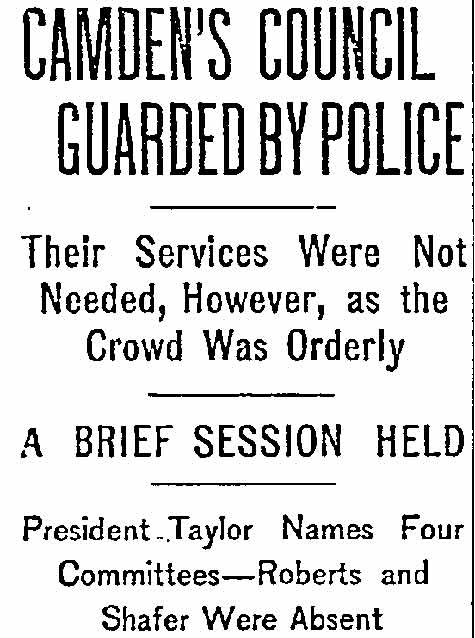
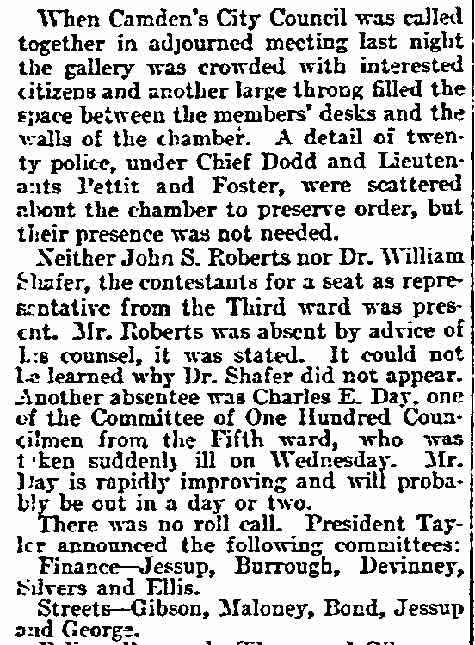
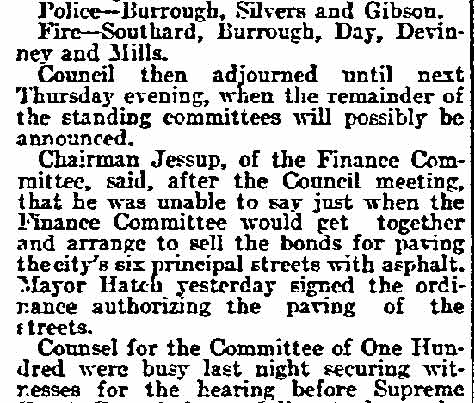
Camden's Council Guarded by Police
CAMDEN'S COUNCIL GUARDED BY POLICE
Their Services Were Not Needed, However, as the Crowd Was Orderly
A BRIEF SESSION HELD
President Taylor Names Four Committees—Roberts and Shafer Were Absent
Philadelphia Inquirer — April 4, 1898
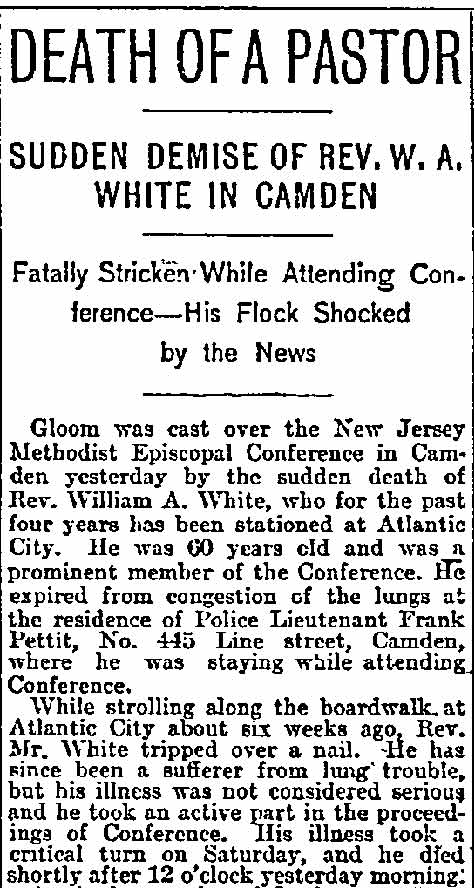
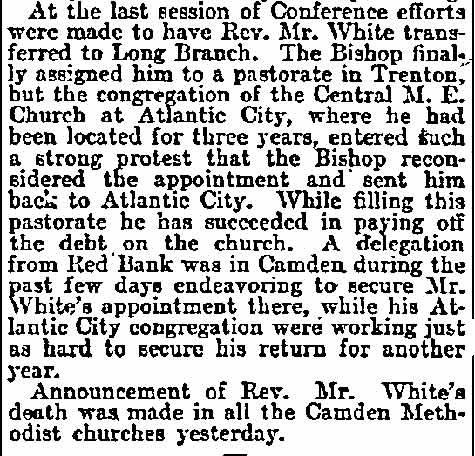
Philadelphia Inquirer, April 4, 1898 — Rev. William A. White, H. Frank Pettit, Line Street
Camden to Go Dry
Philadelphia Inquirer —
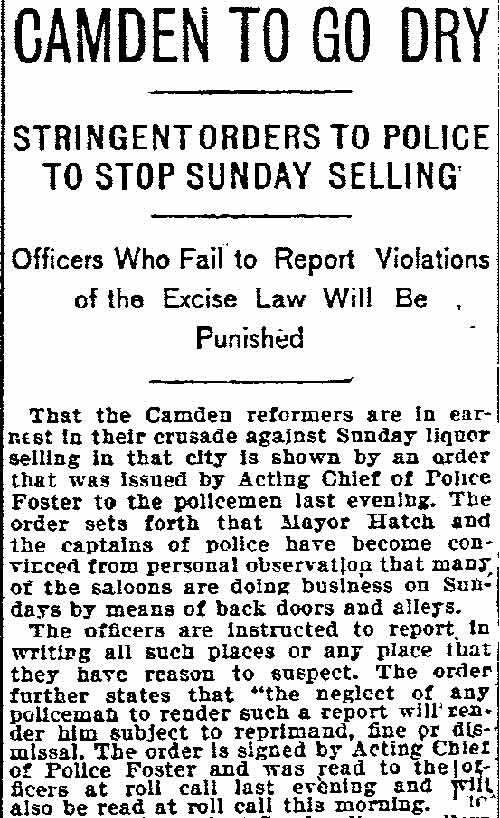
That the Camden reformers are in earnest in their crusade against Sunday liquor selling in that city is shown by an order that was issued by Acting Chief of Police Foster to the policemen last evening. The order sets forth that Mayor Hatch and the captains of police have become convinced from personal observation that many of the saloons are doing business on Sundays by means of back doors and alleys.
The officers are instructed to report in writing all such places or any place that they have reason to suspect. The order further states that “the neglect of any policeman to render such a report will render him subject to reprimand, fine or dismissal.” The order is signed by Acting Chief of Police Foster and was read to the officers at roll call last evening and will also be read at roll call this morning.
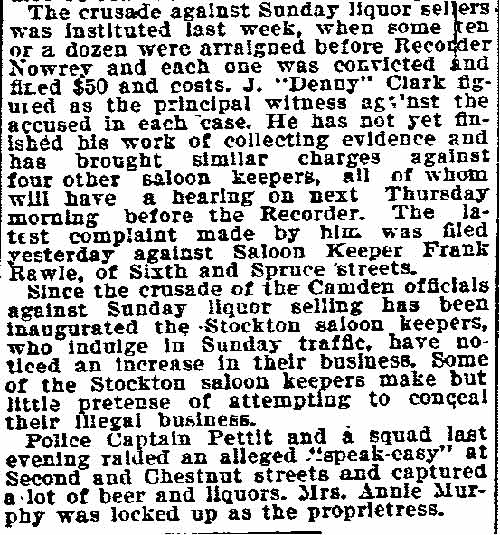
The crusade against Sunday liquor sellers was instituted last week, when some ten or a dozen were arraigned before Recorder Nowrey and each one was convicted and fined $50 and costs. J. “Denny” Clark figured as the principal witness against the accused in each case. He has not yet finished his work of collecting evidence and has brought similar charges against four other saloon keepers, all of whom will have a hearing on next Thursday morning before the Recorder. The latest complaint made by him was filed yesterday against Saloon Keeper Frank Rawle, of Sixth and Spruce streets.
Since the crusade of the Camden officials against Sunday liquor selling has been inaugurated the Stockton saloon keepers, who indulge in Sunday traffic, have noticed an increase in their business. Some of the Stockton saloon keepers make but little pretense of attempting to conceal their illegal business.
Police Captain Pettit and a squad last evening raided an alleged “speak-easy” at Second and Chestnut streets and captured a lot of beer and liquors. Mrs. Annie Murphy was locked up as the proprietress.
Camden Daily Telegram — February 17, 1899
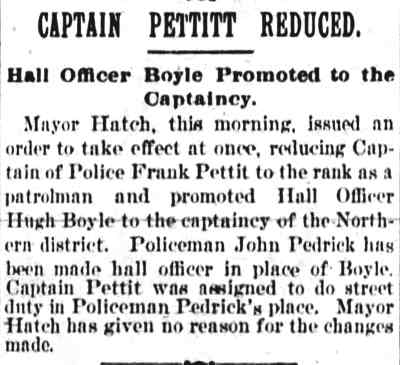
Camden Daily Telegram, February 17, 1899 — Cooper B. Hatch, H. Frank Pettit, John Pedrick, Hugh Boyle
Philadelphia Inquirer — March 5, 1899
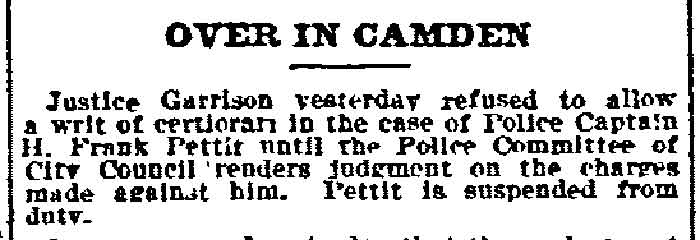
Philadelphia Inquirer, March 5, 1899 — Charles G. Garrison, H. Frank Pettit
In Police Dragnet
Philadelphia Inquirer —
Successful Raid on an Alleged Pool Room in Camden
SEVEN MEN CAPTURED
Keefer, Who Says He Spent His Employers’ Money in the Place, Identifies the Prisoners
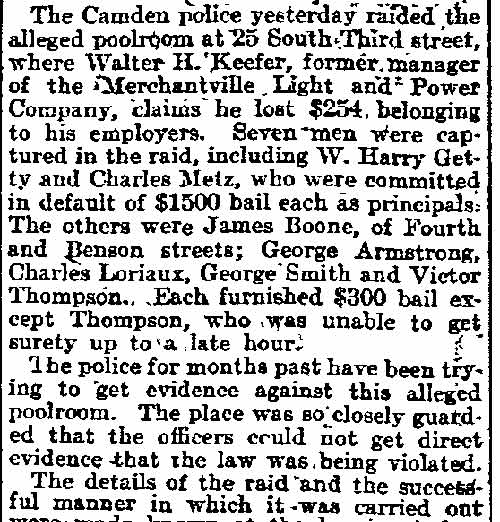
The Camden police yesterday raided the alleged poolroom at 25 South Third street, where Walter H. Keefer, former manager of the Merchantville Light and Power Company, claims he lost $254 belonging to his employers. Seven men were captured in the raid, including W. Harry Getty and Charles Metz, who were committed in default of $1500 bail each as principals. The others were James Boone, of Fourth and Benson streets; George Armstrong, Charles Loriaux, George Smith and Victor Thompson. Each furnished $300 bail except Thompson, who was unable to get surety up to a late hour.
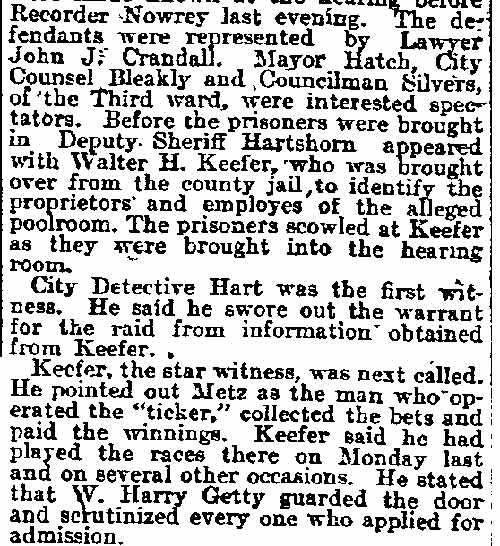
The police for months past have been trying to get evidence against this alleged poolroom. The place was so closely guarded that the officers could not get direct evidence that the law was being violated. The details of the raid and the successful manner in which it was carried out were made known at the hearing before Recorder Nowrey last evening. The defendants were represented by Lawyer John J. Crandall. Mayor Hatch, City Counsel Bleakly and Councilman Silvers, of the Third ward, were interested spectators. Before the prisoners were brought in Deputy Sheriff Hartshorn appeared with Walter H. Keefer, who was brought over from the county jail to identify the proprietors and employes of the alleged poolroom. The prisoners scowled at Keefer as they were brought into the hearing room.
City Detective Hart was the first witness. He said he swore out the warrant for the raid from information obtained from Keefer.
Keefer, the star witness, was next called. He pointed out Metz as the man who operated the “ticker,” collected the bets and paid the winnings. Keefer said he had played the races there on Monday last and on several other occasions. He stated that W. Harry Getty guarded the door and scrutinized every one who applied for admission.
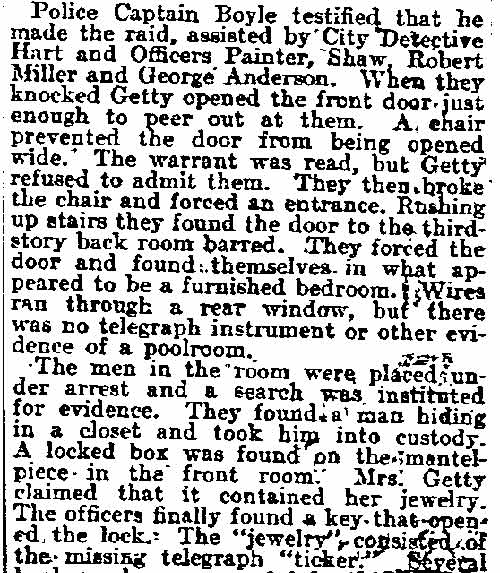
Police Captain Boyle testified that he made the raid, assisted by City Detective Hart and Officers Painter, Shaw, Robert Miller and George Anderson. When they knocked Getty opened the front door just enough to peer out at them. A chair prevented the door from being opened wide. The warrant was read, but Getty refused to admit them. They then broke the chair and forced an entrance. Rushing up stairs they found the door to the third-story back room barred. They forced the door and found themselves in what appeared to be a furnished bedroom. Wires ran through a rear window, but there was no telegraph instrument or other evidence of a poolroom.
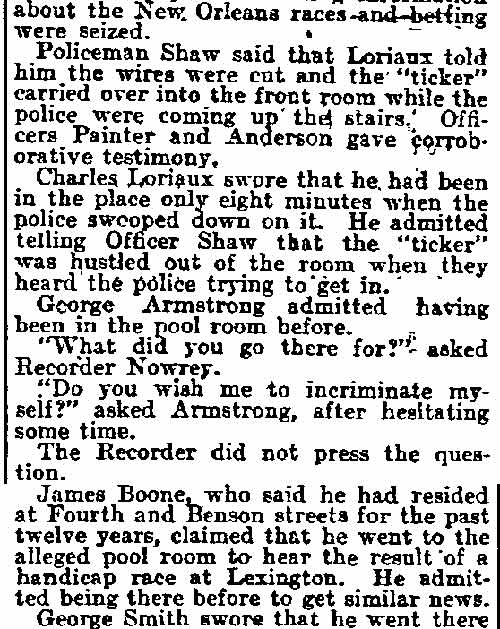
The men in the room were placed under arrest and a search was instituted for evidence. They found a man hiding in a closet and took him into custody. A locked box was found on the mantelpiece in the front room. Mrs. Getty claimed that it contained her jewelry. The officers finally found a key that opened the lock. The “jewelry” consisted of the missing telegraph “ticker.” Several about the New Orleans races and betting were seized.
Policeman Shaw said that Loriaux told him the wires were cut and the “ticker” carried over into the front room while the police were coming up the stairs. Officers Painter and Anderson gave corroborative testimony.
Charles Loriaux swore that he had been in the place only eight minutes when the police swooped down on it. He admitted telling Officer Shaw that the “ticker” was hustled out of the room when they heard the police trying to get in.
George Armstrong admitted having been in the pool room before.
“What did you go there for?” asked Recorder Nowrey.
“Do you wish me to incriminate myself?” asked Armstrong, after hesitating some time.
The Recorder did not press the question.
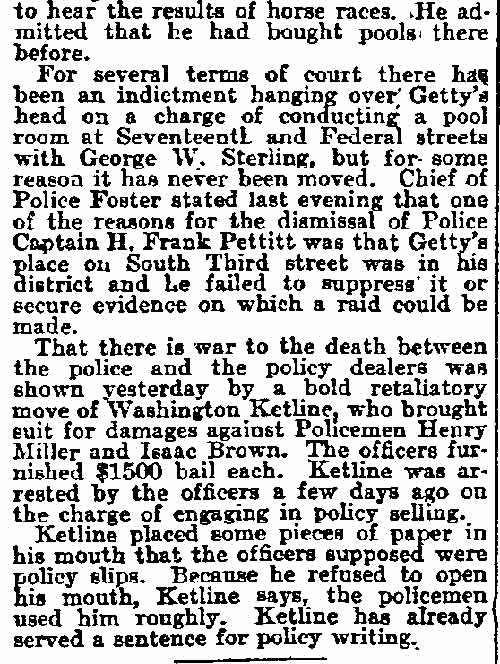
James Boone, who said he had resided at Fourth and Benson streets for the past twelve years, claimed that he went to the alleged pool room to hear the result of a handicap race at Lexington. He admitted being there before to get similar news.
George Smith swore that he went there to hear the results of horse races. He admitted that he had bought pools there before.
For several terms of court there has been an indictment hanging over Getty’s head on a charge of conducting a pool room at Seventeenth and Federal streets with George W. Sterling, but for some reason it has never been moved. Chief of Police Foster stated last evening that one of the reasons for the dismissal of Police Captain H. Frank Pettitt was that Getty’s place on South Third street was in his district and he failed to suppress it or secure evidence on which a raid could be made.
That there is war to the death between the police and the policy dealers was shown yesterday by a bold retaliatory move of Washington Ketline, who brought suit for damages against Policemen Henry Miller and Isaac Brown. The officers furnished $1500 bail each. Ketline was arrested by the officers a few days ago on the charge of engaging in policy selling.
Ketline placed some pieces of paper in his mouth that the officers supposed were policy slips. Because he refused to open his mouth, Ketline says, the policemen used him roughly. Ketline has already served a sentence for policy writing.
Philadelphia Inquirer — April 23, 1917
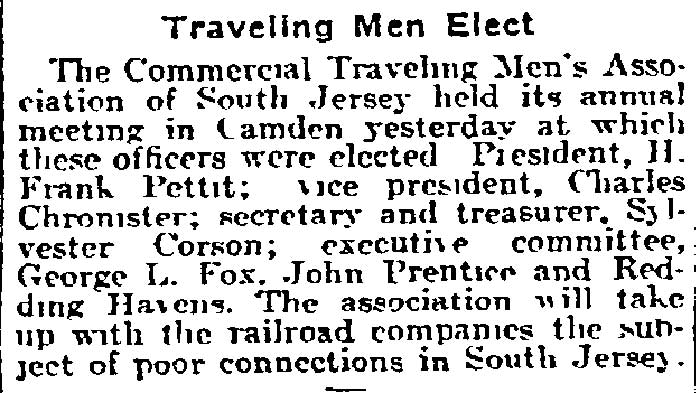
Philadelphia Inquirer, April 23, 1917 — Charles Chronister, Sylvester Corson, George L. Fox, John Prentice, Redding Havens, H. Frank Pettit