East Camden
This page is a work in progress about the neighborhood that has been my home on and off (mostly on!) since 1976. Originally a part of Stockton Township, the area that is now known as East Camden was merged into Camden proper in 1899 along with the neighborhood now known as Cramer Hill. It included the villages of Wrightsville, Stockton, and Rosedale, which lay along Federal Street. The area was served by the Pavonia Railroad Station, located along the railroad line at 27th Street. The East Camden and Cramer Hill area is border by the Cooper and Delaware Rivers, and Pennsauken Township.
Stockton Township had a large park that lay a block south of Federal Street and Marlton Avenue. This park, originally known as Stockton Park, had a long and varied history, and over the years has served as a rifle range, a park, the site of a private zoo, Depression-era family vegetable gardens, and, since 1954, the site of the McGuire Gardens public housing project.
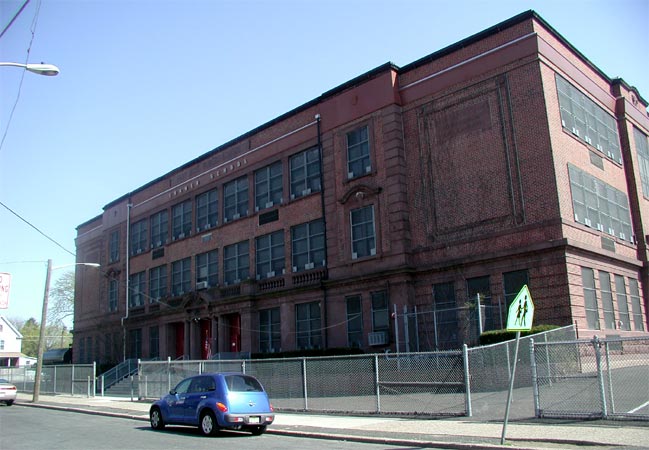
Real estate developers such as J. Howard Kirkbride and Alfred Cramer brought large tracts of land, including parts of the Thomas H. Dudley estate, and laid out affordable building lots, which gave the area its residential character. Much of this activity occurred in the 1890s and early 1900s. Schools built in these times included the Dudley, Garfield, and Cramer Elementary schools. The Cramer school, built in 1913, also served as a junior high school at different times.
Leon Todd developed the neighborhood between Westfield and Rosedale Avenues, along the railroad tracks that bordered the Dudley estate, below North 33rd Street in the mid 1920s. Both Todd and J. Howard Kirkbride built homes in both Stockton/East Camden and Pennsauken Townships, and if it wasn’t for municipal street signs one would not know where East Camden end and the Pennsauken neighborhoods begin, especially in the area near 36th Street and Camden Avenue. The Octavious Catto School was built in late 1920s for Negro children, as Camden’s Elementary schools were then segregated. The segregation of the elementary schools defied even the logic of those times, as the upper grades had always been integrated.
A similar development to the Westfield and Rosedale Avenues project was built between Federal Street and Crescent Boulevard (then State Highway 25, later US Route 130) along Terrace Avenue around the same time. The growth in East Camden caused the city to build Woodrow Wilson High School on Federal Street across from Dudley Grange in the early 1930s. The Federal government stepped in during the Depression, building the Westfield Acres homes at Westfield and Rosedale Avenues, with the first families moving in 1938, and the Henry H. Davis Elementary School was built as a companion to this site.
More development occurred when Baird Boulevard was linked to Federal Street, and another period of building activity occurred immediately before and after World War II, ending in the 1950s. Another public housing project, the Peter J. McGuire Gardens, was built in the early 1950s, on the site of the old Stockton Park. The new Francis X. McGraw Elementary School, named for Congressional Medal of Honor awardee Francis X. McGraw, was also built during this period, at Dudley and Fremont Streets.
Industrial development occurred along the railroad tracks. One of the largest facilities was a warehouse at North 36th and Pleasant Street that was used for many years by the Campbell Soup Company.
During the 1960s and 1970s, as the economic fortunes of Camden declined, so did new construction. A new junior high school was built adjacent to the McGraw School on Dudley, this school was simply known as East Camden Middle School. Two high rise apartment buildings, Westfield Towers and John F. Kennedy Towers, were built adjacent to the two public housing sites during this time.
East Camden has seen its ups and downs. For years it was one of Camden’s more prosperous and stable areas, until being ravaged by drugs, poverty, and political corruption in the 1980s and 1990s. The neighborhood is currently undergoing a rebirth, in great part through the efforts of the Housing Authority of the City of Camden and the St. Joseph’s Carpenters Society, and an influx of Asian and Mexican immigrants who have opened up many small businesses in the area.
This page will include articles and pictures about the past and present of East Camden.
As with most everything else on this web-site, it’s a work in progress, and I welcome your participation—
Phil Cohen
Camden NJ
Videos of Life in East Camden
Courtesy of Sandra Deady Piesco
Henry H. Davis School — 1952
Do You Recognize Anyone Here?
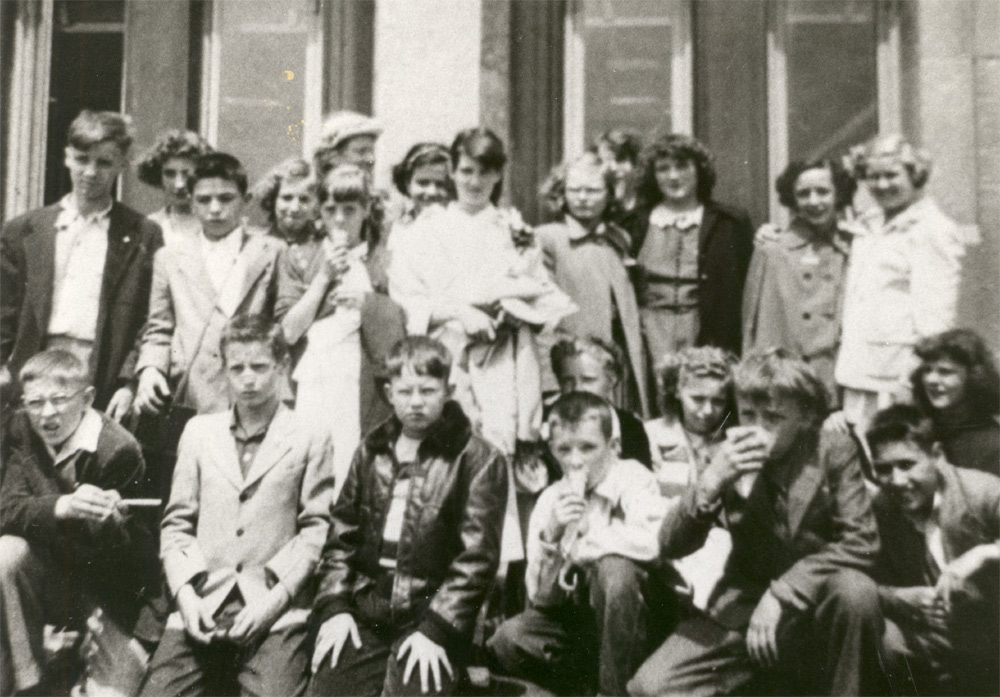
Henry H. Davis School — Miss Ada Haley’s 5th Grade Class, 1952. July 2006 — A reunion is being planned for later in the year. If you recognize anyone or are in this picture yourself, please e-mail Bob Bartosz.
Maps of East Camden
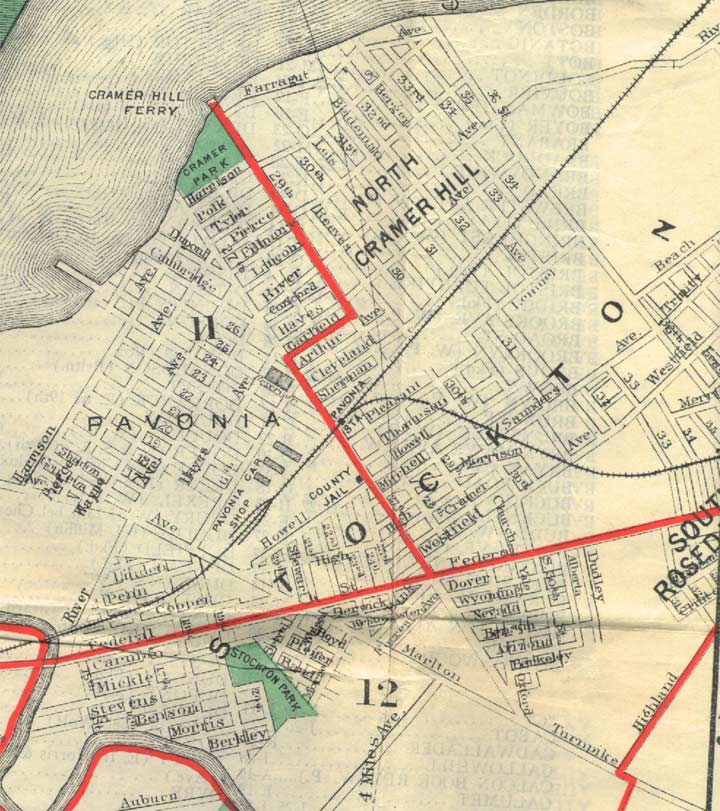
This 1914 map of East Camden shows the neighborhood in the days before the Ben Franklin Bridge and Admiral Wilson Boulevard were built. Of notes are the streets that extend from Federal Street all the way down to the Cooper River. This area was eliminated to make way for the Admiral Wilson Boulevard.
Of interest is Stockton Park, now the approximate site of the Kennedy Tower and Peter J. McGuire public housing projects. Also of interest is that several streets off of 27th & Federal Street still carried names from the Stockton Township days.
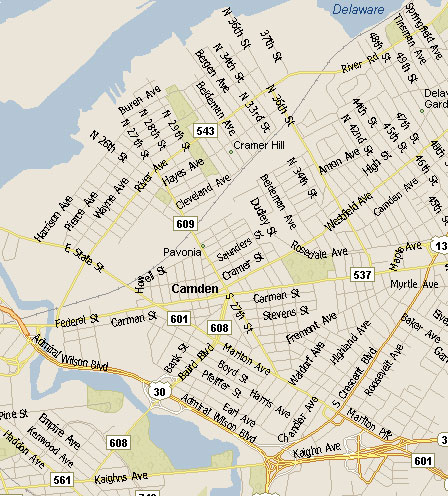
East Camden Map, 2002
Bird’s Eye View of Cooper’s River North from Forest Hill Park
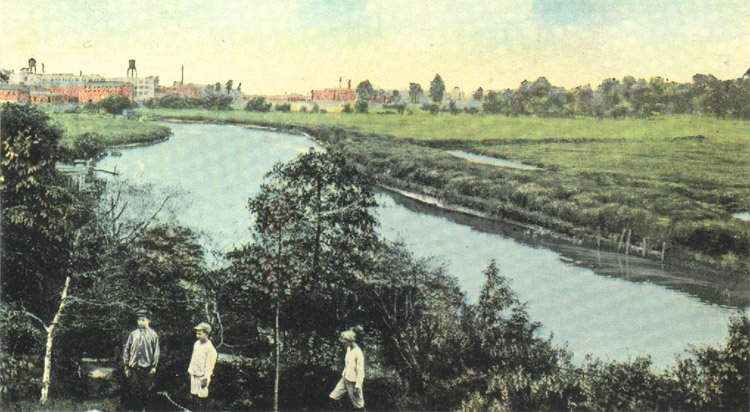
Needless to say, everything on the right side of the river, the north side of the Cooper River, is East Camden. This picture is roughly 15–20 years prior to the building of the Delaware River (Ben Franklin Bridge) and the building of the Admiral Wilson Boulevard. This picture of the Cooper River was taken from a spot along the river roughly behind the site of the present-day Camden High School.
The City Commission of the City of Camden on December 1, 1927 changed the name of Forest Hill Park to Farnham Park, in appreciation of the late Levi E. Farnham, City Engineer of Camden for thirty years.
Stockton Annexed Against Protest Of Democrats
Camden Courier-Post —
Fifty years ago, the old town of Stockton was annexed to the City of Camden over the protests of Democratic members of the town council.
But a Republican Legislature approved a bill introduced by former Justice Frank T. Lloyd on March 24, 1899. He was a member of the Assembly at the time. He resided then in the structure now occupied by the Sheltering Arms Home at Eighteenth street and River avenue.
The town of Stockton had been in existence five years when the annexation took place. Merchantville and Pennsauken township were part of the original Stockton Township with the present East Camden area. Merchantville received its charter as a borough 75 years ago this month. In 1892. Pennsauken township withdrew, from the. township to become a separate municipality.
For two years East Camden remained in the township. In 1894 Alfred Cramer, founder of Cramer Hill, launched a movement to create the town of Stockton and the first governing body was elected. Edward Dudley, then a leading lawyer, was elected councilman-at-large, which entitled him to preside as mayor. William S. Abbott, a lifelong resident, became became clerk.
The town was divided into three wards. Fred Voigt and Justice Lloyd also served with Cramer and Dudley in the town council. The town hall was on the triangle, at Twenty-seventh and Federal Streets.
Albert Plum and William C. Reeves were justices of the peace. Samuel M. Jaquillard served on the Board of Freeholders as did W.O. Buck and Joseph Funfer. Charles E. Allen was a member of the Board of Education.
After the annexation Abbott was elected to Camden City Council. Others elected were Dr. William H. Kensinger, now a resident of Florida; Frederick S. von Nieda, Frederick H. Finkeldey, president of the first Playground Commission; Arthur R, Gemberling, now of Woodstown.
Other active citizens were Lemuel D. Horner, undertaker; Dr. H. F. Hadley, Jacob Bendinger, proprietor of the Rosedale Inn, and Walter L. Tushingham, former vice-president and general manager of the Courier-Post Newspapers.
Intersection of North 27th Street & Federal Street, as Seen from Baird Boulevard
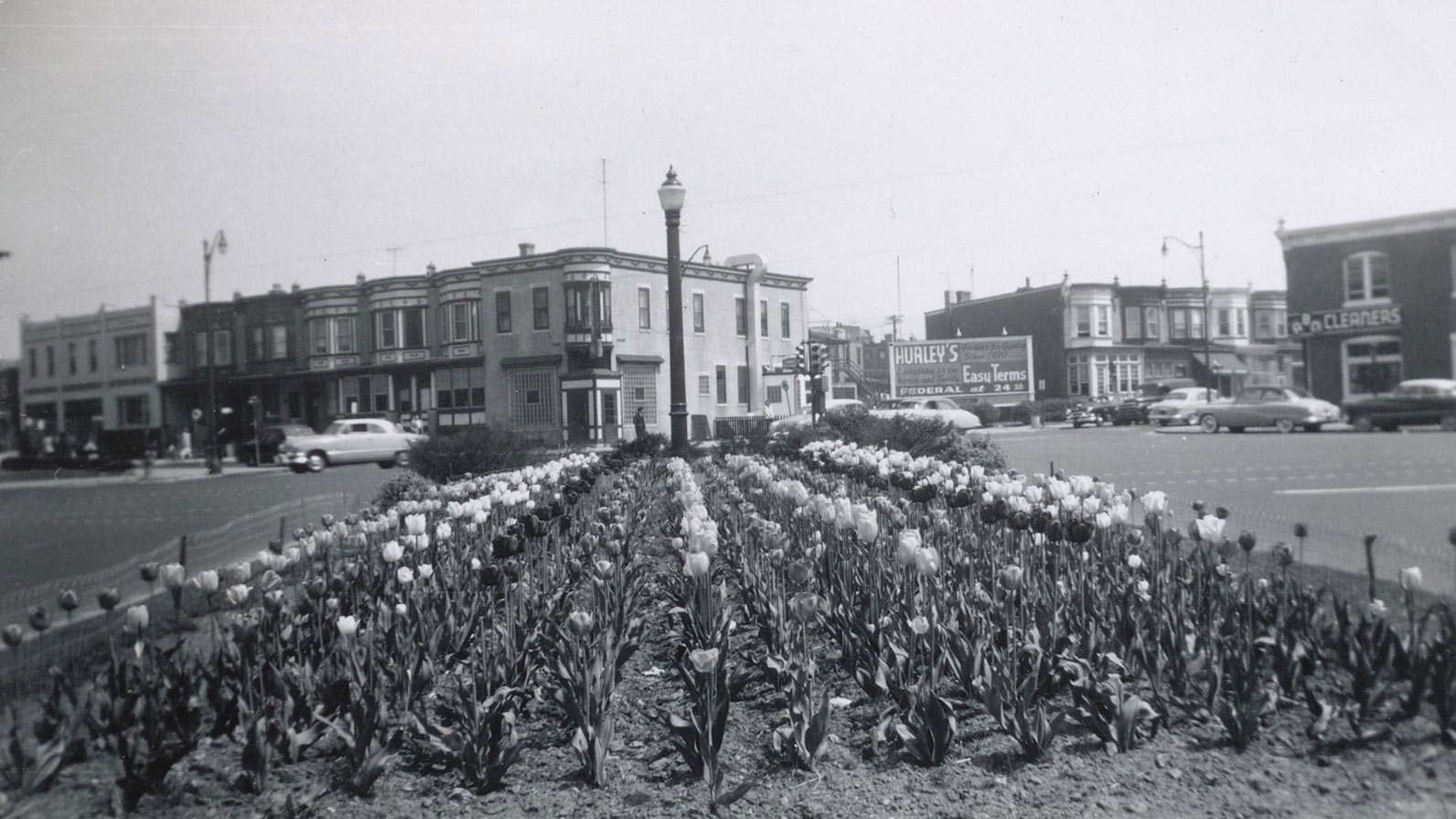
You really do have to click on the image and see this one enlarged to appreciate it. Rows, and rows of tulips on Baird Boulevard? When those who were there said Camden was beautiful, this picture shows they were not kidding! If only this one had been in color!
Thanks to Curtis Parrish for furnishing this picture.
Susan Leviton’s Memories of East Camden
In the summer of 2009 Susan Leviton, who with her parents Herb and Lillian Leviton and sister Mindy Leviton lived at 2552 Baird Boulevard from 1953 through 1968 sent a series of e-mails about East Camden.
Yes, Camden was indeed beautiful. We bought our home at 2552 Baird Boulevard from Henry Schriebstein and his wife in 1953. My parents, Herbert and Lillian Leviton, my sister Mindy and I lived at 2552 Baird Boulevard from 1953 to the fall of 1968.
My memory of our block – and what made it The Boulevard – was the gorgeous green swath down the middle that was lined with a double row of majestic elm trees, all removed in the 60’s because of Dutch Elm Disease. The curb side of the street was lined with maples.
Our next door neighbors (2550) were the Hillmans, who had an apartment above their home and the Nancy Briggs Dance Studio below them and around the corner (Grand Avenue) On the other side (2554) Gert Lorey was joined by her brother-in-law Jules Clayman, his wife Leah, and their son Henry, after Gert’s husband passed away. The Tweedy’s sold their house (2556) to a man named Mr. Heaton [John H. Heaton –PMC] in the mid 50’s.
Behind our block of Baird Boulevard was “The Lot” as we called it, an empty triangular space that was formed where Baird, Eutaw, and Grand backed up. For several summers in the late 50’s, the city ran a day-camp program, built around swings and a corrugated metal-roofed open-sided shelter with a picnic table inside. The first year, our neighbor Lucille Leonard was one of the two counselors, and it was a great thrill to watch her and her co-counselor haul the trunk of art supplies and games out of her basement every morning to drag to The Lot. The space was hardly beautiful, with more dust than vegetation, and when it rained, we had to hold tight to our shoes because it became a sucking swamp of ochre clay mud!
The alley behind our homes and between the houses and the free-standing garages was called Amelia Terrace. What a hoot! It was an alley. It had such a sweet name! Early each spring, an old man (in my memory he was always old) would come walking down the alley with a load of wood on his shoulder hawking, “Clothes Props! Get yer Clothes Props!” It was a sing-song chant that was as much part of spring as the robins. The housewives would check the status of our old wooden props and buy new ones as needed. NOBODY had a clothes dryer! The Clayman’s next door still had a wringer washer in the basement!
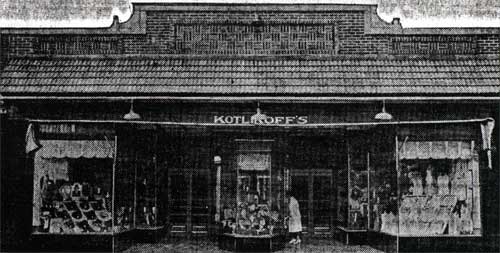
Kotlikoff’s was the only authorized place to get the awful gym suits we were required to wear in junior high and high school. While most of the girls had the store provide machine embroidery of their names, my mother insisted on sewing my name by hand. There was only one other girl whose mom did the same for her. Small comfort.
The walk up to Kotlikoff’s on Federal Street was also a regular pilgrimage for a Mothers’ Day gift. Sweet memories of good clothing and extremely patient assistance.
Ruttenberg’s, I believe that was the name. It was a large hardware store in East Camden on a lot around 27th and Federal [Ruttenberg Hardware at 2636 Federal –PMC]. It burned to the ground one evening around 1959. Shelves of paint and other flammables made the fire quite spectacular and terrifying. After the debris was removed, the lot remained empty for years, but there were areas where you could still walk on green and white linoleum tiles that remained.
We were just a twig on the much larger Jaspan family tree. Camdenite Mamie Lieberman and her husband (Lou?) were Jaspan cousins on my father’s side. Mamie started the first ‘cancellation shoe store’ in the country, I think, in their home, during WWII. The business grew to support all of their children’s families and eventually occupied a store on Route 70 across from what became Loehmann’s. Mamie’s house was near the bridge, and when we were kids we would occasionally go there for shoes. The ENTIRE house was full of shoes – they were even stacked in the bathroom!
Anyway, my father’s family came from Lithuania early in the century, settled in Camden and welcomed many new immigrants for whom my dad’s oldest sister Gussie would cook since my grandmother died when Dad was three, leaving 5 girls and a little boy. My grandfather, Morris, dealt in cattle, I was told.
Herb Leviton, my dad, began working at about age 14 and for many years managed a luncheonette across from RCA Victor. It was owned by one of his pals, Bobby Brest. Dad had a gift for music, although he never had the advantage of learning to play an instrument. He delighted in meeting the recording stars who would stop in between sessions at RCA. He sometimes rummaged among the rejects tossed out ‘the back door’ when a recording session went badly. Sadly, his most precious relics were stolen, but I remember seeing and hearing RCA records that were cut on one side and stamped with a pattern on the flip side, never to be marketed. There was one of Bing Crosby forgetting the words and adlibbing almost an entire side. And another with Crosby’s voice cracking towards the end, an expletive, and then no more. Amazing.
Empire Glass Works was my father’s business once he returned from service during the war. He had a shop at 1112 Mount Ephraim Avenue, between Kaighn Avenue and Sycamore Street where he installed auto glass and made custom glass tabletops. It was a rented space. In the 1970s he moved across the street to 1135 Mount Ephraim Avenue, which he had purchased.
Cramer School, in the mid-50’s was both an elementary and junior high school. There was no auditorium, so when we had a school-wide assembly, the kindergarten and first grade children carried our little wooden chairs into the gym and sat “three bottoms in two chairs.”
The principal, Mr. Showalter followed us to Davis Junior High [the Henry H. Davis School] when Cramer became just an elementary school again. He had a gruff voice, but was really a sweetie, and in the spring he went door-to-door selling light bulbs for the Lion’s Club!
In the mid 60’s, Mad Magazine ran a visual parody of the song ‘America the Beautiful’, and a shot of Admiral Wilson Boulevard looking east, featuring the Admiral Bar and Liquor Store, Oasis Motel, go-go dancing and the sign to Baird Boulevard was the image that illustrated ‘the fruited plains.’
I’d love to see what people remember of Marlton Avenue in East Camden, also. Kiddieland [321 Marlton Avenue] was a children’s clothing store… I’ll think of the family that ran it. Of course, Famous Delicatessen [278 Marlton Avenue]; who could forget that family?! Sisters Fagie (Lou), gum-chewing Rosie in her fishnet stockings at the cash register, and ____? (the chattering redhead at the bread counter). Son Jerry who sliced the lox and corned beef thin and picked the perfect well-done pickle from the barrel. Moishe Ostroff the butcher [280 Marlton Avenue], and the pharmacist whose name I can’t recall who would bottle 10 cents worth of Coke Syrup for stomach trouble [Marlton Drug Company at 280 Marlton Avenue]. We had a family-owned 5 & 10 that became Binkley’s, a dressmaker, the J & L luncheonette at the corner [J&L Shoppe at 300–302 Marlton Avenue], which served as what we’d now call a convenience store (“Run up and get me a half gallon of milk and a pack of Winston’s, Susie.”), and in the mid-60’s Pizza King Tarantini [349 Marlton Avenue] opened farther up the block, and Camden became the home of the Panzarotti! That block of Marlton Avenue also had a fine bakery across the street from Famous [Marlton Bakery at 329 Marlton Avenue]. Children were always given a cookie.
To be continued!
Pavonia Railroad Station — 1908
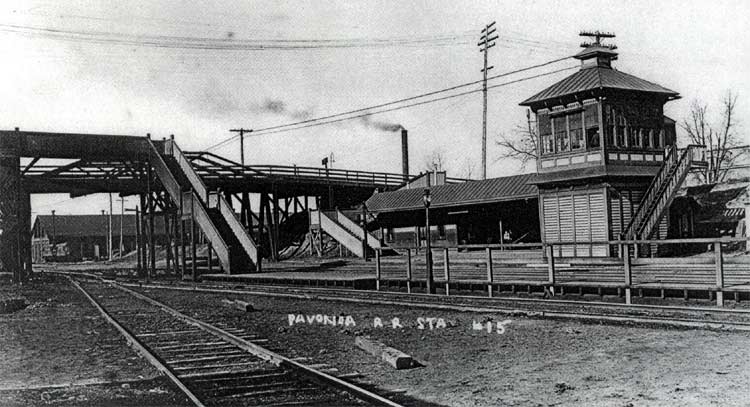
Pavonia Railroad Station, 27th & Federal Street, 1908
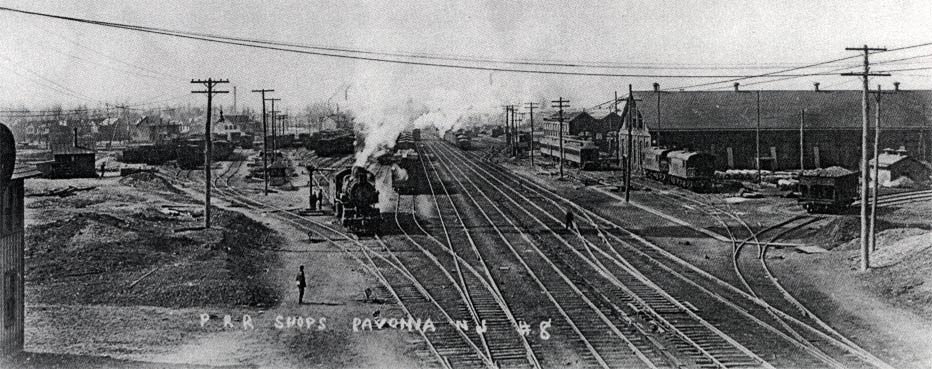
Pavonia Car Shop, Pennsylvania Rail Road, 1908 — As seen from River Road
Camden Baseball Tavern Tournament Team — Early 1920s
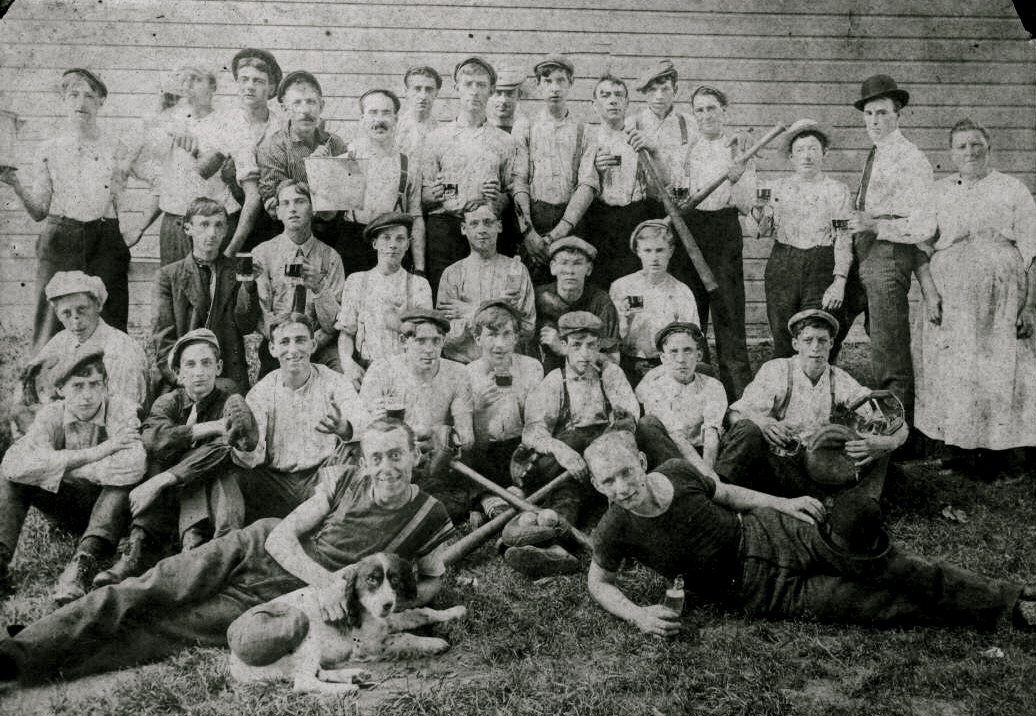
A photo of what appears to be a local Camden baseball tavern tournament team. Early 1920’s. My grandfather, Charles David Letts Sr. is lying on the ground with the open bottle. The rest of the males in the Letts family have always tried to follow his example. The picture looks like a cross between the Bowery Boys and the Katzenjammer Kids. — Edward Letts, January 2011
Olga’s Diner
Olga’s Diner
24th & Federal Street — 1956
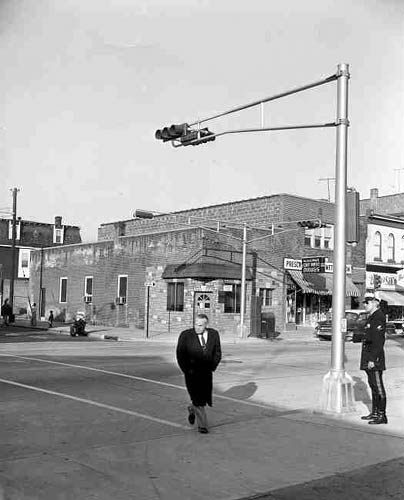
24th & Federal Street, 1956
Jacob Naden Business Card
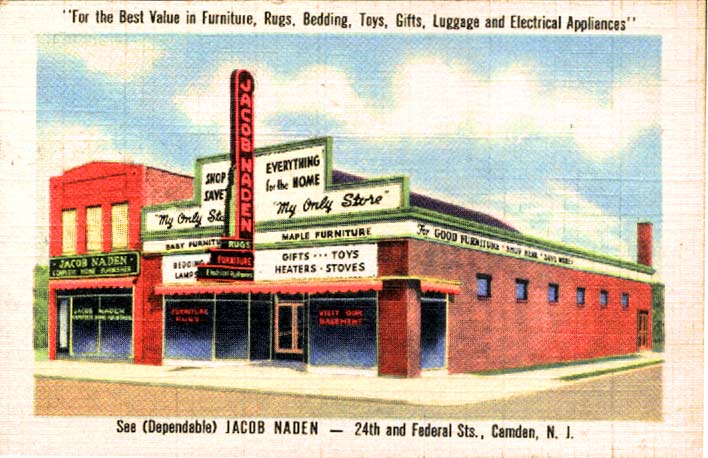
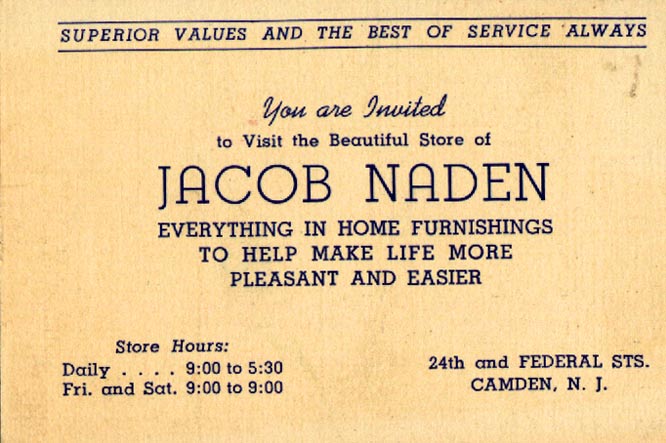
Business Card for the 24th & Federal Street store of Jacob Naden
"For the Best Value in Furniture, Rugs, Bedding, Toys, Gifts, Luggage and Electrical Appliances"
JACOB NADEN
EVERYTHING for the HOME
"My Only Store"
SHOP SAVE
MAPLE FURNITURE
BABY FURNITURE
RUGS
BEDDING LAMPS
GIFTS ··· TOYS
HEATERS · STOVES
FURNITURE
Electrical Appliances
For GOOD FURNITURE "SHOP HERE" "SAVE MORE"
JACOB NADEN COMPLETE HOME FURNISHER
FURNITURE RUGS
VISIT OUR BASEMENT
See (Dependable) JACOB NADEN — 24th and Federal Sts., Camden, N. J.
SUPERIOR VALUES AND THE BEST OF SERVICE ALWAYS
You are Invited
to Visit the Beautiful Store of
JACOB NADEN
EVERYTHING IN HOME FURNISHINGS TO HELP MAKE LIFE MORE PLEASANT AND EASIER
Store Hours:
Daily .... 9:00 to 5:30
Fri. and Sat. 9:00 to 9:00
24th and FEDERAL STS. CAMDEN, N. J.
East Camden Public Buildings
Starting in 1903, shortly after East Camden was made a part of Camden, public improvements were built.
At the intersection Federal Street, Westfield avenue, and 27th Street, are the Firehouse, Police Station, and Public Library that were built between 1899 and 1906. The firehouse is still in use in 2003.
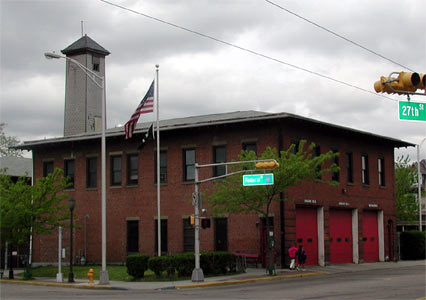
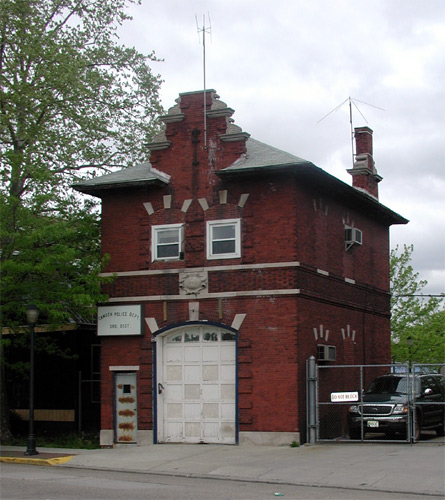
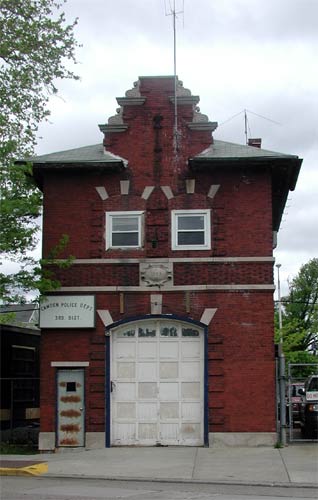
East Camden firehouse and police station, 2003
27th & Federal Street — 1956
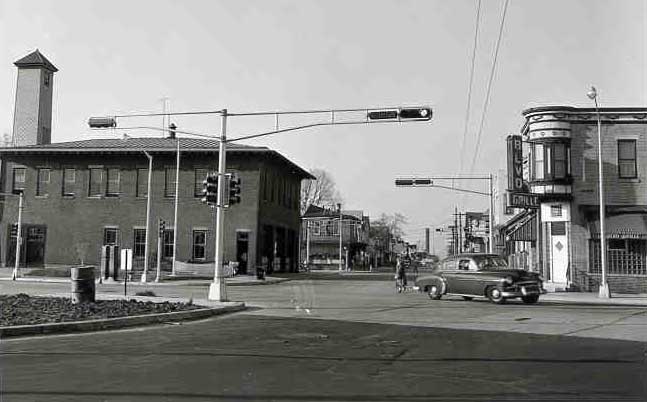
27th & Federal Street, in 1956. To the right, the Boulevard Grille, still open in 2003 as Freddie’s Bar.
East Camden Real Estate Developers
Alfred Cramer (below, left) & J. Howard Kirkbride laid out and sold lots in East Camden and in Cramer Hill. The neighborhood rapidly expanded, and many homes were built. After World War I was concluded, further development was done by realtors such as Leon Todd and Edward Miller.
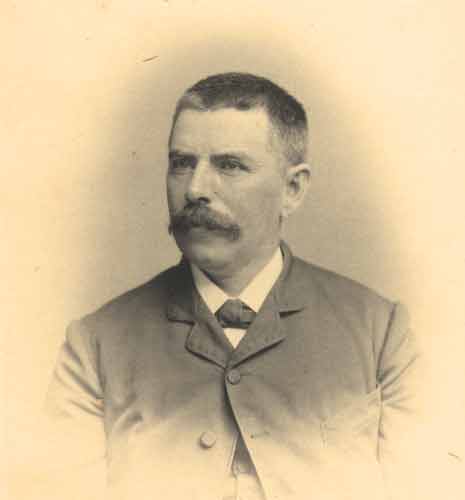
Alfred Cramer
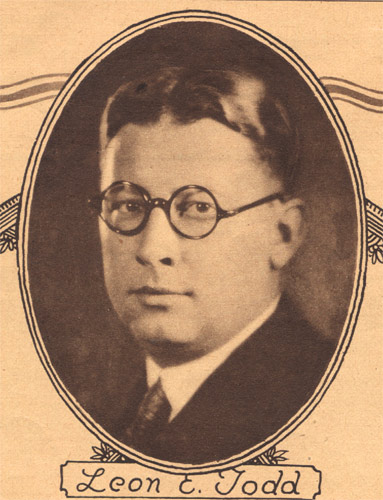
Leon Todd
James A. Garfield School — 2825 Cramer Street
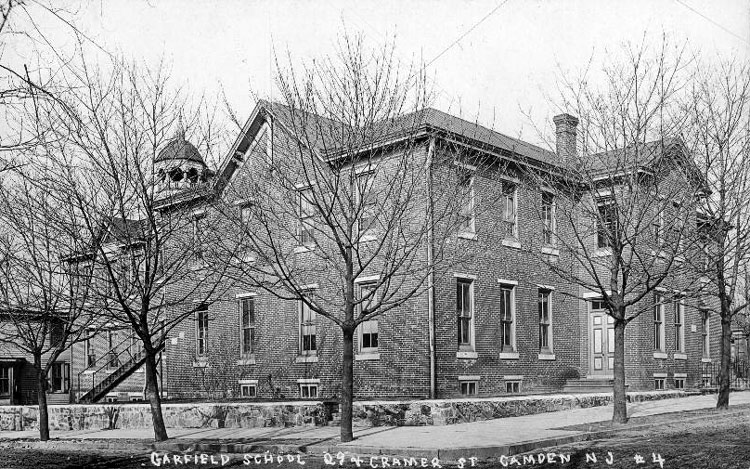
James A. Garfield School, 2825 Cramer Street
Alfred Cramer School
Westfield, Merriel, & Rosedale Avenues at 32nd Street
Black & White Photos from April, 1925 — Color Photographs taken
These pages show the many varieties of beautiful “Air-Lite” and “Air-Wa” homes on the outskirts of Camden. These pictures tell there own story of attractiveness, coziness, and unique fittings. This locality is especially attractive having ideal living conditions, good transportation by bus, trolley, and auto.
CAMDEN FIRST – 1925
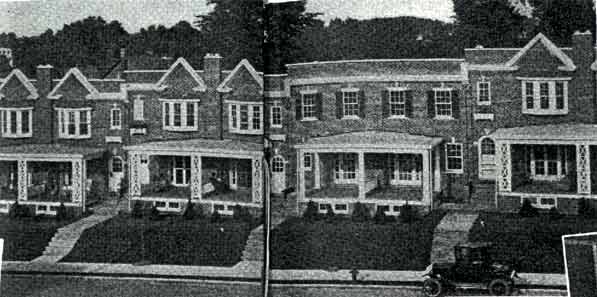
Westfield Avenue, 3100 block, 1925
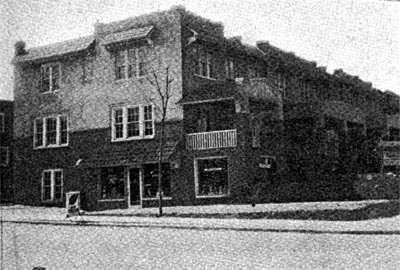
3100 Block Westfield Avenue
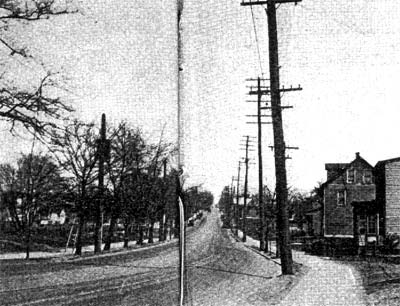
Westfield Avenue East from North 32nd Street
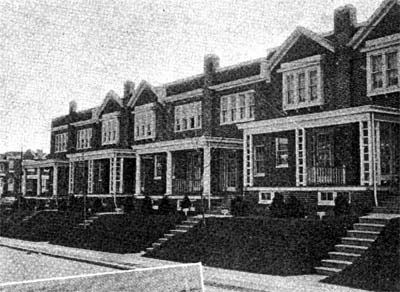
North 32nd Street from Rosedale Avenue
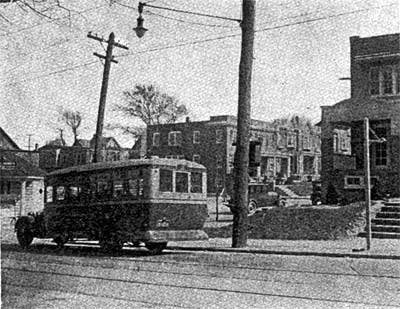
Corner of Westfield Ave. & No. 32nd Street
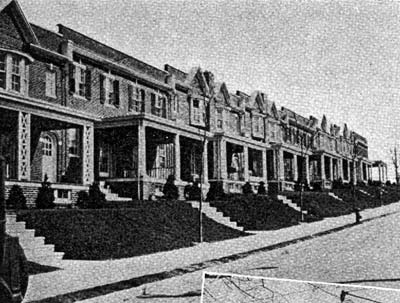
North 32nd Street from Westfield Avenue, 1925
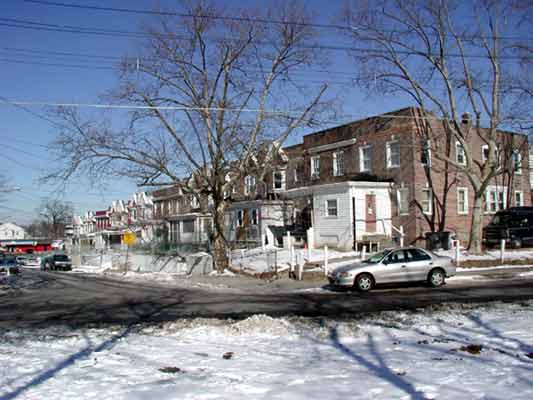
No. 32nd Street from Rosedale Avenue, February 2004
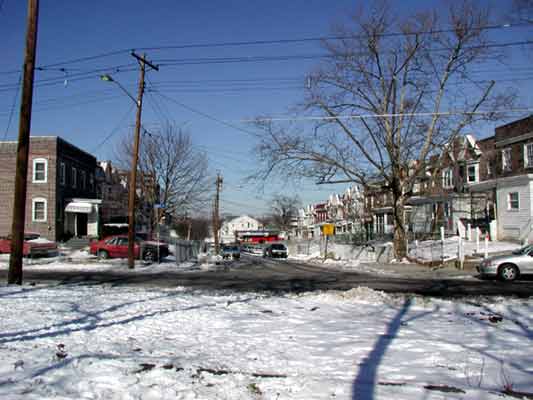
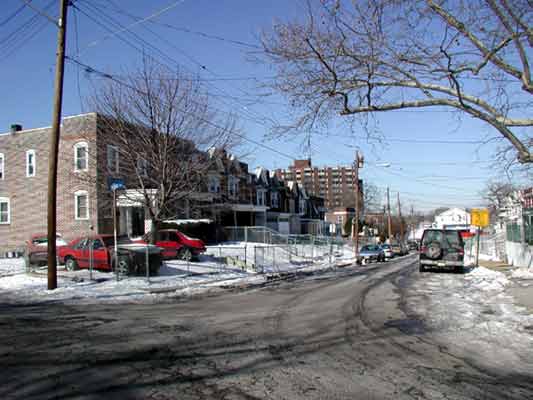
No. 32nd Street from Rosedale Avenue
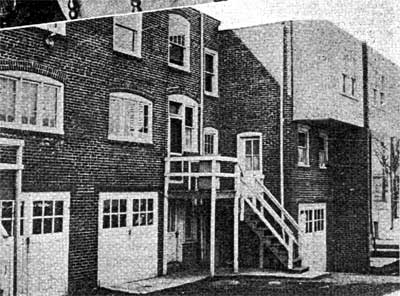
Rear of No. 32nd Street Rowhomes
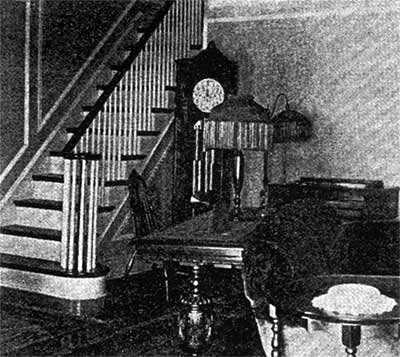
Inside a home, 1925
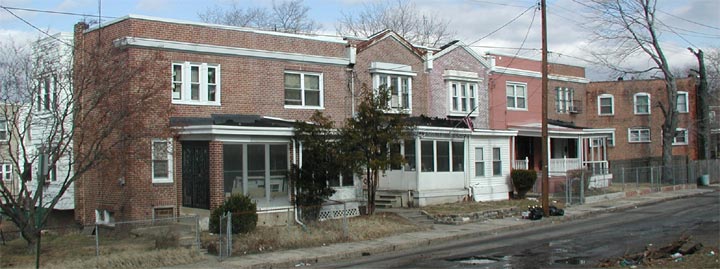
3177 to 3187 Rosedale Avenue
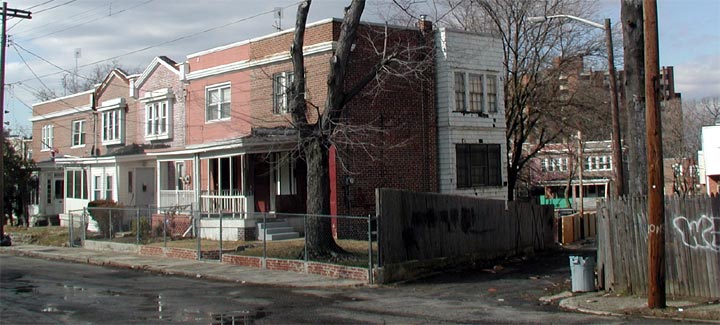
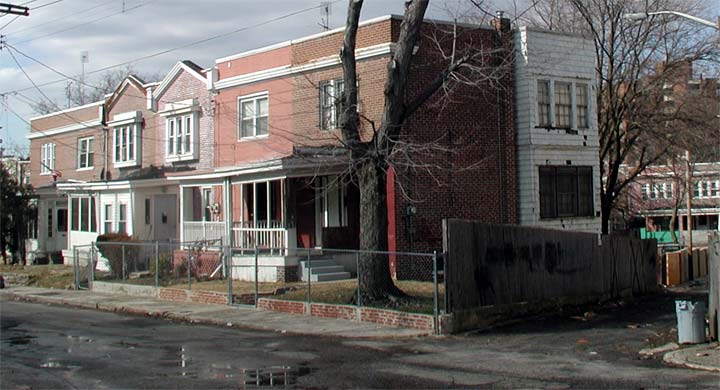
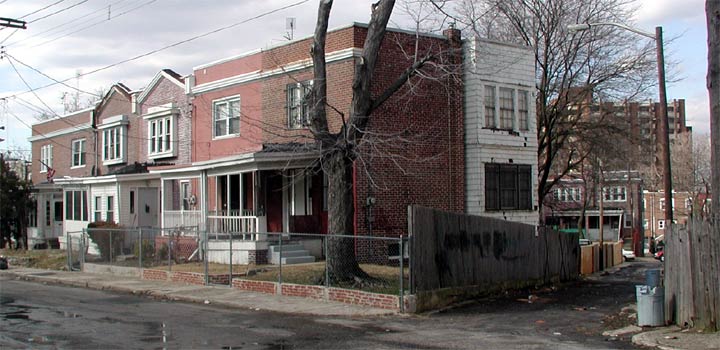
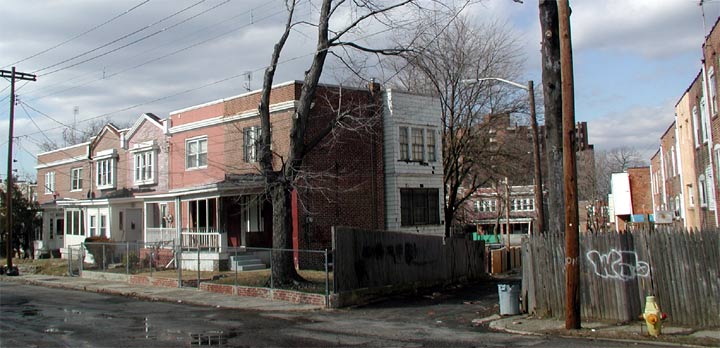
Four views of 3177 to 3187 Rosedale Avenue. Looking through the alley, one can see two houses on Merriel Avenue, & in the background the Westfield Tower senior citizens high rise apartment building.
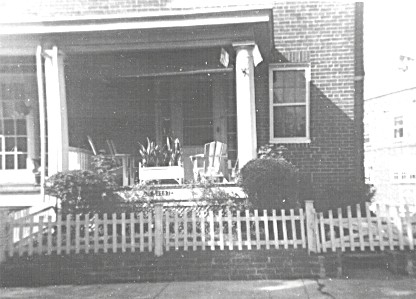
“This is the house at 3187 Rosedale Ave, approximately late 1940’s. It’s the house I grew up in.” — Fred Kalt
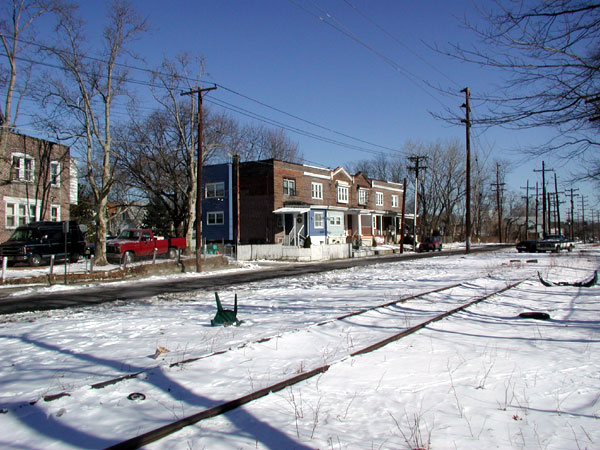
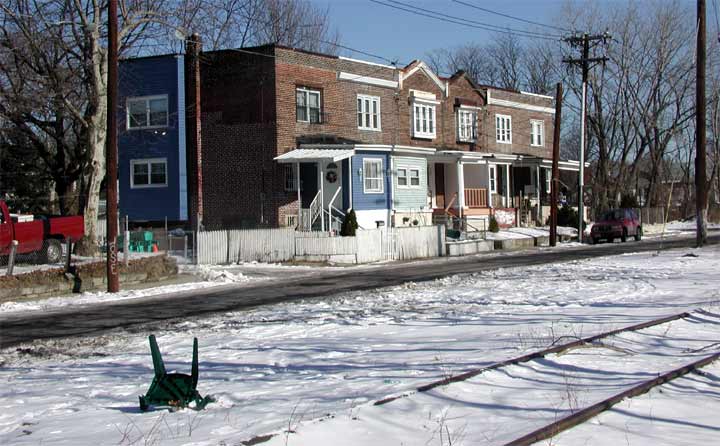
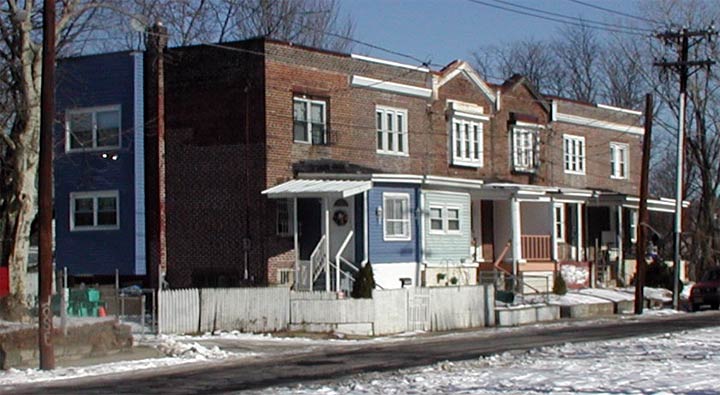
Three views of 3281 to 3291 Rosedale Avenue, February 1, 2004
School Staff and Administration
1913
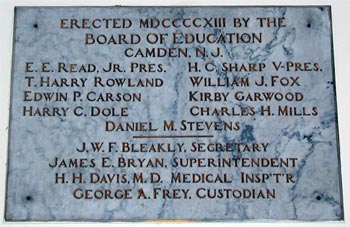
ERECTED MDCCCCXIII BY THE
BOARD OF EDUCATION
CAMDEN, N.J.
E.E. READ, JR. PRES. H.C. SHARP V-PRES.
T. HARRY ROWLAND WILLIAM J. FOX
EDWIN P. CARSON KIRBY GARWOOD
HARRY C. DOLE CHARLES H. MILLS
DANIEL M. STEVENS
J.W.F. BLEAKLY, SECRETARY
JAMES E. BRYAN, SUPERINTENDENT
H.H. DAVIS, M.D. MEDICAL INSP’T’R
GEORGE A. FREY, CUSTODIAN
Building Committee and Board Members
1913
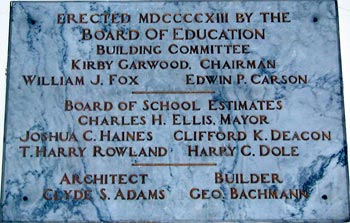
ERECTED MDCCCCXIII BY THE
BOARD OF EDUCATION
BUILDING COMMITTEE
KIRBY GARWOOD, CHAIRMAN
WILLIAM J. FOX EDWIN P. CARSON
BOARD OF SCHOOL ESTIMATES
CHARLES H. ELLIS, MAYOR
JOSHUA C. HAINES CLIFFORD K. DEACON
T. HARRY ROWLAND HARRY C. DOLE
ARCHITECT BUILDER
CLYDE S. ADAMS GEO. BACHMANN
In 2004, the Real Camden Looks Like This
Nobody in the major media will EVER tell you about the many, many streets in Camden that look like this… well-kept houses on clean streets
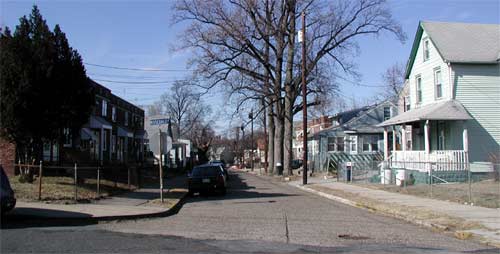
Looking West down 100 Block on North 35th Street from Rosedale Avenue, February 22, 2004
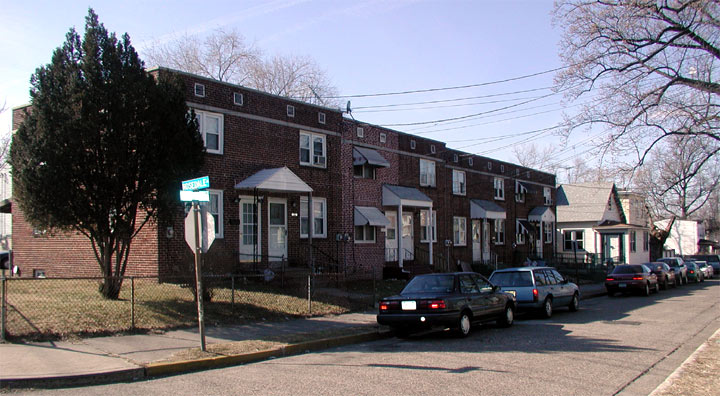
A block of row-homes built in 1952, at 127–125, 123–121, 119–117, and 115–113 North 35th Street from Rosedale Avenue, photographed February 22, 2004.
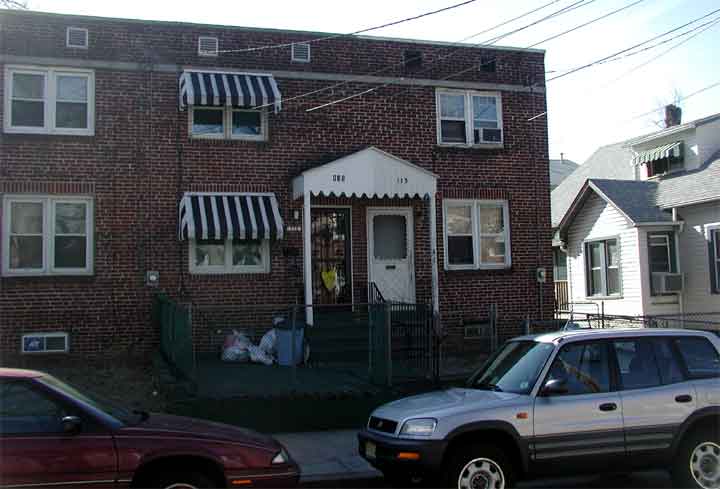
115–113 North 35th Street, February 22, 2004
Camden News Notes
Philadelphia Inquirer —
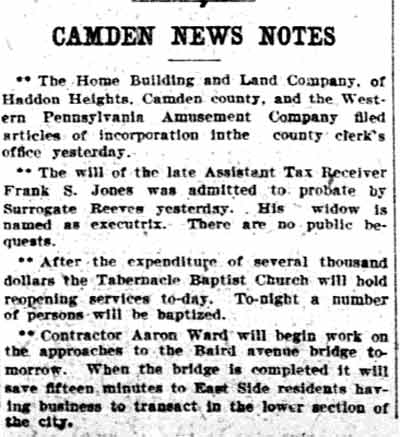
The Home Building and Land Company, of Haddon Heights, Camden county, and the Western Pennsylvania Amusement Company filed articles of incorporation in the county clerk’s office yesterday.
The will of the late Assistant Tax Receiver Frank S. Jones was admitted to probate by Surrogate Reeves yesterday. His widow is named as executrix. There are no public bequests.
After the expenditure of several thousand dollars the Tabernacle Baptist Church will hold reopening services to-day. To-night a number of persons will be baptized.
Contractor Aaron Ward will begin work on the approaches to the Baird avenue bridge to-morrow. When the bridge is completed it will save fifteen minutes to East Side residents having business to transact in the lower section of the city.
Must Stop Cars at Every Corner
Philadelphia Inquirer —
East Camdenites Win Long Contention Against the Public Service Railway Company
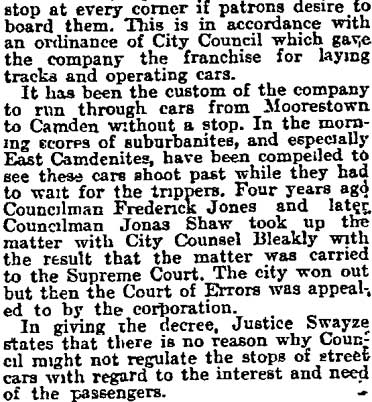
After several years of effort, East Camdenites have won out in their action against the Public Service Railway Company according to a decree given by the Court of Errors which is to the effect that all cars, “special” or otherwise, must stop at every corner if patrons desire to board them. This is in accordance with an ordinance of City Council which gave the company the franchise for laying tracks and operating cars.
It has been the custom of the company to run through cars from Moorestown to Camden without a stop. In the morning scores of suburbanites, and especially East Camdenites, have been compelled to see these cars shoot past while they had to wait for the trippers. Four years ago Councilman Frederick Jones and later Councilman Jonas Shaw took up the matter with City Counsel Bleakly with the result that the matter was carried to the Supreme Court. The city won out but then the Court of Errors was appealed to by the corporation.
In giving the decree, Justice Swayze states that there is no reason why Council might not regulate the stops of street cars with regard to the interest and need of the passengers.
Woman Hits Husband Hurling Stone at Dog
East Camden in the News — Philadelphia Inquirer,
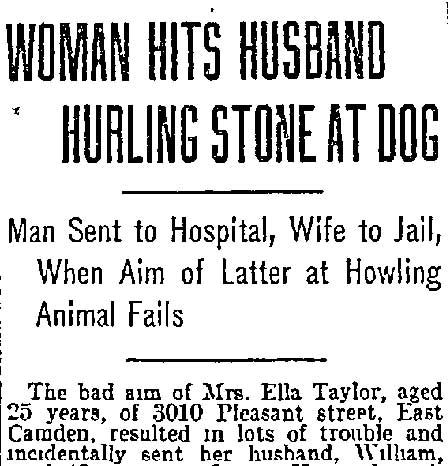
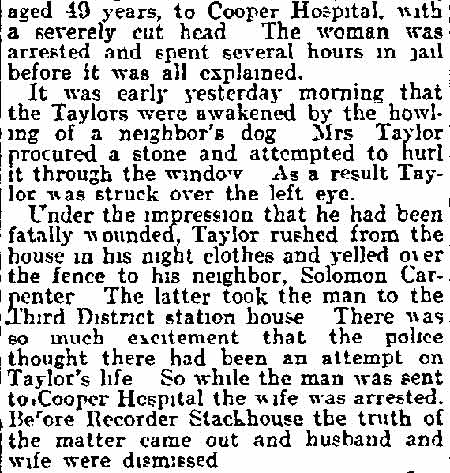
Man Sent to Hospital, Wife to Jail, When Aim of Latter at Howling Animal Fails
The bad aim of Mrs. Ella Taylor, aged 25 years, of 3010 Pleasant street, East Camden, resulted in lots of trouble and incidentally sent her husband, William, aged 49 years, to Cooper Hospital, with a severely cut head. The woman was arrested and spent several hours in jail before it was all explained.
It was early yesterday morning that the Taylors were awakened by the howling of a neighbor's dog. Mrs. Taylor procured a stone and attempted to hurl it through the window. As a result Taylor was struck over the left eye. Under the impression that he had been fatally wounded, Taylor rushed from the house in his night clothes and yelled over the fence to his neighbor, Solomon Carpenter. The latter took the man to the Third District station house. There was so much excitement that the police thought there had been an attempt on Taylor's life. So while the man was sent to Cooper Hospital the wife was arrested. Before Recorder Stackhouse the truth of the matter came out and husband and wife were dismissed.
Click to view the full PDF.
Philadelphia Inquirer — September 15, 1915. Ella Taylor – William Taylor – Solomon Carpenter – O. Glen Stackhouse – Cooper Hospital – Pleasant Street
Aerial View of East Camden — July 1926
“Bridge Boulevard Estates”
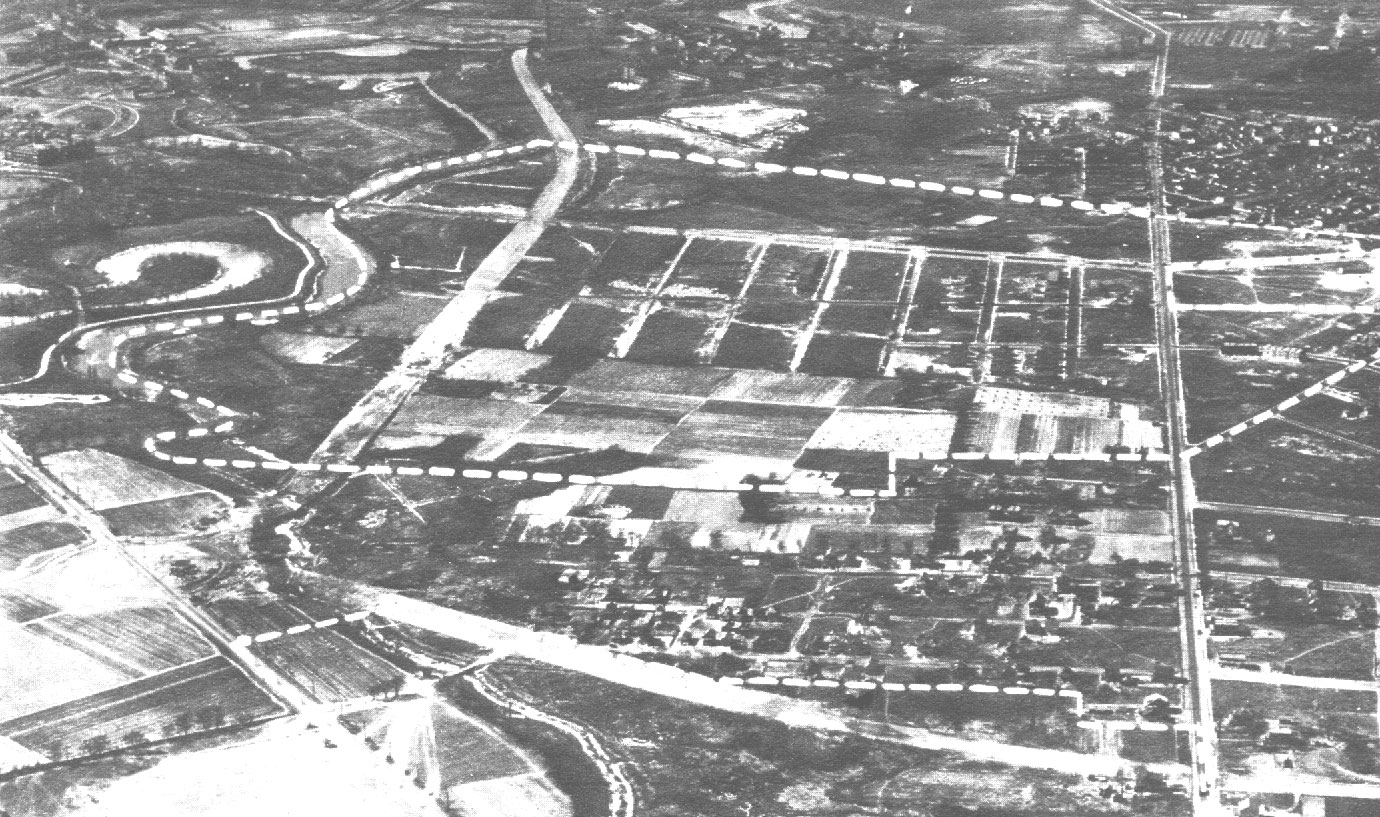
This aerial view of East Camden was part of a July 1926 ad by the Suburban Home Realty Company, located at 325 Market Street in Camden, run by Edward S. Miller.
The newly-constructed Bridge Boulevard (later renamed Admiral Wilson Boulevard) and Marlton Pike run parallel, and Baird Boulevard crosses the tract. While streets had been laid out, the depression and war would slow some homebuilding in this area.
Aerial View of East Camden — 1963
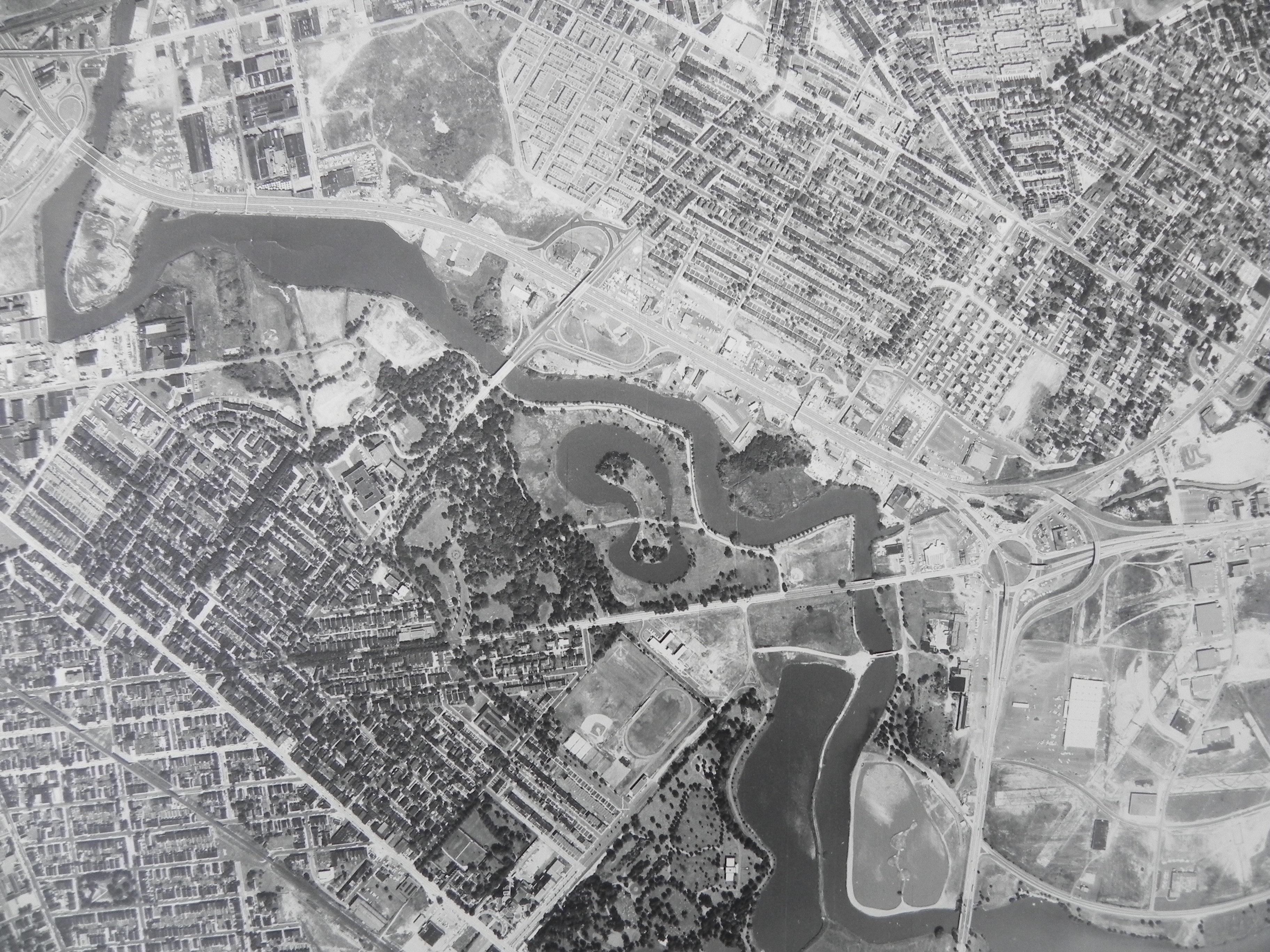
Aerial view of East Camden in 1963, showing Parkside, Baird Boulevard, Farnham Park, McGuire Gardens, Marlton Avenue, Admiral Wilson Boulevard, and Airport Circle.
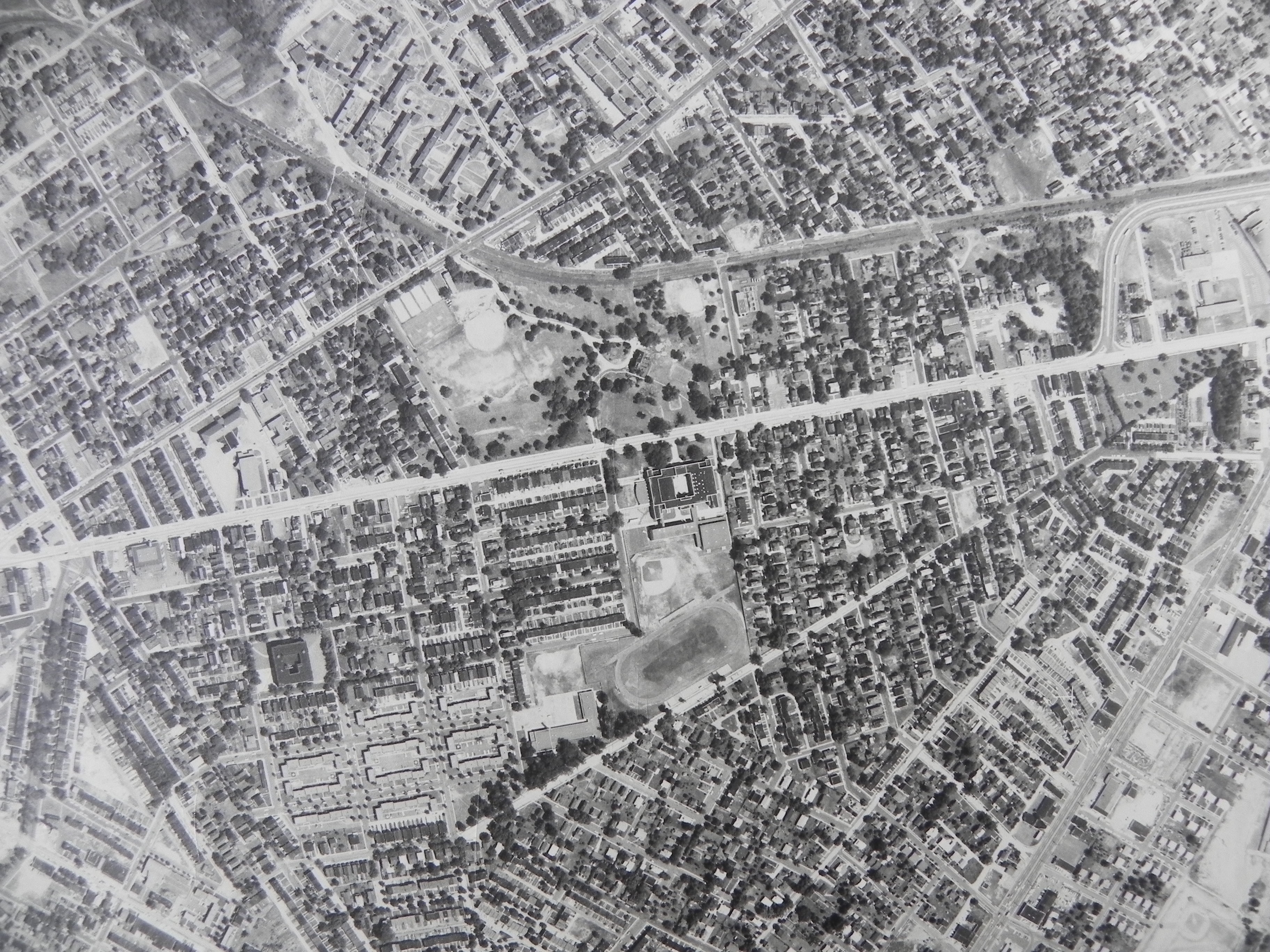
Aerial view of East Camden in 1963, showing Woodrow Wilson High School, Federal Street, Westfield Avenue, Westfield Acres, and Fremont Street.
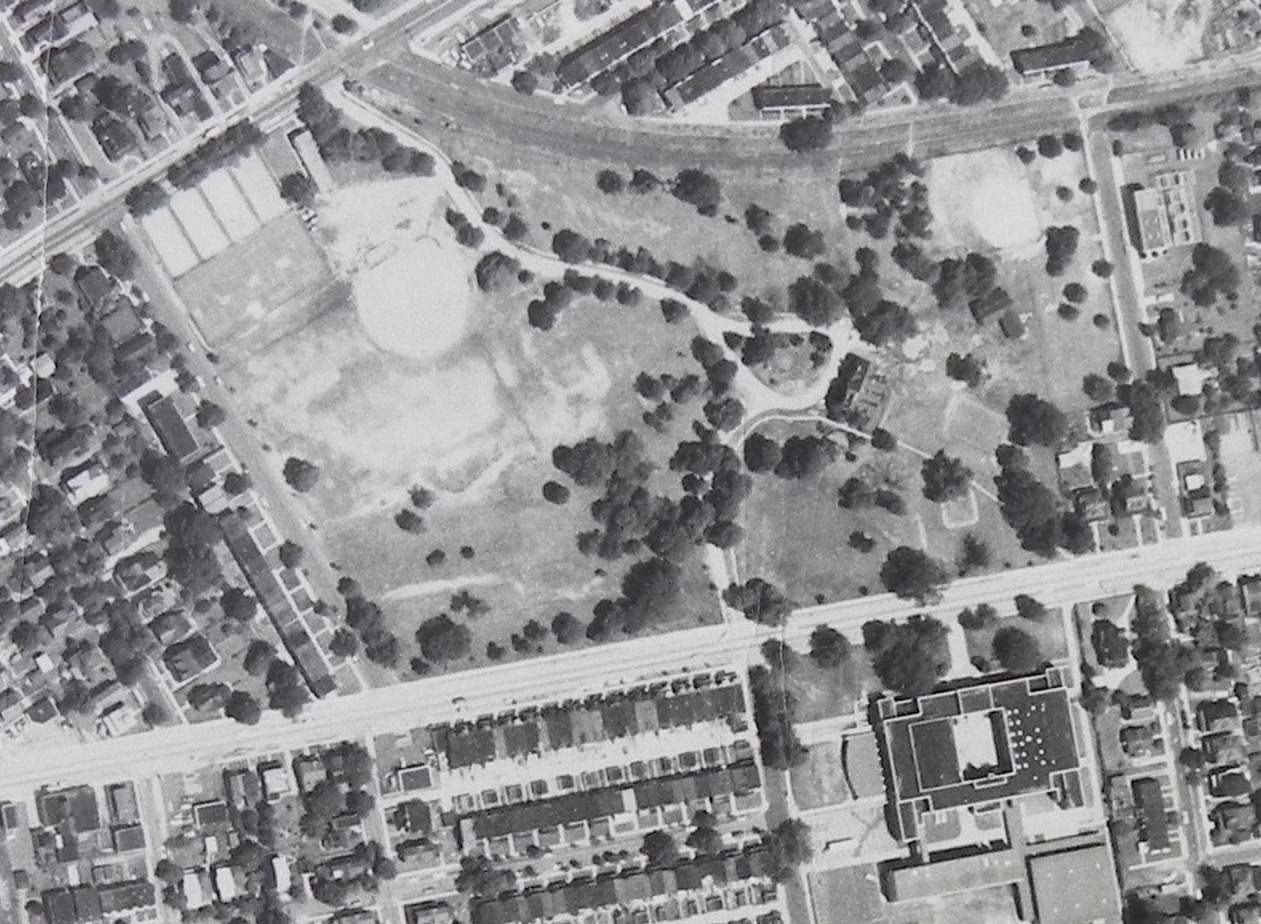
Dudley Grange – 1963
Dudley Grange
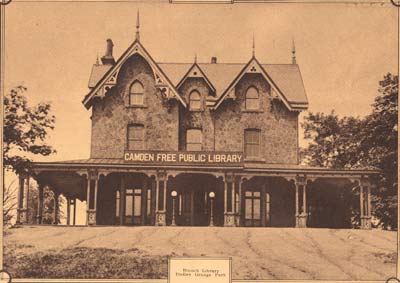
The Library at Dudley Grange
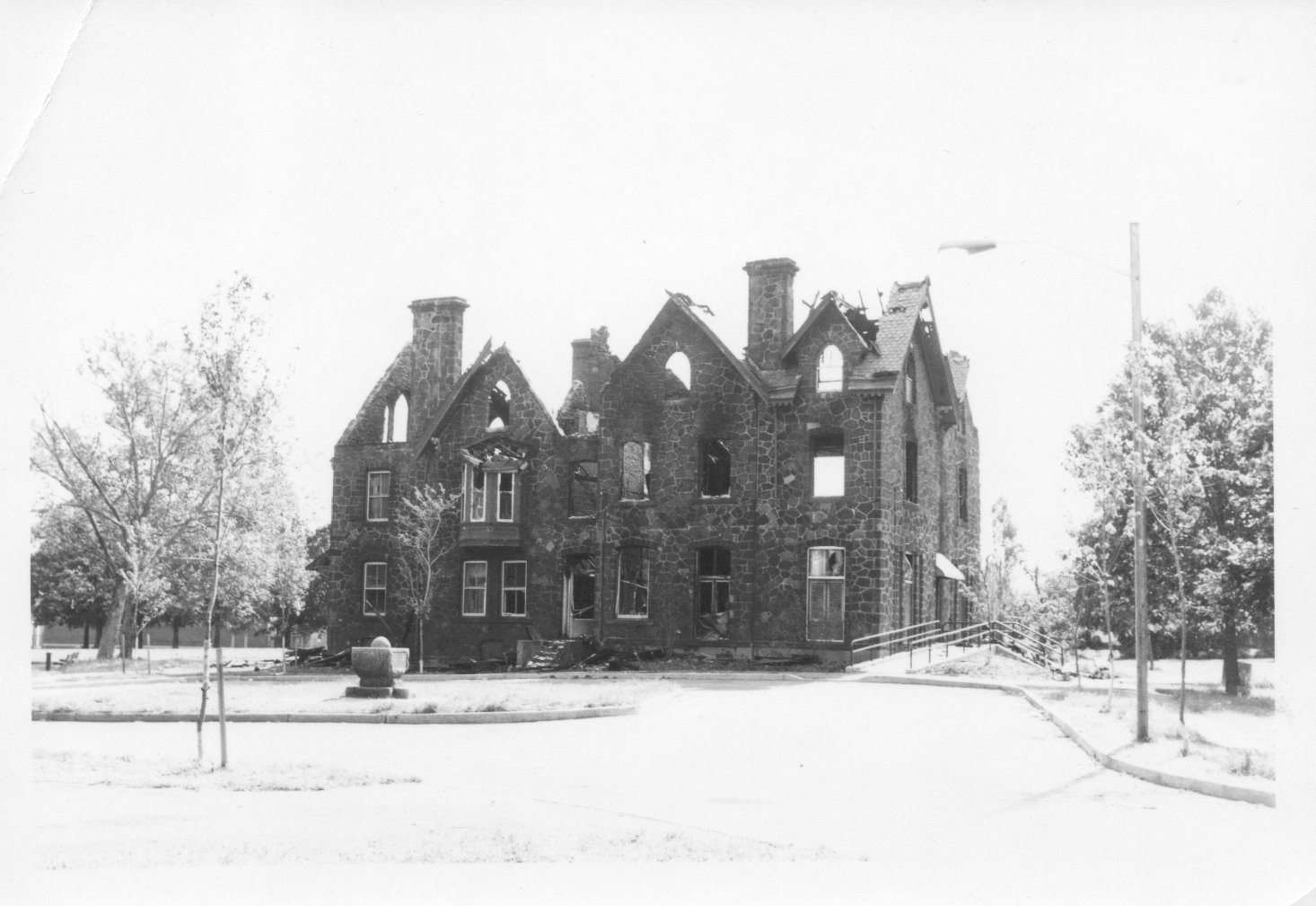
Dudley Grange Park is located at Federal and Dudley Streets in East Camden. The park is on the remainder of the Thomas H. Dudley estate. The Dudley house was the home of the East Camden branch of the Camden Free Public Library up until the late 1970s. Neglect on the part of city government resulted in the destruction of this historic building by fire in August of 1980.
Responsibility for the care and upkeep of Dudley Grange Park fell to Camden County in the 1990s.
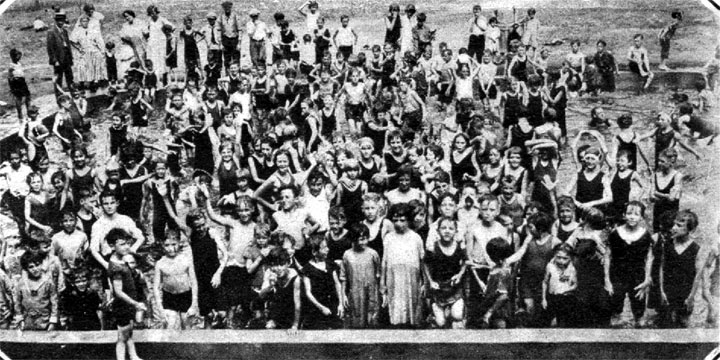
Children enjoying the splash pool at Dudley Grange — July 1926
Dudley Grange Scene of Bible Conference
Camden Courier-Post —
An open air Bible Conference will be held in Dudley Grange, Federal and Dudley streets, today, beginning at 2:30 p. m., under the auspices of the Calvary Methodist Protestant church, twenty-third and High Streets.
The theme will be “The Indwelling Presence of Christ.” Three topics will be considered: “The Reality of, the Reason For, and How to Realize His Indwelling.”
The conference will be conducted by Rev. Newton C. Conant, pastor of the church, who invites everyone to attend and to bring a box lunch or supper. Edwin H. Castor, Bible teacher of Philadelphia, and others will assist Rev. Conant.
Dudley Grange — Photos
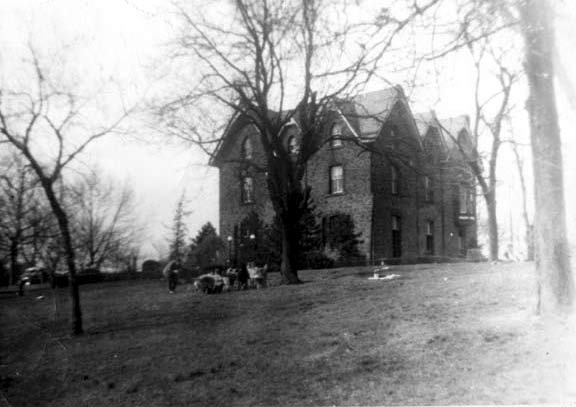
Dudley Grange, 1944 — Are those children or sheep in the photo?
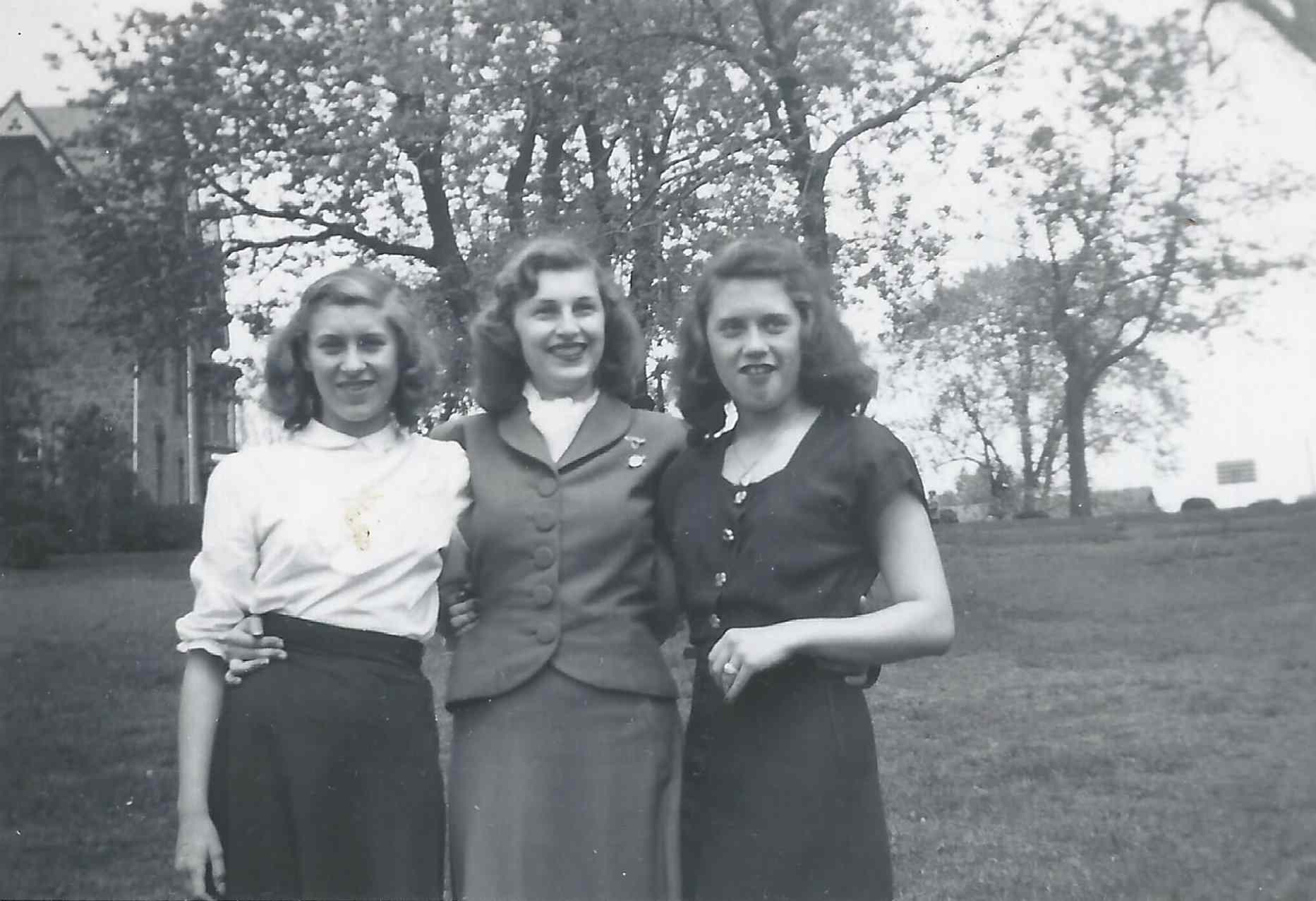
East Camden girls at Dudley Grange, late 1940s. From left: Unknown, Ruth Grace Johnson, Unknown.
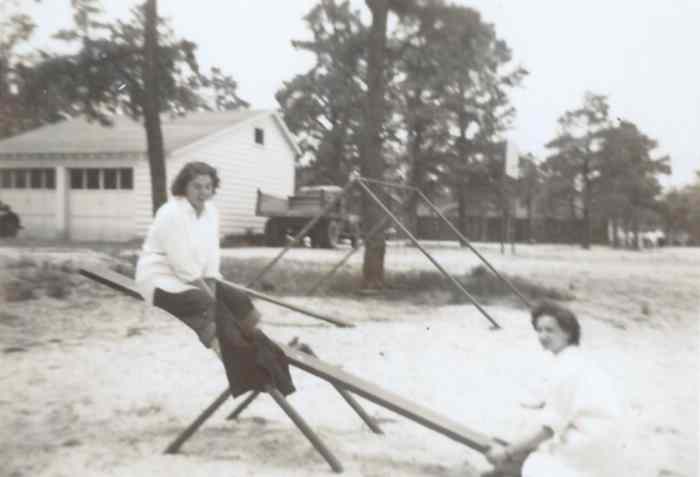
East Camden girls at Dudley Grange, late 1940s. From left: Unknown, Ruth Grace Johnson.
Dudley Grange After the Fire — October 1980
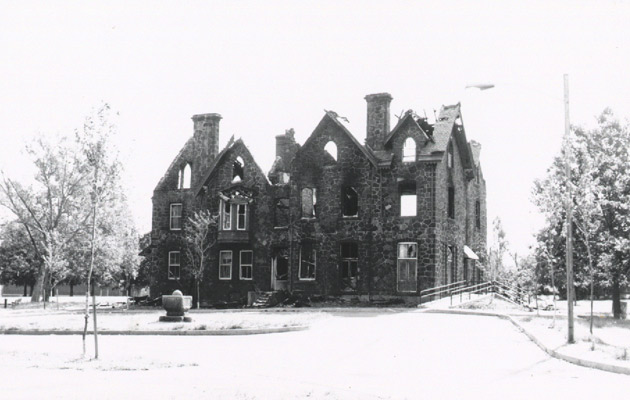
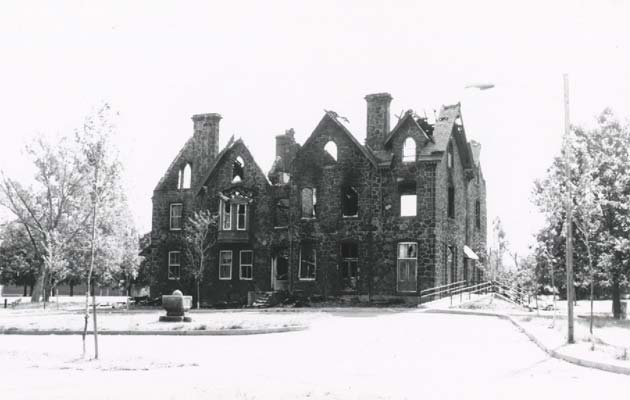
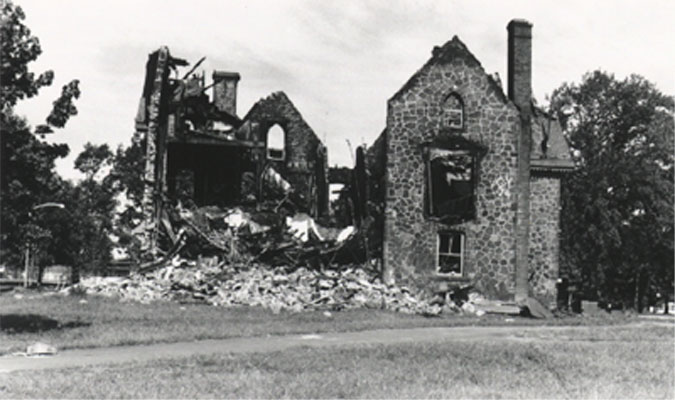
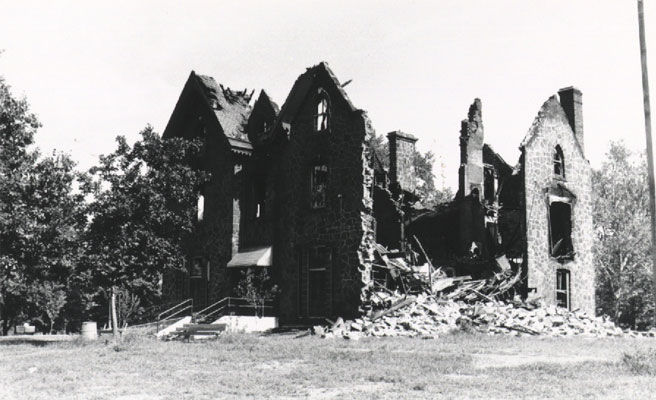
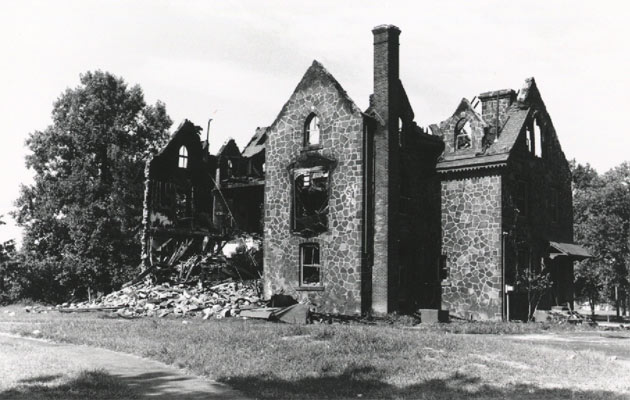
Dudley Grange after the fire in October of 1980
Dudley Grange, August 17, 1986
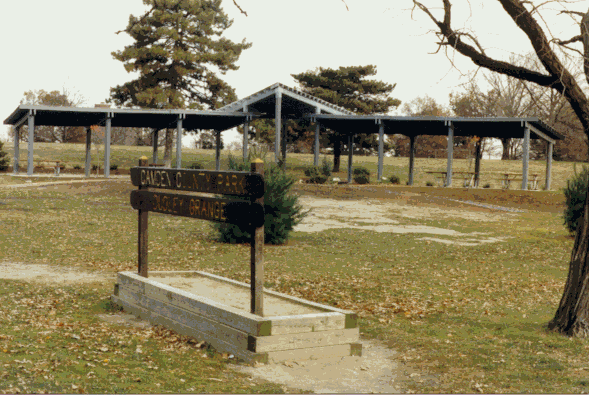
The picnic shelter at Dudley Grange Park was built in 1996.
Where Police Seized Still, After Year’s Operation
Camden Courier-Post —
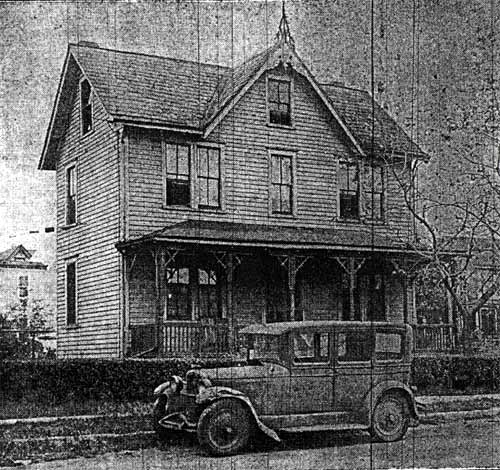


This double dwelling, at 3404 Rosedale avenue, was the scene of a still seizure early yesterday, after it had been operating one year, according to a neighbor. The occupant, Mrs. Mollie Schwartz, 46, was arrested and admitted she operated the plant, according to Acting Lieut. of Police John Potter. A man said to be a brother of the woman, fled in his undershirt, while Sergt. Edward Hahn, recently transferred to Third district duty from the traffic division, and Patrolman Joseph Keefe were making the arrest and seizure. Eleven barrels of mash, a stove, one cooler and three gallons of liquor were seized with the 75-gallon still in the house, police reported. One of two cars without license tags, which were parked in front of the house when raided, disappeared later.
3404 Rosedale Avenue
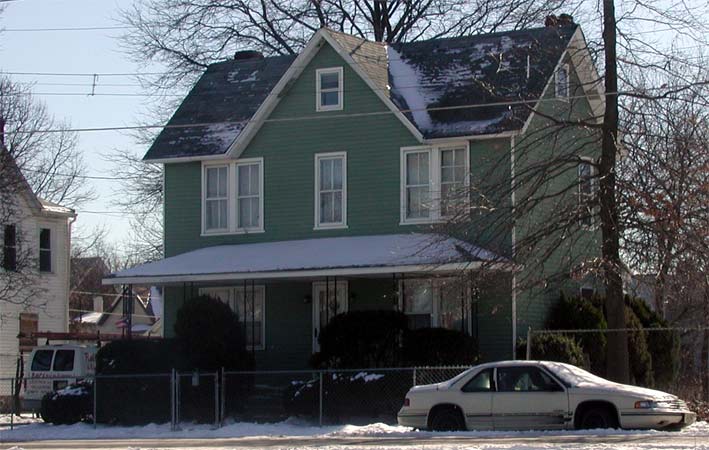
3404 Rosedale Avenue — February 1, 2004
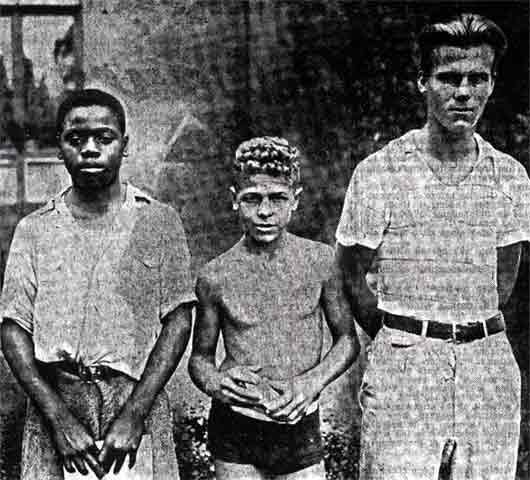
Approximately 250 members of Camden’s juvenile population who hope to be Olympic contenders in 1940, 1944—or 1948—met at Dudley Grange Park yesterday to compete for local championships. Above are three of the winners. Lester Honey, 12, of 627 Chestnut street, left, admits he relishes the idea of becoming a second Jesse Owens. Steve Lalinski, 12, of 1026 North Twenty-sixth street, center, was high scorer, and Arthur Lear, 15, of 1336 Atlantic avenue, placed in two events.
Camden Courier-Post —

[Headline and deck as transcribed from the printed page; they are not on the three scanned crops.]
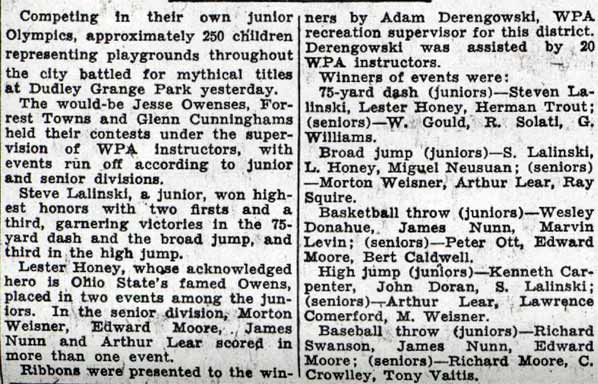
250 Children Vie for Ribbons At Dudley Grange Track Meet
WPA Playground Instructors Supervise Competition of ‘Future Olympic Stars’; Steve Lalinski Carries Off Highest Honors with Three Victories
Competing in their own junior Olympics, approximately 250 children representing playgrounds throughout the city battled for mythical titles at Dudley Grange Park yesterday.
The would-be Jesse Owenses, Forrest Towns and Glenn Cunninghams held their contests under the supervision of WPA instructors, with events run off according to junior and senior divisions.
Steve Lalinski, a junior, won highest honors with two firsts and a third, garnering victories in the 75-yard dash and the broad jump, and third in the high jump.
Lester Honey, whose acknowledged hero is Ohio State’s famed Owens, placed in two events among the juniors. In the senior division, Morton Weisner, Edward Moore, James Nunn and Arthur Lear scored in more than one event.
Ribbons were presented to the winners by Adam Derengowski, WPA recreation supervisor for this district. Derengowski was assisted by 20 WPA instructors.
Winners of events were: 75-yard dash (juniors)—Steven Lalinski, Lester Honey, Herman Trout; (seniors)—W. Gould, R. Solati, G. Williams.
Broad jump (juniors)—S. Lalinski, L. Honey, Miguel Neusuan; (seniors)—Morton Weisner, Arthur Lear, Ray Squire.
Basketball throw (juniors)—Wesley Donahue, James Nunn, Marvin Levin; (seniors)—Peter Ott, Edward Moore, Bert Caldwell.
High jump (juniors)—Kenneth Carpenter, John Doran, S. Lalinski; (seniors)—Arthur Lear, Lawrence Comerford, M. Weisner.
Baseball throw (juniors)—Richard Swanson, James Nunn, Edward Moore; (seniors)—Richard Moore, C. Crowley, Tony Vaitis.
Westfield Acres and McGuire Gardens
Camden’s first public housing project was built along Westfield Avenue. Construction began in 1936, and the first families moved into their new homes in 1938. The Acres as it came to be known was a landmark until its demolition in 1999. It was rebuilt and renamed Baldwin’s Run, with the first families arriving in the spring of 2003.
Ground Broken for New Homes
Camden Courier-Post —
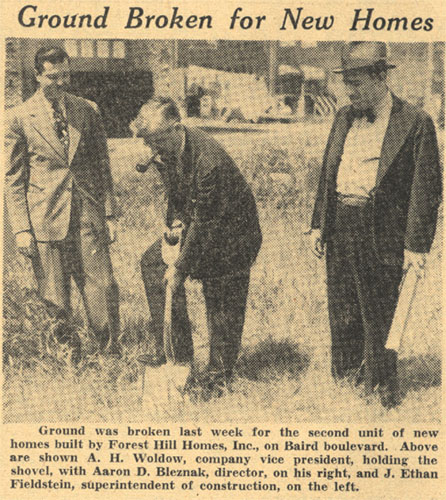
Ground was broken last week for the second unit of new homes built by Forest Hill Homes, Inc., on Baird boulevard. Above are shown A. H. Woldow, company vice president, holding the shovel, with Aaron D. Bleznak, director, on his right, and J. Ethan Fieldstein, superintendent of construction, on the left.
Work Started on 8 Homes In Baird Blvd. Development
Camden Courier-Post —
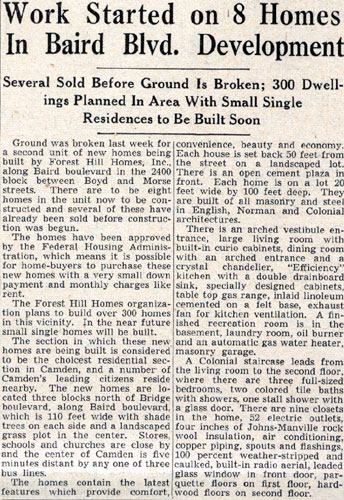
Several Sold Before Ground Is Broken; 300 Dwellings Planned In Area With Small Single Residences to Be Built Soon
Ground was broken last week for a second unit of new homes being built by Forest Hill Homes, Inc., along Baird boulevard in the 2400 block between Boyd and Morse streets. There are to be eight homes in the unit now to be constructed and several of these have already been sold before construction was begun.
The homes have been approved by the Federal Housing Administration, which means it is possible for home-buyers to purchase these new homes with a very small down payment and monthly charges like rent.
The Forest Hill Homes organization plans to build over 300 homes in this vicinity. In the near future small single homes will be built.
The section in which these new homes are being built is considered to be the choicest residential section in Camden, and a number of Camden’s leading citizens reside nearby. The new homes are located three blocks north of Bridge boulevard, along Baird boulevard, which is 110 feet wide with shade trees on each side and a landscaped grass plot in the center. Stores, schools and churches are close by and the center of Camden is five minutes distant by any one of three bus lines.
The homes contain the latest features which provide comfort, convenience, beauty and economy. Each house is set back 50 feet from the street on a landscaped lot. There is an open cement plaza in front. Each home is on a lot 20 feet wide by 100 feet deep. They are built of all masonry and steel in English, Norman and Colonial architectures.
There is an arched vestibule entrance, large living room with built-in curio cabinets, dining room with an arched entrance and a crystal chandelier, “Efficiency” kitchen with a double drainboard sink, specially designed cabinets, table top gas range, inlaid linoleum cemented on a felt base, exhaust fan for kitchen ventilation. A finished recreation room is in the basement, laundry room, oil burner and an automatic gas water heater, masonry garage.
A Colonial staircase leads from the living room to the second floor, where there are three full-sized bedrooms, two colored tile baths with showers, one stall shower with a glass door. There are nine closets in the home, 52 electric outlets, four inches of Johns-Manville rock wool insulation, air conditioning, copper piping, spouts and flashings, 100 percent weather-stripped and caulked, built-in radio aerial, leaded glass window in front door, parquette floors on first floor, hardwood floors on second floor.
Kotlikoff’s
East Camden Woman’s Club Plans Social Program
Camden Courier-Post —
Three social functions this month will conclude activities of the East Camden Woman’s Club for the fiscal year. On Monday next, the members will be guest’s for the day at Mrs. Edward Combs’ summer camp along the Rancocas, Wednesday, June 28, they will make a trip to Ocean City, where they will spend the day at the cottage of Miss Dorothy Morris. Tomorrow they will hold a luncheon at Fuhrman Inn, Philadelphia.
A meeting of the Garden Section of the club will be held at the club-house, 33 North Thirtieth Street, on Wednesday afternoon, June 21. Mrs. William Ash is chairman of the group.
The Drama Department sponsored the program presented at the meeting of the club held Monday evening, in the clubhouse. Mrs. Howard Eby, chairman of the department, arranged the program, which she titled “A Scenic Reading.” It consisted of portraits of famous women in life and fiction.
Miss Lydia Brady illustrated the “Song of the Shirt.” Mrs. James Pearce portrayed “Barbara Fritchie;” Mrs. Theodore Warren, “Maude Muller;” Mrs. Louis Hammell, “Barefoot Boy;” Mrs. James Pearce and Mrs. Russell Kennedy, “John Anderson, My Jo John;” Mrs. Warren Barth, “Milk Maid.”
Marlton Manor Homes Advertisement
Camden Courier-Post —
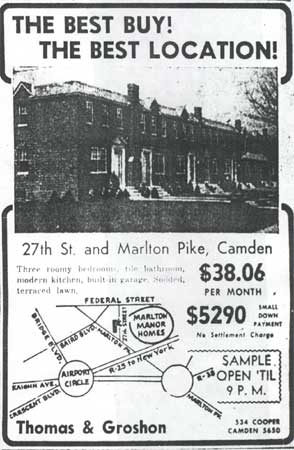
THE BEST BUY! THE BEST LOCATION!
27th St. and Marlton Pike, Camden
Three roomy bedrooms, tile bathroom, modern kitchen, built-in garage, sodded, terraced lawn. $38.06 per month — $5290 small down payment. No settlement charge.
Sample open ’til 9 P.M. — Thomas & Groshon, 534 Cooper, Camden 5650
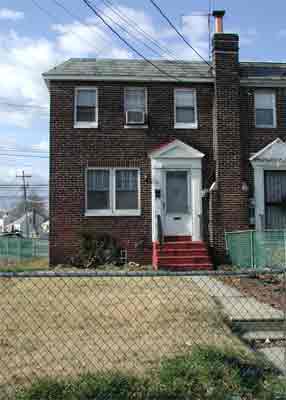
383 South 27th Street — June 2002
Jill Petris Lamparella Writes About East Camden
I was born in 1951 and brought home to 139 North 32nd Street. My parents were William Joseph and Elizabeth Mae (Reeves) Petris. These were all very happy years for me and my sister Sheree Joy Petris (married name Romesburg) who was born in 1954. These were happy years because all of our family lived in Camden. My Dad’s family was from South Camden and my Mother’s family was from East Camden.
My Dad was terrific at carpentry and for several years in their spare time, he rebuilt the entire inside of 139. We had indirect lighting in dining room which shone pink from the outside and they made a faux pink marble fireplace in the living room. Strange, but I guess they were into pink. My Grandparents, George and Ruth Reeves lived at 3173 Merriel Avenue and I could see their house from my back bedroom window. My best friend Janice Olnhausen lived next door at 3171 Merriel Avenue with her parents Emil and Betty Olnhausen. My Great Grandparents, William and Eva Roles (parents of Ruth Roles Reeves) built Roles Court Apartments on North 34th Street and Rosedale Avenue, they lived there and ran the apartments until both passed away. The apartments then passed to George and Ruth Reeves who later sold the property. Most of our family the Petris’s, Reeves, Roles, and Kellys were brought up and lived and had happy times at Roles Court Apartments. My parents lived there from 1947 (the year of their marriage) to 1950 until they purchased 139 North 32nd Street.
Our playground were those streets, the back alleys and of course Dudley Grange Park, where they had a ball game going every night during the summer and then there were the swings and slides. My Grandfather George “Rick” Reeves along with his friends George Kissinger, Inky Workings and Harry Hoffman all played baseball there. My Dad Bill Petris also played at one time or other.
My Mother Betty Mae lived in Westfield Acres from 1938 to 1941 or 1942 on a third floor apartment with her sister Ruthie and baby brother George “Richard” Reeves until they moved to 3173 Merriel Avenue.
I went to Henry H. Davis Elementary School from kindergarten (Mrs. McCarroll), 1st grade (Mrs. Braun) 2nd grade (Mrs. Brown), third grade (Mrs. Elliott), fourth grade (Miss Williams), fifth grade (Miss Quinn) and 6th grade (Miss Costello). Mr. Showalter became the principal at some point. I think he had come from Cramer School.
Everyone was friendly, we took the bus everywhere but mostly to 27th Street to go to the M&H to get ice cream, Kotlikoff’s to get clothes and the 5 & 10 to look at Barbies. My Mother and my Aunt Carol Kelly would push coaches with their children into “town” as they called it on nice days.
My sister and I would walk to Grace Baptist Church on Sundays, where most of my Mother’s family attended (the Reeves side). William Reeves owned the house on Cramer Street across from the church and sided up against the bank parking lot. Later the house was lived in by my Aunt Ida and Uncle Sam. Ida was George Reeves’ sister. William Reeves, my great grandfather was the fire chief at the firehouse.
During the Fourth of July celebrations, every year, Dudley Grange Park would set off a wonderful fireworks display. I don’t remember if it was big in relation to displays now. It was huge, and beautiful and implanted in my memories so much so that I have to rush out and see fireworks somewhere on the 4th. Unfortunately, someone was killed in the 1950’s as I believe one of the fireworks went into the crowd. After that, the fireworks stopped at Dudley Grange to my recollection.
Harry’s Grocery store was on the corner of North 32nd Street and Westfield Avenue. On the other corner was Sy’s Cleaners. The Esso station was on the other side of the street facing North 32nd. Frank’s soda fountain and candy shop was on North 34th and Westfield on the way to school. There was another candy store across from Davis on the corner. The playground at Davis was the scene of many Halloween parades when we had to march around the school for our parents to see back in the 1950’s. The playground was wonderful, life was fun and easy.
I had wonderful holidays and many happy memories of 139, 3173 and Roles Court Apartments and the neighborhood in general. The library was great. I would go once every two weeks and take out as many books as I could read. There was roller skating, bike riding, the kid who sold water ice and snowballs in his wagon, the milk truck, the ice truck, the clothes prop man and people who were homeless that would knock on your door to ask for a bowl of soup. You did not say no and always gave them something to eat and you never locked your doors back then. You didn’t have to be afraid of anyone. It was a close neighborhood and everyone knew who you were from street to street and neighbors looked out for one another.
My parents sold 139 North 32nd Street around 1962 to move to Cherry Hill after 6th grade. My Grandparents lived at 3173 from about 1941 to approximately 1974 when they past on and my Uncle Richard Reeves inherited the house and then sold it to move near Gibbstown, NJ. My Aunt Ruth Reeves Feairheller moved out of 3171 when she got married in 1957 and at some point moved to a street that paralleled Route 130 near Pennsauken and the Penn Fruit. She may have also lived on Carman Street at one time.
There is so much more and I could go on all day but I won’t. It was a lovely, uncomplicated, innocent and wonderfully happy time for all of the family. Now family is scattered all around the U.S. The “olden” days were great fun.
Jill Petris Lamparella
March 2008
An East Camden Memory
By Angelo Forte —
I lived in East Camden from December of ’43 to July of ’46. It was only a short time but these two plus years were the happiest of my life. I was 15 then and after living on a small street in South Philadelphia then moving to a house with a lawn, driveway and a garage was heaven.
My two older sisters didn’t care much for it because they had social ties in Philadelphia but I quickly made new friends in the neighborhood. The address was 2312 Howell Street across the street from the Pavonia railroad yard. I can still remember my mother hanging out laundry only to have to take it down and re-wash it when the switch engine across the street would blow it’s stack sending a cloud of black smoke and ash over the whole neighborhood.
I had a cocker spaniel named Cookie, together we would take long walks, sometimes over the 27th street bridge to Cramer Hill all the way to the river front overlooking Petty’s Island. I made friends in Cramer Hill also. Many times we would walk to Forest Hill and I would go for a swim and Cookie would watch my clothes on the bank of the river. We would then walk over to Central Airport to watch the Navy N3N’s take off and land. At that time the Navy was using Central Airport as an annex to Musten Field which was part of the Philadelphia Navy Yard.
I attended many of the local teen dances, St Joe’s on 29th and Westfield Avenue held one of them. Another was on 26th and Federal Street over the top of the five and dime store, still another was at St. Anthony on 29th and River Road in Cramer Hill.
There used to be a feed store on 23rd and Federal Streets. On Saturday mornings I would accompany a friend on his rounds delivering straw, hay, and chicken feed to the many little farmettes in Cramer Hill, some of which had pigs, goats, chickens, and even a cow.
My favorite hang out was Shellow’s, an ice cream parlor between 23rd and 24th on Federal Street.
When I turned sixteen my father told me that I would have to get a job and I would not be going back to school in the fall. I got a job as an aircraft engine mechanic apprentice at the Naval Air Material Center in Philadelphia at 41 cents an hour. I loved the work, I was dazzled by all the different types of aircraft that flew in and out of the base. My love affair with Camden came to an end when my father announced that we were moving back to Philadelphia. I was devastated and heartbroken. I didn’t talk to my father for weeks. Not long after moving back to Philadelphia I joined the Army and was sent to Korea!
I will always remember East Camden fondly.
Angelo Forte, September 26, 2004
Tony the Barber
By Ron Blizard —
I grew up in East Camden during the 1950’s. Unlike the suburbs, most of the essentials were within walking distance of home. One of those places was Tony the Barber’s, a storefront on the 2900 block of Westfield Avenue. It had a white barber pole out front with spiraling red and blue ribbons, two chairs, but only one barber. From the time I first needed a haircut and had to sit on the special booster seat placed across the arms of the barber chair, I got my haircuts from Tony. All the men in the neighborhood including my dad did too. In those days a barber shop was a ‘men only’ place.
Tony was a thin man with a thin face and a prominent roman nose. He had dark olive skin that looked perpetually sun tanned, even in the middle of winter. His wavy receding hair was black mixed with flecks of silver-gray and combed straight back. He was also a quiet man and never said much, and worked silently and meticulously, snipping each hair carefully and evenly so that that each hair lay perfectly. Tony had electric clippers, but only used them on the back of necks and for trimming sideburns. He used scissors over comb for the majority of his work. When you left Tony’s, you knew you had a haircut. In the style of the time your hair was closely, almost microscopically cropped, with sidewalls going up that got progressively longer, but the effect was so even and precise that it was a work of art, a labor of love.
As a young lad, going to Tony’s was uncomfortable. First, it was unbearably quiet, almost like being in church. In those days children were to be seen and not heard, especially in Tony’s barber shop. It was an unspoken rule that only men were allowed to speak, and then only in hushed voices. Boys never said a word. It was something we just intuitively knew and understood. The only sound that was to be heard was the snip snip of the scissors and the soft clacking of scissors against comb as Tony lifted each hair and cut it to his exacting standard.
Secondly, you had to wait an interminably long time for any other men and kids in line ahead of you. Tony never rushed or gave you less than the best haircut no matter who you were or how many were waiting. On long afternoons of waiting, occasionally the aroma of garlic and fresh homemade spaghetti sauce would waft in from the kitchen in the back. Tony’s wife was rarely seen or heard, respecting the sanctity of Tony’s workplace, but the aroma from her labors was deliciously inviting.
I was about 10 when I was enticed and fell away into barber shop apostasy. There was another barber shop that opened 3 blocks down Westfield with 4 chairs and no waiting. Better yet, they had an AM radio tuned to WIBG or “wibbage” as it was known, the pop radio station. There was conversation and laughter. The barbers were younger and talkative, but the truth was they didn’t know me, didn’t know my father either, and didn’t care. They used electric clippers over comb, so hair cuts took a lot less time, but the results were never as good, which my mom noticed and complained about. Still, to me it seemed a good tradeoff. I continued to go to the other shop, passing by Tony’s and occasionally looking in as Tony performed his work on his faithful clientele. Our eyes would meet and I would feel that I had betrayed some primal code, like abandoning one’s religion.
Sometime after I graduated from high school for some inexplicable reason, I returned to Tony’s. He ushered me to the chair and draped the sheet around me as if I had never been gone. Men’s hairstyles were different by then and my hair was much longer. Tony didn’t complain. His only terse comment was that what he lost on me, he made up for with my dad, who was bald and only had a little bit of hair around the sides of his head. At the end of this haircut, Tony performed a service that he reserved only for his adult customers, strapping a hand vibrator onto his wrist and rubbing my shoulders. Although I was only a freshman in college, I felt I had passed through a door on my way to manhood. I was now worthy to be accorded this service, now a man among men who had put their shoulders to the wheel.
Within a year or so my parents moved out of Camden and I never saw him again. He probably did not survive age, cigarettes, and the rapid decline of Camden for much longer. I like to think that Tony didn’t have to witness the rise of unisex hairstyle salons in the seventies. There is nothing more detestable to a man than to have one’s hair cut by a woman as she insistently regales you with stories of the difficulties her girlfriend is having.
Tony was one of those men that I didn’t understand or appreciate at the time. Today I would give anything for a haircut by Tony, but barbers with Tony’s character and commitment to his craft are very rare in my generation.
“Tony the Barber” was Anthony Farsaci, who passed away in June of 1977. Mr. Farsaci owned and operated his Blue Ridge Barber Shop at 2938 Westfield Avenue as early as 1943, after moving from 2406 Federal Street, where he had done business from the late 1920s through at least 1940. —PMC
Mrs. Molotsky
By Ron Blizard —
I attended Garfield Elementary School in Camden in the 1950’s. My fourth grade teacher there was Mrs. Molotsky. She was a short dark-haired woman with glasses and a strict demeanor. Though matronly, she had a youthful vigor about her. Opening exercises at the beginning of each school day included a reading of a Psalm out of the Bible. She would read slowly and distinctly, so that we could catch each syllable and appreciate the majestic cadences of the King James Bible. One of her favorites was Psalm 24:
Lift up your heads, O ye gates;
And be ye lifted up ye everlasting doors;
And the King of Glory shall come in.
Who is the King of Glory?
The Lord strong and mighty,
The Lord mighty in battle.
Lift up your heads O ye gates;
Even lift them up, ye everlasting doors;
And the King of glory shall come in.
Who is the King of glory?
The Lord of hosts, he is the King of glory.
We were thus lifted up out of our mundane circumstances and had our imaginative understanding of life enriched. Though we did not understand the words and could not understand the meaning except as fleeting dream-like images, we were given to understand that life consisted of things that transcended the circumstances of our daily existence, that there were things at stake in how we lived our life and in how we achieved whatever we were going to achieve that were more important than what our immediate circumstances were or how we might have felt about things at any given point in time.
The other thing I remember from that time of my life is that my buddy and I were fascinated by WWII and used to draw planes, ships, and battle scenes depicting the things we had seen on TV, like Victory at Sea or Navy Log. One afternoon as Mrs. Molotsky was walking the aisles as we did our class work, she took notice of a Messerschmitt 109 I had drawn on a book cover with a swastika on its tail and invited me to stay after school.
After all the other kids had left, she walked over to my desk and gently asked me if I knew that the Germans had killed millions of Jews during the war. Thus it was that I first learned of the unimaginable evil of the holocaust. As she spoke to me of the horrors and inhumanity I was dumbfounded. It marked a turning point in my understanding of evil in the world, that people with power could be not just illegitimate, but also profoundly and irretrievably evil. I didn’t, of course, fully comprehend that at the time, but the most immediate effect was that I never drew another swastika.
412 Morse Street
Camden Courier-Post —
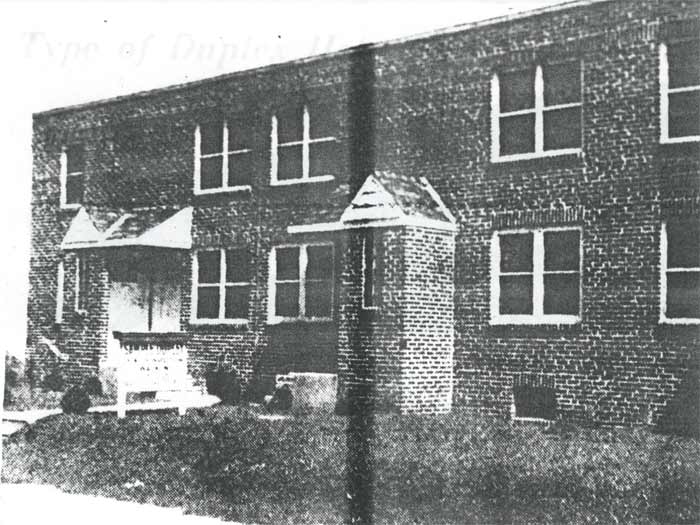

Type of Duplex H[ome] [?]
DUPLEX HOME, offered to veterans by Baird Boulevard Homes, Inc., Twenty-seventh street and Marlton pike, is shown above. The sample home, at 412 Morse street, is open for inspection. Twenty of the first 23 available for sale, have been sold, the company reports.
Local Businesses
Panzarottis!
Hosanna African Methodist Episcopal Church
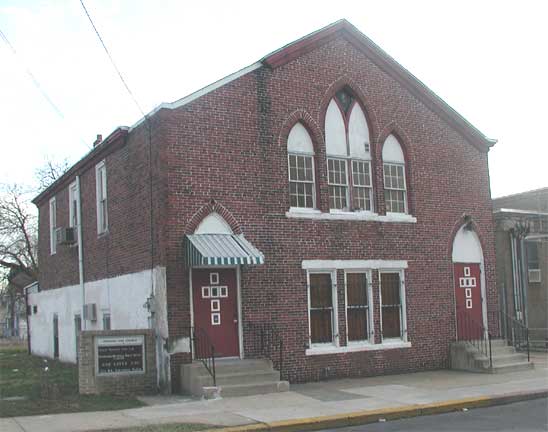
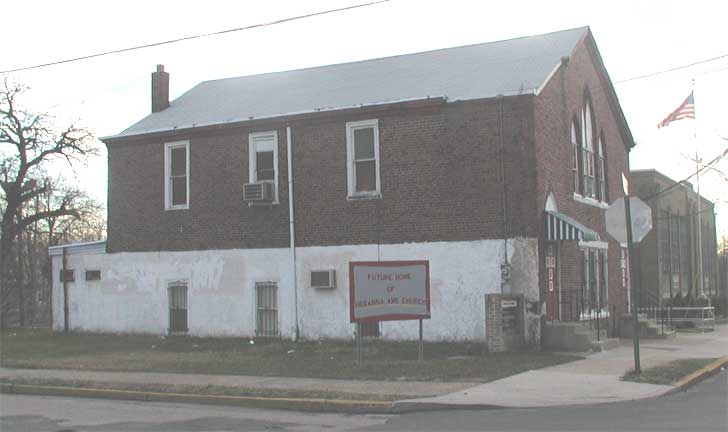
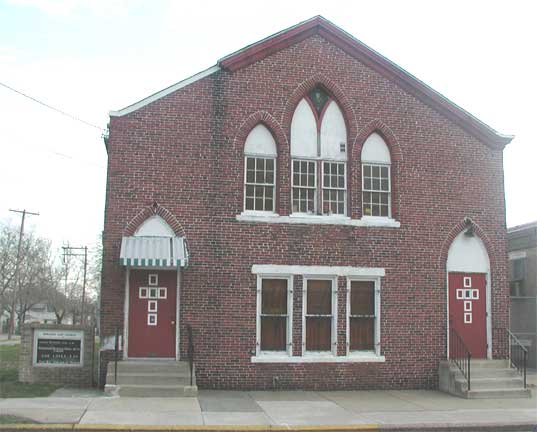
Hosanna African Methodist Episcopal Church, 30th & Saunders Street
12th Ward Athletic Association
Schools in East Camden and Cramer Hill
Schools in East Camden:
- Octavius V. Catto
- Woodrow Wilson High School
- Henry H. Davis
- Alfred Cramer
- East Camden Middle
- Thomas H. Dudley
- James A. Garfield (gone)
- Francis X. McGraw
- William McKinley (gone)
- St. Joseph’s Parochial
Schools in Cramer Hill:
- George Washington
- Veterans Jr. High
- Harry C. Sharp
- Beideman (gone)
- James G. Blaine (gone)
Public Is Invited to Jobless Gardens
Camden Courier-Post —
An invitation to inspect the “Taylor Gardens,” which are being tilled by the unemployed at Morse and Mickle streets, was extended yesterday to the public by Christian Staas, chairman of that section of the garden movement.
There are 74 gardens in the tract, Staas said, and while many were damaged by the hurricane ten days ago, they have been put into shape and make a fine display. “We want the public to see the work the boys have done at Taylor and Mickle Streets, as we are proud of the gardens,” said Staas.
NOTE — It appears that Mr. Staas was misquoted as to the location of the gardens, as Taylor Avenue never existed in East Camden, and Morse and Mickle never intersected there either. The location appears to have been at Morse and Carman Streets.
Camden U.S.O. Fund Now Totals $16,358
Camden Courier-Post —
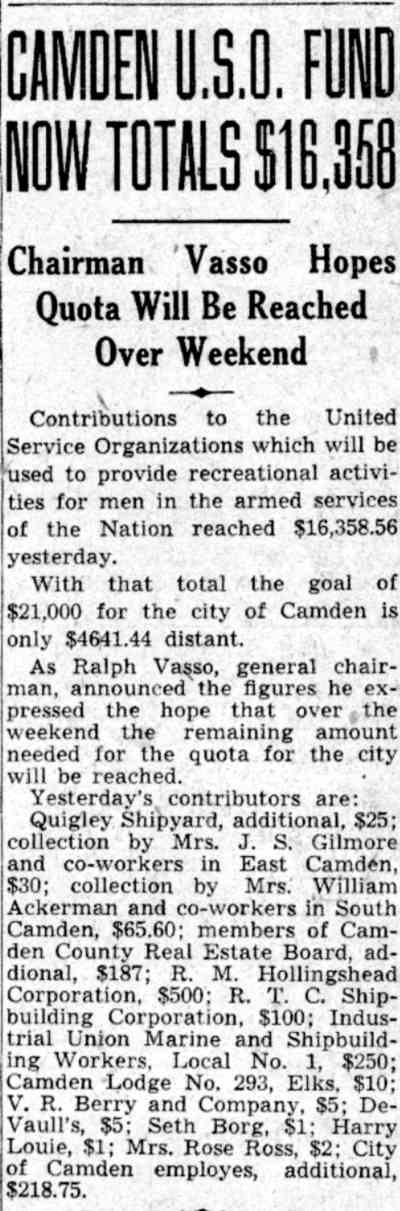
Chairman Vasso Hopes Quota Will Be Reached Over Weekend
Contributions to the United Service Organizations which will be used to provide recreational activities for men in the armed services of the Nation reached $16,358.56 yesterday.
With that total the goal of $21,000 for the city of Camden is only $4641.44 distant.
As Ralph Vasso, general chairman, announced the figures he expressed the hope that over the weekend the remaining amount needed for the quota for the city will be reached.
Yesterday’s contributors are:
Quigley Shipyard, additional, $25; collection by Mrs. J. S. Gilmore and co-workers in East Camden, $30; collection by Mrs. William Ackerman and co-workers in South Camden, $65.60; members of Camden County Real Estate Board, addional [sic], $187; R. M. Hollingshead Corporation, $500; R. T. C. Shipbuilding Corporation, $100; Industrial Union Marine and Shipbuilding Workers, Local No. 1, $250; Camden Lodge No. 293, Elks, $10; V. R. Berry and Company, $5; DeVaull’s, $5; Seth Borg, $1; Harry Louie, $1; Mrs. Rose Ross, $2; City of Camden employees, additional, $218.75.
E. End G.O.P. Auxiliary
Camden Courier-Post —
Members of the Auxiliary to the East End Republican League who are planning to participate in the group’s trip to New York City on September 4 and 5, have been requested to attend the regular meeting of the organization on Monday night, at the clubhouse, 300 North Twenty-seventh street. Mrs. Mildred Sacco, outing fund chairman, is in charge of arrangements for the trip, assisted by Mrs. Edith Burger. Mrs. Helen Wells, president of the auxiliary, will preside at the meeting.
Proposed Site of McGuire Gardens — February 1951
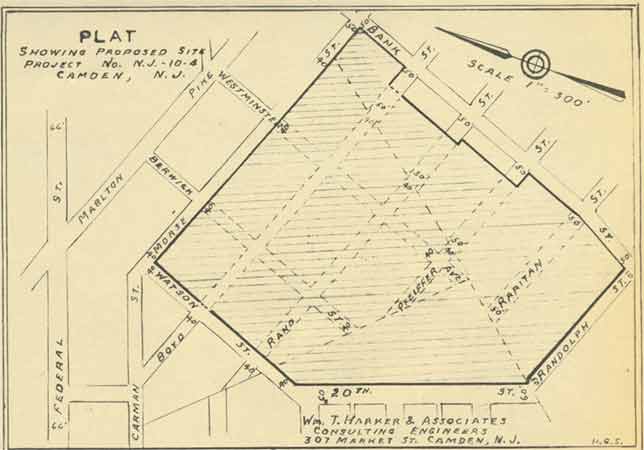
The proposed site of Project 10-4, McGuire Gardens, February 1951.
Dudley Street Row Homes
Camden Courier-Post —
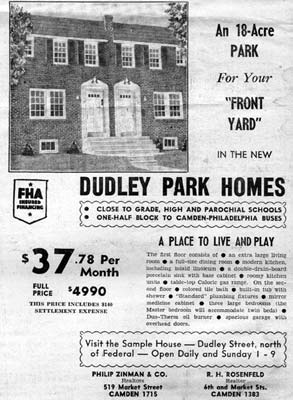
The one block row opposite Dudley Grange Park on Dudley Street between Federal Street and Westfield Avenue, these homes, completed and first occupied in 1952, were among the last built in Camden’s “classic” era.
Cooper Street in East Camden
152 Eutaw Street — Christmas 1961
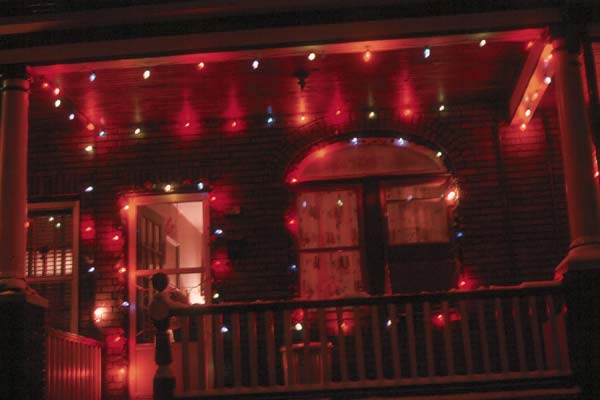
152 Eutaw Street, Christmas 1961. Courtesy of Tom Probst.
Houses for Sale — November 30, 1965
Houses for Sale – November 30, 1965 — As advertised in local newspapers that day!
St. Wilfrid’s Church (Episcopal)
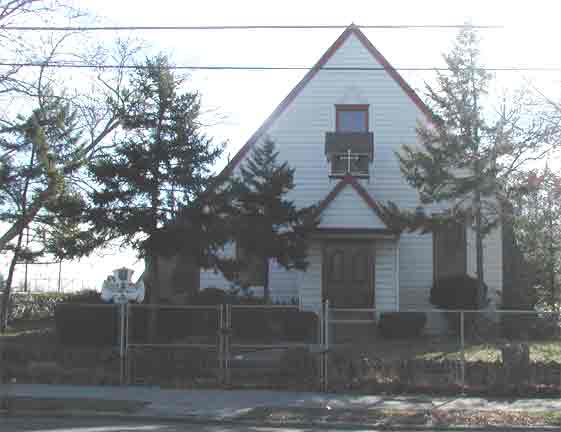
St. Wilfrid’s Church (Episcopal), Westfield Avenue and Dudley Street — December 21, 2002
A Few East Camden People — Our Soldiers!
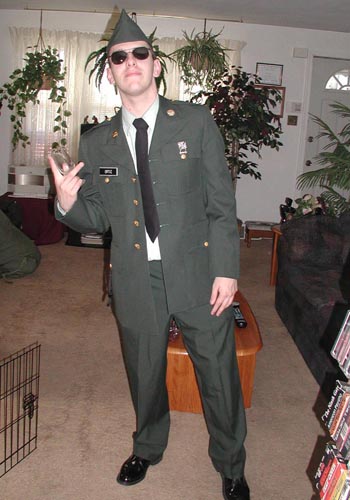
Frederick Aaron Ortiz, 428 South 30th Street
SP4 Charles Moy, 3177 Rosedale Avenue. Willdflecken, Germany, 1962. I was still the gunner on a 106mm R.R. crew at that time. Made Sgt. E5, not long after, and became Squad Leader.
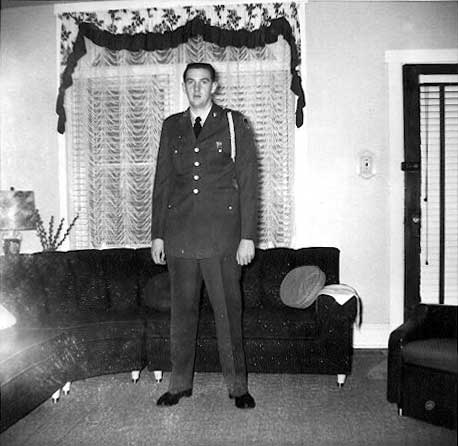
Tom Probst, 152 Eutaw Avenue — 1959
North 36th Street Bridge — 1980
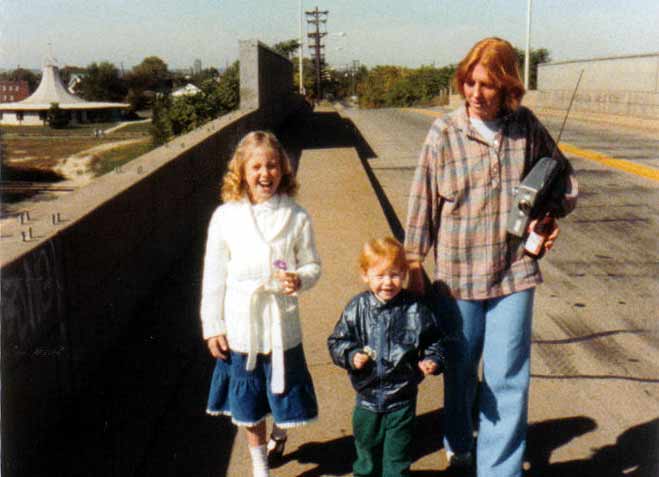
Looking West towards Cramer Hill on the North 36th Street Bridge, 1980. Photograph Courtesy of Floyd L. Miller Jr.
The Campbell Soup Warehouse in East Camden
If Mrs. Miller and the kids had looked to their left, this is what they would have seen!
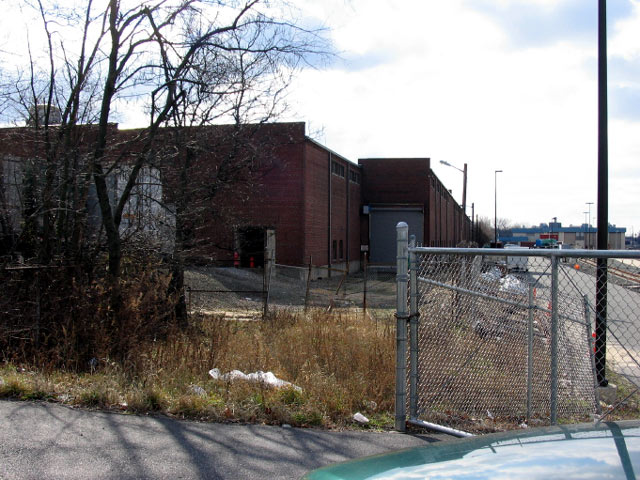
The railroad side of the Campbell Soup warehouse
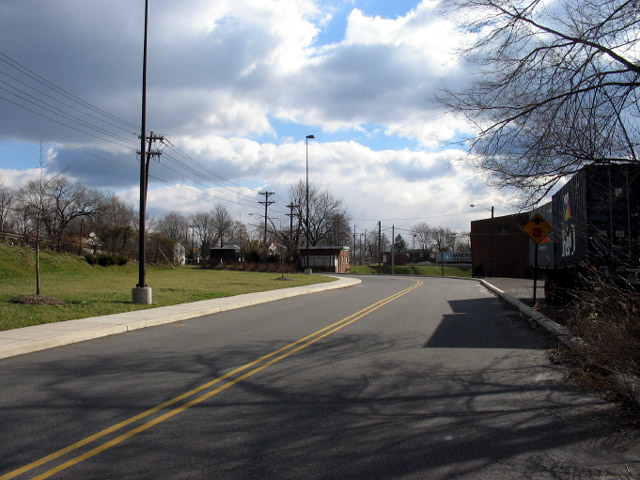
This entrance to the Campbell Soup warehouse is now used as the entrance to the 36th Street Station on the Camden-to-Trenton “Riverline”
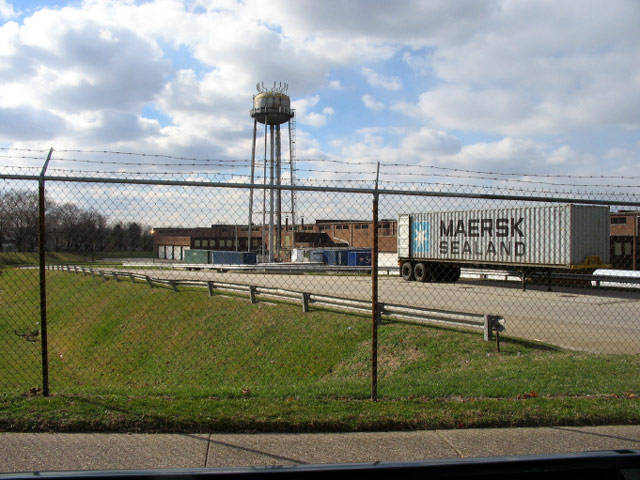
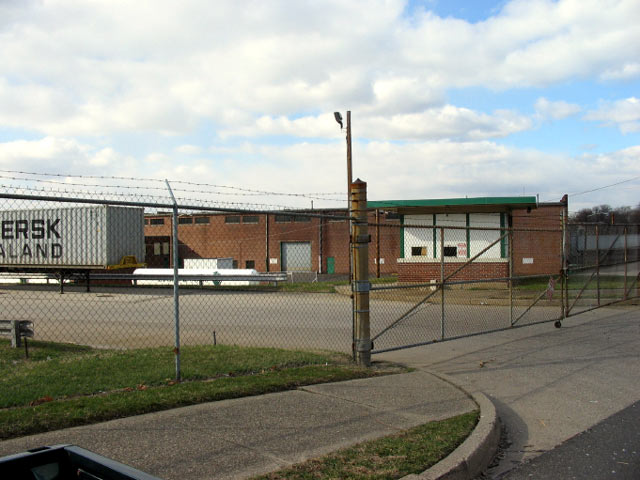
The Campbell Soup Warehouse in East Camden. Photos by John Ciafrani — January 17, 2005
A Block Party on Pfeiffer Street — July 10, 2004
Karen Jackson, of the 400 Block of Pfeiffer street, organized the Summer Safe Drug Awareness Party block party to be held for neighborhood children on July 10, 2004.

Block Party on Pfeiffer Street, July 10, 2004
Contaminated Dirt Removed from Camden
Camden Courier-Post —
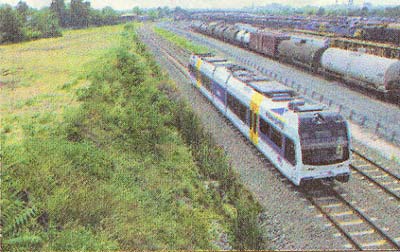
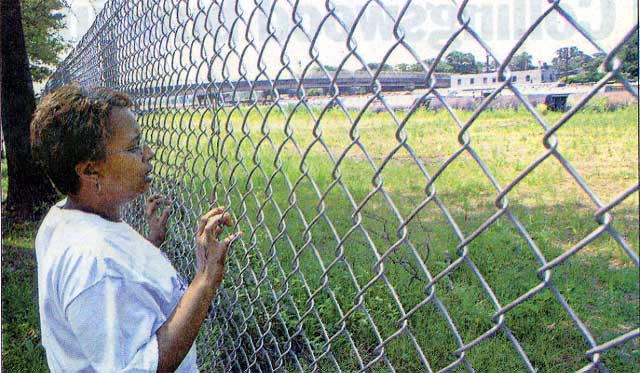
One of the “fun” things about growing up in East Camden was being able to watch the trains that run through it. During construction of “The River Line,” the light rail line that runs from Camden to Trenton, New Jersey Transit dumped tons of dirt along the tracks between 27th and 36th Streets, effectively blocking the view. Worse yet, the dirt was contaminated with PCBs and other toxic substances.
Led by the Eastside Civic Association, news articles, resident protests, and the intervention of state legislators led to the removal of the contaminated dirt.
Residents win fight on issue with NJ Transit
By Richard Pearsall
The contaminated dirt that NJ Transit piled into huge mounds next to a residential neighborhood here is gone, to the delight of residents who demanded its removal.
“After all the years of not winning anything,” said Robin Perkins, a member of the Eastside Civic Association, “we won this one.”
But questions remain about why a small portion of the dirt was incinerated at a special disposal facility rather than deposited in landfills. More than 4,000 tons of the dirt was taken to a facility in South Philadelphia for incineration. The cost of that incineration was $55 per ton, figures provided by NJ Transit show, far in excess of the amounts the agency paid a variety of landfills to take the bulk of the dirt. Those fees ranged as low as $2 per ton.
Janet Hines, a spokeswoman for NJ Transit, described the dirt that went to the incinerator as “no different than what went into the landfills. It had the same content at slightly different levels.”
The dirt that NJ Transit piled in East Camden – some 160,000 tons of it – was excavated during construction of the River LINE from Camden to Trenton. NJ Transit maintained the dirt, which it described as “clean fill,” posed no environmental threat. Built between 2000 and 2004 at a cost of roughly $1 billion, the line began operations in March of this year.
The dirt was dumped in East Camden as an economical way to dispose of it, NJ Transit records indicate, although the agency later described the berms as “visual barriers.”
To date, the removal has cost NJ Transit about $10 million.
Taken from a right of way used for railroading for more than 150 years, the dirt contained residues of various hazardous substances that left it unfit for residential areas and permissible in commercial areas only if capped with cleaner dirt. Among the problem substances were lead, arsenic and other heavy metals; PCBs or polychlorinated biphenyls; and various volatile organic compounds, such as benzopyrene.
NJ Transit deposited the dirt in the Pavonia Rail Yard in East Camden in mounds that stood three stories tall in some spots, stretched for blocks and rested within yards of homes and businesses. After months of newspaper articles, resident protests and finally, the intervention of state legislators, NJ Transit relented and agreed, in June 2003, to remove the berms. The process took nearly a year, but won praise from residents.
“You kept your promise,” Connie Williams, the president of the Eastside Civic Association, told Joyce Gallagher, the NJ Transit executive who worked with the residents, at a meeting in May. By then the dirt was gone. A fence was up; grass and roses were to come.
“It’s out of here,” Perkins said at the time. “That was our main issue.”
The route to removal was circuitous, with starts and stops that NJ Transit did its best to hide from public view, citing “ongoing negotiations.”
Forgoing public bidding, NJ Transit shipped the first 69,000 tons of the dirt to Interstate Materials, a transfer facility on Staten Island, at a cost of $923,000 for disposal and an additional $2.4 million to truck it up the New Jersey Turnpike. The next batch was supposed to go to a quarry in Falls Township, Pa., another deal arranged without bids but that fell through when the Pennsylvania Department of Environmental Protection withdrew its permit. By then, the dirt had gained a bit of notoriety, prompting a number of locations, including Winslow Township, Elk Township and a disposal facility in Delaware, to turn it down. NJ Transit eventually found places for the rest of the dirt in the Salem County Landfill, two more landfills in Pennsylvania – Morgantown and Pottstown – and the Clean Earth Facility, the disposal plant in South Philadelphia. NJ Transit cited an “exigency” clause in its bylaws in explaining why it did not put more of the work out for bid. Contracts above $25,000 are supposed to be advertised and bid.
Pretty Brunette Wins Queen Title In East Camden
Camden Courier-Post —
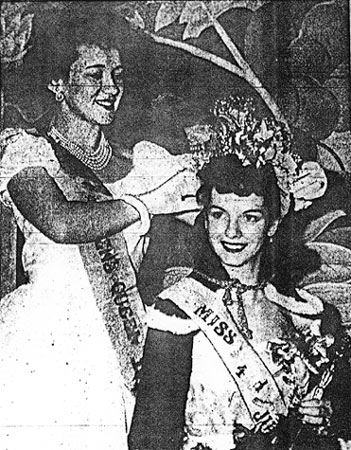
Miss Julia Pusatere, Queen of East Camden, 1950
By John D. Courter
Miss Julia Pusatere, 16, of 113 Eutaw Avenue, will reign as “Queen” over East Camden’s Fourth of July celebration at Dudley Grange park.
Miss Pusatere, a junior at Camden Catholic High School, was crowned “Queen of East Camden” in a beauty contest Tuesday night in which seven other pretty teen-age girls participated.
The contest was held in the Arlo Theater, Westfield Avenue near Twenty-seventh Street, under the sponsorship of the East Camden Fourth of July association.
Ex-Queen Aides Rites
The new queen was crowned by Miss Kay Worrell, of 2926 Clinton street, Queen of last years celebration. Runnersup in this year’s field of beauties were Miss Patti Hill, 17, of 229 Ablett Village, who placed second, and Miss Helen Zettlemoyer, 17, of 135 North Twenty-seventh Street, who was chosen for third place.
Judges included Miss Hilda Shivers, Courier-Post women’s news editor; Don Corvelli, Audubon photographer, and Mrs. Kenneth Silliphant, of 1518 Minnesota road, Camden.
Mrs. Florence Stephan and Mrs. Eleanor Schulde were co-chairmen of the contest, while Leo Stephan was master of ceremonies. The theatre was crowded during the choosing of the beauties.
Wins Several Awards
Miss Pusatere, a sparkling brunette, wore a white gown, combined with a bouffant skirt of starched chiffon with a bodice of satin printed in a floral design and cuffed in self fabric at the off-shoulder neckline. She wore a stole of white tulle.
She was awarded a $100 savings bond from the association; a bronze trophy from Charles Credit Jewelers; a handbag by Kotlikoff’s; a string of pearls from Elwell Jewelers and a miniature cedar chest from Hurley’s.
Miss Hill, a pretty blonde, wore a full skirt of tulle gathered in a ruffled effect to a strapless bodice of lace embroidered in gold and outlined by a ruffle of lace. A wide band of white ribbon created a cummerbund effect. She is a senior at Woodrow Wilson High School.
Miss Zettlemoyer, a pert brunette, appeared in a dress of pink dotted swiss, strapless bodice laced through with black velvet ribbon. She is an office worker for the J. C. Penney Co.
Runnersup Rewarded
Miss Hill and Miss Zettlemoyer each received $25 savings bonds, a bronze trophy, pearls, and a miniature cedar chest.
Stephan opened the contest by introducing Miss Worrell who sat on the throne to watch the contestants appear. When Miss Worrell appeared the train of her long red velvet cape was held by Jeffrey McLaughlin, 5, of 33 North Dudley Street, and Patty Letty, 5, of 67 South Twenty-ninth street.
After the judges had selected the 1950 queen, Miss Worrell doffed her cape and aided Miss Pusatere to dress in the “royal regalia.” Miss Worrell also placed the crown on the head of the new queen.
To Ride in Parade
While Miss Pusatere will reign over the Independence Day celebration she will be presented formally in Dudley Grange Park that day at 5:30 PM. She will wear the crown and the red velvet cape. Her aides will be Miss Hill and Miss Zettlemoyer. All will ride on a float during the July 4th Parade.
Other contestants included Joan Quatrelli, 17, of 139 North Thirty-Second Street; Arlene Gray, 16, of 113 North Twenty-seventh Street; Catherine Thompson, 19, of 2620 High Street, Rita Hockensmith, 17, of 929 North Thirty-Third Street, and Jean Wells, 19, of 318 North Fortieth Street. Each received a pearl necklace and a miniature cedar chest. They also will ride in the parade.
The queen’s bouquet of roses was presented by the Bouquet Shoppe. Nosegays were presented to each of the contestants Starke’s Flower Shoppe. Mrs. Stephan was given a bouquet of roses and Mrs. Schulde, of Jackel Florists, received a handbag. Mrs. Schulde decorated the stage and prepared the queen’s crown. She will also donate and decorate the float which will be used by the queen.
Stephan introduced Miss Gloria White, 18, of 3231 Carol Street, Camden, who was crowned Miss Fairview in a beauty contest June 19. Ernest I. McLaughlin, association president, invited those attending to take part in the July 4 celebration.
Charles Dubois, theatre manager, aided the committee on arrangements.
Camden Fire Department on Marlton Pike — 1960
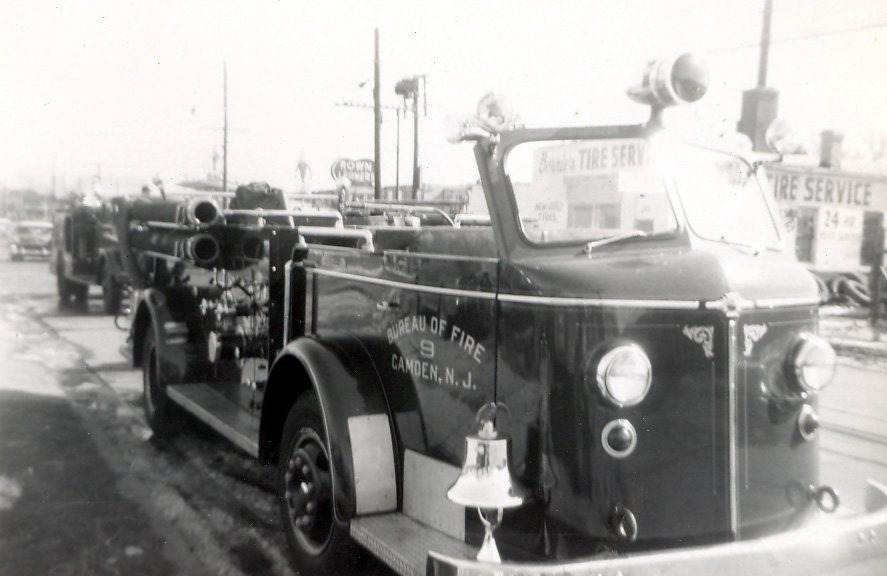
Engine 9 on Marlton Avenue, May 1960
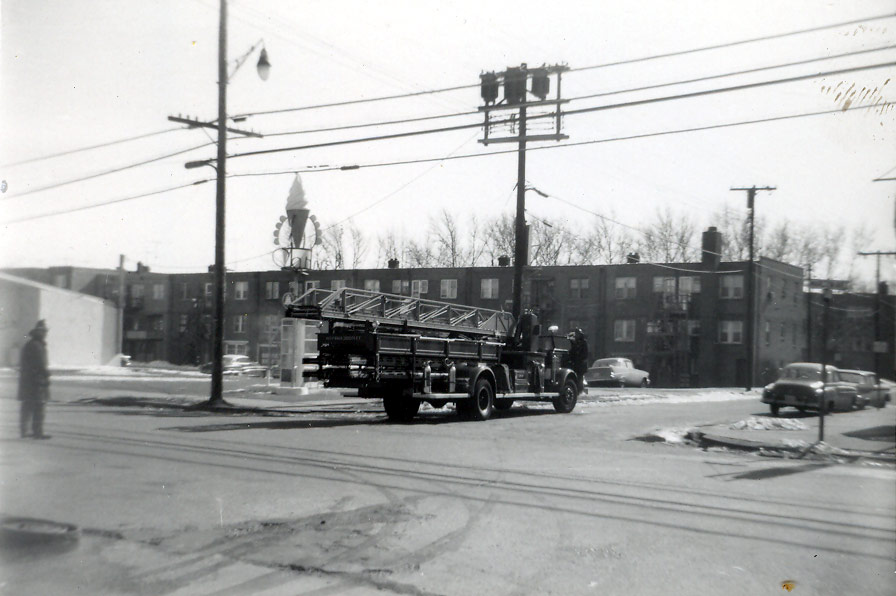
Ladder 3 turning onto Westminster Street, May 1960
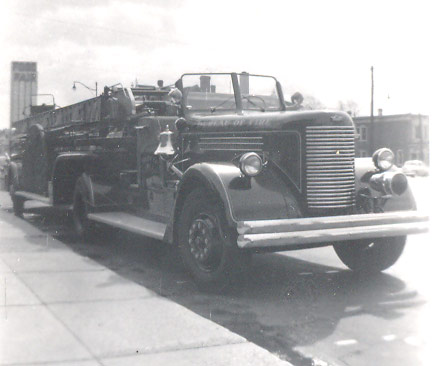
1947 Pirsch 100’ Aerial belonging to either Ladder 2 or Ladder 3, parked on Federal Street below 27th Street, 1950s or 1960s
The 34th & 34th East Side Gang!
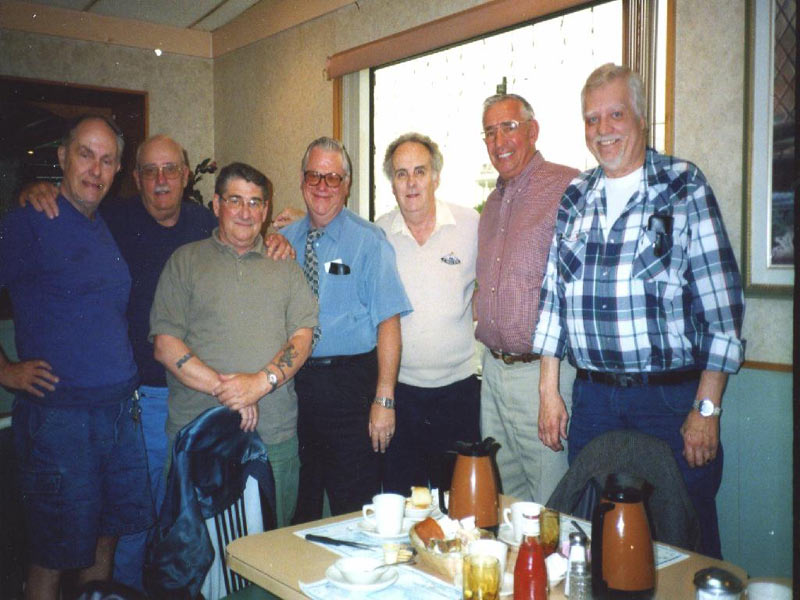
Not to be confused with the notorious North Cramer Hill Gang (those guys pulled stickups!), this fine group of life-long friends grew up in East Camden in the 1940s & ’50s, in the 500 & 600 blocks of North 34th & North 35th Streets. As they say, you can take the boy out of Camden, but you can’t take the Camden out of the boy. This photo was taken in 1991. From left to right: Don Thorne, Bill Chalmers, George Parks, Don Joyce, Bob Bartosz, Bill Emenecker, & Ray Kerby.
Federal Street East of 33rd Street
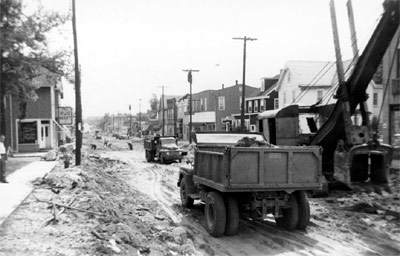
This May 15th 1956 photo by Bob Bartosz shows work being done on Federal Street from 33rd street to east to Route 130.
2400 Block of Federal Street
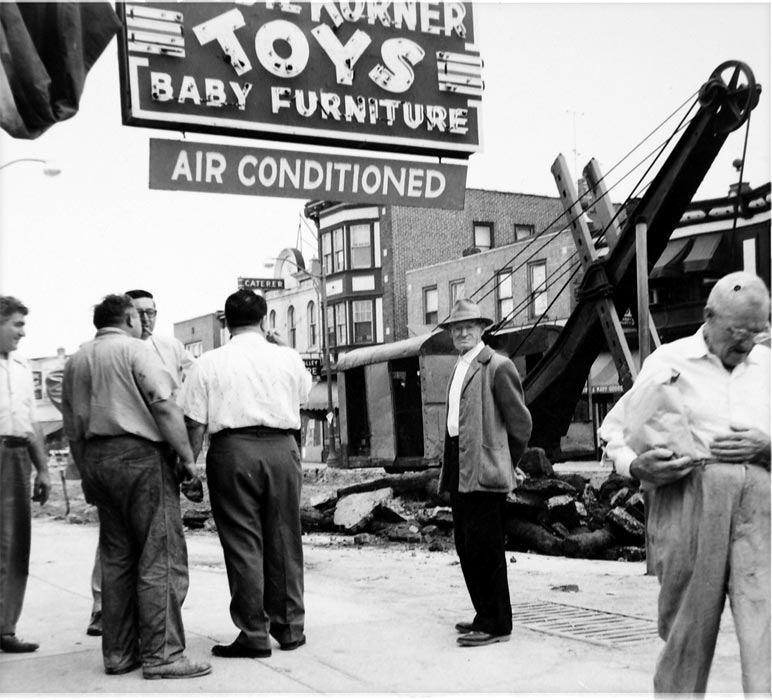
This mid-50s photo from Leehman Wexlin was probably taken by his father Charles, who owned the M & H Sweet Shop at 2406 Federal Street in the 1950s. This looks like the same steam shovel as in the photo above.
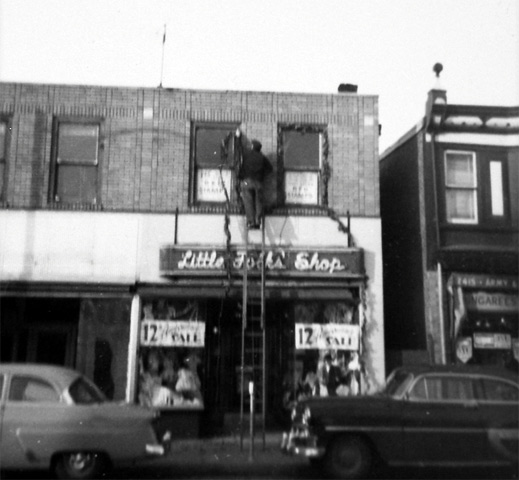
This mid-50s photo of 2413 Federal Street came from Leehman Wexlin and was probably taken by his father Charles, who owned the M & H Sweet Shop at 2406 Federal Street in the 1950s.
M&H Sweet Shop — 2406 Federal Street
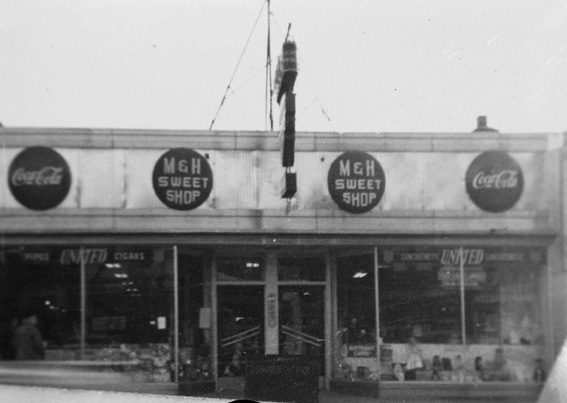
M&H Sweet Shop, 2406 Federal Street
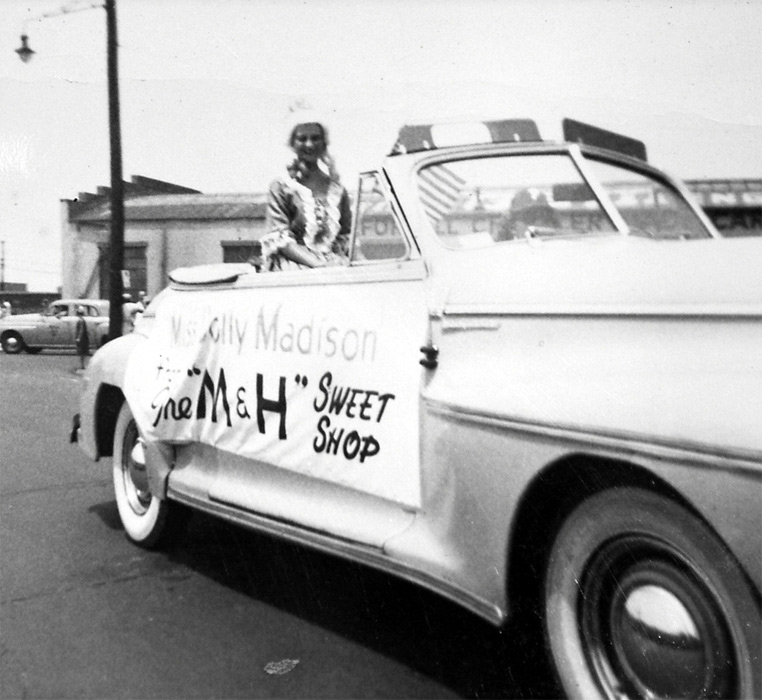
These mid-50s parade photos came from Leehman Wexlin and were probably taken by his father Charles, who owned the M & H Sweet Shop at 2406 Federal Street in the 1950s.
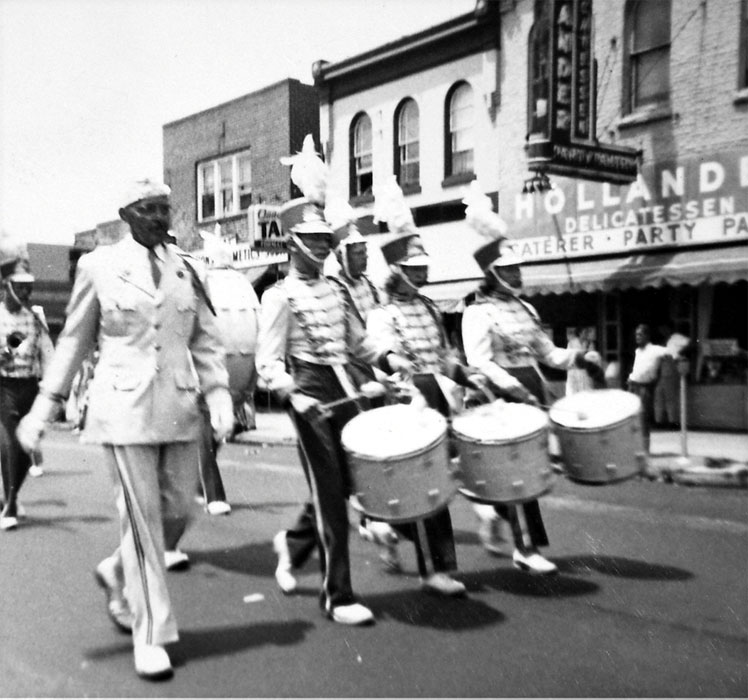
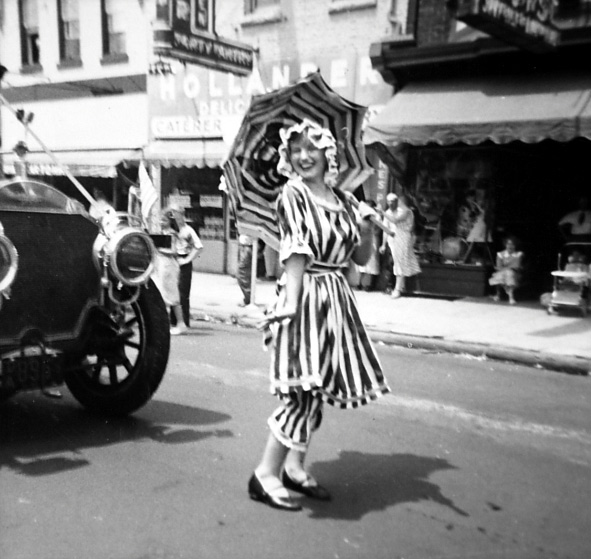
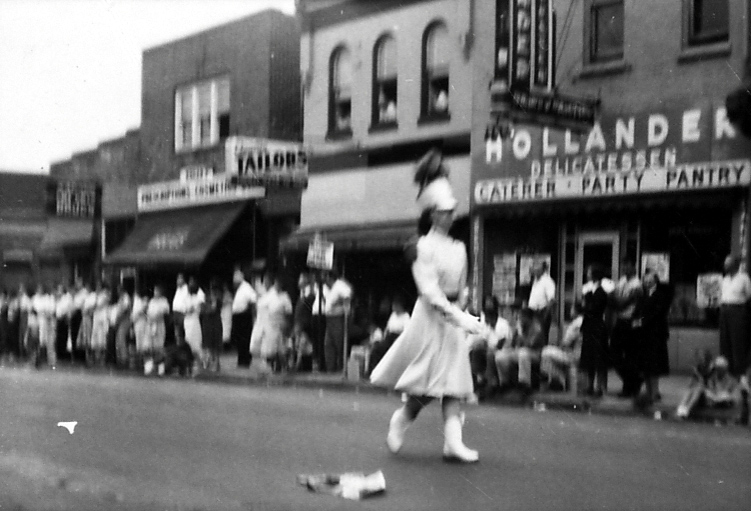
M&H Sweet Shop, 2406 Federal Street — Parade scenes from the mid-1950s
Geraldine Cohen Seinberg’s Memories of East Camden
Read the full memoir by Geraldine Cohen Seinberg about growing up on Morse Street in East Camden.
Harry McCurdy’s Memories
I had my first job at Kotlikoff’s, at 25th and Federal. They hired me as a part time stock boy, after school. But not until I got my “working papers” (do kids today need working papers?).
Harry McCurdy
March 2007
Moishe Ostroff’s Butcher Shop
My father, Morris Ostroff had a Kosher Butcher Shop on 280 Marlton Pike, Camden, New Jersey, and was loved by all. Born in 1916 and died in 1970.
Janice Schwartz
October 2009