Cramer Hill
Another work in progress page, this one is a result of popular demand, one might say. This page will include articles and pictures about the past and present of Cramer Hill.
As with most everything else on this web-site, it’s a work in progress, and I welcome your participation—
Phil Cohen
Camden NJ
Maps of Cramer Hill
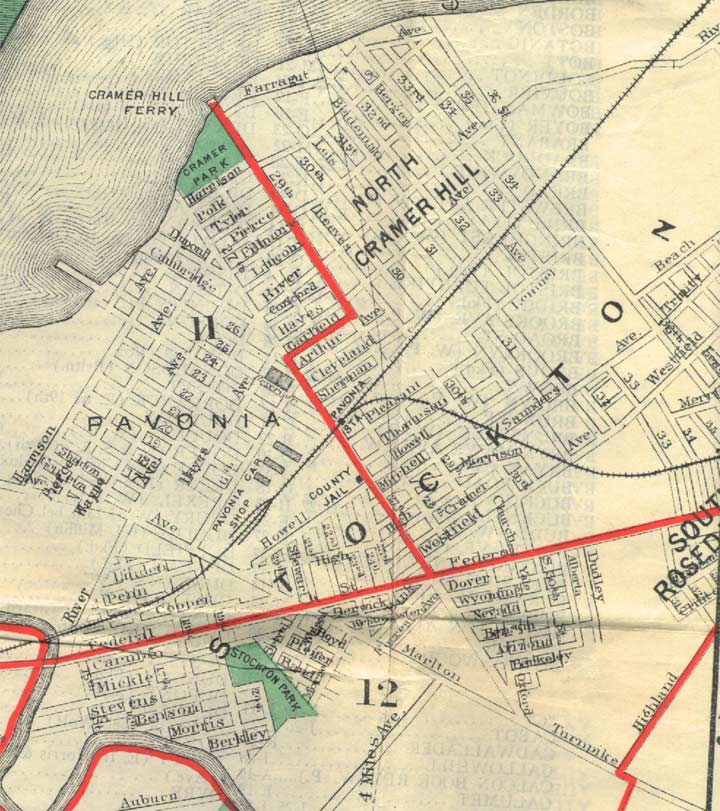
Cramer Hill & East Camden — Map published in 1914
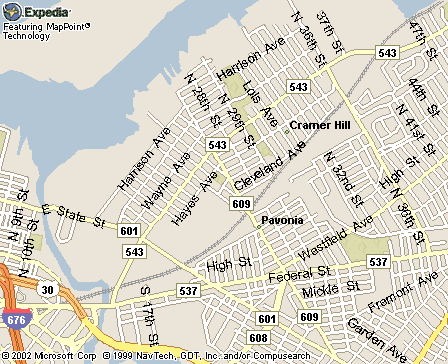
Cramer Hill & East Camden — Map published in 2002
Alfred Cramer
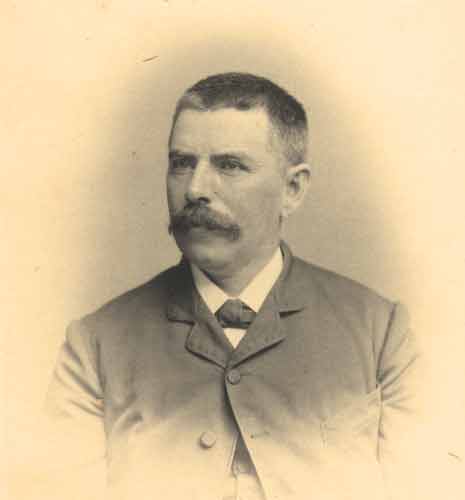
Alfred Cramer — 1885
Cramer Hill derives its name from Alfred Cramer, who in the late 19th century purchased large tracts of farmland, for the most part between Federal Street and the Delaware River in what was then Stockton Township, subdivided the land into building lots, and sold them on an installment basis to people of average means. This was a new innovation in real estate sales at the time, and proved a great success. He also served as postmaster in the section for fifteen years, running a “Cramer’s Hill” post office from April 24, 1878 to Dec 12, 1893. When he resigned, Charles W. Scott took over as postmaster of “Cramer Hill” from December 12, 1893 to September 30, 1899. After that mail service was then done by Camden.
Originally referred to as Cramer’s Hill, the term Cramer Hill originally referred to the elevation north and west of 27th & Federal Street. Over the years the definition changed, and the term Cramer Hill came to refer to the area that lays northeast of State Street and northwest of the railroad and railroad switching yard that runs parallel to River Avenue. This switching yard is known as the Pavonia Yard. The term Pavonia referred in Alfred Cramer’s time to the area northwest of Federal Street between State and North 27th Street. The old Pavonia railroad station was located at North 27th Street, and Camden’s old City Water Works Reservoir was located in the Pavonia prior to October 3, 1902 when its walls fell. Many thousands of dollars of damage was done to property in the trail of escaping water. Over time the term Pavonia fell into disuse, and by 1980 only the Pavonia House bar, the Pavonia-Hower Coal Company, and the railroad yards still carried the name. By 1990 both the bar and coal company were gone. The railroad yard also expanded greatly in its width forming a division within Cramer’s original landholdings, and the words Cramer Hill arrived at its present meaning.
The main road that runs through Cramer Hill, and where most commercial activity has always taken place is River Avenue, which runs the length of the area between the Delaware and the railroad all the way to the city limits and on all the way up to Burlington NJ. The area is bisected by North 27th Street, and the intersection of North 27th Street and River Avenue is arguably the “heart” of Cramer Hill, with two of the three public schools, the former movie theater, and many of the churches and in earlier times social clubs located centered around the intersection. Along the Delaware River there was commercial activity, as the Noecker, Rickenbach and Ake Shipyard was located at the foot of 27th Street, and many other businesses and factories of different sizes located along the rail line and on River Avenue. A huge plant that made plumbing fixtures was for years just over the city limits along River Avenue in Pennsauken, and a bridge connected Cramer Hill with the oil refinery on Petty’s Island.
A creek called Baldwin’s Run also bisected the area, running parallel to 27th Street north of 30th Street. Over time the creek became what was described in the 1930s as “a mosquito filled swamp” and “a health menace.” Frederick von Nieda, who was Camden’s mayor in the mid-1930s campaigned for almost forty years to have the swamp eliminated. Money for the project was finally appropriated after World War II, and Baldwin’s Run was cleaned up, the project being completed shortly before Mr. von Nieda’s death in February of 1950. The newly created park was named Von Nieda Park in March of 1950 by the Camden County Park Commission.
When Alfred Cramer was originally developing the area along River Avenue, a great many people of German origin purchased lots there, and the area for many years saw a large segment of its populace be of German descent. However, like every other area of Camden, the area was at no time ethnically exclusive. The area was one of the last to integrate housing wise, this due in part to the fact that the population of minority citizens in Camden was far less prior to 1950 than it is today and to the fact that many of the families who established roots in Cramer Hill tended to remain in the area. Separated from downtown Camden by the Cooper River, Cramer Hill did not experience the racial unrest that destroyed downtown Camden in the 1960s and 1970s. The area did suffer economically, however, as the rest of Camden did, when industrial jobs began to leave the city after World War II.
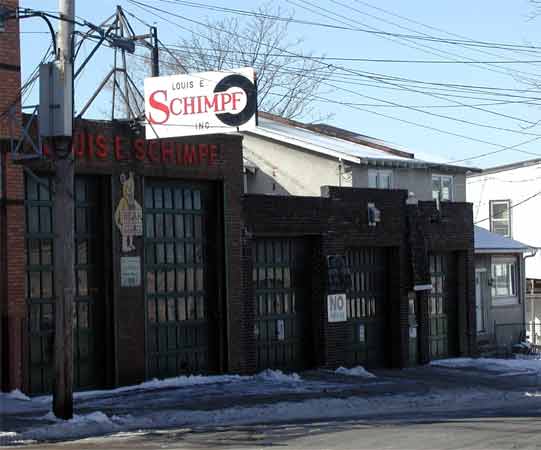
In time, the demographics of Cramer Hill did change. The population is fairly representative of Camden’s ethnic makeup today, although there is a far stronger Hispanic presence there than perhaps on other parts of the city. While the last German-American social club closed its doors in the early 1990s, there remain a few businesses in the area whose roots go back 80 years or more, among them the Lingo Inc. flagpole business, the Crescent Bottling Company, and the L. Schimpf Inc. auto repair shop.
In late 2003 a massive redevelopment plan was proposed for Cramer Hill. The proposal includes the construction of 5000 new homes, and the environmental clean-up of the Harrison Avenue landfill, which is then to be converted into a golf course. While this is in some ways reminiscent of the early 1960s proposal which was successfully battled by the residents of the then economically stable Cramer Hill, this proposal is on much better financial footing, and there was a general consensus throughout the neighborhood that the plan is both necessary and desirable. Unfortunately, some very loud and well-funded “squeaky wheels” managed to derail the project. Sadly, Cramer Hill will not see a comprehensive redevelopment. The neighborhood and the City sadly seems to have been sentenced to 30–40 more years of decay, crime, and misery.
Stockton Annexed Against Protest Of Democrats
Camden Courier-Post —
Fifty years ago, the old town of Stockton was annexed to the City of Camden over the protests of Democratic members of the town council.
But a Republican Legislature approved a bill introduced by former Justice Frank T. Lloyd on March 24, 1899. He was a member of the Assembly at the time. He resided then in the structure now occupied by the Sheltering Arms Home at Eighteenth street and River avenue.
The town of Stockton had been in existence five years when the annexation took place. Merchantville and Pennsauken township were part of the original Stockton Township with the present East Camden area. Merchantville received its charter as a borough 75 years ago this month. In 1892, Pennsauken township withdrew from the township to become a separate municipality.
For two years East Camden remained in the township. In 1894 Alfred Cramer, founder of Cramer Hill, launched a movement to create the town of Stockton and the first governing body was elected. Edward Dudley, then a leading lawyer, was elected councilman-at-large, which entitled him to preside as mayor. William S. Abbott, a lifelong resident, became clerk.
The town was divided into three wards. Fred Voigt and Justice Lloyd also served with Cramer and Dudley in the town council. The town hall was on the triangle, at Twenty-seventh and Federal Streets.
Albert Plum and William C. Reeves were justices of the peace. Samuel M. Jaquillard served on the Board of Freeholders as did W.O. Buck and Joseph Funfer. Charles E. Allen was a member of the Board of Education.
After the annexation Abbott was elected to Camden City Council. Others elected were Dr. William H. Kensinger, now a resident of Florida; Frederick S. von Nieda, Frederick H. Finkeldey, president of the first Playground Commission; Arthur R. Gemberling, now of Woodstown.
Other active citizens were Lemuel D. Horner, undertaker; Dr. H. F. Hadley, Jacob Bendinger, proprietor of the Rosedale Inn, and Walter L. Tushingham, former vice-president and general manager of the Courier-Post Newspapers.
27th Street South of Arthur Avenue
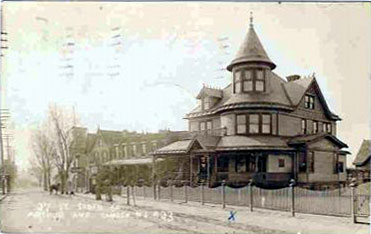
Home of Dr. William Kensinger — About 1900
27TH ST. SOUTH OF ARTHUR AVE. CAMDEN N. J. #[?]
Early 1900s Map
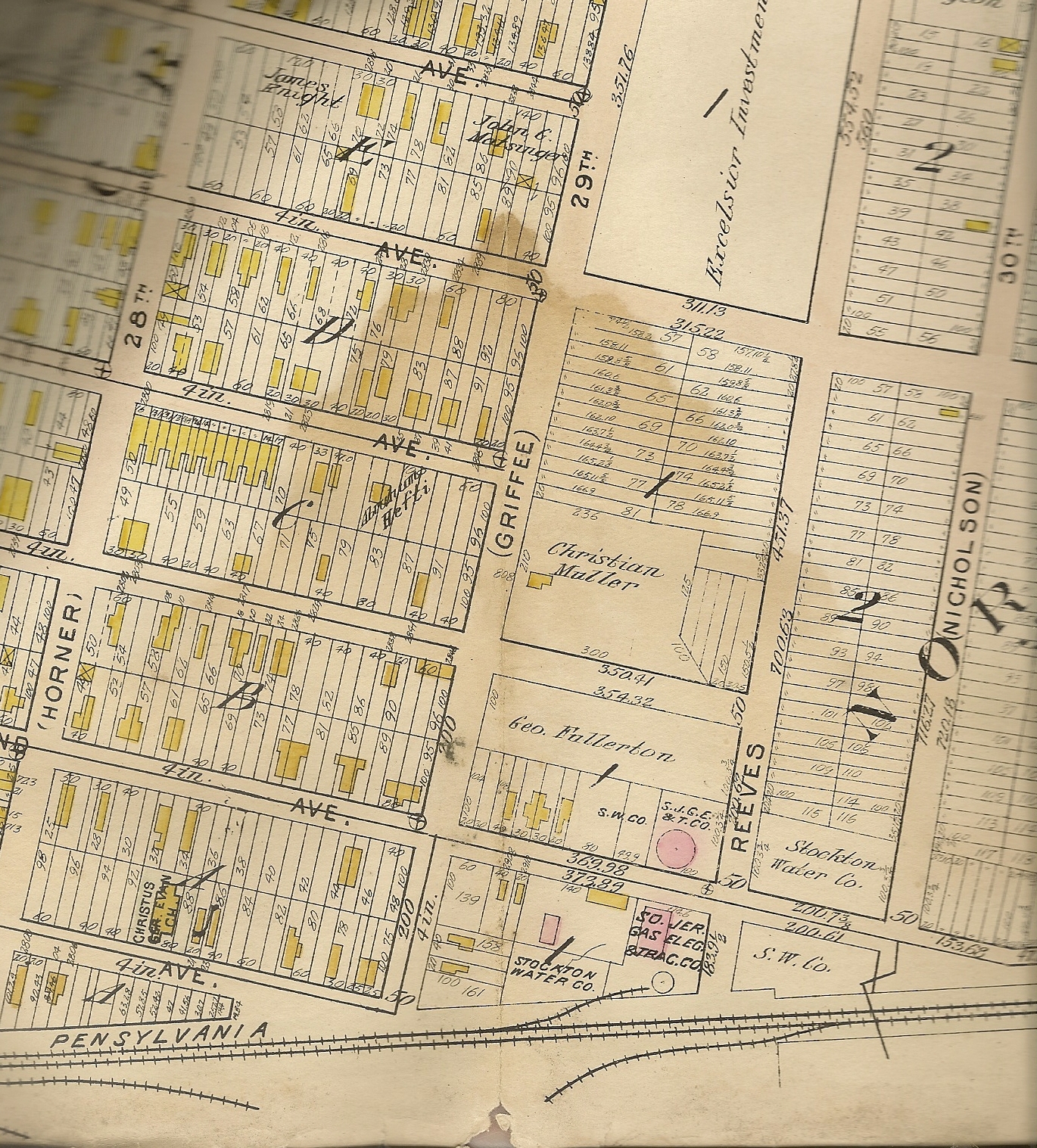
Map from early 1900s (1900–1920s) showing North 29th Street and Griffee Avenue street names. Map is of North 29th Street from Sherman Avenue to across Concord Avenue. The mostly undeveloped land between North 29th Street and Reeves Avenue became Von Nieda Park.
George Washington School on Cambridge Street — Circa 1912
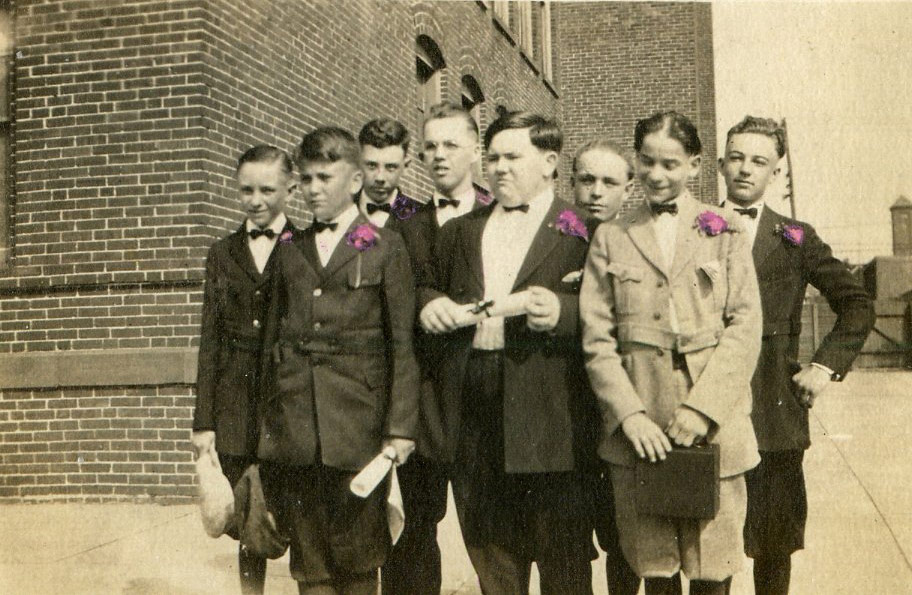
Looking East towards River Avenue
Third from left — Raymond Curtis.
Look at that Oliver Hardy twin center.
The hose tower at the rear belonged to the firehouse of North 27th Street.
Photo courtesy of Bruce Jay Smith
Memories of Bob Turner
I was born in Cooper Hospital in 1938, was raised in Cramer Hill at 2724 Hayes Avenue. I attended Washington, Sharp, and “Vets Memorial,” then graduated from Woodrow Wilson in ’56.
Oh would I love to go back and walk those streets of Cramer Hill… I had a Courier-Post paper route that encompassed Hayes, Garfield, Arthur, Cleveland Avenues from 27th to 29th. I still could do that route in my head.
I remember Howard Unruh like it happened yesterday… I can still smell the tomatoes cooking at Campbell soup. From my third story attic bedroom I can still recall the PSFS sign lit up across the Delaware river at night.
I remember the pumping in of the fill to make Von Nieda park, it was a low land marsh that we would get “cat tails” from and then dry them and light them as punks at night to keep the bugs away. Thanks for taking me down memory lane.
Bob Turner
Summerfield, Florida
November 11, 2004
20 Reasons Why You Remember Cramer Hill
Von Nieda Park — 2003
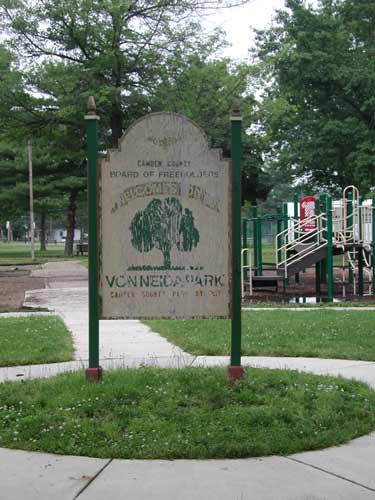
Von Nieda Park — 2003
Bars & Clubs in Cramer Hill
Talk about Cramer Hill, and sooner or later the conversation will get around to the bars and social clubs that were so much a part of the social life of the neighborhood for many years. It’s hard to believe, but there are only four bars and two liquor stores still open in Cramer Hill as of January 2004.
| Address | |
|---|---|
| 1787 River | 1964–2003 The Chateau |
| 1898 River | 1918–1931 George Huder 1939–1959 Niewinski’s Cafe 1964–1966 Walt’s Place 1970–1984 Gretta’s Inc 2000 Sunshine Lounge |
| 2000 River | 1939–1966 Keating’s Cafe 1970–1981 Lin-Rick Tavern 2000 G & N Grocery Store |
| 3125 River | 1939 Alfred Ray Munyan 1943 George W. Starr 1947 Red Anchor Bar 1954–1964 Anchorage Bar 1966–1982 Anchor Bar |
| 3209 River | 1940–1943 George E. Hoover 1947–1983 Engel’s Cafe 1983–2001 Silver Dollar Saloon — Billy & Marge Eckel |
| 2802 Buren | 1940 August W. Oswald Jr. 1947–1970 Jimmy’s Tavern 1976–1977 Step Inn 1990 Gone |
| 1006–08 N 24th | 1918–1928 Hugo Stettnisch 1931 Adolph Newmeyer 1940 Joe Wandy’s Chateau |
| 1010–12 N 24th | 1954 Al’s Cafe 1959 Steve’s Cafe 1964–1980 Little Tavern 1982 Gregory Cafe 2003 Closed |
| 641 N 25th | 1947 This was a grocery store! 1970–2002 Terry’s Cafe 2003 Vizcaya Liquors |
| 949 N 25th | 1918–1921 Charles Irle Sr. 1926–1928 William J. Hinkson 1929–1931 Mrs. Mary Hinkson 1939–1947 Beatty’s Grille 1959–1966 Juno’s Tavern 1970 Schoell’s Tavern 1977 Crane’s Tavern Late 1988 Olde City Brewery Tavern 2003 Closed |
| 925 N 26th | 1947 Lincoln Association |
| 948 N 26th | 1914–1947 Strahle’s Cafe 1956–1980 Pavonia House Destroyed by fire in the early 1980s |
| 1148 N 26th | 1939 Jacob Merger |
| 721 N 27th | 1918–1930 Leon Faerber 1936 Pavonia Cafe 1939 Joseph “Joe Wandy” Wandsleben 1947 No Bar |
| 854 N 27th | 1934 Unknown Saloon |
| 933 N 27th | 1939–1947 Silver Rail Grille |
| 1000 N 27th | 1939 August W. Oswald Jr. 1940–1947 Dick’s Cafe 1959–1970 Rio Bar |
| 1006 N 27th | 1939 Harry L. Jarvis 1947 No Bar |
| 1014 N 27th | 1939–1947 11th Ward Democratic Club |
| 1031 N 27th | 1947–2001 Germania Maennerchor |
| 1101 N 27th | 1919–1984 Pepeta’s Cafe |
| 1251 N 27th | 1918–1919 William E. Banks |
| 2900 Adams | 1979–2008 Waterview Inn |

The Former Home of Mayor Frederick von Nieda
Frederick von Nieda was the Mayor of Camden in the mid-1930s. A resident of Cramer Hill for almost 50 years, Mayor von Nieda lived in this home until his death in February of 1950.
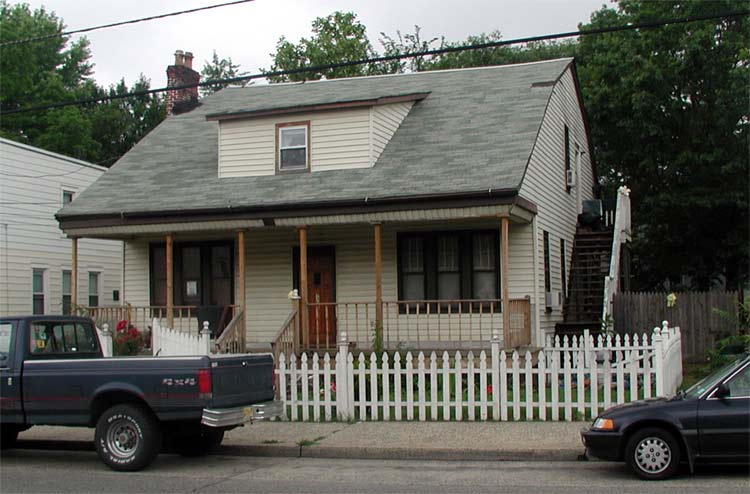
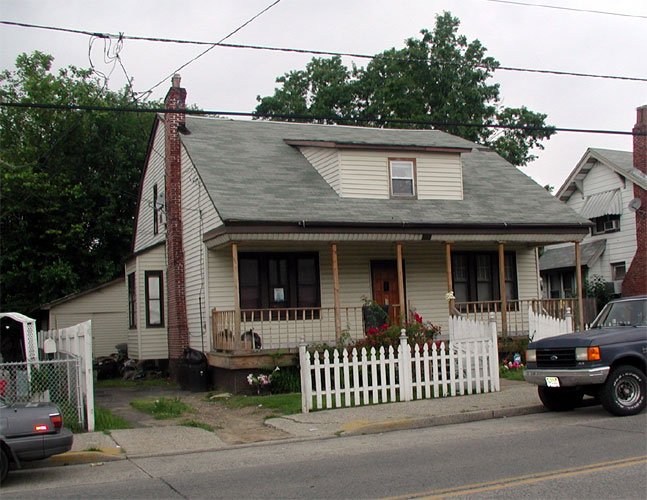
3009 River Avenue
The Rio Bar
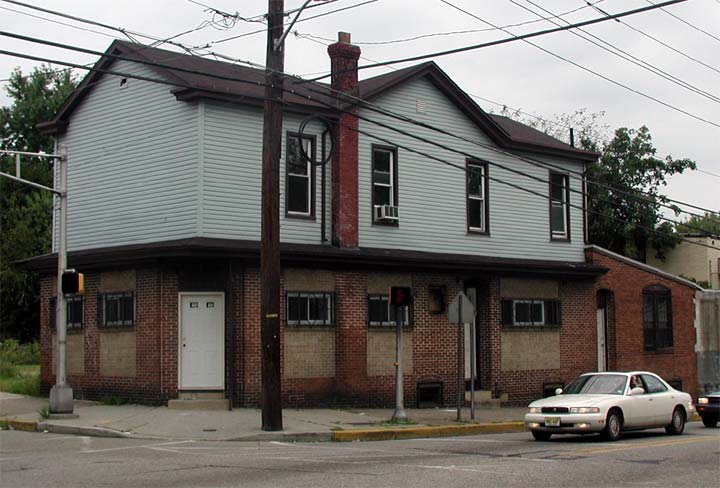
North 27th Street & River Avenue
The Rio Theater
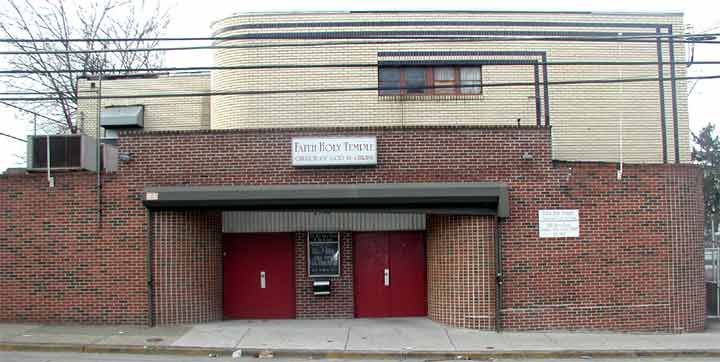
The Rio Theater
The Rio Theater was originally called The Auditorium, and was opened up by Herbert Megowan, one of the first entrepreneurs to go into the movie theater business. He later sold the property to Samuel Varbalow’s Savar theater chain. The theater was later renamed the Rio. The Rio closed its doors in the 1960s, and became the home through the late 1970s of the Cramer Hill Boys Club. The former theater has for many years been the Faith Holy Temple Church of God in Christ.
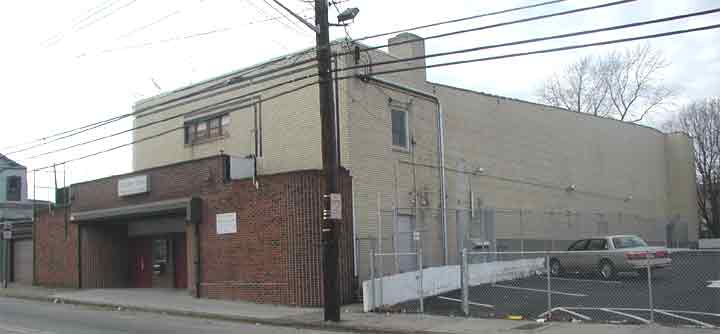
The Rio Theater
1925 — Delaware River Bridge Construction
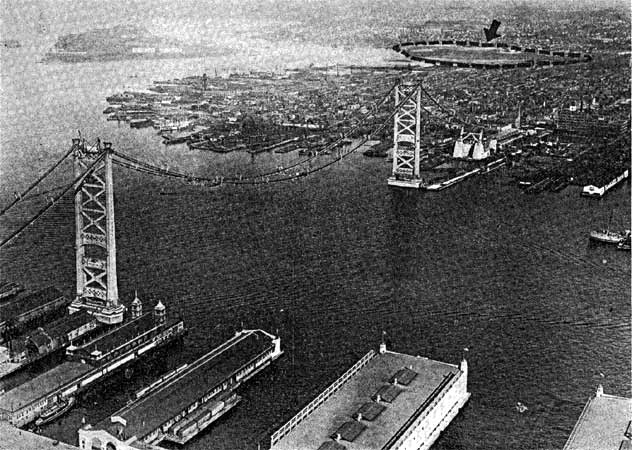
1925 — Delaware River Bridge Construction, North Camden & Cramer Hill. The circled area is the Harrison Avenue garbage dump. In 1925 the site was considered as a location for an airport to serve Camden and Philadelphia. The site has remained undeveloped and in need of environmental cleanup. In the fall of 2003 plans were announced for a cleanup and conversion of the site for use as a golf course.
Club Dance Tonight
Camden Courier-Post —
The Eleventh Ward A. C. will hold its first annual dance tonight at Morgan’s Hall, Fourth and Market streets. Three South Jersey and one Philadelphia District A. A. U. champion will be the honored guests. The honored guests are Phil Mungo, Bill Toomey, Georgie Wright and Eddie Gehringer. The committee in charge of the dance is composed of James Zimmerman, chairman, Charles Hutchinson, Ed Peard, Jr., and James McCann.
Checked and Double Checked
Camden Courier-Post — — By Jiminy (James M. O’Neil)
Quite a few Cramer Hill readers were amused at an odd little incident on River Avenue the other day… It appears that an absent-minded driver of a milk wagon was riding, not his wagon, but on a bicycle… His thoughts were probably in Timbuctoo or the South Pole; at least he wasn’t thinking of what he was doing… For as he started up a hill, on which a number of persons were waiting for a bus, he said something aloud and immediately began to pedal more industriously… What he said was “Giddap!”
’Benedicts’ to Play Pierce A. C. Tomorrow
Camden Courier-Post —
The Married Men of Eighteenth Street and Pierce A. C. will hook up in the “rubber” of their three-game “father, son, and neighbor” tussle tomorrow morning, at Twenty-second Street and Pierce Avenue. The scrap will start at 10 o’clock.
Earl Cholister will seek to last nine innings for the “Benedicts,” while Lloyd Mick will toss them up for Pierce A. C.
11th Ward Women Hold Card Party Tonight
Camden Courier-Post —
A card party will be held tonight by the Eleventh Ward Woman’s Democratic Club at Red Men’s Hall, 715 North Twenty-Seventh Street.
The men’s club is co-operating at the function, which will be the last of the season. Mrs. Grace MacDonald will be in charge, assisted by Mrs. Helen Rush, president of the Woman’s club, and Walter T. Bateman, president of the men’s club.
Eleventh Ward Frolic to Aid Boy Athletes
Camden Courier-Post —
Street dancing and exhibitions of boxing and wrestling will be features of a pinochle party to be held by the Eleventh Ward Athletic Club on the grounds adjoining the club house at 1014 North Twentieth street, a week from tomorrow night. Proceeds will be used toward providing better athletic quarters for boys of the ward, and possibly towards playground facilities for the smaller children. Four champions will be among those taking part in the exhibitions. Prizes will be awarded winning card players, and an orchestra will play for the dancing, Dr. Ethan A. Lang, president of the club, announced.
Patrol Sought to Protect City Gardens for Unemployed
Camden Courier-Post —
A “garden patrol” will be organized tonight to protect “Garden City,” established by Rev. James G. Rodger at the Girard Estate tract east of Cooper river off State Street.
Dr. Rodger, world traveler, missionary and lecturer, will address more than 150 of the 300 gardeners who have cultivated the grounds to provide vegetables for families of unemployed. He is former president and at present a director of the University Union Internationale, of Washington, D.C. and Shanghai, China.
Seven unemployed men at present form the “police department” of “Garden City.” It will be necessary to increase this number before next week, Dr. Rodger said. Plans also will be discussed to boost the number of gardens to more than 500 this year. Fully 300 acres, sufficient to provide for 1000 family gardens, are available at the tract. There were but 25 gardens cultivated last year.
In addition to this tract Dr. Rodger has directed cultivation of approximately five acres at the Reynolds tract, between Princess and Memorial avenues. Eight gardens on this site last year has been increased to 20 this summer.
Altogether more than 500 families at present are benefiting from Dr. Rodger’s project, which was the forerunner of the present Emergency Relief Administration program of garden development. Dr. Rodger, who resides at 721 Cooper Street, also has spread the idea throughout this eastern portion of the country.
Stray Dogs Damage Gardens of Jobless
Camden Courier-Post —
A plea to East Camden dog owners to keep their pets away from gardens of the unemployed was issued Saturday by John Emory, chairman of the Cox Tract group, whose 90 miniature farms are located in the vicinity of Twenty-first Street and Pierce Avenue.
Dogs running at large, Emory said, have destroyed much of the early produce in the gardens. He indicated that assistance of the police would be sought. The tract, one of the most extensive in the city devoted to unemployed gardening, has begun to supply many of the families with fresh vegetables, Emory reported.
Cramer Hill Stores Praised by Officials
Camden Courier-Post —
Importance of neighborhood business was stressed last night at an open air meeting sponsored by the Cramer Hill Businessmen’s association, at Veterans Park, Twenty-sixth street and Hayes avenue. Businessmen of the section were praised in brief talks by Mayor Frederick von Nieda, Mayor Joseph H. Van Meter, Collingswood, and Joshua C. Haines, recorder of deeds.
Prizes were awarded to Mrs. Newton Ash, 840 North Thirtieth street, electric refrigerator; Walter Conine, 1809 River avenue, radio, and George Blanck, 1026 North Twenty-first street, vacuum cleaner.
Officers of the association are Frederick Wolf, president; Charles Till, vice president; Richard Liebert, secretary and George Stiefel, treasurer. Trustees are: Edward Wenner, Joseph Till and Sylvester Onesty.
Underpass Sought for Cramer Hill
Camden Courier-Post —
Peril to Children Crossing Tracks Discussed by Legislative Forum
Possibility of amending existing statutes providing state aid for elimination of grade crossings to permit financing an underpass in Cramer Hill was suggested by City Commissioner Hartmann to State Senator Burling and Assemblymen Lawrence H. Ellis and Millard E. Allen at the weekly legislative forum.
Hartmann, attending the session on other matters, was asked by the legislators to join a discussion started by Clarence Dunkleberger of the Eleventh Ward.
Dunkleberger pointed out no streets cross the railroad tracks between River road and Westfield Avenue, between Twenty-seventh and Thirty-sixth streets. He said parochial and high school students cross the tracks at great danger, and suggested some way be found to compel the railroad to provide an underpass at Thirty-first street, Thirty-second Street, Lois or Beideman avenue.
Burling said that matter was one for the city’s legal department to pursue. Hartmann was called in, and said three solicitors have given opinions that the railroad cannot be forced to act. He also said such an underpass would cost $400,000, not $40,000, the figure named by Dunkleberger.
“We are unable to get state aid because there is no crossing there to eliminate,” Hartmann said. “If the law could be changed to cover such situations, we might be able to work out something. Certainly an underpass is needed there.”
Dr. Ethan A. Lang, Eleventh ward physician, has been seeking for a long time to have something done about the situation, but has been stymied by the high cost.
Officers Installed by 11th Ward Women
Camden Courier-Post —
The Eleventh Ward Women’s Organization Republican Club last night installed officers with Mrs. Minnie Martin beginning her ninth term as president.
The installation was held in O’Donnell’s cafe, Thirty-ninth and Federal streets.
Mrs. Etta C. Pfrommer, former Eleventh ward county committee-woman, installed. Other officers besides Mrs. Martin and Mrs. Margaret Huckle, first vice president; Mrs. Matilda Bensel, second vice president; Mrs. Harriet Stone, secretary; Mrs. Louise Monte, treasurer; Mrs. Frances Jaqueillard and Mrs. Edith Gerber, trustees.
Mrs. Bertha Hammett was toastmaster and Mrs. Stone, chairman.
20 Firemen and Police Save Two Boys Marooned in River
Camden Courier-Post —
Their Rowboat Stuck in Mud Flat, Brothers Frantically Cry for ’Help’ Three Hours; Rope Pulls Craft Ashore
Two small boys, brothers, were rescued after being marooned three hours in a rowboat on a mud flat in the Delaware east of Cooper river.
The rescue was effected by Camden police and firemen after the boys had frantically yelled for aid. Despite their long exposure, the boys were discovered to be in good physical condition when police took them to Cooper Hospital at sundown Saturday.
John Castor, Jr., 11, of 511 North Eighth street, and Thomas Castor, 8, of 1228 North Nineteenth street, ventured out into the Delaware river in a boat they found moored off Ninth street. The mother of the boys is dead and John lives with his father at the North Eighth street address and the other boy with his grandmother, Mrs. Teresa Mather, at the North Nineteenth street address.
The boys said they started to return to shore about 2:30 p.m. and did not notice the tide had gone out while they were in the boat. The boat stuck on a mud flat north of State street on the shore of the old airport. The boys were unable to budge the craft and called continuously for “help!”
About 5 p.m., they attracted the attention of Harrison McNeir, 14, of 822 Birch, who happened to be walking along an embankment. Young McNeir ran to State street and told Patrolman Thomas Carroll and Clarence Barnes, who were in a radio car, about the plight of the boys.
They sent an alarm to police headquarters. Police were unable to reach the boys and summoned the emergency crew of the Camden Fire Department. The firemen, using a rowboat, also were unable to reach the flat.
Finally, a long rope was tied to the waist of Fireman William Deitz and he waded out in hip boots to the marooned boat. He tied one end of the rope to the rowboat containing the boys and waded ashore. About 20 firemen and police grabbed the other end of the line and pulled the rowboat off the flat to shore.
Dillon Convicted of Slaying on Barge
Camden Courier-Post —
Mixed Jury Returns Verdict of Manslaughter in Brother-in-Law’s Death
A mixed jury yesterday convicted William Dillon, 22, of manslaughter in the death of his brother-in-law, Frank Webley.
Common Pleas Court Judge Clifford A. Baldwin, who heard the case, said he would sentence Dillon next week.
After a fight aboard a barge off Twenty-ninth street Webley, 30, died in West Jersey hospital December 13.
Isaac W. Eason, assistant prosecutor, conducted the case. Anthony F. Marino represented Dillon with a plea of self-defense.
Captain Fred Dillon, owner of the barge and father of the accused man, told of the night of the fight and said both had been drinking. He said they drank half a gallon of wine. After the fight when, Captain Dillon said, he thought Webley was asleep on the deck, his son came to him and said: “I’m sorry but I had to do this, Dad.”
Webley was drunk when he came aboard, Captain Dillon testified. He said he thought Webley was hurt in a fall against a stove.
Captain Joseph Bowers, master of another coal barge, said he was on the death barge the night of the fight. He declared Webley had been drinking and that Captain Dillon gave him $2 to get a gallon of wine.
After hearing Dr. Edward B. Rogers describe the autopsy on Webley and the younger Dillon tell of the fight, the jury retired to find the verdict.
G.O.P. Clubwomen Report on Outing
Camden Courier-Post —
Group of Eleventh Ward Club Tells of Visit to West Point
Report on the visit of 34 club members to West Point recently was given last night to the Eleventh Ward Women’s Republican Club at its final season meeting, held at Thirty-ninth and Federal Street.
Mrs. Elizabeth Kile, Republican committeewoman, and Mrs. Mary Hendricks, Second ward committee-woman, spoke briefly and urged unified Republican effort at the September primary and November general election, according to Mrs. Margaret Starrett, president of the club.
Mrs. Florence Baker, Republican state committeewoman, was scheduled as guest speaker, but was not able to attend. She sent her regrets, Mrs. Starrett said.
Report on the West Point trip was made by Mrs. Starrett.
Mrs. Kile, who is gaining additional prominence in local Republican circles and who is also active in child welfare work, led the group composed of 34 of the club’s members and their guests on the West Point trip.
In addition to reviewing the cadets during parade and drill, the group also visited points of interest in the vicinity. Those who took the trip included Mrs. Ethel Hummell, Mrs. H. Hillman, Mrs. Anna Shissler, Mrs. Ida Behrens, Mrs. E. Virginia Chambers, Mrs. Anna Tarr, Mrs. Pauline Kile, Mrs. Margaret Starks, Mrs. Clara Kelly, Mrs. Mae Burdsall, Mrs. Carrie Lynn, Mrs. Emma Jefferson, Miss Norma Jefferson.
Mrs. Hazel Gutherman, Mrs. M. Chellew, Mrs. Starrett, Mrs. Helen McDonald, Mrs. B. Dukes, Mrs. A. Friant, Mrs. Mary Atkinson, Mrs. J. Schuck, Mrs. Clara Kaelin, Mrs. Gertrude Bailey, Mrs. Simona Anderson.
Mrs. L. Hott, Mrs. Abbie Lewis, Mrs. Eleanor Williamson, Mrs. Nan Fack, Mrs. Margaret Collins, Mrs. Mame Rickenbach, Mrs. Kile, members, and Mrs. Hendricks, Mrs. M. Sears, Mrs. D. Mick, Mrs. C. Lyons, Mrs. Dorothy Fields, guests.
Community Center Plans Youth Outing
Camden Courier-Post —
Community Center Plans Youth Outing
Boys and girls who attend the Community Center at 2818 River road will be guests of the Center next Wednesday at a picnic at Garrison’s Lake.
The children will be transported in buses from the Center. The boys will be in charge of former Mayor Frederick von Nieda, and the girls in charge of Mrs. Noel Magnus.
Defiance Athletic Club
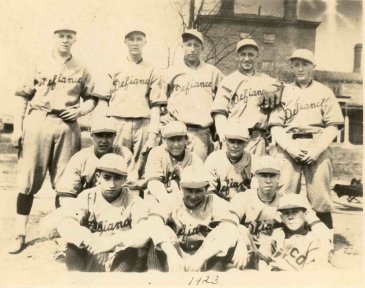
1923 Defiance Athletic Club — Elwood “Woody” Bearint is standing, at far left
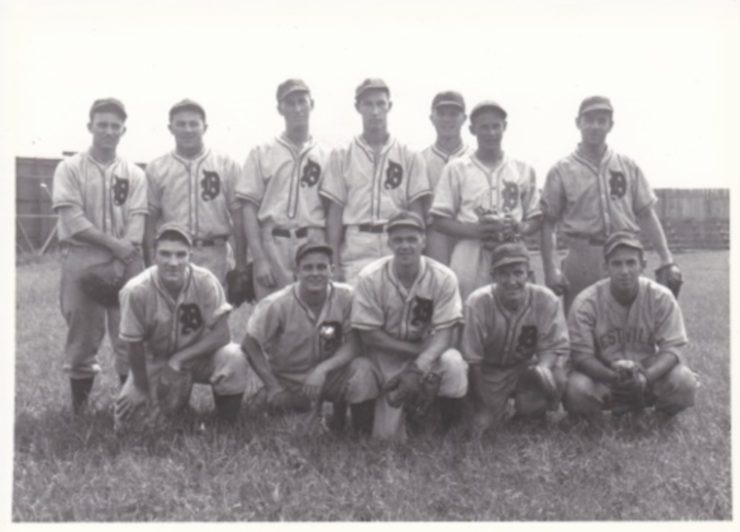
1939 Defiance Athletic Club — Elwood “Woody” Bearint is standing, at far left
Back Row: Lou Forrester, Fred Frett, “Whitey” Jepson, Ray Waldner, Hank Frett, Bob Montgomery, Charlie Henson. Front Row: John Sviben, Billy Cox, Mike Doran, George Goode, John Bugoski
Pierce Athletic Association
Camden Courier-Post —
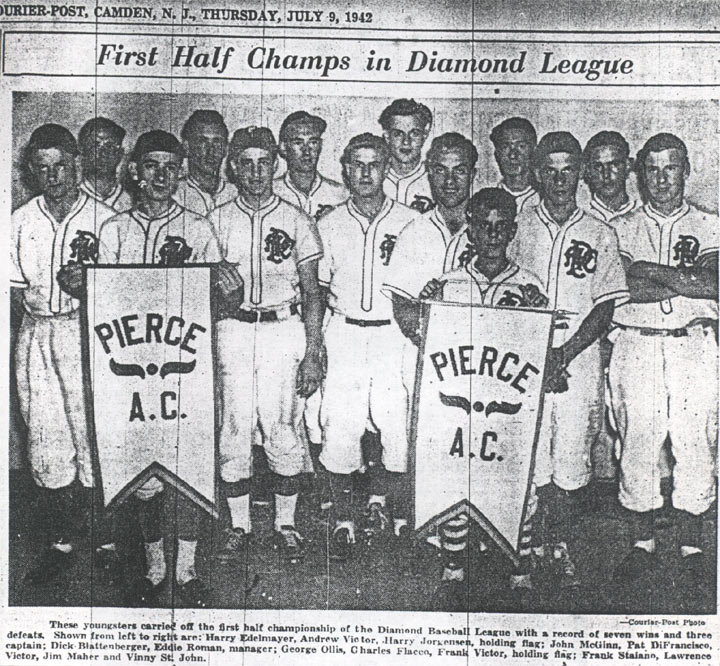
These youngsters carried off the first half championship of the Diamond Baseball League with a record of seven wins and three defeats. Shown from left to right are: Harry Edelmayer, Andrew Victor, Harry Jorgensen, holding flag; John McGinn, Pat DiFrancisco, [text cropped at edge] captain; Dick Blattenberger, Eddie Roman, manager; George Ollis, Charles Flacco, Frank Victor, holding flag; Frank Staiano, Lawrence Victor, Jim Maher and Vinny St. John.
Harry Edelmayer at far left
World War Two in Cramer Hill — Service Banner
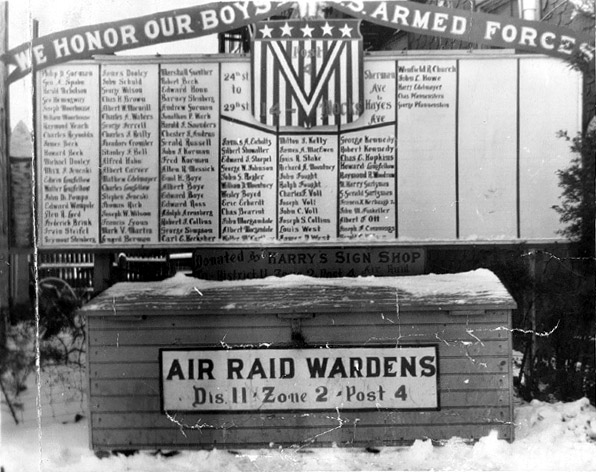
Cramer Hill’s civilian Air Raid Wardens erected this sign listing the names of Cramer Hill men then serving in America’s Armed Forces. Photo originally appeared in the Camden Courier-Post.
WE HONOR OUR BOYS IN U.S. ARMED FORCES
[shield emblem with a stylized M and the words "Post 4"]
24th st. to 29th st.
14 Blocks
Sherman Ave. to Hayes Ave.
[Painted panels of names, in columns; the names are too small to read reliably at the size of the scan.]
Donated by HARRY'S SIGN SHOP
District 11 Zone 2 Post 4 Air Raid [Wardens]
AIR RAID WARDENS
Dis. 11 - Zone 2 - Post 4
Cramer Hill Wildcats
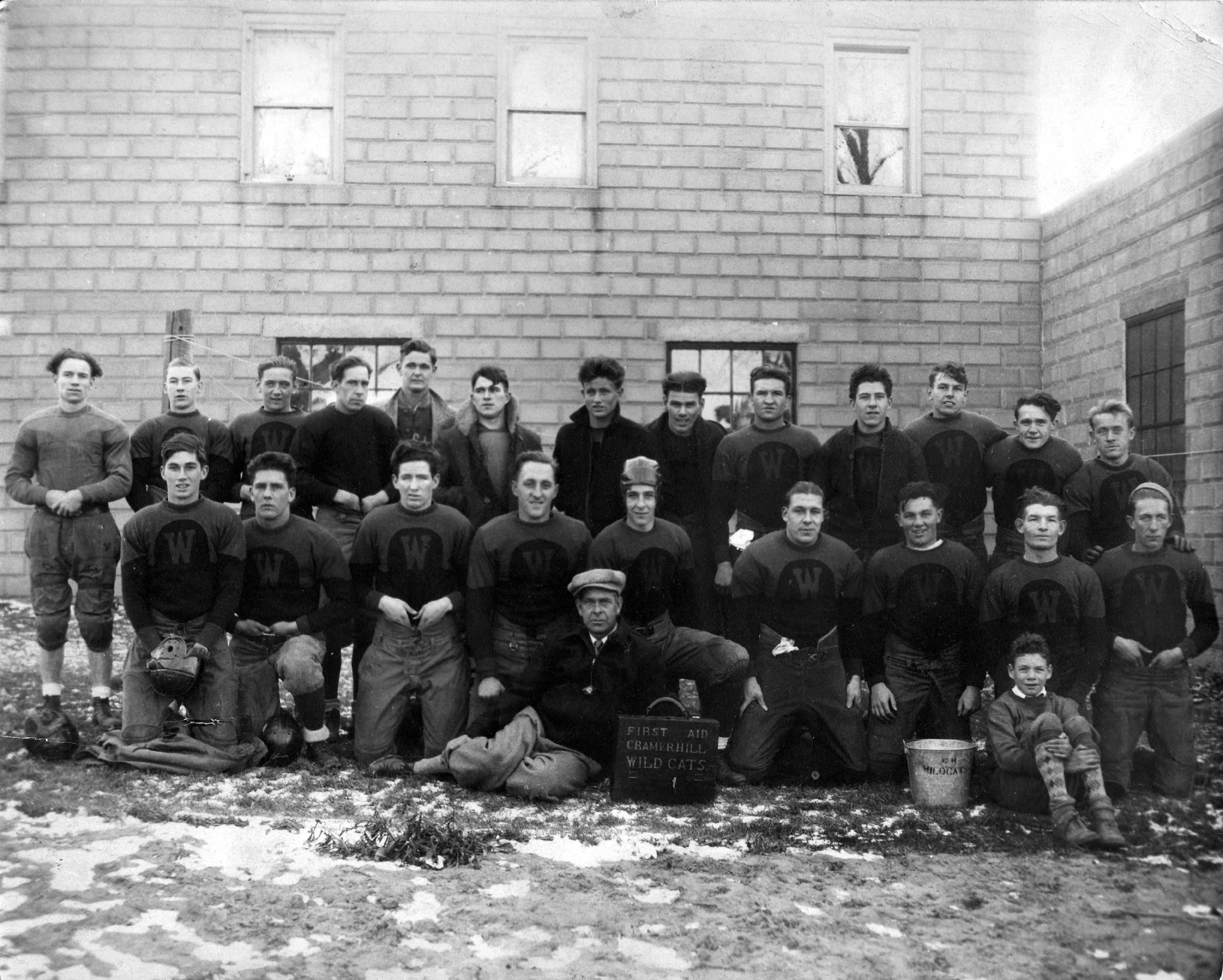
1932 Cramer Hill Wildcats
Front Row: Al Watson, Fran Stackenwalt, Bill Ruh, Tom Walters, Nary Comeau (seated), Fred Niessner, Ernie Christopher, Fred Frett, Amos Hawk, Carl “Dutch” Hoffman, Bob McCann (waterboy). Back Row: George Diem, Lou Uetz, John Ott, Fred Siether (coach), Wilson Rickenbach, Stu Patterson, Bill Jackson, ???????, Bill Hawk, Ray Lindsey, Charlie Schaal, Cliff Forver, Ed Beamer
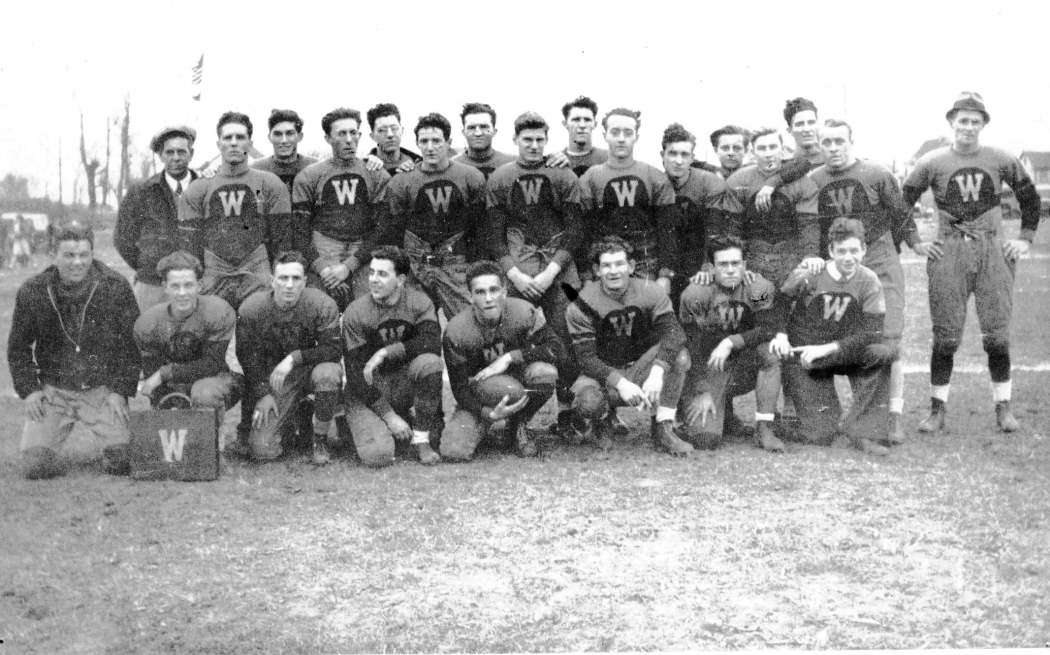
1935 Cramer Hill Wildcats
Back row: Nary Comeau, Frank Stackwalt, Al Watson, Carl “Dutch” Hoffman, Ray Lindsey, Leon McAmee, Bill Hawke, John Gilecki, Joe Jackson, Sam Beamer, Jim Hogan, Elwood Comeau, Lew Uetz, Bill Ruh, Ed Beamer, Paul Bearint (standing). Front Row: Fred Frett, Walt Lindsey, Al Colsey, Ted Carr, Tim Stackwalt, Amos Hawk, “Bud” Lecates, Bob McCann
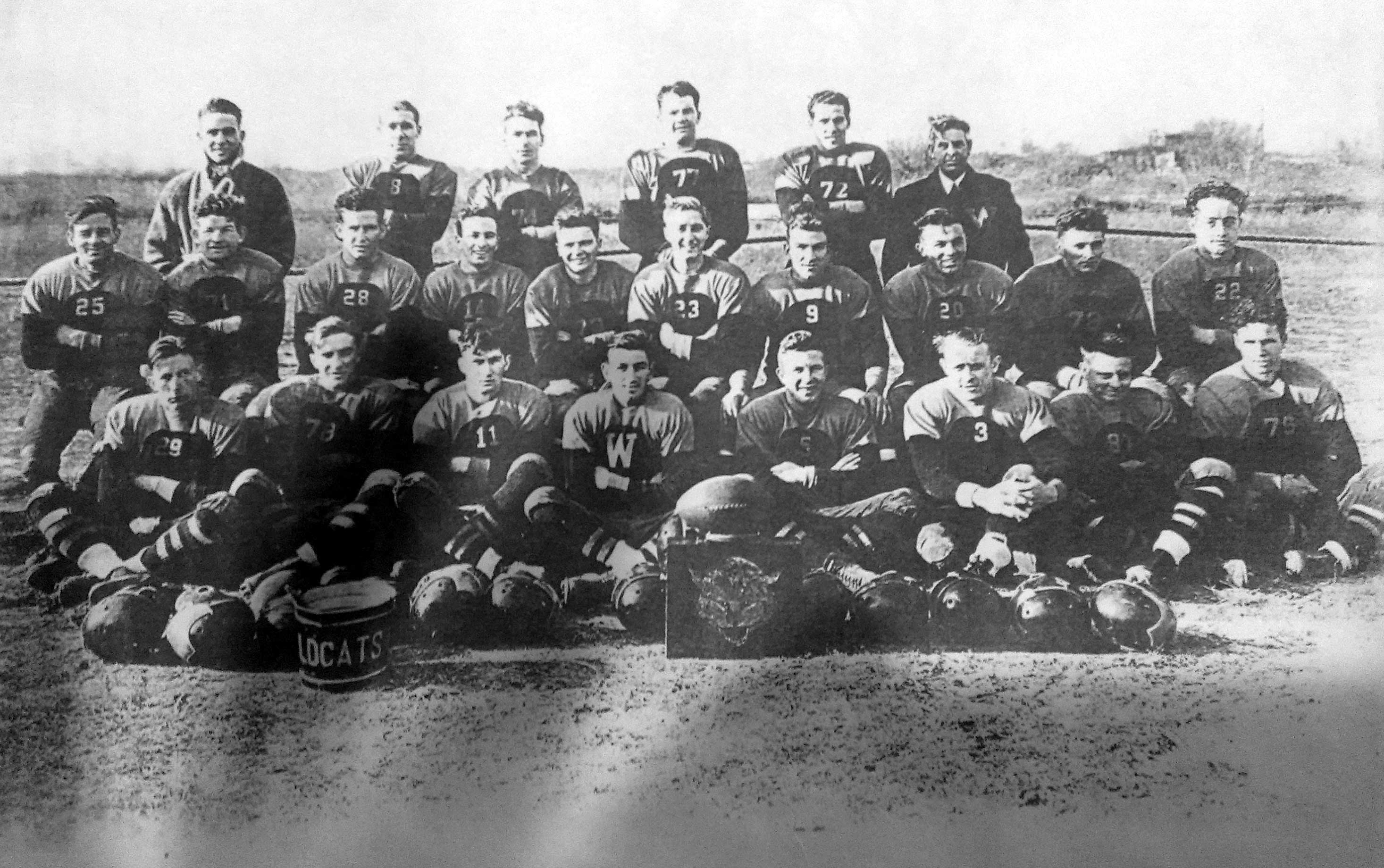
1937 Cramer Hill Wildcats
Top Row: Jim Stackwalt, Ernie Christopher, Charley Townsend, Jim McKerney, Earl Harvey, Nary Comeau. Middle Row: Charley Hensen, Amos Hawk, Bill Ruh, Al Colsey, Bernard McKerney, John Staas, John Sviben, Fred Frett, George Norton, Sam Beamer. Bottom Row: Carl “Dutch” Hoffman, ????????, Al Watson, Larry Sviben, ????????, Ed Beamer, Elwood Comeau, Jimmy Smith
Photo was taken at North 24th Street and Harrison Avenue. Note the Farragut Club in the background.
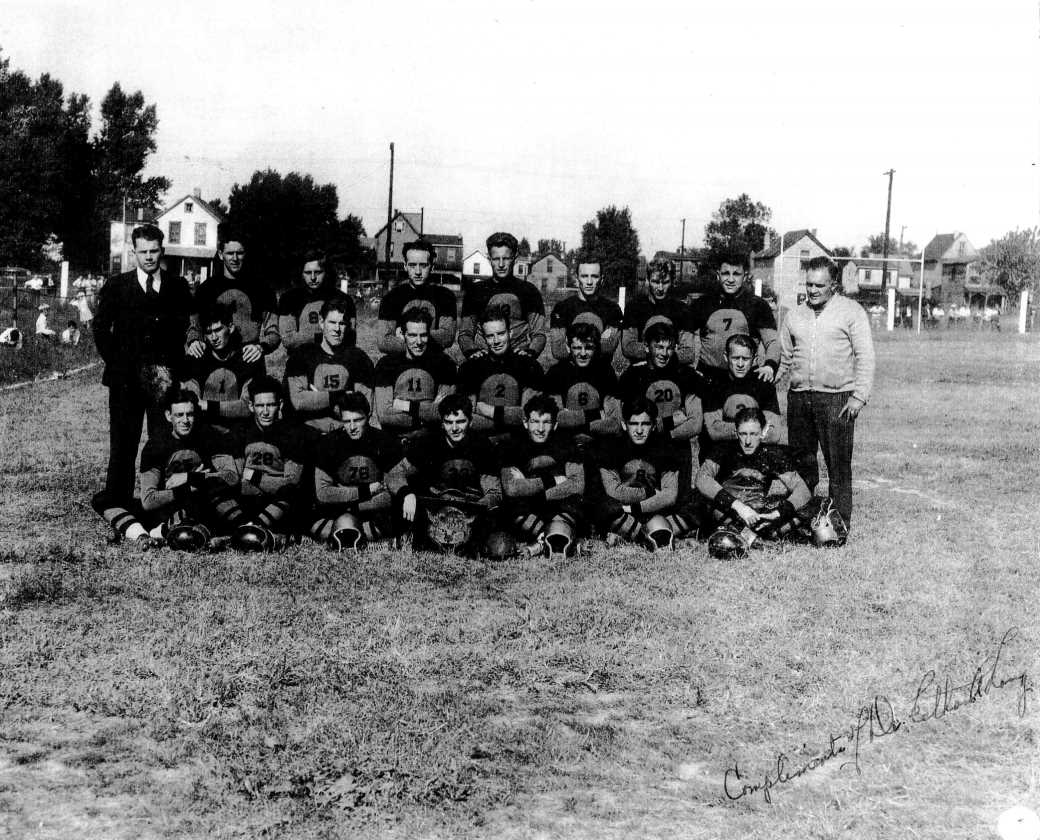
1938 Cramer Hill Wildcats
Back row: Jim McKerney, Paul Bearint, Al Comeau, Sam Beamer, Bill Jackson, Al Colsey, Lou Uetz, Pat Beneditti, Ted Grebe. Middle Row: Al Watson, Jimmy Smith, Earl Harvey, ???????, “Hoakie” Garrity, Fred Frett, Ed Beamer. Front Row: Charley Hansen, Bill Ruh, George Norton, Bernard “Bun” McKerney, Amos Hawk, Jack Uhland, “Dutch” Hoffman
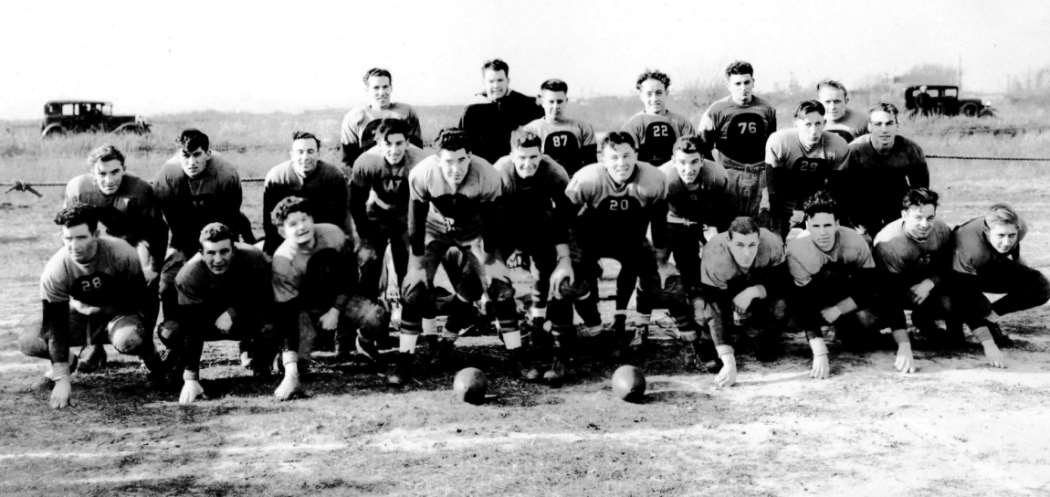
1939 Cramer Hill Wildcats
Front Row: Bill Ruh, Harry Ram, Amos Hawk, Ernie Christopher, Jimmy Smith, Charley Hansen, Dick Staas. Middle Row: Al Watson, Larry Sviben, Al Colsey, Ray Lindsey, Jim McKerney, Fred Frett, John Sviben, Carl “Dutch” Hoffman, ???????. Back Row: Earl Harvey, Bernard “Bun” McKerney, Elwood Comeau, Sam Beamer, ???????, Ed Beamer
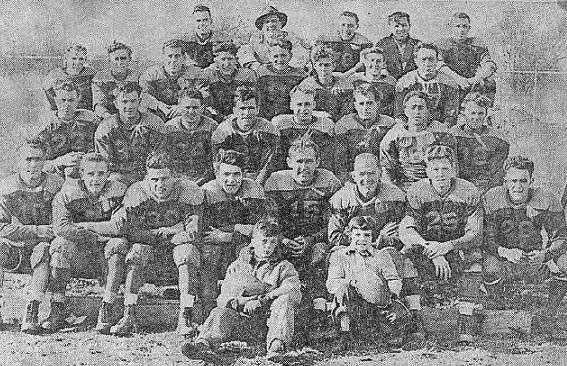
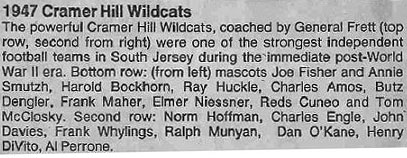
1947 Cramer Hill Wildcats
The powerful Cramer Hill Wildcats, coached by General Frett (top row, second from right) were one of the strongest independent football teams in South Jersey during the immediate post-World War II era. Bottom row: (from left) mascots Joe Fisher and Annie Smutzh, Harold Bockhorn, Ray Huckle, Charles Amos, Butz Dengler, Frank Maher, Elmer Niessner, Reds Cuneo and Tom McClosky. Second row: Norm Hoffman, Charles Engle, John Davies, Frank Whylings, Ralph Munyan, Dan O'Kane, Henry DiVito, Al Perrone.
Third Row: unknown, unknown, unknown, unknown, unknown, unknown, unknown, Ed “Cracker” Beamer. Fourth (Top) Row: unknown, “General” Frett, unknown, unknown, unknown
Cramer Hill Scenes from the 1940s
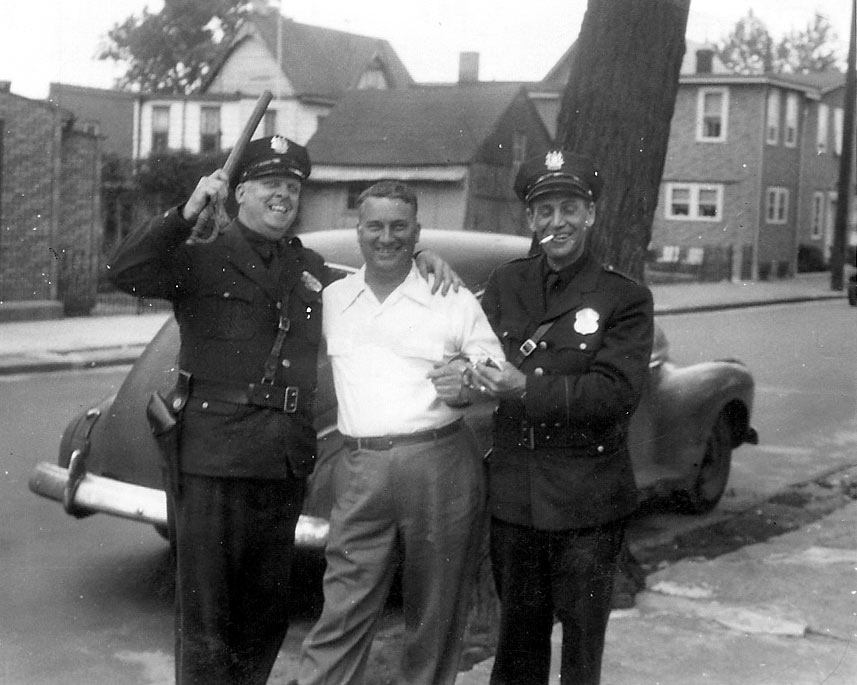
1940s — Emil Friedrichs, Friedrichs Roofing Company of 1031 North 25th Street. Emil Friedrichs is the civilian in the center, with two Camden police officers.
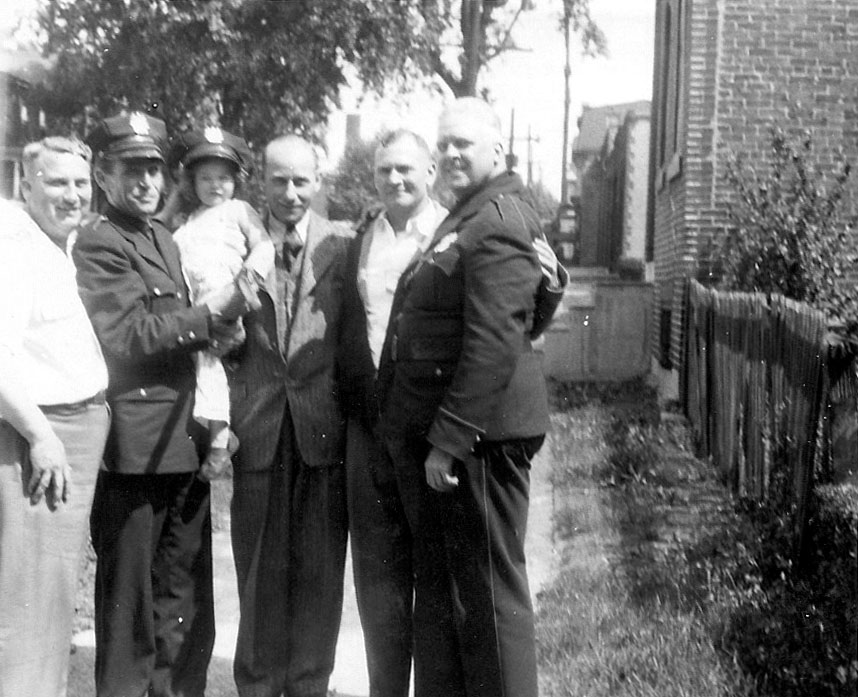
1940s — Emil Friedrichs, Friedrichs Roofing Company. Emil Friedrichs at far left. The little girl is his daughter.
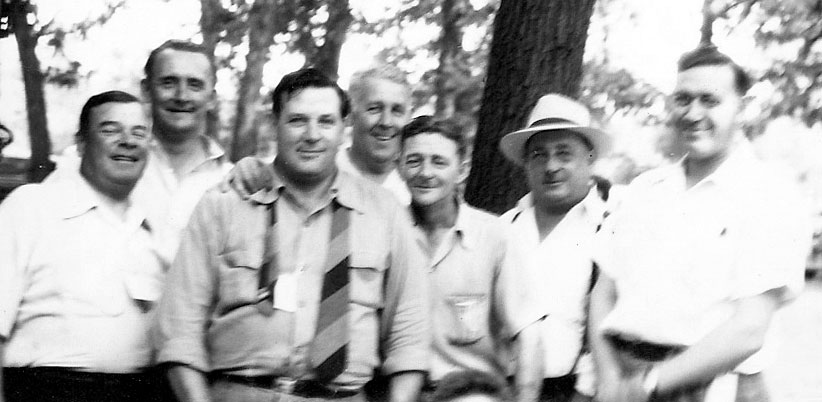
April 3, 1947 — From Left: Unknown, Morris Odell, Francis Vecander (with tie), John Taylor, Unknown, Unknown, Unknown. The man in the hat might be Sam Bates, from North 27th Street.
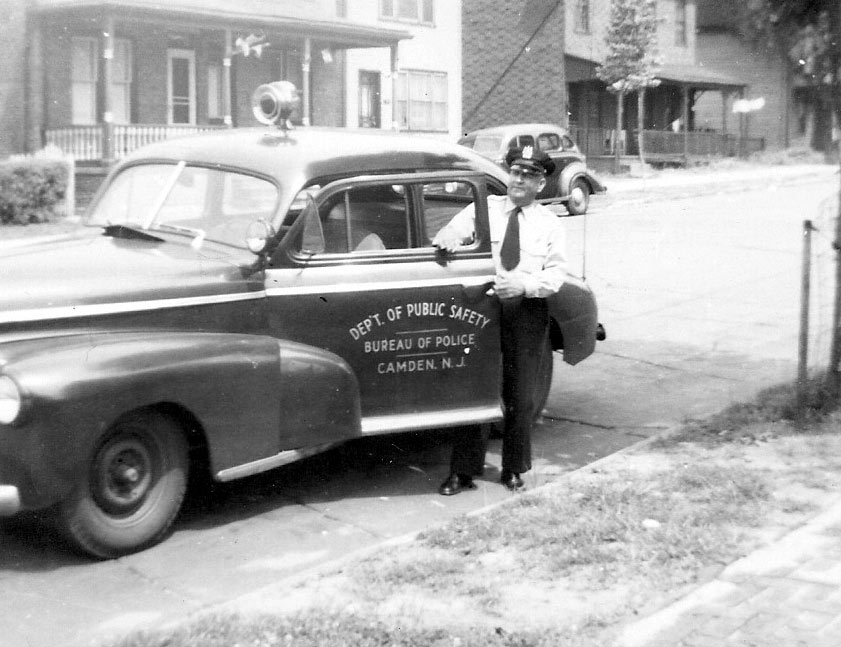
“This must have been someone picking up my Dad (Harold Vecander), for work. The view is from our house on North 26th Street near Wayne Avenue.” — Carol Vecander, 2009
Life on Polk Avenue
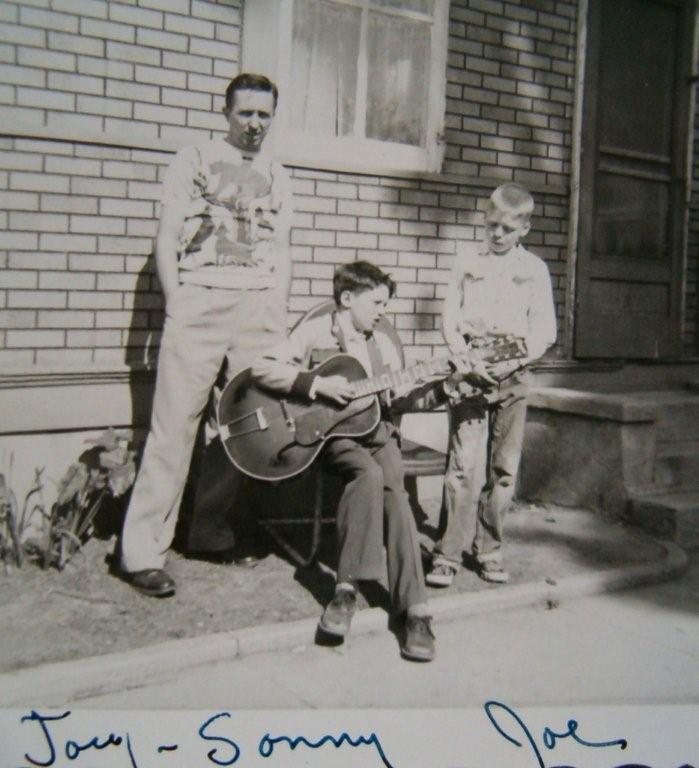
Joe Seddon Sr., Joe Seddon Jr. with guitar, & Sonny Frett — about 1951. Joe Seddon Jr. pursued a successful career in music. Sonny Frett was a career member of the Camden Fire Department.
Cramer Hill Boys Club
Cramer Hill had a great sports tradition, and a great tradition of citizen involvement in community organizations such as the Citizens Fire Company No. 1 in the years before Cramer Hill became part of Camden, the Germania Maennerchor, and the Mathews-Purnell Post 518, Veterans of Foreign Wars. It was not surprising then that in the early 1950s a group of Cramer Hill men that included Jake Arensberg, Bill Flemming, Rocco Nasuti, and others founded the Cramer Hill Boys Club. The impact and importance of the Cramer Hill Boys Club in Cramer Hill during the 1950s, 1960s, and 1970s cannot be understated.
Cramer Hill Boys Club of America
By Ted Frett
Any young boy growing up in the Cramer Hill section of Camden in the 1950’s had a great opportunity to participate in the Cramer Hill Boys Club. This one story building, once a carpet cleaning business in the 1940’s, was located at 29th and Tyler Avenues next to Von Nieda Park. This facility gave young boys an excellent opportunity to participate in numerous activities and of course stay out of mischief in the neighborhood.
Due to the fact that there was a relatively low ceiling, basketball was not one of the inside activities available. However, there was volleyball, ping pong, billiards, shuffleboard, boxing in the basement with Mr. Decker, and a few other small group games. It wasn’t until the old Rio movie theater at 27th and River Road was purchased that basketball got into full swing within the “Club’s” activities. Before the days of video games, computers, and shopping malls, the “Club” was the place to be. And, in 1956 when I first joined the “Club,” most houses on my street, Tyler Avenue, did not have televisions. So, after school and all summer, the boys in the neighborhood would be at the “Club.”
During the 1950’s and 1960’s, the Cramer Hill Boys Club established a reputation for having a very good baseball program for minor league, little league, V.F.W, and Garden State levels. Beginning in the 1950’s, opening day included a parade of all participants and coaches meeting at River Road and State Streets. The procession would walk north on River Road up to Von Nieda Park on 29th Street. Then, everyone would go left on 29th to Harrison Avenue where the little league field was located. After speeches and other fanfare there would be the first game of the season.
All this would not have been possible without the help of many volunteers. Thousands of young boys like me were fortunate to have dedicated coaches and mentors that pointed us in the right direction and made sure we stayed pointed in that direction. Men like Al Watson, Gene Burns, Lou Bobo, and Charlie DeWert to name a few, were outstanding role models that not only taught how to play hard and fair, but also taught how to win and lose. They taught life skills and impressed upon young boys how important it was to develop a good character and to maintain integrity.
If you travel down Harrison Avenue today between 29th Street and Lois Avenue you will not see a little league field, instead you will see woods. It is sad, but that field did wonders for thousands of kids in Cramer Hill. But, it is encouraging to look east from where the field used to be to see the baseball fields in Von Nieda Park thanks to the new generation of Cramer Hill coaches trying to mold young boys into good men.
Ted Frett
Cramer Hill Boys Club: Quiet Man Lends Helping Hand in Sports
East Camden News —
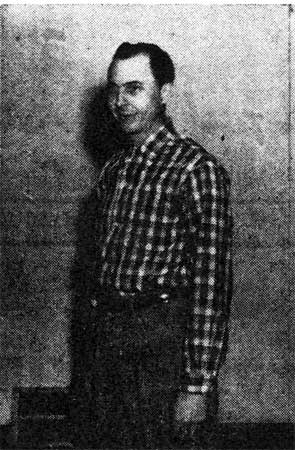
Rocco Nasuti — 1959
Our Man of the Week is a tall, likeable quiet type fellow, with a quick pleasant smile and a desire to help his fellow man— his name, Rock Nasuti.
Born in Camden of a large Italian family, being the last of a family of nine, Rock is a product of the Camden schools and attended Woodrow Wilson High.
While he didn’t participate in sports at Woodrow Wilson, he did play plenty of his favorite sport, baseball, around the local sand-lots.
After he finished high school Rock entered the Army with the 3rd Cavalry Reconnaissance Squadron. He was shipped overseas after his training at Fort Dix. He was engaged in combat in Central Europe, Northern France and Rhineland, and was awarded a Purple Heart as the result of a leg wound.
Nasuti received his discharge in 1946 and was employed for a short period with Hollingshead Co. He then was employed as a carpenter’s apprentice with the Pennsylvania Railroad, where he is still employed as a carpenter.
Rock married Lillian Baker in 1949, and the Nasutis are now four, including Gary, aged six, and Glenn, two.
After some convincing of his brother-in-law, Bill Flemming, Rock joined the Cramer Hill Boys Club in 1956 and became active as Flemming’s coach of the Robin teams of 1956 and 1957. Each year the Robins were champions of the Little League.
While Rock is the type of fellow who weighs his words at club meetings he never hesitates in assisting on committees. In 1958 he was co-chairman of the fair committee, chairman of the football refreshment stand in 1958, chairman of our 1958 Christmas party, co-chairman of our 5th annual birthday party, and assisted on fund drives, and Little League committees.
Rock makes plenty of noise on the bowling alleys, rolling a 175 average with the PRR team.
Cramer Hill Little League
Houses for Sale — November 30, 1965
Houses for Sale — November 30, 1965 — As advertised in local newspapers that day!
Veterans Memorial Park
North 27th Street & Arthur Avenue
The park dates back to the 19th century. In 1938 the City of Camden erected Veterans Memorial Middle School, and a monument was erected after World War II.
Sadly, this site has been badly neglected by both the city government of Camden and the school board of Camden. Located on North 27th Street and Arthur Avenue, in front of Veterans Memorial Middle School, it would take little effort on the part of either municipal agency to properly maintain this site.
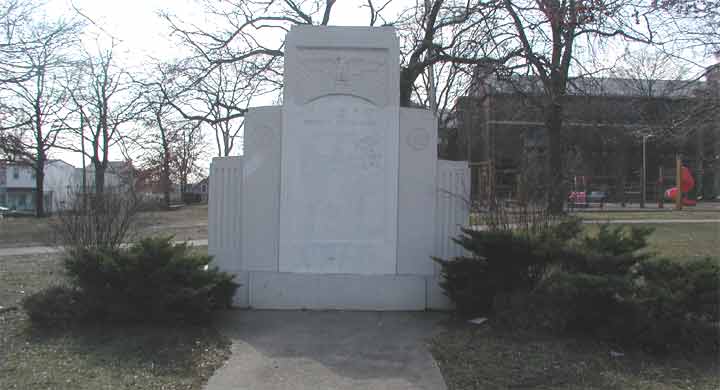
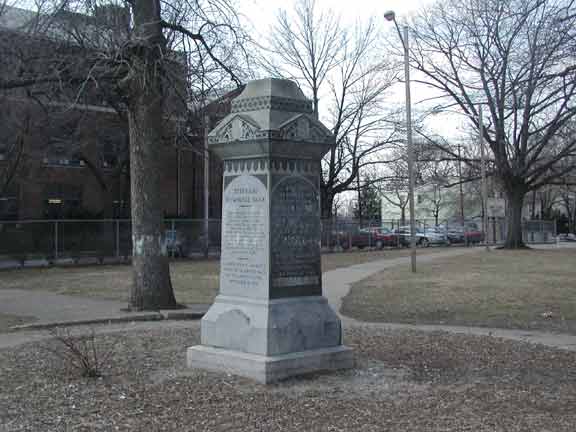
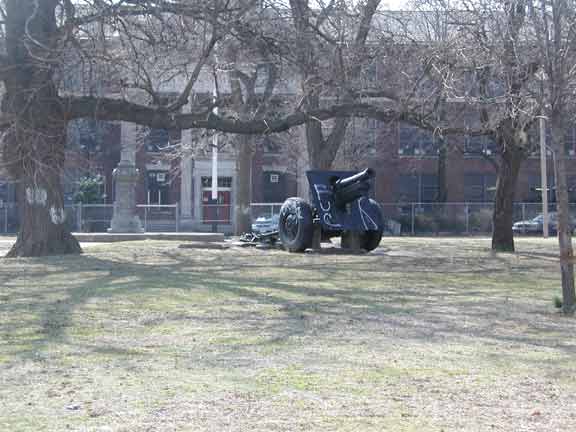
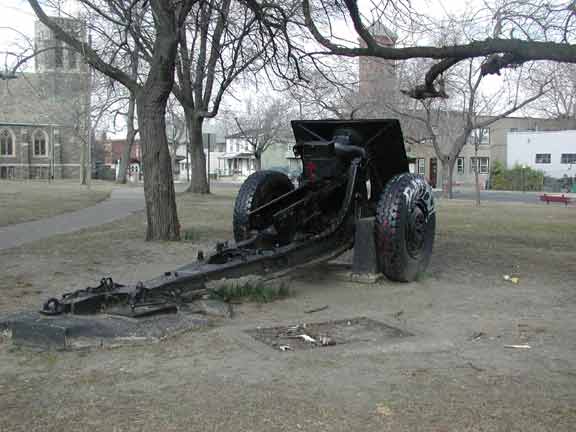
This monument was erected in 1887 as a memorial to William Clisham, an Irish immigrant who was a prominent citizen in the area. The school was built in 1938, and a monument was erected after WWII. In 1999 the VFW had the original Clisham monument restored and re-engraved with the message visible above. Unfortunately, the city has done little if anything to maintain these monuments.
Well Baby Clinic at the Cramer Hill Community Center
Camden Courier-Post —
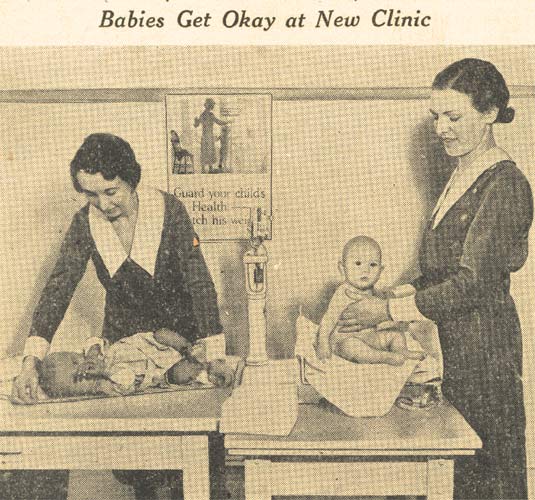

Well Baby Clinic at the Cramer Hill Community Center — June 1938
Babies Get Okay at New Clinic
Two future young citizens are shown above being examined at the new "Well Baby Clinic," opened yesterday by the City Bureau of Health in the Cramer Hill Community Center, on River avenue, east of Twenty-eighth street. On the left is Miss Cecelia Forster, supervisor of clinic nurses, with Baby Lee Barrett, 5½ months old, of 1338 Cambridge street. Standing at the right with Baby Martin Krech, 5 months old, of 1209 North Twenty-eighth street, is Miss Helen Rudolph, nurse in charge of the clinic.
Ablett Village
Is Ablett Village in Cramer Hill? Some say yes, some say no. Ablett Village IS on River road, but was not ever a part of Alfred Cramer’s landholdings, rather, it was built on land owned by 19th century industrialist Moro Phillips. Students from Ablett Village attend Veteran Memorial Middle School and the George Washington Elementary School, so one would say that Ablett residents would definitely be a part of the Cramer Hill community.
The Chateau — 1787 River Avenue
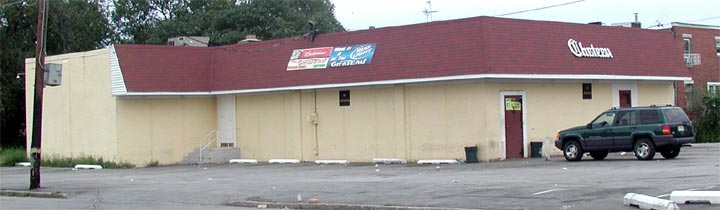
The Chateau — 1787 River Avenue
Wonder Weld — The Miller Manufacturing Company
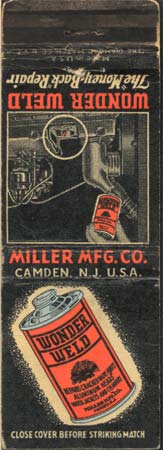
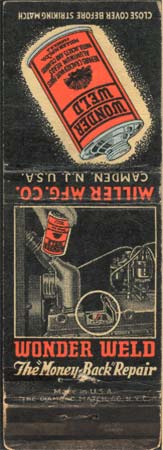
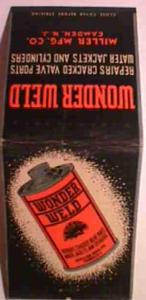
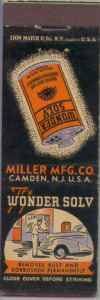
William I. Miller’s Miller Manufacturing Company produced automotive chemicals from the 1930s into the 1960s. Originally located at 1218 Kaighn Avenue, the firm relocated to 1100–02 North 32nd Street in Cramer Hill sometime after November of 1936, and remained there into the 1960s.
The building is no longer standing as of the fall of 2003.
Crescent Beverage & L. Schimpf Inc.
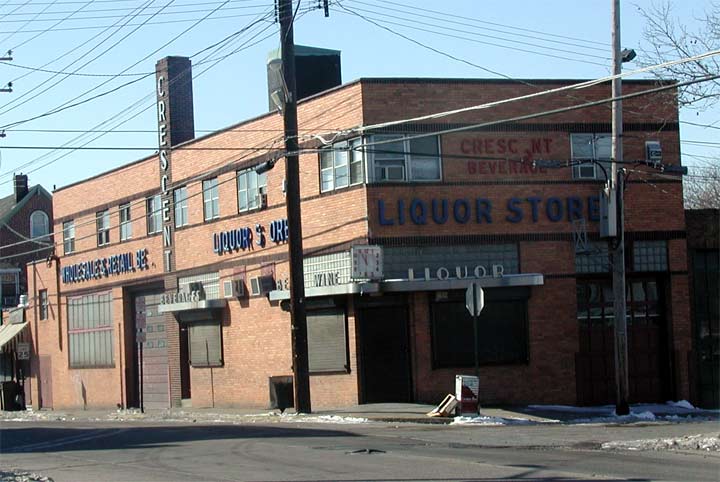
Crescent Beverage, 25th & River Avenue, founded in 1893 by John Schimpf. Photograph of February 1, 2004.
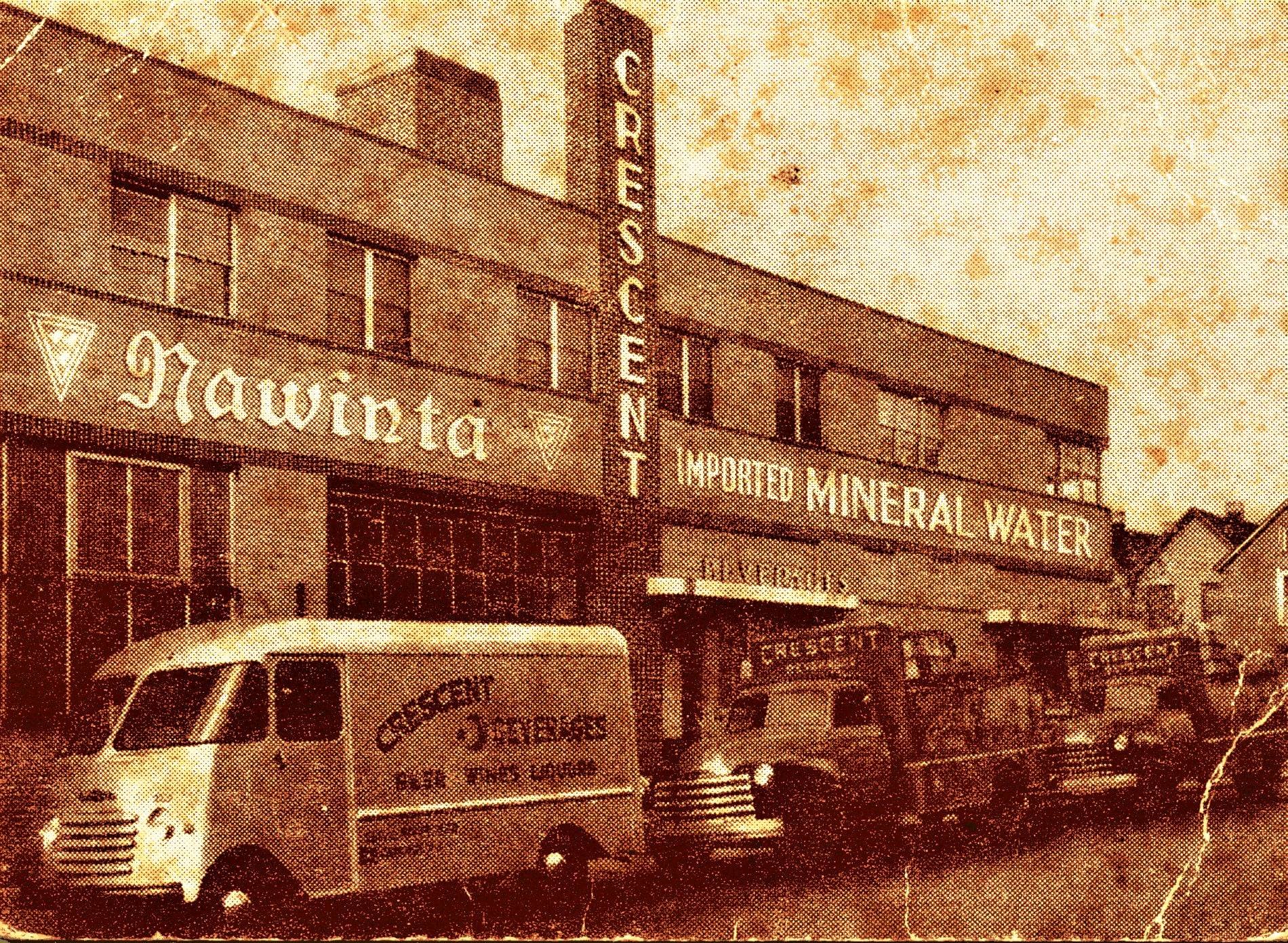
Crescent Beverage, 25th & River Avenue
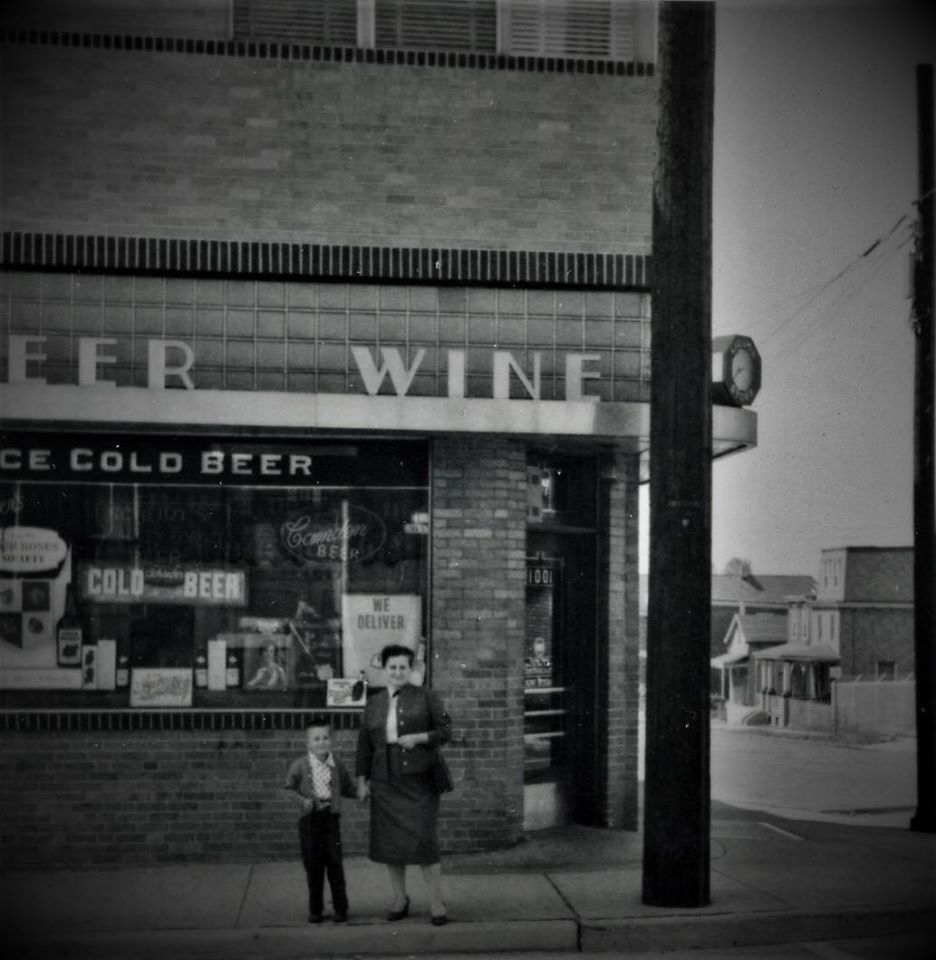
Crescent Beverage, 25th & River Avenue — 1959 Casey Urban and his mom
Crescent Beverage, 25th & River Avenue
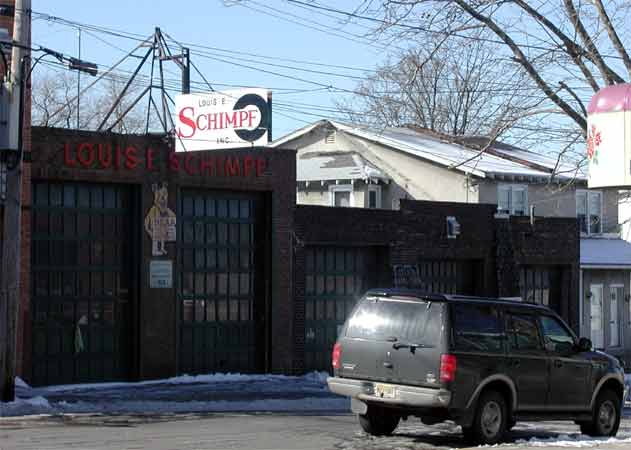
Louis E. Schimpf, Inc. — February 1, 2004
L. Schimpf Inc. — 1930s Courier-Post Ad
Line Up With Schimpf
Camden Courier-Post — 1934
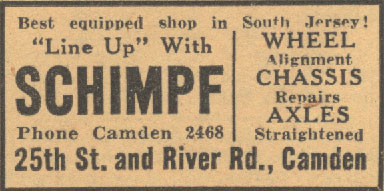
Best equipped shop in South Jersey!
“Line Up” With SCHIMPF
Phone Camden 2468
WHEEL Alignment CHASSIS Repairs AXLES Straightened
25th St. and River Rd., Camden
Looking North on River Avenue from 25th Street — Fall 2003
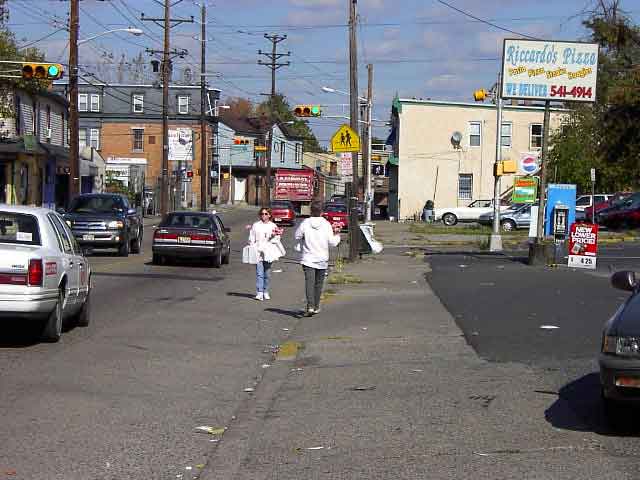
Looking North on River Avenue from 25th Street — Fall 2003
On the Waterfront — The Noecker, Rickenbach, and Ake Shipyard
Forgotten for the most part are the industries and shipyards that were located along the Delaware north of the Cooper River. One business that employed a lot of local workers was the Noecker, Rickenbach, and Ake shipyard, which was at the foot of 27th Street. This yard specialized in wooden boats and barges. By the time Bernie Rieck took these pictures in the early 1960s, the yard had been closed about ten years.
Please note that the photographer, the late Bernie Rieck, miscaptioned these photos as being “North Camden” and “30th” Street. James Rickenbach, who grew up at 27th & Harrison, noted the error in 2006.
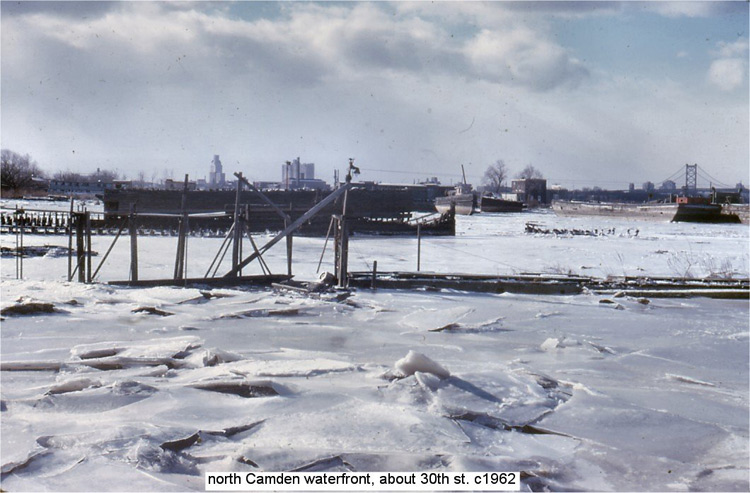
Bernie Rieck: These images are captioned North Camden, but are obviously Cramer Hill from their position in relation to City Hall and the Ben Franklin Bridge. The two story Farragut Sportsman Association building is in the background.
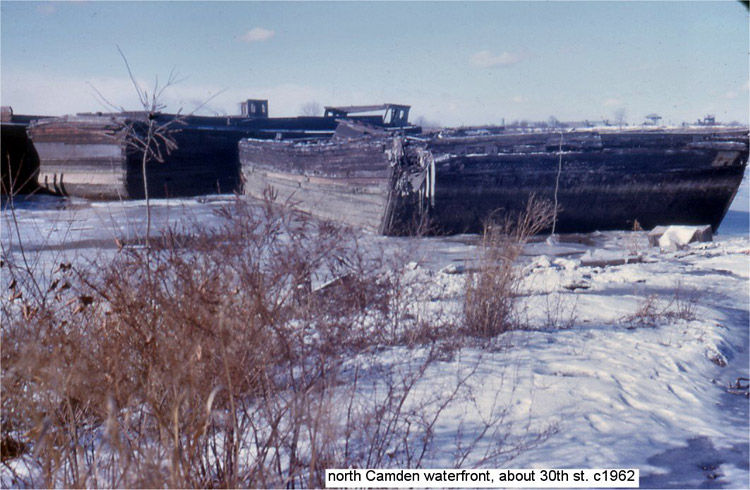
Bernie Rieck: These abandoned barges are all gone now.
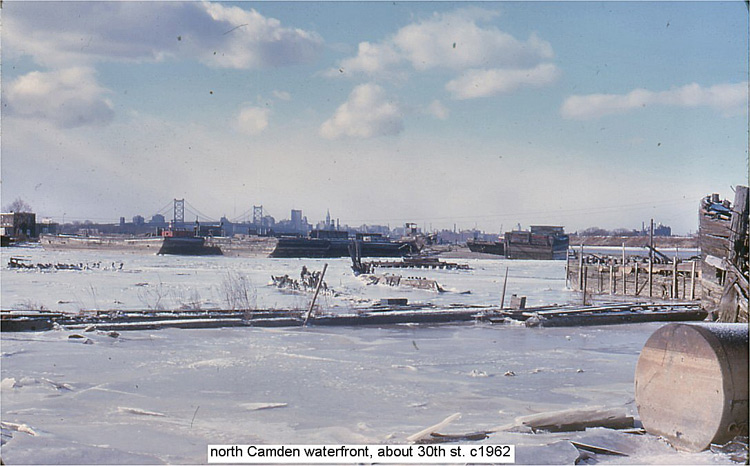
Bernie Rieck: The property, now behind a rusty chain-link fence, shows little evidence of the activities that were here for over 59 years. One can fairly easily see the pier if one walks up to the water.
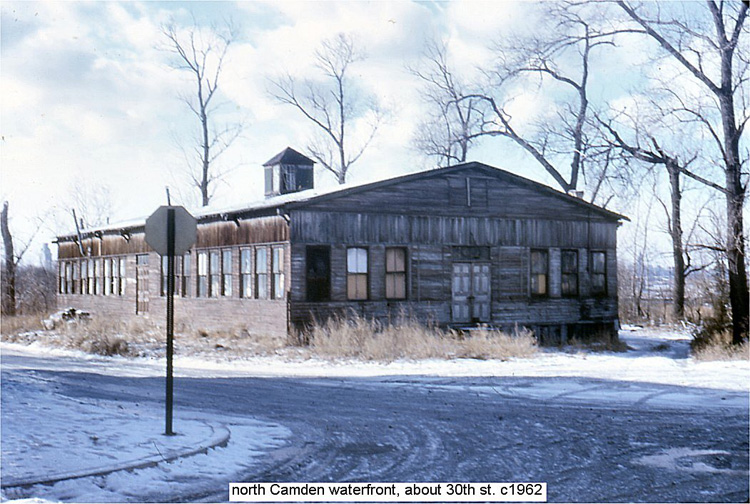
Bernie Rieck: This wooden building is long gone. When I enlarged the photo I could just make out the “R” located above the white double doors in the front of the building.
Additional Comments by James Rickenbach
The North Camden waterfront photos, “about 30th St., c62”— I do not believe any of these photos were taken around 30th Street. They were all from 27th Street. The images of the barges and other wreckage appear to be between 27th and 25th Street, where the Farragut Club is. The two barges (Sand Lighters as my father called them) appear to be from the boat yard run by my Grandfather and his sons (James Rickenbach, Adam Rickenbach and James M. Rickenbach) at the foot of 27th Street.
I used to live directly across the street from the old wooden building. It was at 27th Street and Harrison Avenue. I grew up knowing it as the “Curtain Factory.” They made the material for window shades for a company in Philadelphia. It was run by the Ott family. My father grew up in the same house and he said the entire river front lot across the street was a family type park when he was young. The wooden building was originally a dance hall. It later became a nickelodeon.
On the Waterfront II — The Shipyard in 2003
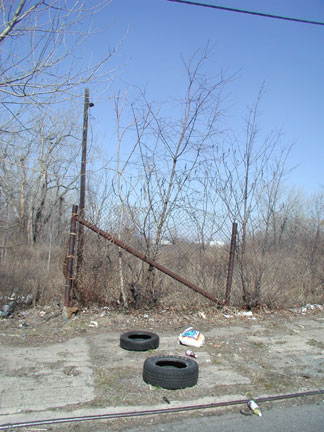
The entrance to former boatyard property, at the southeast corner Buren & 27th.
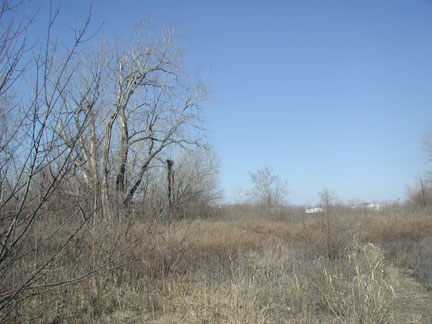
Facing West — see old light pole — there are a few standing on property
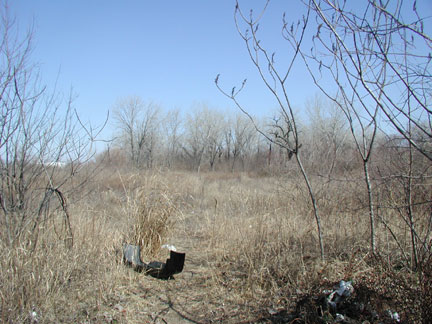
Facing NW inside entrance
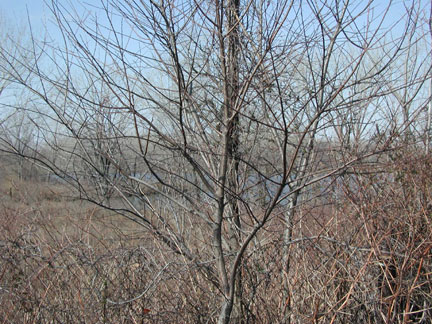
Facing SW from 28th & Buren — Pier or boat slip can be seen through the trees
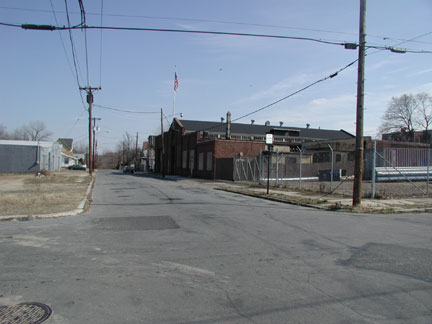
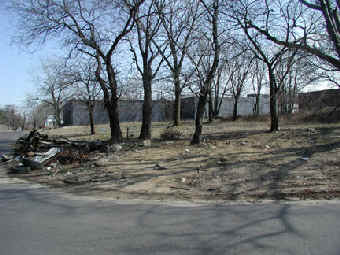
Buren St — Facing North from the Southwest corner 28th & Buren (left). Northeast corner 28th & Buren (right).
Tugboat Lloyd Shaw on Fire
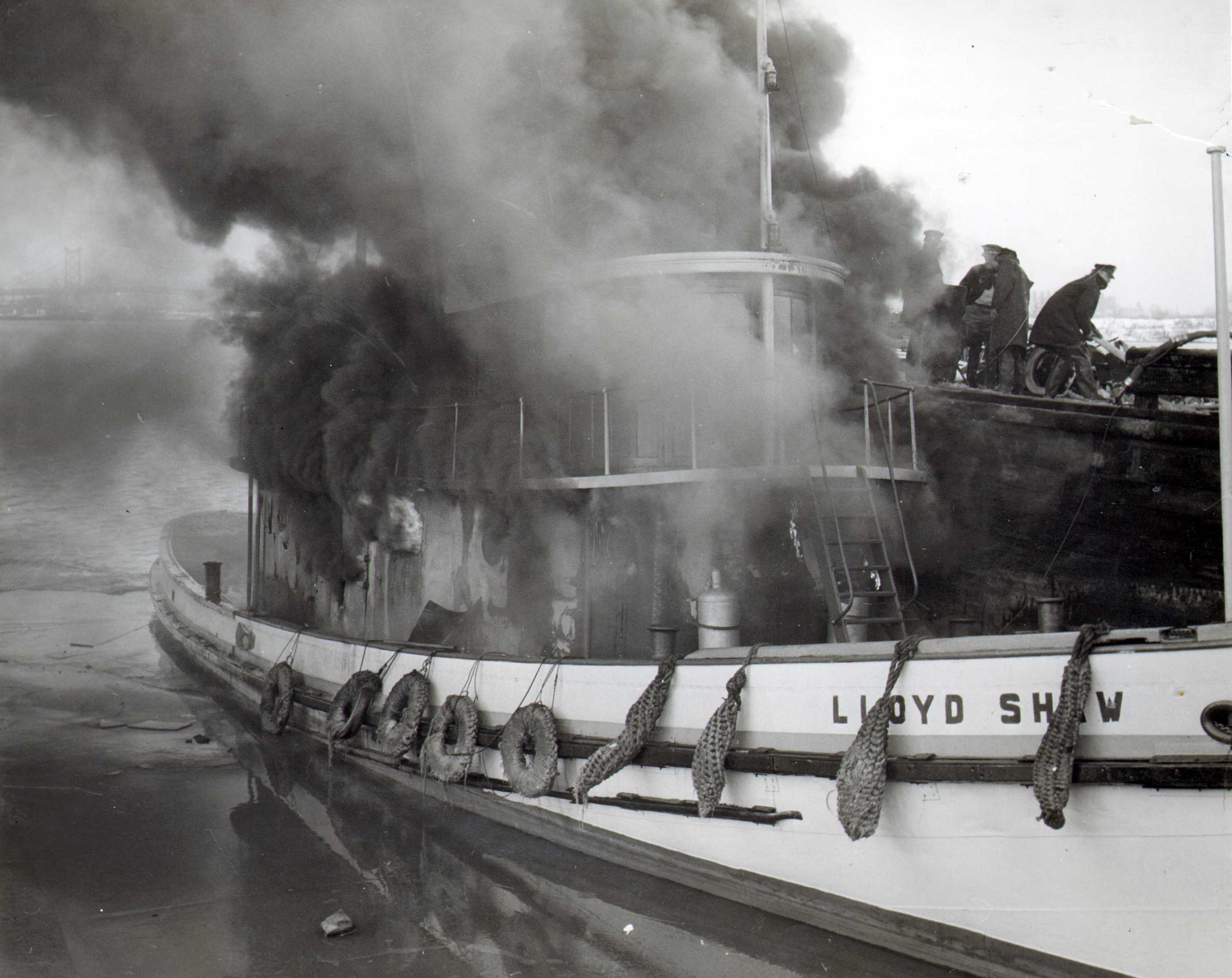
Tugboat Lloyd Shaw on fire at The Noecker, Rickenbach, and Ake Shipyard — Fall of 1958. Second alarm fire started in engine room, then spread.
Derelict Scow at Low Tide
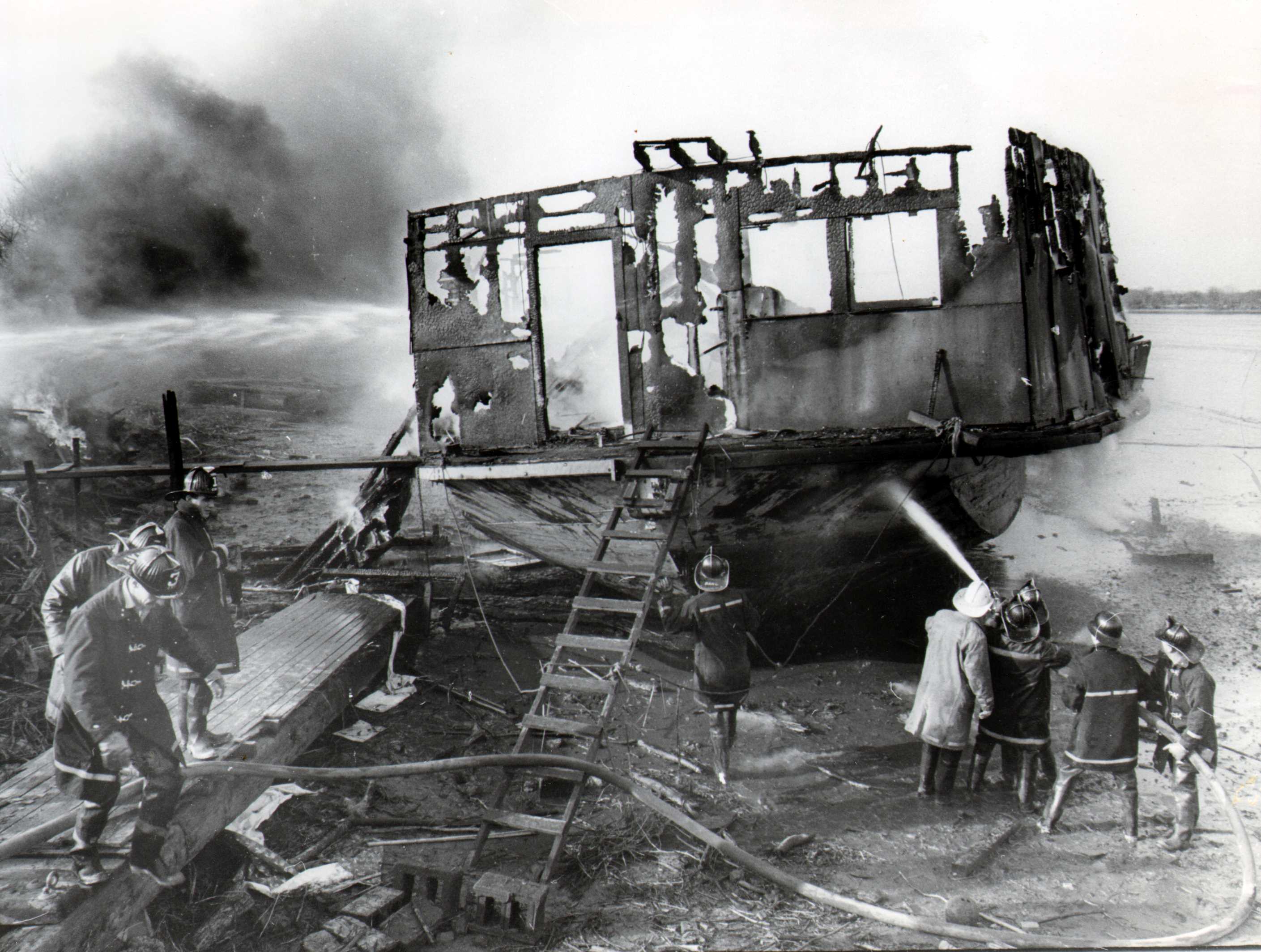
Derelict scow at low tide on the Cramer Hill mud flats — Engine 11 fighting the fire — February 17, 1965
Schools in Cramer Hill
Harry C. Sharp Elementary School | Veterans Memorial Middle School | George Washington Elementary School
Benjamin C. Beideman School (gone) | James G. Blaine (gone)
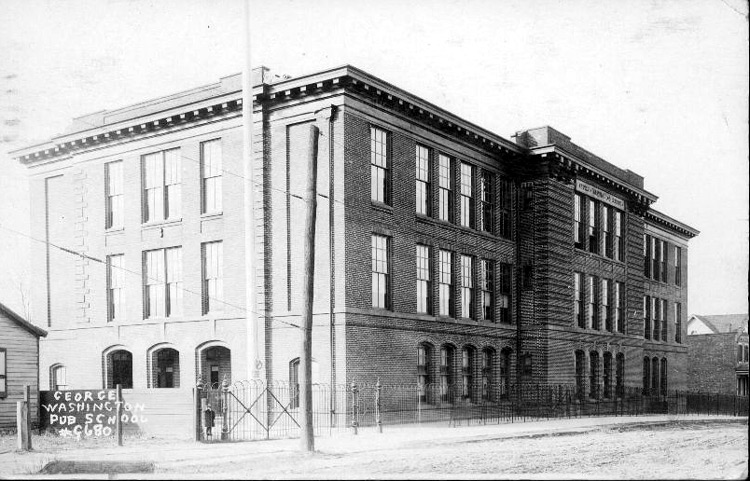
The George Washington Elementary School
American Legion Post 274 Ladies Auxiliary
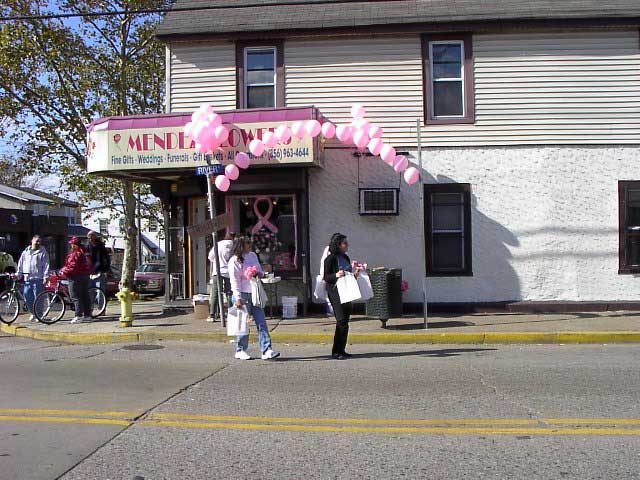
American Legion Post 274 Ladies Auxiliary outside Mendez Flowers, North 25th Street & River Avenue, in the fall of 2003.
One Arrested as Cops Here Raid ‘Arsenal’
Camden Courier-Post —
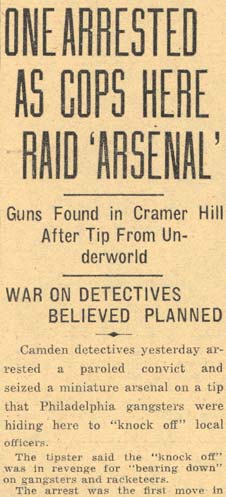


Guns Found in Cramer Hill After Tip From Underworld
War on Detectives Believed Planned
Camden detectives yesterday arrested a paroled convict and seized a miniature arsenal on a tip that Philadelphia gangsters were hiding here to “knock off” local officers.
The tipster said the “knock off” was in revenge for “bearing down” on gangsters and racketeers.
The arrest was the first move in the local drive to harry haven-seeking Philadelphia racketeers from this city.
The convict was arrested and his arsenal seized in Cramer Hill, when police raided the place.
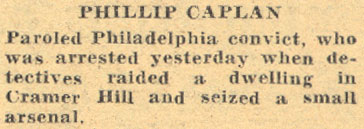
The man arrested is Philip Caplan, who told police he lived at the house raided, 919 North Nineteenth street. According to police, Caplan has a record “as long as your arm.”
Believed ‘Master Mind’
Police expressed an opinion that Caplan was the “master mind” of several recent holdups here. They said they believed he directed the holdups, although not appearing at the scene of the crimes.
Three revolvers, their numbers filed off, and several boxes of cartridges and shot-gun shells, were found in a closet in the house.
Detective Lieut. Louis Shaw said he believed Caplan “and his gang” fled to this city to escape the gang probe now under way in Philadelphia.
Betting Slips Seized
A brief case, containing thousands of number betting slips and other papers, also was seized. Police are attempting to check on the contents.
Caplan was held on suspicion and for possession of weapons.
Detectives Benjamin Simon, George Zeitz, Clifford Del Rossi and Edwin Mills staged the raid, after having had the house under observation four days.
Police learned of the alleged gang headquarters through a “tip” from the underworld. They were informed that several Philadelphia gangsters had rented the house and “were laying in wait for the opportunity of knocking off Camden detectives who were ‘bearing down’ on racketeers and holdup men.”
Detective Simon said their informant told them they would find several guns in the place and two or three sawed-off shotguns, all of which have been used in recent holdups in this city. Police believe some of the guns were removed from the place recently.
Caplan admitted to ownership of the guns when questioned at detective headquarters, but said he was not carrying them on his person and asked that they be returned to him.
Was Paroled Recently
Caplan was paroled recently in Philadelphia, after having been sentenced to serve 15 years in the Eastern Penitentiary for holdup and robbery at the point of a gun.
“This man Caplan has a record as long as your arm,” Lieutenant Shaw said. “He is a racketeer and is now on parole from a 15-year sentence for holdup and robbery at the point of a gun. I have reason to believe he is an expert safe cracker and may be wanted in some other cities. The contents of the brief case will be investigated. It may be this man and his gang were chased out of Philadelphia in view of the current war on numbers and crime there. I do not believe this man is in the numbers business, but I do believe some of the gang he is connected with may be number barons.”
Police arrested a second man outside the Nineteenth street dwelling, but he was released after questioning at police headquarters. They did not reveal his name.
Simon said known “crooks” have been going in and out of the Cramer Hill address since the police have been watching the place.
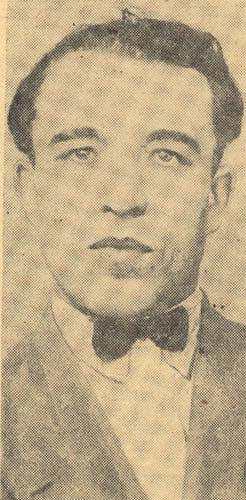
Phillip [sic] Caplan
Paroled Philadelphia convict, who was arrested yesterday when detectives raided a dwelling in Cramer Hill and seized a small arsenal.
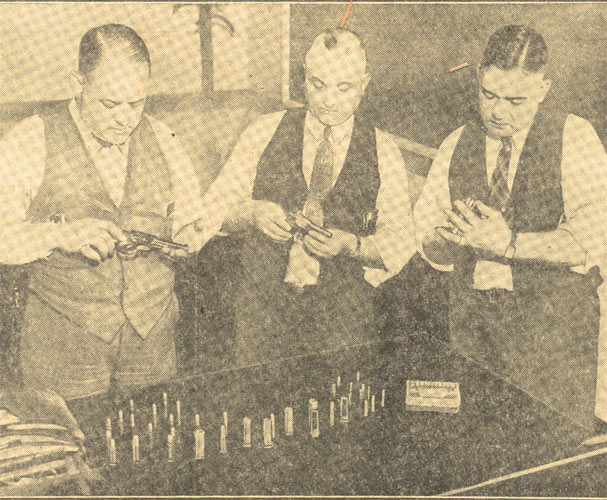
Detectives With Pistols and Ammunition Seized in Raid
City Detectives George Zeitz, Clifford Del Rossi and Benjamin Simon are shown examining pistols seized yesterday in a raid on a house in Cramer Hill, at 919 North Nineteenth street, where Philip Caplan, paroled Pennsylvania convict, was arrested and held “on suspicion.” The raid followed a tip that Philadelphia gangsters had rented the house and were waiting for an opportunity to “knock off” local detectives who have been “bearing down” on racketeers and holdup men. The briefcase on the table, detectives said, contained thousands of “numbers” betting slips.
Southeast Corner of North 25th & River Avenue
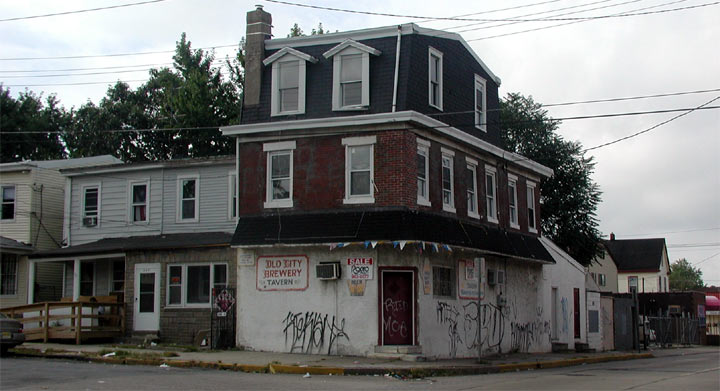
September 27, 2003
The bar pictured above has a long history. It has changed hands (and names) several times:
1918–1921 Charles Irle Sr. 1926–1928 William J. Hinkson 1929–1931 Mrs. Mary Hinkson 1939–1947 Beatty’s Grille 1959–1966 Juno’s Tavern 1970 Schoell’s Tavern 1977 Crane’s Tavern Late 1988 Olde City Brewery Tavern 2003 Closed
Christus Evangelical Lutheran Church
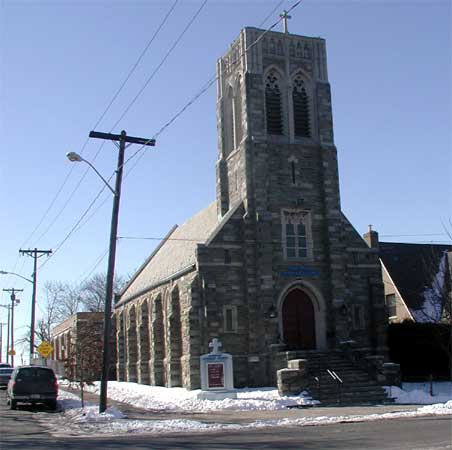
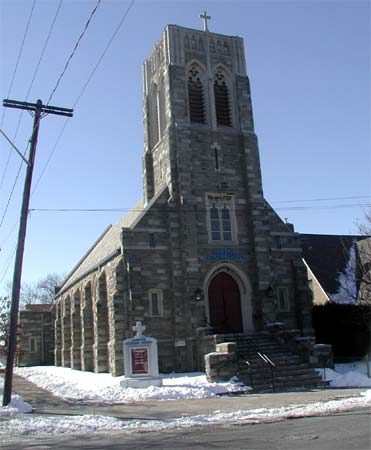
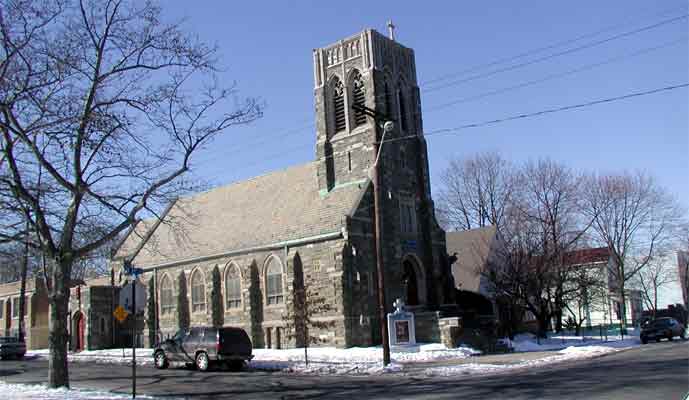
Built by George Bachmann Sr., North 26th Street & Hayes Avenue. Photograph of February 1, 2004.
Postwar Housing in Cramer Hill
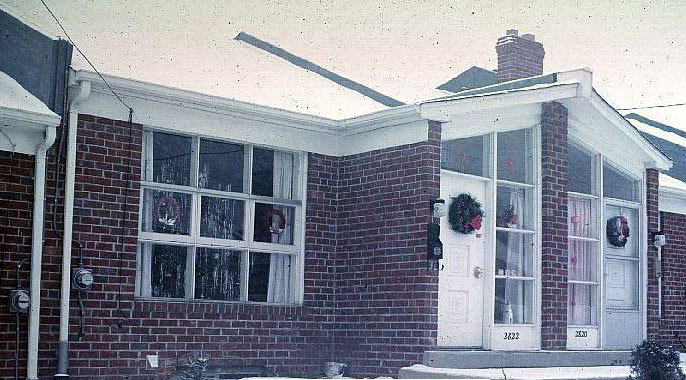
2822 Wayne Avenue, circa 1962. Photograph by Bernie Rieck.
North 36th Street Bridge — 1980
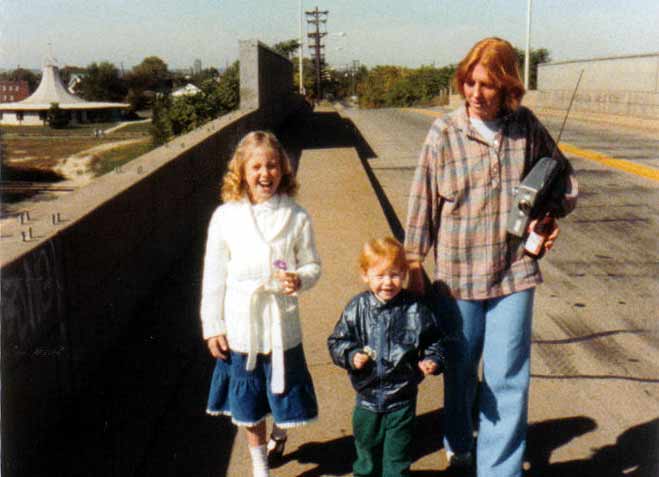
Looking West towards Cramer Hill on the North 36th Street Bridge — 1980. Photograph courtesy of Floyd L. Miller Jr.
A&A Soft Pretzel Baking Co.
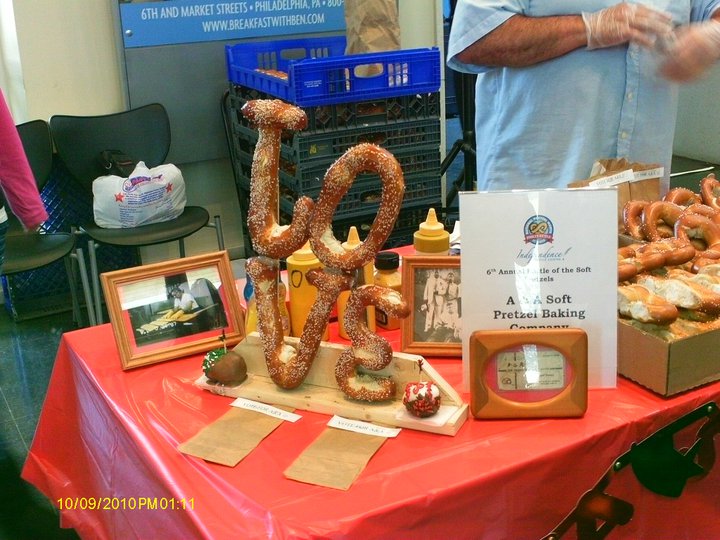
1100 and 1102 North 32nd Street, 1985 to the present: A&A Soft Pretzel Baking Co.
Memories from Lois Avenue
I used to live in 857 Lois Avenue in Camden, NJ. I was trying to see if there was any history on this house. Me and many family members have seen a ghost of a little girl in that home (and I remember a ghostly cat as well). There is also a strange little room in the basement, at least there was when I lived there (we moved from there about 17 years ago). The room was really weird, the basement was like a concrete tomb, moist and dark. In the far end of the basement, would be towards the front of the house, there was a small door on the wall. I would say it was at least 8–12 inches up on the wall. It just has a small wooden door that covered it, and the opening itself was about half the size of a normal door. There was a big pipe that ran along the bottom of that wall, and the wooden door kind of sat on it, so it was hard to open. Inside was very small, could not have been higher than 5 feet or so, maybe 6 feet long by 6 feet wide, just a small space, and there was a wooden bunk bed inside, no mattresses or anything, just the frame of one, but being that the space was so small, this had to be built inside the room. The only other thing in there was a hole in one of the walls, with like a safe door attached to the outside. The only thing I remember finding in there was a penny that was from 1920 something.
Sorry to rant, I just still think about this, and was wondering if you ever heard of something like this, and what you think this could have been used for? Always so curious about this. If this interests you, and you have any feedback, I’d love to hear some else’s thoughts. Thanks for reading my story.
Kiki
November 2010
Memories of Steve Logeren
I grew up in Cramer Hill at 1027 Lois Avenue. I remember those good old days with fond memories. How we would pretend as if we were not poor, just to find out later that all the neighbors were doing the same.
I no longer live in Camden (though proud of it). The great education given me from “H. C. Sharp,” “Veterans Memorial” and “Camden County Vocational and Technical High School,” was all I needed to become a successful citizen, with a family I can afford to give a better (easier) life to. But I will always have a question in my heart. Can they ever know how hard it was to make a dollar as a kid, pulling a red wagon across the 27th Street black iron bridge to Frank’s Junkyard? Yeah boy… I spent that dollar very slowly!
Steve Logeren
October 2005
Memories of Harry McCurdy
I was born in Camden in 1940 at West Jersey Hospital but we lived in Riverton and then Palmyra during the war. In 1946 we moved back to the McCurdy home, 741 North 25th Street in Cramer Hill, at 25th and Arthur Avenue, right next to Vets School. I attended Washington School until the 6th grade. Then we were bussed to the Davis School in East Camden on 34th Street. Back to Veteran’s Memorial Junior High School, as it was called then, for 7th, 8th & 9th grade and on to Woodrow Wilson High School after that.
I was friends with the Holsher family, they lived on the corner of 25th and Hayes Avenue, and ran the Crescent Bottling Company at 25th and River Road. I knew the parents as well as the boys, Henry, Bill and Carl. I think Carl and Bill run the business now. I also worked after school and on Saturdays at Lou Schimpf’s Garage. I went full time with them for three months after High School, and also for a year or so after returning from the Marines in 1961. Actually, my Dad, Ben McCurdy had raced dirt track race cars with Lou Schimpf “in the old days.” They ran at the old sand pit that later became the site of Esther Williams Pool company and the land fill off River Road in Pennsauken. They also ran in Pitman, Vineland and a few other tracks in South Jersey. I never knew until I read your site that Lou Schimpf’s father John Schimpf had originally owned Crescent Bottling.
Your site on Veterans Park, in front of Vet’s School, brought back memories, particularly the shot of the cannon. When it was first located in the park it was just placed at the location it is in now. Consequently, if there were enough bodies, it could be picked up and wheeled around, just like they did in the Army! Well, a bunch of the neighborhood boys (no names, please) worked on it one Sunday night and were able to wheel it right up to the front steps of the school! When Dr. Messenger, the school Principal looked out his window on Monday morning, he was looking right down the barrel of the cannon! You will note from the photographs of the cannon that it is now mounted on two block and concrete supports under the axle and the tail end is also permanently cemented into the ground! Of course, with the wheels now off the ground, we could stand on the wheel, hold on to the face plate, and see how fast we could get the wheel to turn as we ran on it!
One of your earlier contributors mentioned pulling the red wagon full of junk to Frank’s Junk Yard, right over the 27th Street Rail Road Bridge. Frank’s was a great source of income in those days, but as he said, we didn’t know that we were that poor, because we always had a good time growing up. Swimming off the 36th Street Petty’s Island bridge; duck hunting in the cove behind Rundles, hanging out down the river at the Farragut Boat Club at 25th Street and the River, and hopping trains in the Pavonia Yard. They were good times and a great time and place to grow up.
Harry McCurdy
February 2005
Dolores Campbell Arensberg’s Cramer Hill Memories
We moved to Bergen Avenue in 1953. We lived at 1021 Bergen Avenue which is still there. There used to be a red house next to the lot which was Engle’s Bar. The lot belonged to the bar. My mom and dad bought this, their first house after renting the home of my dad’s brother and his wife on Fairview Street in Morgan Village. My dad’s brother was career Navy and was a Master Chief who was sent to Viet Nam in 1953 as part of the advisors which were being sent by our government. This is the first place that my aunt couldn’t go and she and her son lived in the house on Fairview Street, and my mom and dad and my sister and I moved to Bergen Avenue.
We lived across the street from the Clark family. They were at 1020 Bergen. They were Mary and Ed and their kids were Mary, Terry, Sandy, Pam, and a few years later, Ed. Next to them was the William Deal family. Denny Deal was a Camden fireman. On the other side of the Clark family was the Straub family. Mr. and Mrs. Straub were older as I remember them. They had quite a few grown children, two of which worked as steel workers on the Walt Whitman Bridge. The younger son was killed from a fall off the bridge when they were building it. (I haven’t thought about that in years.)
On the corner of Bergen Avenue on the north east side was the little shoe store that was run by the woman who also lived upstairs. School shoes were always bought there. One pair for school and one pair for church. Opposite the shoe store was Louie’s furniture store. It was a glass front store, and Louie was always standing out front. I always wondered how he managed to stay in business when there was never anyone in the store. But he always had a suit and tie on and was standing there watching the traffic on River Road. I remember as a child the suitcase factory that burned one summer night. It was opposite Engle’s Bar and parking lot. It went up in a ball of flames. I think it is still an empty lot?
I remember riding our bikes and jumping rope until the sun went down. So many kids to play with and no one ever argued and rarely did we get into trouble. I also remember the house next to my parents house had an apartment upstairs where a young family lived. There was a son and a daughter. The man and his father who owned that house lived downstairs. They kept to themselves and as kids we were afraid of them because they were really strange. It was also a tragedy that the son, Eddie Marren died by drowning when we were in elementary school and then his sister Ellen was one of the group of kids who died when we were in junior high from the accident when the car that all of the kids had piled into went off the road and over an overpass onto high tension wires in Atco. I think only two kids lived out of about 8–9.
Bergen Avenue was really a quiet street. The Murtaughs lived in the 1100 and the Namms lived in the 1200 block. I can remember Louie Namm walking by our house in the evening coming from the Jewish classes that he took in the evenings, and later Carol and her younger sister. I remember Sandy Lyndsey and her family, and Terry Bruccollere who lived in the row houses up the street. We all walked to school together to Sharp School and later to Vets and Wilson. Those were the good old days when you could actually walk the streets of Cramer Hill without fear.
I can remember going to Frank & Tom’s which was the grocery store on the corner of River Rd. and 32nd street. It changed names so many times while I was growing up. The drug store at 32nd and River Road where Unruh did his infamous tragic act of killing everyone. My mother-in-law had just walked past that corner with my husband in a stroller shortly before the killing spree took place.
There was a Cleaner and Al’s Barber Shop with the infamous pony that all the kids used to sit on while getting their haircuts. Next to the barber shop was the sub shop that I used to walk by on my way home from school at lunch time. My favorite smell in the whole world. I have never tasted a sub quite like that place. Then of course there was Pelligrino’s beauty parlor next to the cleaner. Thinking back on this, it was so convenient to have everything so close. We would catch a bus right at the corner of 33rd and River (the 1280) or the #9 to Philly. We would also meet at the corner of Bergen and River on Friday nights to go skating in Fairview. The bus would come by and pick us up and bring us back at 10. God I miss those days.
Dolores Campbell Arensberg
July 27, 2006
I just reviewed the Bergen Avenue site again. Ok, so my parents bought 1021 Bergen from the Kennedy family in 1953. My parents lived in the white house, one house from Engles Lot. There was a red house that is gone between my parents house and that lot. My dad passed away in 1982 and my mom eventually sold the property in 1988. My mom and dad were Tom and Helen Campbell.
The William Deals lived in Camden across from my parents until the late 1980s as well.
I also remember there being a suitcase factory on the corner of Bergen Avenue and River road next to Swartz’s Furniture Store (across Bergen). It burned down in the early 1950’s. There was also Al’s Barber Shop a few doors up from the furniture store on River Road, and there was Harry’s sub shop next to the barber shop. Howard Unruh actually shot a child sitting on the horse in the barber Shop. Then there was the drug store on the corner of 32nd Street and River Road. The pharmacist was such a grouch!! There was a small grocery store across 32nd Street that was owned by a Jewish family. It later became a laundromat. Frank and Tom’s was the larger grocery store across River Road. They had the best lunch meat!!! The small sub shop in between Frank and Tom’s and the Bar… and there was Lucy’s Hair Salon and next to that the dry cleaner all on the side of River Road as Al’s Barber Shop. We had so much in such a small area!
As kids we used to wait on the corner on Friday night to catch the bus to the skating rink in Fairview! That was the highlight of our lives back then! And of course when we were older we could walk to the Arlo in East Camden! No wonder we all were so skinny! We walked everywhere! We actually walked to Wilson from Cramer Hill over the railroad tracks behind Campbell Soup! Sometimes, under the trains… it’s a wonder we are still alive!
Then there was Carmellos’ on the corner of Beideman and River Road. This woman hated kids! She had the best choice of soda and ice cream, but the kids tormented her! There was also Dead Man’s hill on 33rd Street. Do you know why it was called that? I’ve never found the answer to that one…? Oh, the Bar on River Road across from Lucy’s and Swartz’s was Engles. Frankie Engle used to throw pears at everyone and no one would do anything about him because his dad owned the bar and everyone was afraid of him… funny now that I think about it.
Joe Arensberg lived on the 1000 block of 32nd Street. He is much older than my husband. He raised his family there until moving to Maple Shade. John Long and family lived directly behind my parents. Their address would have been 1024 32nd Street. The Marini’s lived directly behind the grocery store on River Road and 32nd Street in the 1000 block. The Huhn’s lived on the 1000 block of 33rd Street (1032 North 33rd Street) directly across from my parents home.
My parents lived in the white house, 1021 Bergen, one house from Engles Lot. There was a red house that is gone between my parents house and that lot. Going up Bergen toward the river, the next house on the same side was where Ellen Marren lived, then there was a driveway that circles around behind the row houses on the same side of the street. Paul Delfing later lived in that apartment. He was also a fireman. Then the row houses started and William Hummel lived in the second house of the red brick row houses.
You’re really jogging this old memory. I just gave my husband a big lecture on writing to you with all of the info that he has stored. He could really fill in some of the blanks as he was very involved with the Boy’s Club and knew most of the kids on the hill. I wasn’t that aware of most of what went on since my parents were strict and my sister and I were never allowed out of the house!
Other friends — Rennes Allenbach (former Camden Chief of Police Bob Allebach’s younger sister. We are still best friends); Ginger (Virginia) Dowhy, cousin to the Dowhy firemen clan, Ray Chintal who lived on River Road near 22nd Street, next to Ginger; Becky Sooy Murtaugh who is married to John, Ed Murtaugh’s brother; Tara Angelastro Sooy, the sister of Becky Murtaugh; and Marianne Shinn Charlton, who lived on the 800 block of 32nd Street. Her mom was the crossing guard for the Harry C. Sharp School. Also Bruce Bauer, who had an Aunt, Mrs. Lewes, who taught 5th grade at Sharp School.
Dolores Campbell Arensberg
August, 2009
Memories of Bill Campbell
My DAD, William F. Campbell lived in Cramer Hill most of his life. He was a man of few words but a man who helped his community and friends when there was need. He was former President of the Cramer Hill Boys Club, an organization that gave a lot to the community for many years. He never looked for recognition, just believed in his quiet way that giving was part of life. He played for the Cramer Hill Wildcats years and years ago, boxed until he realized that maybe there was a better way to enjoy life. He loved Long Beach Island, and fished for enjoyment (I do not remember the two fishing clubs of which he was a member). He worked for Max Reihmann & Son roofing. When the family needed help he worked as a bartender at the Pavonia House Café at River Road and 26th Street. His integrity was unquestioned. His loyalty to his friends, his church, St. Anthony and the Boys Club were well known. Many ex-leaders of the Boys Club remember Bill although not many are alive today. Bill Bridges wrote a piece in the Camden Courier at the time of his death that said it all. I always wished that I was the father he was, the man that he was.
My memory fails me, I have not lived in Cramer Hill for almost 50 years, but I always remember 923 North 20th Street, as my HOME. Washington Elementary, VETS, WWHS, Mike’s Sub Shop, the #15 bus, my local friends, Frankie Z, Ben, Teddy, Gus, Bobby N. and I could go on.
Cramer Hill was a good place to live. We unfortunately were isolated from the total integration of the rest of the city, we only had one black family in the community and they were the best educated family in the “Hill.” I could say much more, but it is only important to me to remember my DAD and MOM, sisters and brother and friends.
Bill Campbell
Lagos, Nigeria
November 11, 2012
Memories of Bill Hans Sr.
Here is some information I remember from the N. 27th Street in the Cramer Hill section of Camden…
1. Back in the late 70’s early 80’s there was a bar on the corner of 27th and Polk Ave. called the Wonder Inn Bar.
2. On the Southeast Corner of River Avenue & Cambridge Avenue across from the Gas station in front of Washington School was a small store that was owned and ran by Joe Galliano. Joe was a small little Italian guy, but he had a lot of spunk and was in love with youth in the community and was involved with the Cramer Hill Boy’s Club. He later bought and refurbished the old Supermarket on the opposite Northeast Corner of River Avenue & North 27th Street, across from the then Rio Bar.
3. Back on the Southeast side of 27th Street, 939 N. 27th Street… I remember this as being one of the Camden Free Clinics back in the Late 1960’s. I remember my mom taking me there to get shots.
4. I remember when 891 N. 27th street was Lentz’s corner store back in the late 60’s early 70’s. Then in the later part of the 70’s to early 80’s it was The Dugout, a sporting goods and embroidery. This was where Vet’s Middle school and other local organizations got their sports related or organization related embroidery, screen work, or trophies made.
5. I used to live at my Aunt Ray and Uncle Bill Schulman’s at 860 N. 27th Street for a few years. I remember as a 3 or 4 yr old looking out of my front windows at Vet’s and wondering when my brother and sisters were coming home from school. We moved around the city a bit during my youth but moved back there a few times. I remember the riots on the Vet’s school grounds. The house is now gone, but if there are any collector nuts out there… If you dig around in the back yard area of the property you WILL find some cool, vintage matchbox cars buried that I put there but forgot where.
6. At 856 N. 27th Street… Dorothy “Dot” Perkins used to live here for years… She lived there since the Late 50’s till 1994. She had a Daughter Edna Bauer (née Perkins, 1939–2002), Two grandsons Michael, and Charles (Chucky) Bauers (1961–2001). We lived with “Grandmom” Perkins for a couple of years… That is where I met the Zielburg’s on Garfield Ave. (Mr. and Mrs. Zielburg, their children Marie, Danny, and Maureen) I used to have a REALLY big crush on Maureen. One day when I was around 9 or 10, I told her… boy she chased me all the way around the corner threatening to KILL ME! Luckily for me “Grandmom’s” yard was right there… I turned into the yard and locked the gate. Boy… That girl was FAST!!! To end the story… Maureen married my cousin Albert so she became a Hans anyway and forgave me later in life. We still laugh about this to this day… I tease her about it whenever our paths cross. I love you Maureen!
A little bit more History on the old colonial farm house on the corner of 22nd Street and Wayne Avenue, the old Samuel Cooper house. For as long as I have known, from 1964, when I was born until late 1979 the house was occupied by my Aunt Jean (née Hodge) and Uncle Bob (Robert) Catling. They lived there with his daughter Brenda Catling, her husband William Gibson Sr. and their children Brenda, Lisa and William Jr. The house is well described in your historical information. The other side of the house was occupied by an older couple of women, I don’t know much about them, they were kind of private. My uncle was the town’s huckster… he used to go around Cramer Hill and other parts of Camden in his pick-up truck with Lolly. He was the one who used to yell “Fish Man.” I do remember my cousins saying that there was a blocked off tunnel in the basement under the house on the south side the building and that they believed it to lead to the Delaware River. (It was most likely a root cellar and did not go that far.) We never knew why and now it makes sense as some histories of the building say that it had been an “Underground Railroad” stop. I also heard rumors growing up that George Washington once stayed here but could never find out anything in history about that so hence rumors. The fireplace inside the building was once open to both sides of the house.
Bill Hans Sr.
Ashland, New Hampshire
February 2, 2013
Memories of Christian Emick
My ancestors grew up in North Cramer Hill area. The Donner family, Friedrich Donner (Fred), his wife Louise (went by Louisa) (née Hertler), and their family lived most of their lives on Cleveland Avenue. Fred and Louisa lived in 2840 Cleveland Avenue from 1892 until Louisa died in 1934. The house next to it 2838 Cleveland Avenue was owned by their daughter Freda Bobo and her husband in 1911, and then she moved in with her parents with her son while her husband lived other places. After she moved out, their oldest daughter Louise Wroten and her husband Gordy along with Gordy’s father James Wroten and younger brother Otis Wroten lived there until James died. While the Donner’s lived in 2840, a lot happened. Fred and Louisa’s youngest child Stella died at the age of 4 by accidentally setting herself aflame in their front yard while trying to help her mother get rid of paper scraps.
I also know that a very close family friend Ida Watmore (who was best friends with one of Fred and Louisa’s granddaughters growing up), lived with her parents Ida and William and her brother and sister in 2845 Cleveland Avenue.
About 2837 Cleveland Avenue. It was owned by George Baird and his wife Estella. After the wife died, George remarried Bertha Lemmerman (who was previously married to Arthur Murphy), and they had a son together. George died in that house around 1942. After a little while, Bertha moved out and back into one of her previous homes, 2012 Wayne Avenue. It is actually funny because Bertha’s nephew married Fred and Louisa’s one granddaughter. Bertha lived in her house on Wayne Avenue which also was right next to her twin brother’s home Gustave William Lemmerman (Gus), who is my ancestor. Gus and Bertha were the oldest children of Wilhelm and Emma Lemmerman, who owned their own grocery store on River Avenue. My ancestor Gus Lemmerman built his home 1048 North 20th Street himself in 1915 and lived there until he died in 1980. He was a very stubborn man and refused to move out of the home, even when the area was getting semi-dangerous. I know that Gus’s mother Emma moved in with him to help out when Gus’s wife Augusta was having mental problems and wasn’t able to act like a proper mother. My grandpop was Gus’s youngest son Lester, and he had talked about his “Nanny” as he called her (which was his grandmother Emma) and how she took care of him and his older brothers. After Lester and his wife divorced, Les and his son Rick moved in with Gus for a while and that was around 1969 and he lived here for close to ten years.
Christian Emick
April 5, 2020
Harry McCurdy’s Veterans Park Memories
The two photos of the cannon in Vets Park: Looking at the one on the left, facing the school, I remember there had been a sidewalk that ran from the circle and monument in the center of the park, down to 26th St. It would have been between the cannon and that large tree, in the left hand photo. On each side of the sidewalk, spaced about 2 feet apart, were small bronze plaques mounted on stone blocks. Each one had the name, rank, service, and date killed, for veterans killed in WWII. In addition, on each side, just down from the circle (near the cannon and tree), were two larger bronze plaques, about 3 ft X 4 ft. They commemorated either men or units from WWII, but I can’t recall the lettering. If you look at the right hand photo of the cannon (with the Church in the background), you can see the spot where one of the large plaques had been situated.
It is really a shame how the city and school board have let this park go down. I remember when I was a kid, Erv Stiffel ran a florist shop on 27th Street between the gas station in front of Vets (where 26th Street and 27th Street came to a “point”) and Wells’ soda shop at the corner of 27th and Hayes. He had been in the Marines and fought in the South Pacific. He always made sure there were flowers at the white WWII monument on the corner of 27th and Arthur (across from Roedel’s Funeral Parlor) and also made sure it was cleaned up. I recall he was in the Courier-Post a number of years ago complaining about the City and School Board not cleaning up the graffiti off the monument. I guess he is gone now, as are most of that “greatest generation,” but I still recall his strong commitment to veterans.
As an aside, if you look at the photo of that white monument at the corner of 27th and Arthur, you will see a two story house in the background, on the left. That was my house, at the corner of 25th and Arthur. It had been in our family back to the early 1920’s, and was still there the last time I checked.
You have another photo of a large house that is captioned “27th Street, South of Arthur Avenue, About 1900.” That house has since been “modified” and was a church, when I was a kid. But my family told me that at one time, when it was larger (as depicted in your 1900 photo) it had served as a private hospital. Later, (I would guess in the 1920’s or 30’s) the city erected a large water tower on the lot between the church/hospital and Arthur Avenue. I think that is still there as well.
Harry McCurdy
March 2007
Cramer Hill People of Note
A few random profiles on people who lived or worked in Cramer Hill:
Veterans Memorial Park Monument Inscription
(photograph) — 1999
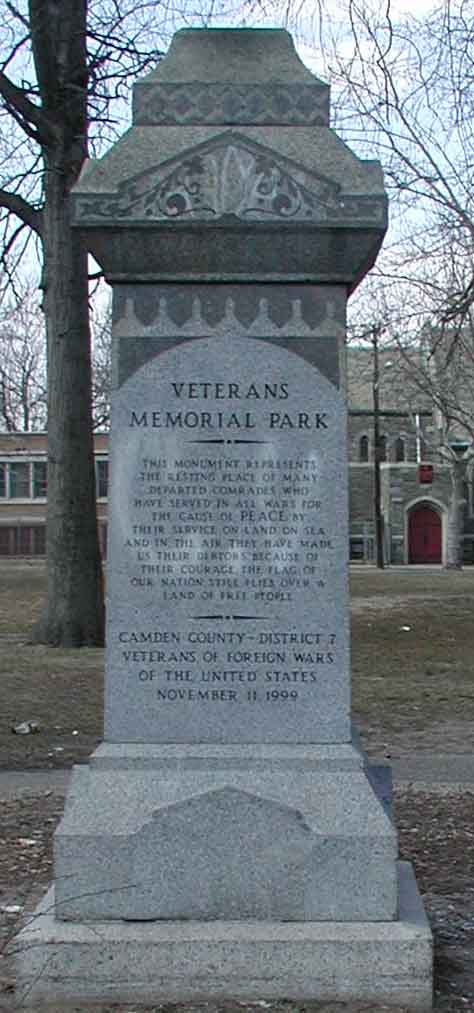
VETERANS MEMORIAL PARK
THIS MONUMENT REPRESENTS THE RESTING PLACE OF MANY DEPARTED COMRADES WHO HAVE SERVED IN ALL WARS FOR THE CAUSE OF PEACE BY THEIR SERVICE ON LAND ON SEA AND IN THE AIR THEY HAVE MADE US THEIR DEBTORS BECAUSE OF THEIR COURAGE THE FLAG OF OUR NATION STILL FLIES OVER A LAND OF FREE PEOPLE
CAMDEN COUNTY - DISTRICT 7
VETERANS OF FOREIGN WARS OF THE UNITED STATES
NOVEMBER 11, 1999
Clisham Monument Inscription
(photograph) — 1888
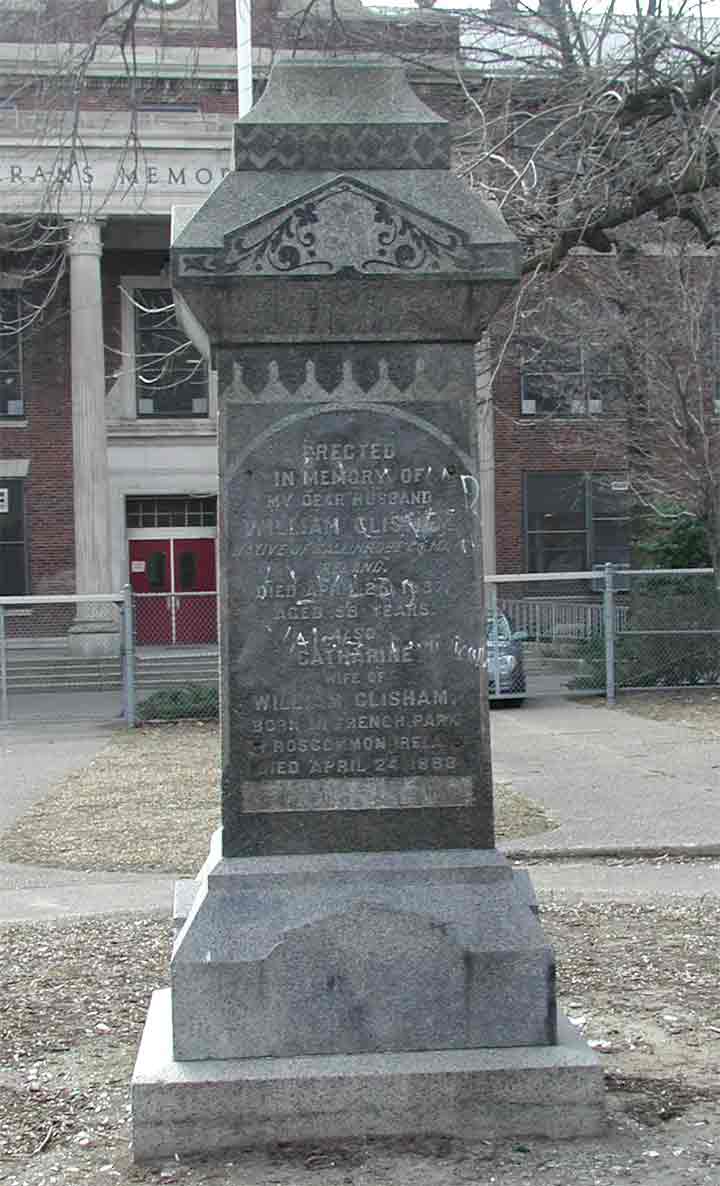
ERECTED
IN MEMORY OF [?]
MY DEAR HUSBAND
WILLIAM CLISHAM
[?]
[?] IRELAND [?]
DIED APRIL 2[?], 18[?]
AGED 5[?] YEARS
ALSO
CATHARINE
WIFE OF
WILLIAM CLISHAM
BORN IN FRENCH PARK
[?] ROSCOMMON [?]
DIED APRIL 24, 1888
Camden Loses Two Prominent Citizens
Philadelphia Inquirer —
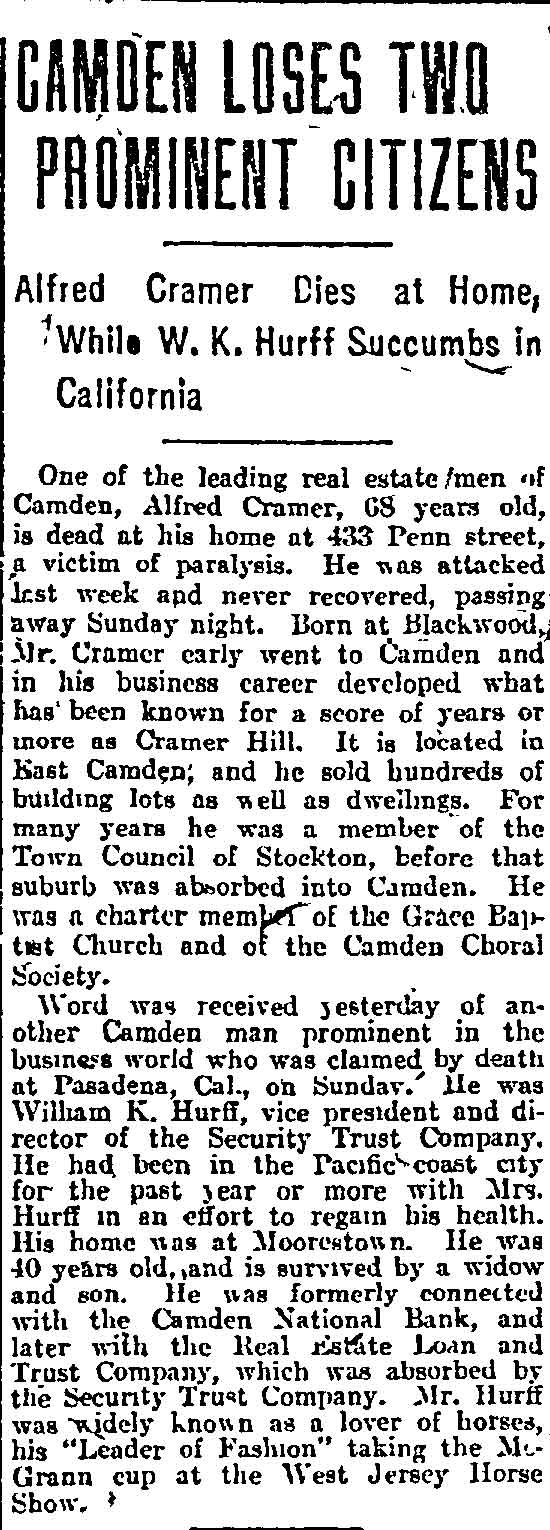
Alfred Cramer Dies at Home, While W. K. Hurff Succumbs in California
One of the leading real estate men of Camden, Alfred Cramer, 68 years old, is dead at his home at 433 Penn street, a victim of paralysis. He was attacked last week and never recovered, passing away Sunday night. Born at Blackwood, Mr. Cramer early went to Camden and in his business career developed what has been known for a score of years or more as Cramer Hill. It is located in East Camden, and he sold hundreds of building lots as well as dwellings. For many years he was a member of the Town Council of Stockton, before that suburb was absorbed into Camden. He was a charter member of the Grace Baptist Church and of the Camden Choral Society.
Word was received yesterday of another Camden man prominent in the business world who was claimed by death at Pasadena, Cal., on Sunday. He was William K. Hurff, vice president and director of the Security Trust Company. He had been in the Pacific coast city for the past year or more with Mrs. Hurff in an effort to regain his health. His home was at Moorestown. He was 40 years old, and is survived by a widow and son. He was formerly connected with the Camden National Bank, and later with the Real Estate Loan and Trust Company, which was absorbed by the Security Trust Company. Mr. Hurff was widely known as a lover of horses, his “Leader of Fashion” taking the McGrann cup at the West Jersey Horse Show.
Fatal Heart Thumps
Philadelphia Inquirer —
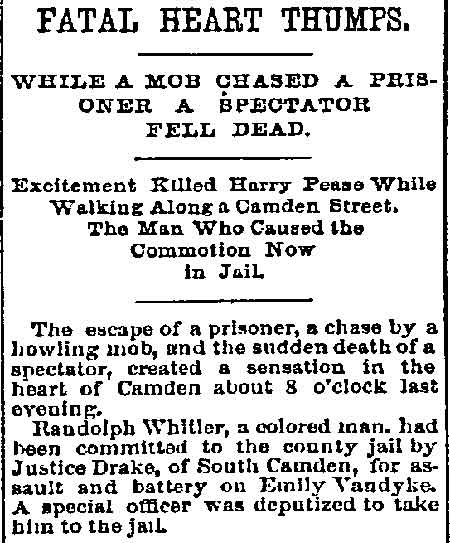
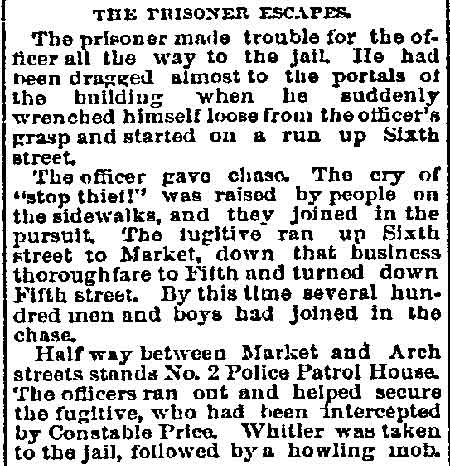
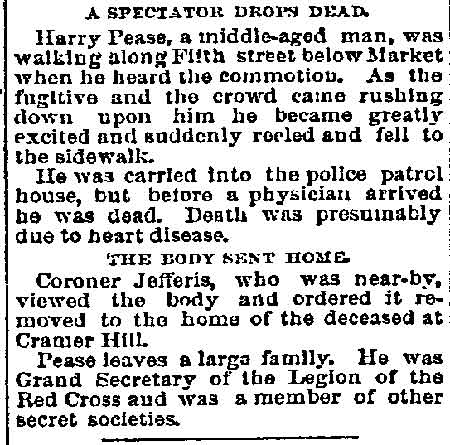
While a Mob Chased a Prisoner a Spectator Fell Dead
Excitement Killed Harry Pease While Walking Along a Camden Street. The Man Who Caused the Commotion Now in Jail
The escape of a prisoner, a chase by a howling mob, and the sudden death of a spectator, created a sensation in the heart of Camden about 8 o’clock last evening.
Randolph Whitler, a colored man, had been committed to the county jail by Justice Drake, of South Camden, for assault and battery on Emily Vandyke. A special officer was deputized to take him to the jail.
THE PRISONER ESCAPES
The prisoner made trouble for the officer all the way to the jail. He had been dragged almost to the portals of the building when he suddenly wrenched himself loose from the officer’s grasp and started on a run up Sixth street.
The officer gave chase. The cry of “stop thief!” was raised by people on the sidewalks, and they joined in the pursuit. The fugitive ran up Sixth street to Market, down that business thoroughfare to Fifth and turned down Fifth street. By this time several hundred men and boys had joined in the chase.
Half way between Market and Arch streets stands No. 2 Police Patrol House. The officers ran out and helped secure the fugitive, who had been intercepted by Constable Price. Whitler was taken to the jail, followed by a howling mob.
A SPECTATOR DROPS DEAD
Harry Pease, a middle-aged man, was walking along Fifth street below Market when he heard the commotion. As the fugitive and the crowd came rushing down upon him he became greatly excited and suddenly reeled and fell to the sidewalk.
He was carried into the police patrol house, but before a physician arrived he was dead. Death was presumably due to heart disease.
THE BODY SENT HOME
Coroner Jefferis, who was near-by, viewed the body and ordered it removed to the home of the deceased at Cramer Hill.
Pease leaves a large family. He was Grand Secretary of the Legion of the Red Cross and was a member of other secret societies.