Preface
First, let it be understood that this page is in no way an attempt to glorify Howard Unruh or the terrible things he did on September 6, 1949. If anything however, this page stands as evidence for each of us that “there but for the grace of God go I.”
Howard Unruh has been, and unfortunately will continue to be, called America's first mass shooter. This is completely untrue. There were several other similar incidents, including one in Chester, Pennsylvania in November of 1948… less than 24 miles away and only 10 months before, where a sniper killed seven people before taking his own life. Click here for more information on this incident.
Howard Unruh has been described as “an odd, withdrawn 'mama's boy' in his neighborhood.” He grew up in East Camden, attending Cramer Junior High School and graduating from Woodrow Wilson High School in January of 1939.
Unruh served in the United States Army in Europe, and saw considerable combat. After returning home he became increasingly withdrawn. On September 6, 1949 the schizophrenia that had been manifesting itself unknown to his own family and his neighbors overtook him, and he killed 13 people in a shooting rampage that has been inaccurately described as “America's First Mass Murderer.”
Howard Unruh was never brought to trial, his mental condition being apparent to those who apprehended him. Sent to Trenton State Prison shortly after his arrest, he has been confined to a maximum security hospital for the criminally insane, and will remain confined for the rest of his life. This may well be considered one of the few times that the criminal justice system in New Jersey worked by its very un-involvement in the proceedings.
If there is any possible “silver lining” that can be found in this sad affair, is that the Unruh affair may have spurred the federal government to put additional resources into mental health care for the veterans that came home from World War II. Howard Unruh's rampage was arguably the culmination of a chain of events that had been taking place since the middle of World War II, evidenced by a series of suicides and suicide attempts by soldiers home on leave and discharged veterans.
Photos
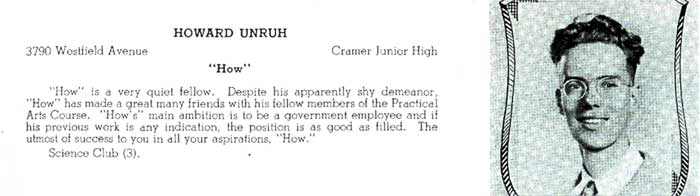
Howard Unruh. 1939 Camden High School Yearbook Entry
3790 Westfield Avenue; Cramer Junior High. “How” is a very quiet fellow. Despit his apparently shy demeanor, “How” has made a great many friends with his fellow members of the Practical Arts Course. “How's” main ambition is to be a government employee and if his previous work is any indication, the position is as good as filled. The utmost of success to you in all your asprations,“How.” Science Club(3).
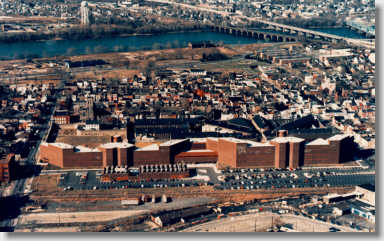
Trenton State Prison, Trenton, NJ
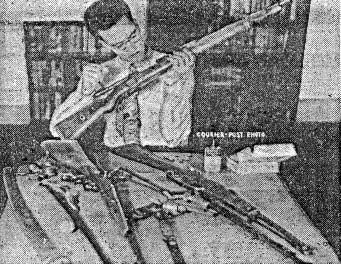
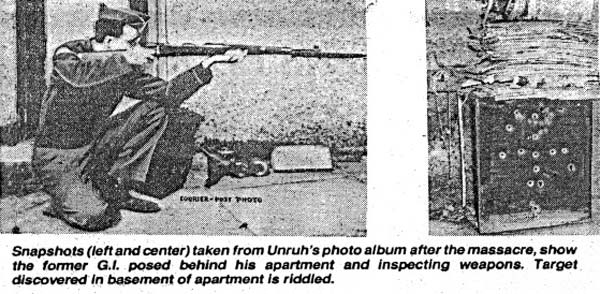
Snapshots (left and center) taken from Unruh’s photo album after the massacre, show the former G.I. posed behind his apartment and inspecting weapons. Target discovered in basement of apartment is riddled. Camden Courier-Post — September 7, 1974
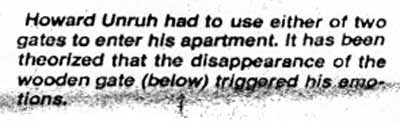
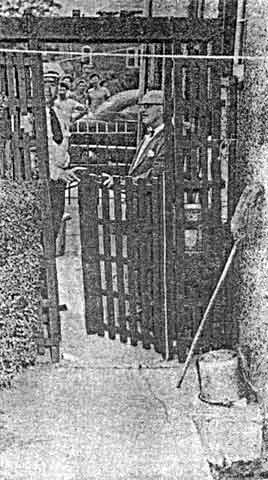
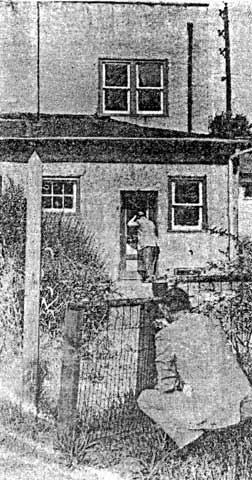
Howard Unruh had to use either of the two gates to enter his appartment. It has been theorized that the disappearance of the wooden gate triggered his emotions
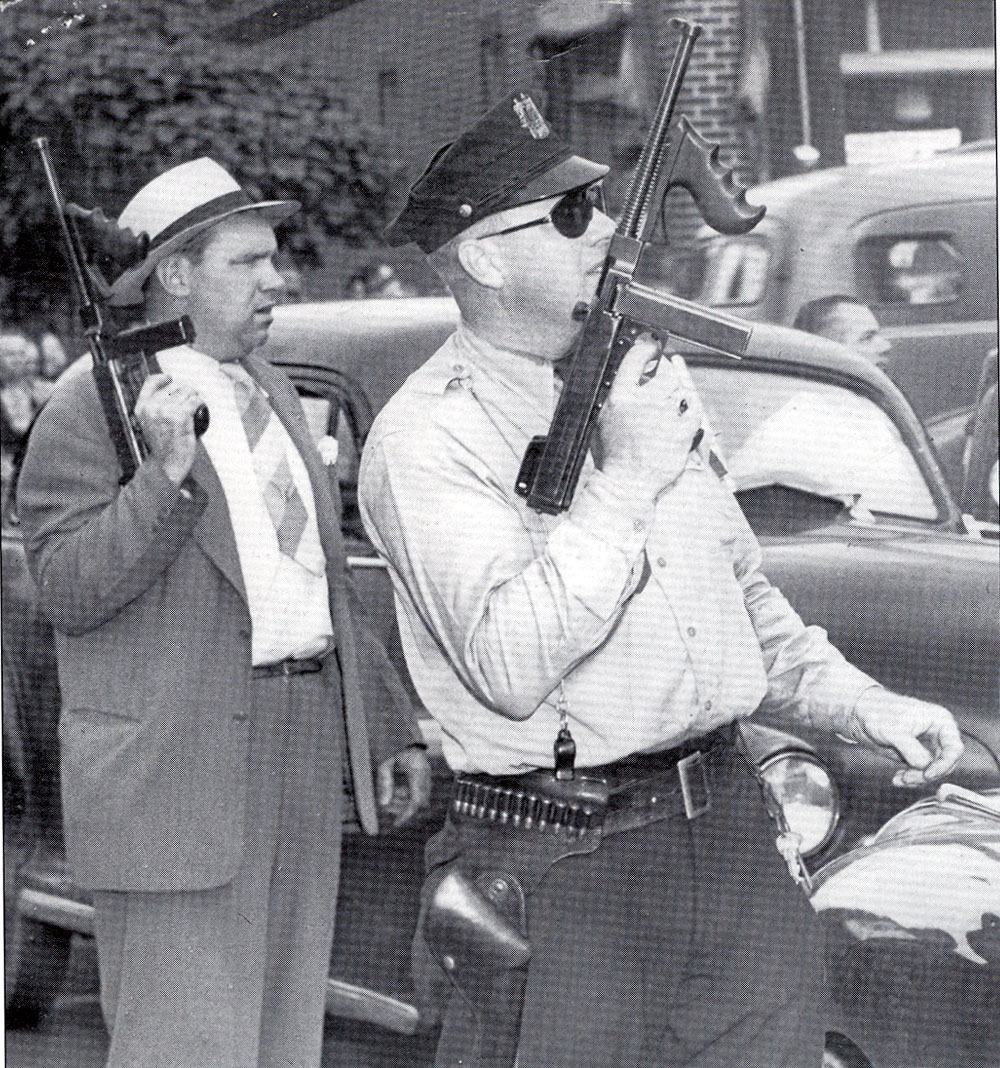
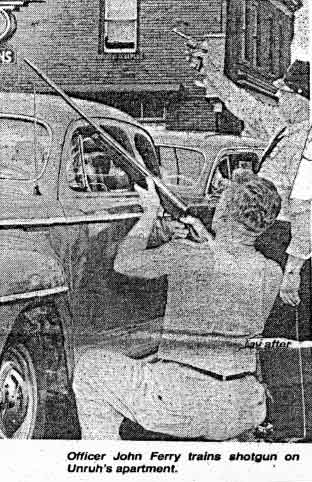
Officer John Ferry trains shotgun on Howard Unruh’s apartment. Camden Courier-Post — September 7, 1974
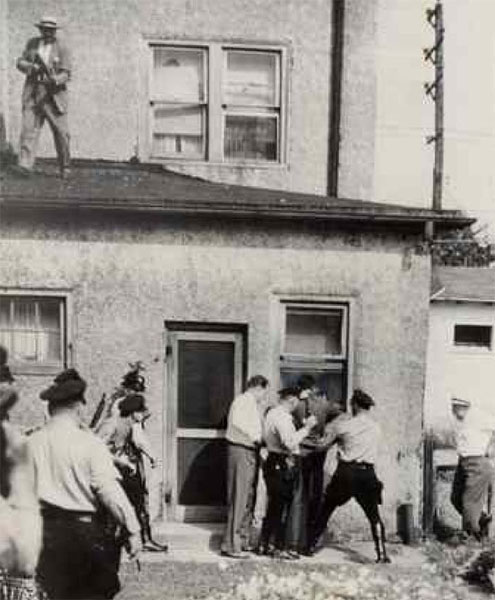
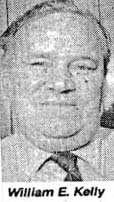
William E. Kelly on the roof of Unruh’s apartment during his arrest. Camden Courier-Post — September 7, 1974
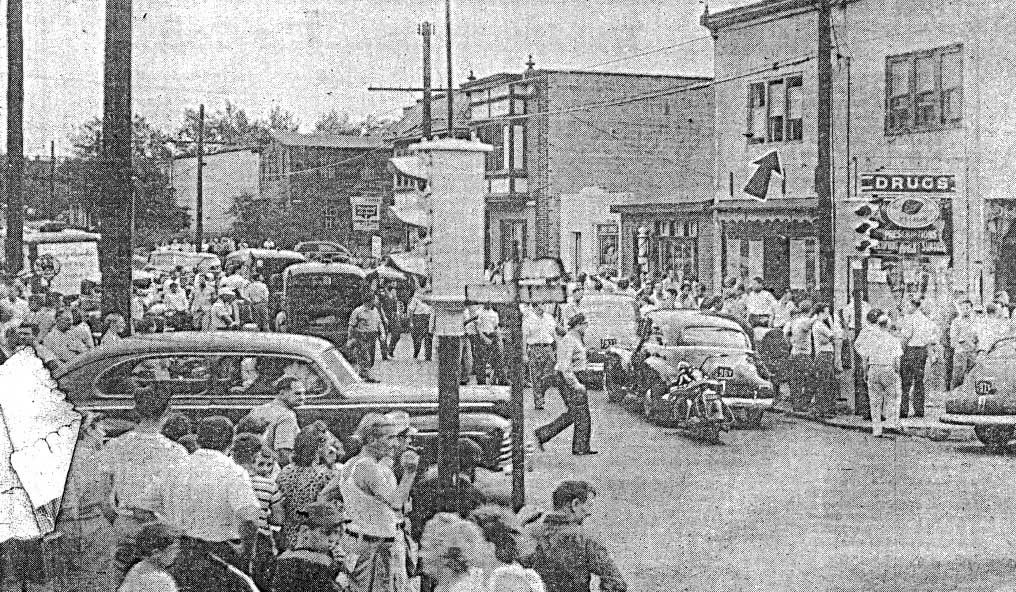
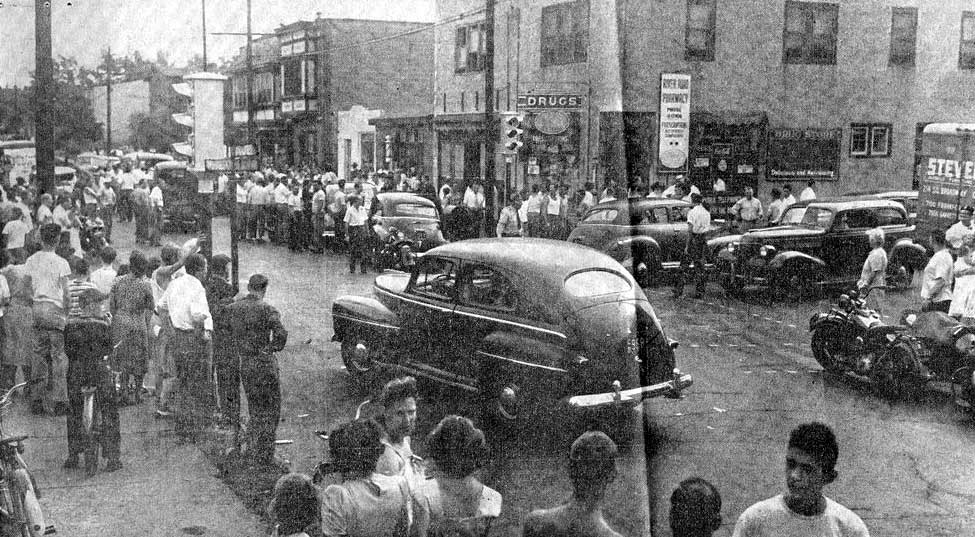
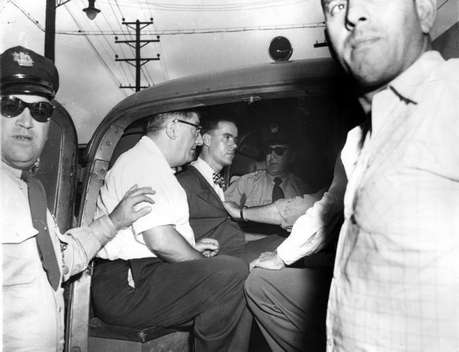
Immediately after Howard Unruh surrendered, River Road at 32d street becomes crowded with police and curiosity seekers. Minutes later Unruh sits perfectly calm in police wagon. Camden Courier-Post — September 7, 1974
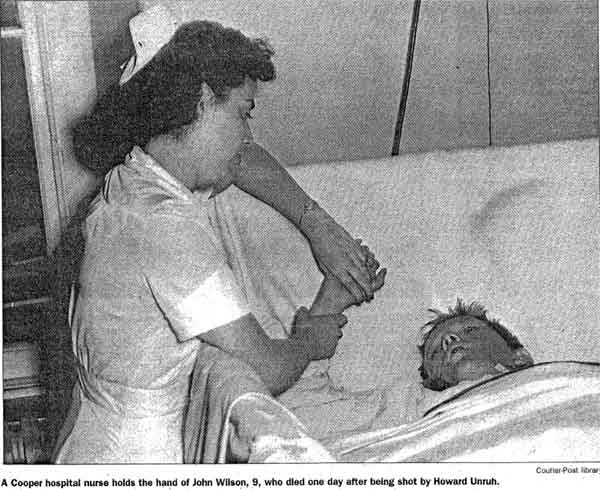
A Cooper Hospital nurse holds the hand of John Wilson, 9, who died one day after being shot by Howard Unruh. Camden Courier-Post — September 7, 1974
William E. Kelly Anecdote
Camden Courier-Post —
“After the shootings we walked through the neighborhood to find witnesses. There was a small government housing project on 32nd Street. It's gone now. Anyway. There was a woman outside who complained that a mailman came racing through the project and had torn down her clothesline.
“I said, 'What mailmain?'” and she said: Look over there. There is his bag. Sure enough he had dropped a full bag of mail. It was lying on the ground. We brought it downtown to the post office. I later was told the mailman quit and never came back.”
Camden Courier-Post - September 7, 1974
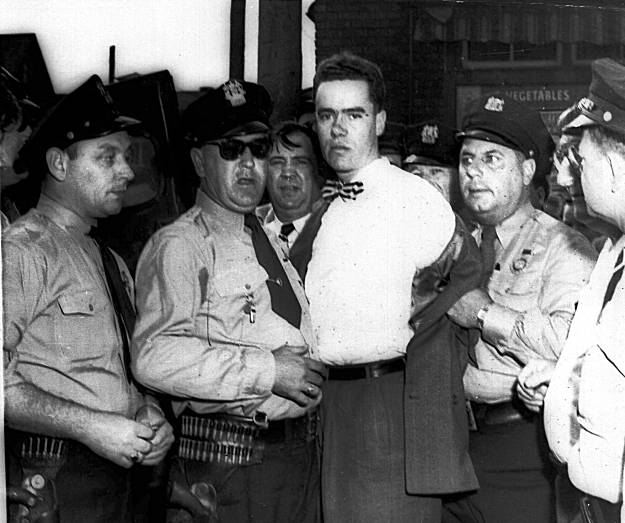
Howard Unruh in custody. Camden Courier-Post — September 7, 1974
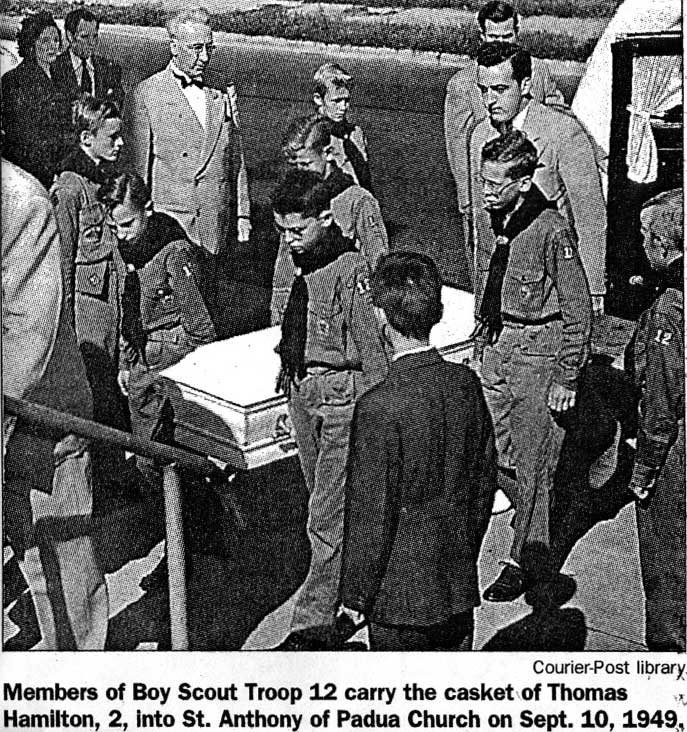
Members of Boy Scout Troop 12 carry the casket of Thomas Hamilton, 2, into St. Anthony of Padua Church on Sept. 10, 1949. Camden Courier-Post — September 7, 1974
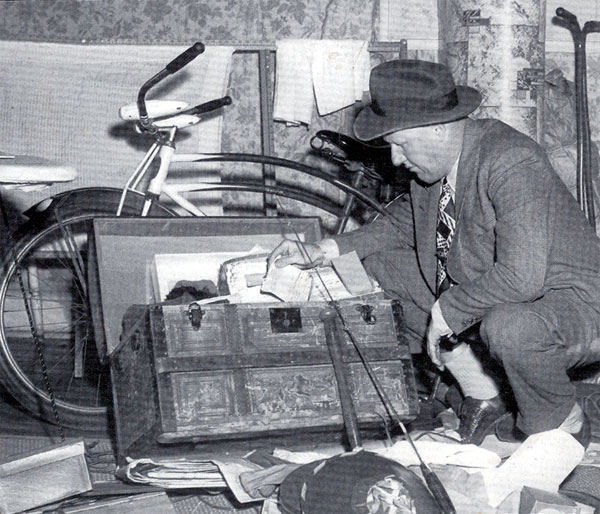

Camden County Detective James McLaughlin checks out items belonging to Howard Unruh in the Unruh home on River Avenue, Camden in 1949. McLaughlin had been investigating Unruh’s killing spree in 1949. Camden Courier-Post — September 7, 1949
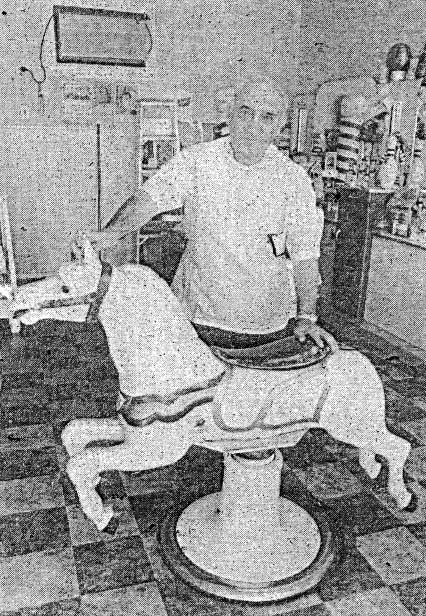
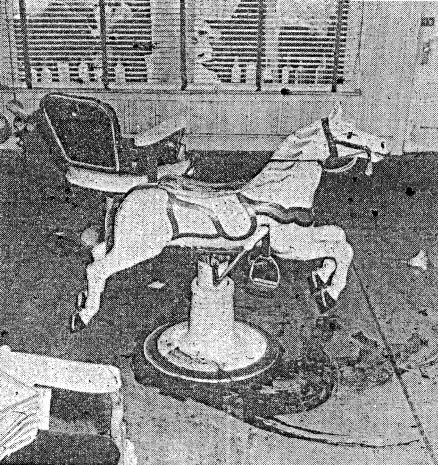
Al Santoro has operated the Barber Shop where Clark Hoover and young Orris Smith were killed. Santoro has kept the hobby horse Smith was on when he was shot. Camden Courier-Post — September 7, 1974
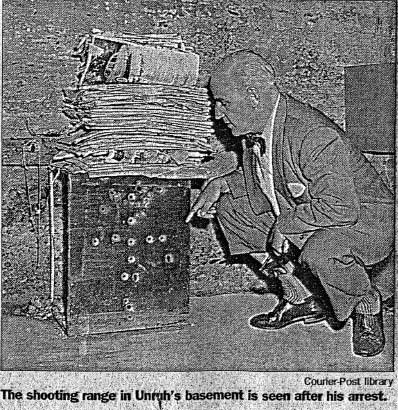
The shooting range in Unruh’s basement is seen after his arrest. Camden Courier-Post — September 7, 1974
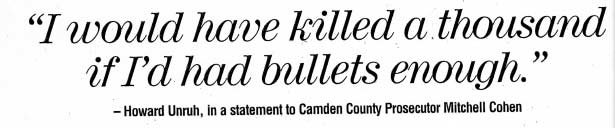
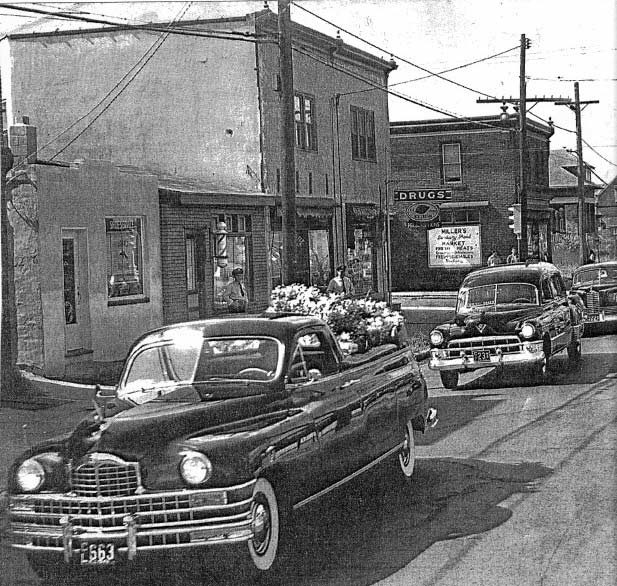
“I would have killed a thousand if I’d had bullets enough.” — Howard Unruh, in a statement to Camden County Prosecutor Mitchell Cohen. Camden Courier-Post — September 7, 1974
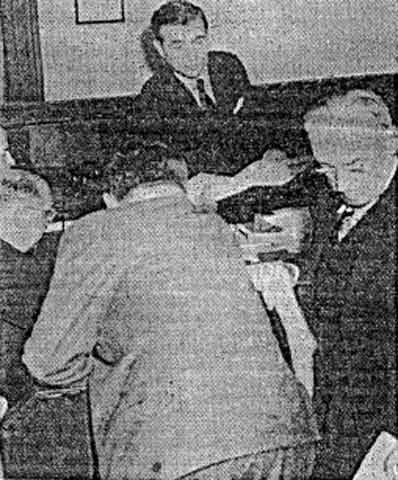

Prosecutor Michell H. Cohen releases psychiatric reports Oct. 7, 1949, finding Unruh insane.
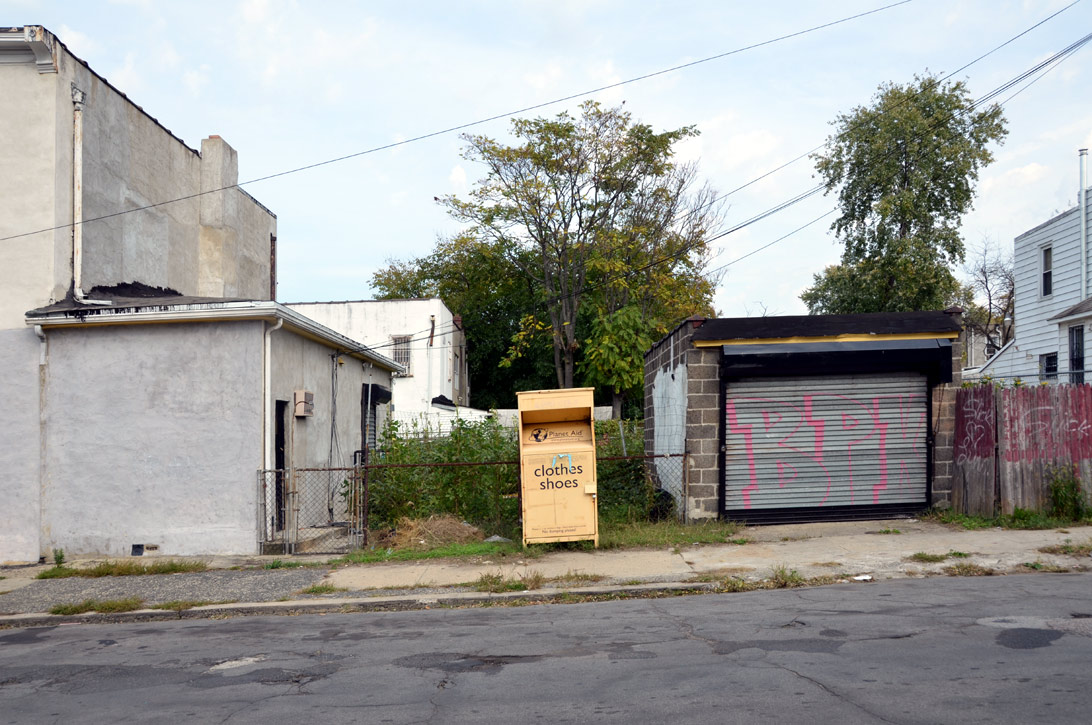
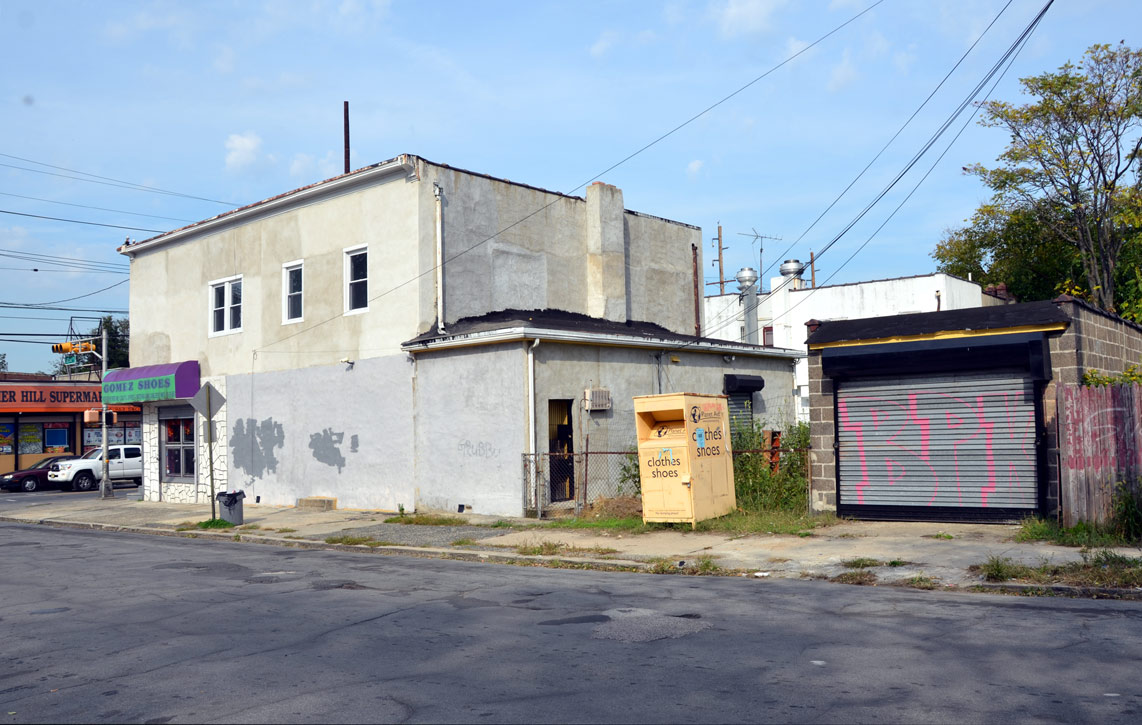
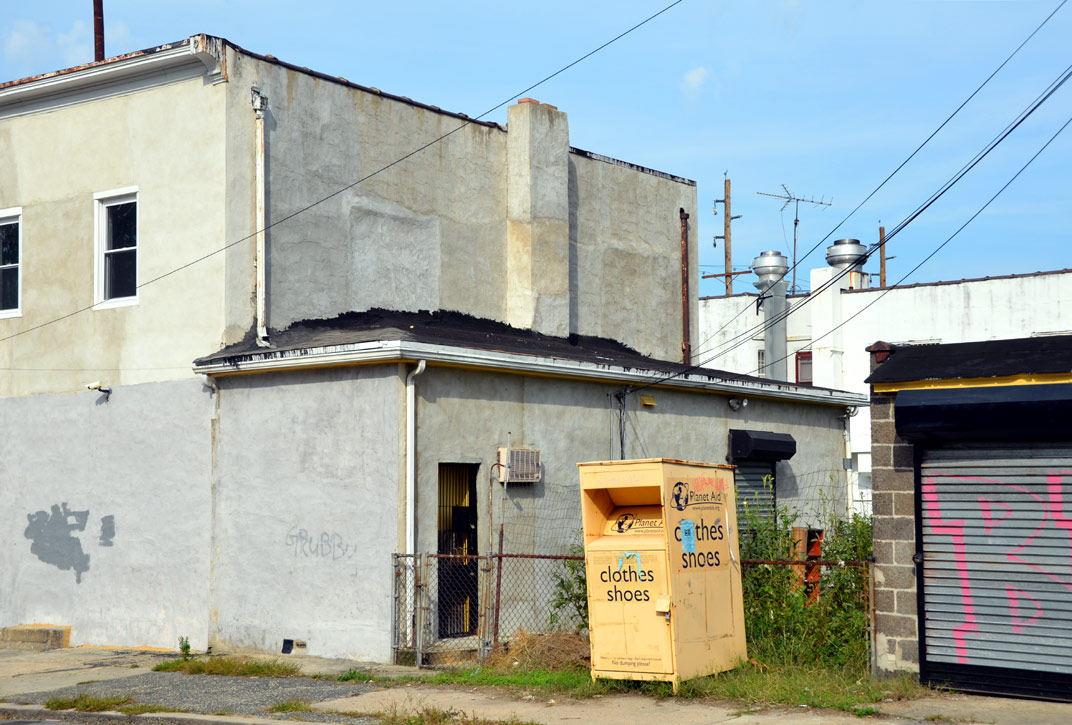
3200 River Avenue - October 18, 2011
Howard Unruh
United States Army
Of the many on-line articles about Howard Unruh, some are pure garbage. Unfortunately, 60-plus years after the event, people with WORSE intentions than Howard Unruh's have sought to exploit the murders to further their own selfish political and social agendas. Beginning in 2009, articles began to appear claiming Howard Unruh was a homosexual. While it is beyond doubt that was teased, as many shy and reclusive boys were and are, there is ZERO evidence of him being gay. ZERO. If anything, there is more evidence to indicate the contrary, specifically, his time in the Army and his words and deeds after his arrest. To exploit the tragedy of Howard Unruh, one of thousands of combat veterans who came home during and after WWII with serious mental illness and found little help, is to spit in the face of every veteran who has come home from war damaged.
In 1945, Gen Omar N. Bradley was appointed as the head of the Veterans Administration. Bradley hired Paul Hawley, the chief surgeon of the European Theater of Operations, to direct the Division of Medicine. Hawley hired more than 4000 physicians and initiated an extensive hospital-building program. New Veterans Administration hospitals were established in affiliation with medical schools, guaranteeing that the best medical services would be provided to veterans. The Veterans Administration system also encouraged clinical psychologists to become psychotherapists and provided a large number of training positions. It took several years to hire the doctors and build the hospitals. My father, Dr. Leon B. Cohen, a clinical psychologuist, was one of these doctors. He began his service with the V.A. in 1951… two years after Unruh's murders.
The most informative, accurate, and objective one, is by Katherine Ramsland.
— Philip Cohen
Veteran Kills 12 in Mad Rampage on Camden Street
New York Times —
Editor's Note
For a distinguished example of local reporting during the year, The New York Times submits the story by Meyer Berger of the mass shootings in Camden, New Jersey on September 6, 1949. Mr. Berger was assigned to the story by The Times City Desk shortly before 11 A.M. He caught the first available train to Camden; personally covered the story and filed approximately 4,000 words. The last of his copy reached The Times office at 9:20 P.M., about one hour before the first edition closing. In the opinion of the editors of The New York Times, Mr. Berger's story was a brilliant example of thorough, accurate reporting and skillful writing, under pressure. Mr. Berger subsequently received the 1950 Pulitzer Prize for local reporting.
CAMDEN, N.J., Sept.6—Howard B. Unruh, 28 years old, a mild, soft-spoken veteran of many armored artillery battles in Italy, France, Austria, Belgium and Germany, killed twelve persons with a war souvenir Luger pistol in his home block in East Camden this morning. He wounded four others.
Unruh, a slender, hollow-cheeked six-footer paradoxically devoted to scripture reading and to constant practice with firearms, had no previous history of mental illness but specialists indicated tonight that there was no doubt that he was a psychiatric case, and that he had secretly nursed a persecution complex for two years or more.
The veteran was shot in the left thigh by a local tavern keeper but he kept that fact secret, too, while policemen and Mitchell Cohen, Camden County prosecutor, questioned him at police headquarters for more than two hours immediately after tear gas bombs had forced him out of his bedroom to surrender.
Blood Betrays His Wound
The blood stain he left on the seat he occupied during the questioning betrayed his wound. When it was discovered he was taken to Cooper Hospital in Camden, a prisoner charged with murder.
He was as calm under questioning as he was during the twenty minutes that he was shooting men, women and children. Only occasionally excessive brightness of his dark eyes indicated that he was anything other than normal.
He told the prosecutor that he had been building up resentment against neighbors and neighborhood shopkeepers for a long time. “They have been making derogatory remarks about my character,” he said. His resentment seemed most strongly concentrated against Mr. and Mrs. Maurice Cohen who lived next door to him. They are among the dead.
Mr. Cohen was a druggist with a shop at 3202 River Road in East Camden. He and his wife had had frequent sharp exchanges over the Unruhs' use of a gate that separates their back yard from the Cohens'. Mrs. Cohen had also complained of young Unruh's keeping his bedroom radio tuned high into the late night hours. None of the other victims had ever had trouble with him. Unruh, a graduate ofWoodrow Wilson High School here, had started a GI course in pharmacy at Temple University in Philadelphia some time after he was honorably discharged from the service in 1945, but had stayed with it only three months. In recent months he had been unemployed, and apparently was not even looking for work.
Mother Separated From Husband
His mother, Mrs. Rita Unruh, 50, is separated from her husband. She works as a packer in the J. Evanson Soap Company in Camden and hers was virtually the only family income. James Unruh, 25 years old, her younger son, is married and lives in Haddon Heights, N.J. He works for the Curtis Publishing Company.
On Monday night, Howard Unruh left the house alone. He spent the night at the Family Theater on Market Street in Philadelphia to sit through several showings of the double feature motion picture there—“I Cheated the Law” and “The Lady Gambles.” It was past three o'clock this morning when he got home.
Prosecutor Cohen said that Unruh told him later that before he fell asleep this morning he had made up his mind to shoot the persons who had “talked about me,” that he had even figured out that 9:30 A.M. would be the time to begin because most of the stores in his block would be open at that hour.
His mother, leaving her ironing when he got up, prepared his breakfast in their drab little three-room apartment in the shabby gray two-story stucco house at the corner of River Road and Thirty Second Street. After breakfast, he loaded one clip of bullets into his Luger, slipped another clip into his pocket, and carried sixteen loose cartridges in addition. He also carried a tear-gas pen with six shells and a sharp six-inch knife.
He took one last look around his bedroom before he left the house. On the peeling walls he had crossed pistols, crossed German bayonets, pictures of armored artillery in action. Scattered about the chamber were machetes, a Roy Rogers pistol, ash trays made of German shells, clips of 30-30 cartridges for rifle use and a host of varied war souvenirs.
Mrs. Unruh had left the house some minutes before, to call on Mrs. Caroline Pinner, a friend in the next block. Mrs. Unruh had sensed, apparently, that her son's smoldering resentments were coming to a head. She had pleaded with Elias Pinner, her friend's husband, to cut a little gate in the Unruhs' backyard so that Howard need not use the Cohen gate again. Mr. Pinner finished the gate early Monday evening after Howard had gone to Philadelphia.
At the Pinners' house at 9 o'clock this morning, Mrs. Unruh had murmured something about Howard's eyes: how strange they looked and how worried she was about him.
A few minutes later River Road echoed and re-echoed to pistol fire. Howard Unruh was on the rampage. His mother, who had left the Pinners' little white house only a few seconds before, turned back. She hurried through the door.
She cried, “Oh, Howard, oh, Howard, they're to blame for this.” She rushed past Mrs. Pinner, a kindly gray-haired woman of 70. She said, “I've got to use the phone; may I use the phone?”
But before she had crossed the living room to reach for it she fell on the faded carpet in a dead faint. The Pinners lifted her onto a couch in the next room. Mrs. Pinner applied aromatic spirits to revive her.
Panic Grips Entire Block
While his mother writhed on the sofa in her house dress, and worn old sweater, coming back to consciousness, Howard Unruh was walking from shop to shop in the “3200 block” with deadly calm, spurting Luger in hand. Children screamed as they tumbled over one another to get out of his way. Men and women dodged into open shops, the women shrill with panic, man hoarse with fear. No one could quite understand for a time. what had been loosed in the block.
Unruh first walked into John Pilarchik's shoe repair shop near the north end of his own side of the street. The cobbler, a 27-year-old man who lives in Pennsauken Township, looked up open-mouthed as Unruh came to within a yard of him. The cobbler started up from his bench but went down with a bullet in his stomach. A little boy who was in the shop hid behind the counter and crouched there in terror. Unruh walked out into the sunlit street.
“I shot them in the chest first,” he told the prosecutor later, in meticulous detail, “and then I aimed for the head.” His aim was devastating—and with reason. He had won marksmanship and sharpshooters' ratings in the service, and he practiced with his Luger all the time on a target set up in the cellar of his home.
Unruh told the prosecutor afterward that he had Cohen the druggist, the neighborhood barber, the neighborhood cobbler and the neighborhood tailor on his mental list of persons who had “talked about him.” He went methodically about wiping them out. Oddly enough, he did not start with the druggist, against whom he seemed to have the sharpest feelings, but left him almost for the last.
Newlywed Wife Shot Dead
From the cobbler's he went into the little tailor shop at 3214 River Road. The tailor was out. Helga Zegrino, 28 years old, the tailor's wife was there alone. The couple, incidentally, had been married only one month. She screamed when Unruh walked in with his Luger in his hand. Some people across the street heard her. Then the gun blasted again and Mrs. Zegrino pitched over, dead. Unruh walked into the sunlight again.
All this was only a matter of seconds and still only a few persons had begun to understand what was afoot. Down the street at 3210 River Road is Clark Hoover's little country barber shop. In the center was a white-painted carousel-type horse for children customers. Orris Smith, a blonde boy only 6 years old, was in it, with a bib around his neck, submitting to a shearing. His mother, Mrs. Catherine Smith, 42, sat on a chair against the wall and watched.
She looked up. Clark Hoover turned from his work, to see the six-footer, gaunt and tense, but silent, standing in the driveway with of the Luger. Unruh's brown tropical worsted suit was barred with morning shadow. The sun lay bright in his crew-cut brown hair. He wore no hat. Mrs. Smith could not understand what was about to happen.
Unruh walked to “Brux”—that is Mrs. Smith's nickname for her little boy—and put the Luger to the child's chest. The shot echoed and reverberated in the little 12 by 12 shop. The little boy's head pitched toward the wound, his hair, half-cut, stained with red. Unruh said never a word. He put the Luger close to the shaking barber's hand. Before the horrified mother, Unruh leaned over and fired another shot into Hoover.
The veteran made no attempt to kill Mrs. Smith. He did not seem to hear her screams. He turned his back and stalked out, unhurried. A few doors north, Dominick Latela, who runs a little restaurant, had come to his shop window to learn what the shooting was about. He saw Unruh cross the street toward Frank Engel's Tavern. Then he saw Mrs. Smith stagger out with her pitiful burden. Her son's head rolled over the crook of her right arm.
Mrs. Smith screamed, “My boy is dead. I know he's dead.” She stared about her, looking in vain for aid. No one but Howard Unruh was in sight, and he was concentrating on the tavern. Latela dashed out, but first he shouted to his wife, Dora, who was in the restaurant with their daughter Eleanor, 6 years old. He hollered, “I”m going out. Lock the door behind me.” He ran for his car, and drove it down toward Mrs. Smith as she stood on the payment with her son.
Latela took the child from her arms and placed him on the car's front seat. He pushed the mother into the rear seat, slammed the doors and headed for Cooper Hospital. Howard Unruh had not turned. Engle, the tavern keeper, had locked his own door. His customers, the bartender and a porter made a concerted rush for the rear of the saloon. The bullets tore through the tavern door paneling. Engel rushed upstairs and got out his .38 caliber pistol, then rushed to the street window of his apartment.
Unruh was back in the center of the street. He fired a shot at an apartment window at 3208 River Road. Tommy Hamilton, 2 years old, fell back with a bullet in his head. Unruh went north again to Latela's place. He fired a shot at the door, and kicked in the lower glass panel. Mrs. Latela crouched behind the counter with her daughter. She heard the bullets, but neither she nor her child was touched. Unruh walked back toward Thirty-second Street, reloading the Luger.
Now, the little street—a small block with only five buildings on one side, three one-story stores on the other—was shrill with women's and children's panicky outcries. A group of six or seven little boys or girls fled pass Unruh. They screamed, “Crazy man!” and unintellible sentences. Unruh did not seem to hear, or see, them.
Autoist Goes to His Death
Alvin Day, a television repair man, who lives in the near-by Mantua, had heard the shooting, but driving into the street he was not aware of what had happened. Unruh walked up to the car window as Day rolled by, and fired once through the window, with deadly aim. The repair man fell against the steering wheel. The front wheels hit the opposite curb and stalled. Day was dead.
Frank Engel had thrown open his second-four apartment window. He saw Unruh pause for a moment in a narrow alley between the cobbler's shop and a little two-story house. He aimed and fired. Unruh stopped for just a second. The bullet had hit, but he did not seem to mind, after the initial brief shock. He headed toward the corner drugstore, and Engle did not fire again.
“I wish I had,” he said, later. “I could have killed him then. I could have put a half-dozen shots into him. I don't know why I didn't do it.”
Cohen, the druggist, a heavy man of 40, had run into the street shouting, “What's going on here? What's going on here?” but at sight of Unruh hurried back into his shop. James J. Huttton, 45, an insurance agent from Westmont, N.J., started out of the drug shop to see what the shooting was about. Like so many others he had figured at first that it was some car backfiring. He came face to face with Unruh.
Unruh said quietly, “Excuse me, sir,” and started to push past him. Later, Unruh told the police: “That man didn't act fast enough. He didn't get out of my way.” He fired into Hutton's head and body. The insurance man pitched onto the sidewalk and lay still.
Cohen had run to his upstairs apartment and had tried to warn Minnie Cohen, 63, his mother, and Rose, his wife, 38, to hide. His son, Charles, 14, was in the apartment, too.
Mrs. Cohen shoved the boy into a clothes closet, and leaped into another closet herself. She pulled the door to. The druggist, meanwhile had leaped from the window onto a porch roof. Unruh, a gaunt figure at the window behind him, fired into the druggist's back. The druggist, still running, bounded off the roof and lay dead in Thirty-second Street.
Unruh fired into the closet, where Mrs. Cohen was hidden. She fell dead behind the closed door, and he did not bother to open it. Mrs. Minnie Cohen tried to get to the telephone in an adjoining bedroom to call the police. Unruh fired shots into her head and body and she sprawled dead on the bed. Unruh walked down the stairs with his Luger reloaded and came out into the street again.
A coupe had stopped at River Road, obeying a red light. The passengers obviously had no idea of what was loose in East Camden and no one had a chance to tell them. Unruh walked up to the car, and though it was filled with total strangers, fired deliberately at them, one by one, through the windshield. He killed the two women passengers, Mrs. Helen Matlack Wilson, 43, of Pennsauken, who was driving, and her mother, Mrs. Emma Matlack, 66. Mrs. Wilson's son John, 12, was badly wounded. A bullet pierced his neck, just below in the jawbone.
Earl Horner, clerk in the American Stores Company, a grocery opposite the drugstore, had locked his front door after several passing men, women and children had tumbled breathlessly into the shop panting “crazy man***killing people.***” Unruh came up to the door and fired two shots through the wood paneling. Horner, his customers, the refugees from the veteran's merciless gunfire, crouched, trembling, behind the counter. None there was hurt.
“He tried the door before he shot in here,” Horner related afterward. “He just stood there, stony-faced and grim, and rattled the knob, before he started to fire. Then he turned away.”
Charlie Petersen, 18, son of a Camden fireman [John M. Peterson] , came driving down the street with two friends when Unruh turned from the grocery. The three boys got out to stare at Hutton's body lying unattended on the sidewalk. They did not know who had shot the insurance man, or why and, like the women in the car, had no warning that Howard Unruh was on the loose. The veteran brought his Luger to sight and fired several times. Young Petersen fell with bullets in his legs. His friends tore pell-mell down the street to safety.
Mrs. Helen Harris of 1250 North Twenty-eighth Street with her daughter, Helen, a 6-year-old blonde child, and a Mrs. Horowitz with her daughter, Linda, five, turned into Thirty-second Street. They had heard the shooting from a distance but thought is was auto backfire.
Unruh passed them in Thirty-second Street and walked up the sagging four steps of a little yellow dwelling back of his own house. Mrs. Madeline Harrie, a woman in her late thirties, and two sons, Armand, 16, and Leroy, 15, were in the house. A third son, Wilson, 14, was barricaded in the grocery with other customers.
Unruh threw open the front door and, gun in hand, walked into the dark little parlor. He fired two shots at Mrs. Harrie. They went wild and entered the wall. A third shot caught her in the left arm. She screamed. Armand leaped at Unruh, to tackle him. The veteran used the Luger butt to drop the boy, then fired two shots into his arms. Upstairs Leroy heard the shooting and the screams. He hid under a bed.
By this time, answering a flood of hysterical telephone calls from various parts of East Camden, police radio cars swarmed into River Road with sirens wide open. Emergency crews brought machine guns, shotguns and tear gas bombs.
Sergeant Earl Wright, one of the first to leap to the sidewalk, saw Charles Cohen, the druggist's son. The boy was half out the second-floor apartment window, just above where his father lay dead. He was screaming “He's going to kill me. He's killing every body.” The boy was hysterical.
Wright bounded up the stairs to the druggist's apartment. He saw the dead woman on the bed, and tried to soothe the druggist son. He brought him downstairs and turned him over to other policemen, then joined the men who had surrounded the two-story stucco house where Unruh lived. Unruh, meanwhile, had fired about 30 shots. He was out of ammunition: Leaving the Harrie house, he had also heard the police sirens. He had run through the back gate to his own rear bedroom.
Guns Trained on Window
Everett Joslin, a motorcycle policeman, scrambled to the porch roof under Unruh's window. He tossed a tear-gas grenade through a pane of glass. Other policemen, hoarsely calling on Unruh to surrender, took positions with their machine guns and shotguns. They trained them on Unruh's window.
Meanwhile a curious interlude had taken place. Philip W. Buxton, an assistant city editor on the Camden Evening Courier had looked Unruh's name up in the telephone book. He called the number, Camden 4-2490W. It was just after 10 A.M. and Unruh had just returned to his room. To Mr. Buxton's astonishment Unruh answered. He said hello in a calm, clear voice.
“This Howard?” Mr. Buxton asked.
“Yes, this is Howard. What's the last name of the party you want?”
“Unruh.”
The veteran asked what Mr. Buxton wanted.
“I'm a friend,” the newspaper man said. “I want to know what they're doing to you down there.”
Unruh thought a moment. He said, “They haven't done anything to me—-yet. I'm doing plenty to them.” His voice was still steady without a trace of hysteria.
Mr. Buxton asked how many persons Unruh had killed.
The veteran answered: “I don't know. I haven't counted. Looks like a pretty good score.”
“Why are you killing people?”
“I don't know,” came the frank answer. “I can't answer that yet. I'll have to talk to you later. I'm too busy now.”
The telephone banged down.
Unruh was busy. The tear gas was taking effect and police bullets were thudding at the walls around him. During a lull in the firing the police saw the white curtains move and the gaunt killer came into plain view.
“Okay,” he shouted. “I give up, I'm coming down.”
“Where's that gun?” a sergeant yelled.
“It's on my desk, up here in the room,” Unruh called down quietly. “I'm coming down.”
Thirty guns were trained on the shabby little back door. A few seconds later the door opened and Unruh stepped into the light, his hands up. Sergeant Wright came across the morning-glory and aster beds in the yard and snapped handcuffs on Unruh's wrists.
“What's the matter with you,” a policeman demanded hotly. “You a psycho?”
Unruh stared into the policeman's eyes——a level, steady stare. He said, “I'm no psycho. I have a good mind.”
Word of the capture brought the whole East Camden populace pouring into the streets. Men and women screamed at Unruh, and cursed him in shrill accents and in hoarse anger. Someone cried “lynch him” but there was no movement. Sergeant Wright's men walked Unruh to a police car and started for headquarters.
Shouting and pushing men and women started after the car, but dropped back after a few paces. They stood in excited little groups discussing the shootings, and the character of Howard Unruh. Little by little the original anger, born of fear, that had moved the crowd, began to die.
Men conceded that he probably was not in his right mind. Those who knew Unruh kept repeating how close-mouthed he was, and how soft spoken. How he took his mother to church, and how he marked scripture passages, especially the prophecies.
“He was a quiet one, that guy,” a man told a crowd in front of the tavern. “He was all the time figuring to do this thing. You gotta watch them quiet ones.”
But all day River Road and the side streets talked of nothing else. The shock was great. Men and women kept saying: “We can't understand it. Just don't get it.”
Life Hereabouts by Charley Humes
Camden Courier-Post —
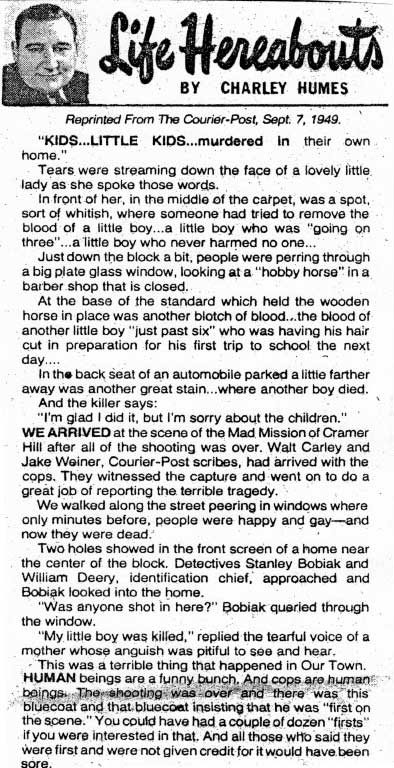
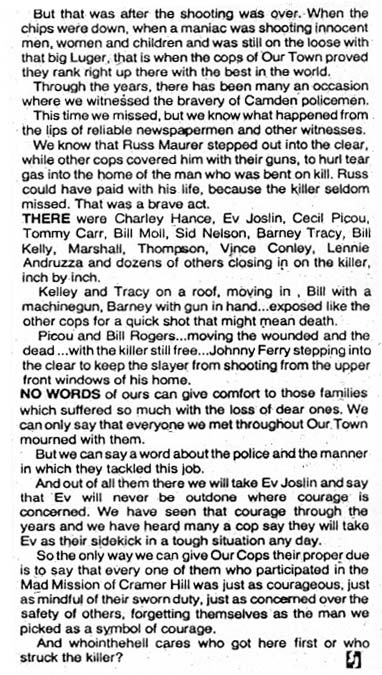
Life Hereabouts by Charlie Humes - Camden Courier-Post - September 7, 1949
Charley Humes - Howard Unruh - Walt Carley - Jake Weiner - Stanley Bobiak - William Deery - Russ Maurer - Charles Hance - Everett Joslin - Cecil Picou - Thomas Carr - William Moll - Martin “Sid” Nelson - Harry J. “Barney” Tracey - William Kelly Sr. - Marshall Thompson - Vince Conley - Leonard Andruzza - William Rogers - John Ferry
…He Left a Trail of Death
Camden Courier-Post —
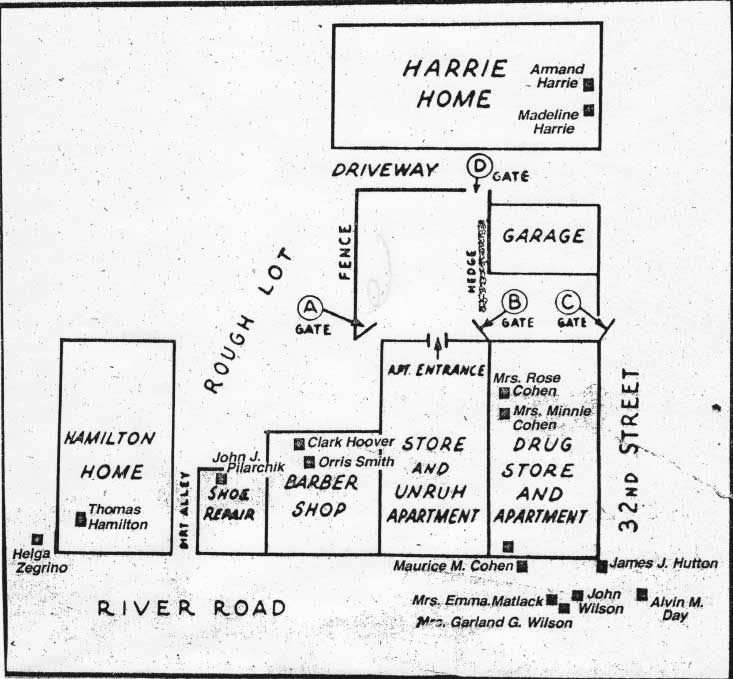
September 6, 1949 was a pleasant, sunny Tuesday but 27-year-old Howard B. Unruh awoke in a black mood. He had been at the movies in Philadelphia the night before but paid little attention to the double feature. He had planned his revenge in that theater. He had planned to kill them all—those who had made him suffer so much grief and humiliation. The druggist and his wife, the barber, the tailor, the shoemaker.
He was in such a dark mood that he even threatened his mother. He had a wrench in his hands, Mrs. Freda Unruh would tearfully recall four days later, and he raised the wrench and threatened her. He was upset about the late, Mrs. Unruh knew. But Howard wouldn’t talk. He wouldn’t tell his mother what was bothering him. And Mrs. Unruh was so alarmed by his unusual behavior that she left the apartment and went to a neighbor’s home. She said she felt like calling the police, but she didn’t and the one opportunity to avoid a massacre slipped by.
THE TALL, square-shouldered, veteran of World War II waited until 9:30. He told investigators he waited until all the stores were open so he could get all his “persecutors” at once. He took his German Luger and several clips.
He lived with his mother in a small second-floor apartment, just one door from the corner of River Avenue and 32nd Street in the East Camden neighborhood known as Cramer Hill. Eyewitness accounts conflict as to where Unruh started his trail of death. The 10-minute killing spree was confined to a few yards of pavement at that intersection and he must have retraced his steps several times. The Courier-Post that day said his first stop was the drugstore of Maurice M. Cohen. Unruh felt a special grudge toward Cohen and his wife, Rose.
IT STEMMED from the unusual setup of the Unruh apartment. The only entrance was through a rear door. The most convenient way to get to the door was through the Cohens’ backyard. Over the years there had been friction. Sometimes the druggist allowed Unruh to use the backyard, sometimes he didn’t. Just a few days before there had been conflict over a gate Unruh had constructed between the two yards. And then someone tore the gate off its hinges.
The silent Unruh saw this as a source of humiliation. He smoldered inside. The pharmacist apparently saw Unruh coming. He tried to warn his wife, mother and 12-year-old son, who were upstairs. Unruh apparently chased him and killed him outside the store. Then he went up the steps and killed Mrs. Cohen and the elderly mother of the druggist as they tried to hide in the clothes closets. The boy somehow escaped.
As he left the pharmacy, James H. Hutton, 45, an insurance agent well known in the neighborhood and also known to Unruh, was entering the store. Unruh executed the insurance man on the sidewalk.
MOST NEWSPAPER accounts talk about Unruh’s “deadly accuracy,” and his “marksmanship.” But all of his victims were shot at almost point-blank range. It doesn’t take a marksman to kill from three or four feet away.
Probably the next victim was Alvin M. Day, 24, an RCA television repairman from Mantua. He was making his first stop of the day on River Avenue and was probably halted at the intersection for the traffic light. Unruh went up to his car and put a bullet through his head.
Then Unruh walked a few paces down River Avenue to Clark Hoover’s Barber Shop. Unruh told investigators that the barber was always directing insulting remarks in his direction. THE BARBER had a carousel-type hobbyhorse in his shop used by tots instead of the barber chair. That morning six-year-old Orris Smith was perched on the horse getting a haircut for school. Before the horrified mother, Unruh put bullets into the heads of the barber and her son.
His next stop was an adjoining shoe repair shop, where he killed the cobbler, John J. Pilarchik, 27. The next building on River Avenue is a private home. Mrs. Mary Hamilton, nine months pregnant, was playing with her three sons in the living room. She saw Unruh peer through the window and aim his gun. She got two of the boys out of the room in time but two-year-old Thomas Hamilton died.
UNRUH NEXT went into the tailor shop. He was after owner Thomas Zegrino but he was not there. So Unruh killed Zegrino’s bride of only a few weeks, Helga. Unruh walked back up River Avenue, passing the shops where he had left a trail of death. A car was stopped for a red light at the intersection. Unruh walked up to the car, put his hand through the window and shot the driver, Mrs. Helen Wilson of Pennsauken, her elderly mother and her 10-year-old son. The two women died instantly. The boy died the next morning in the hospital. By now the intersection was littered with bodies in stalled cars and on the sidewalks. People were rushing from the scene screaming while Unruh calmly walked around looking for more victims.
Unruh took a shot at Charles Peterson, 18, who had just stopped his car and had come out to see the bodies. Peterson was hit in the leg and survived.
ACROSS THE STREET, customers in the American Store had bolted the door and taken cover behind the counter. Unruh tried the door but could not open it. He shot twice into the store but no one was hit. He took two shots at a group of men looking out from Frank Engle’s Cafe. Both shots missed. Engel got his pistol and shot at Unruh from his second story window, hitting the gunman in the buttocks.
Unruh walked a short distance up 32nd Street and into the first house where he shot Mrs. Madeline Harrie. Her son, Armand, 16, took a flying leap at Unruh. The killer hit him with the butt of his Lugar and shot him as he lay on the floor. Both survived their wounds.
UNRUH HAD reloaded his pistol several times but by now had used most of his ammunition. He went back up into his second-story apartment, locking the doors behind him. Soon the air was filled with the shrill wail of police sirens and the intersection swarmed with heavily armed officers, perhaps 50 of them. The policemen kept discovering bodies and rushing them off to Cooper Hospital.
It might have been 15 or 30 minutes before police realized it was one man they were after and he was probably sitting right above their heads looking down on the whole scene. Police, armed with sub-machine guns, took up positions in the rear of the building and shouted for Unruh to give himself up. Then they opened up fire on the windows and finally lobbed in tear gas cylinders which never went off. Then came a voice, “Don’t shoot. Don’t shoot. I’m coming down.”
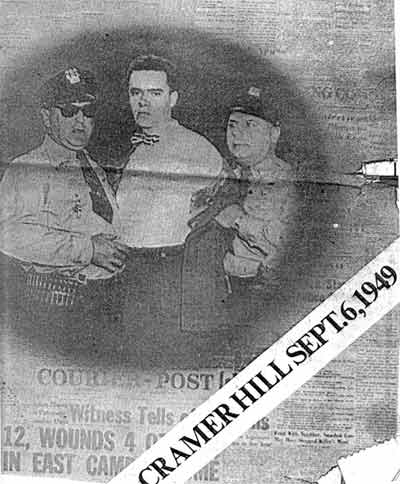
DOWN THE backstairs and out into the sunshine stepped Howard Unruh. He was calm. He was dressed neatly in a pinstriped suit, white shirt, bow tie. A photographer captured the scene. One cop said, “What’s the matter with you? You a psycho?”
“I’m no psycho. I have a good mind,” answered Howard Unruh. He was quickly hustled away from a menacing crowd. He gave a confession to Camden County Prosecutor Mitchell Cohen, now a federal judge. He said to Cohen, “I’m glad I did it. They were making derogatory remarks about my character.” When asked about the children, he said, “What children?” He was booked on 12 counts of murder (raised to 13 the next day). It was discovered that he had been shot and he was taken to Cooper Hospital. At two the next morning he was whisked away to Trenton State Hospital’s Vroom Building for the criminally insane. He has been there ever since.
He shot at me twice…bang…bang…
Camden Courier-Post —
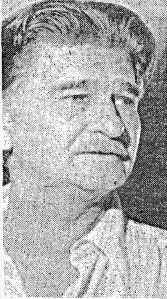
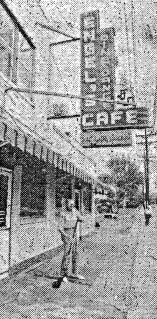
Frank Engel still is the proprietor of Engel's Cafe, directly across from the barber shop. He watched the walk of death from the cafe window in horror and is believeed to be the man who shot Unruh
Everyone was lying dead on the pavement
Camden Courier-Post —

Everyone was lying dead on the pavement. —Carl Sorg
The Kids…The Breadman…The Cop…
Camden Courier-Post —

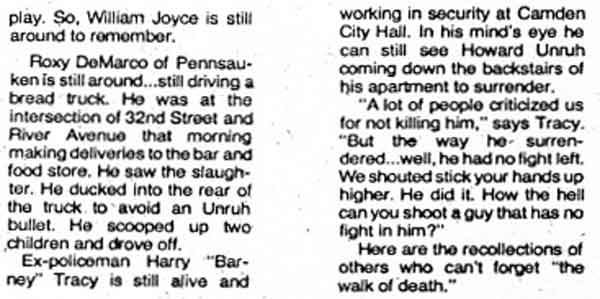
The Kids…The Breadman…The Cop… Camden Courier-Post - September 7, 1974.
William Joyce - Roxy DeMarco - Harry “Barney” Tracy - Howard Unruh
I saw Him Put His Hand Through the Window and Shoot
Camden Courier-Post —
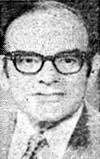

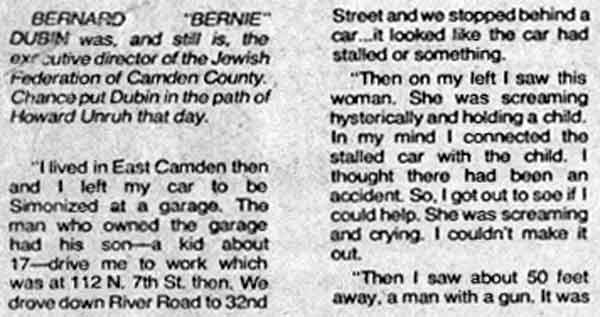
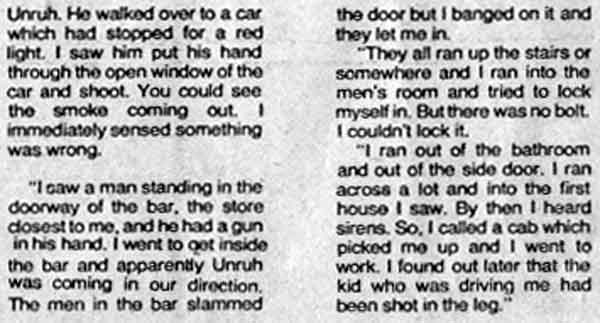
BERNARD “BERNIE” DUBIN was, and still is, the executive director of the Jewish Federation of Camden County. Chance put Dubin in the path of Howard Unruh that day.
“I lived in East Camden then and I left my car to be Simonized at a garage. The man who owned the garage had his son—a kid about 17—drive me to work which was at 112 N. 7th St. then. We drove down River Road to 32nd Street and we stopped behind a car…it looked like the car had stalled or something.
“Then on my left I saw this woman. She was screaming hysterically and holding a child. In my mind I connected the stalled car with the child. I thought there had been an accident. So, I got out to see if I could help. She was screaming and crying. I couldn’t make it out.
“Then I saw about 50 feet away, a man with a gun. It was Unruh. He walked over to a car which had stopped for a red light. I saw him put his hand through the open window of the car and shoot. You could see the smoke coming out. I immediately sensed something was wrong.
“I saw a man standing in the doorway of the bar, the store closest to me, and he had a gun in his hand. I went to get inside the bar and apparently Unruh was coming in our direction. The men in the bar slammed the door but I banged on it and they let me in.
“They all ran up the stairs of somewhere and I ran into the men’s room and tried to lock myself in. But there was no bolt. I couldn’t lock it.
“I ran out of the bathroom and out of the side door. I ran across a lot and into the first house I saw. By then I heard sirens. So, I called a cab which picked me up and I went to work. I found out later that the kid who was driving me had been shot in the leg.”
I had a clear shot at him…
Camden Courier-Post —
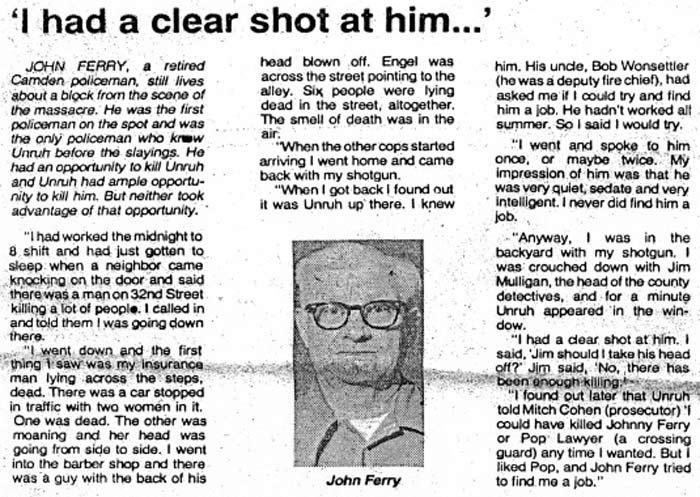
John Ferry - Howard Unruh - James Milligan - Mitchell Cohen - “Pop” Lawyer - Frank Engel - Robert Wonsetler
Yes, this is Howard…
Camden Courier-Post —

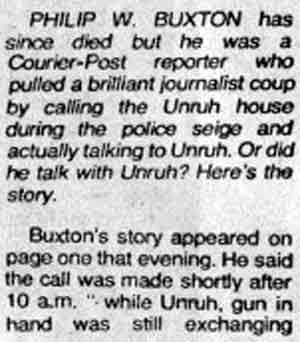
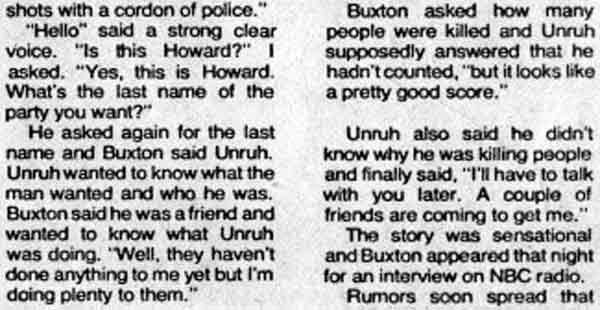
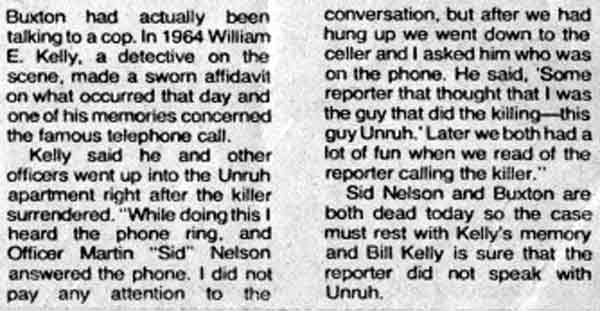
Howard Unruh - Philip W. Buxton - William E. Kelly Sr. - Martin “Sid” Nelson
…Revolting Narrative
Camden Courier-Post —
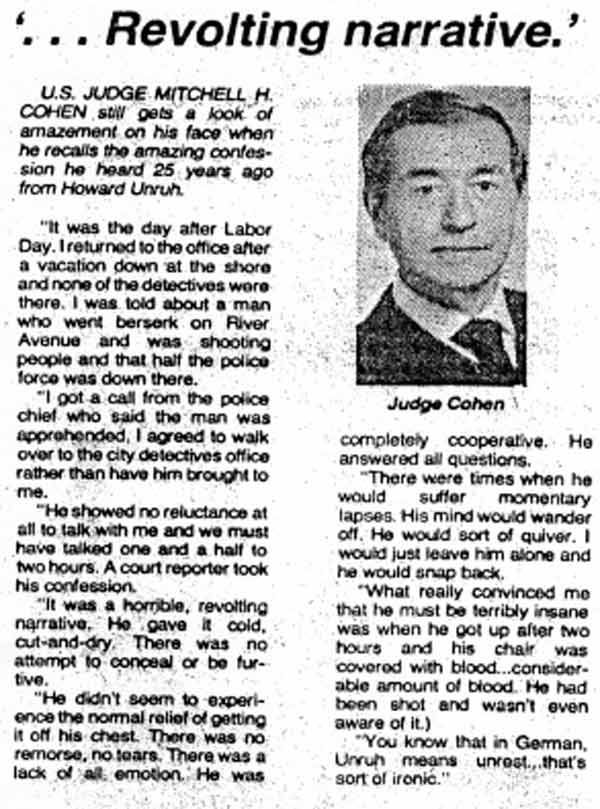
U.S. JUDGE MITCHELL H. COHEN still gets a look of amazement on his face when he recalls the amazing confession he heard 25 years ago from Howard Unruh.
“It was the day after Labor Day. I returned to the office after a vacation down at the shore and none of the detectives were there. I was told about a man who went berserk on River Avenue and was shooting people and that half the police force was down there.”
“I got a call from the police chief who said the man was apprehended. I agreed to walk over to the city detectives office rather than have him brought to me.”
“He showed no reluctance at all to talk with me and we must have talked one and a half to two hours. A court reporter took his confession.”
“It was a horrible, revolting narrative. He gave it cold, cut-and-dried. There was no attempt to conceal or be furtive.”
“He didn’t seem to experience the normal relief of getting it off his chest. There was no remorse, no tears. There was a lack of all emotion. He was completely cooperative.”
“There were times when he would suffer momentary lapses. His mind would wander off. He would sort of quiver. I would just leave him alone and he would snap back.”
“What really convinced me that he must be terribly insane was when he got up after two hours and his chair was covered with blood — considerable amount of blood. He had been shot and wasn’t even aware of it.”
“You know that in German, Unruh means unrest…that’s sort of ironic.”
I Was Back in Combat Again
Camden Courier-Post —
WILLIAM F. AUGSTINE [sic] was a news photographer whose career included covering the Lindbergh kidnapping, D-Day and the liberation of Paris—he was with the Courier-Post 12 years and was working for the Philadelphia Inquirer on Sept. 6, 1949. He was the first photographer on the scene. Now retired in Richey, Fla., he can recall in exact detail his part in the drama.
“I was in the press room in Camden City Hall. I had just called in to the office to say I was going out on a routine assignment in Burlington—to take a picture of a building. I was going to leave when the phone rang and I was tipped off to what was happening on River Road.”
“I parked about half a block away and went through the crowd and at that time there was shooting. I got down on the ground. I had just gotten back from the war a few years before and here I was back in combat again.”
“The picture which won the National Picture of the Year Award of AP (Associated Press) was the one with the body of the druggist in the foreground and Barney Tracy and Bill Kelly in the background up on the roof of a shed trying to lob a tear gas grenade into the window.”
“When he came out I got shots of him being frisked up against the wall. When they were taking him to the police car, I got the shot of him surrounded by the cops. He stared right into the camera. I was kneeling down and shot up. (The photo was carried by scores of newspapers around the world.)”
“I took about 30 pictures altogether. I rushed back to the office to develop them and was told I had a $100 bonus even before they saw what pictures I took.”
East Camden's 'Walk of Death' as Nation's First Mass Killing
Camden Courier-Post —


By Kevin Riordan, Courier-Post Staff
When it was over, five men, five women and two children were dead, a third child was dying, and Howard Unruh had shot his way into history as the first mass murderer of modern times.
“A Bible-reading former G.I., crazed because of an alleged affront, ran amok in East Camden today,” began Richard Crandall’s lead story in the Evening Courier of Sept. 6, 1949.
The 13 victims — among them a pharmacist, his wife, a TV repairman, a bride of six weeks and a boy getting a back-to-school haircut — have been dead for a half-century now.
But their killer, a quiet, pleasant, 78-year-old patient at Trenton Psychiatric Hospital in West Trenton, lives on. So does a dispute, argued every year during a mandatory hearing, about whether he could or should live elsewhere and with less supervision.
And those who lost family and friends are unable to forget the Tuesday morning 50 summers ago, when a gun-loving loner tormented about homosexuality transformed North 32nd Street and River Road in East Camden’s Cramer Hill section into a killing field.
“We were all outside playing,” recalls Joseph Hamilton, who was 8 when he heard the gunshots that would reverberate through the rest of his life. “The next thing I knew, my mother was hustling us inside.”
Moments later, Hamilton saw his 2-year-old brother, Tommy, lying dead on the floor of the family’s River Road apartment. The boy had been looking out the window when Unruh shot him in the head.
“Tommy dropped dead at my feet,” Mary Hamilton, who was 8 months pregnant, told reporters.
Fifty years later, “Tommy’s picture still hangs in my father’s living room,” says Joe Hamilton, a 58-year-old Pennsauken resident.
“My mother and father never talked about it,” says his 54-year-old brother, Jim, of Bellmawr. “It’s not easy for me to talk about it.”
Like Pearl Harbor or JFK’s assassination, the Unruh massacre is a touchstone in the memories of South Jerseyans of a certain age. Those who were children — including James Klein, who would grow up to become Unruh’s public defender — remember panicky parents and wild rumors.
“Mothers were calling their kids in off the street because they heard there was a madman shooting people,” recalls attorney John Lack, then a teen-ager in Camden’s Whitman Park section. “Then we went in the house and listened to WCAM.”
By the time most people understood what was happening, the shooting was over, the killer was in handcuffs and 13 men, women and children were dead or dying, all within a few hundred feet of 32nd and River.
“Everyone was lying dead on the pavement,” eyewitness Carl Sorg said in 1974. “What a sight.”
The bodies would have numbered 26 had Unruh succeeded in killing the three people he wounded and everyone else he fired at.
Lydia Hall watched as the dead were brought in to Cooper Hospital, where she worked. She vividly remembers the first body — a boy with blood all over his white shirt.
“We saw a couple more come in, and we were wondering why they all seemed to be bleeding in the same place,” Hall, 71, recalls. “We counted 13 bodies…one after another. We’d see one and we’d think it was the end, and then there would be another. It was horrible.”
“It was murder raised to a new magnitude,” Robert M. Yoder wrote in The Saturday Evening Post in 1950. “The age of atom bombs and supersonic speeds, of Superman and double-feature horror movies, finally had evolved supermurder.”
In the late summer of 1949, Howard Unruh was an unemployed 28-year-old World War II combat veteran who lived with his mother, Freda, in a modest apartment at 3302 River Road. His father had long been estranged from the family and his brother was married and living in Haddon Heights.
Ten years after graduating from Woodrow Wilson High School — the yearbook cited Howard “How” Unruh’s ambition to work for the government — he seemed to have no plan in life. He had worked sporadically in factories and had dropped out of Temple University’s pharmacy school. He had few friends, except for his guns, which he played with in a shooting range he set up in the basement.
Tall, with an erect posture and an aloof demeanor, Unruh was something of an object of ridicule in the working-class neighborhood. And as his paranoia deepened, he came to believe he had many, many enemies.
“They were making derogatory remarks about my character,” he said later.
Much as he had once kept meticulous records about the Germans he killed in the war, Unruh compiled a six-page list of grudges against his neighbors. He wrote “retal.” for retaliate, next to certain names. He bought a machete.
His anxieties, stemming from insults both real and imaginary, were exacerbated by his furtive pursuit of liaisons with other men. Unruh listed their names, too, in a notebook-type diary later recovered by police.
(In a 1974 interview, retired Camden Detective William McLaughlin talked about the contents of the diary. He said Unruh had written about being profoundly depressed about his homosexual feelings, leading him to dump his girlfriend — whom he had met at church — and drop out of pharmacy school.)
On the night of Sept. 5, Unruh went to downtown Philadelphia’s 24-hour Family Theater, a somewhat notorious cruising spot. Unruh sat through a double feature of I Cheated the Law and The Lady Gambles three times, finally returning home at 3 a.m.
It was then that Unruh discovered the theft of a backyard gate he and a friend had built the day before. Until then, the only way into the back yard, where the sole door to the Unruh apartment was located, was through a gate belonging to next-door neighbors Maurice and Rose Cohen. They owned and lived above the drugstore at 32nd and River, and Rose Cohen sometimes complained that Unruh left the gate open.
Unruh had verbally lashed out at Mrs. Cohen only once, after she criticized him in front of people for leaving it open. But Unruh had been planning his revenge against Mrs. Cohen and her family for two years.
“When I came home last night and found my gate had been taken,” he said later, “I decided to shoot all of them so I would get the right one.”
Unruh got up around 8 on the morning of Sept. 6. His mother fried him some eggs. Then he entered what Mrs. Unruh described as a trance, and menaced her mutely with a large wrench.
Mrs. Unruh ran to a friend’s house and fainted. Her beloved son took the 9mm Luger he had legally purchased for $37.50 at M&H Sporting Goods in Philadelphia, along with 33 rounds of ammunition, and headed out the door.
He was wearing a brown pinstriped suit, white shirt, striped bow tie, and what the newspapers described as “sports-style” moccasins.
It was shortly after 9 a.m. Unruh would later say he had planned to wait until 9:30, so that the businesses on River Road would be open. Timing was important because he wanted to murder the pharmacist, the cobbler, the barber, the owner of the cleaners and the guys at Engel’s Cafe, too.
“Some of the gang at Engel’s needled him,” O’Brien, the retired police officer, recalls. “They thought the guy was gay.”
Newspaper and eyewitness accounts differed on the sequence of the killings and the duration — ranging from 10 to 20 minutes — of the massacre. Unruh, the man best able to resolve the contradictions, has refused all interview requests for the last 50 years, including a recent one by the Courier-Post.
Within an hour or two after his surrender, Unruh did make a lengthy statement to then-Camden County Prosecutor Mitchell Cohen, who was not related to Maurice and Rose Cohen. The statement — which the prosecutor described as a “horrible, revolting narrative” — remains sealed. A recent request to review the document was refused.
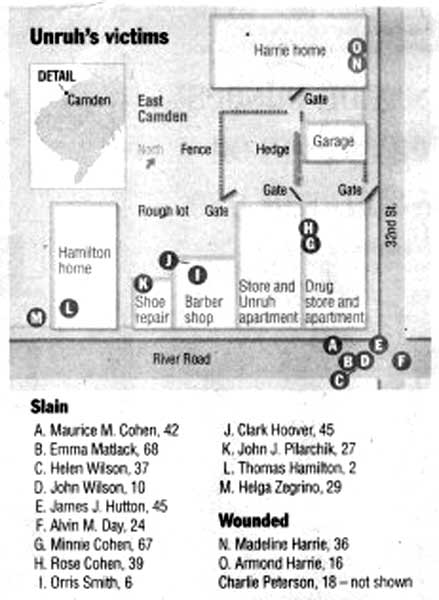
According to witnesses and newspaper, magazine, and other published accounts, Howard Unruh’s “walk of death” unfolded like this: The first victim was John Pilarchik, whose shoe repair shop was at 3206 River Road, two doors up from the Unruh apartment. Unruh walked in and shot the 27-year-old cobbler in the head at point-blank range.
Next door, at Clark Hoover’s barbershop, Orris Smith was on a hobbyhorse chair when Unruh came in. Orris was 6. His nickname was “Bruz.” Unruh shot him in the heart, in front of the boy’s mother. “I’ve got something for you, Clarkie,” Unruh then told the 45-year-old barber, shooting him in the head.
Unruh’s next stop was the dry cleaning shop at 3208 River Road. The killer had a grudge against owner Tom Zegrino, but the shop owner had just left on an errand. So Unruh turned his attention to Zegrino’s bride of six weeks, Helga. “Oh my God, don’t,” she begged. Unruh shot her in the head. She was 29.
After murdering Tommy Hamilton, Unruh crossed River Road and fired through the front doors of Engel’s Cafe. He did the same thing at the American food store at the southwest corner of 32nd and River. He also shot at a bread truck on River Road, narrowly missing the driver.
While some witnesses described Unruh as a silent, methodical killer, others said he waved his gun around and shot wildly. Either way, a mere few minutes into the grand scenario of revenge he had been contemplating for two years, Unruh began shooting at people who were not on his list. People he did not know. People he had probably never even seen.
Charles Peterson, 18, was shot in the leg while getting out of a car. Four other people in two vehicles that had stopped at the traffic light at 32nd and River were shot, too.
Alvin Day, a 24-year-old TV repairman from Mantua, died at the wheel after a bullet pierced his liver. Unruh walked up to another car and shot Helen Wilson, 37, her mother, Emma Matlack, 68, and Helen’s son John, 10, all of Pennsauken. The women were killed instantly. The boy — whose deathbed picture is perhaps the massacre’s single most heartbreaking artifact — died the next day.
The killer was headed toward his prime targets: the Cohens. But he came upon Jim Hutton, a 45-year-old insurance man from Westmont, who had sold the Unruh family their policies. In those days insurance agents went door-to-door, and Hutton often stopped at the drugstore for a soda while making his rounds.
Hutton was walking into the drugstore when “he saw the gun,” Unruh said. “He didn’t seem to know what to do…I said, ‘Excuse me, I’m sorry.’ He didn’t move. So I fired at him.”
The Cohens’ son Charles, now 62, recalls hearing the sound of what he presumed was a car backfiring and then looking out the window of his family’s second-floor apartment. “I saw Unruh shoot the insurance agent. I said, ‘Junior (a nickname for Unruh) has a gun and he’s shooting.’ My mother ran up the stairs and said, ‘Hide, Charles, hide.’”
Unruh then entered the drugstore beneath the Cohen family’s apartment. “I ran into the closet in my mother’s room. My mother hid in my closet in my room. My father must have tried to head him (Unruh) off,” Cohen says.
Maurice Cohen’s body was found on River Road, in front of the drugstore. “I heard the noise,” Charles Cohen continues. “I think I put my feet against the door. When I opened my eyes again, it was quiet.”
His 42-year-old father was shot in the chest, and his mother, 38, was shot in the head. His 67-year-old grandmother, Minnie, who was trying to call the police, was shot in the heart and the head. Unruh told authorities he had planned to decapitate Maurice and Rose Cohen, but had left the machete behind.
As Charles Cohen was led from the building by a police officer in the aftermath of the massacre, he recalls, “I saw somebody lying in the street. I later realized it was my father.”
(Unruh himself was wounded during the massacre, but not by police. A resident of 32nd Street later told police her son had shot Unruh with a .22-caliber rifle as the killer was shooting at “a man on the side of the drugstore,” possibly Hutton. The bullet lodged in Unruh’s hip and was never recovered.)
The slaughter of the Cohen family was not Unruh’s final act of violence that day. He barged into a house on North 32nd Street, shot and wounded Madeline Harrie, 36, and her son, Armond, 16. Then he went home.
After briefly exchanging fire with police, who tossed tear gas canisters into his apartment, Unruh “came out with his hands up and surrendered,” according to a 1965 affidavit by Camden police Lt. William Kelly.
Inside the apartment was a copy of Unruh’s Bible, open to the apocalyptic 24th chapter of Matthew.
“I would have killed a thousand,” Unruh said, “if I’d had bullets enough.”
Today, the area around 32nd and River has the same worn-out, banged-up, slapped-together look of many Camden neighborhoods. The siding on the facade of Clark Hoover’s barbershop is peeling off. The Cohens’ drugstore is now a deli called Fryday. John Lee has owned the building, which includes the Unruh apartment, for five years. “The apartment is completely sealed off,” he says.
“I’ve never gone in there.”
Sixty Years Ago Today, A Camden Gunman Killed 13
Philadelphia Inquirer —
By Barbara Boyer, Inquirer Staff Writer
Charles Cohen slipped into a closet after hearing his mother yell, “Hide, Charles! Hide!”
Sixty years later, he remembered vividly what he had heard next: gunfire.
Howard Unruh, a deranged World War II veteran, was spraying bullets around the Cohens' apartment in the Cramer Hill section of Camden. He was on an infamous 20-minute rampage that killed 13 people and wounded three others.
In the media, it became known as the walk of death.
As 12-year-old Charles huddled in a closet, Unruh killed the boy's father, Maurice, 40, then his mother, 39-year-old Rose. Unruh then killed the boy's grandmother Minnie Cohen, 67, as she desperately tried to call police.
Last week, Cohen said a prayer and lit a candle in a synagogue to observe Yahrzeit, the Hebrew anniversary of the deaths, which occurred Sept. 6, 1949.
“You get through it, but you never get over it,” Cohen said. “I think about my parents every day.”
He was disappointed to hear from a reporter that Unruh, although in poor health, was still alive. Cohen was waiting for the call that the man who killed his parents had died.
He never got that call.
On Friday, Cohen died at 72, three days after giving his final interview about that terrible day 60 years ago.
Many witnesses gone
Unruh has outlived a lot of people who could offer memories of the shootings and their aftermath. The judge is gone. The medical examiner, the psychiatrist, and nearly all the investigators are gone, too.
One of those still around Camden is Ron Dale, a retired ironworker and Navy veteran who was 8 and waiting to get his hair cut on that September morning.
The line for the barber in the 3200 block of River Road was long as youngsters got ready for the first day of school. The shoemaker in the next shop had comics, so Dale waited there.
That was when Unruh arrived, gun in hand, and shot the shoemaker, John Pilarchik, 27, a World War II veteran from Pennsauken.
“I heard this bam! He turned around and looked at me,” Dale said last week. “He left and went to the barber's.”
J. Clark Hoover, 45, was cutting the hair of 6-year-old Orris M. Smith as the boy sat on a hobbyhorse. The two were shot dead in front of the boy's mother.
Dale ran home, pale with fear, his mother later told him. She closed and locked the windows, pulled the blinds, and locked the door, which the family rarely had done before the slayings but regularly did afterward.
Pandemonium ensued. Police flooded the neighborhood. As they searched for the gunman, they used loudspeakers to warn residents to stay inside. Mothers grabbed their babies and ran. Others slid beneath their beds.
Dale was among those who scattered for safety. At Engel's, the nearby saloon, the owner later told Dale that he had grabbed his gun and waited for Unruh as customers took cover behind the jukebox and bar.
But Unruh targeted mostly neighbors and business owners on the other side of River Road, or killed those who got in his way or just caught his eye.
The chronology of the shootings is unclear. At some point, Unruh spotted movement in the first-floor window of a rowhouse next to the shoemaker's. He fired and killed 2-year-old Tommy Hamilton, who was playing with the curtain next to his playpen.
Unruh lived in a second-story apartment at River Road and 32d Street, above the pharmacy where Maurice Cohen worked. Unruh wanted the Cohens dead because of a squabble about Unruh's leaving a gate open.
He also killed a mother, her son, and a grandmother stopped in traffic; a tailor's wife of one month; a TV repairman stopped in traffic; and an insurance agent who failed to get out of his way as he stood at the door of the pharmacy.
Dale thinks Unruh also was looking for neighborhood teens.
“The older kids in the neighborhood used to harass him. They thought he was gay and used to make fun of him,” Dale said, describing Unruh as a loner.
James Klein, Unruh's public defender for 33 years, was 7 at the time.
“I remember playing outside and my mother saying, 'Come inside. There's a madman on the loose.'”
In a recent interview, one historian said the event foreshadowed the decline of Camden, an industrial city that had experienced little more than petty crimes. It pierced a trusting community where neighbors took care of one another, he said.
“It's something you never really forget… You take extra precautions to protect your family and your property,” said Paul Schopp, a former director of the Camden County Historical Society. “He didn't just rob them of their lives. He robbed them of their essence.”
Schopp, who took an interest in the case as a historian, said his father had been on the No. 9 bus from Philadelphia, heading home to Palmyra, when it passed through Camden during the rampage. Police stopped traffic on River Road.
“He was very much aware that something horrific had happened,” Schopp said. “By the time his bus had reached the carnage, they were putting sheets over the bodies.”
If he'd had more ammunition, Unruh told police, he would have kept shooting. In the end, he surrendered when police descended on his apartment and opened fire on the building.
Years later, as Unruh's attorney, Klein would become one of the few people to visit him regularly in Trenton Psychiatric Hospital, where doctors diagnosed paranoid schizophrenia and he remained in a ward for the criminally insane.
Klein said Unruh had never been right after he returned from World War II combat, having served in Italy and France, keeping a diary of the Germans he killed. After the war ended and he returned from the service, Unruh tried college but could not make it, Klein said.
Unruh collected weapons and created a shooting range in the basement of his building. He often walked the neighborhood in Army boots, carrying a Bible. Police later learned that Unruh had kept a list of those he wanted dead.
Over the years, Unruh never was found competent to stand trial; the legal system has treated him as someone found guilty by reason of insanity. He unsuccessfully sought parole and transfers to less restrictive facilities, with the relatives of his victims fighting each possible move.
Cohen was among those who attended court proceedings and kept track of Unruh. In the 1980s, he became a strong advocate for victims' rights and hoped for changes in the criminal-justice system to prevent such slayings, his family said. It seemed, however, that the number of mass murders increased; each time, Cohen relived his own horror, they said.
He and his wife of 52 years, Marian, had three grown daughters and seven grandchildren, some of whom never were told of the tragedy. Two years ago, he and his wife left Cherry Hill and moved out of the area. His wife said services for her husband would be private.
There are no more hearings — or, as Marian Cohen called them, “dog and pony shows” — where Unruh is taken to court. Every year, a judge signs a new order to keep him confined.
On River Road, most of the buildings still stand, occupied by new businesses. Engel's Saloon is now the Rumbarenque Night Club, closed this year after a 25-year-old man was fatally shot outside.
Martin's barbershop stands where the shoemaker was killed, and weeds grow in a lot where the old barbershop was torn down.
The apartments where the Cohens and Unruh lived are vacant. A newer stucco facade hides the bullet holes that had, for decades, scarred the building.
The pharmacy is a shoe store, where Maritza Guzman, the owner of Gomez Shoes, learned of the rampage a week after she moved her business there two years ago.
Guzman said she was sorry for the tragedy, “but life has to continue.”
Still in custody
Today, Unruh is the oldest person incarcerated in the state. When not hospitalized for medical reasons, he is confined at Trenton Psychiatric Hospital.
Klein questions whether the mass murderer will survive to see his 89th birthday in January.
“He's really declined a lot,” said Klein.
Notorius Camden Killer Unruh Dies at 88
Philadelphia Inquirer —
By Joseph A. Giambardello & Barbara Boyer, Inquirer Staff Writers
Howard Unruh, the World War II Army veteran who became the modern face of mass murder when he shot and killed 13 people in East Camden in 1949, died today. He was 88.
Unruh was never found competent to stand trial after the killing spree, and spent the rest of his life at Trenton State Hospital, diagnosed as paranoid schizophrenic.
Unruh's 20-minute rampage in the 3200 block of River Road of Cramer Hill unfolded on Tuesday, Sept. 6, 1949. At the time, it was known as the “walk of death.” The 13 victims included three children.
Eventually, officers used tear gas to smoke him out of his apartment.
“I'm no psycho,” the combat veteran told police. “I have a good mind.”
Experts have offered many explanations for Unruh's actions, all fitting what has become the textbook profile of a spree killer. Introverted. Narcissistic. Oedipal. Remorseless.
He had a fascination with guns, which apparently developed during the war. He served with the 342d Armored Field Artillery in Italy, Austria, Belgium, France and Germany.
His Army commanders told reporters at the time that Unruh was a good soldier who kept to himself. Among recognitions, Unruh held a Good Conduct Medal and two bronze stars on his European medal for his battle participation. He didn't drink, smoke or chase women, and took orders well, the commanders said.
Unruh's younger brother, James, told reporters he thought the war caused him to snap.
“Since he came home from the service, he didn't seem to be the same. He was nervous. He never acted like his old self,” James Unruh had said.
Experts at the time said Unruh more likely had been suffering from mental illness before the war.
He was born Jan. 20, 1921 in Haddonfield. His parents separated and the children lived with their mother, Freda, in Camden. An average student, he graduated from Woodrow Wilson Senior High School and then worked for Curtis Publishing Co. In 1942, he worked briefly as a sheet metal worker for the Philadelphia Naval Base until he enlisted in the Army.
He served with a self-propelled field artillery unit and sometimes served as a tank gunner. In 1945, he was honorably discharged.
He returned to live with his mother in Camden, where the two regularly attended Sunday services at St. Paul's Lutheran Church. Howard, born-again, participated in Bible study Monday nights as well.
He took college classes briefly and never held a job.
At home, Unruh listened to somber music, Brahms and Wagner, and constructed a range in the basement where he practiced shooting with a cache of guns he collected. Tall and lanky, he was considered weird by teens who teased him. Although Unruh, known as Junior, dressed nicely, he often wore his Army boots and clutched a Bible as he walked the neighborhood.
To get home, Unruh often cut through a rear yard owned by Maurice and Rose Cohen at 32nd Street and River Road where they ran the local pharmacy. He often had run-ins with the Cohens and other shop owners. Secretly he plotted to kill them over two years.
After Unruh squabbled with Cohens about a backyard gate, he constructed his own gate that was wrecked by neighborhood boys on September 5.
Unruh told police he planned his killing spree as he sat overnight in Philadelphia through three showings of a double feature — The Lady Gambles and I Cheated the Law.
In the morning, he had a dazed look, his mother later recalled. He threatened her with a wrench and she ran for help. Her son left next, with a 9mm pistol he bought in Philadelphia for $37.50.
Unruh only stopped killing when he ran out of ammunition and retreated to his apartment.
In the state hospital, Unruh spent his time reading, including the Bible; watching television, listening to music and playing cards. He was still regarded a loner.
He had visitors, over the years, including a fellow World War II veteran who died in 2001. Since then, his health steadily declined and before his death, officials said, he was no longer lucid.
Unruh has no known survivors.
Rampage in Camden
By Katherine Ramsland
A Preconceived Plan
It seemed a petty grievance, but it was also a turning point. As soon as he saw the missing gate, just installed that day, he knew that his life would change. He had to take action now, no matter what the cost. He’d been plotting revenge for at least two years and now it was time to act on his “preconceived plan.”
Dressing up in a brown tropical-worsted suit, white shirt, and striped bow tie, the slender six-foot recluse walked out into the neighborhood. He was carrying a German 9mm Luger, a six-shot revolver, and a knife. His first stop was the shoe repair shop, where he shot and killed the cobbler. Then he went to the barbershop next door, where he shot and killed the owner as a customer managed to escape. Then he went to a drugstore and shot and killed the pharmacist, his wife, and his mother-in-law, who had been trying to hide.
Going to an apartment above the store, he killed the pharmacist’s wife and her 63-year-old mother, who was on the telephone calling the police. The pharmacist had jumped out a window onto a porch roof. The shooter leaned out and hit him with a bullet, wounding him badly enough to send him off the roof to the sidewalk below. He had no time to recover because the shooter had jumped down the steps and come out to the street, where he discharged another shot. Maurice died on the street, but he had succeeded at saving one person, his 12-year-old son, hidden in a closet upstairs. The shooter reloaded.
Nearby, Mrs. Harrie and her 16-year-old son, Armond, were hanging clothing onto a clothesline. Mrs. Harrie went inside and the shooter entered her house. Her son ran in and said that the man shot at them five times, wounding them both in an arm. Then he tried smacking Armond with the butt of the empty pistol, but before anyone could stop him, he left. He now had shot nine people, killing seven.
Circling back, he walked down 32nd St. along the side of the pharmacy and encountered a motorist, Alvin Day, who had slowed down near the body of James Hutton, the dead insurance agent. That was his mistake. The shooter leaned into his car and killed him, leaving the car to stall and roll into the curb.
Then the shooter went over to another car that was stopped at a light across the street. He shot through the windshield, killing the female driver and her mother, and wounding a twelve-year-old boy in the back seat with a bullet through his neck. Next was a car behind this one (according to the map, but not included in other accounts) where he shot a young male, Charlie Peterson, wounding him. He shot into several other cars, too. Peterson staggered from his car and entered the tavern so someone could get him to a hospital. The man on the rampage was then busy firing at a chain grocery store.
Frank Engel leaned out a window and shot at the retreating figure with his own pistol. He thought he had hit the maniac in the thigh, because he paused, but it had not slowed him down. Engle could have fired again and killed him, but he refrained. Later he would say, I could have put a half dozen shots into him. I don’t know why I didn’t do it. I wish I had.
Apparently, the shooter wasn’t yet finished. He went into the tailors shop. Zegrino, too, was on his list. By that time, a man who had been in line behind cars into which the maniac had fired had driven to the nearest fire station on 27th Street, six blocks away, to raise an alarm. But there would be two more fatalities.
The tailor’s wife, Helga, who had been married to him for only three weeks, got on her knees and begged, “Oh, my God, don’t!” Then she screamed so loudly that people in buildings across the street could hear her. Without mercy, the shooter pointed his gun and shot her. Then he left and went strolling down the street.
Tommy Hamilton, aged two, happened to look out his front window, so the shooter aimed and fired right through the glass, taking his last victim. (One Philadelphia Inquirer account has him going into the Hamilton apartment, herding the family into the kitchen, and then killing Tommy. In the New York Times, Meyer Berger has him killing Tommy from outside, but entering the apartment of the Harrie family and shooting at them. Other sources have Mrs. Harrie and her son outside, but the Harrie boy claimed later to reporters that they were both inside when shot. The killer says he shot someone through a window from outside. The likely tale is that he shot the Harries inside but the Hamilton boy from outside.)
He attempted once more to get into a restaurant that stood at the end of River Road near Bergen St. but failed, so as sirens began to wail from a distance, he went around to the back and finally came home to his apartment. He’d been out for less than 15 minutes, but was running low on ammunition. “I ran out of bullets,” he later said, “so I went home.”
In his wake, twelve people were dead, five men, five women and two small children — and four were badly wounded a man, a woman, and two teenagers. One of these would later die, bringing the toll to thirteen. Had he hit everyone at whom he took a shot, as Time-Life’s Mass Murderers says, the number of deaths would have been twenty-six.
The police were scrambling to go after this man, having run into or been called to the massacre, but the shooter reached his apartment first. He barricaded the door and reloaded. One officer found a boy running in the street, who turned out to be Charles Cohen, the boy who had been spared by being shoved into the closet in his home. He had nearly suffocated, he said, and had finally kicked open the door to get out. He remembered watching his grandmother fall just as the door closed, and he had heard screams and shooting. He was taken to the home of a relative.
People had now identified the rampaging shooter to the first arriving officers as Howard Unruh, a 28-year-old recluse and religious nut. All available police reserves were dispatched. None had ever dealt with such an incident before. Ironically, Unruh’s name in German meant unrest.
Siege
A cordon of between 50 and 60 police officers surrounded the two-story gray stucco building that housed Unruh’s apartment at 3202 River Road, behind and next to the Cohen’s pharmacy and residence. Unruh was barricaded inside, and he shot at them from a window. From the number of victims, the police believed they were dealing with more than one killer. They armed themselves with rifles and machine guns. For a time, the road was a state of confusion, with people in the milling crowd getting in the line of fire.
The police shot into the apartment in what reporters called a rain of gunfire intended to drive the shooter out or to kill him. Pedestrians formed a ring around the area and within half an hour, more than 1,000 people were watching. Several marksmen on the roof of a nearby shed tried to get a clear shot into the room from which the suspect himself was shooting. One officer shouted that he had hit the man. Meanwhile, the bodies of the dead and the wounded were removed to Cooper Hospital, and some officers were collecting stories from eyewitnesses. One woman suffering from shock and a man who had injured his leg trying to escape were also rushed to the hospital.
Freda Unruh, the shooter’s mother, had returned home around this time, just after 10 A.M. When she saw the police barricade and heard spectators talking excitedly about what had occurred, she knew it was about her son, and she wandered off in a daze. She finally made her way (or was taken) to the home of her sister, five blocks away, who found a doctor to treat her and who kept the breaking details of the story from her. It was the sister’s opinion that this had all been caused by terrible experiences that Howard had suffered during his three-years in the war.
Reporters were aware of the events, and Philip W. Buxton, an assistant city editor of the Camden Evening Courier looked up Unruh’s phone number, Camden 4-2490W, and called the home. To his surprise, Unruh answered with a calm voice.
“Is this Howard Unruh?” Buxton asked.
“Yes, this is Howard. What’s the last name of the party you want?”
Unruh, the editor told him.
“Who are you?” Unruh demanded to know. “What do you want?”
Buxton could hear the sound of bullets coming through the window, breaking glass. He identified himself as a friend and then asked, “What are they doing to you?”
“They haven’t done anything to me yet,” said Unruh, “but I’m doing plenty to them.”
“How many have you killed?”
“I don’t know yet. I haven’t counted them. But it looks like a pretty good score.”
The editor then wanted to know why he was killing people.
“I don’t know. I can’t answer that yet. I’m too busy. I’ll have to talk to you later. A couple of friends are coming to get me.” He slammed down the phone.
Who those friends might be was never clarified.
To get him to leave the apartment, the detectives on the roof got close enough to lob a canister of tear gas through the broken bedroom window. It proved to be a dud, which alerted Unruh to their strategy, so he went into another room. As he returned, they tossed in a second canister and the place slowly filled with stinging gas. It took another five minutes, but finally Unruh moved aside the white curtain upstairs, looked out and said, “Okay, I give up. I’m coming down.”
“Where’s the gun?” a sergeant yelled up at him.
“It’s on my desk, up here in the room. I’m coming down.”
He came out the door, unarmed, with three dozen guns trained on him, and surrendered without a word to motorcycle officer Charles Hance. Forty-five minutes after he had taken his first shot, Unruh was ushered through the angry crowd, who swore at him and called for a lynching, and into a police car and driven away.
One observer murmured, “You gotta watch them quiet ones.”
Three coroners came to oversee the autopsies. The wounded were tended, but the 12-year-old boy who had been sitting in the backseat of a car was in critical condition. The bullet had gone through his neck to the base of his brain. The prognosis was poor.
The police did not comprehend the killer’s motives. They had never dealt with such an incident before. “What’s the matter with you?” one officer asked Unruh. “Are you a psycho?”
“I’m no psycho,” Unruh insisted. “I have a good mind.”
Whether or not he was right remained to be seen.
Interrogation
At City Hall, a gaunt Unruh was taken into a private room and questioned for hours by detectives and those who would be involved in prosecuting him. At all times, he seemed calm, as Berger reported for The New York Times. Only occasionally excessive brightness of his dark eyes indicated that he was anything other than normal.
To Camden County Prosecutor Mitchell Cohen he admitted that before going to sleep the previous night he had made up his mind to go on this rampage. He was willing to offer a shot-by-shot account. “I shot them in the chest first,” he explained, “and then I aimed for the head.” Although some people were pre-planned targets, a few just got in the way. About the insurance agent on the pharmacy doorstep, Unruh simply explained, “That man didn’t act fast enough. He didn’t get out of my way.”
He’d gone out that morning, he admitted, with one bullet in the chamber, 16 loose bullets and two clips of eight, because his neighbors had been making derogatory remarks about my character.
A check of his records indicated no report of mental illness before, during, or after his Army service. In fact, he had an exemplary record as a soldier and those who knew him reported that he was not a drinker. No one knew much then about post-traumatic stress disorder, or even combat fatigue (which they called war neurosis). Few people knew much about paranoid character disorders or schizophrenia.
Eighteen civilian witnesses were interviewed and most claimed that Unruh had entered the barbershop first, but Unruh insisted it was the shoemaker, with the barbershop second, so his report became the official one.
Between what neighbors said and what Unruh told his questioners (this was in the days before people were told they had the right to remain silent), a narrative about was pieced together.
It was learned that on September 5, the evening before, Unruh was in Philadelphia at the 24-hour Family Theater, where he watched a double feature. One movie was I Cheated the Law, about how a lawyer seeking justice tricks a gangster into confessing to murder. The other was The Lady Gambles, starring Barbara Stanwyck, about a woman with a gambling addiction who destroys nearly everything in her life. Unruh sat through both three times, thinking that Barbara Stanwyck was one of his hated neighbors. He left the theater for home at about 3:00 a.m.
At that time, he discovered that someone had stolen his outside gate. He and his mother’s friend had just installed it that day, because the only other way to get access to the apartment door was through the gate owned by Rose and Maurice Cohen. They owned the pharmacy downstairs in the same building and had their residence next door on the same floor as the Unruhs. Prior to cutting a gateway into the fence, he’d had to walk through a weedy lot to get out to the street, or use their gate. Rose sometimes complained that Howard left the gate standing open, and she and her husband both disliked the loud music that Howard played on the radio late at night. Their squabbles had led to a threat to revoke his gate privileges.
“When I came home last night and found my gate had been taken,” Unruh said, “I decided to shoot all of them so I would get the right one.”
He went to bed angry and got up around 8:00 a.m. to eat a breakfast of fried eggs that his mother had prepared. She asked him what was wrong but he told her nothing about his plan. He went into the basement to retrieve some items and came back, going into the living room. He seemed to go into a trance, according to the statement Mrs. Unruh gave later, and when she probed to find out what was wrong, he spun around and menaced her with a wrench.
She left the house and went to the home of friends, the Pinnars, to tell them she was afraid that tensions were coming to a head and that her son no longer loved her. (By some accounts, she had narrowly escaped death by leaving when she did.) It was Mr. Pinnar who had helped build the gate the day before. David Everitt claims that Mrs. Unruh had told them she was most afraid of her son’s eyes. Freda Unruh would later tell reporters, he stared at her as if he had no idea who she was.
After she left, Unruh returned to his preparation. He figured that 9:30 was the time to begin, because most of the stores would be open at that time. He could shoot everyone who had been talking about him. He had a German 9-mm. Luger that he had bought for $37.50 at M&H Sporting Goods in Philadelphia, and he had thirty-three rounds of ammunition. It was enough to do what he had in mind.
At just after nine o’clock, he had walked out into the neighborhood, fully armed.
The Story Unfolds
Two people believed they had hit Unruh with a bullet — the tavern owner and a police officer, but only when Unruh got off his chair after hours of questioning did anyone notice the bloodstain. He had been wounded in his right side but he was uncomplaining throughout the interrogation. He was sent to Cooper Hospital, the same place where the victims were being treated or placed in the morgue.
There he underwent surgery for his own wound, but surgeons were unable to remove the bullet. That meant they could not determine who had actually shot him. (While the newspapers offer no answer in later reports, most accounts attribute the hit to Frank Engel.)
Two psychiatrists, Drs. H. E. Yaskin and James Ryan, were assigned to ask Unruh questions while he was still hospitalized at Cooper. What they learned would be compared with assessments by other professionals later, because it seemed clear that, regardless of his past record, he was destined for psychiatric treatment. They (along with reporters looking for Unruh’s acquaintances) learned more about his background.
Unruh was living with his mother, Freda, in a small apartment on River Road. He had a married younger brother living in Haddon Heights and his father, Samuel Unruh, was alive but estranged from the family. (Samuel had come to City Hall when he’d heard about the shootings.)
Unruh had had an ordinary childhood and seemed to have been a well-behaved boy, although reportedly he was quiet and moody. He attended the Lutheran church every Sunday and studied the Bible. When he was of age, he enlisted in the army in 1942 to fight for America during World War II, but most people did not realize that this was not just a patriotic duty for him. It was also an experience of death that he painstakingly documented.
He took excessive care of his rifle and was a brave soldier as a tank gunner in Italy, Belgium, Austria, Germany, and France, taking part in the relief of Bastogne in the Battle of the Bulge. Whenever he killed a German, he wrote down the day, hour, and place. If he actually glimpsed the remains, he described the corpse in some detail, to the point where a fellow soldier who read the tight-lipped, Bible-reading soldier’s diary was quite shocked. Unruh was honorably discharged in 1945. Like many soldiers, he returned home with medals and a collection of firearms.
He decorated his bedroom in the three-room apartment with military pieces. Berger writes that on the walls he had crossed pistols, machetes, crossed German bayonets, and photographs of armored artillery in action. Even his ashtrays were made from German shells.
Unlike other soldiers, he did not try to find a girlfriend and settle down, although for a few weeks prior to his enlistment he had dated a young woman who went to his church but he had ended this relationship by letter from overseas. After coming home, he mostly remained inside his mother’s apartment, rarely going out and becoming increasingly more reclusive. She supported them both with her income as a packer for a soap company, although Howard had made and sold several model trains. For three months, he took pharmacy courses at Temple University in Philadelphia, across the river. He also went to church and attended Bible classes.
“I always thought of Howard as a soft-spoken young man,” said the pastor of his Lutheran church. “He came to services regularly before the war. After the war, he came mornings and evenings regularly for about a year. About three months ago, he stopped entirely.” The pastor’s wife called Unruh “the mildest type of man you could meet.”
Mrs. Pinnar, who had corresponded with Howard when he was overseas, said when he came back he was different. He always appeared to be very nervous. He walked very straight on the street, his head rigid, never glancing to the right or left. She thought he was suffering from war neurosis.
Unruh’s brother, James, 25, said that Howard was a born-again Christian who had undergone a deep religious experience and had tried to live by the ways of Christ. Yet he’d become nervous over the past couple of months, according to statements James made to the New York Times. He just seemed changed.
Another church member who visited him a month after he stopped going to church said that he exhibited strange behavior, believing that people were making things hard for him. This is precisely what Unruh’s mother had been frightened about.
Unruh’s primary recreation was collecting guns and target shooting in the basement. Eventually he stopped going out. Without a job, he just sat around the house, often thinking about his neighbors.
He kept a list of grudges against them, imagining how he would get his revenge. He felt that people in the neighborhood were slandering him, talking behind his back. Next to each offender’s name he had recorded that particular person’s misdeeds. Then he had placed the word retal, short for retaliation. “I had been thinking about killing them for some time,” Unruh commented. “I’d have killed a thousand if I’d had bullets enough.”
Despite Unruh’s claim that he had pondered all of this while at the movies, many people believed that the damage he saw to the gate when he came home from the theater was the final straw. Freda Unruh had sensed that morning that something terrible was going to happen. As she left the Pinnars’ home that morning, according to them, she heard gunfire at a distance and went back in, crying, “Oh Howard, Howard, they’re to blame for this.” She asked for a phone to call the police, but before she reached it, she fainted. (Some accounts say a doctor revived her and took her to her sister’s. Others say that the Pinnars revived her and she went back out.)
In sum, Howard Unruh appeared to be a quiet man who developed suspicions but kept them to himself, letting them simmer and grow into paranoid delusions. Now his fate was in the hands of a team of mental health professionals.
Diagnosis
When he was able to leave Cooper Hospital, Unruh was sent to the New Jersey Hospital for the Insane (now Trenton Psychiatric Hospital), to be installed into a bed in a private cell in the maximum-security Vroom Building.
Only twelve hours earlier, 10-year-old John Wilson, who had been with his mother and grandmother in a car when all of them were shot, had died from his injury. This put the death count at thirteen. Prosecutor Cohen emphasized that the killer had not been declared insane, but that he would be receiving tests to determine his state of mind. It was not an involuntary admission by the court, but a voluntary agreement that four psychiatrists had recommended and Unruh had accepted. He’d asked to be subjected to further study and observation.
Since he would need bed rest for at least two weeks anyway, the prosecutor had no reservations about leaving him in the hands of psychiatrists. “It will benefit all concerned,” he said. “We will get the full and complete results of all possible study.” He filed the charges for 13 willful and malicious slayings with malice aforethought and three counts of atrocious assault and battery.
On Friday morning, September 9, Freda Unruh learned from her estranged husband the full facts of her son’s fate. “Howard, poor Howard,” she cried. “He didn’t know what he was doing.” She fainted before she had heard all the details. Then she worried that the hospital would not have enough handkerchiefs for Howard’s hay fever.
Soon there were rumors that two of the four psychiatrists had determined that Unruh was sane. “He appears cognizant of his surroundings,” said Dr. Dean Cavalli, a Camden area physician, “and knows between right and wrong.” But he added that he himself was not a psychiatrist. Nothing further was forthcoming. They expected the tests to last more than a month.
At the hospital, Dr. Robert S. Garber, assistant superintendent, and Dr. James Spradley began their assessments, attended by the prosecutor and several detectives. News photographers were permitted to enter the isolation cell for pictures. Unruh submitted without expression, although he turned his head when they asked him to.
Reportedly, Unruh was surprised by the treatment he was receiving. “It is certainly a lot better than I deserve,” he commented. He expressed some remorse over dropping out of pharmacy courses, because he could have devoted his life to saving lives. No one records him feeling badly about the victims.
During the testing, the relative of the boy who recently had died showed up in the doorway of Unruh’s cell.
“I’m going to get him!” the man yelled, trying to rush inside, but the police guards restrained him and took him out.
Dr. Edward Strecker, of the Medical School of the University of Pennsylvania and a consultant for the armed services, told reporters that war does not cause an increase in the number of actual cases of insanity. (Ironically, on the same page is an incident of another veteran creating havoc in a restaurant by hitting people with a chair and being shot dead by the police. He’d been angry that someone suggested he get psychiatric help.) Strecker believed that Unruh’s illness must have built up over the years. The type of killing that he had done could not be traced to military service. The war had simply provided the opportunity to learn the weapons. Although he had not examined Unruh himself, he thought the man had gone gun crazy once he started shooting.
Another psychiatrist, unidentified, thought that Unruh’s overtly religious character might have given him a savior complex, and when he saw that he had failed to save the world, he reacted.
While they awaited the official results, reporters looked around for earlier signs of Unruh’s mental instability. The Woodrow Wilson High School yearbook from 1939 indicated that he was shy and that his ambition was to become a government employee. They called him How. A check of his records revealed Bs and Cs for things like health, courtesy, and personal impression. There was no evaluation of his intelligence, but his mental alertness was average.
After two months of personality and physiological tests, the assessment was concluded and the final diagnosis was Dementia praecox, mixed type, with pronounced catatonic and paranoid coloring. Unruh was a paranoid schizophrenic, caught in a world of his own delusions and separated from reality. His mental illness had come upon him slowly and was not caused by combat.
Pronounced insane, he was immune from criminal prosecution but was sentenced for the remainder of his life to the Vroom building, the unit for the criminally insane.
Mass vs. Spree
In Who Killed Precious?, a book about the FBI’s approach to mass murderers and serial killers, H. Paul Jeffers says that before Howard Unruh’s rampage, mass murders in America were rare. After Unruh, there’s hardly been a year stained by it. On Mass Murders, an American Justice documentary, it was claimed that mass murders have been on the rise over the past three decades and that around the country there are an average of two a month. Two hundred people each year become victims, and seven of the ten worst cases in our history have occurred since 1980. Many experts see this as a sign of the breakdown of social controls.
A mass murderer, according to the FBI Crime Classification Manual, is someone who kills four or more people in close succession in a single locale, or in closely related locales. This differs from a spree killer, who may have similar motives and ambitions, but who tends to travel over a series of loosely related or unrelated locations. Mass murderers come in two basic varieties: family killers such as John List, who slaughtered his mother, wife, and three children, or classic mass murderers, like Charles Whitman or Richard Speck.
Mass murderers are male, white, usually over 30, and generally own at least one gun. Criminologist James Fox says the availability of guns has influenced the increase in mass murders because guns distance people from their crimes, a desire common to mass murderers. They want it to be easy and fast.
Mass Murderers are typically quite ordinary. They’re reclusive, have few if any friends, and have no criminal record. However, they do not let go of past grievances and they tend to build and fester, with minor incidents being perceived as major offenses, and impersonal ones as personal. Some stress, such as a broken relationship, a loss, or unemployment, may be the trigger that sets everything in motion. They blame others for their failures and their motive is generally to strike back, to punish, and to exact as much damage as they can manage. The higher the death toll, the better they have succeeded. People who have been dismissing or ignoring them are not going to forget them now. Their choice of targets is typically irrational, and often does not even include the one against whom they wanted vengeance. Some, like Unruh, have shown signs of psychosis, but most have been judged sane at the time of the incident.
The time period for mass murder can be minutes, hours or days, and such people typically have a mental disorder, are frustrated, and their problems have increased to the point of having to act out aggressively. Charles Whitman and James Huberty are held up as the typical example. In 1966, Whitman took an arsenal up the tower at the University of Texas in Austin to take shots at unsuspecting people from above until he was killed. In an hour and a half, he killed sixteen and wounded thirty. He had also killed his wife and mother that day. Huberty, crushed by unemployment, went hunting for humans at a McDonald’s fast food restaurant in San Ysidro, California in 1984, killing 21 and wounding 19.
While the FBI manual says that because Unruh moved to different locations, his act was not classified as a mass murder, but other criminologists disagree. His spate of killings was one of the shortest on record, it was a contained neighborhood, and he did not travel in the way that spree killers like Andrew Cunanan or Charles Starkweather did. The manual calls Unruh a spree killer, but there is clearly disagreement on this classification. Since the Crime Classification Manual has not been universally adopted the way the Diagnostic and Statistical Manual of Mental Disorders has been in psychiatry, exactly how to classify Unruh seems unclear.
Other examples of killers like him include:
Martin Bryant — On April 28, 1996, Bryant, 28, killed the two owners of Seaside Cottages in Australia, then took two semi-automatic rifles to a tourist area in Port Arthur, where in 15 seconds he shot and killed 20 people, wounding fifteen. He then walked around shooting more, got into his car to drive a few hundred yards, killed more people, stole a car, killed more people, took a hostage, and went back to the cottages, where he killed several people driving by and then killed the hostage. The police held him under siege overnight and he ran out when the building went up in flames. His total in less than a day had been 35 dead, 18 wounded. While he is considered a mass murderer, he did move around quite a bit and he killed people in a lot of different areas, but not in the manner in which classic spree killers do, who generally stretch things out over days or weeks.
Michael Ryan — In August 1987, Ryan, 27, a gun-loving, hypersensitive young man prone to exaggerated fantasies, took an AK-47 assault rifle and several other weapons on a shooting spree in Hungerford, England, killing 15 and wounding as many before retreating to his former school and turning the gun on himself. He began in the woods, killing a woman who ran from him, then drove home to shoot the family dogs and grab ammunition. When his car failed to start, he set fire to his house and began a two-mile walk through the streets of Hungerford, shooting both acquaintances and strangers. When his mother found him and confronted him, he killed her, too. She was his eighth victim, felled by four bullets. Police set up blockades and inadvertently sent motorists directly into the killer’s path, where their cars were sprayed with bullets and many were killed. Ryan even entered one home and shot an elderly man to death. Finally he went into the John O’Gaunt School. Surrounded by police, he demanded to know about his mother and his dog. Before he shot himself in the head, among his last statements was, “I wish I had stayed in bed.”
Marc Lépine — Enraged against feminists and believing that some woman got a position intended for him, militaristic Lépine armed himself on December 6, 1989 and committed the worst mass murder in Canadian history. Most of the victims were women and all of them were strangers. Lépine went to the Engineering school at the University of Montreal, separating the women from the men in one classroom before he started shooting. Six died and three were wounded. Then he left the classroom and roamed the building, now treading the line that divides mass from spree killers. Like Unruh, he just kept walking and shooting when he found people. Then he went into another classroom, killed more students and then plunged a knife into a woman struggling to survive a shot. As a final gesture, he turned a pistol on himself. Fourteen women had died; fifteen men and women had been wounded, and in the months to come, some people who had survived would kill themselves.
Given these examples of killers who move around in a fairly tight area, either we need to pinpoint a better distinction between mass and spree killers or develop a new category into which to place those who appear to be not quite in either camp. Most criminologists call Unruh a mass murderer, and his rampage does bear all the marks of a disgruntled, militaristic loner who decided to just act out.
Unruh in Retrospect
“The more random the killings,” says sociologist Jack Levin, “and the more it occurs in public places among absolute strangers, the more likely it is that the killer is psychotic, or insane.”
That was not the case with Howard Unruh. He knew most of the people he had killed, he’d placed them on a list, it was his neighborhood, and the spate of killings was the result of what he called a preconceived plan. He even believed he was not crazy. When he heard sirens, he rushed home. Thus he knew that what he had done was illegal or wrong. He was aware and he had made a plan. That frame of mind generally does not pass in today’s courts as insane.
Dr. Richard Noll, professor of psychology at DeSales University and author of The Encyclopedia of Schizophrenia and the Psychotic Disorders, now in its second edition, offers a perspective on the manner in which Unruh may have been diagnosed in 1949.
“It sounds more like schizoid personality disorder or paranoid personality disorder, in modern DSM-IV parlance. When someone was violent back then, they always invoked the diagnosis of paranoid schizophrenia. If someone was distraught (from emotional trauma, for example), that might be called pseudo-neurotic schizophrenia.
“Paranoid schizophrenia is traditionally one of the most misused diagnostic labels in both clinical and forensic contexts. Schizophrenia is an insidious, chronic brain disease that takes many forms, the paranoid subtype being one of them. The age of onset for this subtype tends to be slightly older than for other subtypes, has a better prognosis, and is most likely to be helped by treatment. The hallmark of the paranoid subtype is delusions, usually of a persecutory or grandiose nature. For the individual in Trenton Psychiatric Hospital since 1949 who killed 13 people because he believed his neighbors were slandering him, you would have to place that explosive event in the context of prior mental status and subsequent clinical observations. Anyone — especially a male under great stress due to a divorce, job loss, death of a loved one, etc. — could become paranoid and violent under conditions of extreme and prolonged stress.
“In a clinical contest, it is really quite difficult to distinguish between paranoid schizophrenia, an agitated manic episode of bipolar disorder, delusional disorder, a brief psychotic reaction, or someone with a paranoid personality disorder (a character disorder, not a psychotic disorder), who simply loses it. Without a detailed clinical history, it is hard to assess whether the diagnosis was a correct one. However, it is true that the diagnostic criteria for paranoid schizophrenia have tightened up considerably since the 1940s when this incident took place, and back then the term paranoid schizophrenia was liberally dispensed in a forensic context as almost a euphemism for raving madman. Anytime violence entered the case history, the paranoid schizophrenia diagnostic label was almost automatically applied, even if someone was bipolar and violent, or under stress and violent.
“In other words, had he gone on his rampage today, his paranoia would have been acknowledged but unless psychosis actually affected his ability to appreciate that what he was doing was wrong or made him unable to comply with what he knew, then he would have been declared legally sane.”
Howard Unruh remained at Trenton Psychiatric Hospital and as of this writing, is still there, according to Ramsey, mopping floors. Now in his 80s, he reportedly has spoken to no one since his mother died some years ago. He has ground privileges now and just keeps to himself.
Bibliography
Besieged Slayer Talks with Reporter on Phone, Philadelphia Inquirer, Sept. 6, 1949.
Berger, Meyer. Veteran Kills 12 in Mad Rampage on Camden Street, The New York Times, Sept 7, 1949.
Boy Escapes Unruh’s Shots, Almost Suffocates in Closet, Philadelphia Inquirer, Sept 7, 1949.
Di Marco, Roxy, Slayer Missed his First Target, Philadelphia Inquirer, Sept. 6, 1949.
Douglas, John, Ann W. Burgess, Allen G. Burgess, and Robert K. Ressler. Crime Classification Manual. San Francisco: Jossey-Bass, 1992.
Everitt, David. Human Monsters: An Illustrated Encyclopedia of the World’s Most Vicious Murderers. New York: Contemporary Books, 1993.
I ran Out of Bullets, Went Home, Killer Says, Philadelphia Inquirer, Sept. 6, 1949.
Jeffers, H. Paul. Who Stole Precious? New York: St. Martin’s Press, 1991.
Killer Changed by War Service, New York Times, Sept. 7, 1949.
Lane, Brian. Chronicle of Twentieth Century Murder, Vol. II. New York: Berkley, 1995.
Mass Murderers. Time-Life Books, Alexandria, VA, 1992.
Mad Camden Killer Spirited To State Asylum at Trenton, Philadelphia Inquirer, Sept 8, 1949.
Madman Traces His Murder Path, Philadelphia Inquirer. Sept 7, 1949.
Mass Murder: An American Tragedy, American Justice, A&E Network, 1994.
Mother Wanders off In Daze as She Sees Siege of Home, Philadelphia Inquirer, Sept, 7, 1949.
Nation’s First Mass Murder was the Top Story of Sept 6, 1949, Courier-Post, April 29, 2003.
Noll, Richard. The Encyclopedia of Schizophrenia and the Psychotic Disorders, Second Edition, New York: Facts on File, 2000.
Police Coordinate Stories of Killings, Philadelphia Inquirer. Sept 6, 1949.
Ramsey, Ed. The Silent Life of the Incurable Howard Unruh. The Trenton Times, May 4, 2003.
Scott, Gini Graham. Homicide: One Hundred Years of Murder in America. Los Angeles: Lowell House, 1998.
Smith, Wilfred. Mad Camden Veteran Shoots Twelve Dead, Wounds Four in Mass Murder Orgy, Philadelphia Inquirer, Sept. 6, 1949.
Tomlinson, Gerald. Murdered in Jersey. New Brunswick, NJ: Rutgers University Press, 1997.
Unruh’s Church Shocked by News, Philadelphia Inquirer, Sept. 6, 1949.
Unruh’s Mother Faints When Told of Murders; Killer Guarded in Cell, Philadelphia Inquirer, Sept 9, 1949.
Unruh Described as Good Soldier, Philadelphia Inquirer, Sept 7, 1949.
With special thanks to John Timpane, opinion page editor at the Philadelphia Inquirer.