Westfield Acres
From Start to Finish, 1938–2001

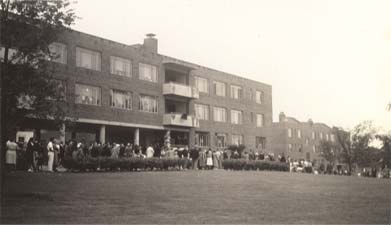
Rear of Westfield Acres — 1995
Welcome to the history of Westfield Acres, the times in which it was first built, and images and text covering life at the Acres since the first families moved there on May 1, 1938 until it was finally demolished in 2001.
Phil Cohen
Management


The first manager and assistant manager at Westfield Acres were Meyer Wessel and Mary Ellen Soistmann. I don't think enough credit can be given these two individuals in successfully implementing the then basically untried proposition of publicly operated low-income housing. While others deserve much credit for building it, Wessel and Soistmann, who became manager herself around 1943, ran it, and during their tenure ran it well.
Von Nieda Opposes New City School
Camden Courier-Post —
Asserts U.S. Should Make 100% Grant for Housing Project Building
Objection to the city burdening itself with any more school expenses, was voiced yesterday by Mayor Frederick von Nieda at a meeting of the Mayor's Housing Committee.
The mayor's viewpoint was made clear to members of the committee who met in his office to map out a plan to be submitted to Washington which would make possible a 100 percent grant by the government for the proposed school to be erected at the $3,000,000 “Westfield Acres” housing project.
The mayor declared his objection to any additional school burden after it was brought out that the office of W.P.A. Administrator Harold L. Ickes had notified the committee the city's proposal for a 30-room school has been held up because there are no available government funds.
“I am opposed to any additional school expense on the city because of this project,” Mayor von Nieda said. “If the housing project is to come here, the government must meet its share.
“We want another school and not a shack. There is already a temporary school on Thirty-second street between Hayes and River avenues, and we don't want any more of that. I am against any more spending so far as the city is concerned. The board of education has all it can stand. There will be no more spending, only over my dead body.”
Following the mayor's statement, James W. Burnison, chairman of the committee, named a subcommittee to confer with the board of education and other local educational officials in an effort to map out some plan acceptable to Washington. The sub-committee consists of A. J. Rosenfeld, Charles F. Hollopeter and Joseph N. Hettel.
Mayor von Nieda told the group that a 30-room school would cost at least $250,000, and that approximately 400 families would be housed at the development, with at least one child to every family.
Burnison urged passage of federal legislation which would give the city definite assurance that it would be paid all service charges, such as sewer and water, in lieu of taxes.
A dedication committee was named to arrange for exercises at such time as the project gets under way. The committee includes George V. Walsh, project manager, Hollopeter and Burnison. Other members of the housing committee are James V. Moran, Joseph Mitton and Rosenfeld.
Architects Show Mode of Westfield Acres
Camden Courier-Post —
Trenton, Aug. 8.—Associated architects of Camden, who designed the Westfield Acres Housing project are displaying a model of the development in a Trenton exhibit.
The exhibit, sponsored by the New Jersey Chapter of the American Institute of Architects and the New Jersey Society of Architects, is being presented at the New Jersey State Museum. It will be continued until September 14.
Outstanding work of members of the two associations, numerous examples of small house construction, building construction and remodeling are included in the exhibit.
Joseph Norman Hettel, Camden architect, has a personal exhibit of photographs and plans of the South Camden bath-house and the winning design for the Masonic Memorial in Lakeview Memorial Park.
$2,489,000 Low Bid on Westfield Acres
Camden Courier-Post —
Housing Project Construction Contract Sought by Atlantic City Firm
Washington, Aug. 11.—Bids for construction of buildings for Westfield Acres—Camden, N.J., low-rent housing project—were opened at the Interior Department today with a bid of $2,489,000 by Anthony P. Miller of Atlantic City, N.J., the low offer.
Turner Construction Company, of New York, submitted a bid of $2,535,000, while that of Ring Construction Company, of Minneapolis, Minn. was sealed and will be opened tomorrow.
The housing project is one of two in New Jersey under construction with FWA funds. Co-operating is the New Jersey State Housing Authority. Atlantic City is the other municipality benefiting.
There are 50 projects throughout the nation which will provide homes for 26,000 families formerly housed in unsanitary and deteriorated dwellings.
Westfield Acres will accommodate 598 families. Extending northward from Westfield Avenue and Thirty-second street to Pleasant street, the development will include 24 buildings covering 25 percent of the area, with the remaining ground for play space and other community facilities.
Foundations are in the last stages of construction and will be completed in a few days. Building will begin as soon as a contract is awarded.
Each building will be a fireproof apartment house with three, four and five-room units including mechanical refrigeration, electric stoves and standard sanitation.
Safeguards Against Home Accidents Ordered for Westfield Acres
Camden Courier-Post —
Fire Hazards Banned in East Camden Project Under PWA Decree
Science is being enlisted to make Westfield Acres, Camden’s $3,000,000 housing project for nearly 600 families, as safe and foolproof from accidents as science can devise. The PWA officials are insisting that every precaution be taken for safety. Last year American homes recorded accidents reaching 31,000 fatalities.
All projects will be of fire-proof construction, with exterior walls of incombustible materials, roofs and interior portions all of incombustible materials. There will be no loose dark hallways — insidious fire hazards of the old-style tenement house. Each apartment will open directly on the stairs which will form safety towers.
The housing division is carrying out definite improvements in stairway safety. Stair treads of the open type with broad landings are required. Complying with the recommendations of the U.S. Bureau of Standards, the slope is between 30 and 38 degrees, with rise from 7 to 8 inches and the steel-protected treads 10 or 11 inches wide. Every stairway will have handrails and will be well lighted.
Waste from apartments will be disposed of through convenient openings in the wall to the incinerator below, thus relegating the obsolete “ash-can” to the distant past. Every dwelling unit in the project will be equipped with the latest modern plumbing devices designed to be a safeguard against the dangers lurking in every home.
Perhaps the newest precaution in combating bathroom accidents is an arrangement which prevents back siphoning of water into the water lines. The housing division mandates that tub faucets be raised above the rim of the fixtures. Where open vents are absent, vacuum breakers are installed to prevent back syphoning. Bathroom chain pull-cords will be installed so that they cannot make an electrical connection.
Residents will not need to worry about blown-out electrical fuses. Automatic circuit breakers are installed to prevent ground or short circuits, and are automatically restored as soon as the fault is removed.
100 Men Put to Work at Westfield Acres
Approximately 100 men are now at work on the government housing project, Westfield Acres, in East Camden.
George V. Walsh, project supervisor, announced that while the actual work in the superstructure of the many buildings in the $3,000,000 project has not officially started the men now working are preparing the foundations for the new construction.
More men are being hired each day, Walsh said, and by early spring the project will reach its peak when nearly 800 men will be employed at one time. The daily average, Walsh said, will be 500 men.
1937 Rental Brochure
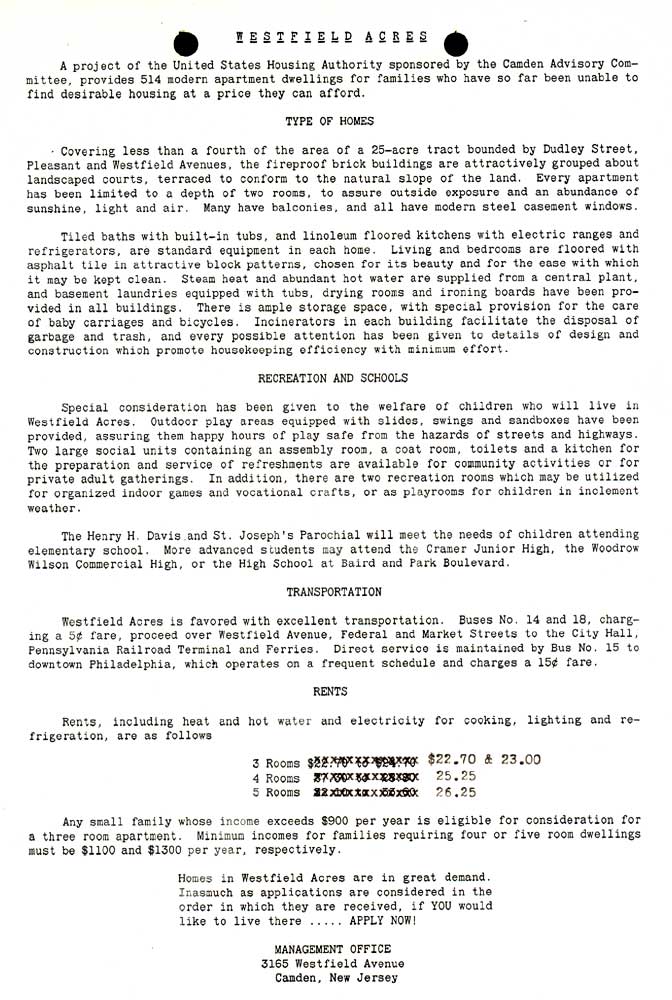
1937 rental brochure describing Westfield Acres to prospective tenants
Rental Rates Set at Westfield Acres
Camden Courier-Post —
$23.60 to $32.80 Scheduled Range of Units in U.S. Project
Rentals in Westfield Acres, the Federal $3,000,000 housing project in Camden, will range from $23.60 to $32.80 monthly, including heat, hot water, and electricity for lighting, cooking and refrigeration.
According to the schedule announced in Washington yesterday by Nathan Straus, administrator of the United States Housing Authority, the average cost of shelter alone is $4.89 per room per month. The other items average about $2.43 a month.
In the project are 514 dwelling units, of which 278 are three-room, 165 four-room and 71 five-room apartments. The monthly rental, including services, is set at $23.60 for the three-room apartments, $28.25 for the four-room, and $32.80 for the five-room.
The administrator also announced “standards of eligibility and conditions of occupancy” for the Camden project.
In selecting tenants from lists of eligible applicants, it is provided first consideration be given to families of the lowest income who have the greatest need for housing.
Other provisions are that every tenant shall have an income which is sufficient to pay the rent and provide for necessary living expenses and that no family shall be accepted as a tenant unless the family is living under substandard housing conditions.
Rentals to Cover All
The rentals are set in accordance with the United States Housing Authority Act of 1937 which establishes specifications governing rentals “at the amounts necessary to pay all management, operation, and maintenance costs, plus such additional amounts as the authority shall determine are consistent with maintaining the low-rent character of such project.” The same act limits possible tenancy to those families who are living in substandard housing and cannot afford decent accommodations at rentals within their means.
The New Jersey State Housing Authority is the only public housing agency in New Jersey. Because no local housing authority has been established in Camden, the United States Housing Authority will manage the project with the advice of the Camden Advisory Committee on Housing, it was announced.
The United States Housing Authority, in this instance, was unable to pursue its policy of selling or leasing Public Works Administration projects to localities or local housing authorities as provided for in the Wagner-Steagall Act.
Following are the complete standards of eligibility and conditions of occupancy:
“In selecting tenants from eligible lists of applicants, first consideration shall be given to families of the lowest income who have the greatest need for housing.
Income Requirements
“Every tenant shall have an income which is sufficient to pay the rent and provide for necessary living expenses.
“The dwellings shall be available solely for families whose net income at the time of admission does not exceed five times the rental (including the value or cost to them of heat, light, water, and cooking fuel) of the dwellings to be furnished such families, except that in the case of families with three or more minor dependants, such ratio shall not exceed six to one.
“No family shall be accepted as a tenant unless the family is living under substandard housing conditions. A family shall be considered under substandard conditions if—
Substandard Defined
“a. The dwelling occupied is not decent, safe, and sanitary. No dwelling shall be considered decent, safe, and sanitary where one or more of the following conditions exists:
“Need for major repairs or extensive minor repairs to overcome hazard to person, health, or comfort.
“No hot and cold running water.
“No inside private tub or shower.
“No inside private water closet.
“No adequate private cooking facilities, including sink with running water.
“Heating facilities inadequate from point of room sizes, light, and ventilation inadequate for living purposes.
“Lack of privacy detrimental to health and morals.
“Rooms without adequate lighting facilities.
“b. The dwelling is located in an area where dwellings predominate which, by reason of dilapidation, overcrowding, faulty arrangement or design, lack of ventilation, light or sanitation facilities, or any combination of these factors, are detrimental to safety, health or morals.
“c. The family is living under overcrowded conditions. A dwelling shall be considered overcrowded when it is occupied by a total number of persons which exceeds the maximum occupancy standards set forth below.
“d. The family is paying more than it can afford for rent.
Family Composition
“No lodgers or transient paying guests shall be allowed.
“No group of persons other than a family shall be admitted.
Minimum and Maximum Occupancy
“Occupancy shall be limited as follows:
| Minimum | Maximum | |
|---|---|---|
| Three-room | 2 | 3 |
| Four-room | 3 | 5 |
| Five-room | 4 | 7 |
Westfield Acres was built on a vacant 25-acre area in a good residential district on Westfield avenue about two miles from the center of the city. The 24 fireproof buildings, which take up less than 15 percent of the site, are arranged in such manner as to allow for extensive lawns and play areas.
All the apartments are equipped with electric cooking ranges and electric refrigerators, and are heated from a central plant.
Ten centralized laundries located in basements and equipped with tubs, hot plates, drying rooms and ironing boards are available to all project tenants.
Four large recreation rooms are located on the ground floor. They have wide windows and may be used as club rooms for group parties and general social gatherings.
For children of pre-school age, there are 10 surfaced play areas equipped with slides, swings and sand boxes, located in convenient places throughout the project. One larger area, with heavier equipment, furnishes recreational opportunities for older children.
Tenants also are provided with adequate individual storage space. On every floor there is an incinerator.
A Bird's-Eye View of Low Rents
Camden Courier-Post —
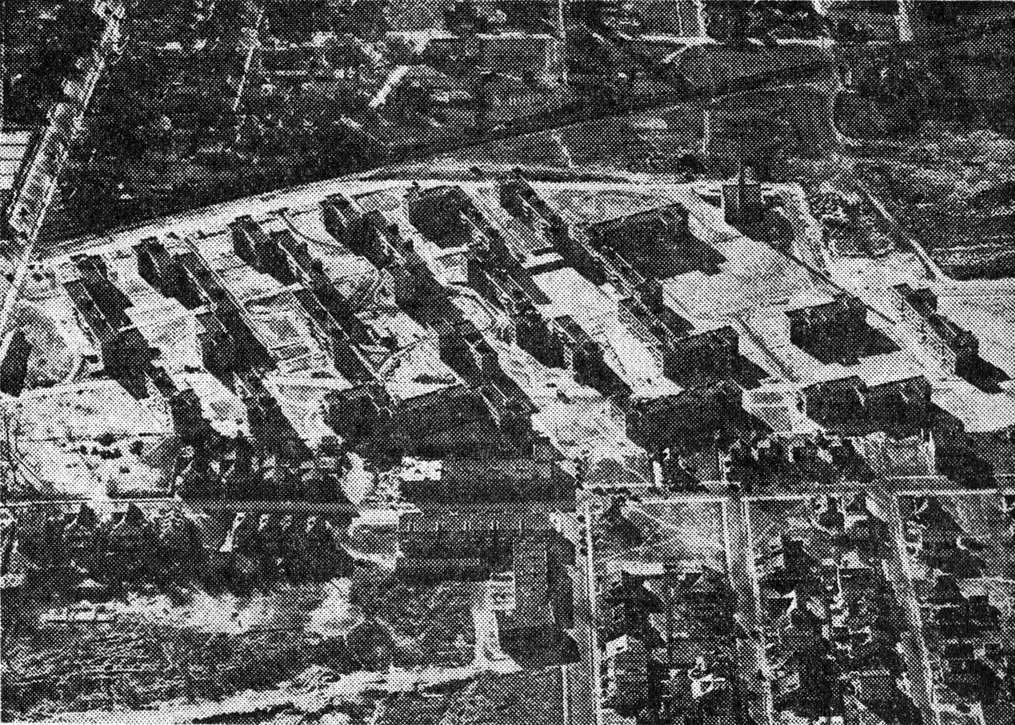
In these three-story apartment units at Westfield Acres, 515 families will be housed at low rentals. The government spent $3,116,000 for ground and buildings.
Who Need It
Camden Courier-Post —
Rentals at Westfield Acres, Camden's $3,000,000 Federal housing project, are within the means of those most in need of decent, low-cost housing and every effort should be made to see that those are the ones who receive the benefit.
As announced in Washington, the rates will be from $23.60 per month for three-room apartments to $32.80 for five rooms. Since these prices include heat, hot water and electricity for lighting, cooking and refrigeration, it is obvious that the three-room tenant will be paying no more than he paid for sub-standard quarters at $15 a month.
Nathan Straus, Federal housing administrator, has laid down the requirements for eligibility of tenants, providing that first consideration be given families of lowest income. His schedule of “conditions of occupancy” makes clear that the entire idea of low-cost housing will be submerged if every precaution is not taken to keep the “chiselers” out.
At Westfield Acres are modern, up-to-date homes for low-salaried workers. Here is a fulfillment of the New Deal's ambition to improve the living standards of those now “surrounded by dilapidation, primitive conveniences or otherwise unwholesome environment.”
To them Westfield Acres belongs. The family of higher income which well can afford commensurate conveniences at regular private rental has no right to live in Westfield Acres and should not be allowed to deprive a needy, deserving family of its right to these advantages.
Dixon Says Need for Housing Grows
Camden Courier-Post —
Camden Statistics to Be Presented to Federal Board by Group Here
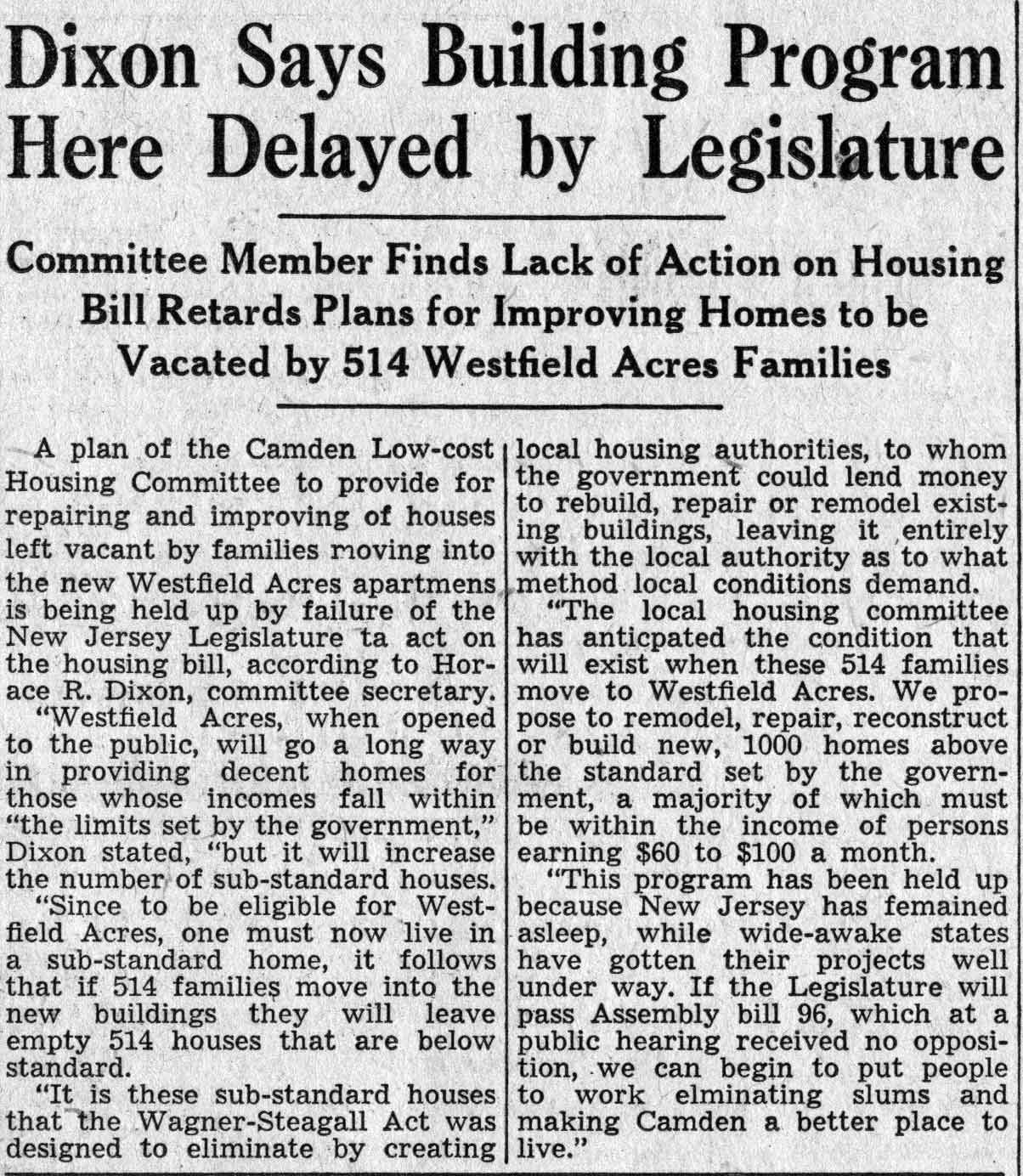
The need for housing in Camden has increased rather than decreased in the past four years, Horace R. Dixon, secretary of the Camden Low-Cost Housing Committee, said in a statement yesterday.
“Housing conditions in Camden are revealed in an inventory made in 1934. The conditions have not improved since. The figures show an urgent need for a real housing program under the Wagner-Steagall Act. The committee is bringing the figures up to date for presentation to the United States Housing Authority with a request for earmarking of funds for a Camden housing program.
“Of the 12,958 residential structures, 50 percent are more than 40 years old. Only 3350 or 26 percent are in good condition, while 6210, or 48 percent, need minor repairs and 2254, or 17 percent need major repairs, and 1190 or nine percent are unfit for use.
“We must build 1200 houses to replace those unfit for use.
“A further break-down reveals 30,584 dwelling units, 11,774 of them occupied by owners, and 18,810 rental units, including those vacant. Of the total, 28,233 units are occupied and 2261 or 7.4 percent are vacant. This figure is exaggerated since it includes clubs, hotels and rooming houses.
“This is only part of the story. The committee is fighting to give Camden families more homes and Camden workmen the chance to build them.”
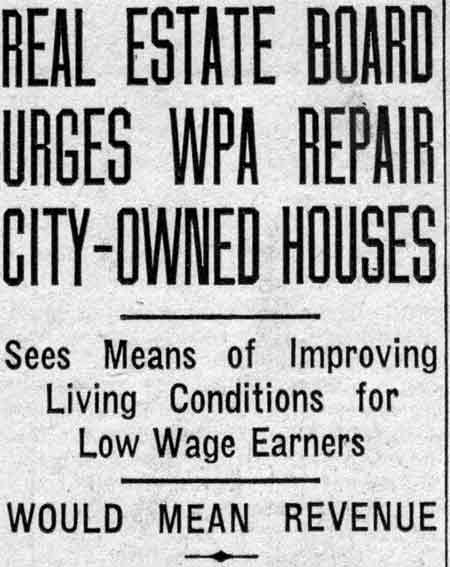
Real Estate Board Urges WPA Repair City-Owned Houses
Camden Courier-Post —
Sees Means of Improving Living Conditions for Low Wage Earners — Would Mean Revenue
Sees Means of Improving Living Conditions for Low Wage Earners
WOULD MEAN REVENUE
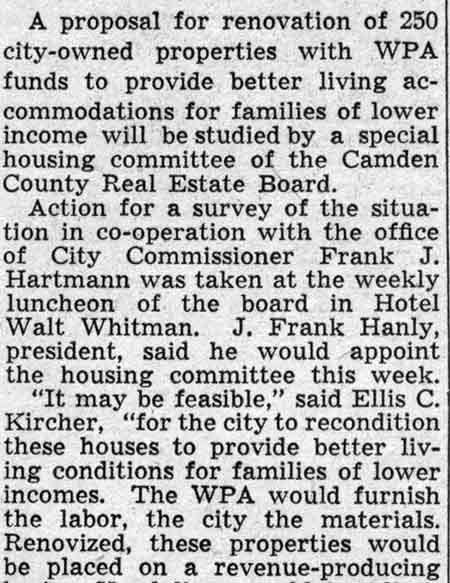
A proposal for renovation of 250 city-owned properties with WPA funds to provide better living accommodations for families of lower income will be studied by a special housing committee of the Camden County Real Estate Board.
Action for a survey of the situation in co-operation with the office of City Commissioner Frank J. Hartmann was taken at the weekly luncheon of the board in Hotel Walt Whitman. J. Frank Hanly, president, said he would appoint the housing committee this week.
“It may be feasible,” said Ellis C. Kircher, “for the city to recondition these houses to provide better living conditions for families of lower incomes. The WPA would furnish the labor, the city the materials. Renovized [sic], these properties would be placed on a revenue-producing basis. Vandalism would be eliminated and all concerned would stand to gain by their rehabilitation.”
WPA Could Make Survey
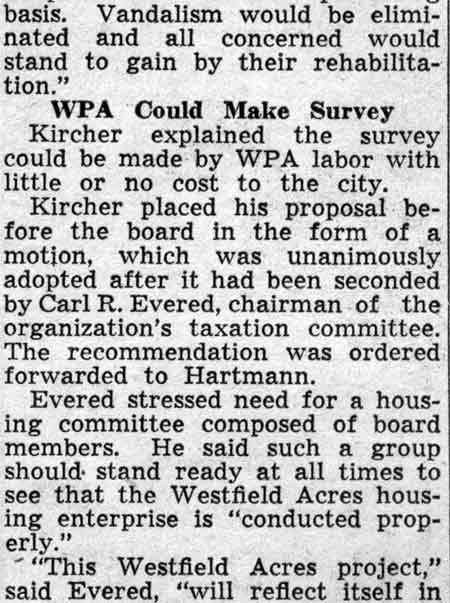
Kircher explained the survey could be made by WPA labor with little or no cost to the city.
Kircher placed his proposal before the board in the form of a motion, which was unanimously adopted after it had been seconded by Carl R. Evered, chairman of the organization’s taxation committee. The recommendation was ordered forwarded to Hartmann.
Evered stressed need for a housing committee composed of board members. He said such a group should stand ready at all times to see that the Westfield Acres housing enterprise is “conducted properly.”
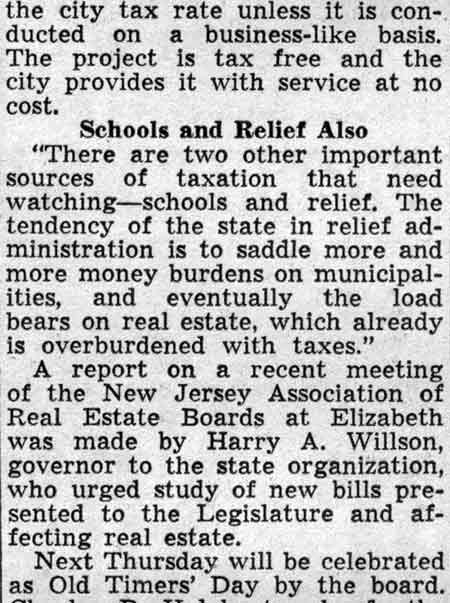
“This Westfield Acres project,” said Evered, “will reflect itself in the city tax rate unless it is conducted on a business-like basis. The project is tax free and the city provides it with service at no cost.
Schools and Relief Also
“There are two other important sources of taxation that need watching—schools and relief. The tendency of the state in relief administration is to saddle more and more money burdens on municipalities, and eventually the load bears on real estate, which already is overburdened with taxes.”
A report on a recent meeting of the New Jersey Association of Real Estate Boards at Elizabeth was made by Harry A. Willson, governor to the state organization, who urged study of new bills presented to the Legislature and affecting real estate.
Next Thursday will be celebrated as Old Timers’ Day by the board. Charles P. Halyburton heads the committee in charge of arrangements.
Former presidents and members of the organization will be present from various sections of the country, old friendships will be renewed and a special program of entertainment has been planned.
A letter of condolence was sent to the family of Thomas P. Delany, associate member of the board, who was killed this week in an automobile accident on the Camden bridge.
Exception was taken by S. Raymond Dobbs, city assessor, to the number of houses specified as city owned and to the suggestion that properties of this type stand in need of any repairs.
“I think I should know the true condition of city property,” said Dobbs, “for I am still in charge of the bureau for city property although I have been transferred from my former position as assistant to Commissioner Hartmann.”
“The actual number of properties owned by the city is 37 and not 250. I believe confusion in this respect was probably due to mistaking properties which have tax title liens upon them and others that Mayor Brunner has taken into receivership with city-owned houses.”
“These properties could not be remodeled or improved with WPA funds for the Federal act specifies only property which city, county or State has title to can be repaired with WPA assistance.”
“As far as the 37 houses the city has title to, I can assure the board that they are not in need of repairs and are tenanted.
Also pictured: Frank J. Hartmann Jr. — J. Frank Hanly — Ellis C. Kircher — Carl R. Evered — Thomas P. Delany — Charles P. Halyburton — S. Raymond Dobbs
Housing in Camden
Published by the Housing Authority of the City of Camden
Compiled and written by the Writers Program of the Works Projects Administration in New Jersey, Robert W. Allen, State Administrator.
The Site
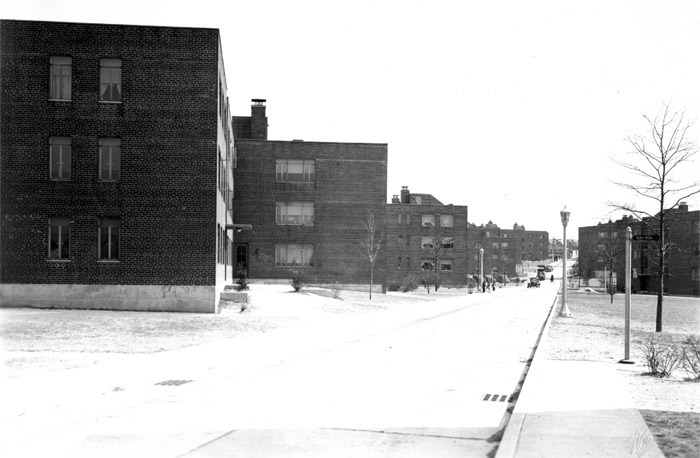
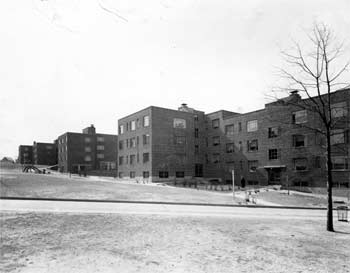
Left: Looking north from Westfield Avenue down Beideman Avenue. Right: Westfield Acres 1941, looking west across Beideman Avenue. Photos from 1941.
The first public housing development projected in Camden was planned, financed, and constructed by the federal Public Works Administration in the days before the local Housing Authority came into existence. It antedated the enactment of the United States Housing Law of 1937—the statute which sanctioned the new public policy of the nation to provide better living conditions for that one-third of the American people inadequately housed, clothed and fed according to American standards.
The movements sponsored by civic groups and the municipal authorities to provide better housing for Camden found concrete expression when the Action Committee of 1935 persuaded the PWA to earmark $3,500,000 to finance a housing project. From 11 sites surveyed by the State Housing Authorities, a 26-acre plot sloping toward Westfield Avenue was chosen for the project. Twenty-five acres of it were a rolling sandy waste which had to be reclaimed. At the corner of Westfield Avenue and 32nd Street was an acre of cultivated land on which was an old house called the “Mansion.” This was razed to make room for the “Acres” and the land on which it stood was bought for $6,000.
The original plans called for a slum-clearance project in conjunction with new buildings, and a site in South Camden was selected. As the choice of that location would have involved the demolition of many homes, which the owners would not relinquish without the right of eminent domain, a prerogative which the Comptroller-General of the United States ruled the PWA did not possess, it was decided to build on the Westfield Acres tract instead. The land was purchased outright by the government.
In the latter part of 1938, however, a test case which was reviewed by the New Jersey Supreme Court sitting en banc, Mr. Justice Bodine said “there is no more reason why the Legislature of our State may not, under its power of eminent domain, take private property to effect slum-clearances than that it may not take private property in order to provide for roads, railroads, and swamp clearances.” He approved the housing program and found no barrier, Constitutional or statutory, to its continued operation.
The tract is bounded on the south by Westfield Avenue, on the east by 32nd Street, on the west by the Camden-Burlington Railroad, and on the north by Pleasant Street, beyond which it extends for a short distance.
It is easily accessible from the Market Street ferry by a five cent fare bus and from Philadelphia by bus for 15 cents.
The Plan
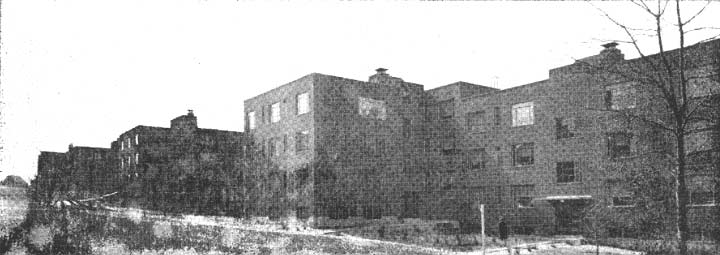
Looking west across Beideman Avenue from 510 Beideman Avenue
Since May 1938 tenants have lived in Westfield Acres, ground for which was broken on November 2, 1935. The development consists of 18 brick buildings of modern design, the plans for which were drawn by Associated Architects of Camden City. Three stories high, the structures are divided into 514 apartments of three, four, and five rooms each.
Each of the 514 apartments is equipped with a tiled bathroom. The kitchens are covered with inlaid linoleum, and are supplied with electric cooking ranges and electric refrigeration. Group incinerators are provided to dispose of all refuse, and streets and street lighting are maintained by the project.
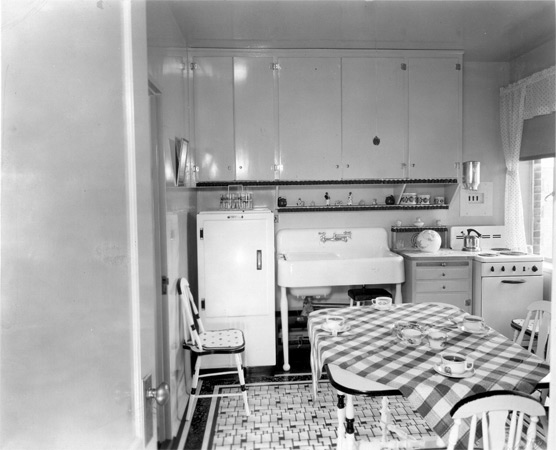
A modern kitchen at Westfield Acres, 1941. For many of the initial residents in the 1930s, these kitchens were their first experiences with refrigerators and electric stoves.
Space has been reserved for community and recreational buildings and outdoor concerts. The grounds are beautifully landscaped and well cared for. A central heating plant supplies uniform and adequate heat at all times. Construction of these apartment dwellings cost $3,116,000.
The Housing Authority on May 24, 1938 entered into an agreement with the Bendix Laundry Rental Service for furnishing metered washing machines for one year at a cost of 10 cents for every half-hour’s use, 10 percent of the gross receipts to be paid to the Authority. Each of the ten laundries, located conveniently about the “Acres”, has one machine installed and ready for use at any hour of the day. A spare machine is kept in reserve to replace any that may be disabled. Each laundry has ample space and drying racks for the air-drying of clothes.

Doing laundry at Westfield Acres, 1941
Management and Tenant Relations
In order to reach the lowest income group, tenancy has been limited to families whose income does not exceed five times the rental value, with exceptions for families having three or more minor dependents, in which case the income may not exceed six times the rental value.
In February 1941 tenants engaged in defense work whose income exceeded the permissible maximum were allowed to remain until additional housing facilities became available, but a surcharge of 25 cents was added to their monthly rent for every $15 of extra annual income. This was not a final solution.
War and defense contracts in Camden plants have not only caused the increase of the population but have provided workers in certain fields abnormally high incomes. This has posed an important problem for the Housing Authority. Tenants whose incomes formerly fell within the limits are earning so much more now because of overtime work that their income exceeds the original limitations set by the Authority. In view of the housing shortage in Camden and the fact that incomes will revert to normal after the war, the Housing Authority felt impelled to adopt an arrangement that would avoid hardship and yet assure equitable treatment for all tenants.
This was achieved by a revision of rent scales which take into consideration the increased wages of tenants who have been living in Westfield Acres and will permit adjustment of rents in the future when wages are not abnormal. Instead of the usual three rental schedules based on three average income levels, five basic schedules were instituted in 1942. In addition, a system of surcharges was adopted for those tenants whose incomes exceed the highest established grade. The income limits, for families of varying sizes:
| Family Size | Grade A | Grade B | Grade C | Grade D | Grade X |
|---|---|---|---|---|---|
| 2 Persons | $800 | $950 | $1,150 | $1,350 | $1,600 |
| 3 Persons | $850 | $1,100 | $1,200 | $1,400 | $1,650 |
| 4 Persons | $900 | $1,150 | $1,325 | $1,500 | $1,850 |
| 5 or More | $900 | $1,700 | $1,400 | $1,650 | $2,000 |
The rents and number of apartments available for each grade:
| Bedroom Type | Grade | Units | Rent* |
|---|---|---|---|
| 1 Bedroom | A | 27 | $17.00 |
| B | 42 | $20.00 | |
| C | 130 | $25.00 | |
| D | 79 | $28.00 | |
| X | 0 | $35.00 | |
| 2 Bedrooms | A | 10 | $17.00 |
| B | 56 | $20.00 | |
| C | 65 | $25.00 | |
| D | 34 | $28.00 | |
| X | 0 | $35.00 | |
| 3 Bedrooms | A | 12 | $17.00 |
| B | 25 | $20.00 | |
| C | 16 | $25.00 | |
| D | 18 | $28.00 | |
| X | 0 | $35.00 | |
| *Monthly shelter rent plus utilities | |||
After admission, as incomes rise above Grade X, rents are increased. A surcharge of 25 cents a month is made for each $15 a year or fraction thereof by which a tenant's income exceeds the limit for Grade X. A rental of $50 per month has been established as the top.
The lowest annual income for a Westfield Acres family is $454; the highest, $1,839; and the average, $1,308.
The income restrictions had obliged 64 families to move from Westfield Acres prior to June 1, 1940. Only 25 of those families had been able to find homes in Camden; the balance was scattered outside the city. Between April and October 1940 apartments were vacated by 32 families who purchased their own homes.
There never has been an eviction for misconduct or nonpayment of rent; delinquency losses have been in the proportion of only $1 for every $10,000 of rental. A family required to move elsewhere because of increased earnings is given a reasonable time in which to find a new home and everything possible is done to assist those who must depart.
Problems of management have been few. Children have been careless at times at play in their homes and about the grounds. Parents are notified of mischievous acts and are expected to apply corrective measures and to pay for material or property damage. But such instances have been rare, and no case of juvenile delinquency has been recorded against the 600 children at the “Acres.”
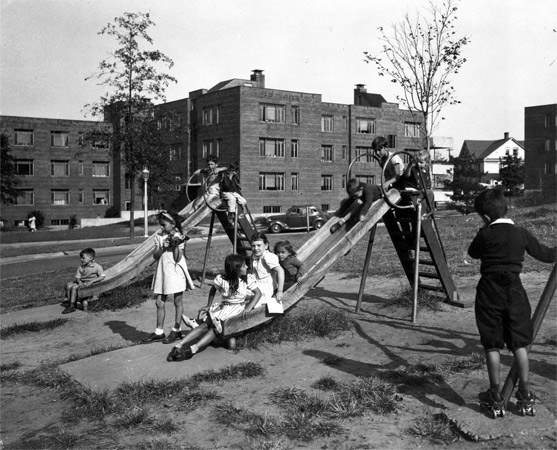
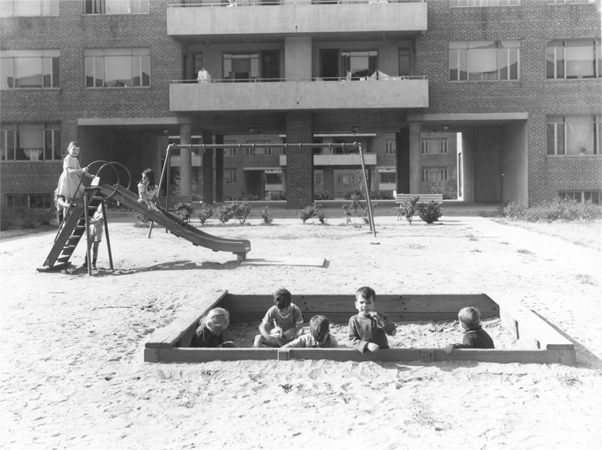
A playground at the rear of the property, showing the archways that ran beneath the buildings. Photos from 1938.
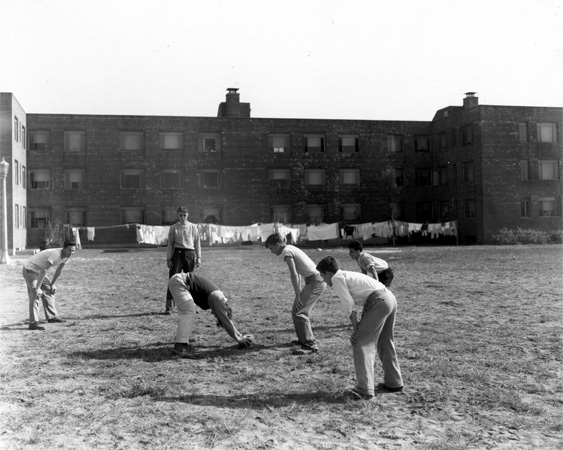
Playing ball at the rear of the property. The playground and archway would lie to the immediate right of this photo. Photos from 1938.
At the rear of the “Acres” for the use of tenants is a baseball field, which is also used for outdoor community gatherings, and a large playground is available directly across Westfield Avenue at Dudley Grange Park, a city park of about 50 acres.
My mother and I were among the first families in Westfield Acres. Having moved from third and Penn to North Fifth Street, and then to the Acres was unbelievable. It was a great environment. I attended Davis school, Cramer school and Woodrow Wilson.
Situated at convenient points in the “Acres” grounds are three community halls where classes are conducted in sewing, and lectures are given on child hygiene, cooking, and other subjects.
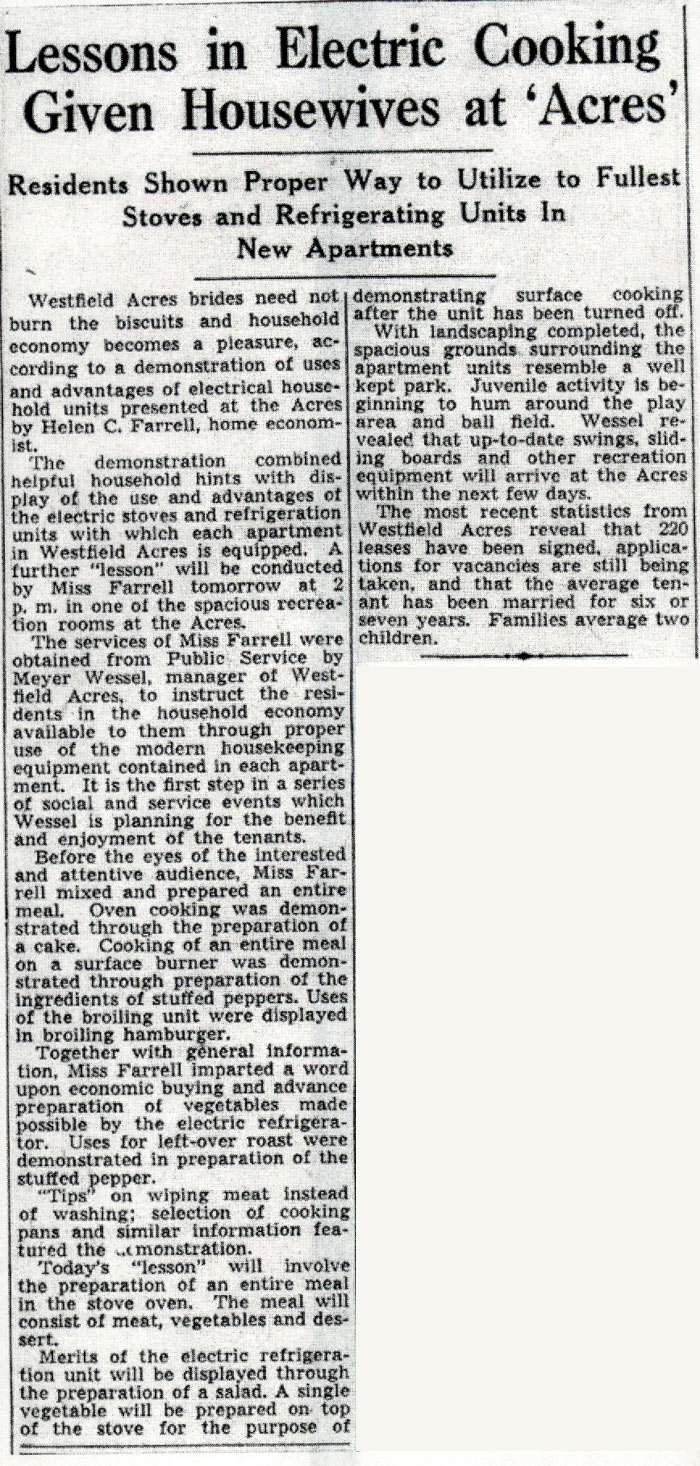
“Lessons in Electric Cooking Given Housewives at 'Acres'” — Camden Courier-Post, June 4, 1938
In the administration building is a well stocked library which is growing rapidly by reason of constant additions by the tenants. It now comprises more than 400 volumes. It is serviced by the National Youth Administration and is free to all tenants.
The administrative personnel consists of a manager and an assistant manager, two typist-clerks, a bookkeeper, a building superintendent, a chief engineer, four engineers, eight janitors, a general maintenance mechanic, two maintenance helpers, and two gardeners.
Before acquisition of the parcel by the government, the city’s tax anticipation from Westfield Acres was $878.40. Westfield Acres pays the city $4,700 in lieu of taxes, or a net gain in revenue of $3,821.60. If privately owned, Camden’s share of anticipation would be $41,502.84, thus showing a theoretical loss of $36,802.84. A survey of the operating figures for a comparable area, however, deducting costs for services not supplied to Westfield Acres, reveals a gain of $7,455.84 to the city. In addition, the enormous benefits to the tenants that cannot be revealed by figures, must be kept in mind.
Mr. Sample's Candy Stand
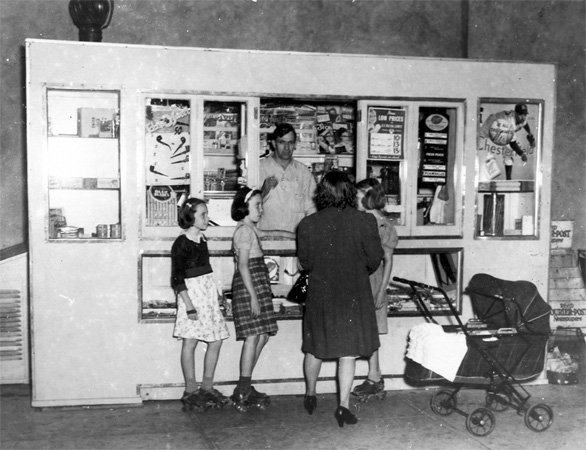
Mr. Sample's candy stand, 1938. The concession stand was located directly across the archway from the rental office in the front building parallel to Westfield Avenue.
…the concession stand was a blind man's stand. It was located directly ACROSS the archway from the Rental office in the front building parallel to Westfield Avenue. I remember walking over there with my MOM from 402 Dudley when MOM paid the rent. We would always stop at the stand and MOM would buy me something.
The name of the candy store with the blind man was called “Samples.” He lived on the first floor in 3161 (Westfield Avenue). His apartment was just outside the archway where the store was located. He was a very, very popular and nice gentleman. I loved talking to him. He sold everything from penny candy to milk, comics, and newspapers.
One of my memories was going to the office each month and paying Mrs. Soistman and then sitting on the steps and enjoying a Frank's orange soda and a tasty pie purchased from Mr. Sample's stand. This was my chore as my Mom was working.
I lived in the third building from the front, third floor one bedroom (the front being where you paid the rent and Samples candy stand was). Bud Sample and his family were my cousins. The years I lived there, it wasn't a run down housing project. I only remember one family name and it was Sinclair. From there we moved to Pennsauken, then to California.

Children at Westfield Acres
February 6, 1939 Inspection
The photographs shown below were taken by Mr. J. Richard Altieri, Liaison Construction Supervisor of the United States Housing Authority, on the occasion of his visit to this project on February 6, 1939.
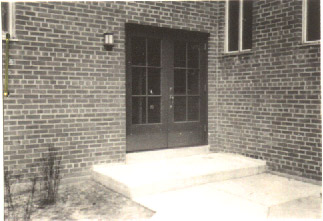
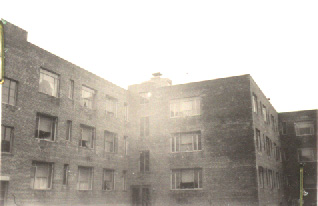
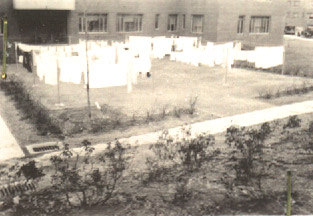
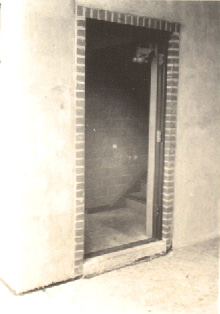
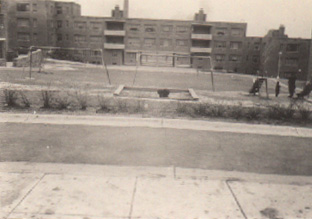
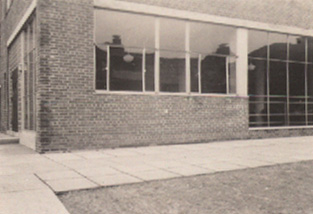
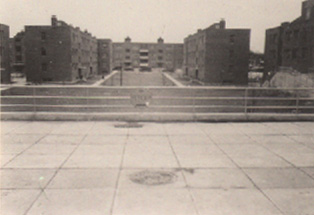
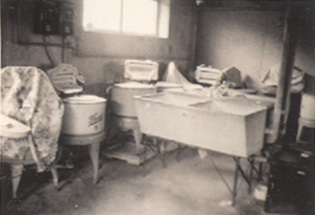
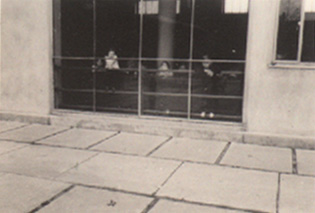
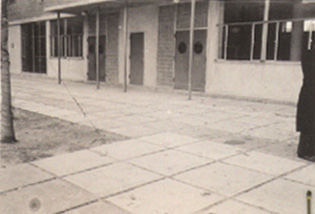
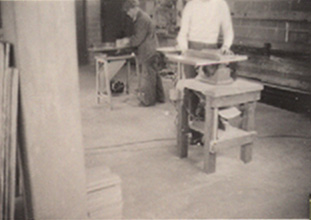
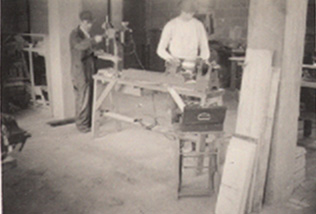
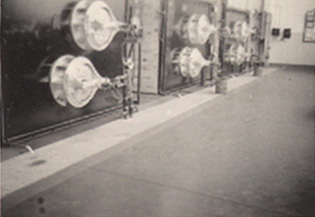
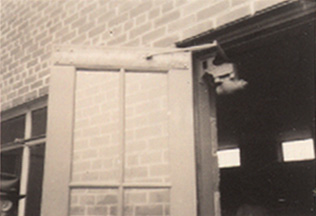
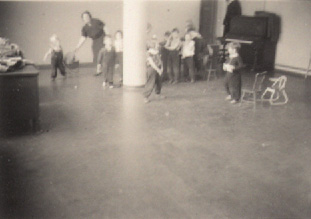
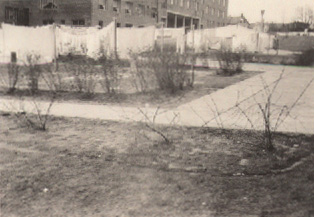
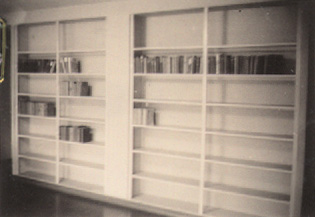
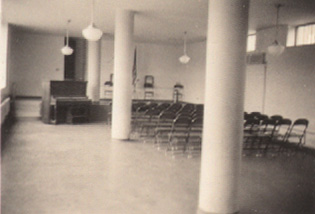
Inspection photographs by J. Richard Altieri, Liaison Construction Supervisor, United States Housing Authority, February 6, 1939. Captions (top to bottom, left to right): main entrance doors; incinerator hoods; play area converted to drying space; door blown off in windstorm; play area through wall, Building 15; Social Room, Building 15; mall at Building 9; laundry room, Building 8; pre-kindergarten class; Boys' Club entrance, Building 9; woodworking shop; joiner in woodworking shop; boiler room; reinforced door head; children at play in pre-kindergarten; drying area, Building 16; library, Building 17; Social Room, Building 17.
Murals in Social Room (Building 9)
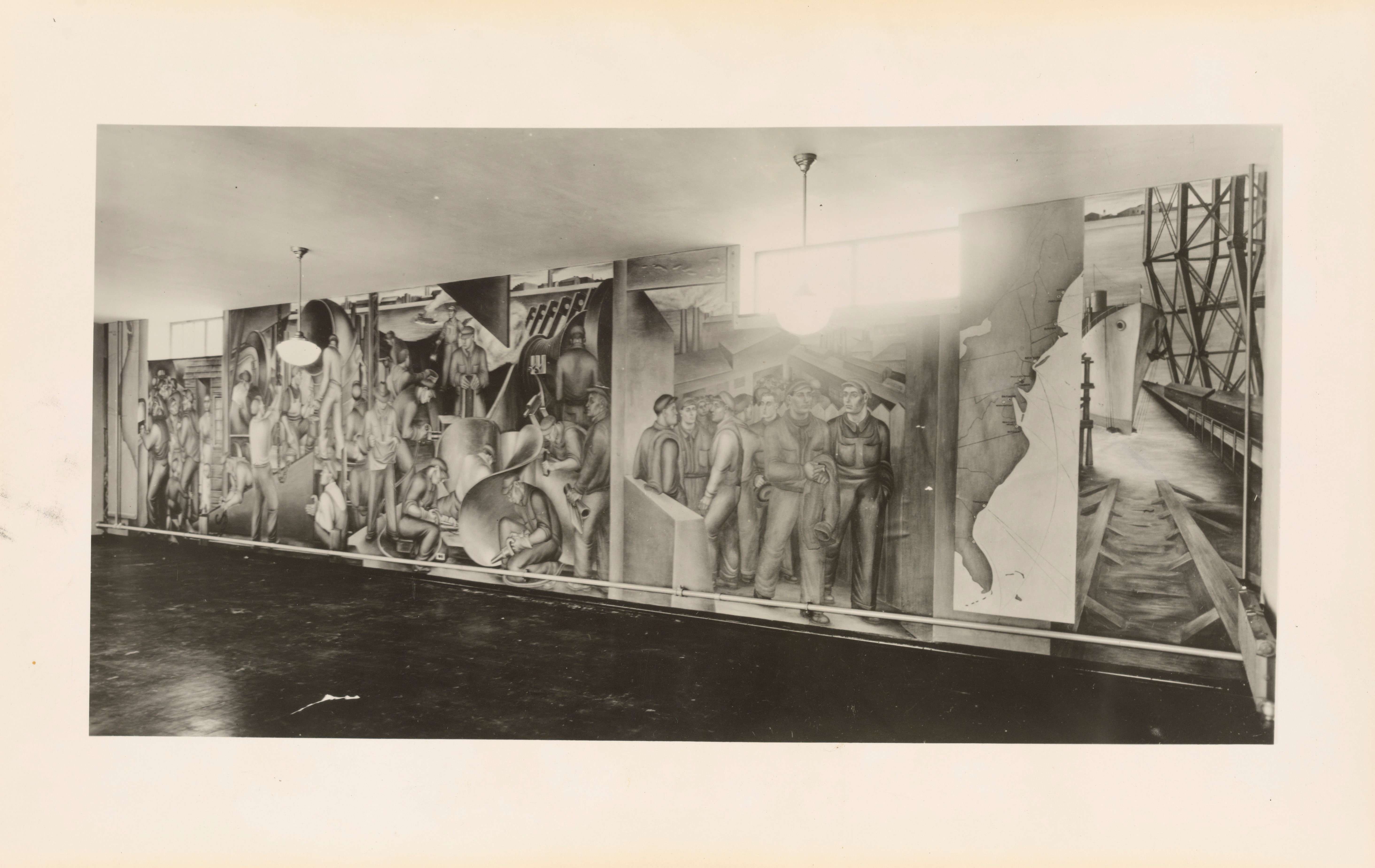
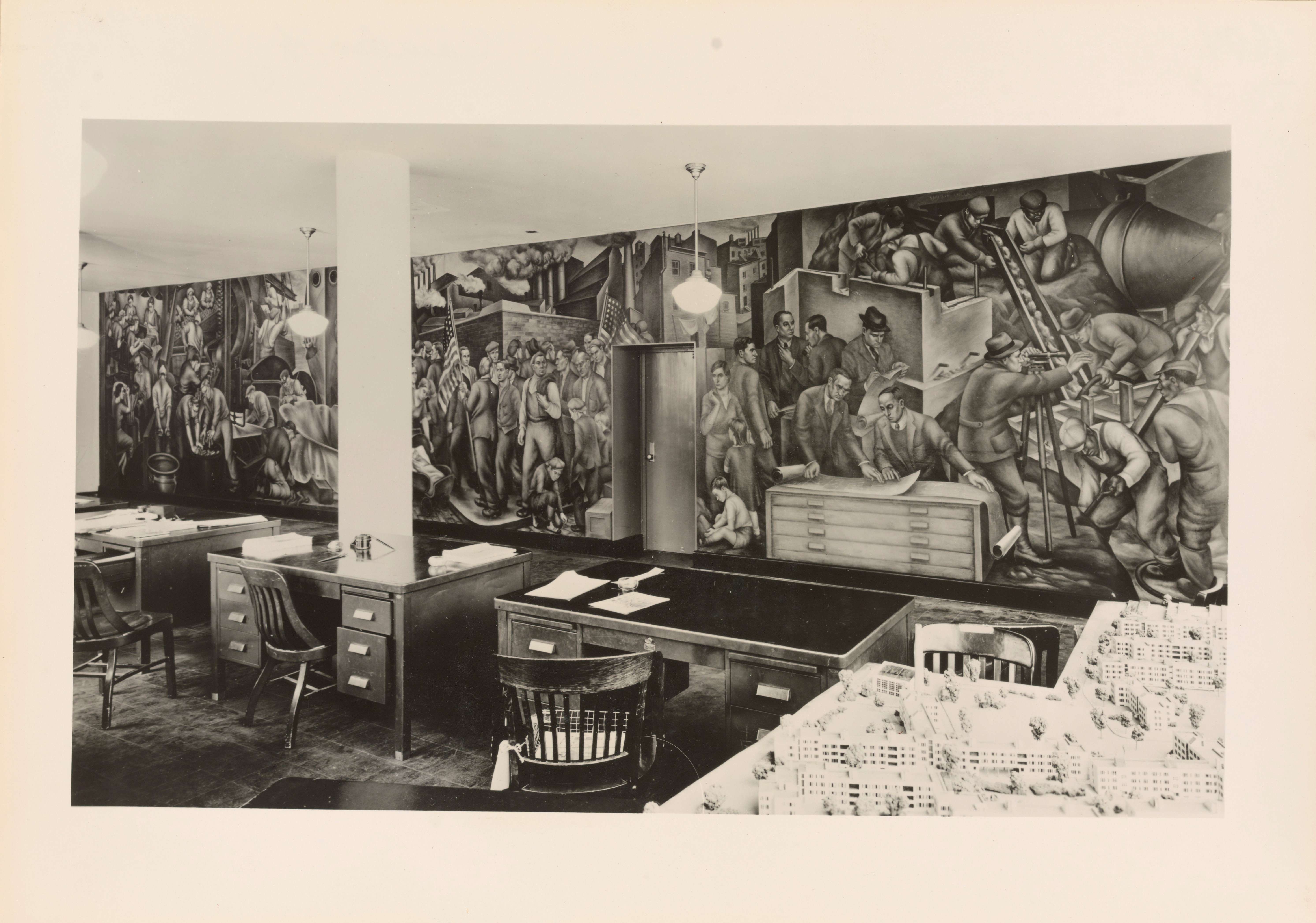
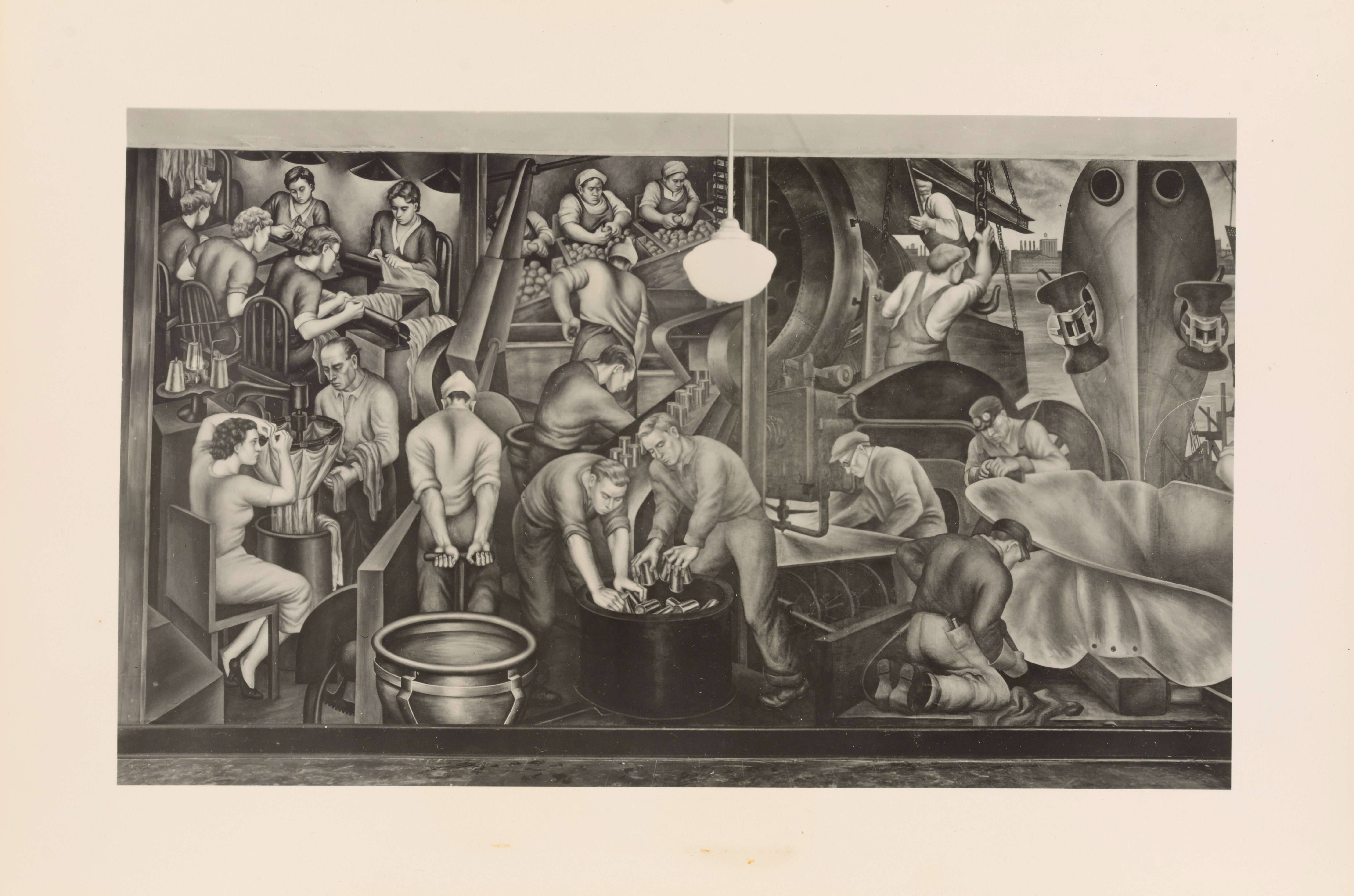
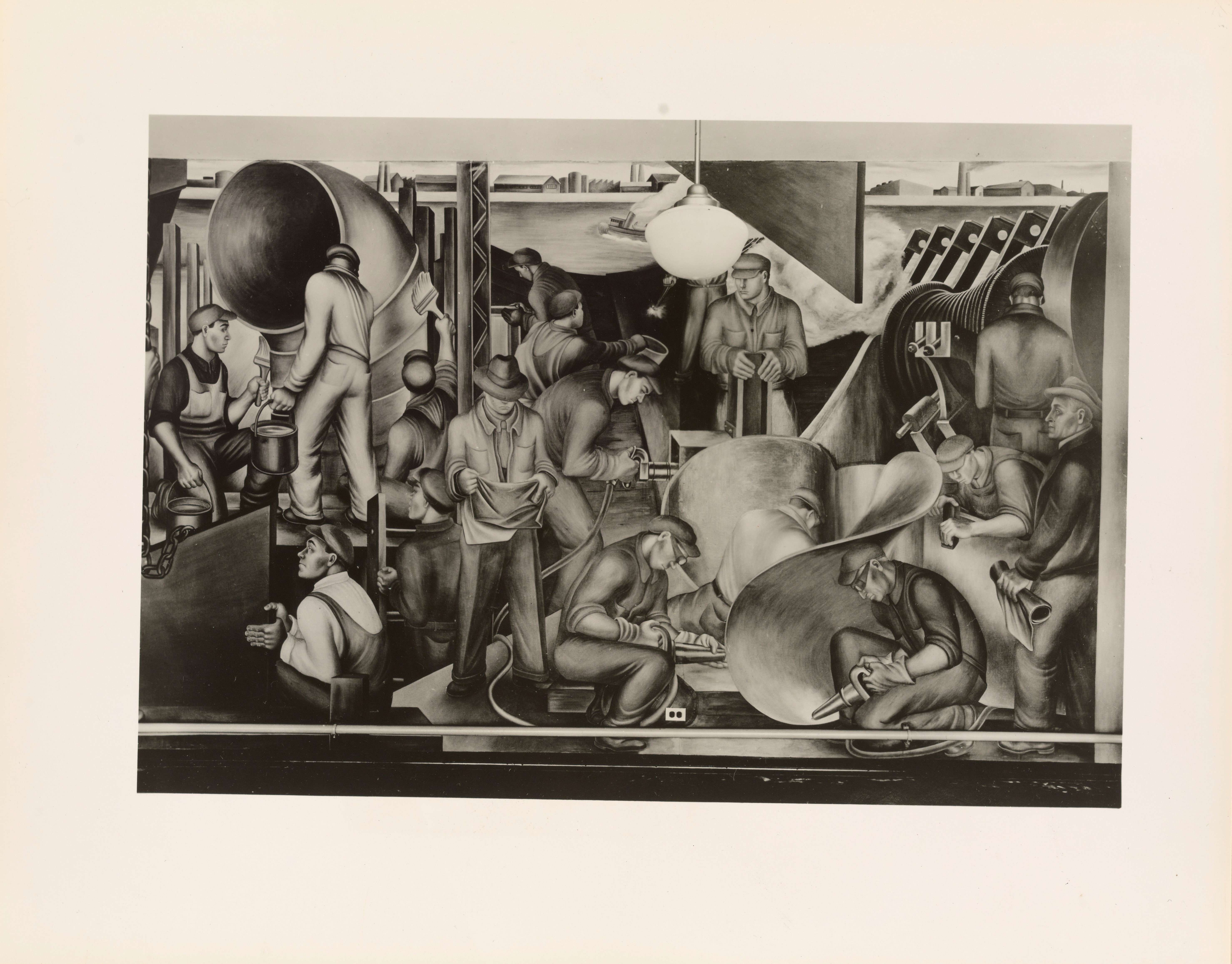
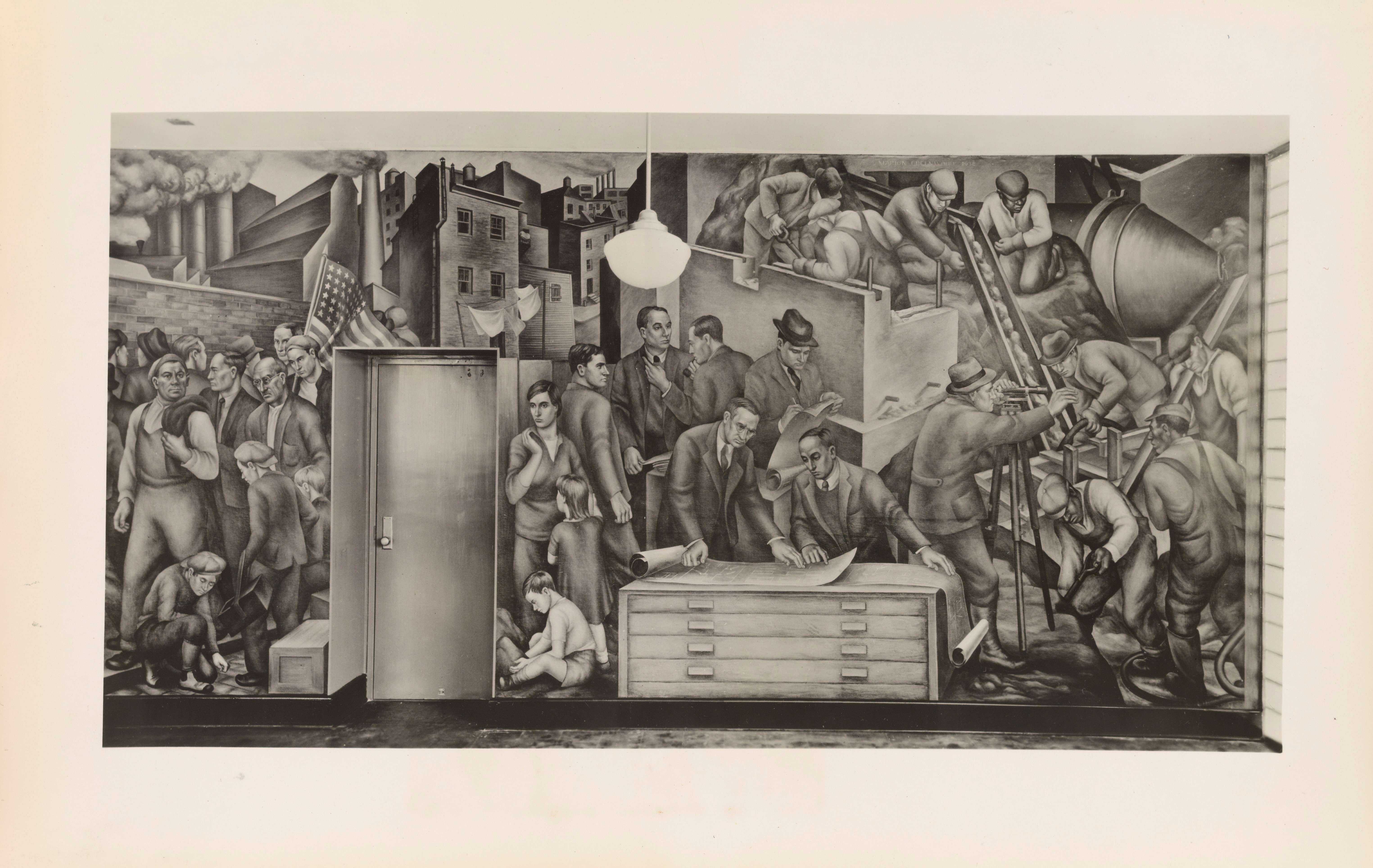
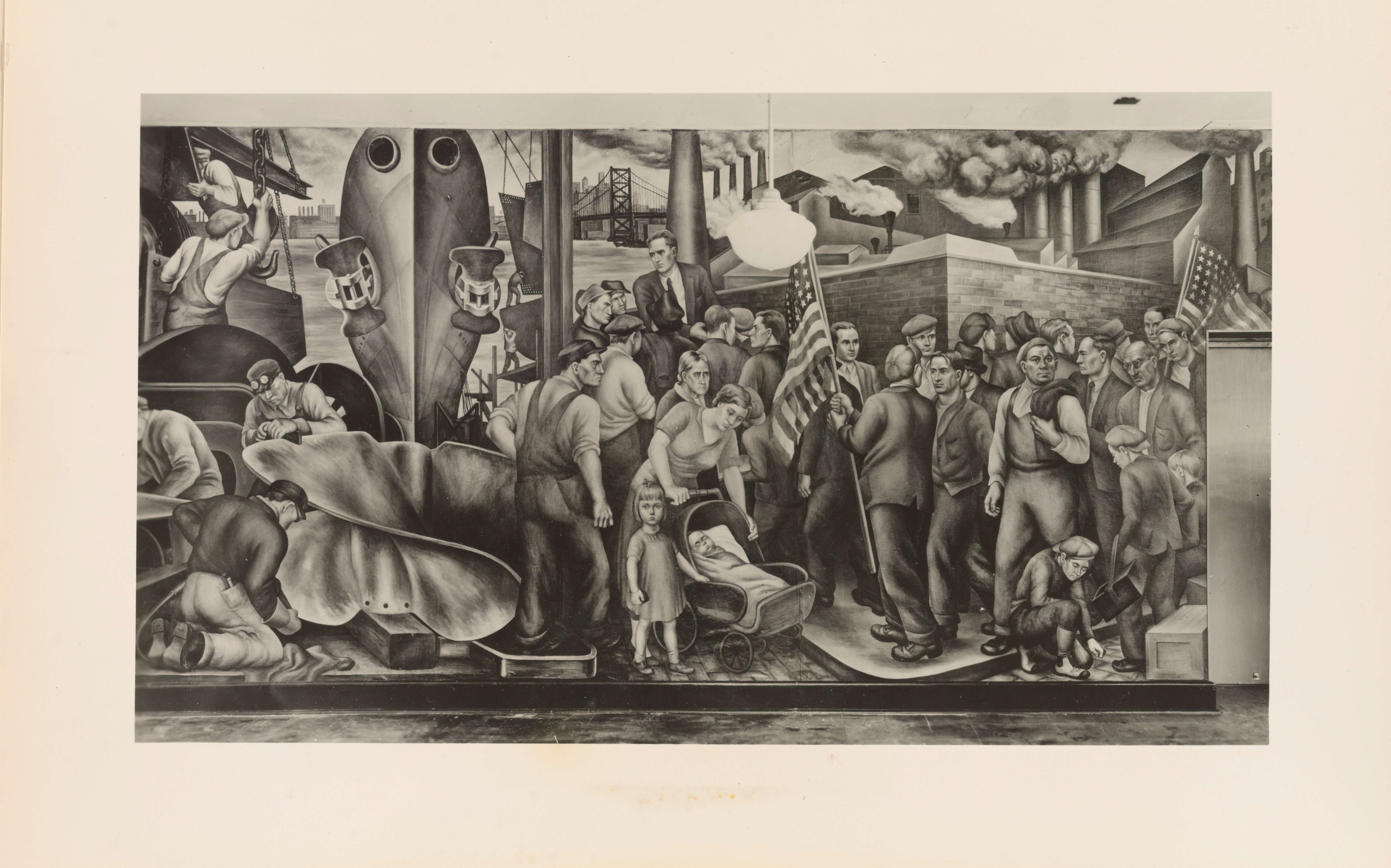
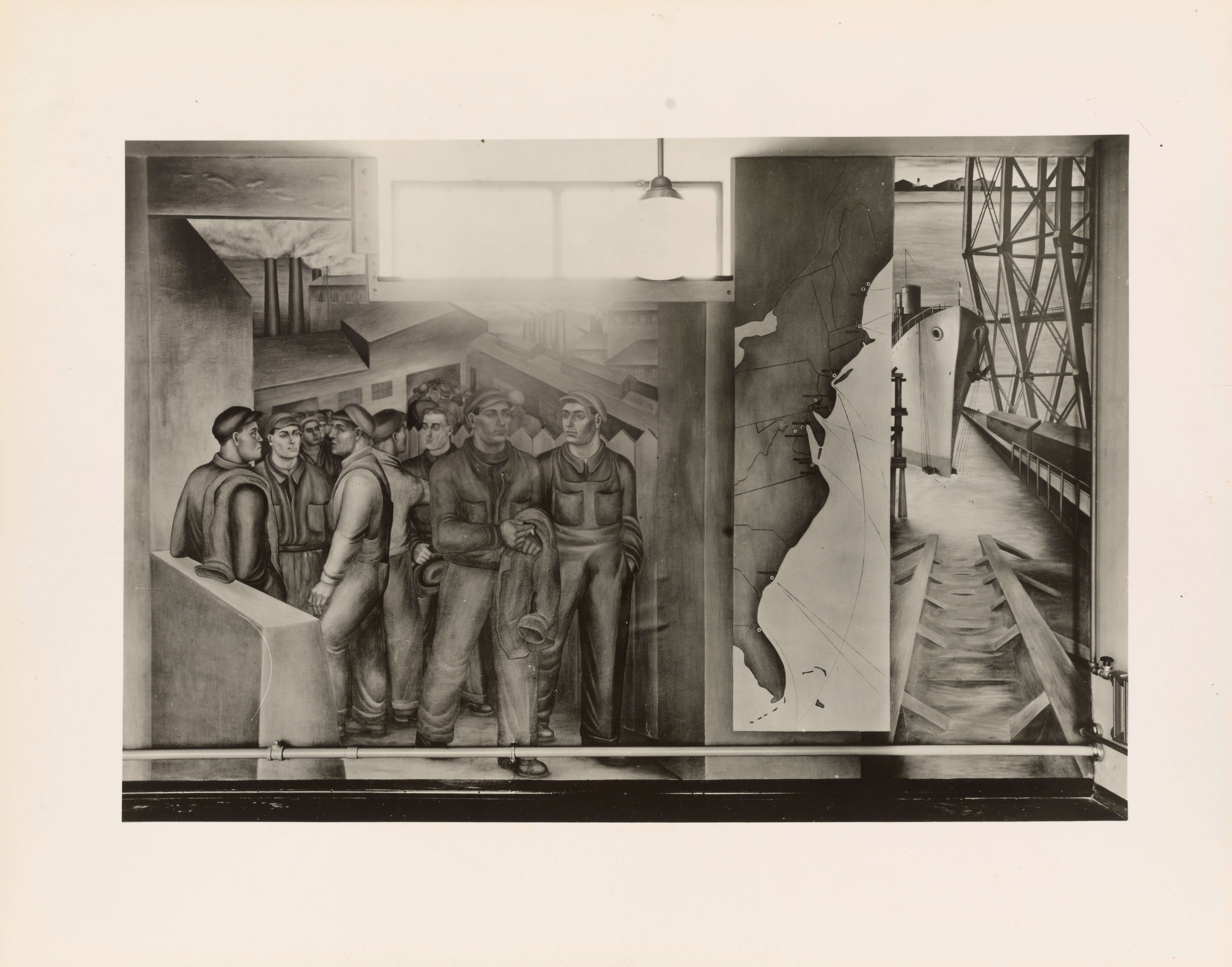
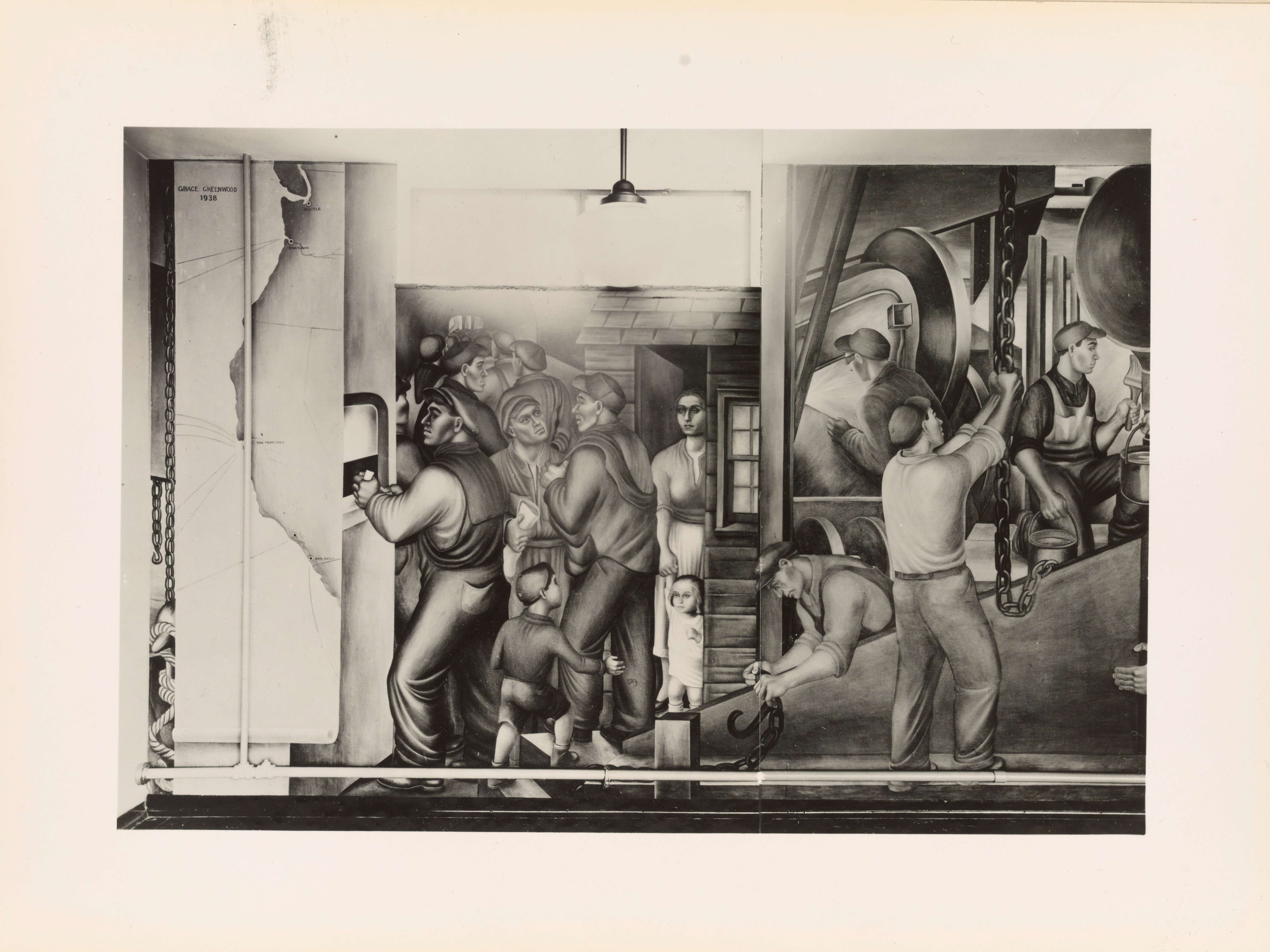
Murals in social room, probably Building 9
June 5, 1939
Manager Meyer Wessel submitted a series of reports. An interesting page among the reports assembled was dated June 5, 1939. It reports that since May 1, 1938, the date that the first family took up residence at the Acres, there were 38 babies born. There also were four deaths among Acres residents.
Westfield Acres was segregated, as all Camden public housing was prior to the 1950s. The ethnic makeup of Westfield Acres families on June 5, 1939 was as follows:
| Anglo-Saxon families | 429 |
| Italian families | 37 |
| Jewish families | 25 |
| German families | 10 |
| Polish families | 7 |
| French families | 1 |
| Dutch families | 1 |
| Swedish families | 1 |
| English families | 1 |
| Scotch families | 2 |
3 Families Forced to Vacate Acres
Camden Courier-Post —
Income Exceeded Maximum Set by USHA, Wessel Reports to Board
Three additional families have been forced to vacate apartments in Westfield Acres because the family income exceeded the maximum set by the United States Housing Authority for tenant eligibility.
This was revealed in a report submitted to the Camden Housing Authority at its meeting last night by Meyer Wessel, housing manager at the Acres, low-rent housing project in East Camden. Previously seven other families were forced to vacate under Federal regulations which require a survey of tenants' income every four months. The maximum for eligibility is five times the rental of the apartment for which a family is eligible.
Wessel invited all members of the Authority to attend the Fourth of July celebration at the Acres.
The Authority on motion of Commissioner Burnell S. Hartmann, authorized its counsel, Walter S. Anderson, Jr., to prepare a resolution of condolence addressed to City Commissioner Mary W. Kobus on the death of her husband, Joseph F. Kobus.
All five members of the Authority attended the meeting. They are Horace R. Dixon, chairman; Hartmann, John Diehl, W. F. Dobbins and Dr. Howard E. Primas.
The 1939 Chevrolet — May 1940
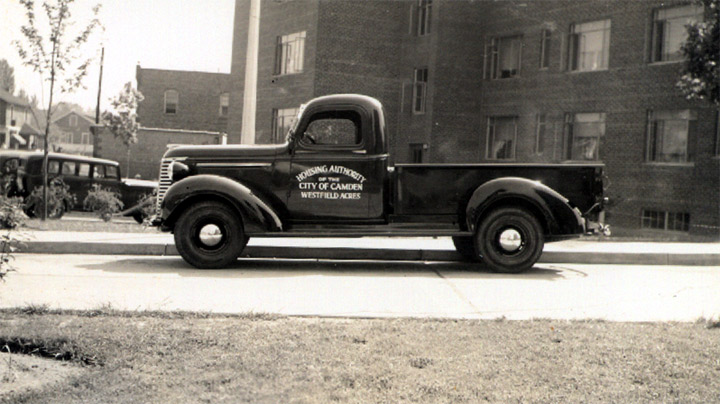
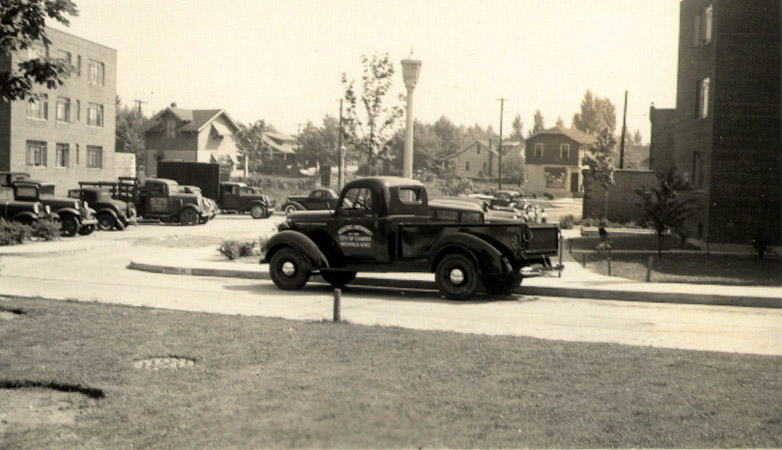
The Housing Authority acquired a new 1939 Chevrolet pickup truck in May of 1939. Having the truck enabled the maintenance staff to pick up trash far more efficiently. Soon after the acquisition, a garage was built by adding on to the Boiler House. Above are two pictures of the truck, parked on Beideman Avenue at Saunders Street.
December 1939 Christmas Decorations
Elmer W. and Catherine Marzi moved to Apartment 22 in May of 1938. These pictures were taken of their Christmas decorations in 1939.
July 1940 — Outdoor Showers
In the summer of 1940 Manager Meyer Wessel arranged to have showers installed in the outdoor play area so the younger children of the Acres could cool off and wade, at a total price of $45.02… the pictures below give evidence to the success of this idea.
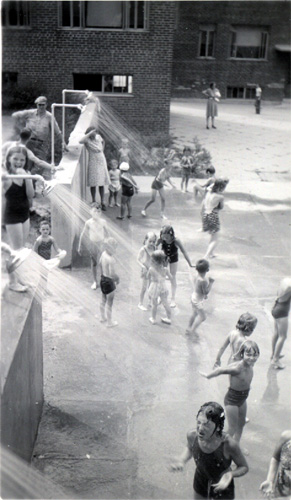
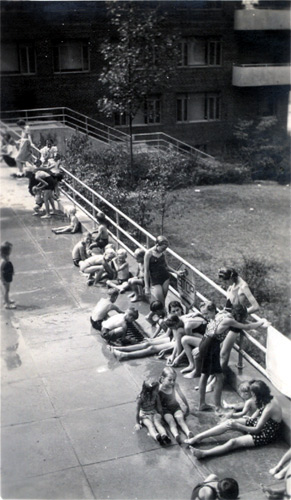
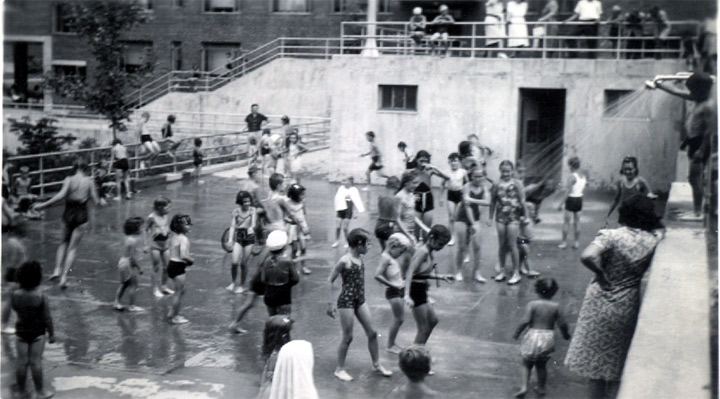
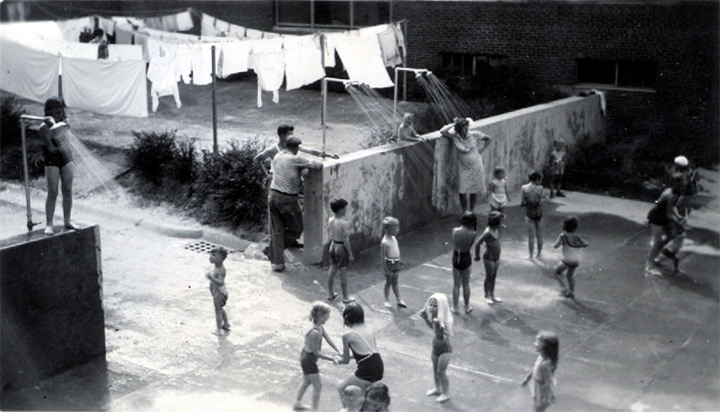
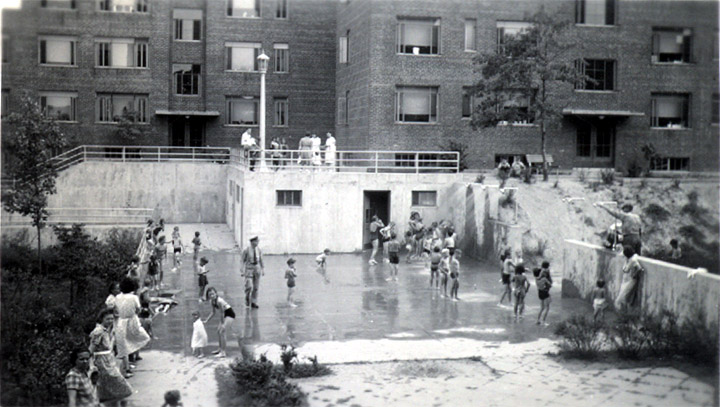
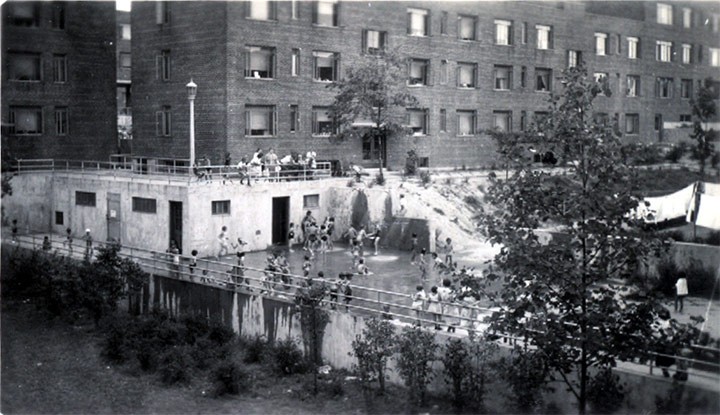
Summer showers installed for children at Westfield Acres, July 1940. Manager Meyer Wessel arranged for the showers at a cost of $45.02.
A Westfield Acres Morning — June 1941
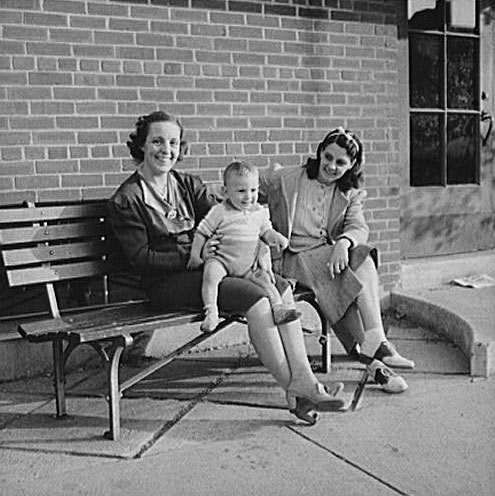
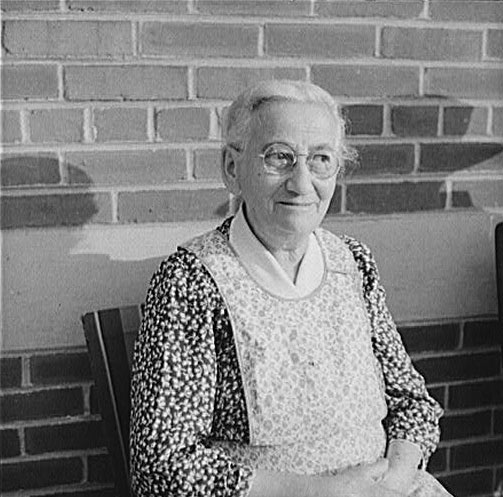
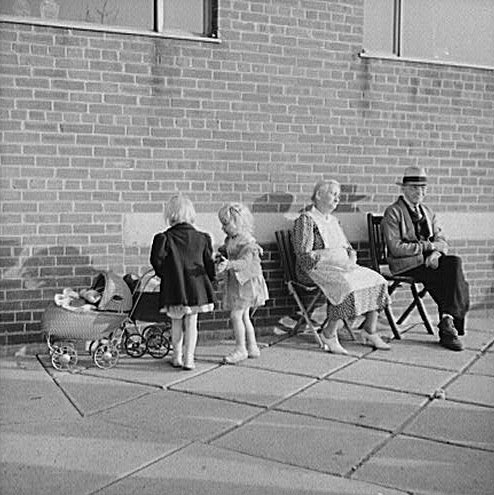
A Westfield Acres morning, June 1941
Memorial Day 1941
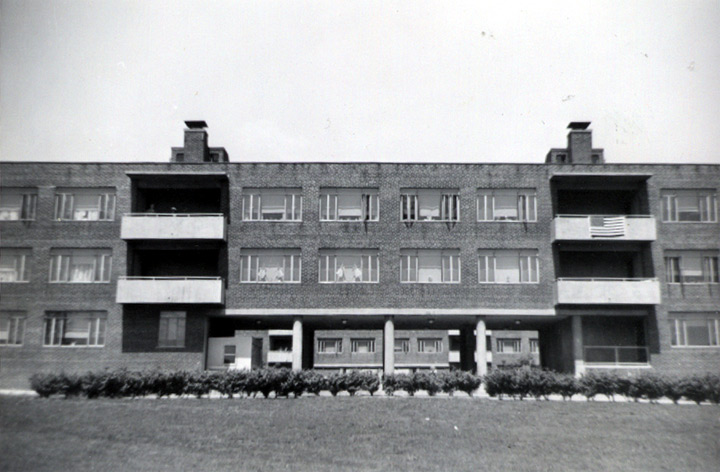


Left: The Acres as viewed from Westfield Avenue. Right: Mary Ellen Soistmann, an “Acres” girl, & Meyer Wessel.
Right: Mrs. Dora Feldman, Apartment 29, a Gold Star Mother. Her son, First Lieutenant Jacob Feldman, was killed under heroic circumstances. He was attached to Company D, 110th Infantry, 28th Infantry Division during World War I. He was mortally wounded on September 12, 1918, near Marancourt, France.
July 4th, 1941
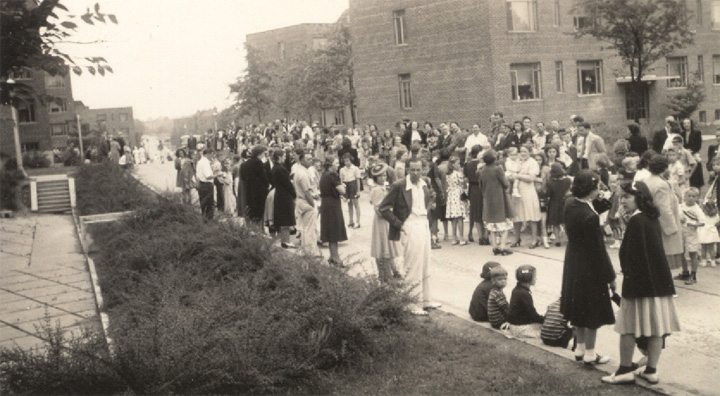
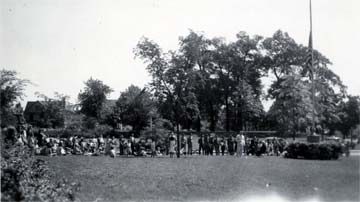


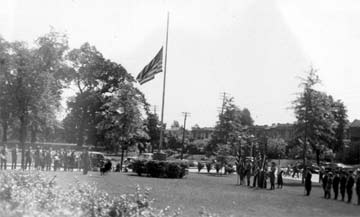
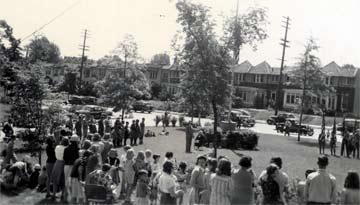


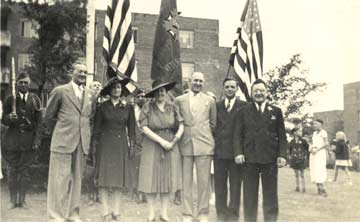


Top row: Waiting for the parade to begin on Beideman Avenue. The lot behind the crowd in the right-hand picture is the site of the present-day Westfield Tower Apartment building.
Baby Parade on Beideman Avenue; Color Guard advancing up Beideman Avenue.
On parade in front of the Acres, from Westfield Avenue & Dudley Street; flag raising exercises, from Westfield Avenue & Dudley Street. View of flagpole from Dudley Street; view of flagpole from an “Acres” balcony.
View of the crowd in front of Building 22 (3159 Westfield Avenue) during the patriotic exercises. The speaker was standing in front of a microphone, beneath the balcony. Picture taken from Westfield and Dudley Avenues.
Participants in the patriotic program. Front Row, from left to right: Meyer Wessel, Westfield Acres Manager; Mrs. George Brunner; Mrs. Mary Ellen Soistmann, Management Aide; Mayor George E. Bruner; Commissioner Burnell S. Hartman; Commissioner John W. Diehl, Chairman, Housing Authority of the City of Camden Board of Commissioners.
Patriotic program as seen from across Westfield Avenue; participants in flag raising exercises just before disbanding.
Westfield Acres Boys Club — July 23, 1941

Westfield Acres Boys Club — Charles Evans
July 1941 — Grounds Improvement
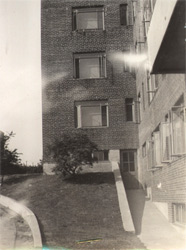
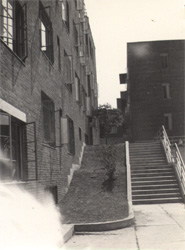
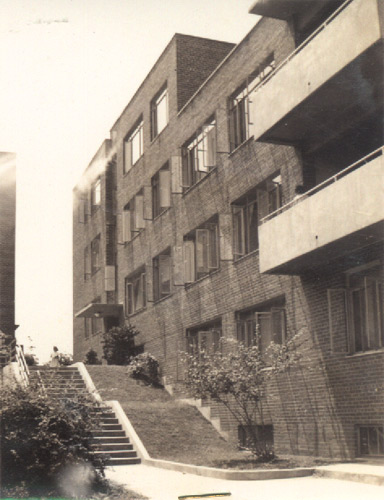
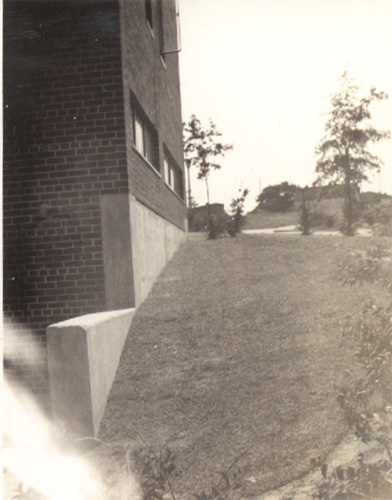
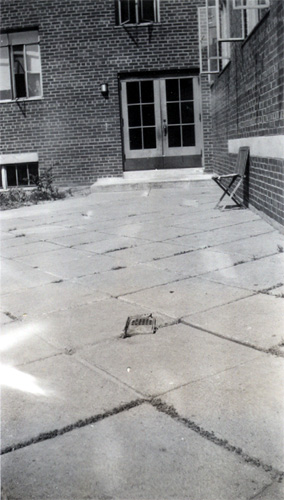
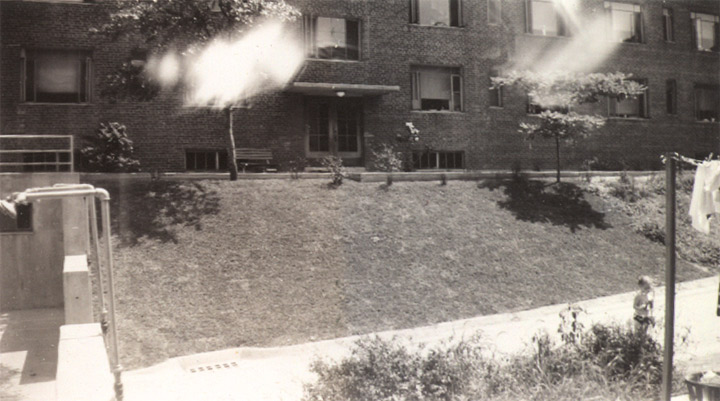
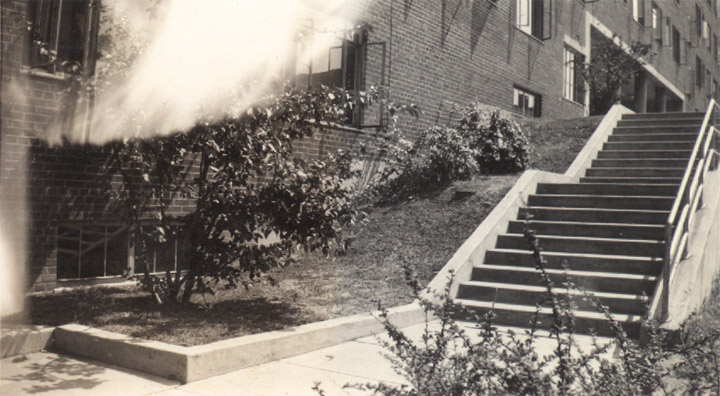
Grounds improvement photographs, July 1941. Erosion was an ongoing problem for groundskeepers at the Acres.
The War Years — 1942–1945
After the article above was published, war production and the draft resulted in changes to the population of Camden and the tenant base at Westfield Acres. As war workers and the sons of tenants were inducted, changes to their family size and income levels resulted in conflicts with the income eligibility rules. Upper management responded in an honorable fashion, and servicemen's families were taken care of, under the direction of Mrs. Mary Ellen Soistmann, who for many years was the manager at Westfield Acres. The first manager was Meyer Wessel.
Phil Cohen, 2003
February 21, 1943 — Service Flag Ceremony
At 2:00 PM on February 21, 1943 a service flag was raised at Westfield Acres to honor the many men who had already gone off to serve in America's armed forces. Attendees included Camden Mayor George E. Brunner, Camden County Clerk Frank J. Suttil, Rabbi F.D. Plotke of Congregation Beth Israel, and the Reverend Francis J. Hagerty of St. Joseph's Catholic Church on Federal Street.
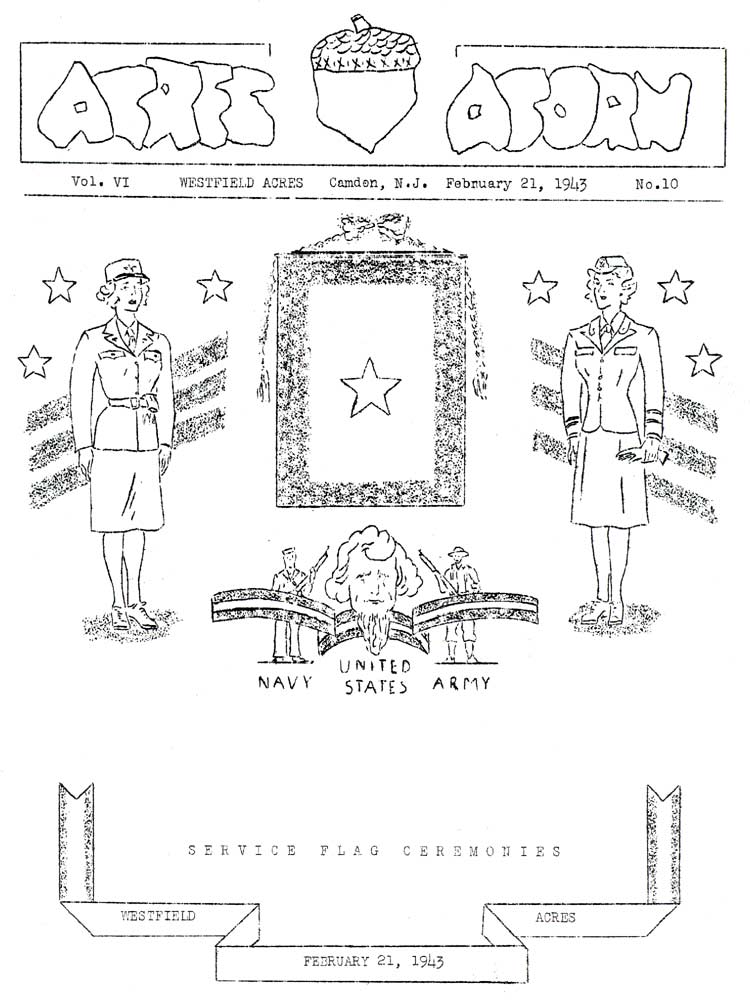
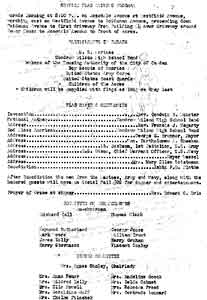
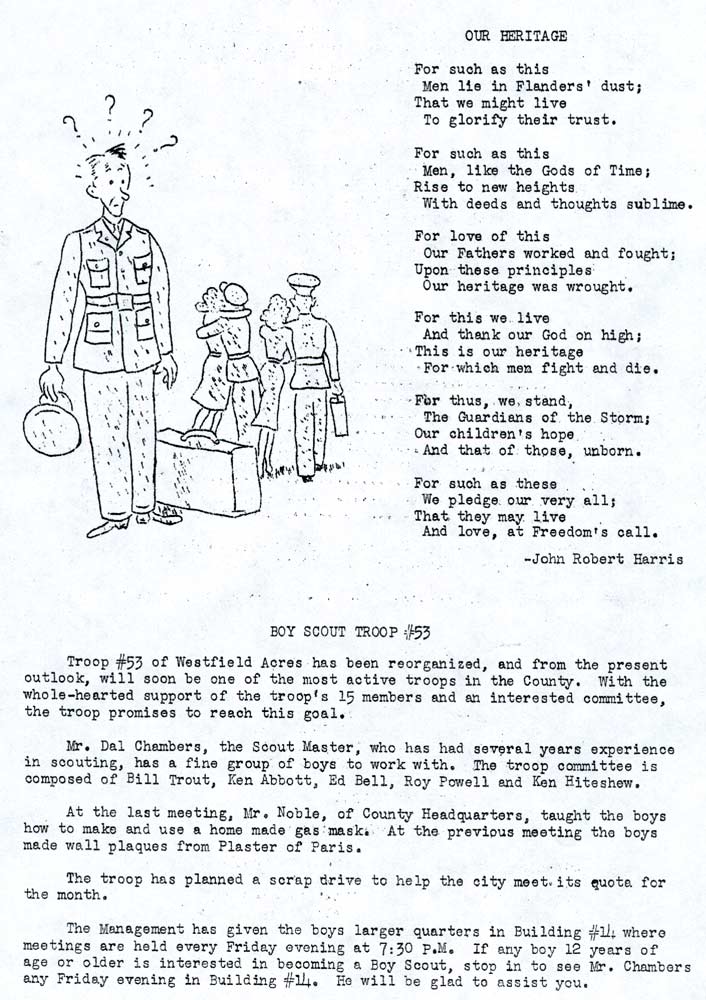
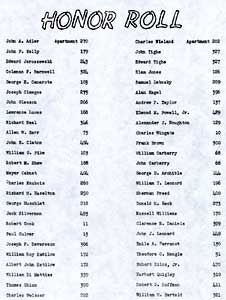
From left: The Acres Acorn — February 21, 1943 Service Flag Ceremonies; Program of Events and Dignitaries; “Our Heritage” & Boy Scout Troop 53; Honor Roll of Westfield Acres men then serving.
Westfield Acres Becoming Haven For Families of Men in Service
Camden Courier-Post — February 2, 1944
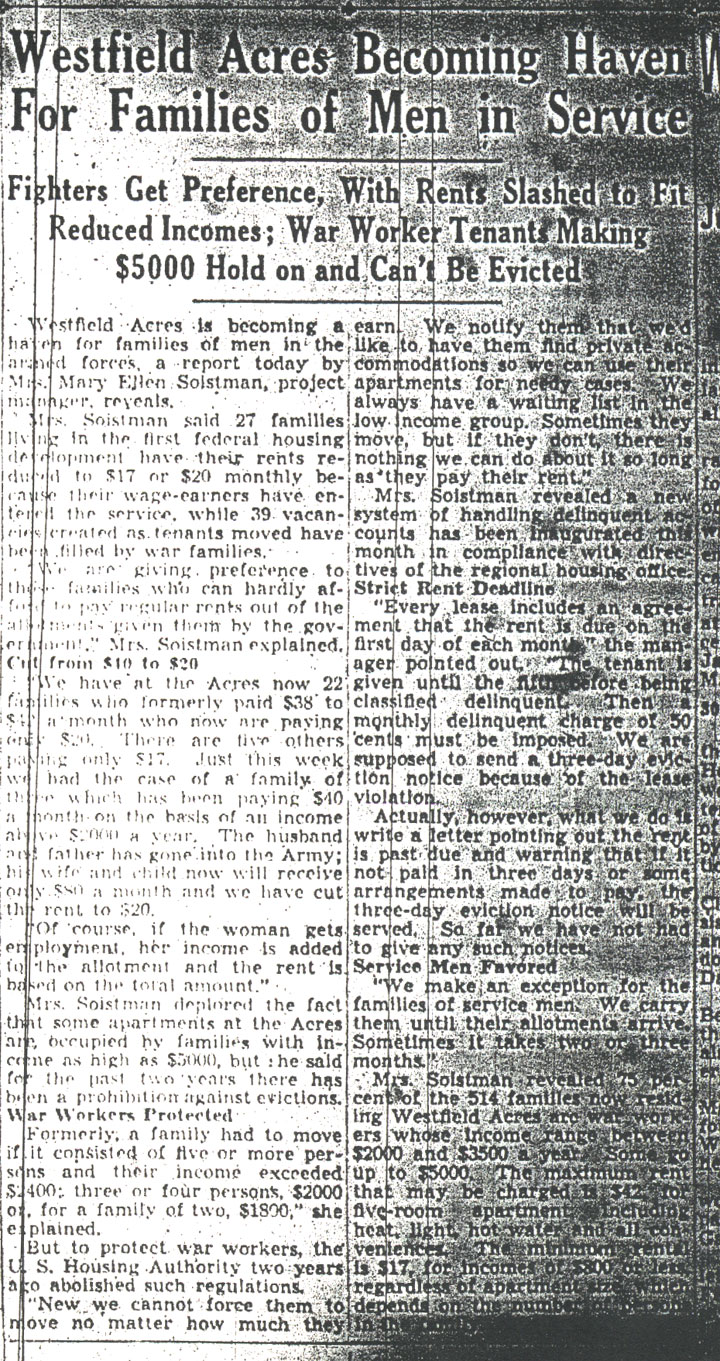
Fighters Get Preference; With Rents Slashed to Fit Reduced Incomes; War Worker Tenants Making $5000 Hold on and Can't Be Evicted
Westfield Acres is becoming a haven for families of men in service, according to a report by Mary Ellen Soistmann, manager of the project. The Authority is giving preference to service men's families by reducing rents from surcharges collected from over-income tenants.
World War II Dead from Westfield Acres

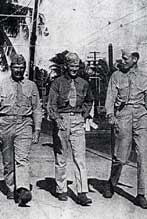


Named: Edward Gondolf, Howard J. Cahill, James Segawa, and Gordon Henderson.
Sadly, more than a few men from the Acres did not return from the war. Westfield Acres war dead include the following:
- Frank Brown, Technical Sergeant, United States Marine Corps
- Howard Joseph Cahill, Private First Class, United States Marine Corps
- John Francis Carberry, Platoon Sergeant, United States Marine Corps
- Edward Gondolf, Private, United States Army
- Gordon Henderson, Private First Class, United States Army
- Harry Horn, Seaman First Class, United States Navy
- Wilbur Charles Keckhut, Fire Controlman Second Class, United States Navy
- William J. Lloyd Jr., Sergeant, United States Army
- James Segawa, Second Lieutenant, United States Army Air Force
Aerial Photograph & Map of Westfield Acres
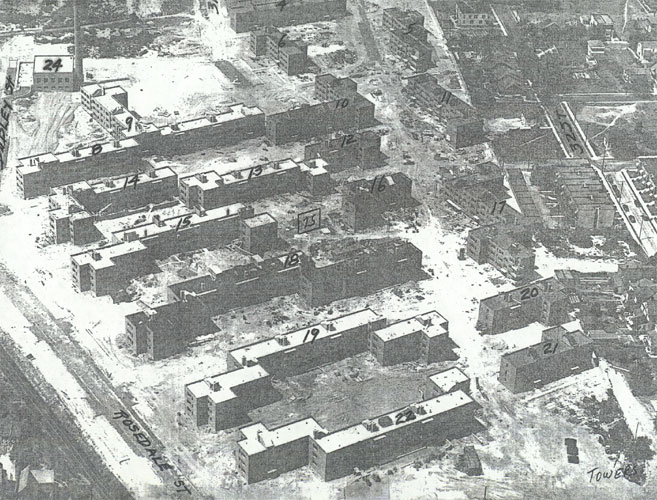
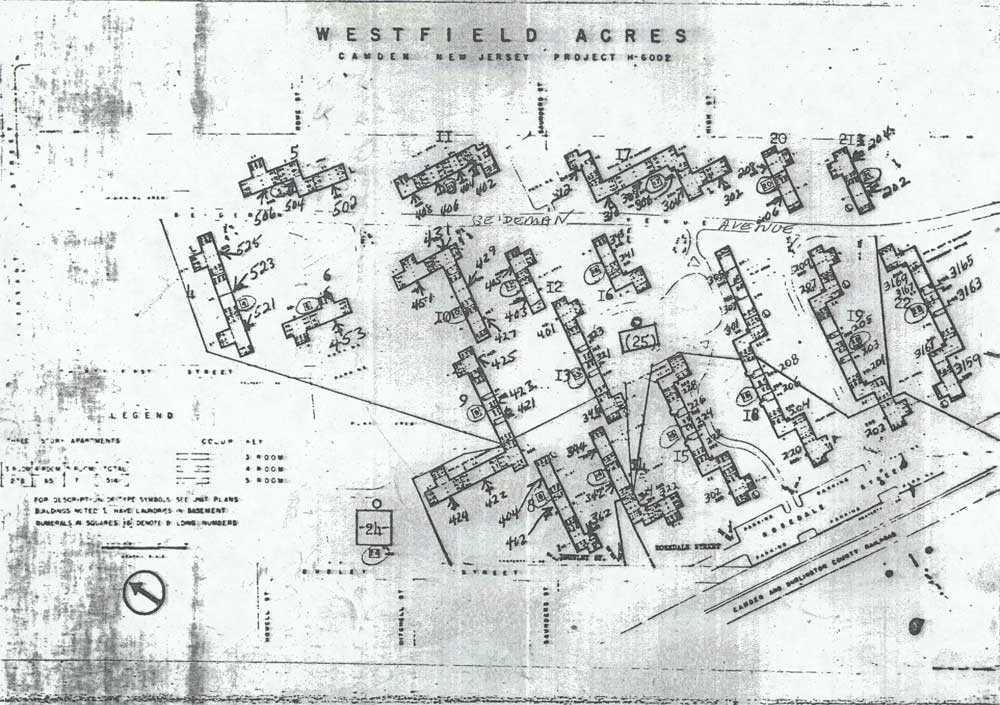
Aerial photograph and map of Westfield Acres
The Post-War Years
The return to the pre-war rules regarding income limits, and the housing shortage in Camden County in the late 1940s caused hard feelings, and as the Housing Authority was a public agency, politics began to encroach on the Authority. Vigilant action by the Board of Commissioners, then chaired by Joseph McComb, kept problems that occurred at Branch and Chelton Terrace from occurring at Westfield Acres.
Phil Cohen, 2003
Charge of Housing Abuses Denied by Authority Here
Camden Courier-Post — August 6, 1946
State Realtors Chief Makes Allegations Of Red Activity; McComb Declares His Statements Were Distorted
A charge of Communist activity within public-housing projects was relayed to Washington today by Clinton B. Snyder, president of the New Jersey Association of Real Estate Boards. In a letter to Federal Housing Administrator Tighe Woods, Snyder again pressed his demand for an investigation of public housing in the state.
Joseph J. McComb, chairman of the Camden Housing Authority, denied the charges: “The deliberate distortion by Snyder of statements made by me, is probably libelous. It is certainly untruthful and unjustifiable.”
“A good example of the results actually achieved by the Camden Housing Authority is shown in the figures on removals from Westfield Acres, a low-income project containing 514 dwellings. There were 175 over-income families in this project and constant pressure by the Housing Authority has brought about the removal of 98 of these families.”
After the war, Westfield Acres experienced some problems with its heating plant, which resulted in a conversion from coal to gas.
New Cold Wave Coming; 'Acres' Residents Shiver
Camden Courier-Post — January 1949

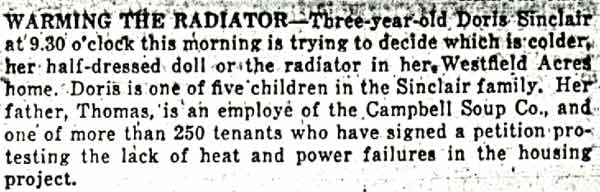
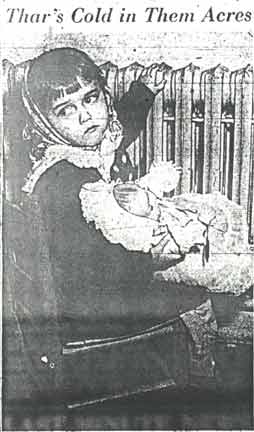
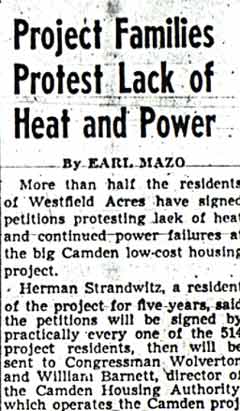
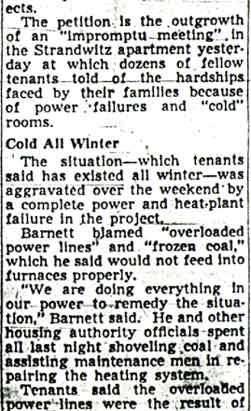
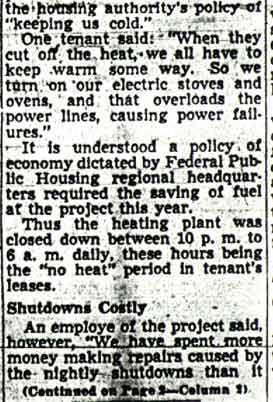
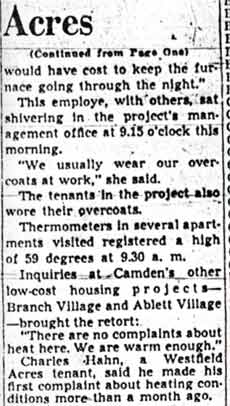
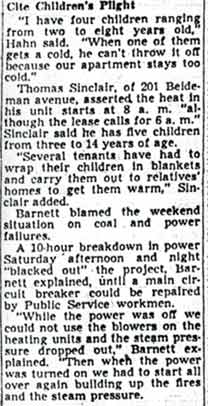
WARMING THE RADIATOR—Three-year-old Doris Sinclair at 9:30 o'clock this morning is trying to decide which is colder, her half-dressed doll or the radiator in her Westfield Acres home. Doris is one of five children in the Sinclair family. Her father, Thomas, is an employee of the Campbell Soup Co., and one of more than 250 tenants who have signed a petition protesting the lack of heat and power failures in the housing project.
Right: Doris “Dorie” Sinclair Craig
The families of many returning veterans set up housekeeping at the Acres, some taking advantage of the subsidized rentals while attending college on the GI Bill. Other Acres families included widows and senior citizens. Over the next two decades, recognition of the need for senior citizens housing resulted in Camden's erection of three high-rise apartment buildings dedicated for senior citizens.
Camden's public housing and public schools had been segregated prior to the beginning of World War II. Westfield Acres and William S. Ablett Village, located at State Street and River Road, were white-only, while Clement T. Branch Village and Chelton Terrace, both located in South Camden, were built for the city's black residents. Desegregation of public housing in Camden occurred in the early 1950s.
Christmas in the Acres
I remember that the entire Acres community would bring their old X-mas trees to the playground and they would burn them all within the framework of the monkey bars. Something you don't see too often anymore!!!
My family lived in the Ares at 525 Beideman Avenue, 2nd floor apartment in the middle, forgot the number… but like yesterday, I have fond memories of the fun we kids use to have, never to be afraid of someone shooting you or attacking you off the playground. I had a girlfriend at 523 on the first floor apartment left side. I had a school mate who I still see at class reunions who lived at 521 on 2nd floor right had side. The kids I grew up with all lived in the Acres
I can remember we use to play hide and seek in the basement of the building it was hugh and NO one person came screaming downstairs to say hey you little…zxsq/!!! go home where you belong. It was great fun. I went to Henry H. Davis School, Cramer Jr. High, and Woodrow Wilson High School.. The Acres was a part of all the kids I grew up with and went to school with. It was a tragedy that they torn down the buildings, I really wanted a BRICK from the Ares for memories sake.. and I couldn’t find anyone to go there and get me one…how sad I was.
The kids I grew up with in the Ares fought, don’t get me wrong, but not like today… cause you fought today, and tomorrow you were friends.
There were kids names like Bumps, Nubby, Hoff, Sleepy, and Ralph and Billy and Carol and Ruth…too
We did things together, even if it was just sitting outside after dinner and talking or eating penny candy or cookies if we had a neighbor who would bake them for us, and we did, Mrs. Hoffman. she was wonderful, we all loved her.
I am amazed at the kids today, who never had that kind of fun like us. Yeah we were gangs to speak, but we had fun, we all played together in the field in front of 525 Beideman Avenue. Tag, baseball, football, kick ball, dodge ball.. or we would walk of to the little grocery store just outside the acres housing and pool our money to buy penny candy and we all had some, mostly bubble gum to see who could make the biggest bubble. We also climbed the trees at the acres, mostly in the back..
It was a great remembrance for me, when we lived in the Acres, I had so many friends, and went to school with all of them, from 2nd grade to High School. The Brick still upsets me, but its the memory of the buildings and the good times, back then, that will happen no more, because of Gangs, Drug Dealers. Wow what a shame..
Hey WESTFIELD ACRES, THANKS FOR THE MEMORIES… I now live in California, and often talk of how we lived in the projects as they called them back then.. but believe me it was a great time, these kids today will never know.
I was 6yrs to 9yrs old when I lived there. A time I will always cherish. I know I sound like a cheerleader for the Acres, but believe me it was a wonderful place to live at the time. Low income families trying to get buy, each family helping one another, I hardly see that today. Wow, sharing your meal with your neighbor and kids.
Wild Auto Rams Wall, Kills Two
Camden Courier-Post —
In E. Camden
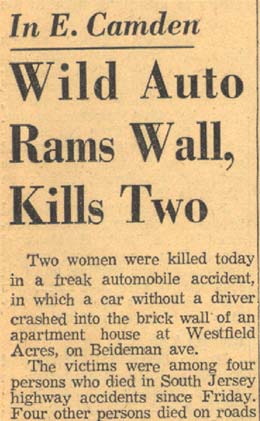
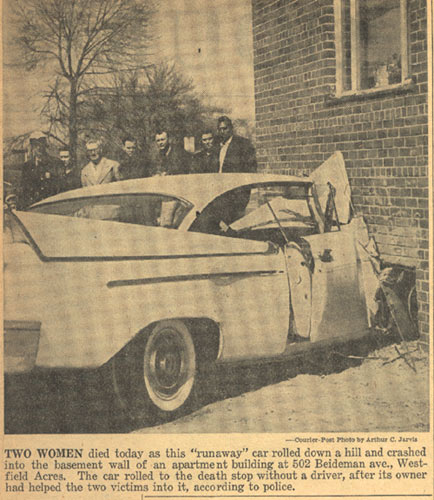
Two women were killed today in a freak automobile accident, in which a car without a driver crashed into the brick wall of an apartment house at Westfield Acres, on Beideman ave.
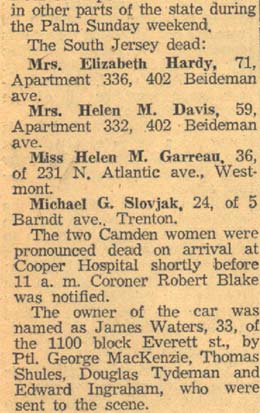
The South Jersey dead: Mrs. Elizabeth Hardy, 71, Apartment 336, 402 Beideman ave.; Mrs. Helen M. Davis, 59, Apartment 332, 402 Beideman ave. The two Camden women were pronounced dead on arrival at Cooper Hospital shortly before 11 a.m.
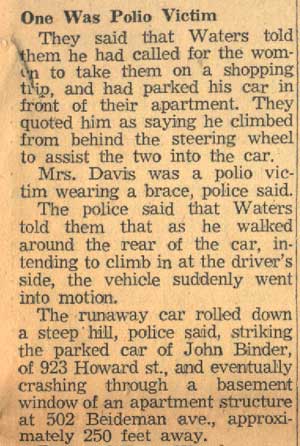
The owner of the car was named as James Waters, 33. They said that Waters told them he had called for the women to take them on a shopping trip, and had parked his car in front of their apartment. He said he climbed from behind the steering wheel to assist the two into the car.
Mrs. Davis was a polio victim wearing a brace, police said. As Waters walked around the rear of the car to climb in at the driver's side, the vehicle suddenly went into motion. The runaway car rolled down a steep hill, striking the parked car of John Binder, of 923 Howard st., and eventually crashing through a basement window of an apartment structure at 502 Beideman ave., approximately 250 feet away.
The victims were removed from the wreckage by police under the direction of Sgt. Roland Cumerford and members of Rescue Squad 1, headed by Capt. Philip Stanger and District Fire Chief Godfrey Patterson. Mrs. Hardy is survived by two sons, Frank and Robert, both of Camden, and two daughters, Mrs. Catherine Howsare and Mrs. Mary Carnahan, both of Pittsburgh.
The 1980s & 1990s
The fate of Westfield Acres paralleled that of the rest of the City of Camden in the 1970s, 1980s, and 1990s. As the Acres was always intended as housing for the poor, the increased social problems that accompanied the urban poor in these years complicated the mission of management to keep Westfield Acres a decent place to live. The arrival of crack cocaine in Camden during the winter of 1985–1986 made a bad situation worse, and corruption and mismanagement at the Housing Authority of the City of Camden through August of 1999 made the situation virtually impossible. It also must be noted that the reluctance of judges at Camden’s landlord tenant court to evict disruptive tenants did not make the situation easier… while a disruptive family may not have been made homeless, their actions also made decent life impossible for their neighbors, and this fact was (and still is) generally ignored by the judges of this court. While millions of dollars were poured into rehabilitation projects at the Acres in the 1980s and 1990s, many of these projects were poorly conceived and poorly executed.
Phil Cohen, 2003
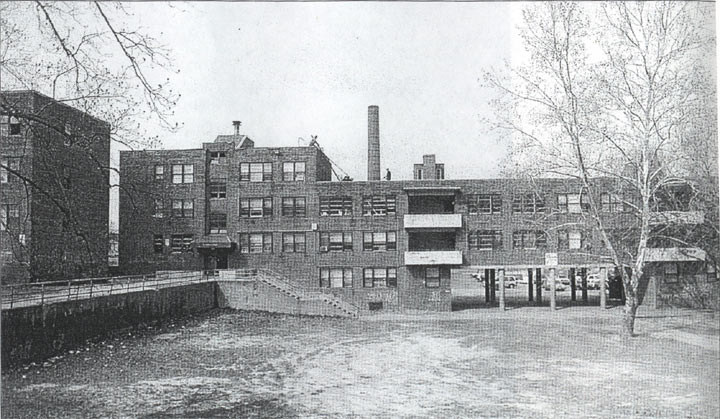
Westfield Acres — 1995
While the buildings at Westfield Acres remained structurally sound, many had been literally taken over by drug dealers and criminals, and the management at the Housing Authority in the 1990s lacked the commitment, skills, and resources to address the problem. During this period the federal department of Housing and Urban Development stepped in and took over management of the Housing Authority from the local politicians who had served their community so badly. With the buildings falling into disrepair and control of the property rapidly eroding, a decision was made to raze the project and replace it. This process began in 1998. It was delayed, as the first two administrations put in place by HUD were little better ethically or competency-wise than the corruption-riddled one that they replaced. A federal grant was obtained for demolition and the relocation of the residents and demolition of Westfield Acres began in 1998. The 200 and 300 blocks of 32nd Street were also demolished as part of the new development.
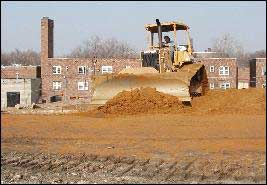
Demolition on North 32nd Street; Westfield Acres in background
In August of 1999, HUD stepped in again, and turned management of the Housing Authority of the City of Camden over to Dr. Maria Marquez. This marked a change, as Dr. Marquez was a Camden resident, and not politically tied to previous administrations or any other local political organization. Dr. Marquez was given 30 days to effect changes at the Authority, or it would be placed in receivership. She successfully instituted changes at the Agency, and receivership was avoided. Demolition of Westfield Acres was completed in 2001.
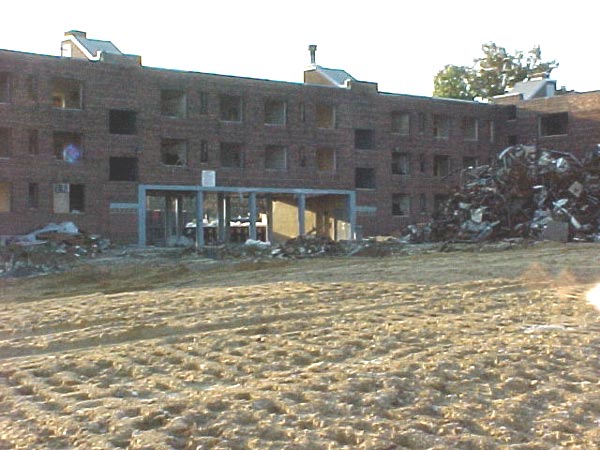
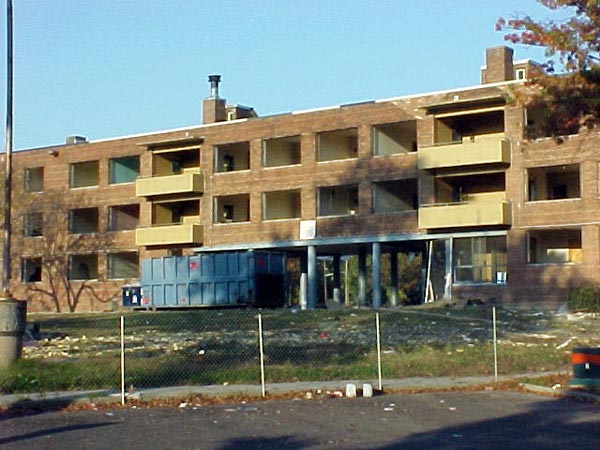
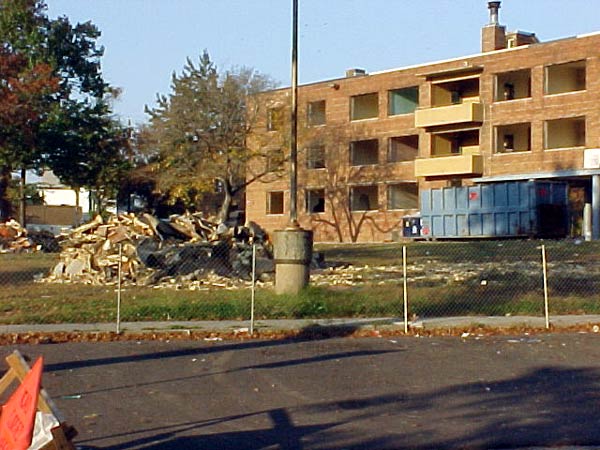

The demolition of Westfield Acres, 2001
Under Dr. Marquez' leadership, a $35,000,000 grant was obtained to rebuild housing at Westfield Acres in 2000. Renamed Baldwin's Run, the new community—a mixture of privately owned homes, market level rentals, and low-income housing—saw its first residents arrive in the spring of 2003.
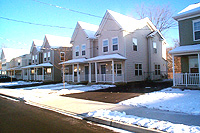
New homes at Baldwin's Run, 2003