Introduction
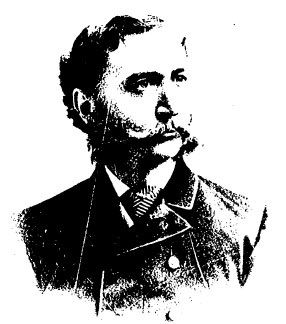
Dr. Henry Genet Taylor
DR. HENRY GENET TAYLOR was born on July 6, 1837. He was a grandson of Citizen Genet, France’s first ambassador to the United States, and a nephew of Governor DeWitt Clinton of New York. His father, Dr. Othniel Hart Taylor, was a distinguished physician who had a long career in Camden.
After completing his medical studies at the University of Pennsylvania, Dr. Taylor opened an office in Camden NJ in 1860. When the Civil War broke out, Dr. Taylor soon was enlisted in the Eighth New Jersey Regiment. He rose to the post of Brigade Surgeon of the artillery of the III Corps, Army of the Potomac, and served under Major Generals Hooker, French, and Sickles. He left the Army in March of 1864, but remained connected with the military as an examiner of draftees and with the National Guard of New Jersey as late as 1887.
Dr. Taylor was a founder of Camden’s first hospital, the Camden Dispensary. He served as Physician-in-Chief at the Camden Home for Friendless Children, and was on the Board of Directors of Cooper Hospital from its founding through at least 1897.
Dr. Taylor was on the original staff of Cooper Hospital when it was founded in 1884, and when it was dedicated on August 12, 1887. The four original attending physicians were Dr. Dillwyn Pancoast, Dr. H. Genet Taylor, Dr. Alexander M. Mecray, and Dr. William A. Davis. The surgeons were Doctors E.L.B. Godfrey, O.P. Cross, Dowling Benjamin and J.F. Walsh, with Dr. Joseph H. Willis as the original pathologist and Dr. Harry B. Jarrett serving as the first Resident Physician.
In April of 1893 Dr. Taylor was elected President of the Board of Managers of the New Jersey Training School for Nurses.
Dr. Taylor was a member and officer of many professional and fraternal organizations. He was a charter member of Trimble Lodge, No. 117 Free and Accepted Masons, and also was a member of the Camden County Historical Society.
In 1885 Dr. Taylor had built a home on Cooper Street, designed by prominent Philadelphia architect Wilson Ayre, at 305–307 Cooper Street. This house, as part of the Cooper Street Historic District, was added in 1989 to the National Register of Historic Places.
One of the most noted physicians in Camden in his day, Dr. Taylor cared for many prominent citizens, including Senator William Joyce Sewell.
Dr. Henry Genet Taylor passed away early in 1916, survived by his wife, Helen and a son, Henry Genet Taylor Jr. The Taylor family remained at 305 Cooper Street in Camden as late as 1959.
Camden Lodge, No. 1
Ancient Order of United Workmen
Virgil Willett was a longtime member of New Jersey Lodge No. 1, Independent Order of Odd Fellows and of Camden Lodge, No. 1, Ancient Order of United Workmen. George Reeser Prowell wrote the following in his History of Camden County, New Jersey which was published in 1886:
Ancient Order of United Workmen.
The object of this order is to embrace and give equal protection to all classes and kinds of labor, mental and physical; to strive earnestly to improve the moral, intellectual and social condition of its members; to create a fund for the benefit of its members during sickness or other disability, and, in case of death, to pay a stipulated sum for each member, thus guaranteeing his family against want. Its jurisdictions are a Supreme Lodge, Grand and Subordinate Lodges. The Grand Lodge of Maryland, New Jersey and Delaware is thus officered: G. M. W., John J. Gallagher, of Wilmington, Del.; G. F., William H. Vermilye, Jersey City, N. J.; G. O., James A. Vansant, Camden, N. J.; G. G., John W. Diefendorf, Wilmington, Delaware; G. R., A. F. Colbert, Baltimore; G. Receiver, Myer Hirsch, Baltimore; G. M. E., G. S. Wilkins, M.D., Baltimore.
Camden Lodge, No. 1. was chartered January 27, 1879, with these officers: Master Workman, Joseph R. Leaming; Foreman, Charles Markley; Overseer, George W. Coles; Recorder, Harry Ladow; Financier, William Thegen; Receiver, Albert P. Brown; Guide, William P. Partenheimer; Inside Watchman, Benjamin M. Denny; Outside Watchman, William Jones; Medical Examiner, H. Genet Taylor, M.D. These were also charter members, Moore Beideman, Robert L. Barber, John F. Benner, De Witt C. France, Joel H. Evaul, Henry S. Fortiner, George R. Fortiner, Howard L. Gandy, Merritt Horner, William Struthers, Benjamin G. Smith, William H. Stans bury, Marmaduke B. Taylor, Frank S. Wells, John S. Wells. The lodge has one hundred and forty-eight members, with these officers: Past Master Workman, J. C. Prickett; Master Workman, Virgil Willett; Foreman, J. H. Le Chard; Overseer, R. R. Lewellen; Receiver, W. R. Lun drum; Financial Secretary, Charles Markley; Recording Secretary, John Woltjen; Guide, J. S. Pike; Inside Watchman, John W. Clopper, Jr.; Outside Watchman, J. H. Evaul; Medical Examiner, E. R. Smiley, M.D.
Camden City Dispensary
Philadelphia Inquirer —
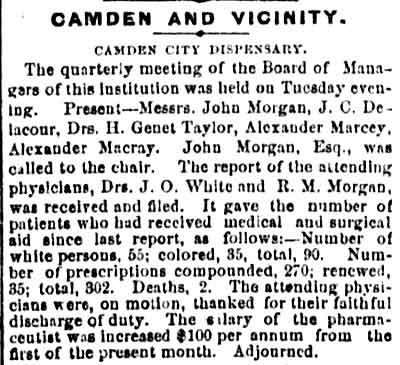
CAMDEN AND VICINITY.
CAMDEN CITY DISPENSARY.
The quarterly meeting of the Board of Managers of this institution was held on Tuesday evening. Present—Messrs. John Morgan, J. C. Delacour, Drs. H. Genet Taylor, Alexander Marcey, Alexander Macray. John Morgan, Esq., was called to the chair. The report of the attending physicians, Drs. J. O. White and R. M. Morgan, was received and filed. It gave the number of patients who had received medical and surgical aid since last report, as follows:—Number of white persons, 55; colored, 35, total, 90. Number of prescriptions compounded, 270; renewed, 35; total, 302. Deaths, 2. The attending physicians were, on motion, thanked for their faithful discharge of duty. The salary of the pharmaceutist was increased $100 per annum from the first of the present month. Adjourned.
St. Paul's Episcopal Church Elections
Philadelphia Inquirer —
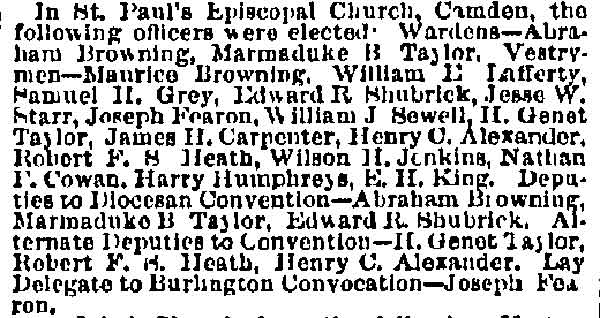
In St. Paul’s Episcopal Church, Camden, the following officers were elected: Wardens—Abraham Browning, Marmaduke B. Taylor. Vestrymen—Maurice Browning, William H. Lafferty, Samuel H. Grey, Edward R. Shubrick, Jesse W. Starr, Joseph Fearon, William J. Sewell, H. Genet Taylor, James H. Carpenter, Henry C. Alexander, Robert F. S. Heath, Wilson H. Jenkins, Nathan F. Cowan, Harry Humphreys, E. H. King. Deputies to Diocesan Convention—Abraham Browning, Marmaduke B. Taylor, Edward R. Shubrick. Alternate Deputies to Convention—H. Genet Taylor, Robert F. S. Heath, Henry C. Alexander. Lay Delegate to Burlington Convocation—Joseph Fearon.
Biographical Review
1897
HENRY GENET TAYLOR, A.M., M.D., Chairman and Secretary of the Board of Physicians and Surgeons of the Cooper Hospital, Camden, N.J., has had a distinguished career, beginning his serious professional work among the wounded and disease-stricken soldiers at the time of the Civil War. He was born July 6, 1837, at Charmantot, Rensselaer County, N.Y., in the house of his uncle, General Henry James Genet.
This gentleman was the eldest son of “Citizen Genet,” the first ambassador from France to this country, who married a daughter of Governor Clinton of New York. Dr. Taylor’s parents were Dr. Othniel Hart and Evelina (Burrough) Taylor. Othniel Hart Taylor, M.D., was a graduate of the University of Pennsylvania, and for a quarter of a century one of the foremost medical men of New Jersey. In 1852 he was President of the New Jersey State Medical Society, and he was one of the founders of the Camden City Dispensary and the Camden City and County Medical Societies. Dr. Taylor’s mother was a member of the well-known Burrough family, who came originally from England, settled first in Long Island, and as early as 1693 located in West Jersey.
Henry Genet Taylor acquired his early education in the Camden city schools and the Protestant Episcopal Academy at Philadelphia. He studied medicine at the University of Pennsylvania, graduating in 1860, and the same year opened an office in Camden. The day following the disastrous first battle of Bull Run, July 21, 1861, he went to Washington by request of his preceptor in surgery, Professor Henry H. Smith, at that time Surgeon-general of Pennsylvania, and was soon fully occupied caring for the wounded. Once enlisted in this work, his services were in constant demand; and in September, 1861, he received a commission as Assistant Surgeon of the Eighth New Jersey Regiment. The following year, during the Peninsular Campaign, he was the only medical staff officer of his regiment in the field. He was on duty at the second battle of Bull Run, or Manassas, August 29, 1862, when the storm of carnage lasted from early morning until nightfall, and the brave men fell “thick as leaves in Vallombrosa”; and after the battle he remained ten days within the rebel lines, and they accompanied the wounded under his charge to Washington. Soon after the engagement at Antietam he was made Brigade Surgeon of the artillery of the Third Army Corps, and served on the staff of Major-generals Hooker, French, and Sickles. In March, 1864, he retired from army service and resumed his professional work in Camden; but he was not allowed to remain in the privacy of local practice, for he was soon made Assistant Surgeon of the Board of Enrolment for the First Congressional District, and had charge of the medical examination of candidates for the service until the close of the war. From 1869 till 1882 he was Surgeon of the Sixth Regiment of the National Guard of New Jersey; and during the strike of 1887 he was Surgeon of the Provisional Brigade on the staff of Major-general William J. Sewell.
Dr. Taylor was one of the founders of the Camden Dispensary, with which he is now connected as consulting physician; and he has for a number of years been its secretary. He is physician-in-chief of the Camden Home for Friendless Children, and has been Chairman and Secretary of the Board of Physicians and Surgeons, and a member of the Board of Managers of the Cooper Hospital since its establishment. He is President of the New Jersey Training School for Nurses, and delivers lectures on nursing and holds clinics at the hospital during his term of service. From 1861 to 1888 he was Secretary of the Camden County Medical Society, though unable to attend to the duties of his office while serving in the army; and he was President in 1865. When he resigned his office the County Society presented him with a set of engrossed resolutions and a handsome service of silver. He has also been President of the Camden City Medical Society, and he served as its Secretary for a number of years. In 1889 he was chosen President of the New Jersey State Medical Society, and the same year he received from Rutgers College the degree of Master of Arts. He is a member of the American Medical Association, the Pennsylvania Historical Society, the New Jersey Historical Society, the New Jersey Sanitary Association, the New Jersey Academy of Medicine, and the Military Order of Surgeons of New Jersey. As a writer on professional subjects he has won distinction; and his papers, read before the societies of which he is a member, have attracted considerable attention.
Dr. Taylor was married October 23, 1879, to Helen, daughter of Alexander and Hannah C. (Cooper) Cooper, of Haddonfield, N.J., and grand-daughter of Captain James B. Cooper, United States Navy. Captain Cooper distinguished himself in the Revolutionary War, and afterward entered the United States Navy. During the War of 1812 he had charge of the gunboats of our navy along the New Jersey coast; and a few years prior to his death he was Superintendent of the Naval Asylum at Gray’s Ferry, Philadelphia. Dr. Taylor has two children — Henry Genet and Richard Cooper.
The Doctor is a member of the Grand Army of the Republic; the Loyal Legion; the Sons of the Revolution; charter member of Trimble Lodge, No. 117, A. F. & A. M.; and other prominent social organizations. He has travelled both in this country and in Europe, and is a true citizen of the world. His residence, which was planned by architect Wilson Ayre, of Philadelphia, and erected eight years ago, is one of the handsomest dwellings in Camden County. Made of stone and brick, it is modelled after a chateau in France, and has many original features. It is three and a half stories high, and forty feet wide, extending back seventy-five feet, and contains twenty rooms.
Camden County Medical Society
Philadelphia Inquirer —
INTERESTING NEWS OF A DAY IN CAMDEN
The Camden County Medical Society at its annual meeting in Camden yesterday was presented with a portrait in oil of the late Dr. Alexander Mecray by the widow, Mrs. Lydia Mecray. These officers were elected: President, William Wescott; vice president, Joel W. Fithian; secretary, Paul Mecray; treasurer, S. G. Bushey; historian, Alfred Cramer; reporter, Ezra Sharp; censor, D. W. Blake; trustee, H. G. Taylor.
Funeral of Former Judge Voorhees
Philadelphia Inquirer —
Former Judge Peter V. Voorhees was buried from his home, 315 Cooper street, Camden, yesterday. The services were in charge of Rev. R. E. Brestell, rector of St. Paul’s P. E. Church. The pall-bearers were Dr. H. Genet Taylor, Dr. Paul H. Markley, Richard H. Reeve, Augustus Reeve, Watson Depuy, Howard M. Cooper, Alexander C. Wood and Ephraim Tomlinson. Interment was made at Evergreen.
305 Cooper Street
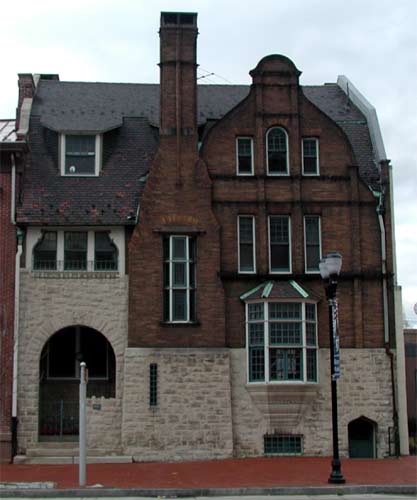
305 Cooper Street — February 7, 2004
Dr. Henry Genet Taylor House at 305–307 Cooper Street
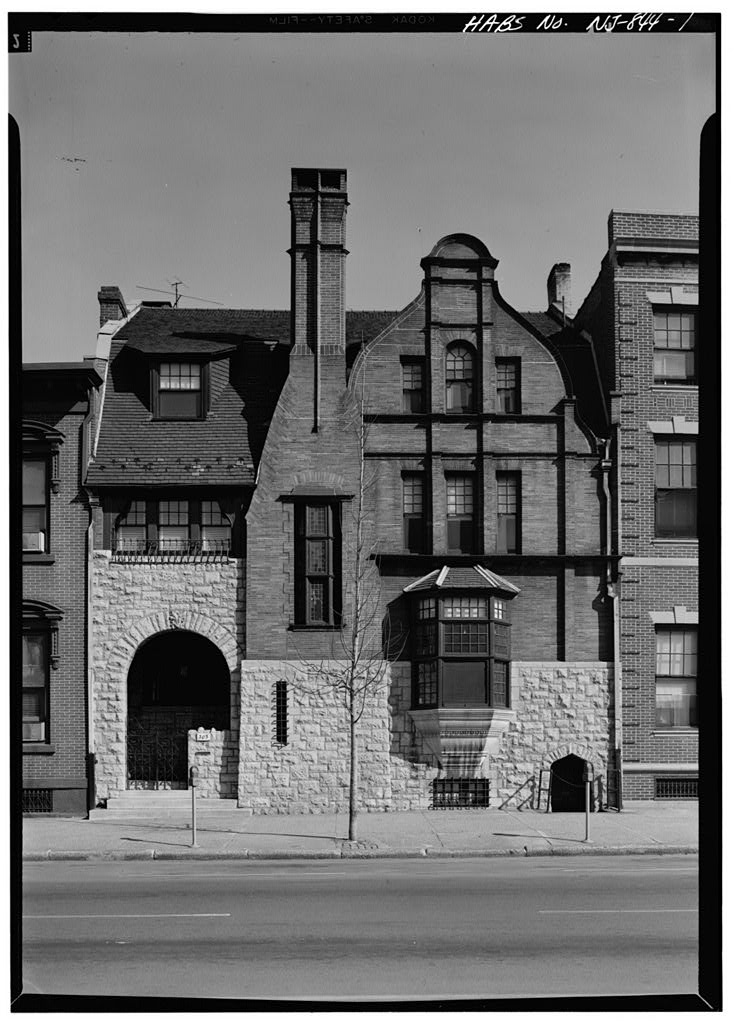
Dr. Henry Genet Taylor House at 305–307 Cooper Street
Click Here for 22 more images of the Dr. Henry Genet Taylor House at the Library of Congress.
Regimental History: New Jersey, Eighth Infantry
(Through Dr. Henry Genet Taylor’s time in service)
Eighth Infantry.—Cols., Adolphus J. Johnson, John Ramsey; Lieut.-Cols., Thomas L. Martin, Joseph Trawin, William Ward, John Willian, Henry Hartford; Majs., Peter M. Ryerson, William A. Henry, George Hoffman, Virgil M. Healey, Louis M. Morris.
This regiment was organized under the provisions of an act of Congress, approved July 22, 1861, and was fully organized, officered and equipped by Sept. 14, at which time it was mustered into the service of the United States, for three years, at Camp Olden, Trenton. It left the state on Oct. 1, with 38 officers, 851 non-commissioned officers and privates, a total of 889.
Upon arrival at Washington it went into camp at Meridian hill, and there remained until the early part of December, 1861, when it was ordered to report to Gen. Joseph Hooker, near Budd’s Ferry, Md., where the 5th, 6th, 7th and 8th N. J. regiments were brigaded and designated the 3d brigade of Hooker’s division, generally known as the 2nd New Jersey brigade.
The regiment received its initiation into actual warfare at the battle of Williamsburg, where with the 6th and 7th it was sent into a wood in front of a line of field-works. Among the killed in that battle was Maj. Ryerson, while among the wounded were a large number of officers, including Col. Johnson. Gen. Hooker, in his report of the battle of Fair Oaks, testified in the most emphatic terms to the gallantry of the brigade and added that the service assigned to the 7th and 8th in the rear was performed to his entire satisfaction. The loss of the regiment at Fair Oaks or Seven Pines was 1 killed and 6 wounded.
In the engagement at Bristoe Station Lt. Col. Ward was wounded in the arm and side, and Capt. J. Tuite was killed. In the series of engagements ending at Chantilly on Sept. 1, 1862, the regiment lost 25 men.
In the formation of troops for the battle of Chancellorsville, the New Jersey brigade, which at that time included the 2nd N. Y., 115th Pa., 5th, 6th, 7th and 8th N. J., under command of Gen. Mott, crossed the Rappahannock on May 1. The 5th and 8th N. J. were detached to guard the pontoons, while the others were picketed along the Rappahannock to its junction with the Rapidan and thence along that river to connect with pickets thrown out by Carr’s 1st N. Y. brigade. Mott received instructions directing him to guard the ford, Seeley’s battery being placed at his disposal. At 6 o’clock on the morning of May 3, the battle opened with skirmishing on the left, and it soon extended along the entire front, accompanied by a hot artillery fire from the enemy, the first shot from the latter’s guns killing 2 men of the 8th. At one period of the engagement, a section of artillery belonging to Dimmick’s regular battery, 1st artillery, being in danger of capture, all the cannoneers and horses having been killed, Gen. Mott dispatched Capt. Nichols with a detachment of the 8th to bring it off by hand. The battery was rescued, the gallant heroes of the 8th, with the brave Capt. Nichols, bringing the guns safely into the lines. The losses of the regiment were 21 killed, 96 wounded and 10 missing, Col. Ramsey being among the wounded.
On June 25, 1863, a large number of the 8th reenlisted in the field, for three years or during the war, and those who did not reenlist and whose term of service had expired were mustered out at Trenton, Sept. 21, 1864.
On the Second Day of the Battle of Gettysburg (July 2, 1863) the 8th New Jersey Infantry was detached from its brigade and sent to the Rose Woods next to the Wheatfield as some of the first troops to defend the area from the attacking Confederates.
Those who had reenlisted in 1863 who remained were consolidated into the 8th battalion and so remained until Oct. 12, 1864, at which time the 6th battalion was joined to it by transfer. The command then resumed its regimental organization, which it continued until the close of the war, the regiment being finally mustered out at Washington, July 17, 1865. The total strength of the regiment was 2,795, and it lost, by resignation 35, by promotion 56, by discharge 431, by transfer 336, by death 284, by dismissal 4, by desertion 416, not accounted for 247, mustered out, 986.
Source: The Union Army, vol. 3
Battles Fought
Fought at Williamsburg, VA.
Fought on 05 May 1862 at Williamsburg, VA.
Fought on 01 June 1862 at Fair Oaks, VA.
Fought on 16 June 1862 at Fair Oaks, VA.
Fought on 28 June 1862 at Hospital, Fair Oaks, VA.
Fought on 28 June 1862 at White Oak Swamp, VA.
Fought on 29 June 1862 at Fair Oaks, VA.
Fought on 27 August 1862 at Bristoe Station, VA.
Fought on 29 August 1862 at 2nd Bull Run, VA.
Fought on 30 August 1862 at 2nd Bull Run, VA.
Fought on 03 May 1863 at Chancellorsville, VA.
Fought on 02 July 1863 at Gettysburg, PA.