Introduction
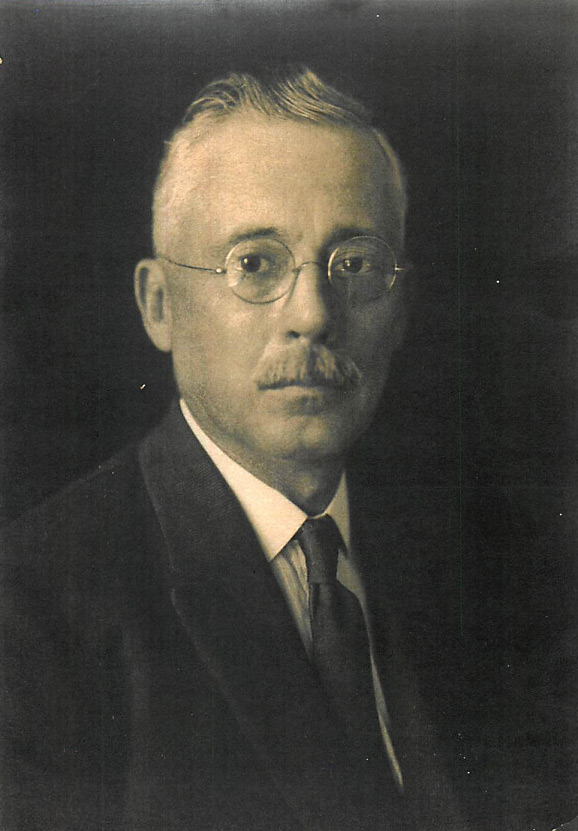
Dr. Rowland I. Haines
Dr. Rowland I. Haines was a Camden physician who practiced in the downtown area in the early 20th century. He was among the city’s first automobile owners, driving one of the small red runabouts that clattered through the streets around 1903, alongside Dr. Wilson G. Bailey and William Lockney Hurley. These early “gas buggies” were regarded with suspicion by old-timers who called them “devil wagons” and “bubbling trains to annihilation.”
Dr. Haines was associated with St. John’s Episcopal Church and was mentioned in connection with various civic and social activities in Camden during the 1900s through 1920s.
Accident on Spruce Street
Philadelphia Inquirer —
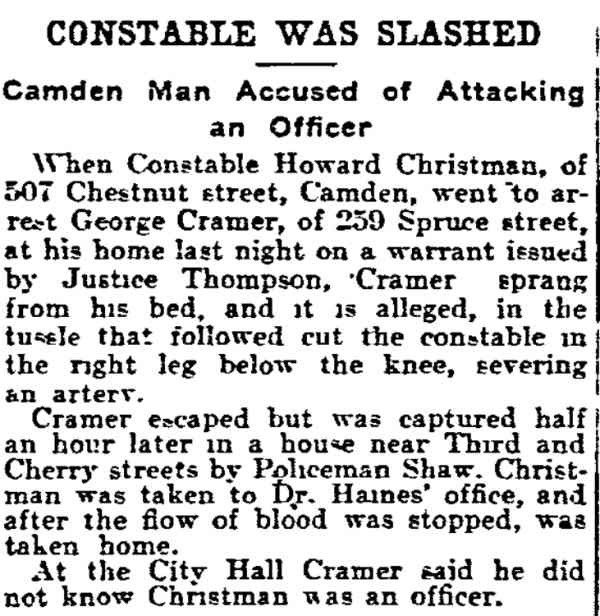
Named: George Cramer, Howard Christman, Chestnut Street, Albert Shaw, Dr. Rowland I. Haines, and Spruce Street.
Auto Owners Gather
Camden Daily Courier —
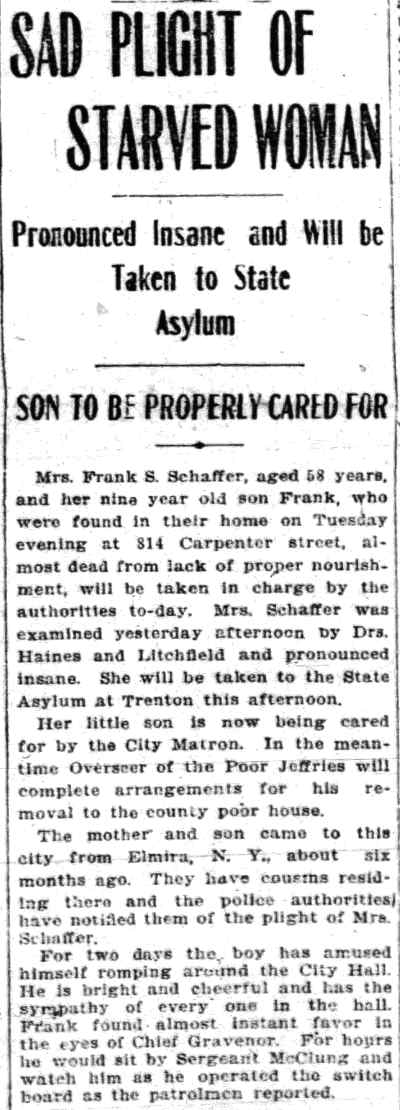
Named: Elisha A. Gravenor, E.E. Jefferis, Frank Schaffer, Carpenter Street, Dr. Rowland I. Haines, Dr. Paul N. Litchfield, and Elbridge B. McClong.
St. John's Episcopal Church
Philadelphia Inquirer —
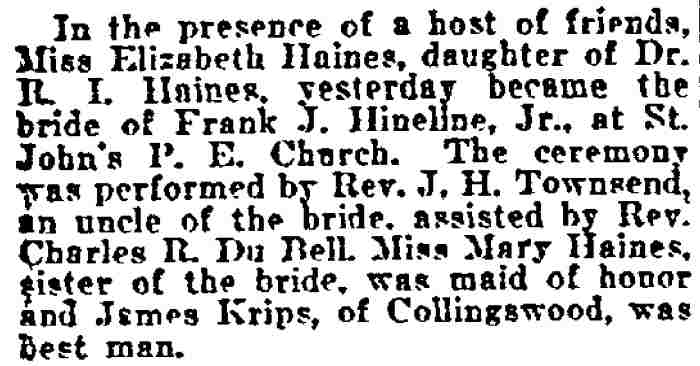
In the presence of a host of friends, Miss Elizabeth Haines, daughter of Dr. R. I. Haines, yesterday became the bride of Frank J. Hineline, Jr., at St. John’s P. E. Church. The ceremony was performed by Rev. J. H. Townsend, an uncle of the bride, assisted by Rev. Charles R. Du Bell. Miss Mary Haines, sister of the bride, was maid of honor and James Krips, of Collingswood, was best man.
Reminiscences of Early Automobile Days in Camden
Evening Courier —
By Ben Courter
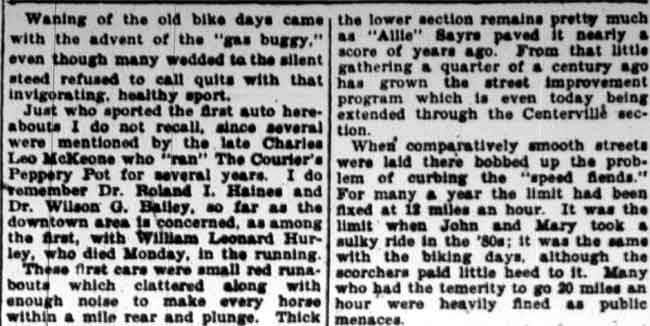
Waning of the old bike days came with the advent of the “gas buggy,” even though many wedded to the silent steed refused to call quite with the invigorating, healthy sport.
Just who sported the first auto hereabouts I do not recall. Almar Sayers were mentioned by the late Charles Leo McKeone who ran “The Peppery” Pot for several years. I do remember Dr. Roland I. Haines and Dr. Wilson G. Bailey, so far as the downtown area is concerned, as among the first, with William Lockney Hurley, who died Monday, in the running. These first cars were small red runabouts which clattered along with enough noise to make every horse within a mile rear and plunge. Thick
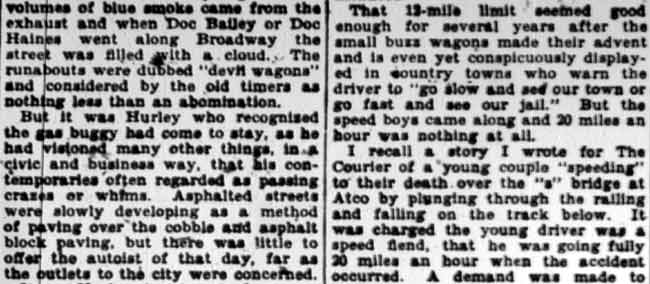
volumes of blue smoke came from the exhaust when Doc Bailey’s car and Haines went along Broadway the street was filled with a cloud. The runabouts were dubbed “devil wagons” and considered by the old timers as bubbling trains to annihilation.
But it was Hurley who recognized the gas buggy had come to stay, as he had witnessed many other things, in a casual and business way, that are now temporaries often regarded as passing circus or whims. Asphalted streets now show a development as a method of paving over the cobble and asphalt block paving, but there was little to offer the autoist of that day, far as the college of the city were concerned.
That 18-mile limit seemed good enough for several years after the street buggies made their advent and is even yet conspicuously displayed in suburby towns who warn the driver to “go slow and see our town or go fast and see our jail.” Did the speed boys come along and 20 miles an hour a public at all.
I recall a story I wrote for The Courier of a young couple “speeding to their death over the ‘c’ bridge at Atco by plunging through the railing and falling on the track below. It was charged the young driver was a speed fiend, that he was going fully 30 miles an hour when the accident occurred. A demand was made to
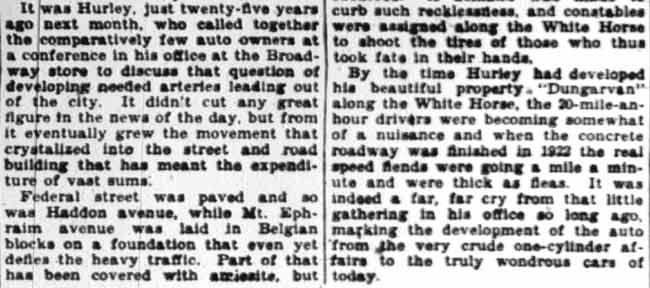
It was Hurley, just twenty-five years back, in 1903, who called together the comparatively few auto owners at a conference in his office at the Broadway store to discuss the question of developing needed arteries leading out of the city. It didn’t cut any great figure in the news of the day, but from it eventually grew the movement that crystallized into the street and road building that brought about the expenditure of vast sums.
Federal street was paved and so was Haddon avenue, while Mt. Ephraim avenue was laid in Belgian blocks, a foundation that very yet deadens the heavy traffic. Part of it has been covered with asphalt, but
the lower section remains pretty much as “Allie” Sayers paved it nearly a score of years ago. From that little gathering a quarter of a century ago has grown the street improvement program which is event today being extended through the Centerville section.
When comparatively smooth streets were laid there bobbed up the problem of curbing the “speed fiends.” For many a year the limit of 18 miles was the limit when John and Mary took the sulky ride in the donkey; it was the same with the biking days, although the scorchers paid little heed to it. Many who had the temerity to go 20 miles an hour paid little heed to public menaces.
curb such recklessness, and constables took fate in their hands, not hesitating to shoot the tires of those who thus took fate in their hands.
By the time Hurley had developed his beautiful property “Dungarvan” along the White Horse, the 30-mile-an-hour drivers were becoming somewhat of a nuisance and when the concrete roadway was finished in 1922 the real speed fiends were going a mile a minute and even thick in days. It was indeed a far, far cry from that little gathering in his office so many ago, marking the development of the auto when also very crude one-cylinder air fairs to the truly wondrous cars of today
Named: Ben Courter, Charles Leo McKeone, Dr. Wilson G. Bailey, Dr. Rowland Haines, Alfred L. Sayers, Federal Street, Haddon Avenue, and Mount Ephraim Avenue.