Camden Police Department 1962 Annual Report
The Police Department of the City of Camden NJ was founded in 1871, and has roots going back long before that.
In 1961, the Department published its first Annual Report. Thanks to former Camden police officer Frank Crissey, who served from 1962 until his retirement in 1987, and his wife Jeanne, for making the 1962 Report available.
Phil Cohen
Front Cover
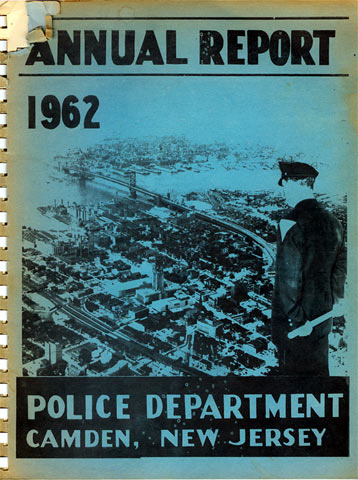
Front Cover.
Page 1
Page 1.
Page 2 — Mayor Alfred R. Pierce
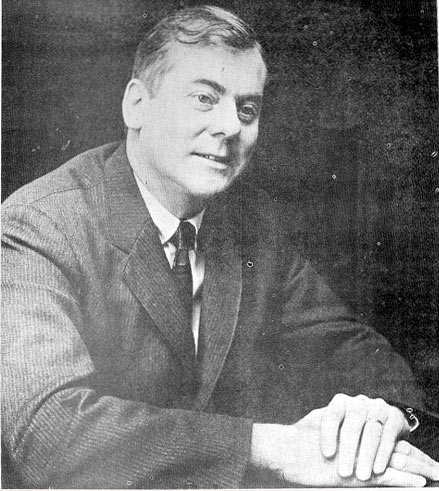
ALFRED R. PIERCE, MAYOR, City of Camden
Native of Camden and lifelong resident…educated in public school system…attended Rutgers South Jersey and received law degree from Dickinson School of Law…served US Army Air Force in World War II as combat pilot credited with 51 missions…rose to rank of captain…married with three children…former attorney Camden City Board of Education…elected to city commission on coalition ticket in 1959—became Mayor under the new form of mayor-council government in July 1961
Page 3 — Director of Public Safety
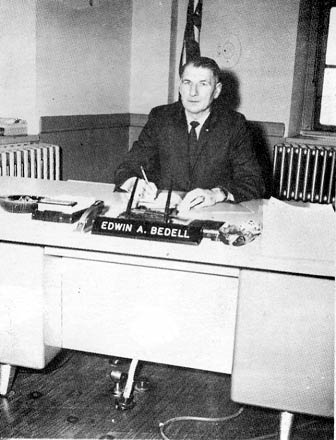
Colonel EDWIN ALLEN BEDELL, DIRECTOR of Public Safety
Retired 1961, US Army Colonel…graduate of Middlebury College…formerly Director Public Works, appointed Director of Public Safety June, 1962…attended numerous military schools for administration, including Armed Forces Staff College…married, father of one child…proficient in a number of foreign languages.
Page 3 — Chief of Police
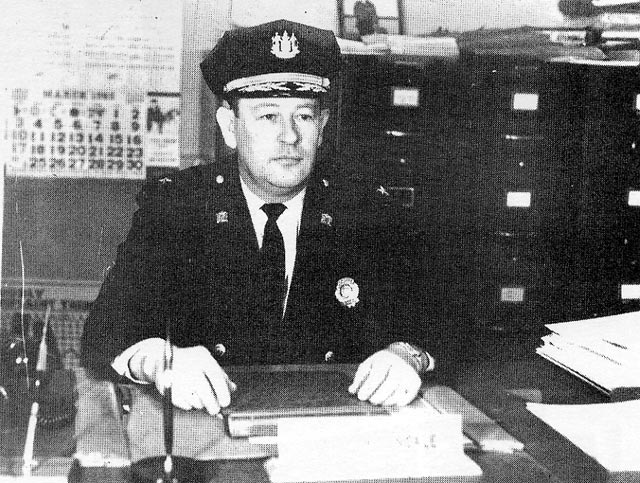
WILLIAM H. NEALE, Chief of Police
Lifelong resident of city…educated in public school system…appointed to police department in 1940…promoted to detective in 1946 after service with US Army Criminal Investigation Division (CID)…while in CID attended famed Scotland Yard School…also attended numerous police schools…elevated to sergeant in 1951…to lieutenant in 1957 handling detective division…promoted to Inspector in 1960…appointed Chief in August 1960…married father of three children…Vice-President South Jersey Chiefs of Police Association.
Page 5 — Chief's Letter
Camden Police Department letterhead.
Colonel Edwin Bedell
Director of Public Safety
City of Camden
New Jersey
Dear Director:
It is with pleasure that I present herewith the Annual Report of the Camden City Police Department for the year 1962.
In this report we have endeavored to present, in as concise form as possible, all essential information covering the work and accomplishments of this Department during the year 1962. Utilizing pictures and graphs, we have aimed to present a clear and realistic concept of the various units of our Department, each of which plays a vital part in providing the citizens of Camden with efficient and effective police service.
An interesting segment of the report points out the overall decrease in the crime index pattern and indicates a noticeable increase in vice arrests. The crime rate in Camden is 5.2% under the previous year, 1961. The national average has increased approximately 97% from the same year.
We are constantly endeavoring to improve and modernize our various operations and follow closely all new techniques and scientific achievements. These are adopted after proven worth.
We further trust that the attainments herein will merit your confidence and approval.
Very truly yours,
<Signed>
WILLIAM H. NEALE,
Chief of Police.
Pages 6–10
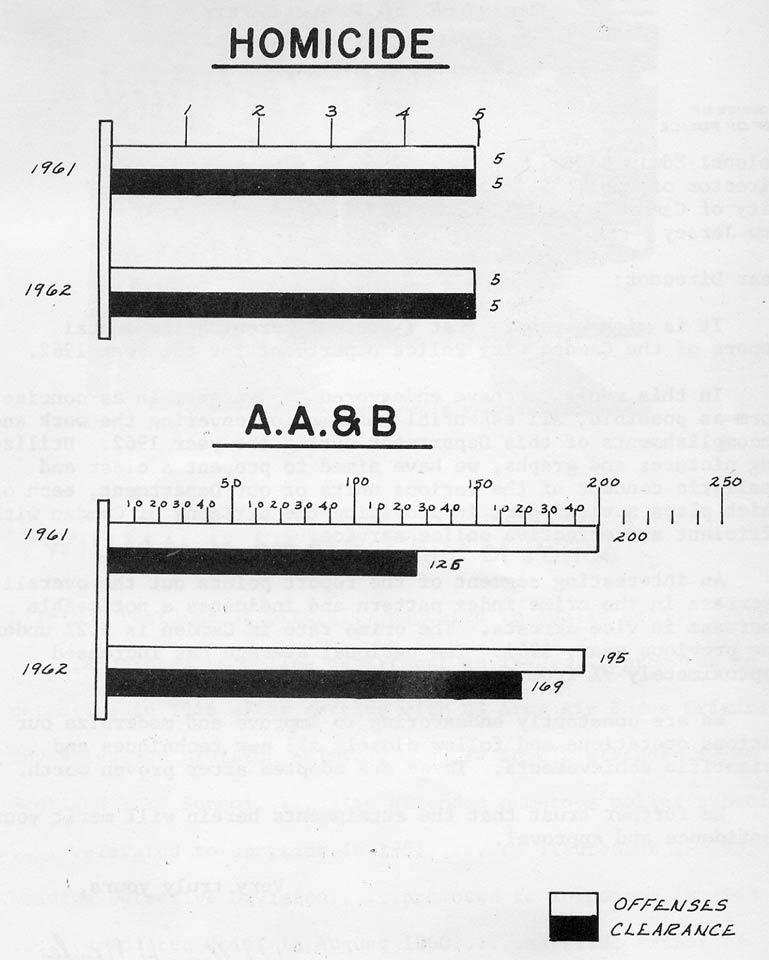
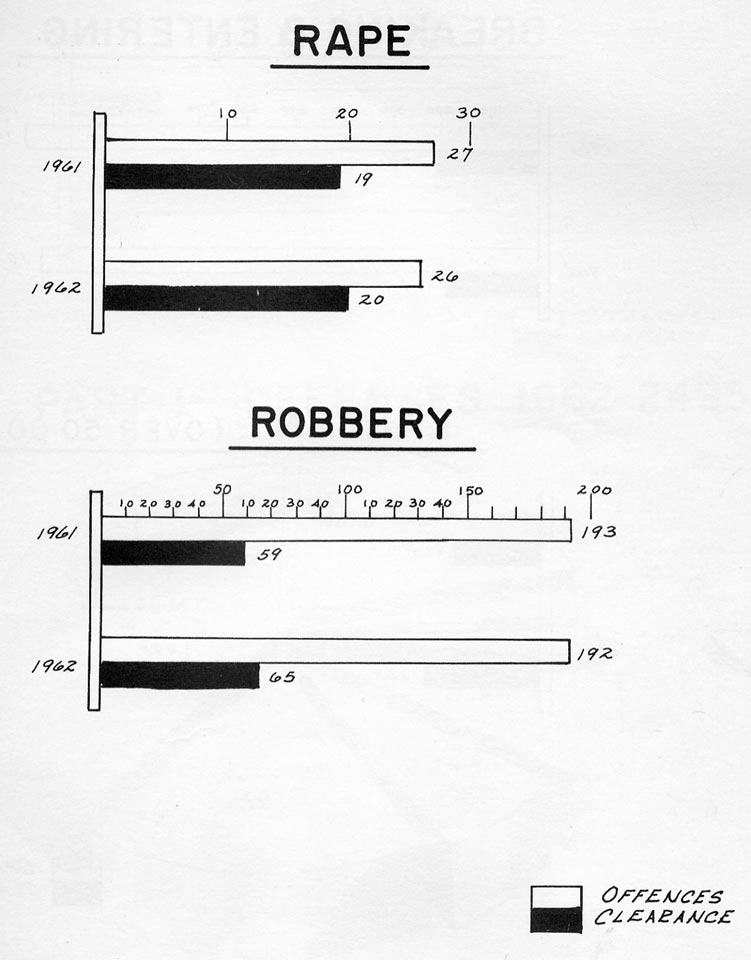
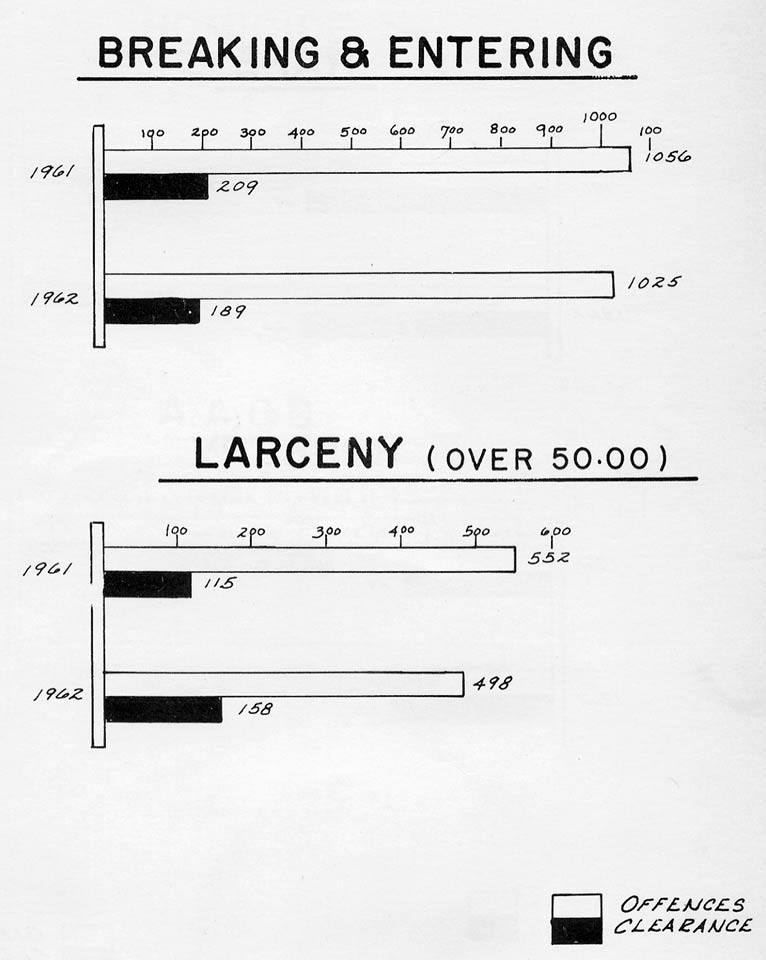
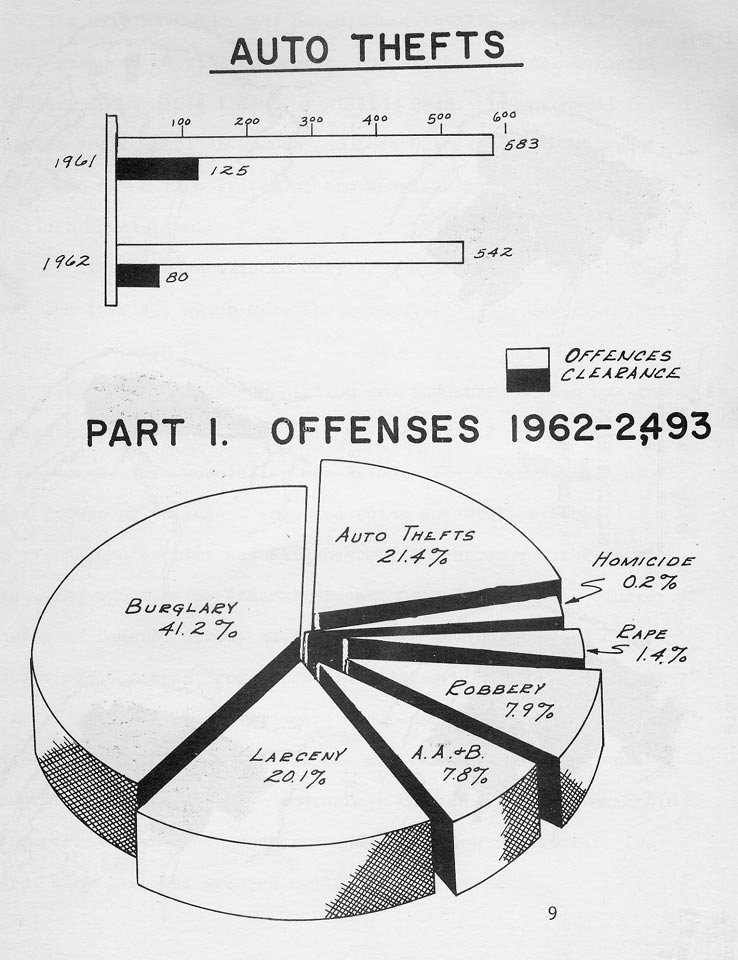
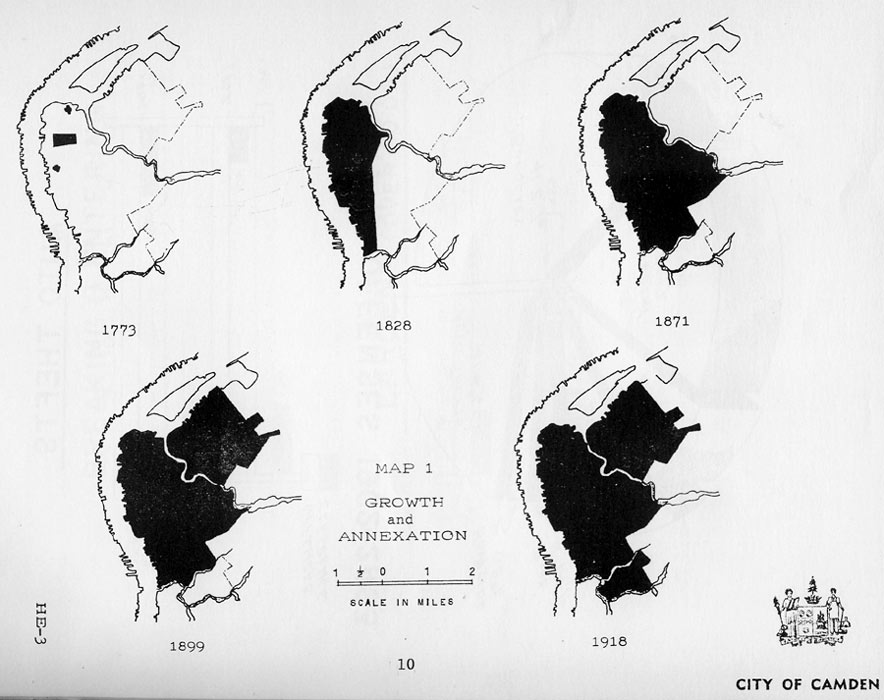
Pages 6–10.
Pages 11–14 — The History of the City of Camden and Its Police Department
The City of Camden was established in 1773 by Jacob Cooper, great-grandson of William Cooper, one of the original colonial settlers and a close friend of William Penn. It was named for Charles Pratt, Earl of Camden and Lord Chancellor of England in 1776, who was a firm friend of the American colonies during the American Revolution.
At first Camden existed only as a small settlement of houses near the ferries, which were the gateway from New Jersey to Philadelphia.
With the growth in population and industry, Camden was incorporated as a city in 1828 with an area of 3.9 square miles, or 2,496 acres. Its population was 1,143. The city was made up of five groups or villages; Cooper's Point was William Cooper's Ferry, Kaighn's Point was Kaighnstown, Pinchtown was the section along the shore below Federal Street, Dogwoodtown was a cluster of houses at Federal Street near the Cooper River Creek, Camden proper was the area from North Sixth Street to the Delaware River. A mayor and five councilmen were elected by the people to serve as a local governing body. It was the responsibility of this governing body to restrain and arrest the unruly and to maintain Quarters Session Court to try and punish law violators. The first city jail was erected at 418 Federal Street.
This type of police protection remained until the Charter of 1851. Under this Charter, City Marshals acted as Chiefs of Police and were elected annually by the people.
The following have served as City Marshals:
| 1851 | John W. Potts |
| 1852 | James H. Lowery |
| 1853 | Peter S. Elliott |
| 1854–56 | Henry Belstering |
| 1857–58 | John W. Hoagland |
| 1859–60 | Edmund Shaw |
| 1861–62 | Timothy Middleton |
| 1863 | Samuel Conrow |
| 1864–66 | John W. Campbell |
| 1867–69 | J. Kelly Brown |
| 1870 | Claudius Bradshaw |
The police force achieved a measure of formal organization in December, 1868, when uniforms were first issued. Shortly afterward, the city fathers recognized the need for a full time police department. In 1871, under a new charter, the chief of police was appointed and held office at the pleasure of the mayor. The police department then consisted of the chief of police and 25 patrolmen. The chief received the grandiose salary of $950 per annum. A patrolman's salary was $750 per year. They also received $50 per year in equal payments of $25 each on the first day of July and January, to be applied to the purchase of the uniforms. This remained the uniform allowance until 1959 when it rose to $150 per year.
The following have served as Chiefs of Police of the Camden City Police Department.
| 1871–73 | Daniel W. Curliss |
| 1874 | William H. Hemsing |
| 1875–76 | Daniel W. Curliss |
| 1877–79 | Charles F. Daubmann |
| 1880–85 | Josiah Matlack |
| 1886 | Harry H. Franks |
| 1887–93 | Samuel Dodd |
| 1894 | William H. Davis |
| 1895–98 | Samuel Dodd |
| 1899–06 | John Foster |
| 1907–21 | E.A. Gravenor |
| 1922–26 | James E. Tatem* |
| 1927–30 | Louis H. Stehr Jr.* |
| 1931 | Acting Chief, Major Charles V. Dickinson |
| 1932–33 | Acting Chief John W. Golden |
| 1934–39 | Arthur Colsey |
| 1939–41 | Acting Chief Ralph Bakley |
| 1942–48 | George Frost |
| 1948–49 | Acting Chief Samuel Johnson |
| 1949–60 | Gustav Koerner |
| 1960 | Donald Watson (temporary) |
| 1960–1962 | William H. Neale |
Statistics and Records Systems, a Detective Division, modern Traffic Bureau, new Communications System, K-9 Corps, and an ultra-new Tactical Force were instituted.
Today the Police Department of the City of Camden is considered as modern as any police in the United States. Several foreign nations have used Camden as a pattern in organizing their own departments. Future plans call for a new Police Building which will include an up-to-date crime laboratory, more equipment for communications, a jail and courtroom and all Division and Central Headquarters under one roof. Thus all subdivisions of the Police Department will be centralized for greater efficiency and better service to the public.
* The booklet as originally published misspelled Chief Tatem's name, and omitted Chief Stehr.
Pages 15–16
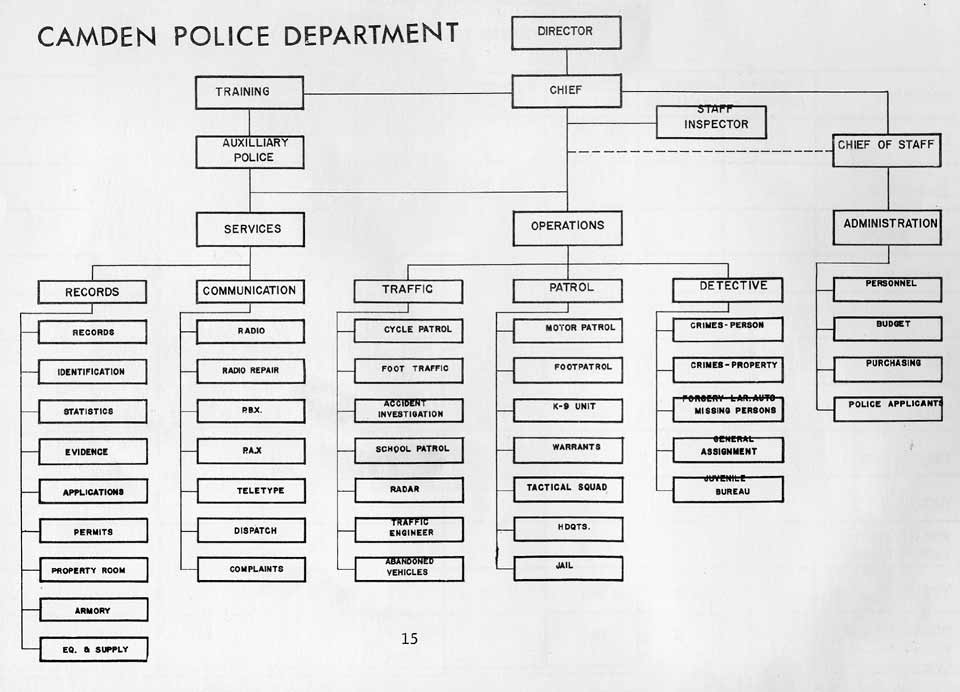
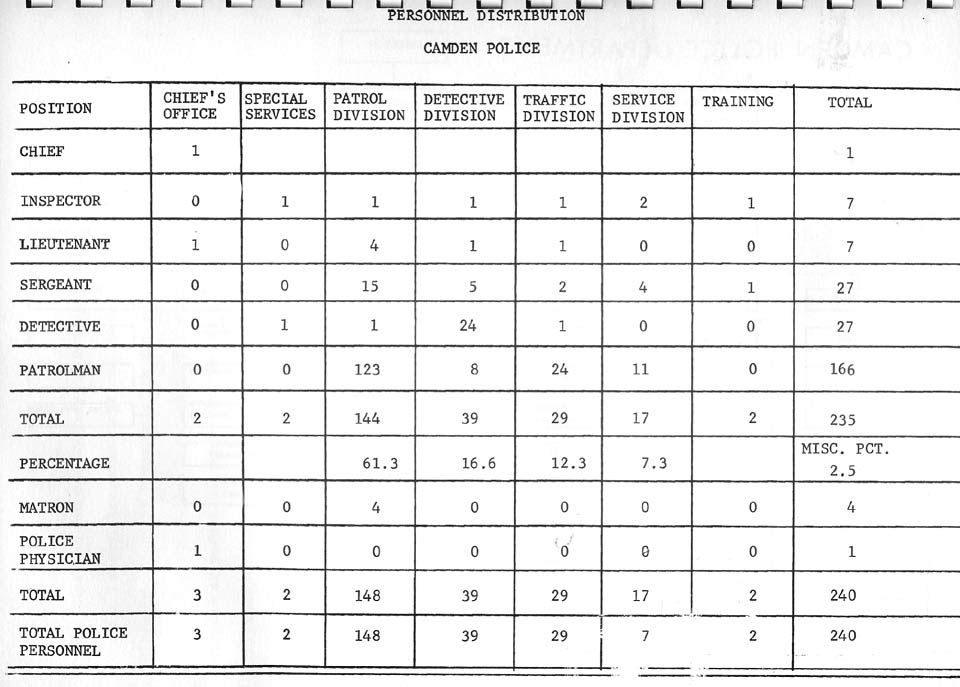
Pages 15–16.
Page 17
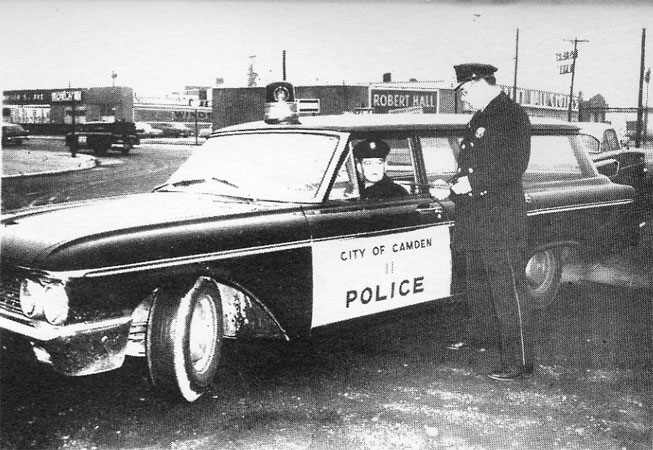
Receiving Special Orders.
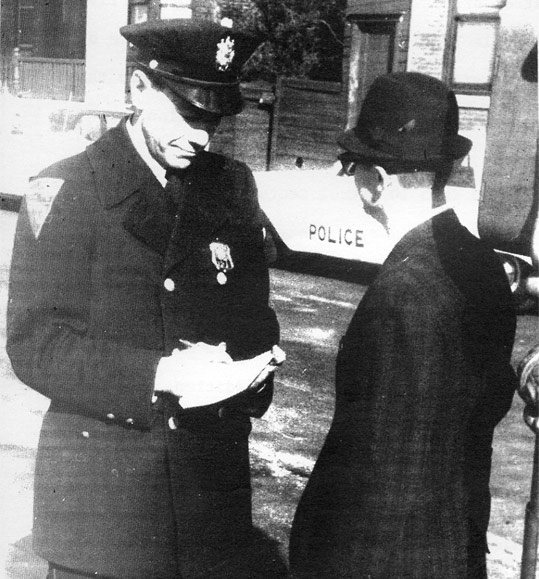
Street Report from Citizens — Officer William “Bill” Haines.
Page 18 — Patrol Division
The Patrol Division is constantly on the alert to its prime responsibility for the containment and control of law violators, has met the rising crime trend by employing the latest techniques in modern police methods. Strategic deployment of tactical units was instituted to obtain maximum field strength and adequate coverage in areas of critical concern.
Within the Patrol structure is the efficient and effective K-9 Corps and the mobile Tactical Unit. These flexible arms of the Patrol force are available for duty in any locale where the need is indicated. Vice and spontaneous criminal action are their prime targets.
The City is divided into 10 Patrol Sectors. It is within these sectors that the four primary units—the radio patrol cars, patrol wagons, foot patrolmen, and plainclothes operators of the Patrol Division are assigned.
The City consists of 207 miles of streets, 12 miles of water front, and a population of 117,159. In addition, being an industrial city, Camden daily accommodates thousands of transients and commuters. The range of activities handled by the personnel of the Patrol Division extends from simple complaints to homicides.
In addition to routine patrol, services, inspections and hospital runs comprise a large portion of the daily work load.
Pages 19 & 20 — Missing Pages
When the booklet was put together, pages 17 and 18 were duplicated, and pages 19 and 20 were omitted. If anyone has a version of this booklet with these pages included, please contact us.
Page 21 — Patrol Activities
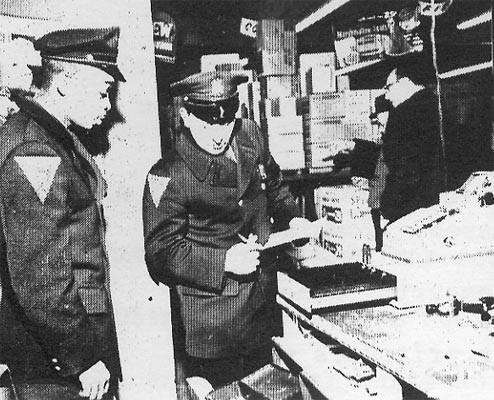
Initial Investigation. Left: Officer William “Bill” Reeves, second officer unknown.
Page 21.
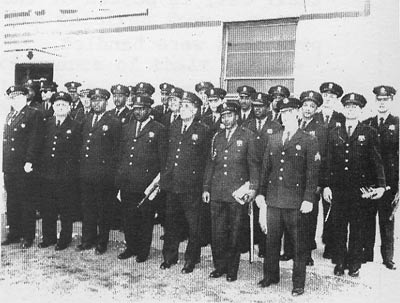
Roll Call and Inspection
Front row from left: William Kelly, John Ferry, Clyde Waters, Andrew Monroe, Cecil Picou, Isaiah Pitts, Sergeant Joseph Troestel.
Middle Row: Standing behind Waters and Monroe (with mustache) is Fontaine Shockley, unknown, unknown, Freddie Dobson, Horace “Speed” Wilkerson, Frank Crissey is at far right, holding a book.
Back row starting at the window: Jerome Spratley, Arnold Cream, Danny Domerowski and at far left Art Lewandowski.
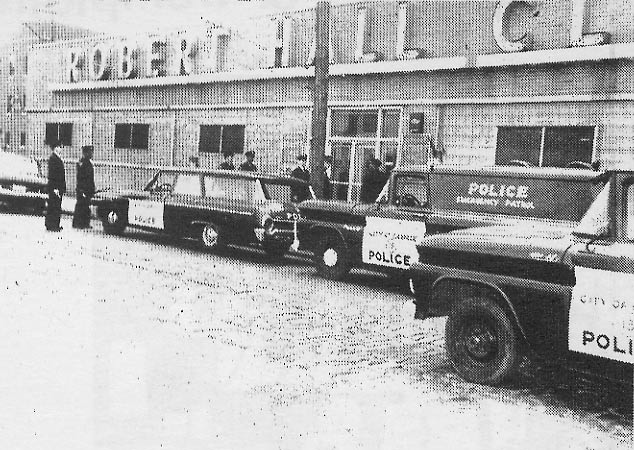
Responding to Burglar Alarm.
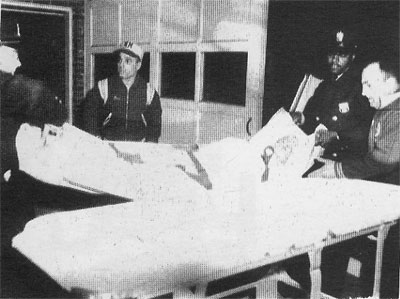
Hospital Run.
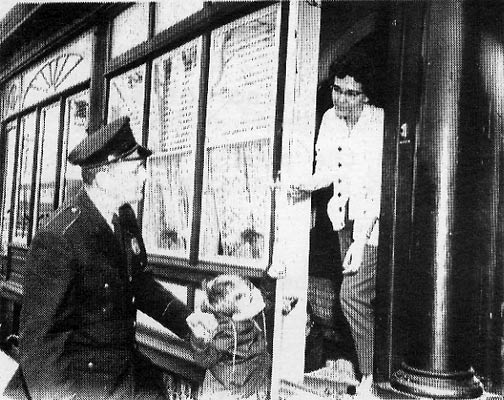
Lost Child Return Home.
Page 22 — Police Headquarters
This integral part of the Patrol Division is maintained on a 24-hour-a-day basis the year around. On duty is a sergeant, jailer, and a matron. In addition, an administrative lieutenant is assigned to Headquarters on the day tour. Prisoners are received, booked, and processed. Complaints are accepted and warrants issued when necessary. Nine cells for temporary detention are maintained for prisoners until their bail is posted or the case adjudicated. In 1962, 5880 prisoners were handled.
The Sergeants assigned to Headquarters also act as information specialists for all inquiries the public makes to Department.
Lost children and complaints make up the bulk of the Headquarters business.
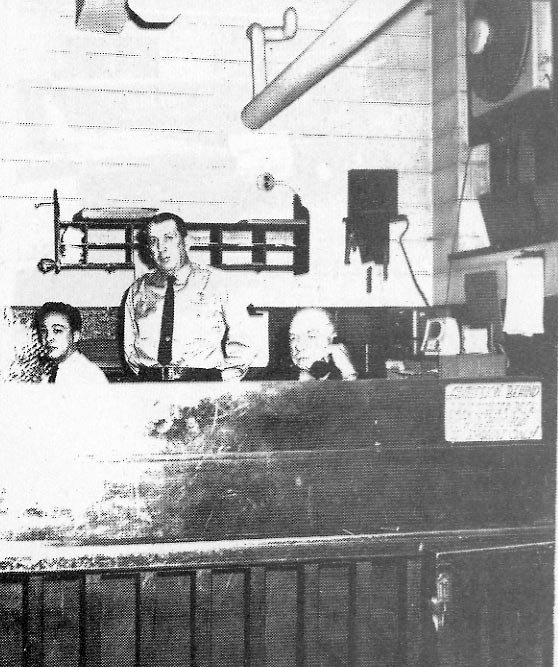
Headquarters & Complaint Desk. At left, seated: Peter Paull.
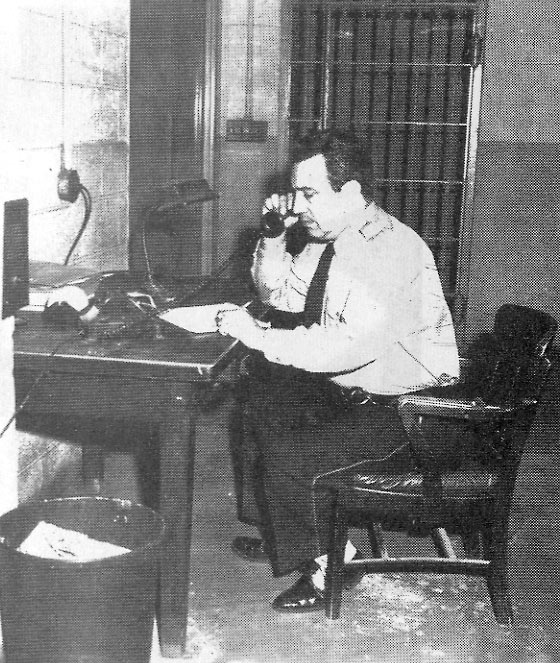
Jail Security Report.
Page 23 — Warrant Squad
In 1962 a Warrant Squad was established. It operates directly out of Police Headquarters but is a part of the Patrol Division. The prime function of this two-man plainclothes team is to serve major crime and out-of-town warrants. These include warrants declared non-serviceable and returned from other police units. The Warrant Squad began operations on July 6, 1962 on an experimental basis and has since been made permanent. Frequent tips and numerous odd-hour duty stints are required from the members of the Warrant Squad in the performance of their assignments. Since its inception, the Warrant Squad has processed a total of 983 warrants and has effected a total of 195 arrests.
Pages 24–25 — Canine Corps
This integral part of the patrol Division was formed in 1960. It now consists of the carefully selected men who have shown an aptitude in dog handling. During the past year, the K-9 Division handled a number of complaints, from homicides to ordinary disturbances. The K-9 patrols respond on all calls where the need for this specialized police service is indicated. They have proved their effectiveness in burglary investigations, crowd disturbances, prowler detection, and as a psychological tool in general crime prevention. Their renown has grown to such an extent that K-9 demonstrations are constantly in demand by citizen's groups. In 1962 a total of 34 such programs were handled by this unit.
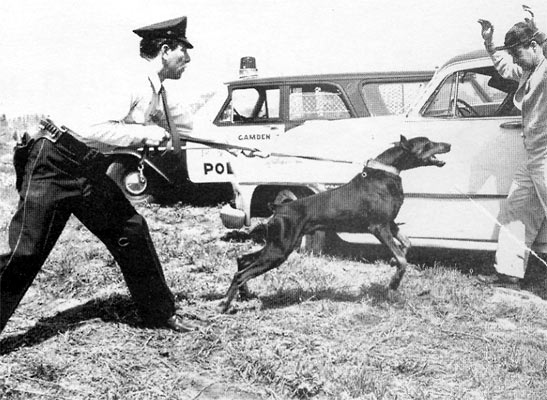
K-9 Team Making Apprehension. Ray Paradise & George Mahoney.
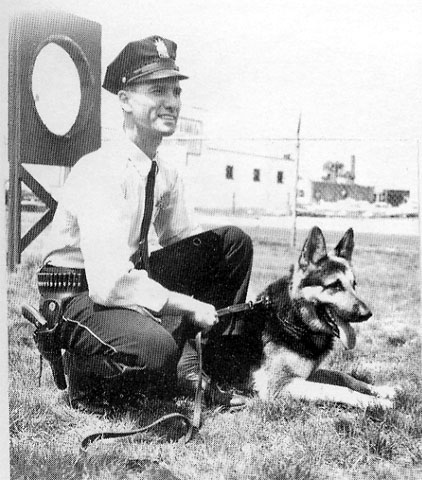
Policeman and Dog — Partner and Friend. Dave Newberry.
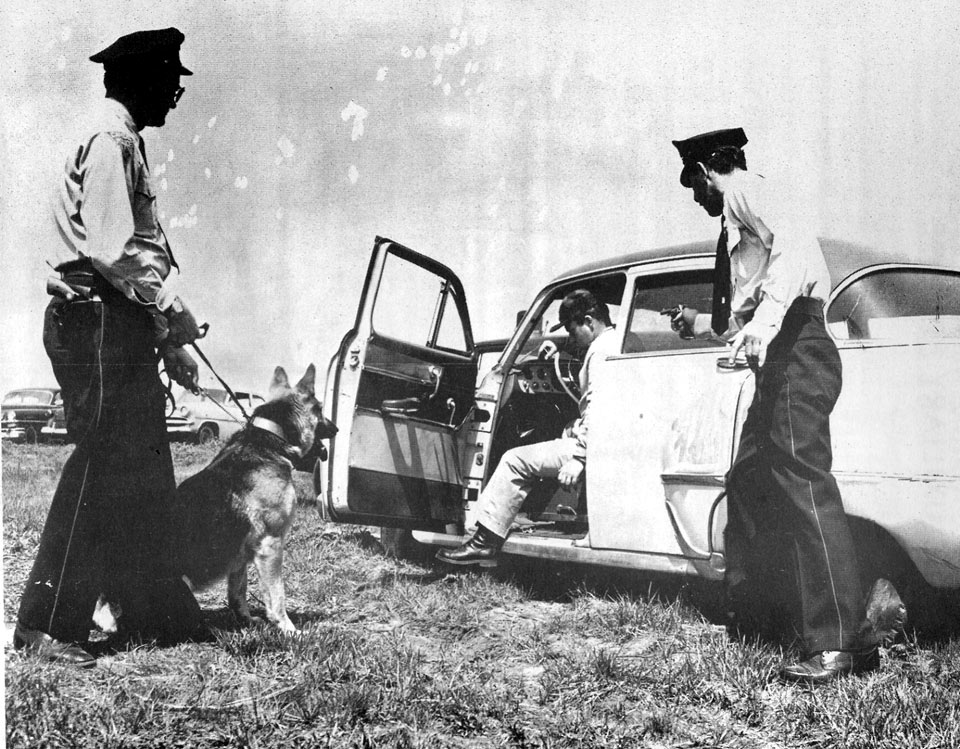
Ed Hahn Jr. & Ray Paradise.
Page 26 — Auxiliary Police
Organized in 1961, this civilian arm of the Police Department numbers approximately 65 dedicated citizens. The personnel work directly with the members of the various police divisions. Trained in a variety of police subjects, including criminal law, laws of arrest, basic crime detection, traffic duties and first aid, they operate mainly in the Patrol Division. Their value is apparent on heavy-traffic weekends and during emergencies, such as floods and fires. Recently, they have accepted the responsibility of operating a city ambulance for emergency hospital runs. All volunteers, they possess a high degree of esprit de corps and enthusiasm.
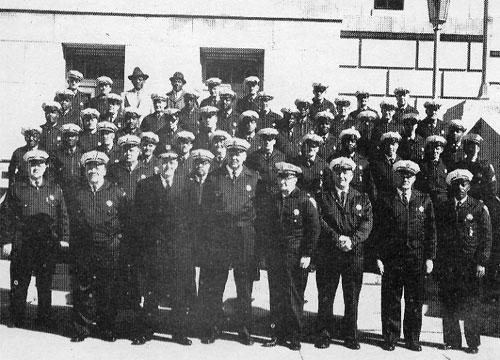
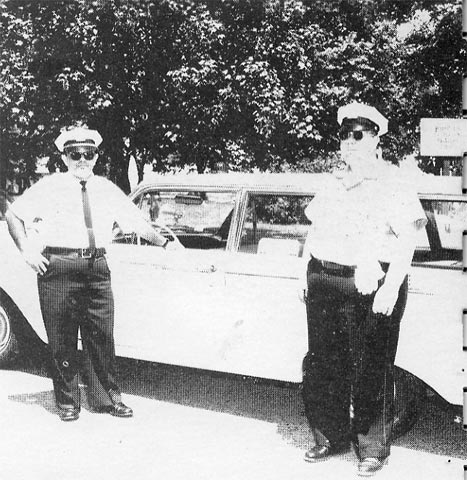
Auxiliary Police.
Page 27 — Detective Division
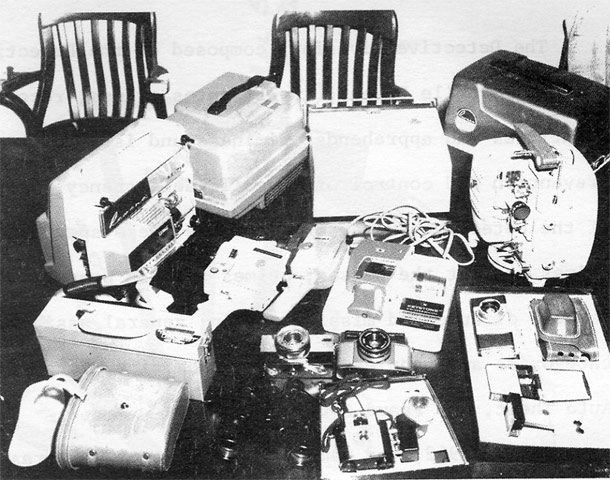
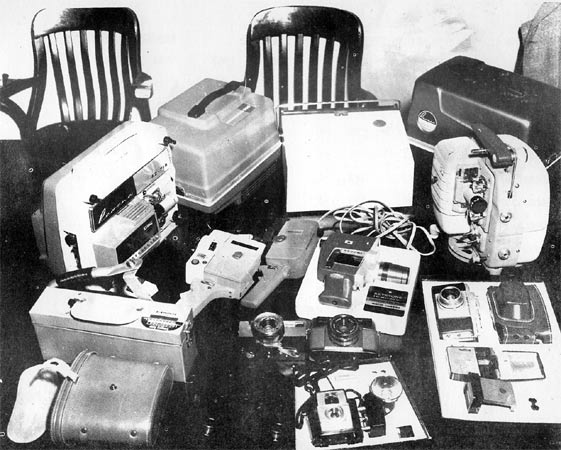
Recovered Stolen Goods.
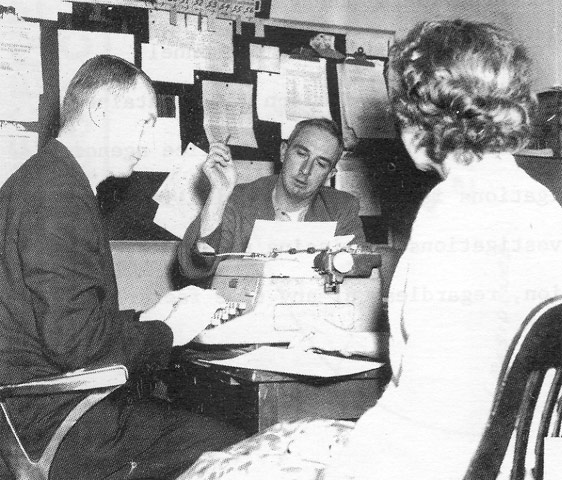
Statement Taken From Witness. Unknown, John E. Opfer, unknown witness.
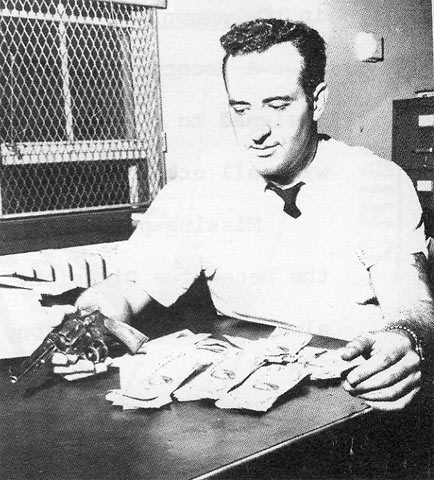
Detective Reviewing Case and Evidence. Detective Robert DePersia.
Page 28 — Detective Division
The Detective Division, composed of the Detective Bureau and the Juvenile Bureau, investigates crimes, recovers property, identifies and apprehends criminals and is concerned with the prevention and control of juvenile delinquency. Within the scope of the Detective Bureau proper falls these specialized categories: Crimes against the person; crimes against property; forgery; larceny of auto and missing person; general assignments. These categories are handled by special Homicide, Burglary, Robbery, Auto Theft, and Fraud Sections.
During 1962, the Camden Police Detective Bureau compiled a new record for cases solved. Its efficiency was also reflected in the amount of property recovered during the year.
A record number of cases were handled by the personnel assigned to the Detective Division. Close liaison was maintained with all other police sub-divisions and neighboring police agencies.
Missing persons investigations is also a responsibility of the Detective Division. Investigations of missing persons are always carried to a conclusion, regardless of any time factors.
Pages 29–31 — Detective Work
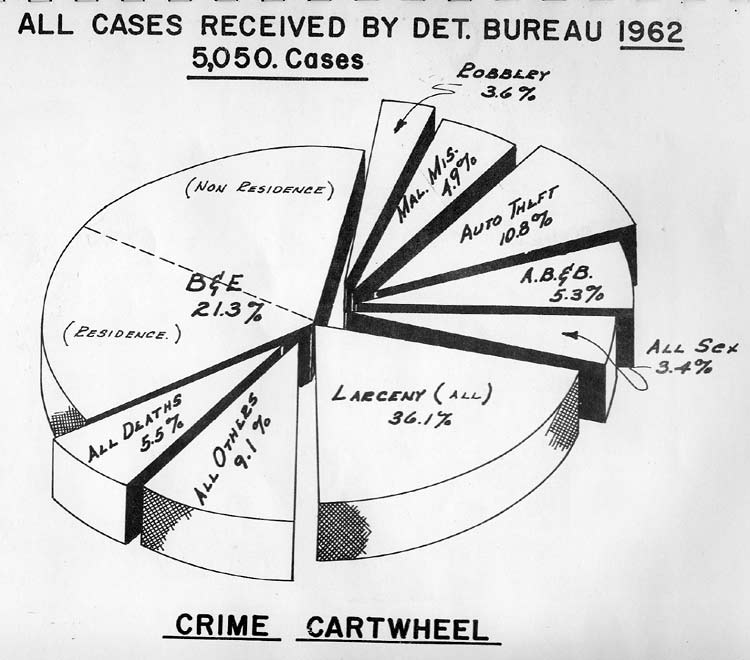
Page 29.
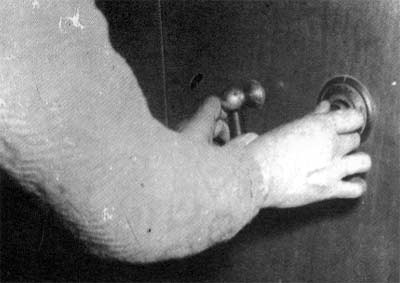
Safe Cracker at Work.
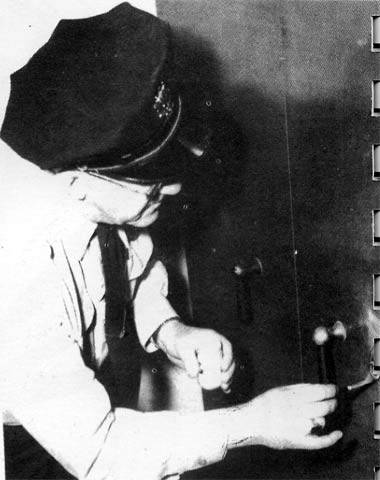
Dusting for Latent Fingerprints.
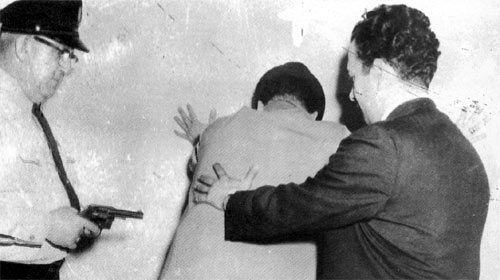
At far right: Detective Vincent Buondanno.
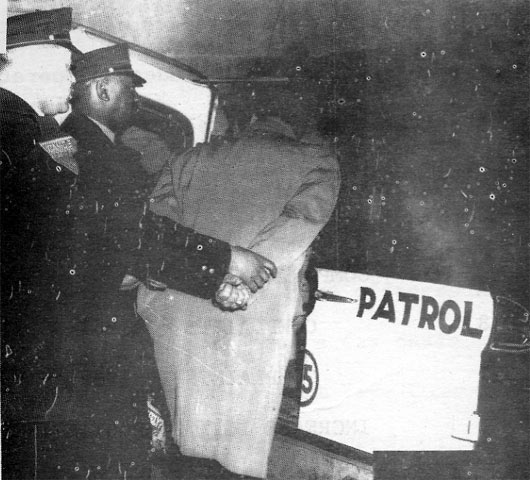
Suspect Taken To Detective Division For Further Investigation. Officer Robert A. Upshaw Sr. (at left) with Officer Clyde Waters making an arrest.
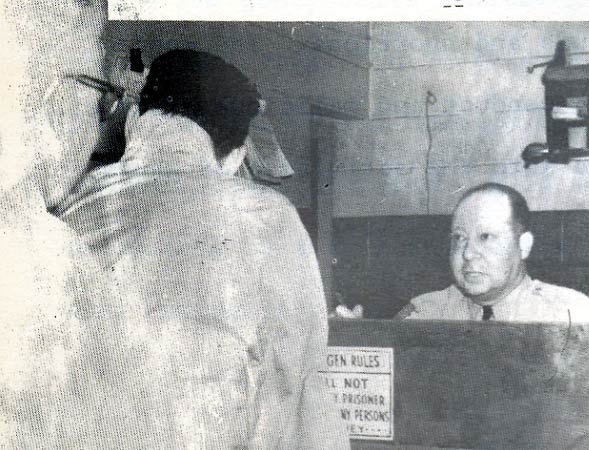
Suspect At Booking Desk. Seated behind desk: Dominic Palese.
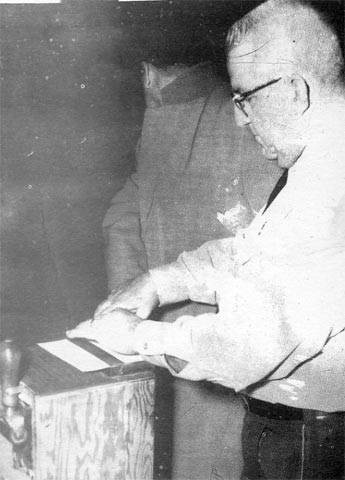
Suspect Processed For Positive Identification.
Page 33 — Juvenile Bureau
The Juvenile Bureau is an integral part of the Detective Division. Commanded by a Sergeant, it includes an operations sergeant and four detectives. The clerical duties are handled by a civilian clerk-stenographer. In 1962, the Juvenile Bureau handled a total of 939 complaints. There were 827 arrests.
| Comparison | 1961 | 1962 |
|---|---|---|
| Arrests | 818 | 827 |
| Complaints | 913 | 939 |
| Increase 1.17% composite increase | ||
The objective of this sub-division of the Detective Division is rehabilitation. In 1962, offenses committed by juveniles in Camden ranged from larceny to frauds and abortions. The most prominent offenses were disorderly conduct and malicious mischief. Investigations were also conducted into the activities of gangs.
Page 33 — Communications Division
Communications is the heart and life-line of any modern police organization. During the past year Communications became a separate and independent Division. Headed by an Inspector, this Division has made rapid strides in providing the city with comprehensive communications services.
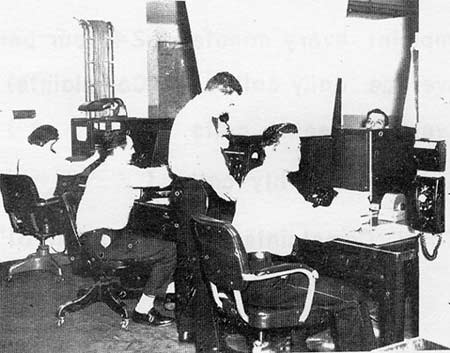
The Division is staffed by five police officers and numerous civilian operators on a 24 hour a day basis. The unit now operates completely separate from Fire Communications and has its own newly installed Gamewell Board. This is a police telegraph system. A new plan for the expeditious handling of all emergency calls including air raid alarms was put into effect last year. In 1962 a record number of complaints totalling 45,104 was handled by the personnel of the Police Communications Division. A 13 state hook-up via teletype is maintained on a full time basis to expedite any police action that may arise.
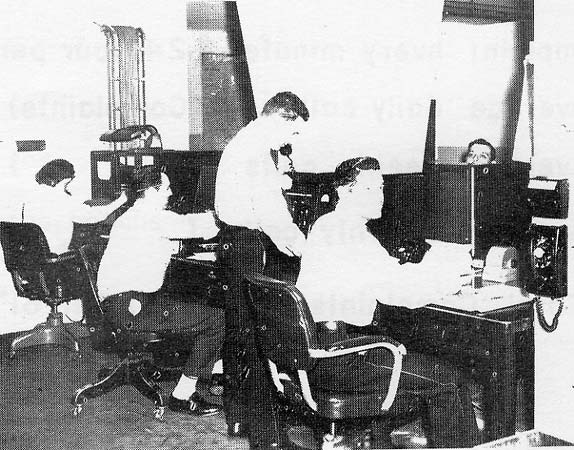
Communications Division.
Page 34
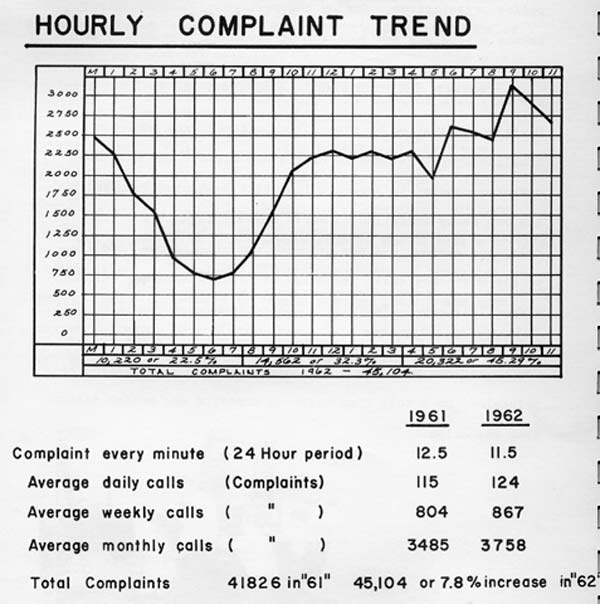
Page 34.
Pages 35–36 — Special Services
Among the many and varied duties of the Special Services Section are general administrative office functions and accompanying clerical responsibilities. They deal with the Police Department in general and include sick reports, injured on duty claims, requisitions for purchases, and attendance records. The varied nature of the unit's business is indicated in the following categorical breakdown:
LICENSES AND PERMITS:
| a. bingo licenses | 34 |
| b. raffles licenses | 47 |
| c. permits to purchase revolvers | 75 |
| d. special permits for alcohol | 79 |
| e. parades | 11 |
| f. processions | 8 |
| g. block parties | 13 |
| h. pool room licenses | 8 |
| i. solicitors recorded | 44 |
| j. dance permits | 14 |
| k. taxi cab licenses | 79 |
| l. outdoor telephone booths (locations checked) | 22 |
In addition, the Special Services Section completed the following:
DEMONSTRATIONS AND TOURS:
| a. K-9 Demonstrations | 34 |
| b. Viewing of films | 20 |
| c. Tours of Police Department | 4 |
| d. Participation in Parades | 2 |
RECRUIT CANDIDATE SCREENING: A detailed questionnaire was prepared which assures the City of the best in applicants.
COMPLAINTS: A number of complaints are received by various administrative departments in the City. In 1962 the Special Service Section handled 60 such complaints.
Camden Police Color Guard at Pyne Point Junior High School
From Left: Edward Lewandowski, Horace Wilkerson, Joseph McCann, Bill Murray.
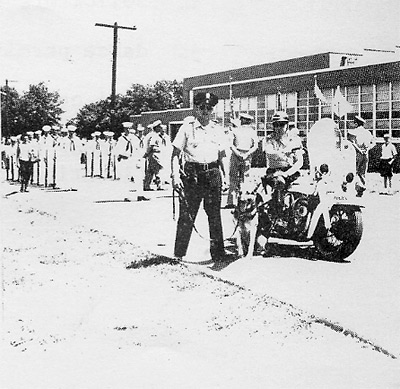
Parade Assignment.
Page 37 — Recreation
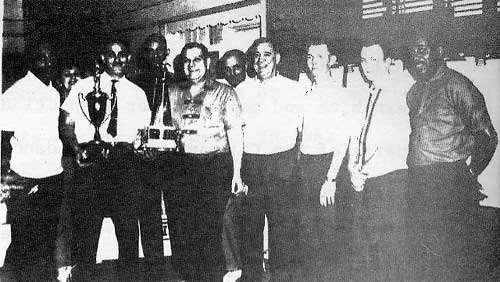
Police Bowling Team. At far left: Donald Still. At far right: Bill Murray.
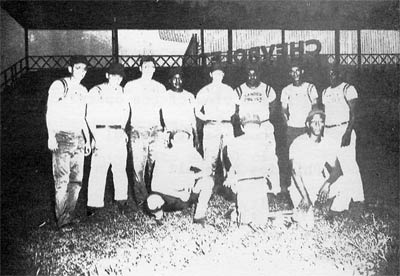
Police Softball Team. Kneeling: unknown, unknown, Bill Bennett. Standing, second from right: Reginald “Sonny” Hilton.
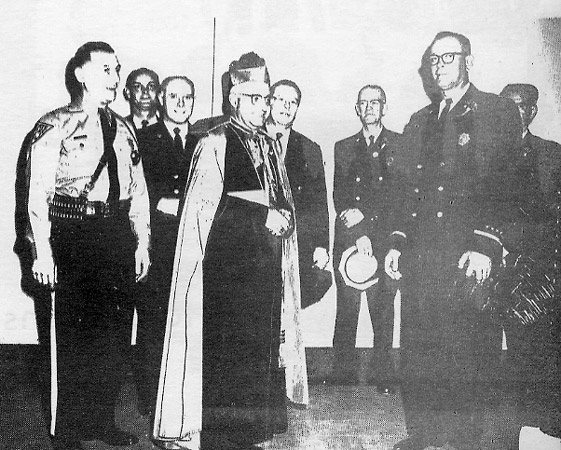
Annual Police & Firemen's Communion Breakfast.
Page 38 — National Police Week
National Police Week was observed the week of May 13, 1962. All police bureaus staged an open-house. A bus with many police exhibits and mementos for inspection by the public toured various parts of the City under the guidance of two veteran police officers.
This week was designated by President Kennedy by writ of proclamation and was acclaimed by Governor Richard Hughes of the State of New Jersey as a week honoring Police Officers in the entire State.
Police equipment displayed to the public offered citizens an inside view of the operational aspects of the Department. The School Safety Patrol escorted hundreds of youngsters to a Phillies Baseball game in recognition of their service to the community.
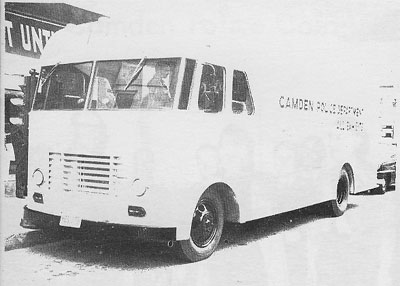
Police Display Open to Citizens.
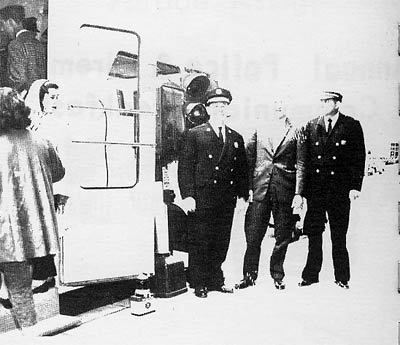
Police Officials Inspecting Police Display. Chief William “Bill” Neale, unknown, unknown.
Page 39 — Awards, Commendations and Presentation
One of the brightest tasks of a police administrator is the presentation of awards and commendations to members of this Department for meritorious achievements during the year. In 1962 Director Bedell and Chief Neale were privileged to present a total of 39 awards to various members of Camden's Police Department. They ranged from Certificates of Commendations and Certificates of Citations to Distinguished Service Awards. In addition one civilian received a Certificate of Citation for his assistance in the apprehension of a robbery suspect. The Camden Police Department was the recipient of an elaborate Narcotics Display Exhibit. This was presented by the Camden County Society in conjunction with the Temple University School of Pharmacy.
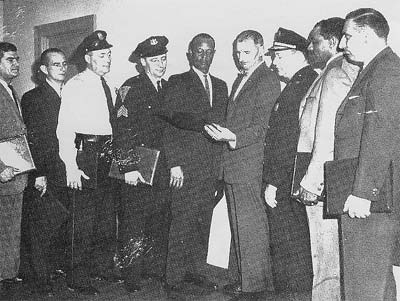
Presentation of Awards. From Left: Joseph “Joe Reno” Valeriano, unknown, unknown, Sergeant Tom Kelly, Detective Nate Jones, unknown, Chief William Neale, Detective “Pete” Sunkett, unknown.
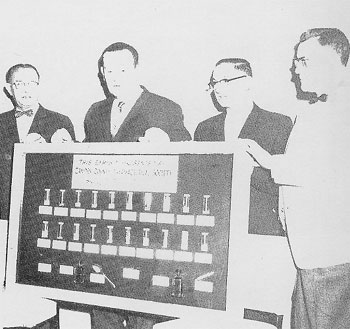
Narcotic Display Presentation.
Page 40 — Training Unit
A necessity in any modern police organization is the Training Unit. Camden's is composed of one inspector and one sergeant. They are charged with the responsibility of training recruits and in-service personnel and providing special courses in modern police techniques. Among the programs offered in 1962 were:
- Instruction in handling the Remington shotgun
- Defensive and disarming methods
- Techniques of arrest
- Complete firearms program (pistol and shotgun)
- Supervisory course for sergeants and lieutenants
- Recruit training for recruits from Camden and Gloucester Counties
- Training bulletins for departmental distributions
- Search and Seizure course
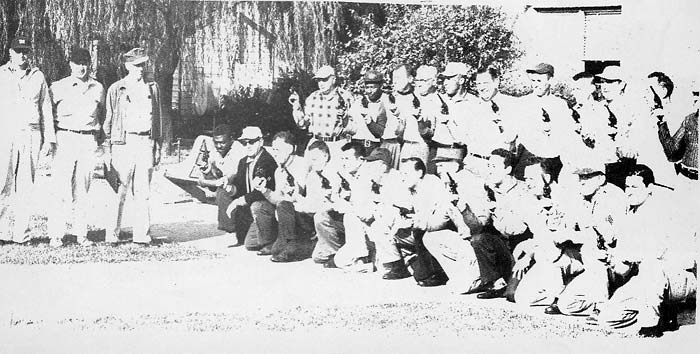
Pistol Training and Qualification.
Page 41 — 1962 Police Replacements
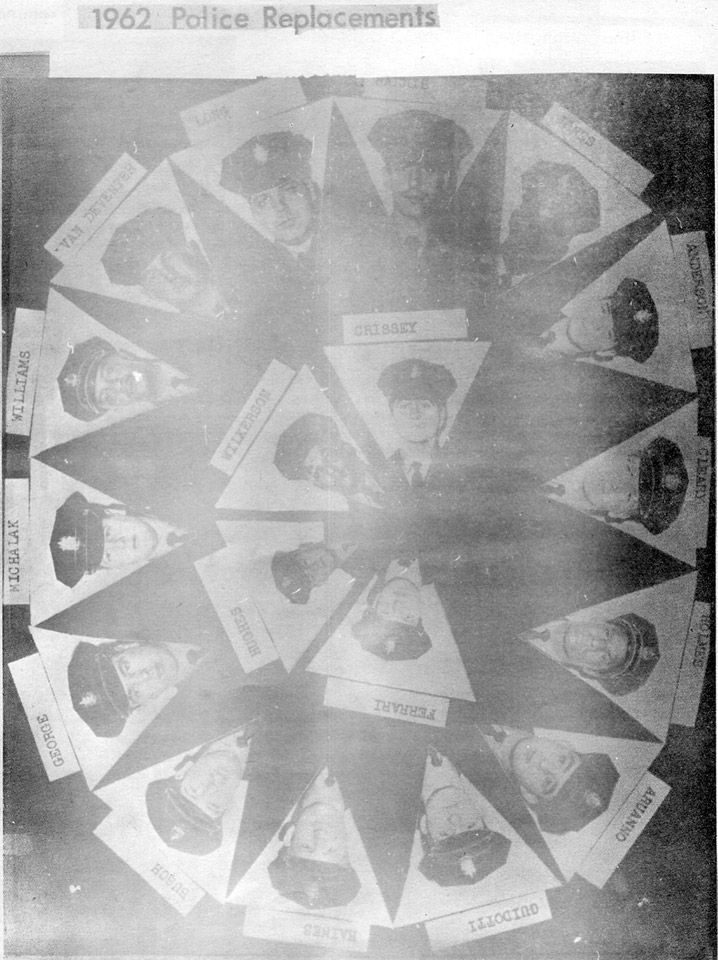
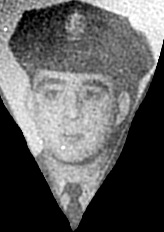
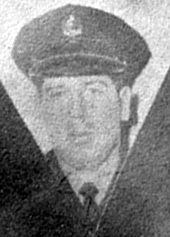
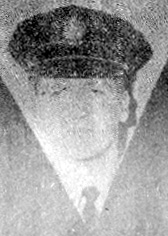
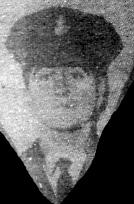
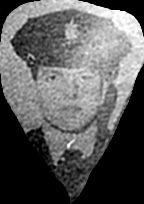
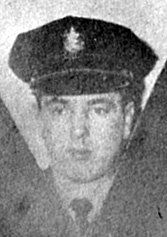
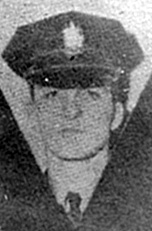
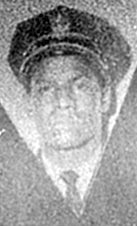
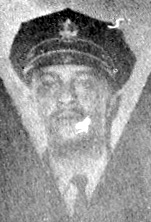
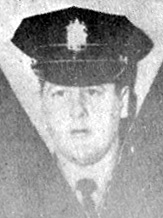
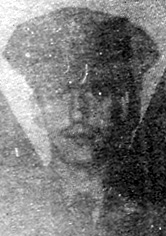
1962 Police Replacements.
James “Big Jimmy” Anderson — Joseph Aruanno — William “Bill” Busch — John Cleary — Frank Crissey — Phil Ferrari — Albert C. “Al” George — Charles “Charlie” Guidotti — Ivan Holmes — Robert “Bob” Hughes — Al Haines — Arnold Jones — Horace Wilkerson — Robert Williams — Robert “Shea” Van Deventer — Edward Michilak — Thomas Long — Harry Harris.
Thanks to Ray Massi, Frank Crissey, & John Ciafrani for help in identifying these officers.
Page 42 — Recruit Processing
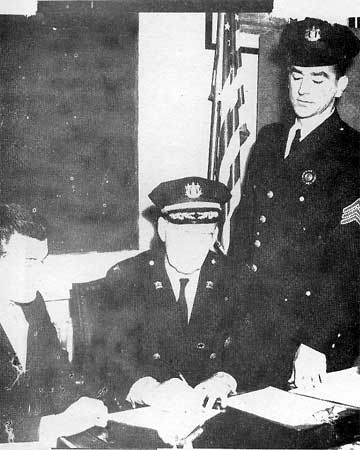
Filing Application. Sitting: Don Watson. Standing: Sergeant Ed Yeager. At left, from left: James “Big Jimmy” Anderson, Inspector Watkins, Sergeant Ed Yeager.
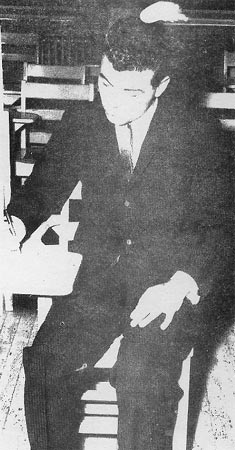
Written Qualification Examination. At right: James “Big Jimmy” Anderson.
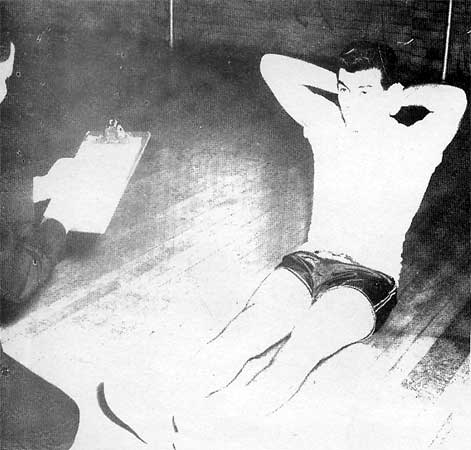
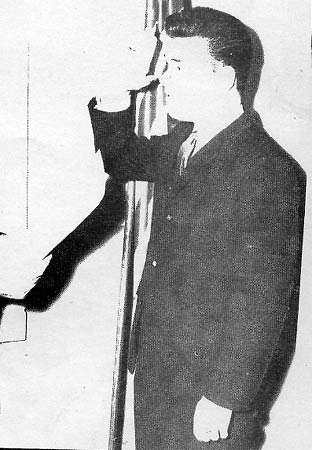
Physical Fitness Examination and Taking the Police Oath. James “Big Jimmy” Anderson.
Page 43 — Police Academy
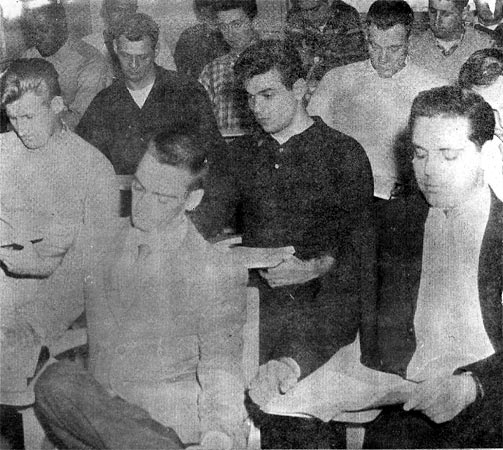
Attending Police Academy
Officers from Camden and other towns. Frank Crissey in plaid shirt.
Wearing suit and tie in lower right hand corner: Thomas Long. Blond student in white shirt at left: Al Haines. Upper left hand corner: Arnold Jones. Wearing black shirt, between Haines and Long: James “Big Jimmy” Anderson. Wearing checkered shirt: Frank Crissey. Upper right hand corner: Edward Michilak. Wearing striped shirt, between Crissey and Michilak: Phil Ferrari.
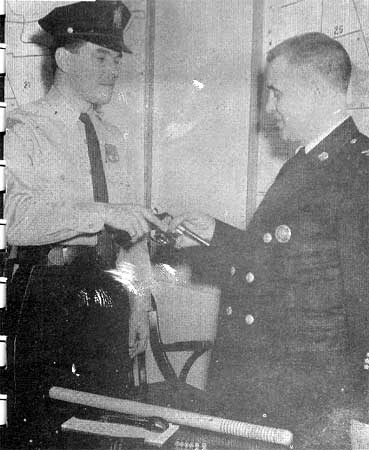
Issuing of Police Revolver and Equipment. Big Jimmy Anderson & Inspector Watkins.
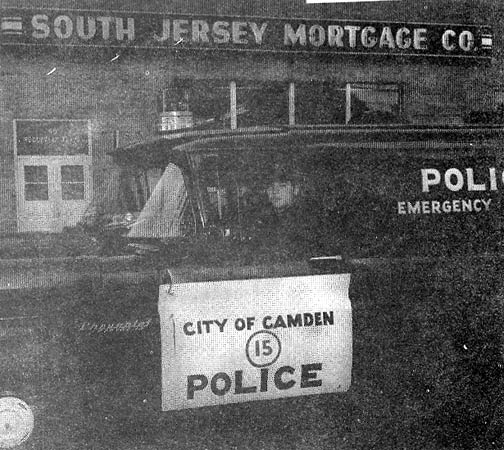
Assigned to Patrol Duty.
Page 44 — Traffic Division
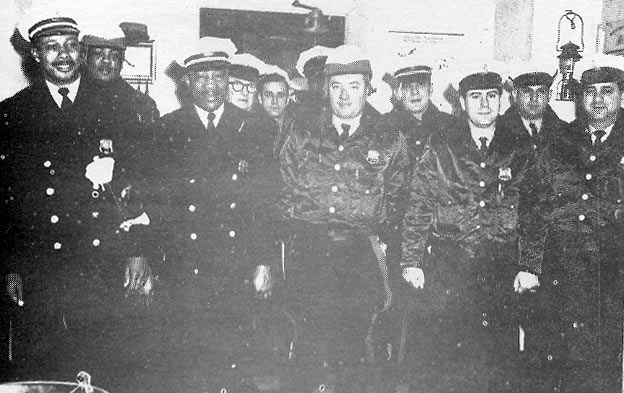
Traffic Division Personnel Awaiting Assignment. From Left: Joel White, Lou Walls, Horace Wilkerson Sr., unknown, unknown, unknown, Paul Skeens, unknown, Vince Levecchio, David Hodosheff, Anthony Martino.
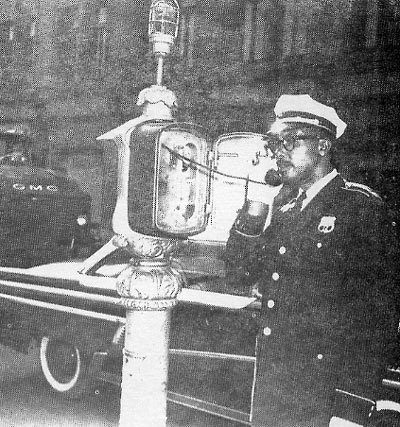
Reporting Traffic Condition. Joel White.
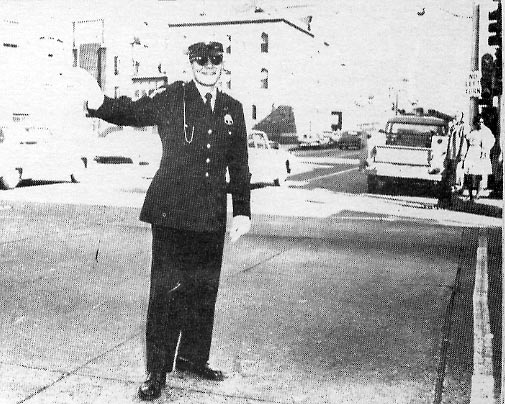
Traffic Control.
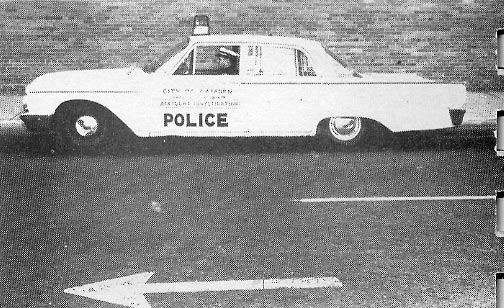
Accident Investigation.
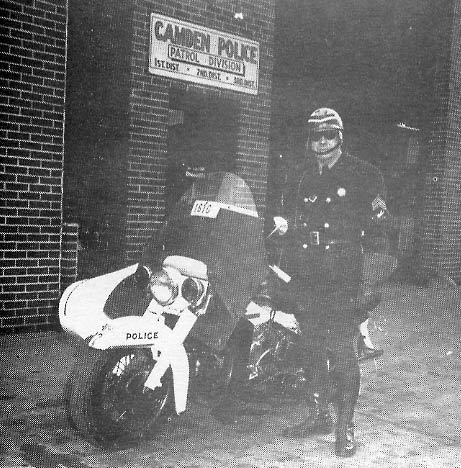
Motorcycle Patrol.
Page 45 — Traffic Division
One of the busiest of all line units within the Camden Police Department. Its problem is multiplied by the general congestion of Camden's city streets. The density of Camden's population also increases the work-load of the Traffic Division. Among some of the units of Camden's Traffic Division are the Radar Squad, School Safety Patrol, Abandoned Vehicles Unit, Foot Traffic, Motorcycle Enforcement, Accident Investigation, Traffic Engineering, Special Events and a Records Section.
A total of 31 persons are assigned to the Traffic Division. In 1962, a record number of accidents was reported and handled by the Camden Police Department. Responsibility for maintaining records and statements is with the Records Section of the Traffic Division. Last year 3,283 auto accident reports were handled by the Camden Police. In addition, 12 deaths by auto were investigated by the Traffic Bureau, and arrests were made as a result.
Page 46 — Identification Bureau
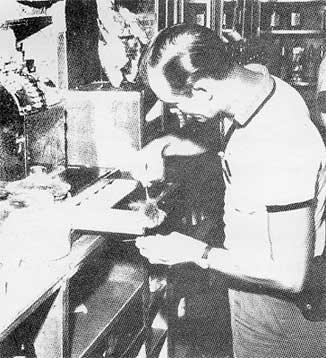
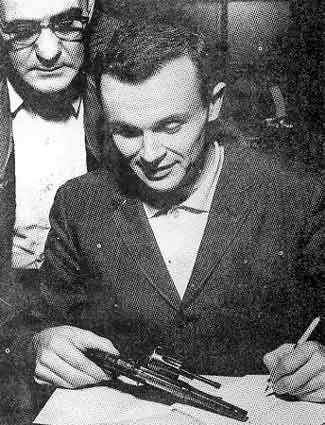
Gathering Physical Evidence. At left: unknown. At right: Inspector Watkins, Joseph McComb Jr. (holding gun).
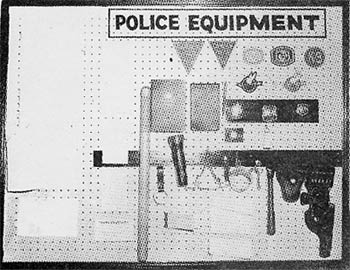
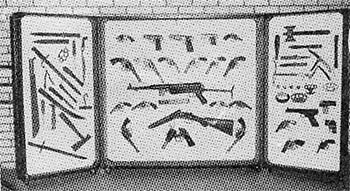
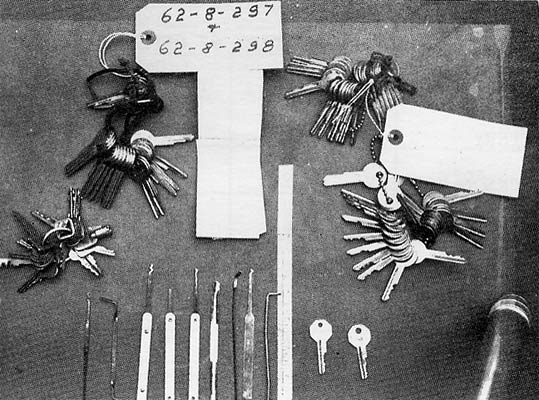
Tools of the Police Profession and Confiscated Weapon Display.
Pages 47–50 — Records and Identification Division
Consisting of Central Records, Identification, Archives, Statistical Unit, Evidence and Property, this Division's primary functions is to service other Divisions in the Police Department. The Identification Bureau is open on a 24-hour-a-day cycle. Among its assignments are the processing and storing of evidence; searching of crime scenes; distribution of the Daily Bulletin; maintenance of an extensive criminal registration file and the fingerprinting, photographing and processing of prisoners. The Identification Bureau is also charged with the voluntary registration and transferring of firearms. Missing persons reports are received initially and transmitted through local broadcast media and teletype.
The Camden Police Mobile Crime Unit is operated by the technicians of the Bureau. It responds on all major crimes within the city limits. In addition, the Identification Bureau technician is present at all parades, ceremonies, fires, and other disasters to take photographs and, if necessary, diagrams.
The general overall function of the Records and Identification Bureau is best illustrated by the chart compiled by personnel within the Bureau.
PHOTOGRAPHY:
| Enlargements | 5,400 |
| Contact prints | 2,800 |
| Reproductions (copy) | 6,800 |
| Identification Photos | 195 |
| Total pieces of film developed | 231 |
In addition the Records & Identification Bureau receives a daily average of:
| Counter look-ups | 90 |
| Telephone calls and requests | 120 |
| Mail, incoming and outgoing | 85 |
The Supply Unit has the function of maintaining, issuing and repairing the multitude of equipment that is organic to the police department. Eighteen new men were equipped in 1962, and numerous items of replacement and return were handled by the Supply Unit. In addition, this Unit is charged with the operation of the Police Armory and ammunition supplies. Vehicles, radios, stretchers, lanterns, ammunitions, ropes, and other equipment pertinent to the operation of a modern police organization are the responsibility of the Supply Unit.
In the year 1962 the Records & Identification Bureau of the Camden Police Department provided the following services:
RECORDS ON FILE:
| Total number of arrest cards | 126,000 |
| Criminal Fingerprint files | 17,102 |
| Criminal Registration Fingerprint files | 2,900 |
PERSONS FINGERPRINTED:
| Criminals | 1,257 |
| Criminal Registration | 756 |
| All other fingerprinted | 1,642 |
| Latent fingerprints at Crime Scenes and Autos | 821 |
| Total pieces of evidence received by Evidence Custodian | 3,125 |
| Missing Persons, valid alarms processed (male) | 191 |
| Missing Persons, valid alarms processed (female) | 192 |
| Missing Persons, valid alarms processed (total) | 382 |
| Firearms registered and transferred | 432 |
The Records Room is the central system of filing and storing of records pertinent to the successful operation of Camden's Police Department. Data, records, photostats, and information are provided for various local, state, and federal law-enforcement agencies, as well as the Armed Services. Confidential inquiries for industry are also completed by the Records Room. In addition, all arrest, complaint, and investigation case records are processed, indexed, and filed by the personnel of the Records Room.
During 1962 the Records Bureau received and processed a total of 90,208 complaint forms and a record number of 5125 offense reports were typed, classified, and recorded.
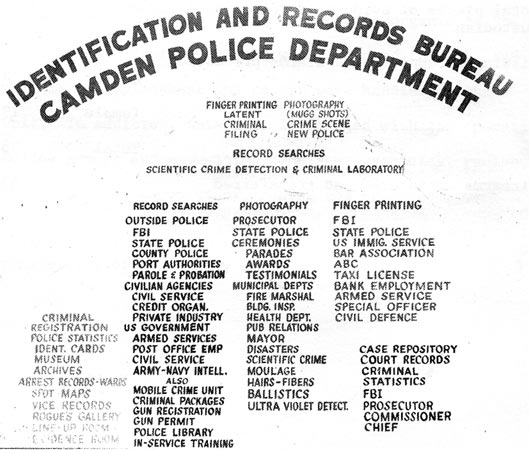
Page 50.
Page 51 — Statistics Unit
This newly created section of the Records and Identification Division is charged with the responsibility of compiling, categorizing and evaluating crime statistics and other records. Crime patterns, crime trends and their frequency in any given section of the city are recorded. This enables more effective concentration of police strength in critical areas. Graphs, charts, tables, and special reports make up the bulk of the Unit's work. It is possible to present a projected statistical report on any facet of police operations. In 1962 the Statistics Unit presented the following:
| Daily Chief's log | 365 |
| Weekly Crime trend | 52 |
| Monthly FBI Return “A” | 12 |
| Special Reports on projects | 23 |
| Miscellaneous reports (press, radio, other police agencies) | 39 |
| Prosecutors Monthly Gambling Reports | 12 |
| Prosecutor's Quarterly Gambling Reports | 4 |
| FBI Annual Reports B & C on Arrests and Classification of Crime | 1 |
| Consolidated Crime Report for Director | 1 |
| Chiefs Quarterly Part #1 Crime | 4 |
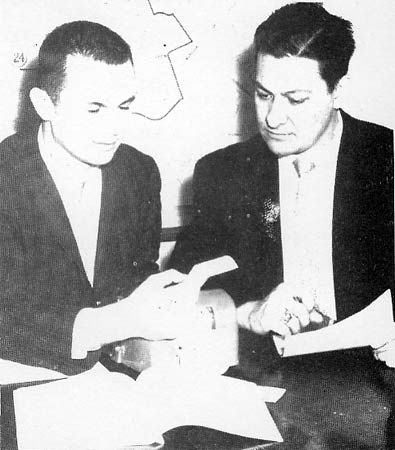
Crime Reporting.
Page 52 — This Is the City
The city of Camden is divided into 14 wards. It is further sub-divided into ten (10) sectors for police protection. The following figures indicate the area and populations of the various Police Car Sectors, wards and their accompanying statistics (the area in square miles and the population based on the 1960 U.S. Census).
| Sector | Area | Population | Crime Rate* | Rate Per 100 |
|---|---|---|---|---|
| 11 | .50 | 10,747 | 467 | 4.36 |
| 12 | .48 | 6,226 | 293 | 4.70 |
| 13 | .53 | 7,904 | 370 | 4.68 |
| 15 | .43 | 5,469 | 395 | 7.22 |
| 21 | 1.38 | 17,220 | 339 | 1.96 |
| 22 | 1.59 | 11,669 | 181 | 1.55 |
| 23 | .83 | 8,668 | 323 | 3.73 |
| 25 | 1.03 | 17,169 | 536 | 3.12 |
| 31 | 1.07 | 14,803 | 412 | 2.79 |
| 33 | 2.06 | 17,284 | 199 | 1.15 |
| Total | 9.9 | 117,159 | 3,515 | 3.52 |
* Includes all reported larcenies for the year 1962
Page 53
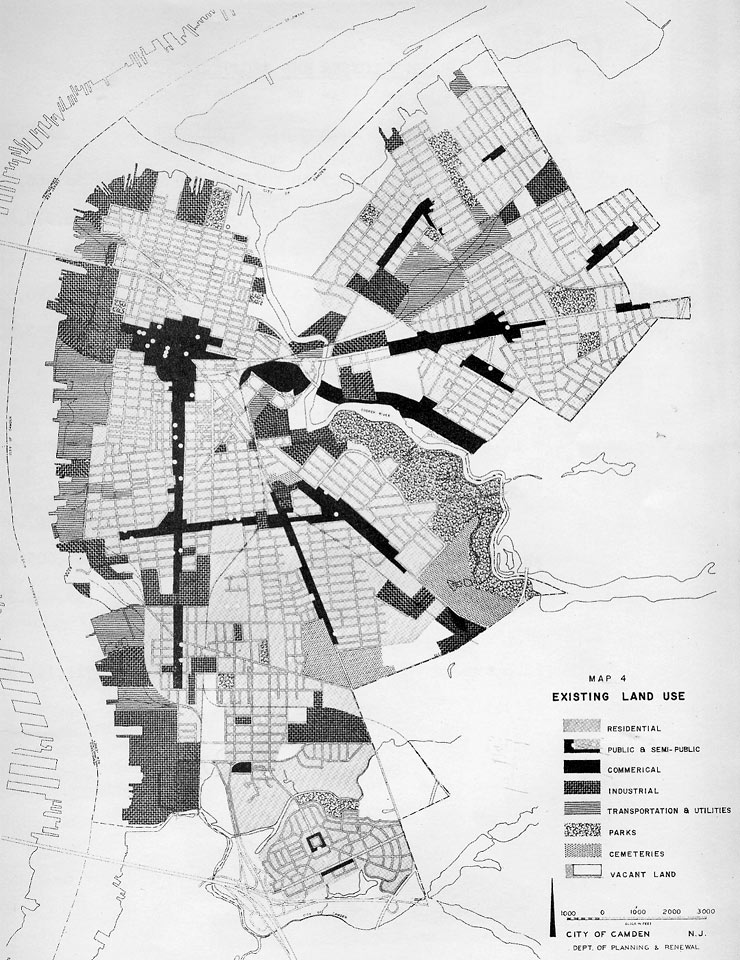
Page 53.
Page 54 — Total Reported Losses and Recoveries
| 1961 Loss | 1962 Loss | 1961 Recovered | 1962 Recovered | |
|---|---|---|---|---|
| January | $94,598.01 | $78,602.60 | $71,069.66 | $53,466.50 |
| February | 81,759.51 | 85,858.22 | 63,003.42 | 56,579.60 |
| March | 109,467.86 | 74,907.81 | 99,565.42 | 40,447.17 |
| April | 93,420.38 | 54,158.46 | 64,913.67 | 44,490.85 |
| May | 64,997.18 | 62,834.42 | 52,659.02 | 49,987.90 |
| June | 33,958.98 | 50,629.10 | 34,887.07 | 44,262.85 |
| July | 71,428.87 | 57,047.35 | 49,927.91 | 35,123.60 |
| August | 80,989.43 | 46,237.30 | 53,402.29 | 39,605.95 |
| September | 52,256.13 | 67,094.22 | 49,351.85 | 22,259.78 |
| October | 61,235.42 | 75,195.15 | 42,021.42 | 24,440.50 |
| November | 70,437.22 | 66,549.20 | 44,239.20 | 65,005.45 |
| December | 52,146.08 | 75,195.15 | 40,933.00 | 35,455.38 |
| Total | $866,695.07 | $780,321.19 | $665,973.93 | $511,125.53 |
| Amount Stolen 1961 | $866,695.08 |
| Amount Stolen 1962 | $780,321.19 |
| Decrease Stolen 1962 | $86,373.89 |
| Total Recovery 1962 | $511,125.53 or 65.5% |
Page 55
Page 55.
Pages 56 & 57 — Missing Pages
When the booklet was put together, pages 56 and 57 were omitted, I believe due to mis-numbering. If anyone has a version of this booklet with these pages included, please contact us.
Page 58 — Arrest Comparison for Part #1 Offenses, 1961–62
| Crime | 1961 | 1962 | Increase | Decrease |
|---|---|---|---|---|
| Murder | 5 | 5 | 0 | 0 |
| Death by Auto | 11 | 9 | 0 | 2 |
| Rape | 19 | 20 | 1 | 0 |
| Robbery | 59 | 65 | 6 | 0 |
| Aggravated Assault | 126 | 169 | 43 | 0 |
| Burglary | 209 | 189 | 0 | 20 |
| Larceny | 303 | 311 | 8 | 0 |
| Auto Theft | 125 | 80 | 0 | 45 |
| Total Arrests for Part #1 | 857 | 848 | 9 |
A Part #1 Offense as classified by the FBI is a crime of major proportion. Within this category fall all the offenses against the person (Murder, Death by Auto, Rape, Robbery and Aggravated Assault) and those offenses against property (Burglary, Larceny and Auto Theft) that are indictable and upon conviction would mean a severe penalty both monetary and imprisonment up to, and including, death.
Page 59
Page 59.
A Part #2 Offense is a crime category established by the F.B.I. They include all offenses deemed secondary to the Part #1 or major criminal offenses. In addition, they are representative of the types of offenses found in all penal codes covering the 50 states. Finally, it is essential to have maximum uniformity in collecting crime statistics for periodic returns. The Standard Classification of Offenses system was devised in 1932 by the F.B.I. for the compilation of criminal statistics. This method of general classification was selected and adopted in order that police, judicial and penal statistics may be uniformly compiled in terms of a single crime category.
Page 60 — Arrest Comparison for Part #2 Offenses, 1961–62
| Crime | 1961 | 1962 | Increase | Decrease |
|---|---|---|---|---|
| Assault & Battery | 994 | 978 | 0 | 16 |
| Worthless Checks & Forgery | 29 | 119 | 0 | 18 |
| Embezzlement & Fraud | 68 | 72 | 4 | 0 |
| Receiving/Possession Stolen Goods | 45 | 53 | 8 | 0 |
| Carrying Concealed Deadly Weapons | 63 | 60 | 0 | 3 |
| Prostitution | 6 | 10 | 4 | 0 |
| Sex Offenses | 169 | 157 | 0 | 12 |
| Family Offenses | 33 | 26 | 0 | 7 |
| Narcotics | 2 | 33 | 11 | 0 |
| Liquor Violations | 12 | 64 | 52 | 0 |
| Drunkenness | 677 | 750 | 73 | 0 |
| Vagrancy | 12 | 15 | 3 | 0 |
| Gambling | 56 | 206 | 150 | 0 |
| Drunken Driving | 149 | 173 | 24 | 0 |
| All Others | 1,082 | 1,293 | 213 | 0 |
| Total Arrests for Part #2 | 4,592 | 5,032 | 442 |
Page 61 — Arrest by Wards, 1962
| Ward | 1st District | 2nd District | 3rd District | Wards Arrest 1961 | Ward Arrest 1962 | Difference # | Pct. |
|---|---|---|---|---|---|---|---|
| 1st | 423 | 687 | 423 | 264 | 62.4 | ||
| 2nd | 2,514 | 1,593 | 2,524 | 931 | 58.4 | ||
| 3rd | 362 | 371 | 362 | 9 | 2.4 | ||
| 4th | 243 | 269 | 243 | 26 | 9.7 | ||
| 5th | 253 | 393 | 253 | 140 | 35.6 | ||
| 6th | 239 | 258 | 239 | 19 | 9.9 | ||
| 7th | 311 | 319 | 311 | 8 | 2.5 | ||
| 8th | 249 | 287 | 249 | 38 | 13.2 | ||
| 9th | 292 | 298 | 292 | 6 | 2.1 | ||
| 10th | 218 | 224 | 218 | 6 | 2.6 | ||
| 11th | 211 | 192 | 211 | 19 | 9.9 | ||
| 12th | 250 | 293 | 250 | 43 | 14.6 | ||
| 13th | 218 | 243 | 218 | 25 | 13.3 | ||
| 14th | 87 | 122 | 87 | 35 | 28.7 | ||
| Totals | 4,062 | 1,357 | 461 | 5,549 | 5,880 | 331 | 5.9 |
Page 62 — Arrest by Districts, 1962
| Ward | 1st District | 2nd District | 3rd District | Total |
|---|---|---|---|---|
| 1st | 288 | 142 | 26 | 456 |
| 2nd | 221 | 109 | 43 | 373 |
| 3rd | 330 | 73 | 28 | 431 |
| 4th | 375 | 99 | 37 | 511 |
| 5th | 382 | 80 | 22 | 484 |
| 6th | 377 | 131 | 39 | 547 |
| 7th | 356 | 119 | 68 | 543 |
| 8th | 412 | 153 | 60 | 625 |
| 9th | 363 | 114 | 26 | 503 |
| 10th | 349 | 124 | 30 | 503 |
| 11th | 255 | 125 | 53 | 433 |
| 12th | 354 | 88 | 29 | 471 |
| Totals | 4,062 | 1,357 | 461 | 5,880 |
Pages 63–64 — Camden Police Chaplains
The Year 1962 marked the appointment of regular Chaplains in the Camden Police Department. All three denominations are represented. These dedicated men of the cloth are on call at all times to render their services to any and all members of the department.
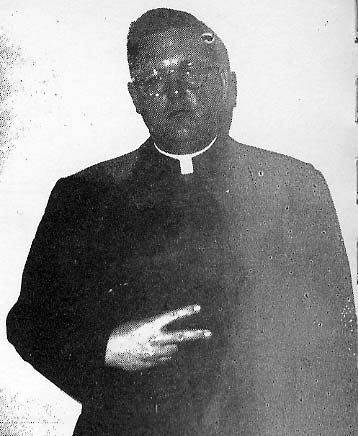
Reverend John Goan (Catholic)
Immaculate Conception Church
614 Market Street, Camden, N.J.
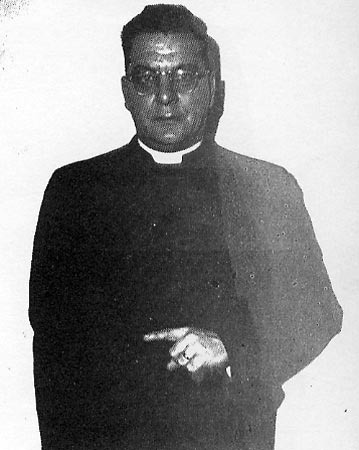
Reverend J. Hillman Coffee (Protestant)
2930 Westfield Avenue, Camden N.J.
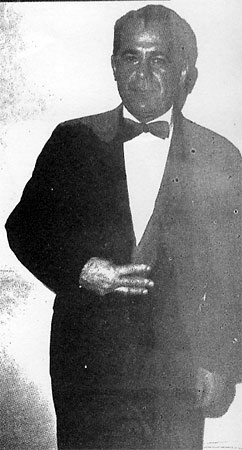
Rabbi Harry B. Kellman
Congregation of Beth El
Park Boulevard, Camden, N.J.
Page 65 — City Council's Police Committee
In the strong mayor-council form of government, a Police Committee is selected from the seven elected councilmen. The Camden Police Department is honored to have appointed as its committee Mr. Matthew Casper, President; Mrs. Elizabeth Hawks, Mr. Elijah Perry and Mr. Mario Rodriguez as their civilian Council Committee.
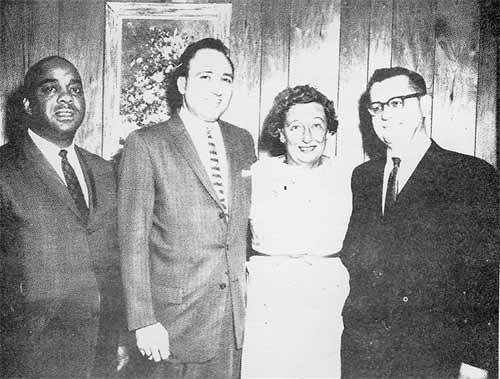
City Council's Police Committee. From Left: Elijah Perry, Matthew Casper, Mrs. Elizabeth Hawk, Mario Rodriguez.
Page 66 — The Police Committee
The year 1961 was a pioneer one for the City of Camden's Police Department. The 1st Annual Report was presented on the activities of the Department. We, the Committee Members, feel benefited by the year's experience and consider ourselves honored to be charged with the same assignment for 1962. We wish to present herewith to the officials of Camden, the Director of Public Safety, and the Chief of Police this product of our combined efforts.
- Inspector John H. Watkins, Chairman
- Sergeant Mario J. Ferrari
- Sergeant Joseph W. Fearon
- Sergeant David D. Kelly
- Patrolman Joseph Kane
- Patrolman Joseph J. McComb Jr.
- Patrolman Anthony Martino
Photos were taken by the official Camden Police photographers.
Page 67 — Acknowledgments
This edition of the Camden Police Annual Report was completed through the courtesy and cooperation of the Camden County Vocational and Technical High School Printing Shop, Mr. John T. Dempsey, Jr.
The many and expertly drawn charts and graphs were completed by Mr. Lawrence Mignogna of the Camden County Engineers Office.
Final editing was contributed by Mr. Gaeton Fonzi, of Somerdale, New Jersey.
Special editions of the 1962 Annual Report were bound in hardback through the courtesy of Mr. Albert Gold.
To all the above, we, the Committee, wish to convey our heartfelt thanks for a job well done.
Page 68 — The Policeman
The policeman is not just a man, he is a living symbol. He is a modern day peace officer in the proud tradition of the frontier sheriffs, the U.S. Marshals, and the Texas Rangers who did so much to establish law and order in the early days of our Republic.
Like those before him, he too carries a gun. But he depends on science and tried and true police techniques to keep the peace. He works around the clock and performs a thousand tasks in the line of duty. He directs traffic, protects children along their school route, gives first aid to the injured, and in an emergency even delivers babies.
He stands between the community and the maniac killer or the armed thug. He has taken an oath to uphold the law even at the risk of his own life or limb.
The policeman uses his many skills to serve his community. All he asks for in return is your cooperation by obeying all the laws you, yourself, have created, and by teaching your children to respect his uniform.
Remember that the policeman is your friend in an emergency. But he can be a formidable foe in dealing with the lawless. In short, he makes your troubles his business…