Introduction
The older sections of Camden, that is, the area that was Camden prior to 1871 and the areas in old Newton Township that had already been developed, had many tiny streets, alleys, and courts. The homebuilders of the day would cram a few houses in whatever land was big enough to accommodate them in the areas between the larger streets. Although today this would not happen for concerns about overcrowding and the desire for open spaces, this practice benefited everyone concerned in a time where people walked to work. There were no autos then nor public transportation. It also increased the city's tax base.
Many of these streets have been completely erased, existing only in memory. A few still exist with houses, others only as cutouts in the sidewalks with an overgrown path where there had been cobblestones.
In the fall of 1932 the Courier-Post newspapers… then the Morning Post and the Evening Courier… published a series of three articles with photos about the small streets that existed at the time, with pictures. A fourth article was announced but may not have been published. These were followed up by a two article feature on the shanty town of Liney Ditch, at the foot of Jasper Street. These articles are below, with links to the pages on this website that concern each of the places mentioned.
Do you have any photos or images of the places concerned, let me know by e-mail so it can be included on this website.
Phil Cohen
Saturday, February 15, 2020
Little Known City Streets Revealed as Safety Havens For Myriads of Children
Camden Courier-Post —
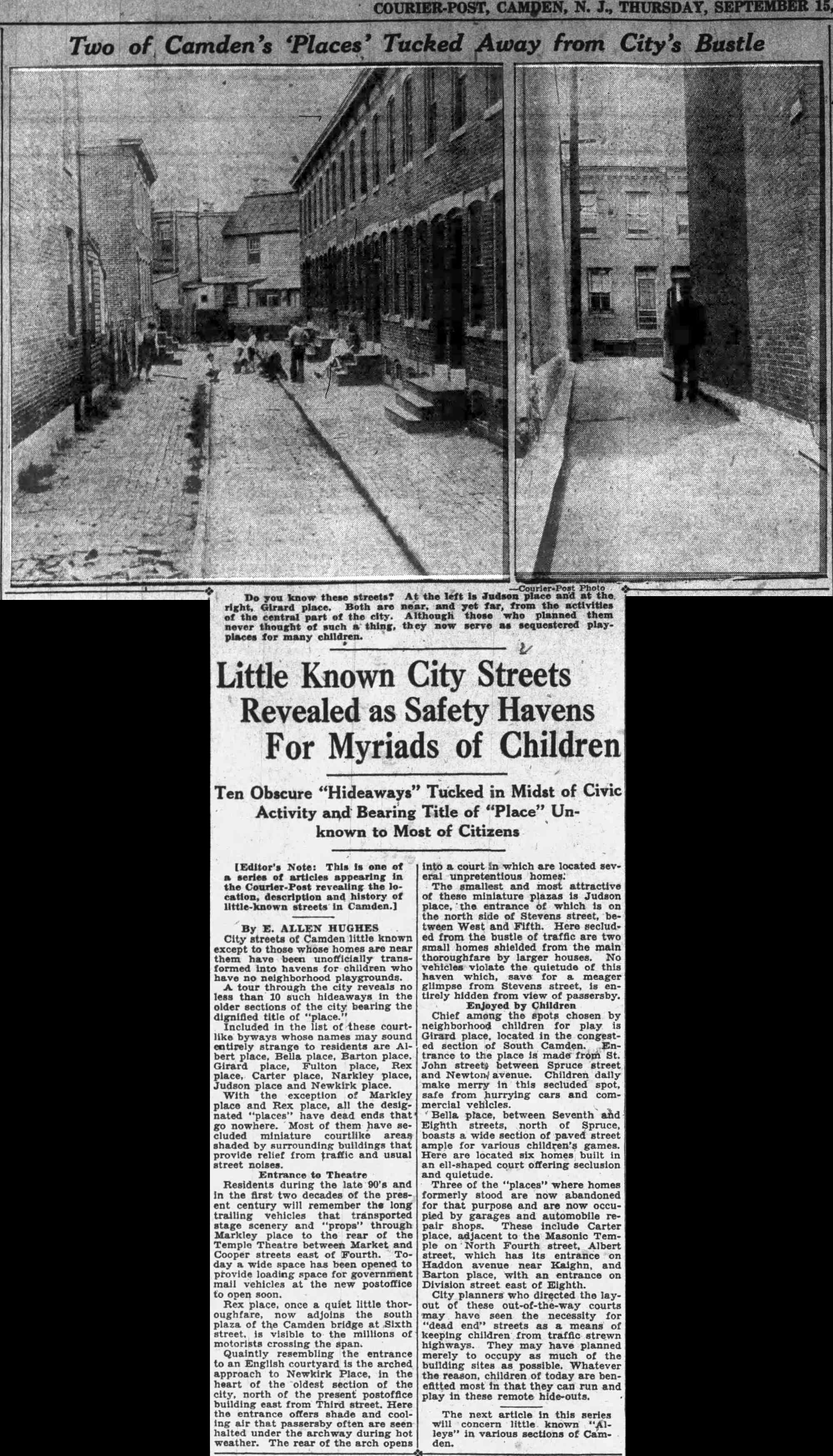
Two of Camden’s ‘Places’ Tucked Away from City’s Bustle
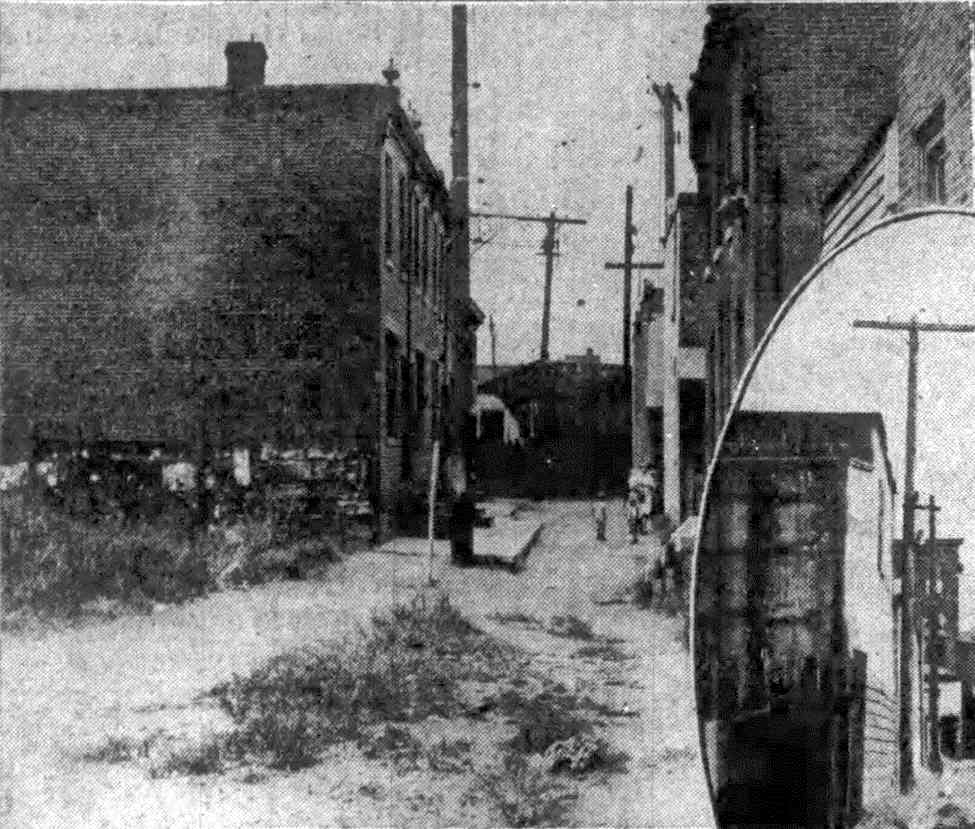
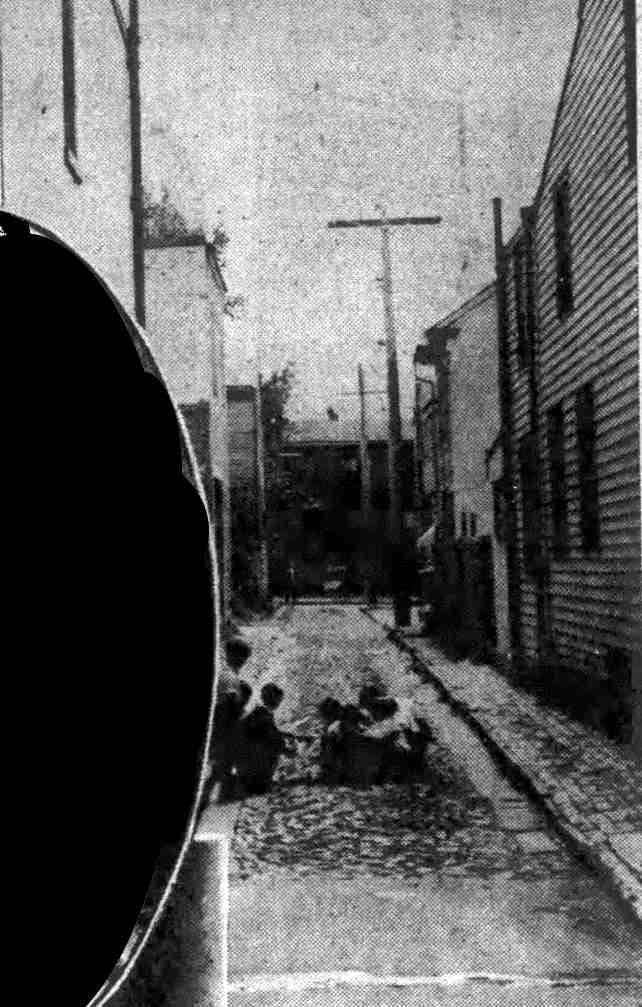
Do you know these streets? At the left is Judson place and at the right, Girard place. Both are near, and yet far, from the activities of the central part of the city. Although those who planned these streets never thought of such a thing, they now serve as sequestered play-places for many children.
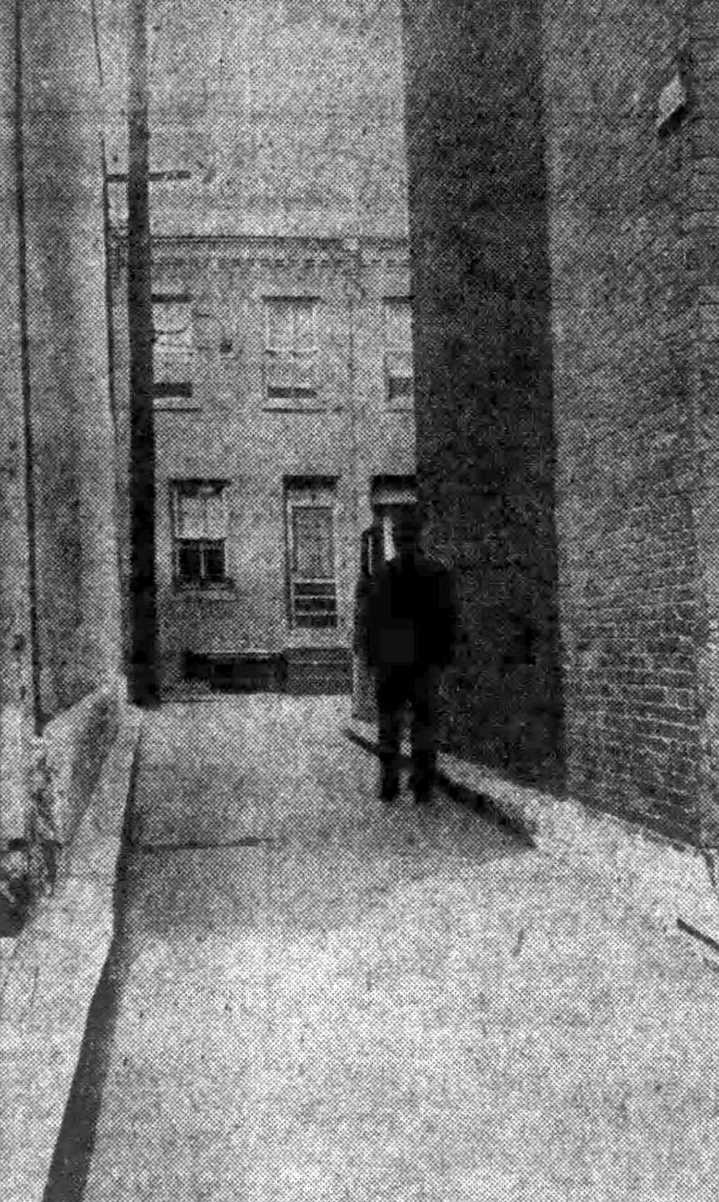
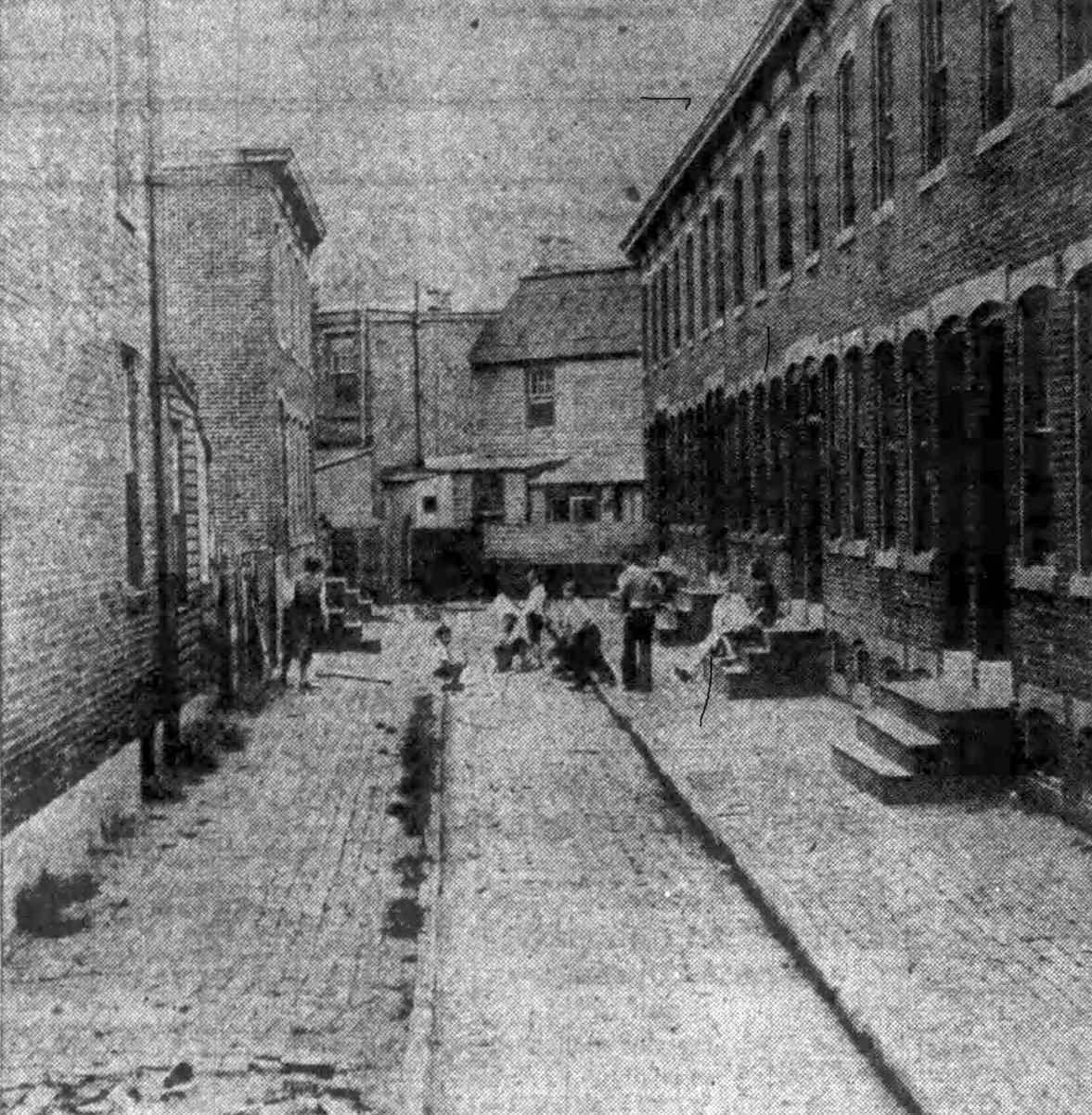
Left: Judson Place
Right: Girard Place

Note: When published, the photos were on the wrong sides. How they are pictured above is correct.
Streets linked in this article: Albert Place — Barton Place — Bella Place — Carter Place — Fulton Place — Girard Place — Judson Place — Markley Place — Newkirk Place — Rex Place — E. Allen Hughes
Little Known City Streets Revealed as Safety Havens For Myriads of Children
Ten Obscure “Hideaways” Tucked in Midst of Civic Activity and Bearing Title of “Place” Unknown to Most of Citizens
[Editor’s Note: This is one of a series of articles appearing in the Courier-Post revealing the location, description and history of little-known streets in Camden.]
By E. ALLEN HUGHES
City streets of Camden little known except to those whose homes are near them have been unofficially transformed into havens for children who have no neighborhood playgrounds. A tour through the city reveals no less than 10 such hideaways in the older sections of the city bearing the dignified title of “place.”
Included in the list of these court-like byways whose names may sound entirely strange to residents are Albert place, Bella place, Barton place, Girard place, Fulton place, Rex place, Carter place, Narkley place, Judson place and Newkirk place.
With the exception of Markley place and Rex place, all the designated “places” have dead ends and go nowhere. Most of them have secluded miniature courtlike areas shaded by surrounding buildings that provide relief from traffic and usual street noises.
Entrance to Theatre
Residents during the late 90’s and in the first two decades of the present century will remember the long trailing vehicles that transported stage scenery and “props” through Markley place to the rear of the old Templeman theatre and also the use of the Camden bridge at Sixth street, is visible to the millions of motorists crossing the span.
Rex place, resembling in appearance to an English courtyard, is the arched entrance to the Masons temple, in the heart of the oldest section of the city, north of the new postoffice building east from Third street. Here the entrance offers shade and cooling air that passers-by often are seen halted under the archway in warm weather. The rear of the arch opens into a court in which are located several unpretentious homes.
The smallest and most attractive of these miniature plazas is Judson place, the entrance of which is on the north side of Stevens street, between West and Fifth. More secluded from the bustle of traffic are two small homes shielded from the main thoroughfare by larger houses. No vehicles violate the quietude of this haven which, save for a meager glimpse from Stevens street, is entirely hidden from view of passers-by.
Enjoyed by Children
Chief among the spots chosen by neighborhood children for play is Girard place, located in the congested section of South Camden. Entrance to the place is made from St. John street between Spruce street and Newton avenue. Children daily make merry in this secluded spot, unthreatened by automobile or commercial vehicles.
Bella place, between Seventh and Eighth streets, north of Spruce, boasts a wide section of paved street ample for various children’s games. Here are located six homes built in an ell-shaped court offering seclusion and quietude.
Three of the “places” where homes formerly stood are now abandoned for that purpose and are now occupied by garages and automobile repair shops. These include Carter place, adjacent to the Masonic Temple, and Newkirk place on Haddon street, which has its entrance on Haddon avenue near Kaighn, and Division street, with an entrance on Division street east of Eighth.
City planners who directed the layout of these out-of-the-way courts may have seen the necessity for “dead end” streets as a means of keeping children from traffic strewn thoroughfares. It is possible, however, the buildings on the sites were merely to occupy as much of the building sites as possible. Whatever the reason, children of today are benefited most in that they can run and play in these remote hide-outs.
The next article in this series will concern little known “Alleys” in various sections of Camden.
Romantic Hints of Long Ago Found in City's Tiny 'Streets'
Camden Courier-Post —
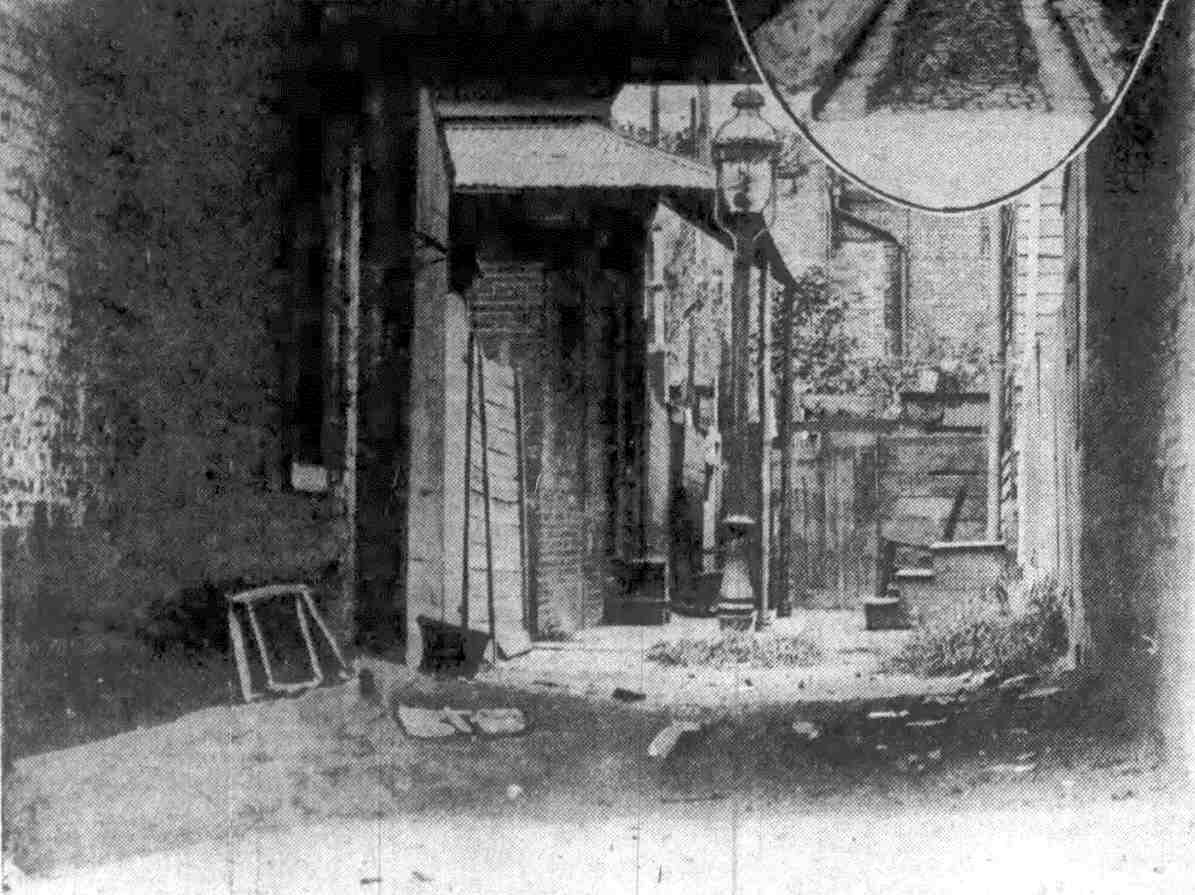
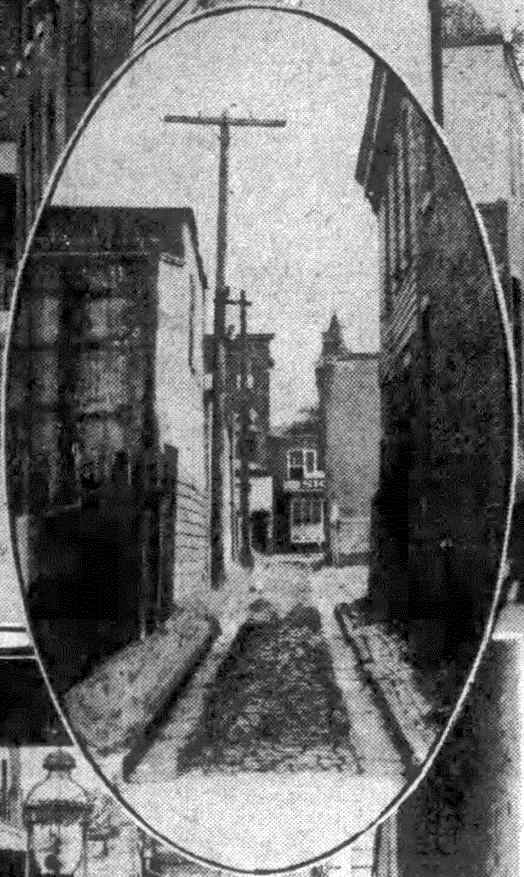
Nelson Court (aka Nelson Street)
Above: Chew Court
Right: Post Alley
Streets linked in this article: Cammer Court — Welsh Street — Wagner Court — Joint Alley — Carbon Court — Coates Avenue — Admiral Henry B. Wilson Jr. — E. Allen Hughes
The reporter got things somewhat confused, which is understandable once one knows that at one time Camden had a Coates Alley, a Coates Avenue, and a Coates Court. Click Here to Get it Explained!
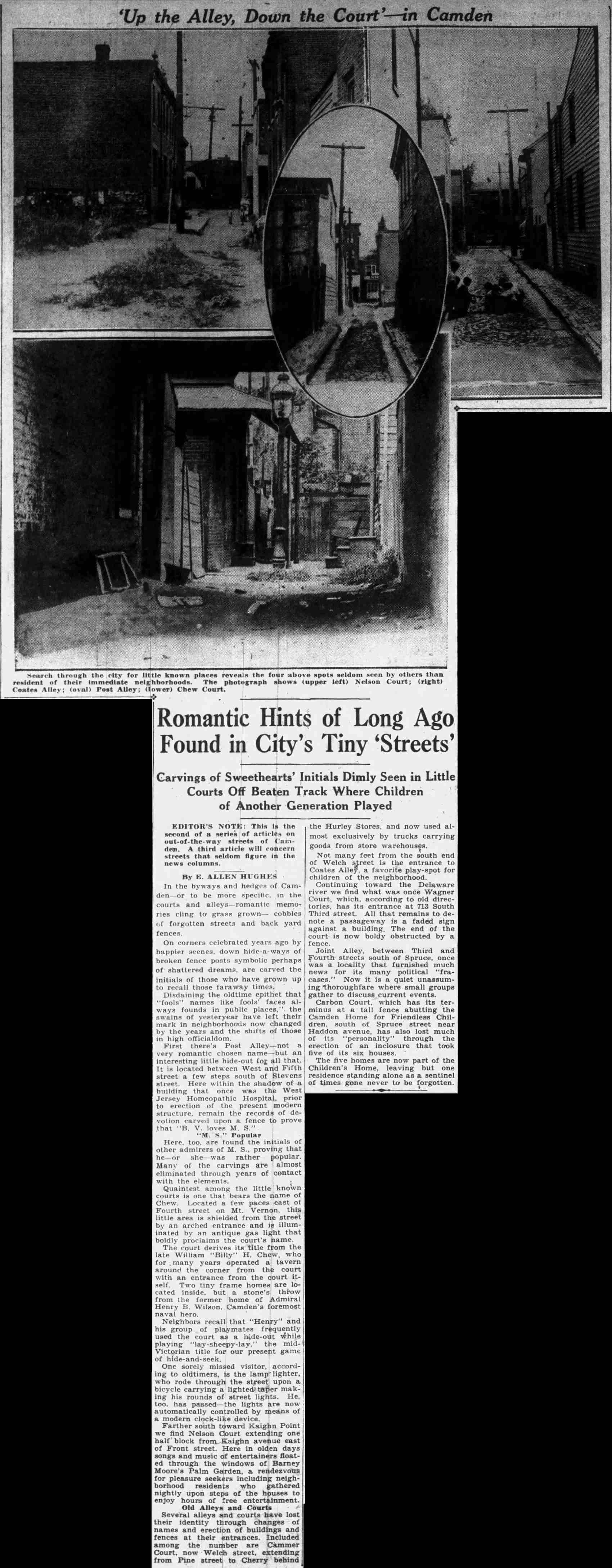
‘Up the Alley, Down the Court’ — in Camden
Romantic Hints of Long Ago Found in City’s Tiny ‘Streets’
Carvings of Sweethearts’ Initials Dimly Seen in Little Courts Of Beaten Track Where Children of Another Generation Played
By E. ALLEN HUGHES
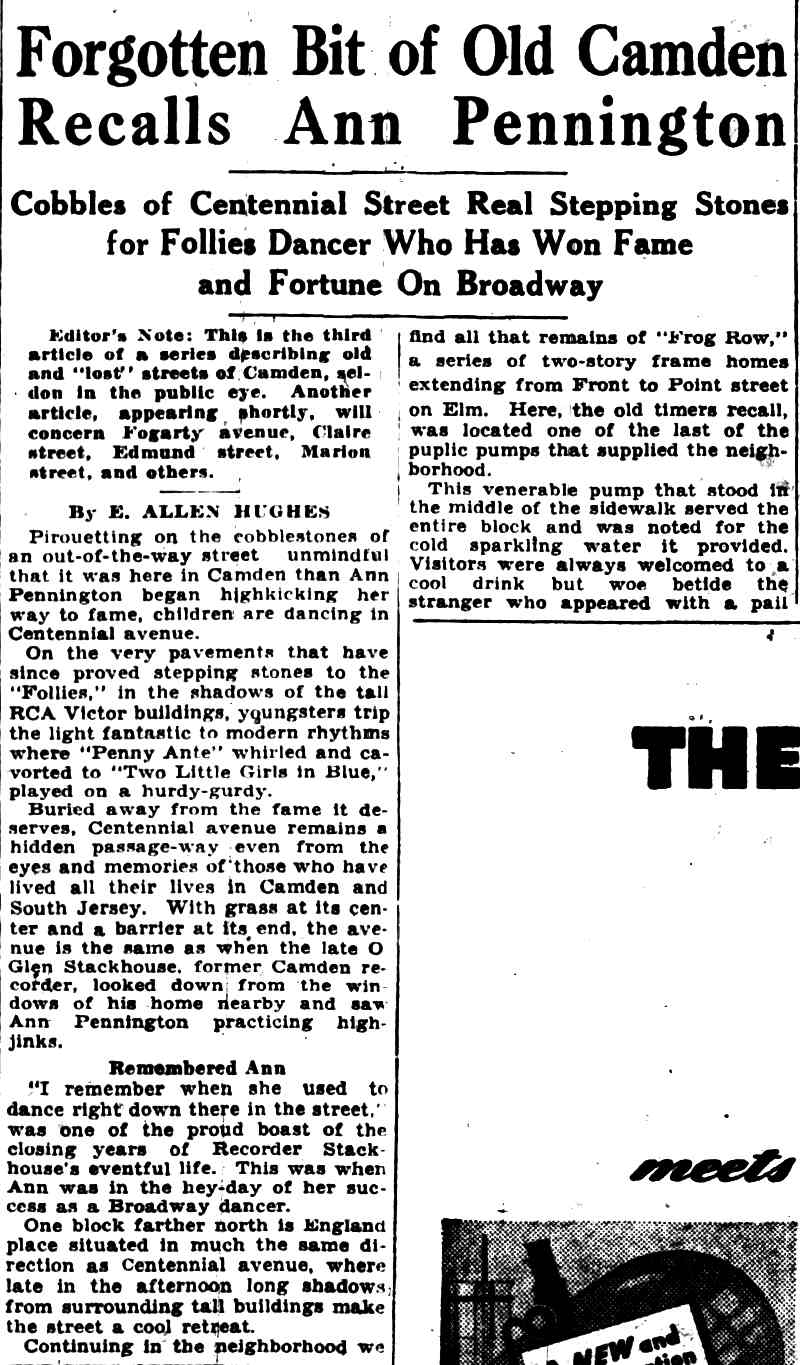
Forgotten Bit of Old Camden Recalls Ann Pennington
Camden Courier-Post —
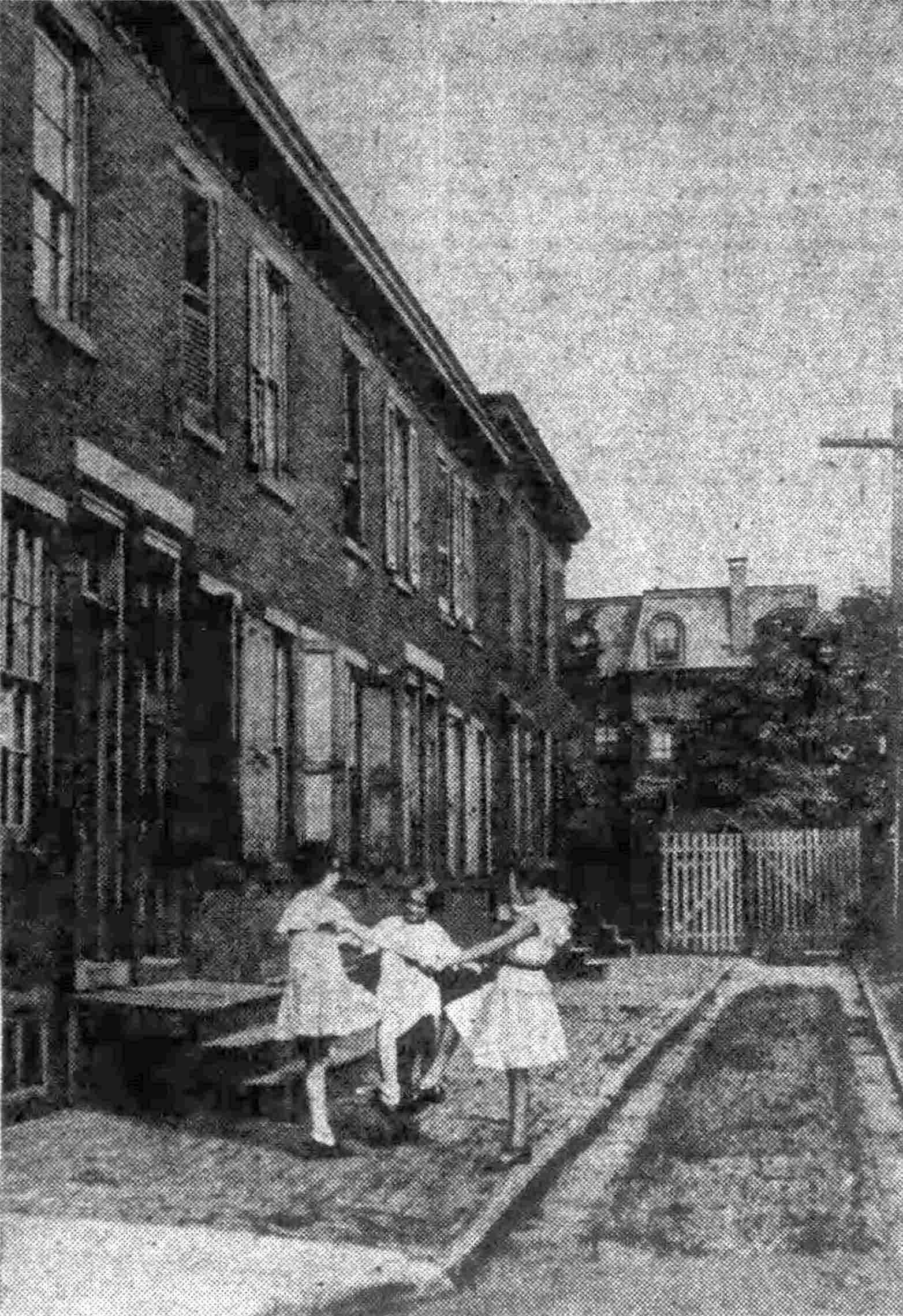
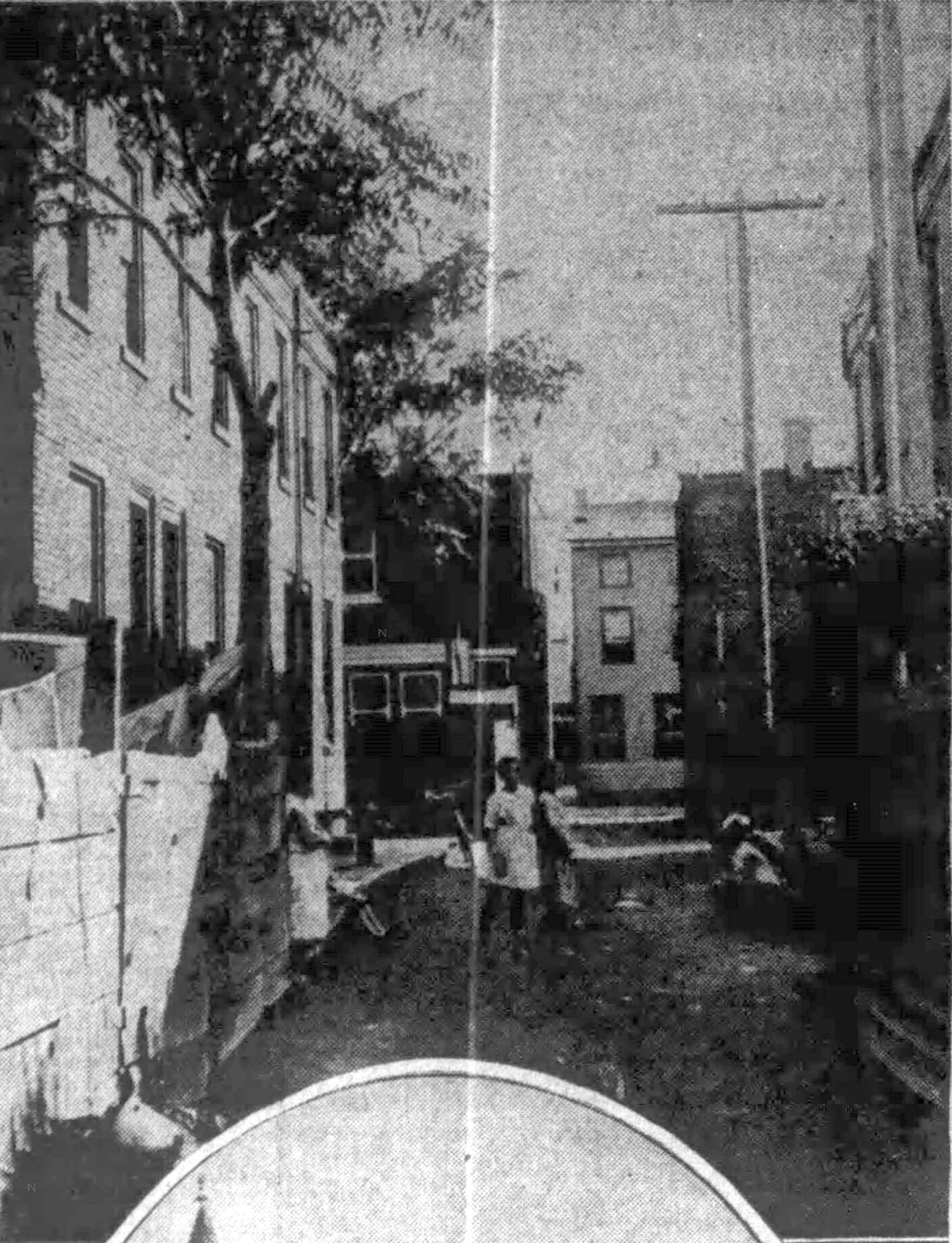
Left: Centennial Avenue
Above: Holcaine Avenue
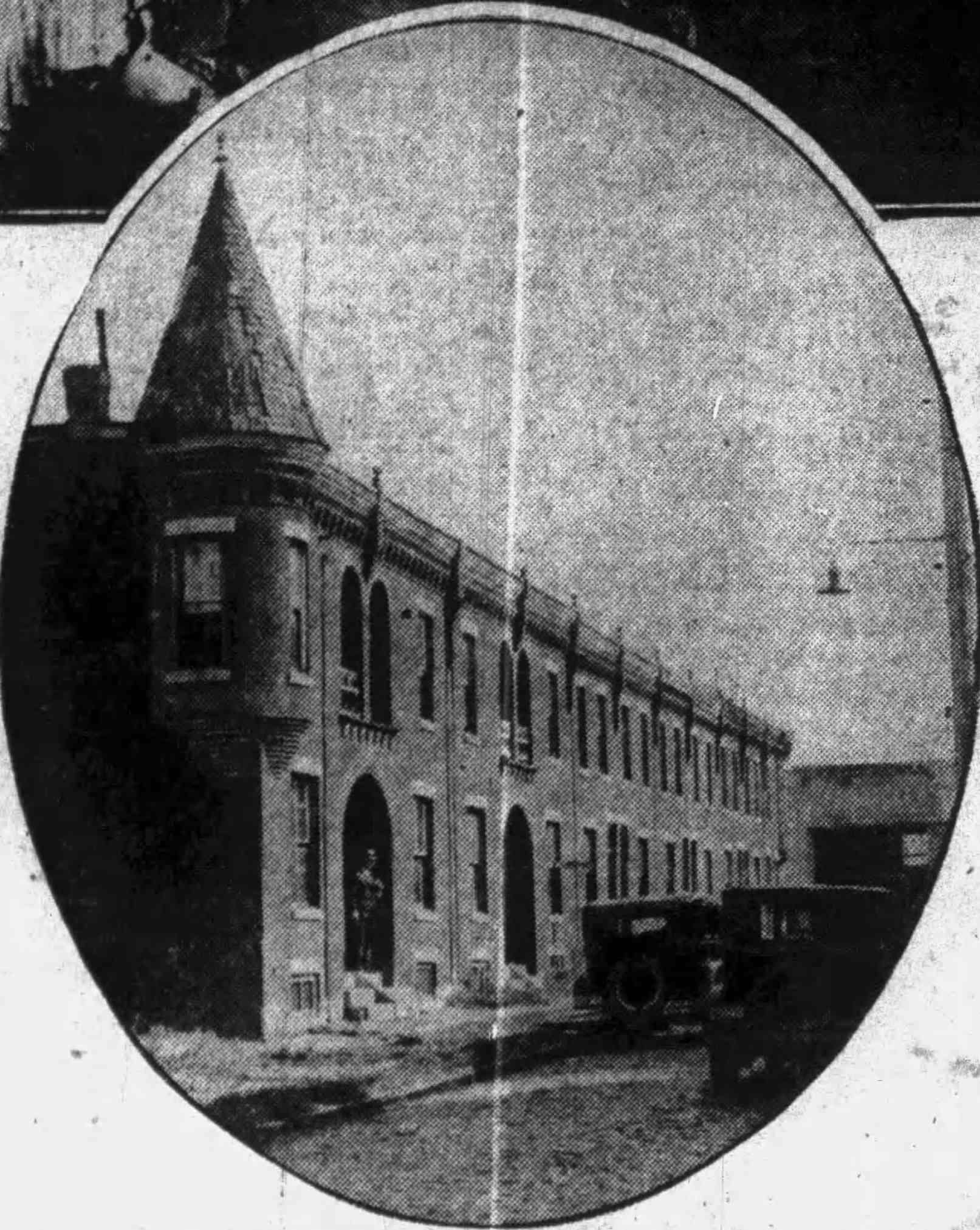
Left: Hyde Park Street
Streets linked in this article: Centennial Avenue — Holcaine Avenue — Hyde Park Street — Frog Row (2 to 18 Elm Street) — Segal Street — Burns Street — Milton Street — Byron Street — Columbia Avenue — England Place — E. Allen Hughes — Ann Pennington
Forgotten Bit of Old Camden Recalls Ann Pennington
Cobbles of Centennial Street Real Stepping Stones for Follies Dancer Who Has Won Fame and Fortune On Broadway
Editor’s Note: This is the third article of a series describing old and “lost” streets of Camden, seldom in the public eye. Another article, appearing shortly, will concern Fogarty avenue, Claire street, Edmund street, Marion street, and others.
By E. ALLEN HUGHES
Pirouetting on the cobblestones of an out-of-the-way street unmindful that it was here in Camden than Ann Pennington began highkicking her way to fame, children are dancing in Centennial avenue.
On the very pavements that have since proved stepping stones to the “Follies,” in the shadows of the tall RCA Victor buildings, youngsters trip the light fantastic to modern rhythms where “Penny Ante” whirled and cavorted to “Two Little Girls in Blue,” played on a hurdy-gurdy.
Buried away from the fame it deserves, Centennial avenue remains a hidden passage-way even from the eyes and memories of those who have lived all their lives in Camden and South Jersey. With grass at its center and a barrier at its end, the avenue is the same as when the late O. Glen Stackhouse, former Camden recorder, looked down from the windows of his home nearby and saw Ann Pennington practicing high-jinks.
Remembered Ann
“I remember when she used to dance right down there in the street,” was one of the proud boast of the closing years of Recorder Stackhouse’s eventful life. This was when Ann was in the hey-day of her success as a Broadway dancer.
One block farther north is England place situated in much the same direction as Centennial avenue, where late in the afternoon long shadows from surrounding tall buildings make the street a cool retreat.
Continuing in the neighborhood we find all that remains of “Frog Row,” a series of two-story frame homes extending from Front to Point street on Elm. Here, the old timers recall, was located one of the last of the public pumps that supplied the neighborhood.
This venerable pump that stood in the middle of the sidewalk served the entire block and was noted for the cold sparkling water it provided. Visitors were always welcomed to a cool drink but woe betide the stranger who appeared with a pail to carry away the water. They guarded the pump, those Frog Row inhabitants, and took no chances on the well going dry.
Farther up toward Cooper Point is Segal street, lined on both sides with houses as alike as peas in a pod. Its terminus which formerly was the Delaware river is now a tall fence.
Continuing eastward we find three solid blocks of two story brick houses comprising Burns, Milton and Byron streets. These streets years ago contained the homes of many of Camden’s prominent men of today. Here also lived a group of youths who termed themselves the “Wharf Rats” with headquarters along the river at the head of Second street.
This band of mischievous adventurers boldly declared that they were tough and seldom hesitated to display their fistic talents when intruders attempted to cut into their domain. This was particularly true of Philadelphians who would row across the river from Penn Treaty Park.
The “enemy” forces were termed “Townies” and usually were met with a barrage of coal lumps hurled by the Wharf Rats from vantage points on the two piers that jutted into the river at Second street.
Many of the “Rats,” who were anything but what the name implied, are now professional and business men and many have found niches in high political life of the county.
Farther to the east on Erie street near Fifth is “Cyclone Row,” which for years stood high above the surrounding neighborhood because of its three-story houses, few of which were located north of York street. The row derives its name from the destructive cyclone of 1885, old timers say, which tore roofs from the houses, uprooted trees and wrought havoc throughout the northern end of the city.
Memories of cyclones are revived with a glimpse of a store front building at Fifth and Cedar streets, between Elm and Pearl streets. Here the cyclone of April, 1912, tore out the entire front of the second floor, exposing to view the bedroom furnishings of the inhabitants. Scars left by the “big wind” are now barely discernible after more than 30 years.
One avenue that has “passed” is Columbia avenue, remembered perhaps by most old timers as the home of Camden county’s morgue. Here it was that the late Martin J. O’Brien, morgue tender, proved of incalculable value to newspaper boys when a story with a “morgue angle” broke.
The entire block was torn down to make room for the present new city hall and court house, and it would be safe to hazard a guess that very few of the motorists who park their cars at the spot realize that their machine may be resting upon the slabs that once supported a human body—dead—just like the street and its name.
Liney Ditch River Community Lives Own Utopian Civic Way
Camden Courier-Post —


Liney Ditch River Community Lives Own Utopian Civic Way
Lone Pump Supplies 500 With Water While Most of Troubles of World Without Fail to Vex Subjects of ‘Mayor’ Cy Jones
Editor’s Note: This is the first of two articles which tell about the rise of “Liney Ditch”—that boathouse community at the foot of Jasper street, Camden. The second of the series, which will appear in a few days, will concern the shacktown “mayor” and village “postoffice.”
By E. ALLEN HUGHES
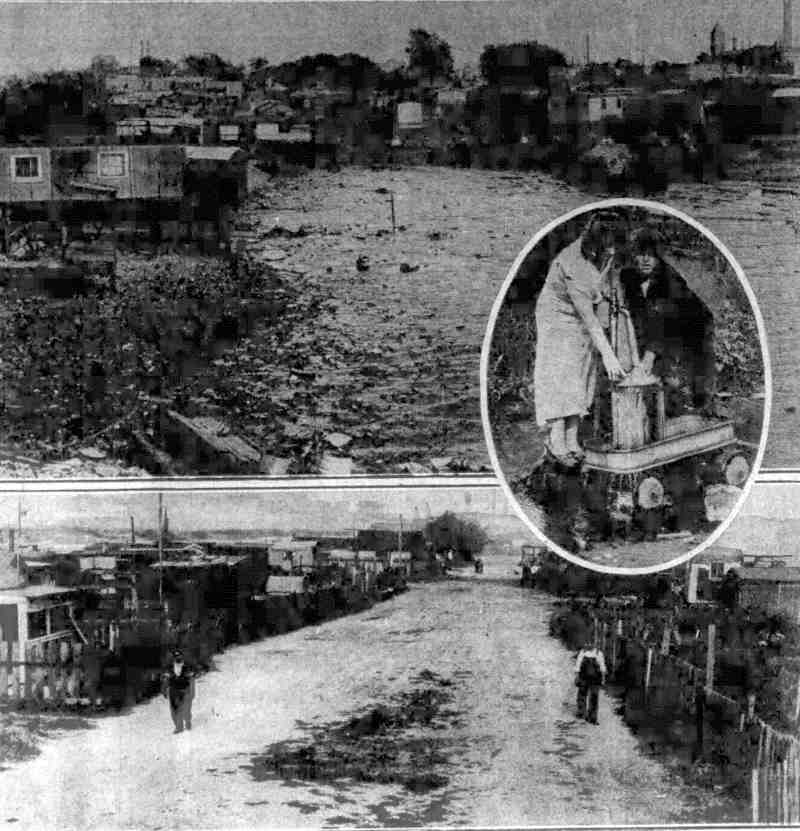
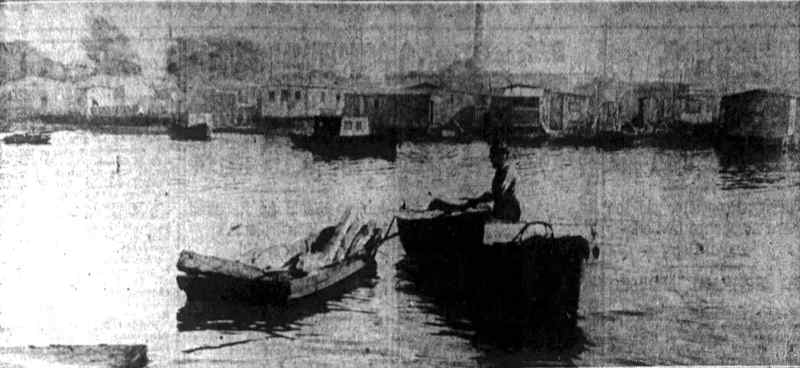
Where Camden’s Old Man River has tossed its mud, its houseboats and its refuse through the years, down where there’s mud for a cellar and the sky for a garret, “Liney Ditch” has become the city’s socialistic Utopia.
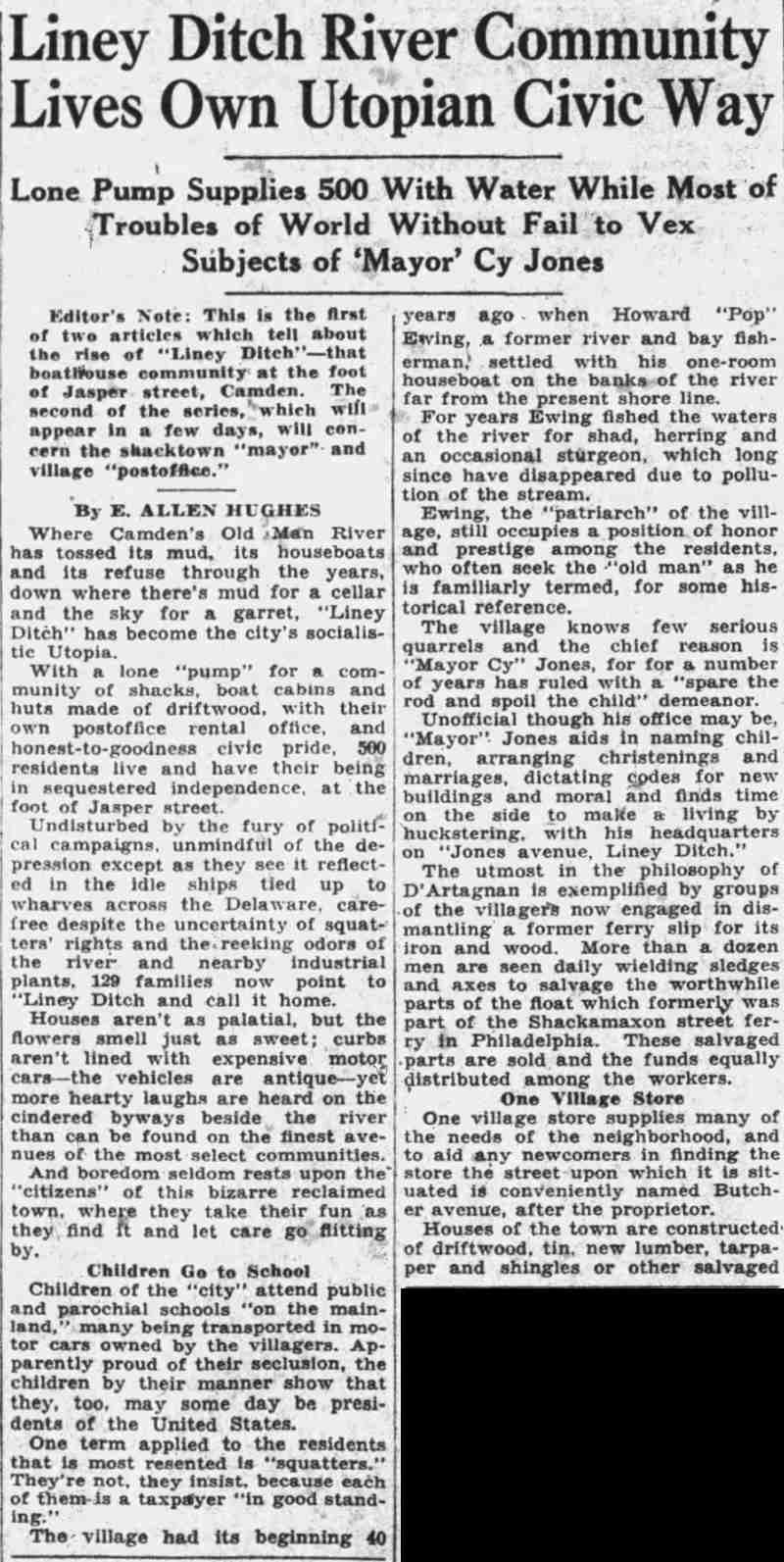
With a lone “pump” for a community of shacks, boat cabins and huts made of driftwood, with their own postoffice rental office, and honest-to-goodness civic pride, 500 residents live and have their being in sequestered independence, at the foot of Jasper street.
Undisturbed by the fury of political campaigns, unmindful of the depression except as they see it reflected in the idle ships tied up to wharves across the Delaware, carefree despite the uncertainty of squatters’ rights and the reeking odors of the river and nearby industrial plants, 129 families now point to “Liney Ditch and call it home.
Houses aren’t as palatial, but the flowers smell just as sweet; curbs aren’t lined with expensive motor cars—the vehicles are antique—yet more hearty laughs are heard on the cindered byways beside the river than can be found on the finest avenues of the most select communities.
And boredom seldom rests upon the “citizens” of this bizarre reclaimed town, where they take their fun as they find it and let care go flitting by.
Children Go to School
Children of the “city” attend public and parochial schools “on the mainland,” many being transported in motor cars owned by the villagers. Apparently proud of their seclusion, the children by their manner show that they, too, may some day be presidents of the United States.
One term applied to the residents that is most resented is “squatters.” They’re not, they insist, because each of them is a taxpayer “in good standing.”
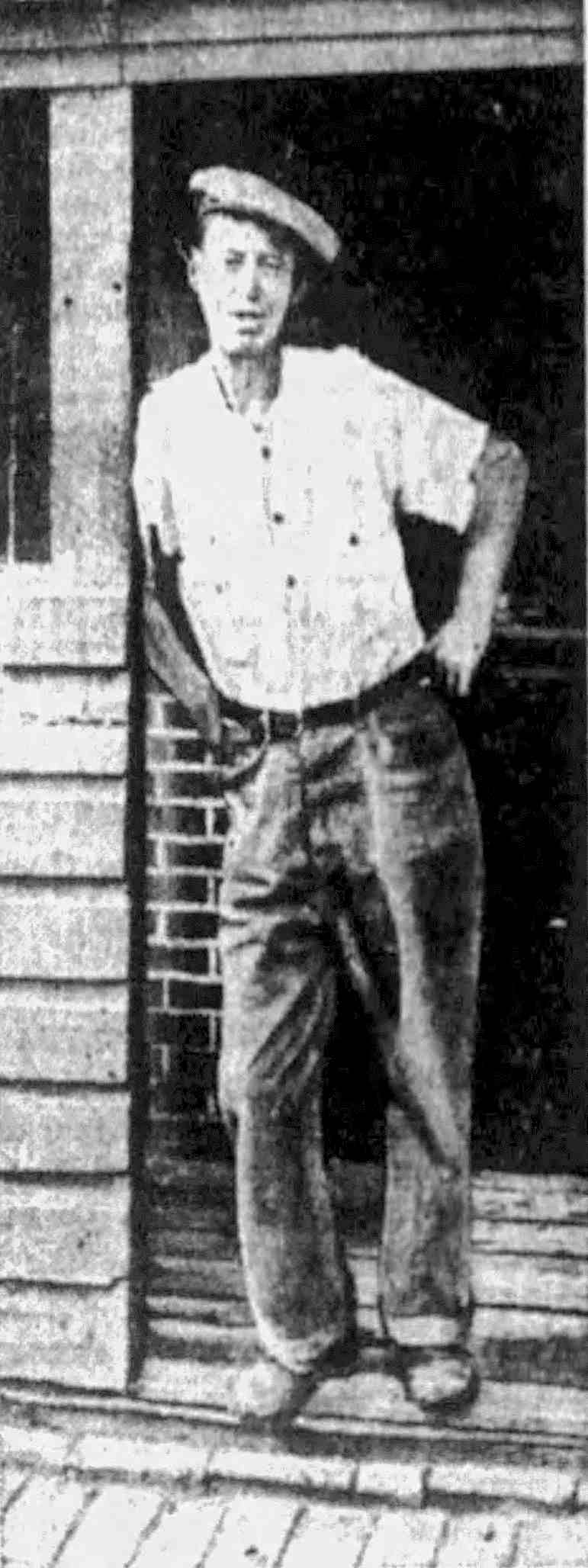
The village had its beginning 40 years ago when Howard “Pop” Ewing, a former river and bay fisherman, settled with his one-room houseboat on the banks of the river far from the present shore line.
For years Ewing fished the waters of the river for shad, herring and an occasional sturgeon, which long since have disappeared due to pollution of the stream.
Ewing, the “patriarch” of the village, still occupies a position of honor and prestige among the residents, who often seek the “old man” as he is familiarly termed, for some historical reference.
The village knows few serious quarrels and the chief reason is “Mayor Cy” Jones, for for a number of years has ruled with a “spare the rod and spoil the child” demeanor.
Unofficial though his office may be, “Mayor” Jones aids in naming children, arranging christenings and marriages, dictating codes for new buildings and moral and finds time on the side to make a living by huckstering, with his headquarters on “Jones avenue, Liney Ditch.”
The utmost in the philosophy of D’Artagnan is exemplified by groups of the villagers now engaged in dismantling a former ferry slip for its iron and wood. More than a dozen men are seen daily wielding sledges and axes to salvage the worthwhile parts of the float which formerly was part of the Shackamaxon street ferry in Philadelphia. These salvaged parts are sold and the funds equally distributed among the workers.
One Village Store
One village store supplies many of the needs of the neighborhood, and to aid any newcomers in finding the store the street upon which it is situated is conveniently named Butcher avenue, after the proprietor.
Houses of the town are constructed of driftwood, tin, new lumber, tarpa-per and shingles or other salvaged materials. — Cy Jones — Sam DiPetro — Albert Smith — Howard Ewing — William H. Chew — E. Allen Hughes — Liney Ditch
Slump and Political Hubbub Are Ignored as 'Liney Ditch' Prepares for Winter Siege
Camden Courier-Post —


Slump and Political Hubbub Are Ignored as ‘Liney Ditch’ Prepares for Winter Siege
Camden’s Unique Community on River Front at Jasper Street Sets Own Codes, Sees Children Get Religious Training and Brooks No Intrusion
By E. ALLEN HUGHES
While Wall Street wavers and political cauldrons sizzle and spill over at fever heat, “Liney Ditch,” Camden’s shacktown on the Delaware, ploddingly prepares for a cold winter siege.
Independent of the world outside, except as it provides a market for the town’s wares of reclamation—driftwood and junk snatched from the river mud—this houseboat hamlet, having the mein of a futurist’s nightmare down at the foot of Jasper street, knows no law except those founded and defended by dictators of “the ditch.”
Here, periodically, the “oldtimers” gather to confer on questions affecting the lives and codes that govern the 500 “residents,” with Mayor “Cy Jones” seated in the head chair.
The mayor’s office which is purely an honorary one, was tendered Jones several years ago by acclamation of a caucus of men of the town.
The villagers meet their obligations with unerring promptness adhering to the old Japanese code that he who fails to pay his just debts is unworthy of his fellows.
Community’s ‘Fixed Charges’
Chief among the fixed charges against the residents are land rentals and water service fees. The former represents a total of two dollars per month and a water “tax” costs 25 cents.
These fees are collected by a representative of the estate whose riparian rights have given them ownership of five acres of reclaimed land that fringes the river.
Service, too, is one of the requirements demanded of the inhabitants, and he who fails in his civic duties and responsibilities is given a “thumbs down” rating. Yet there has been no eviction from the “city” for years, the rulers say.
Care of the children’s spiritual needs are not neglected by the grown ups. The 90 youngsters who go to make up part of the population, are gathered together each Sunday and escorted to the centre of the village where religious services are conducted by church representatives from the mainland.
Under guidance of elders of the community plans are now being made for the erection of an undenominational church where services may be held despite weather conditions.
Sunday is a colorful day for the villagers, when children dressed in their best suits and dresses, mindful of parents’ watching eyes, saunter through the numerous passageways or explore the river front and watch ships pass up and down across the water.
Axes that resound through the week are stilled, work for the men folk ceases and a quiet atmosphere reigns save for the putt-putt of motor boats as they scurry in and out of the inlet that divides the two sections of the village.
Children are not without their pets in this strange community, and no less than 100 dogs are as much a part of the town as the very houses themselves. Large Newfoundlands, collies, police dogs, diminutive poodles and a nondescript aggregation of others that are best called “plain dogs.”
Little need is there for “police” protections while these pets guard the town. So familiar are they with the residents that they promptly announce the approach of a foreign footstep, the natives say.
Not unlike the village postoffice in any rural town, the town boasts a centre where men gather to “swap the news.” Here at the renting office the mail is placed in convenient boxes for the residents.
Nailed to the side of the one story building that holds the headquarters of town are innumerable mail boxes similar to those at the door of any average home, each bearing the name of a villager.
To facilitate collection and distribution, the town has an unofficial mail man, Sam De Petro, whose knowledge of the homes and all the residents enables him to readily reach all the houses and their inhabitants, an impossible task for Uncle Sam’s regular representative because of the utter lack of street names or house numbers.
The mail man is owner of one of the village’s two horses—the other one is owned by “Mayor Jones.”
These animals are sometimes pressed into service when a resident wishes to move his house from one section of town to a new site. When duties are light the horses afford delight to the youngsters for rides.
One of Town’s Elders
Among the older residents of the village who followed closely upon the heels of Howard Ewing, the first settler, is Albert Smith, who forsook the sea 35 years ago and established a home on the river bank, when that spot was far removed from its present line.
Smith, who owns one of the village motor boats, earns a livelihood by selling wood, much of which has been towed from the wartime shipyard at Hog Island, aboard a miniature scow. The wood is cut into cord lengths and sold to dealers who call regularly at the beachfront.
Forgotten fishnets hang in tatters from drying frames, stark reminders of the days when men of the village stretched seines across the inlet for daily hauls. Today many of the fishermen are beachcombers, lamenting the river stench and oil that has exterminated the shad, herring and “catties.”
Radio aerials stretch over many of the homes denoting that the natives keep in touch with “the world of ether” and as night falls upon this town along the river, sounds of music may be heard drifting through lighted windows of these old houses, where families, much like those found in any average city, gather as day closes.
And so, when Winter comes to “Liney Ditch” it will find the inhabitants snugly housed with family larders stocked against the bitter days that come with life along the water front. Let economists worry over business conditions and statesmen quibble over international differences. Those 500 residents of the ‘city by the sea’ would not change places with the average man on the mainland.
Also mentioned: Cy Jones — Sam DiPetro — Albert Smith — Howard Ewing — Liney Ditch