Introduction
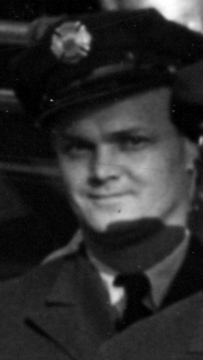
Philip H. Farrow
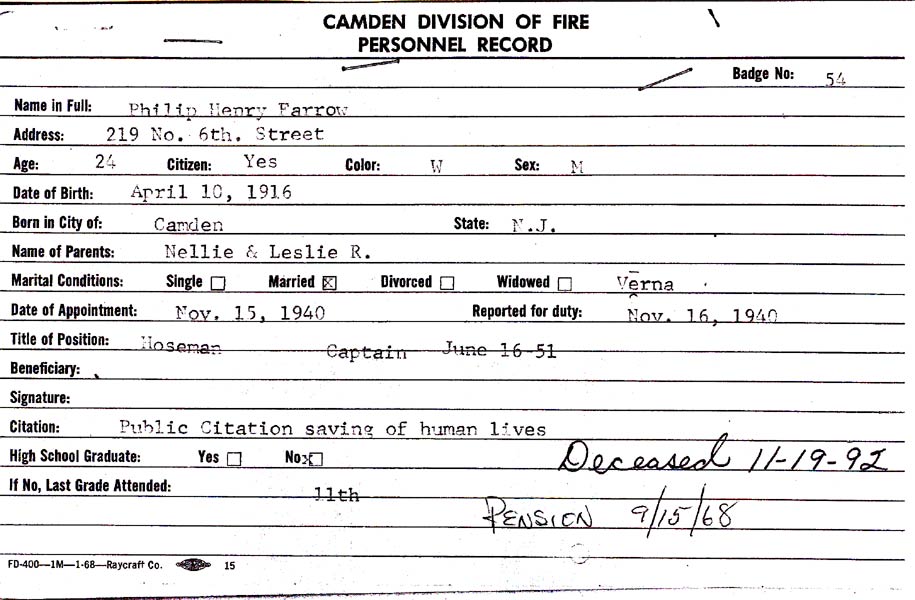
PHILIP H. FARROW was born in Camden NJ on April 10, 1916 to Leslie Ray and Nellie M. Farrow. The elder Farrow had served in the navy for eight years, and had seen action in the 1915 naval expedition to Veracruz, Mexico. When the city directory was compiled in 1914, while still in the United States Navy, Leslie Farrow Sr. and family lived at 1012 South 4th Street in Camden. He had left the Navy by 1917.
Philip Farrow was the second of six children, coming after Geraldine, and before Jesse C., Leslie Ray Jr., George and Evelyn. In June of 1917, when Leslie Sr. registered for the draft, the family lived at 1378 Whitman Avenue. He listed his occupation as spike maker for the Steel Company of Canada, based in Hamilton, Ontario. Leslie Farrow Sr. later worked as an engineer for Camden’s city water department, and was active in the Masons.
By 1924 the Farrow family was living at 529 Newton Avenue in Camden. Five doors down, at 519 Newton Avenue, lived former major league third-baseman Ed Lennox, brother of John Lennox, the Chief of Camden’s Fire Department from 1932 until his death in 1947. On November 16, 1940 Philip Farrow was appointed to the Fire Department. He was still living with his parents and siblings at 529 Newton Avenue and had been working as a roofer with the Max Reihmann Jr. company. Philip Farrow’s first assignment was with Engine Company 8.
Fear of enemy air raids in 1942 spawned a number of Federal Decrees regulating public conduct in the event of air raid warnings. One new Federal Regulation prohibited fire apparatus from using sirens in response to alarms. Under war-time regulations, sirens would be reserved exclusively for air raid warnings.
The use of audible warning devices by fire apparatus was restricted to bells only. The burden to both fire fighters and the public safety was formidable. On March 1, 1942, the inevitable happened. Engine Company 8 while responding to an alarm was involved in a collision with a ten ton truck at Third Street and Kaighn Avenue. Upon impact all of the firemen were thrown into the street. The truck driver declared that he failed to hear the bells of the approaching apparatus. The mishap resulted in injuries to six members and total destruction of the apparatus. Captain Alvin Thompson was listed in critical condition, while Firemen Mitchell Wojtkowiak, Philip Farrow, Leonard Oshushek, Lawrence Boulton and Edwin Robbins were admitted for lesser injuries. Battalion Chief Newton stated that he believed the accident might have been avoided if fire companies were not prohibited from using sirens.
Philip Farrow served his country during World War II as a member of the United States Coast Guard. Sadly, brother Leslie Farrow Jr. was home on leave when he was killed in a car accident on July 21, 1945. He would have been 21 the next day. He was survived by his mother, brother Philip, of 219 North 6th Street in Camden, brother Jesse of the Newton Avenue address, and sisters, his father having passed away September 26, 1942. Leslie Farrow Jr. was buried alongside of his father, in the Masonic section of Lakeview Memorial Park in Cinnaminson NJ. His mother passed in 1967, and they all rest together.

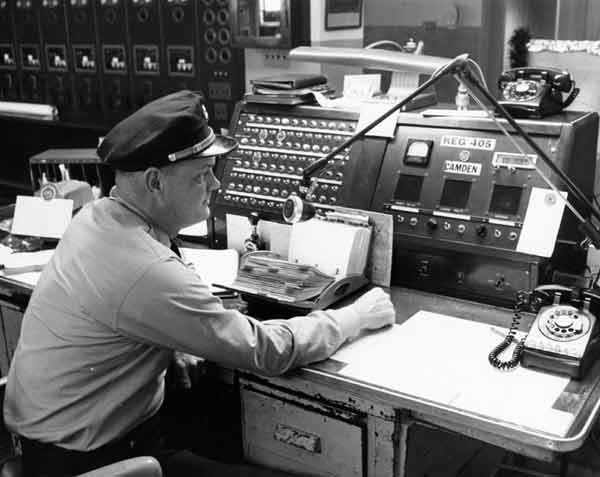
Soon afterwards Philip Farrow returned to work with the Camden Fire Department. During the late 1940s he served with Engine Company 6 at Front and Linden Streets. On June 16, 1951 he was promoted to Captain. By the mid-1960s he was working in the Fire Alarm Radio Room. He retired on September 15, 1968. Philip Farrow was still residing at 219 North 6th Street when he retired.
Last a resident of Ventnor NJ, Philip Farrow passed away on November 19, 1992.
The Farrow Home at 529 Newton Avenue
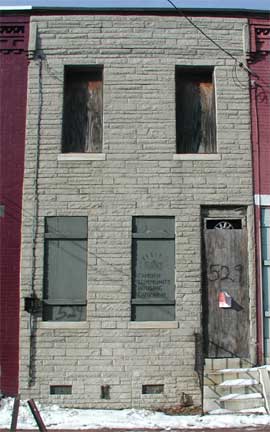
Leslie R. Farrow grew up in this house at 529 Newton Street, Camden NJ — Photo December 8, 2002
His Brother, Jesse C. Farrow
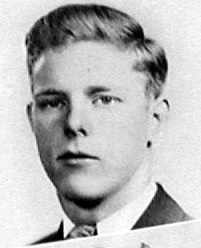
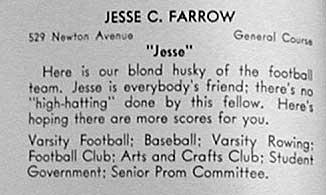
Jesse C. Farrow
His Sister, Geraldine Farrow
1933
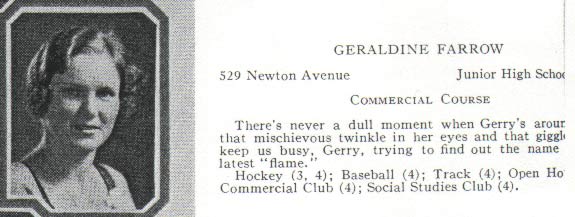
Geraldine Farrow, 1933
Mrs. Kobus Names 3 Cops, 4 Firemen
Camden Courier-Post —
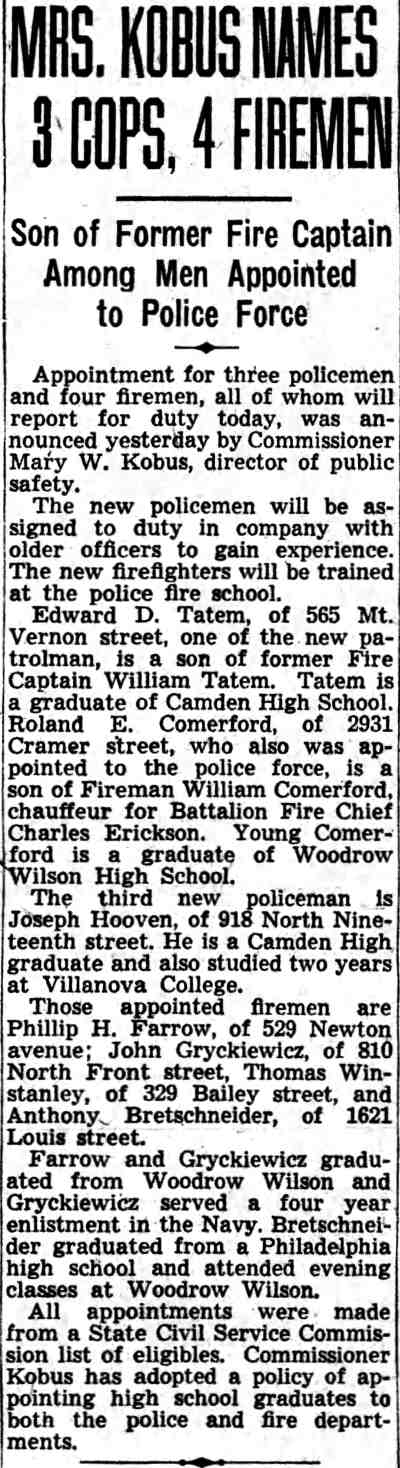
Son of Former Fire Captain Among Men Appointed to Police Force
Appointment for three policemen and four firemen, all of whom will report for duty today, was announced yesterday by Commissioner Mary W. Kobus, director of public safety.
The new policemen will be assigned to duty in company with older officers to gain experience. The new firefighters will be trained at the police fire school.
Edward D. Tatem, of 565 Mt. Vernon street, one of the new patrolmen, is a son of former Fire Captain William Tatem. Tatem is a graduate of Camden High School. Roland E. Comerford, of 2931 Cramer street, who also was appointed to the police force, is a son of Fireman William Comerford, chauffeur for Battalion Fire Chief Charles Erickson. Young Comerford is a graduate of Woodrow Wilson High School.
The third new policeman is Joseph Hooven, of 918 North Nineteenth street. He is a Camden High graduate and also studied two years at Villanova College.
Those appointed firemen are Phillip H. Farrow, of 529 Newton avenue; John Gryckiewicz, of 810 North Front street, Thomas Winstanley, of 329 Bailey street, and Anthony Bretschneider, of 1621 Louis street.
Farrow and Gryckiewicz graduated from Woodrow Wilson and Gryckiewicz served a four year enlistment in the Navy. Bretschneider graduated from a Philadelphia high school and attended evening classes at Woodrow Wilson.
All appointments were made from a State Civil Service Commission list of eligibles. Commissioner Kobus has adopted a policy of appointing high school graduates to both the police and fire departments.
Mrs. Kobus to Ask More Cops, Firemen for City Next Year
Camden Courier-Post —
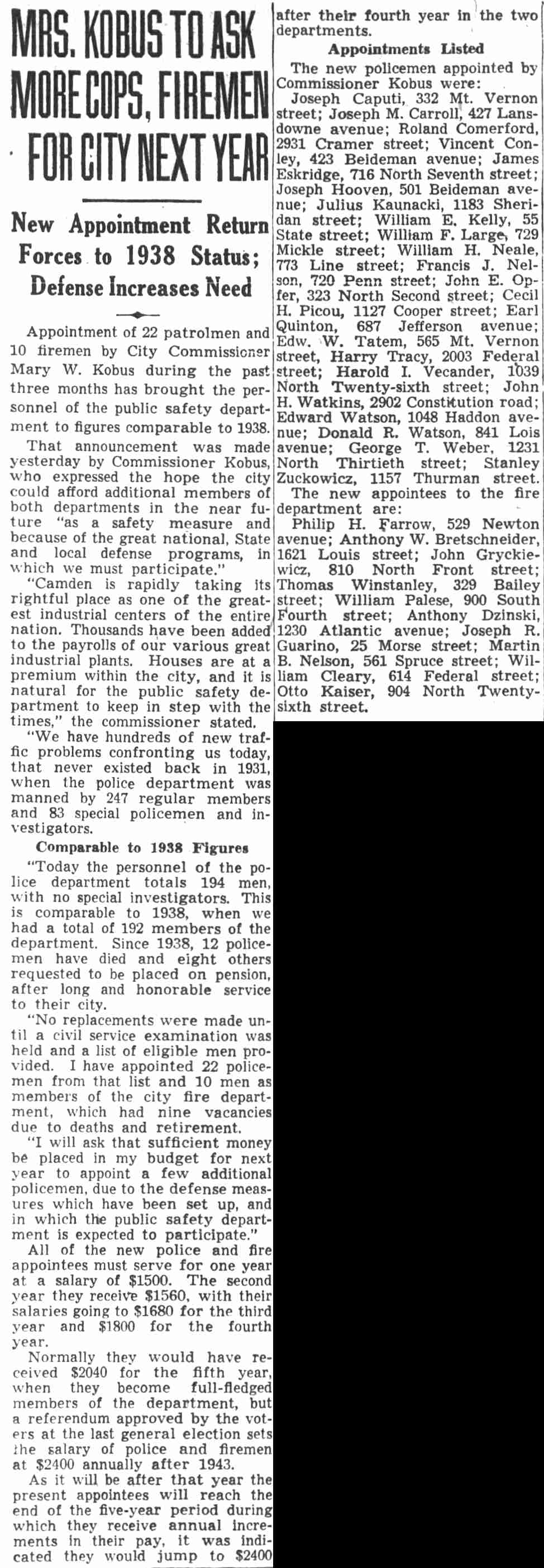
New Appointment Return Forces to 1938 Status; Defense Increases Need
Appointment of 22 patrolmen and 10 firemen by City Commissioner Mary W. Kobus during the past three months has brought the personnel of the public safety department to figures comparable to 1938.
That announcement was made yesterday by Commissioner Kobus, who expressed the hope the city could afford additional members of both departments in the near future “as a safety measure and because of the great national, State and local defense programs, in which we must participate.”
“Camden is rapidly taking its rightful place as one of the greatest industrial centers of the entire nation. Thousands have been added to the payrolls of our various great industrial plants. Houses are at a premium within the city, and it is natural for the public safety department to keep in step with the times,” the commissioner stated.
“We have hundreds of new traffic problems confronting us today, that never existed back in 1931, when the police department was manned by 247 regular members and 83 special policemen and investigators.
Comparable to 1938 Figures
“Today the personnel of the police department totals 194 men, with no special investigators. This is comparable to 1938, when we had a total of 192 members of the department. Since 1938, 12 policemen have died and eight others requested to be placed on pension, after long and honorable service to their city.
“No replacements were made until a civil service examination was held and a list of eligible men provided. I have appointed 22 policemen from that list and 10 men as members of the city fire department, which had nine vacancies due to deaths and retirement.
“I will ask that sufficient money be placed in my budget for next year to appoint a few additional policemen, due to the defense measures which have been set up, and in which the public safety department is expected to participate.”
All of the new police and fire appointees must serve for one year at a salary of $1500. The second year they receive $1560, with their salaries going to $1680 for the third year and $1800 for the fourth year.
Normally they would have received $2040 for the fifth year, when they become full-fledged members of the department, but a referendum approved by the voters at the last general election sets the salary of police and firemen at $2400 annually after 1943.
As it will be after that year the present appointees will reach the end of the five-year period during which they receive annual increments in their pay, it was indicated they would jump to $2400 after their fourth year in the two departments.
Appointments Listed
The new policemen appointed by Commissioner Kobus were:
Joseph Caputi, 332 Mt. Vernon street; Joseph M. Carroll, 427 Lansdowne avenue; Roland Comerford, 2931 Cramer street; Vincent Conley, 423 Beideman avenue; James Eskridge, 716 North Seventh street; Joseph Hooven, 501 Beideman avenue; Julius Kaunacki, 1183 Sheridan street; William E. Kelly, 55 State street; William F. Large, 729 Mickle street; William H. Neale, 773 Line street; Francis J. Nelson, 720 Penn street; John E. Opfer, 323 North Second street; Cecil H. Picou, 1127 Cooper street; Earl Quinton, 687 Jefferson avenue; Edw. W. Tatem, 565 Mt. Vernon street; Harry Tracy, 2003 Federal street; Harold I. Vecander, 1039 North Twenty-sixth street; John H. Watkins, 2902 Constitution road; Edward Watson, 1048 Haddon avenue; Donald R. Watson, 841 Lois avenue; George T. Weber, 1231 North Thirtieth street; Stanley Zuckowicz, 1157 Thurman street.
The new appointees to the fire department are:
Philip H. Farrow, 529 Newton avenue; Anthony W. Bretschneider, 1621 Louis street; John Gryckiewicz, 810 North Front street; Thomas Winstanley, 329 Bailey street; William Palese, 900 South Fourth street; Anthony Dzinski, 1230 Atlantic avenue; Joseph R. Guarino, 25 Morse street; Martin B. Nelson, 561 Spruce street; William Cleary, 614 Federal street; Otto Kaiser, 904 North Twenty-sixth street.
Leslie Ray Farrow Jr. and Philip Farrow
Camden Courier-Post —
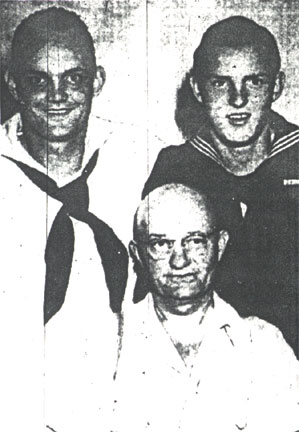
Named: Top: Leslie Ray Farrow Jr., Philip Farrow, Bottom: Leslie Ray Farrow Sr., and Click here for newspaper article.
City Fireman Nips Blaze on Way to Shore
Camden Courier-Post —
Phil Farrow, a Camden city fireman had a busman’s holiday this morning.
While enroute to the PRR terminal to catch a train for Atlantic City to enjoy a few days off, Farrow saw a passerby running to a fire alarm box at Delaware avenue and Market street.
Farrow had just completed work at 8 a. m. and was still in uniform. He approached the man and asked him where the fire was. The man pointed to a car on a parking lot across the street from the RCA plant.
Farrow gave the man a nickel and told him to call Camden 4-5050, the Electrical Bureau, rather than pull the alarm which brings out half the city’s fire-fighting equipment, because of the industrial plants and hotels in the vicinity.
Farrow then grabbed a fire extinguisher from an RCA guard, rushed to the car and put out the blaze before firemen arrived.
Meanwhile the passerby apparently forgot the telephone number Farrow gave him, because instead of calling he pulled the box and four engines and one truck company answered the call.
The fire, Farrow said, was under the hood of the car and was caused by defective wiring. It is owned by John Walton, an RCA employe, who lives at 192 Blue Anchor road, Tansboro.
Farrow still had time to board his train to Atlantic City.
Engine 6 Wagon and Pumper at Front & Linden Streets
Camden Fire Department — circa 1948
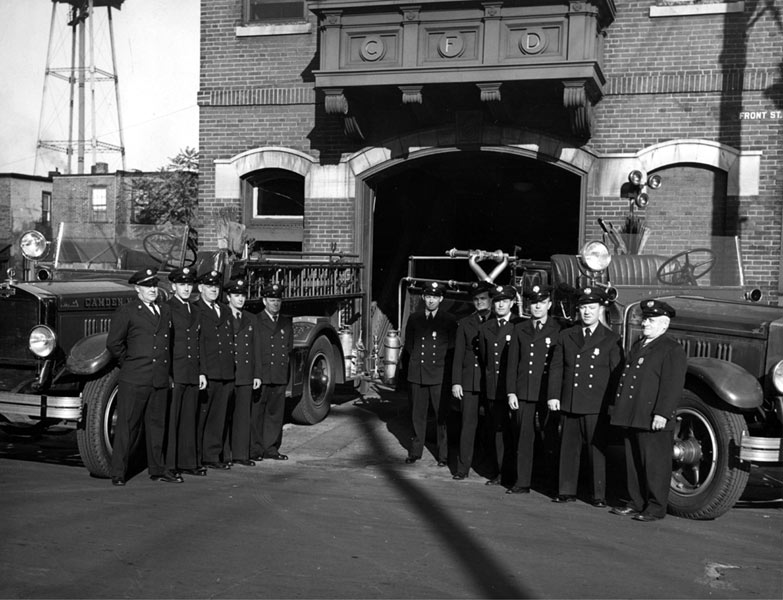
Left column, from left: Captain William Deitz, Firemen Robert Dukes, Harrison Pike, Mario Fattore, Edwin Callahan. Right column, from left: Firemen Thomas McParland, Philip Farrow, Thomas Winstanley, James Stewart, Ernest Tartaglia, John “Shorty” Prucella
Engine 6 Wagon and Pumper at Front & Linden Streets
Camden Fire Department — circa 1949
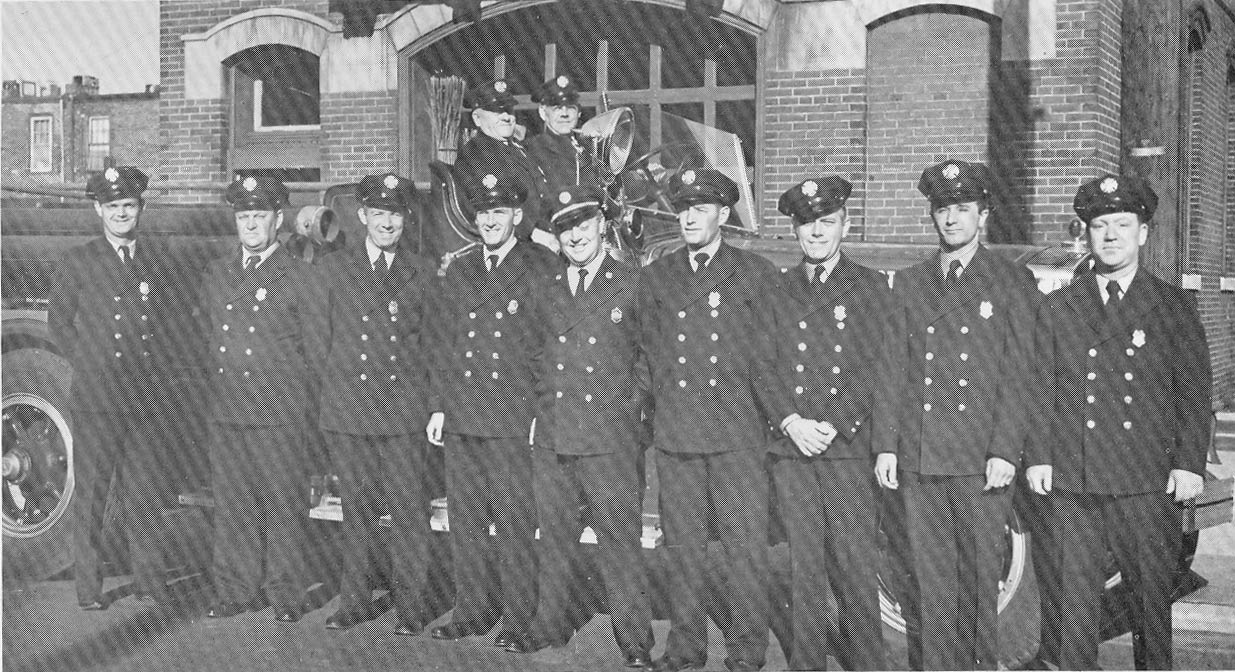
On apparatus: John Prucella and Harrison Pike — Motor Pump Operators, l to r: Philip Farrow, Edwin Callahan, Thomas McParland, Robert Dukes, Captain William Deitz, Thomas Winstanley, James Stewart, Mario Fattore, and Ernest Tartaglia
Firefighters Fete ‘Shorty’ Prucella After 39 Years in Service of City
Camden Courier-Post —
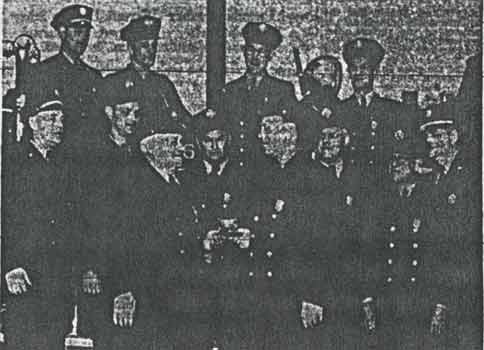

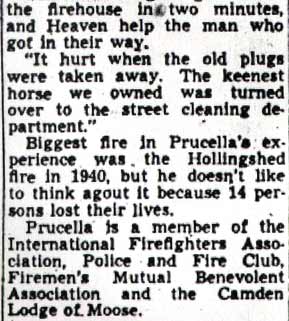
A GOLD WATCH in recognition of his many years of service with the Camden fire department was presented Tuesday to John B. “Shorty” Prucella, 75, retiring member of Engine Co. 6, by his “buddies” of the station. Prucella, who will retire July 15 after 39 years, is given the watch by Hoseman Ernest Tartaglia. Standing, left to right, second row, are Capt. William H. Deitz, P. Farrow, E. Callahan, H. Pike, H. Needham and Capt. Harold Megee; back row, Capt. Thomas Winstanley, of No. 2 Engine Co.; M. Fattore, T. McParland and William Reed.
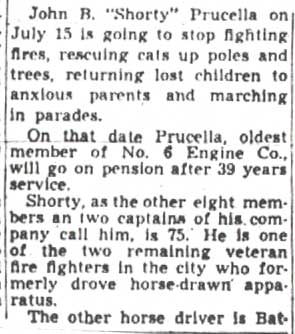
John B. “Shorty” Prucella on July 15 is going to stop fighting fires, rescuing cats up poles and trees, returning lost children to anxious parents and marching in parades.
On that date Prucella, oldest member of No. 6 Engine Co., will go on pension after 39 years service.
Shorty, as the other eight members an [sic] two captains of his company call him, is 75. He is one of the two remaining veteran fire fighters in the city who formerly drove horse-drawn apparatus.
The other horse driver is Battalion Chief Clarence Madden.
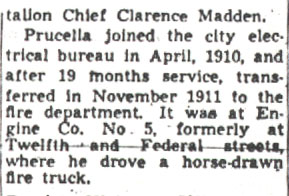
Prucella joined the city electrical bureau in April, 1910, and after 19 months service, transferred in November 1911 to the fire department. It was at Engine Co. No. 5, formerly at Twelfth and Federal streets, where he drove a horse-drawn fire truck.
Receives Watch as Gift
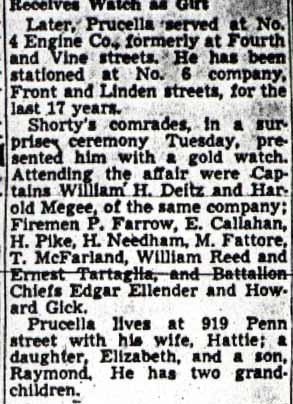
Later, Prucella served at No. 4 Engine Co., formerly at Fourth and Vine streets. He has been stationed at No. 6 company, Front and Linden streets, for the last 17 years.
Shorty’s comrades, in a surprise ceremony Tuesday, presented him with a gold watch. Attending the affair were Captains William H. Deitz and Harold Megee, of the same company; Firemen P. Farrow, E. Callahan, H. Pike, H. Needham, M. Fattore, T. McFarland, William Reed and Ernest Tartaglia, and Battalion Chiefs Edgar Ellender and Howard Gick.
Prucella lives at 919 Penn street with his wife, Hattie; a daughter, Elizabeth, and a son, Raymond. He has two grandchildren.
Will Take It Easy
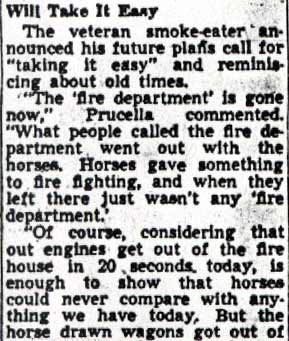
The veteran smoke-eater announced his future plans call for “taking it easy” and reminiscing about old times.
“The ‘fire department’ is gone now,” Prucella commented. “What people called the fire department went out with the horses. Horses gave something to fire fighting, and when they left there just wasn’t any ‘fire department.’
“Of course, considering that out [sic] engines get out of the fire house in 20 seconds today, is enough to show that horses could never compare with anything we have today. But the horse drawn wagons got out of the firehouse in two minutes, and Heaven help the man who got in their way.
“It hurt when the old plugs were taken away. The keenest horse we owned was turned over to the street cleaning department.”
Biggest fire in Prucella’s experience was the Hollingshed fire in 1940, but he doesn’t like to think about it because 14 persons lost their lives.
Prucella is a member of the International Firefighters Association, Police and Fire Club, Firemen’s Mutual Benevolent Association and the Camden Lodge of Moose.
3-Alarm Fire Rakes Building
Camden Courier-Post —

Courier-Post Photo by Sam Kuchner
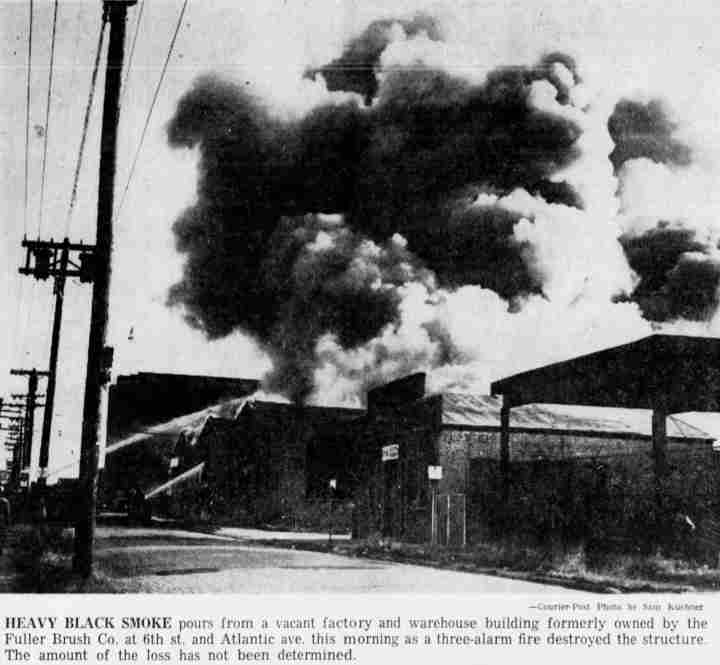
HEAVY BLACK SMOKE pours from a vacant factory and warehouse building formerly owned by the Fuller Brush Co. at 6th st. and Atlantic ave. this morning as a three-alarm fire destroyed the structure. The amount of the loss has not been determined.
Fire early today razed a condemned two-story brick vacant factory and warehouse formerly owned by the Fuller Brush Co. at 6th st. and Atlantic ave. There was no estimate of the loss.
Deputy Fire Marshal John Gaffney said a man who declined to identify himself reported seeing two boys about 14 years of age, running from the building only minutes before the fire was discovered. Gaffney said he has begun an investigation into the cause of the blaze and to locate the youths.
There were no injuries reported but members of Engine Company 8 at 6th st. and Kaighns ave., who were among the first on the scene, escaped being burned seriously and losing a 1,000-gallon pumper after they were engulfed in a ball of flame that shot from the north wall of the structure.
Heavy black smoke could be seen over a wide area.
Spotted Smoke
The first of three alarms was reported at 6:10 a.m. when Donald Fuhrer, an employe of Modern Hard Chrome, located across the street from the building, spotted smoke over the roof of the warehouse.
Two more alarms were reported at 6:15 and 6:18 a.m. as the fire raged out of control, endangering Modern Hard Chrome and Modern Auto Body plants, both of which are adjacent to the factory building.
Capt. Philip Farrow, 46, of 219 N. 6th st., with Engine Company 8, reported that he had never seen a building go “so fast in all my 21 years on the fire department.”
Ball of Flame
Farrow said when he first arrived fire was burning on the south side of the building near the roof. He said the pumper went to Atlantic ave. and firemen were hooking up to a hydrant when a ball of flame shot out and engulfed the men and truck. He said Robert Thomas, driver of the pumper, was forced to put his heavy coat over his head to protect himself so that he could drive the pumper out of the area. Farrow said the men didn’t have time to unhook the hoses.
Fire Chief Edward MacDowell said the building was condemned by the city last summer after a section of the roof collapsed spilling bricks and wooden timbers to the street and sidewalk.
Licks Utility Poles
Mild warm air fanned the blaze and kept heavy black smoke close to the ground and for long periods of time firemen worked in total blackness shifting two-and-a-half-inch water lines from one area of the building to another.
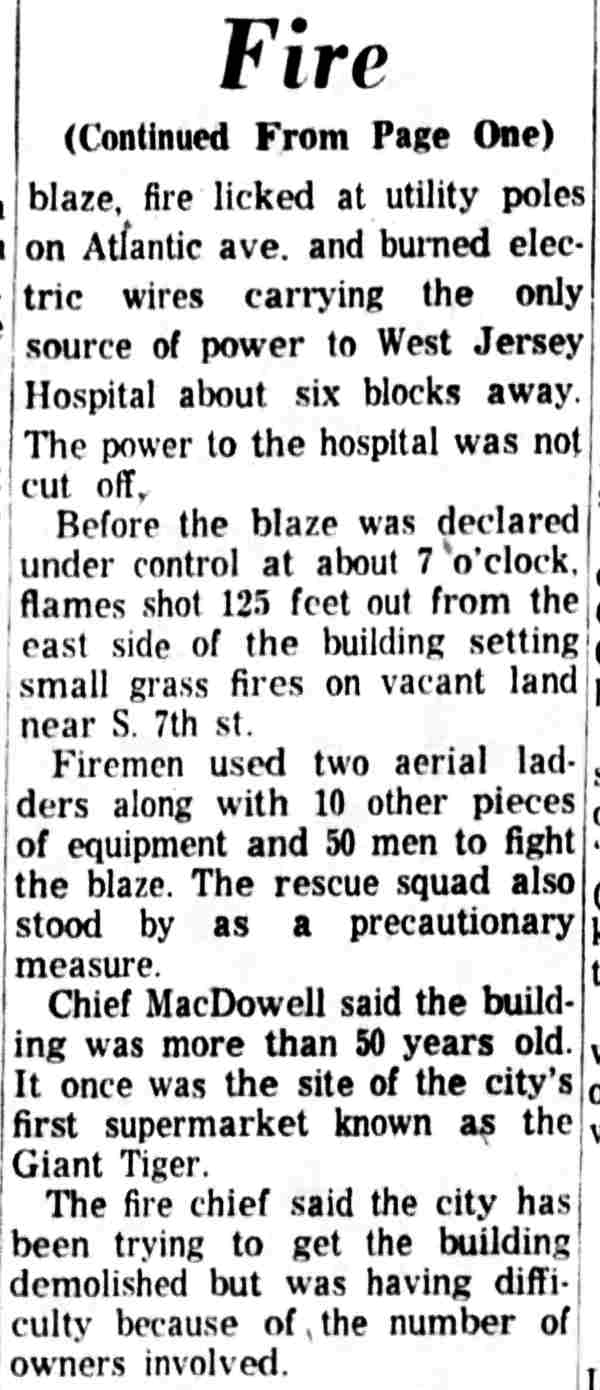
During the early minutes of the blaze, fire licked at utility poles on Atlantic ave. and burned electric wires carrying the only source of power to West Jersey Hospital about six blocks away. The power to the hospital was not cut off.
Before the blaze was declared under control at about 7 o’clock, flames shot 125 feet out from the east side of the building setting small grass fires on vacant land near S. 7th st.
Firemen used two aerial ladders along with 10 other pieces of equipment and 50 men to fight the blaze. The rescue squad also stood by as a precautionary measure.
Chief MacDowell said the building was more than 50 years old. It once was the site of the city’s first supermarket known as the Giant Tiger.
The fire chief said the city has been trying to get the building demolished but was having difficulty because of the number of owners involved.
MUTUAL AID FIRE DRILL 'SUCCESS'
Camden Courier-Post —
Mutual Aid Fire Drill ‘Success’
Ten Suburban Units ‘Save’ City
By FREDRICK W. SMIGELSKI
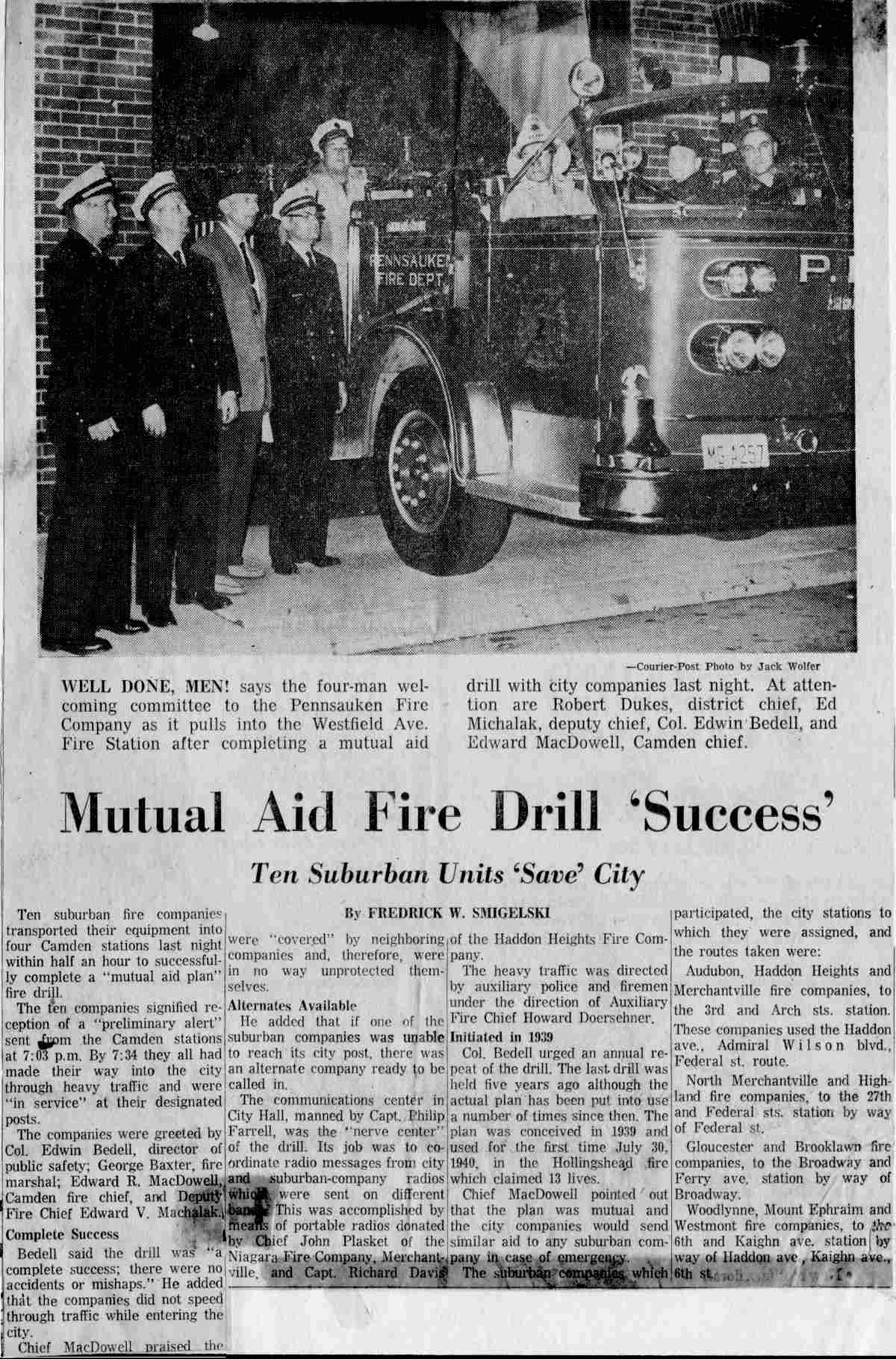
[Photo caption]: WELL DONE, MEN! says the four-man welcoming committee to the Pennsauken Fire Company as it pulls into the Westfield Ave. Fire Station after completing a mutual aid drill with city companies last night. At attention are Robert Dukes, district chief, Ed Michalak, deputy chief, Col. Edwin Bedell, and Edward MacDowell, Camden chief.
[Photo credit]: —Courier-Post Photo by Jack Wolfer
Ten suburban fire companies transported their equipment into four Camden stations last night within half an hour to successfully complete a “mutual aid plan” fire drill.
The ten companies signified reception of a “preliminary alert” sent from the Camden stations at 7:03 p.m. By 7:34 they all had made their way into the city through heavy traffic and were “in service” at their designated posts.
The companies were greeted by Col. Edwin Bedell, director of public safety; George Baxter, fire marshal; Edward R. MacDowell, Camden fire chief, and Deputy Fire Chief Edward V. Machalak [sic].
Complete Success
Bedell said the drill was “a complete success; there were no accidents or mishaps.” He added that the companies did not speed through traffic while entering the city.
Chief MacDowell praised the [text cut off at the foot of the column] were “covered” by neighboring companies and, therefore, were in no way unprotected themselves.
Alternates Available
He added that if one of the suburban companies was unable to reach its city post, there was an alternate company ready to be called in.
The communications center in City Hall, manned by Capt. Philip Farrell, was the “nerve center” of the drill. Its job was to coordinate radio messages from city and suburban-company radios which were sent on different bands. This was accomplished by means of portable radios donated by Chief John Plasket of the Niagara Fire Company, Merchantville, and Capt. Richard Davis of the Haddon Heights Fire Company.
The heavy traffic was directed by auxiliary police and firemen under the direction of Auxiliary Fire Chief Howard Doerschner.
Initiated in 1939
Col. Bedell urged an annual repeat of the drill. The last drill was held five years ago although the actual plan has been put into use a number of times since then. The plan was conceived in 1939 and used for the first time July 30, 1940, in the Hollingshead fire which claimed 13 lives.
Chief MacDowell pointed out that the plan was mutual and the city companies would send similar aid to any suburban company in case of emergency.
The suburban companies which participated, the city stations to which they were assigned, and the routes taken were:
Audubon, Haddon Heights and Merchantville fire companies, to the 3rd and Arch sts. station. These companies used the Haddon ave., Admiral Wilson blvd., Federal st. route.
North Merchantville and Highland fire companies, to the 27th and Federal sts. station by way of Federal st.
Gloucester and Brooklawn fire companies, to the Broadway and Ferry ave. station by way of Broadway.
Woodlynne, Mount Ephraim and Westmont fire companies, to the 6th and Kaighn ave. station by way of Haddon ave., Kaighn ave., 6th st.
Captain Philip Farrow
1967
This 1967 Photo of Camden NJ Fire Department Fire Alarm Radio Room in City Hall shows Fire Captain Philip Farrow sending out Fire Run on Camden KEG 405 Radio. These were the days before County Fire Radio Dispatching.
Captain Philip Farrow at the Camden Fire Alarm Radio Room, City Hall, 1967 — Photo by Bob Bartosz
Fire Department Service Record
Philip H. Farrow — Camden Fire Department service record