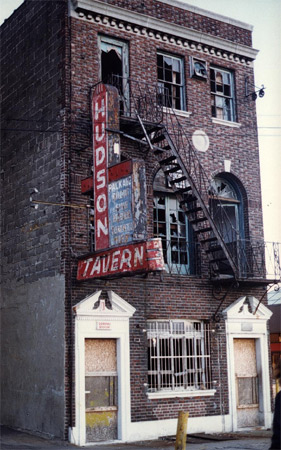
Samuel Lennox
SAM LENNOX was born in Camden in 1897 to James and Catherine Lennox. His father was a railroad laborer. His older brother, James Edgar “Eggie” Lennox, played major league baseball for four different teams between 1906 and 1915, compiling a .274 batting average.
Sam Lennox played professional basketball, and was a member of the Camden Crusaders team that won the Eastern Basketball League championship in 1919, owned by Camden veterinarian Dr. Charles Helm and his partner, W. Penn Corson. Among his teammates were Neil Deighan, Roy Steele, and Joe Hyde, all of whom also went on to successful careers as bar owners in Camden. He also played alongside Eddie Ferat, who went on to work in Camden’s city government for many years. The team, coached by William “Billy” Morgenweck, was known as the Camden Alphas prior to World War I. The Alphas were the league champions in 1914–1915. Renamed the Camden Crusaders after World War I, the Camden five were champions again in 1919–1920, winning both halves of the split-season with a combined 30 and 9 record.
By the late 1950s, Sam Lennox was running the Hudson Tavern, at 12 Hudson Street, just off Federal Street in Camden south of City Hall.
Samuel Lennox had retired by 1970 and was living at the Westfield Towers senior citizen’s high-rise. He passed away in August of 1976, aged 79.
Mt. Carmel vs. Campbell’s
Philadelphia Inquirer —
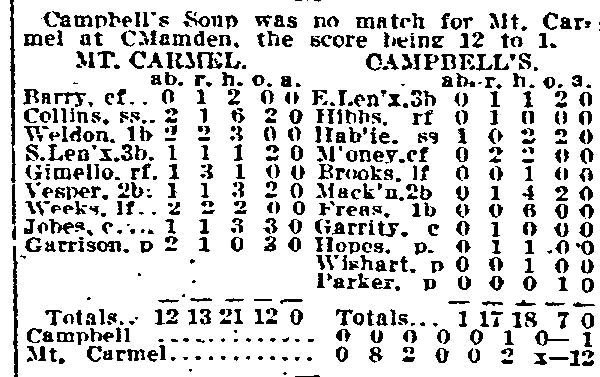
Campbell’s Soup was no match for Mt. Carmel at Camden, the score being 12 to 1.
Mt. Carmel vs. Campbell's Soup — June 14, 1916
Baseball box score: Our Lady of Mt. Carmel defeated Campbell's Soup, 12–1
Mt. Carmel
| Player ↕ | Ab ↕ | R ↕ | H ↕ | O ↕ | A ↕ |
|---|---|---|---|---|---|
| Barry, cf | 1 | 2 | |||
| Collins, ss | 2 | 1 | 6 | 2 | |
| Weldon, 1b | 2 | 2 | 3 | ||
| S. Lennox, 3b | 1 | 1 | 1 | 2 | |
| Gimello, rf | 1 | 3 | 1 | ||
| Vesper, 2b | 1 | 1 | 3 | ||
| Weeks, lf | 2 | 2 | 2 | ||
| Jobes, c | 1 | 1 | 3 | 3 | |
| Garrison, p | 2 | 1 | 2 | ||
| Totals | 12 | 13 | 21 | 12 |
Campbell's Soup
| Player ↕ | Ab ↕ | R ↕ | H ↕ | O ↕ | A ↕ |
|---|---|---|---|---|---|
| E. Lennox, 3b | 1 | 1 | 2 | ||
| Hibbs, rf | 1 | ||||
| Habble, ss | 1 | 2 | 2 | ||
| Mooney, cf | 2 | 2 | |||
| Brooks, lf | 1 | ||||
| Mackun, 2b | 1 | 4 | 2 | ||
| Freas, 1b | 6 | ||||
| Garrity, c | 1 | ||||
| Hopes, p | 1 | 1 | |||
| Wishart, p | 1 | ||||
| Parker, p | 1 | ||||
| Totals | 1 | 17 | 18 | 7 |
Campbell 0 0 0 0 0 0 1 0 — 1
Mt. Carmel 0 8 2 0 0 0 2 x — 12
Camden Crusaders, 1919–1920 Eastern Basketball League Champions
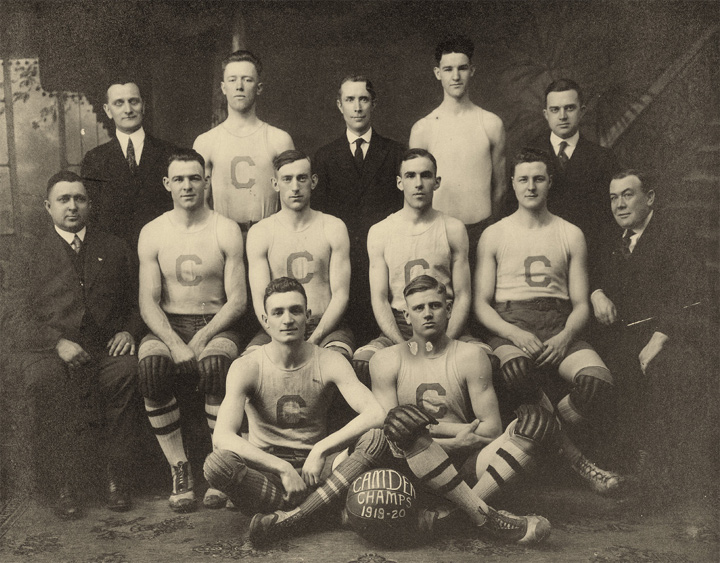
Front row, left to right: Jimmy “Soup” Campbell and Joe Hyde.
Second row, left to right: Dr. Charles B. Helm, Neil Deighan, Roy Steele, Eddie Dolin, Dave Kerr and Sheriff W. Penn Corson.
Back row, left to right: Bill Mitchell, trainer; Sam Lennox, Manager Bill Kennedy, Richie Deighan and Timekeeper Jim Kane.
James Lennox Rites to Be Held Tomorrow
Camden Courier-Post —
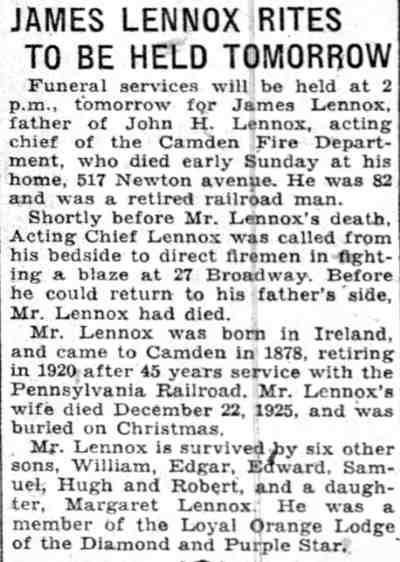
Funeral services will be held at 2 p.m., tomorrow for James Lennox, father of John H. Lennox, acting chief of the Camden Fire Department, who died early Sunday at his home, 517 Newton avenue. He was 82 and was a retired railroad man.
Shortly before Mr. Lennox’s death, Acting Chief Lennox was called from his bedside to direct firemen in fighting a blaze at 27 Broadway. Before he could return to his father’s side, Mr. Lennox had died.
Mr. Lennox was born in Ireland, and came to Camden in 1878, retiring in 1920 after 45 years service with the Pennsylvania Railroad. Mr. Lennox’s wife died December 22, 1925, and was buried on Christmas.
Mr. Lennox is survived by six other sons, William, Edgar, Edward, Samuel, Hugh and Robert, and a daughter, Margaret Lennox. He was a member of the Loyal Orange Lodge of the Diamond and Purple Star.
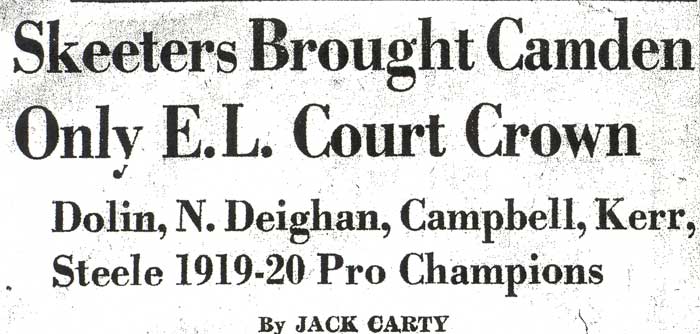
Skeeters Brought Camden Only E.L. Court Crown
Camden Courier-Post —
Dolin, N. Deighan, Campbell, Kerr, Steele 1919-20 Pro Champions
By Jack Carty
Skeeters Brought Camden Only E.L. Court Crown
SKEETERS BROUGHT CAMDEN ONLY E.L. COURT CROWN
Dolin, N. Deighan, Campbell, Kerr, Steele 1919-20 Pro Champions
By JACK CARTY
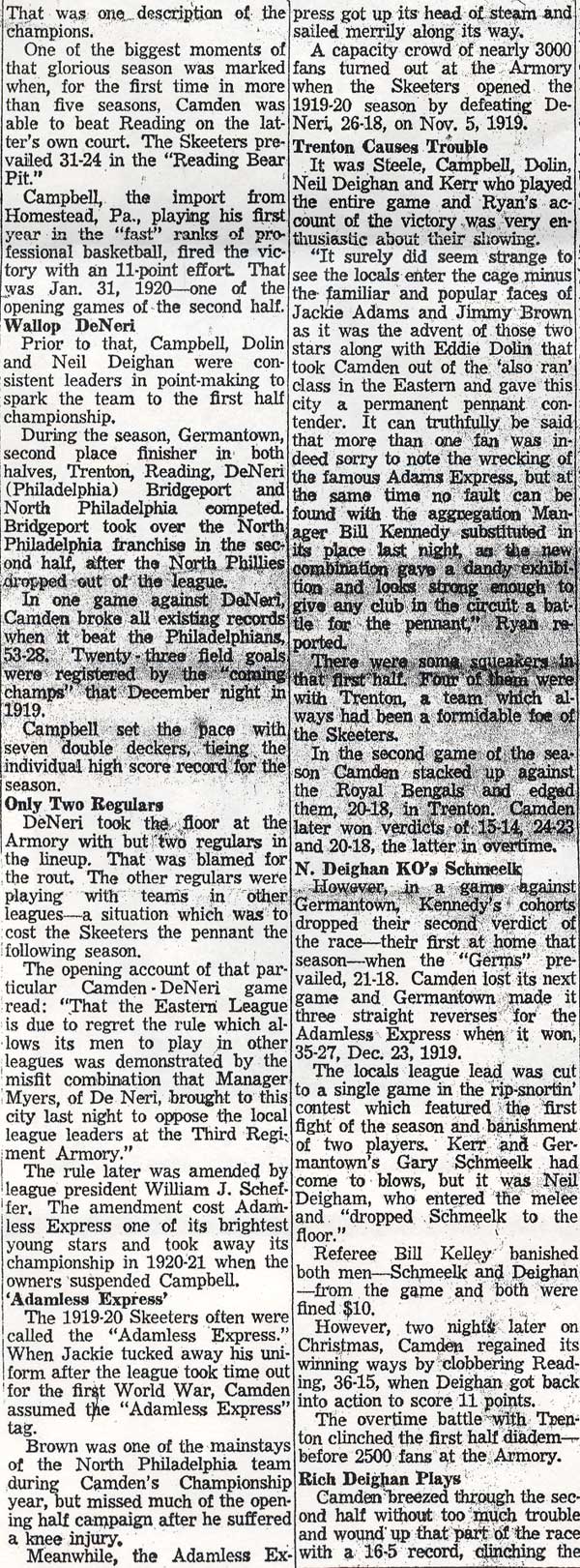
There was an era when Camden was known for more than its production of ships, soups, radios and sundry other commercial items. That was when the Camden Skeeters were the scourge of the Eastern Professional Basketball League.
It was over 35 years ago when a banner line screamed across four columns of an old Daily Courier sports page proclaiming that “All Hail the Champions!”
The date was March 11, 1920. It was the day after the Camden team won its first and only championship of the old Eastern League.
Kennedy Was Manager
After 10 years of striving to bring home the coveted flag, Manager “Whispering Will” Kennedy’s Skeeters sewed up the title by defeating the Bridgeport, Conn., quintet, 45-34 at the Third Regiment Armory, now known as the Camden Armory at Haddon avenue and Mickle st.
The date is a memorable one for many, especially those who were around in the days when professional basketball was “the thing” in Camden. Days when such outstanding stars as Neil Deighan, Jimmy “Soup” Campbell, Rich Deighan, Dave Kerr, Roy Steele, Eddie Dolin and others were the masters of the cage game. They mastered it to the delight of two and three thousand fans every time they stepped on the floor at the Armory.
That season and that 1919-20 basketball team provide one of the proudest sports memories in the history of Camden. Although its short-lived glory lasted for less than two years, the mark the Skeeters left is indelible.
Corson, Helm Owners
The Skeeters, owned and financed by former Sheriff W. Penn Corson and Dr. Charles B. Helm, a veterinarian, had many near misses in the search for the pennant. But they never made the direct hit until Kennedy stepped into the picture.
It was the first season the Eastern League had resumed operation following World War I that the ex-Jasper coach took over the club.
He molded a winner with three veterans of former years—Steele, the captain, Dolin and Neil Deighan—with a couple of comparative unknowns, Kerr, and a youngster named Campbell.
With this aggregation as his nucleus, Kennedy won the pennant for Camden and it seemed that only he could have done it.
Frank H. Ryan, late editor of The Courier-Post, who then was sports editor of The Daily Courier, wrote of Kennedy following the team’s successful first half finish:
Describes Kennedy
“He has been connected with the cage game for a score of years, never bullyrags his men and can get results where others fail. Working hand and glove with Steele, who is captain and the king pin of the men on the floor, Kennedy has succeeded in giving Camden what others have failed to do, namely, the much coveted pennant. If the Skeeters can crown their achievement with the second half crown the natives from the city of ships, phonographs, soaps, furniture and fair zone activities can well afford to look our way and give us a silent sneer.”
And they did.
The Skeeters went right on to win 16 more games and the second half, which also included the “much coveted pennant.” They tied a league record of the Reading Bears with 30 wins per season, even though they had one more loss—10.
‘Reading Bear Pit’
Ryan had said of the Skeeters: “The desire to do the right thing at the right moment, a willingness for team play and a general pull together spirit made a combination which the other five teams found too formidable to surmount.”
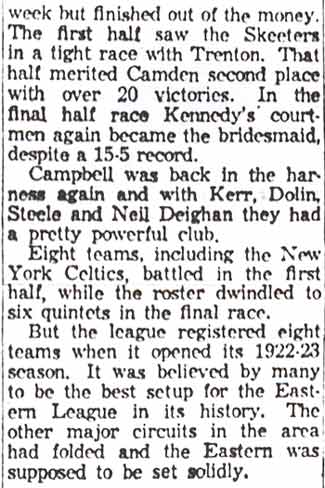
The first half saw the Skeeters in a tight race with Trenton. That half merited Camden second place with over 20 victories. In the final half race Kennedy’s courtmen again became the bridesmaid, despite a 15-5 record.
Campbell was back in the harness again and with Kerr, Dolin, Steele and Neil Deighan they had a pretty powerful club.
Eight teams, including the New York Celtics, battled in the first half, while the roster dwindled to six quintets in the final race.
But the league registered eight teams when it opened its 1922-23 season. It was believed by many to be the best setup for the Eastern League in its history. The other major circuits in the area had folded and the Eastern was supposed to be set solidly.
League Folds
It started an early season (October) and that was the beginning of the end. Football was in full swing. Baseball had just ended. Fans like their sports in season.
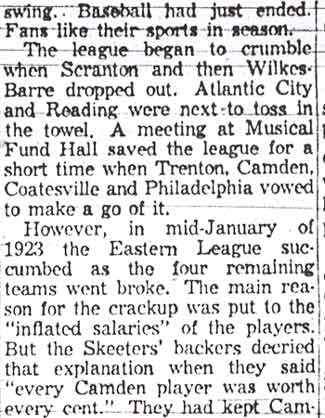
The league began to crumble when Scranton and then Wilkes-Barre dropped out. Atlantic City and Reading were next to toss in the towel. A meeting at Musical Fund Hall saved the league for a short time when Trenton, Camden, Coatesville and Philadelphia vowed to make a go of it.
However, in mid-January of 1923 the Eastern League succumbed as the four remaining teams went broke. The main reason for the crackup was put to the “inflated salaries” of the players. But the Skeeters’ backers decried that explanation when they said “every Camden player was worth every cent.” They had kept Camden in first place until the league folded.
Fans Were Confused
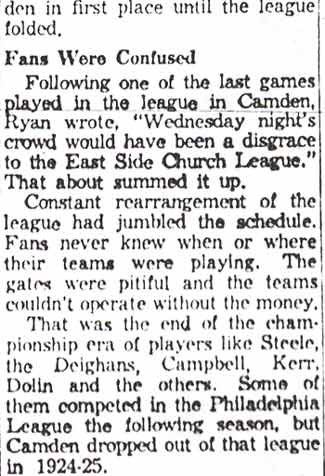
Following one of the last games played in the league in Camden, Ryan wrote, “Wednesday night’s crowd would have been a disgrace to the East Side Church League.” That about summed it up.
Constant rearrangement of the league had jumbled the schedule. Fans never knew when or where their teams were playing. The gates were pitiful and the teams couldn’t operate without the money.
That was the end of the championship era of players like Steele, the Deighans, Campbell, Kerr, Dolin and the others. Some of them competed in the Philadelphia League the following season, but Camden dropped out of that league in 1924-25.
Old-timers who can recall the days of the championship Skeeters claim it was the “greatest basketball” team the East ever had.
Players Still Around
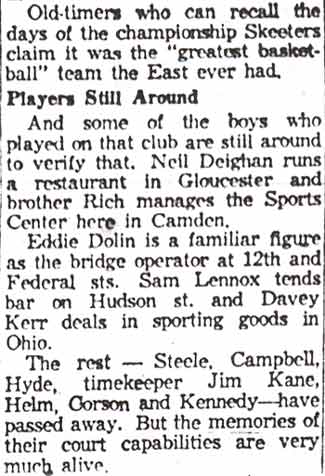
And some of the boys who played on that club are still around to verify that. Neil Deighan runs a restaurant in Gloucester and brother Rich manages the Sports Center here in Camden.
Eddie Dolin is a familiar figure as the bridge operator at 12th and Federal sts. Sam Lennox tends bar on Hudson st. and Davey Kerr deals in sporting goods in Ohio.
The rest — Steele, Campbell, Hyde, timekeeper Jim Kane, Helm, Corson and Kennedy—have passed away. But the memories of their court capabilities are very much alive.
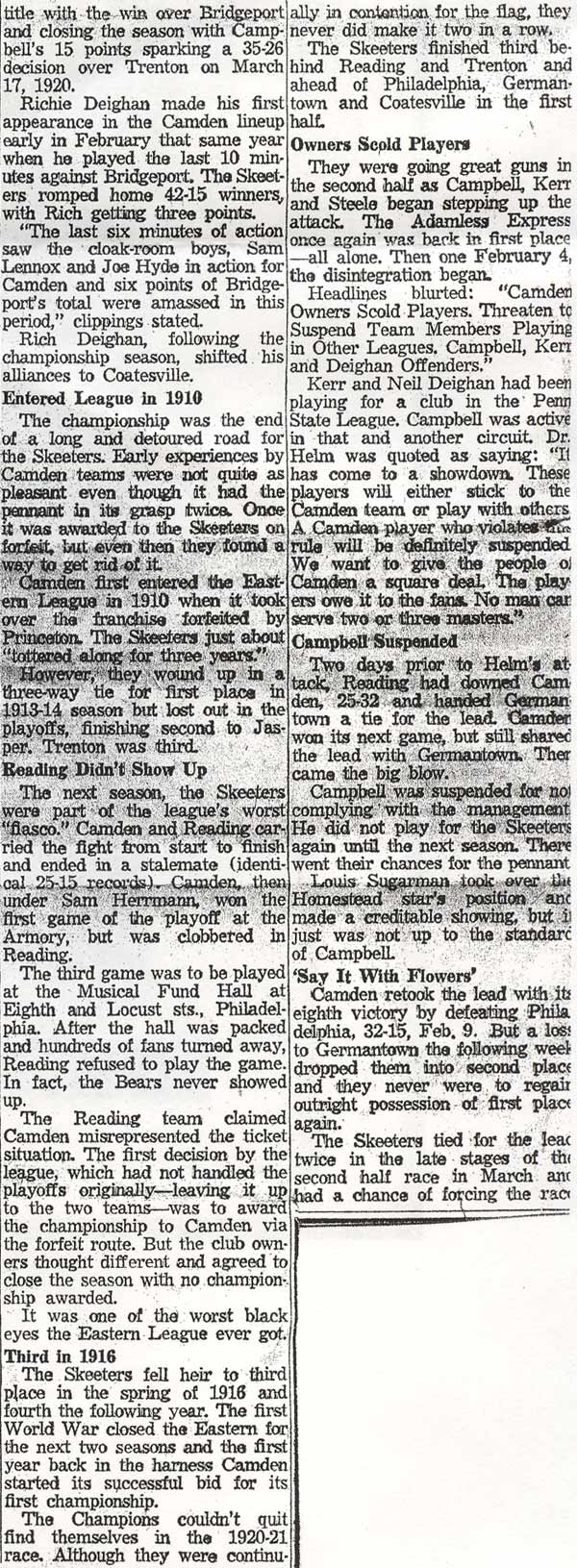
title with the win over Bridgeport and closing the season with Campbell’s 15 points sparking a 36-20 decision over Trenton on March 17, 1920.
Rich Deighan made his first appearance in the Camden lineup early in February that same year when he played the last 10 minutes against Bridgeport. The Skeeters romped home 42-15 winners.
“The last six minutes of action saw the cloomroom boys, Sam Campbell, Joe Hyde, Roy Steele and the Deighans stacking up so many points from Camden and six points of Bridgeport’s total were amassed in the opening games of the second half.”
Wallop De’Neri
To this end, Campbell, Dolin, Steele and Neil Deighan have been consistent leaders in point-making from each team to the first half championship.
Rich Deighan next played professionally as a member of the Trenton Royal Bengals in the Metropolitan League during the 1924–1925 season. He spent the next four years with the Cleveland Rosenblums of the American Basketball League, the dominant professional league of the era, before being released during the 1928–1929 season.
Owners Sold Players
They were going great guns in the second half. Campbell, Kerr and Steele began stepping up the attack. The Adamless Express once again was back in first place —all alone. Then one February 4, the disintegration began.
Headlines blared “Camden Owners Sold Players, Threaten to Suspend Team Members Playing Without Contracts”—Campbell, Kerr and Deighan Offenders.”
Kerr and Neil Deighan had been playing for a club in the Penn State League. Campbell was active in that and another circuit. Dr. Helm was as quoted as saying: “It has come to a showdown. These players will either stick to the Camden Skeeters or play with others. A Camden player who violates the rule will be definitely suspended. The rule was put there to give Camden a square deal.”
Rich Deighan Plays
Camden breezed through the second half on its championship bent and wound up that part of the race with a 16-5 record, clinching it with the win over Bridgeport.
There was an era when Camden was known for more than its production of ships, soups, radios and sundry other commercial items. That was when the Camden Skeeters were the scourge of the Eastern Professional Basketball League.
It was over 35 years ago when a banner line screamed across four columns of an old Daily Courier sports page proclaiming that “All Hail the Champions!”
The date was March 11, 1920. It was the day after the Camden team won its first and only championship of the old Eastern League.
Kennedy Was Manager
After 10 years of striving to bring home the coveted flag, Manager “Whispering Will” Kennedy’s Skeeters sewed up the title by defeating the Bridgeport, Conn., quintet, 45-34 at the Third Regiment Armory, now known as the Camden Armory at Haddon avenue and Mickle st.
The date is a memorable one for many, especially those who were around in the days when professional basketball was “the thing” in Camden. Days when such outstanding stars as Neil Deighan, Jimmy “Soup” Campbell, Rich Deighan, Dave Kerr, Roy Steele, Eddie Dolin and others were the masters of the cage game. They mastered it to the delight of two and three thousand fans every time they stepped on the floor at the Armory.
That season and that 1919-20 basketball team provide one of the proudest sports memories in the history of Camden. Although its short-lived glory lasted for less than two years, the mark the Skeeters left is indelible.
Corson, Helm Owners
The Skeeters, owned and financed by former Sheriff W. Penn Corson and Dr. Charles B. Helm, a veterinarian, had many near misses in the search for the pennant. But they never made the direct hit until Kennedy stepped into the picture.
It was the first season the Eastern League had resumed operation following World War I that the ex-Jasper coach took over the club.
He molded a winner with three veterans of former years—Steele, the captain, Dolin and Neil Deighan—with a couple of comparative unknowns, Kerr, and a youngster named Campbell.
With this aggregation as his nucleus, Kennedy won the pennant for Camden and it seemed that only he could have done it.
Frank H. Ryan, late editor of The Courier-Post, who then was sports editor of The Daily Courier, wrote of Kennedy following the team’s successful first half finish:
Describes Kennedy
“He has been connected with the cage game for a score of years, never bullyrags his men and can get results where others fail. Working hand and glove with Steele, who is captain and the king pin of the men on the floor, Kennedy has succeeded in giving Camden what others have failed to do, namely, the much coveted pennant. If the Skeeters can crown their achievement with the second half crown the natives from the city of ships, phonographs, soaps, furniture and fair zone activities can well afford to look our way and give us a silent sneer.”
And they did.
The Skeeters went right on to win 16 more games and the second half, which also included the “much coveted pennant.” They tied a league record of the Reading Bears with 30 wins per season, even though they had one more loss—10.
‘Reading Bear Pit’
Ryan had said of the Skeeters: “The desire to do the right thing at the right moment, a willingness for team play and a general pull together spirit made a combination which the other five teams found too formidable to surmount.”
The first half saw the Skeeters in a tight race with Trenton. That half merited Camden second place with over 20 victories. In the final half race Kennedy’s courtmen again became the bridesmaid, despite a 15-5 record.
Campbell was back in the harness again and with Kerr, Dolin, Steele and Neil Deighan they had a pretty powerful club.
Eight teams, including the New York Celtics, battled in the first half, while the roster dwindled to six quintets in the final race.
But the league registered eight teams when it opened its 1922-23 season. It was believed by many to be the best setup for the Eastern League in its history. The other major circuits in the area had folded and the Eastern was supposed to be set solidly.
League Folds
It started an early season (October) and that was the beginning of the end. Football was in full swing. Baseball had just ended. Fans like their sports in season.
The league began to crumble when Scranton and then Wilkes-Barre dropped out. Atlantic City and Reading were next to toss in the towel. A meeting at Musical Fund Hall saved the league for a short time when Trenton, Camden, Coatesville and Philadelphia vowed to make a go of it.
However, in mid-January of 1923 the Eastern League succumbed as the four remaining teams went broke. The main reason for the crackup was put to the “inflated salaries” of the players. But the Skeeters’ backers decried that explanation when they said “every Camden player was worth every cent.” They had kept Camden in first place until the league folded.
Fans Were Confused
Following one of the last games played in the league in Camden, Ryan wrote, “Wednesday night’s crowd would have been a disgrace to the East Side Church League.” That about summed it up.
Constant rearrangement of the league had jumbled the schedule. Fans never knew when or where their teams were playing. The gates were pitiful and the teams couldn’t operate without the money.
That was the end of the championship era of players like Steele, the Deighans, Campbell, Kerr, Dolin and the others. Some of them competed in the Philadelphia League the following season, but Camden dropped out of that league in 1924-25.
Old-timers who can recall the days of the championship Skeeters claim it was the “greatest basketball” team the East ever had.
Players Still Around
And some of the boys who played on that club are still around to verify that. Neil Deighan runs a restaurant in Gloucester and brother Rich manages the Sports Center here in Camden.
Eddie Dolin is a familiar figure as the bridge operator at 12th and Federal sts. Sam Lennox tends bar on Hudson st. and Davey Kerr deals in sporting goods in Ohio.
The rest — Steele, Campbell, Hyde, timekeeper Jim Kane, Helm, Corson and Kennedy — have passed away. But the memories of their court capabilities are very much alive.
Hudson Tavern Advertisement
Veteran’s Boxing Association Ring No. 6 Banquet —
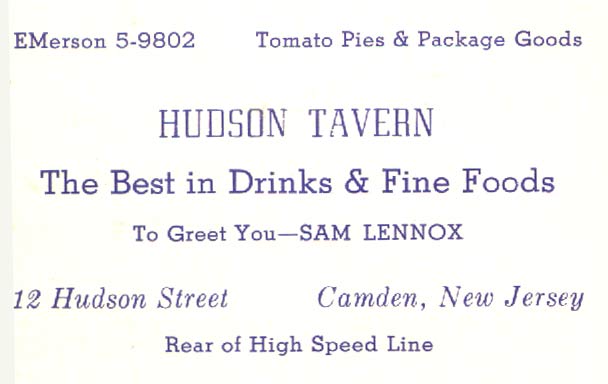
Hudson Tavern — 12 Hudson Street, Camden, New Jersey
The Hudson Tavern
as it appeared in 2000