Introduction
Members of the Camden Fire Department have over the years been represented by different union and fraternal organizations, including the International Association of Fire Fighters, the Brotherhood of Professional Fire Fighters, the International Association of Black Professional Firefighters, and the Society of Camden Latino Fire Fighters.
Local 788 also published Fire Watch Magazine from 1977 well into the 1990s, detailing the activities of the Department in its issues. With photos and articles by Bob Bartosz, Joel Bain, Frank Saia and others, the magazines are a real treasure. It is an honor to be able to present these accounts of the activities of Camden’s fire fighters here.
Phil Cohen — Camden NJ
Fire Watch Magazine — Spring 1977
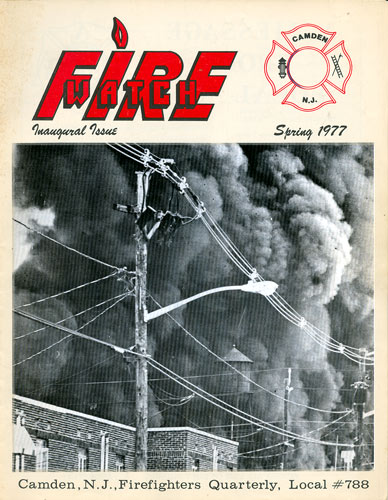
Named: Fire Watch Magazine, Spring 1977, and cover..
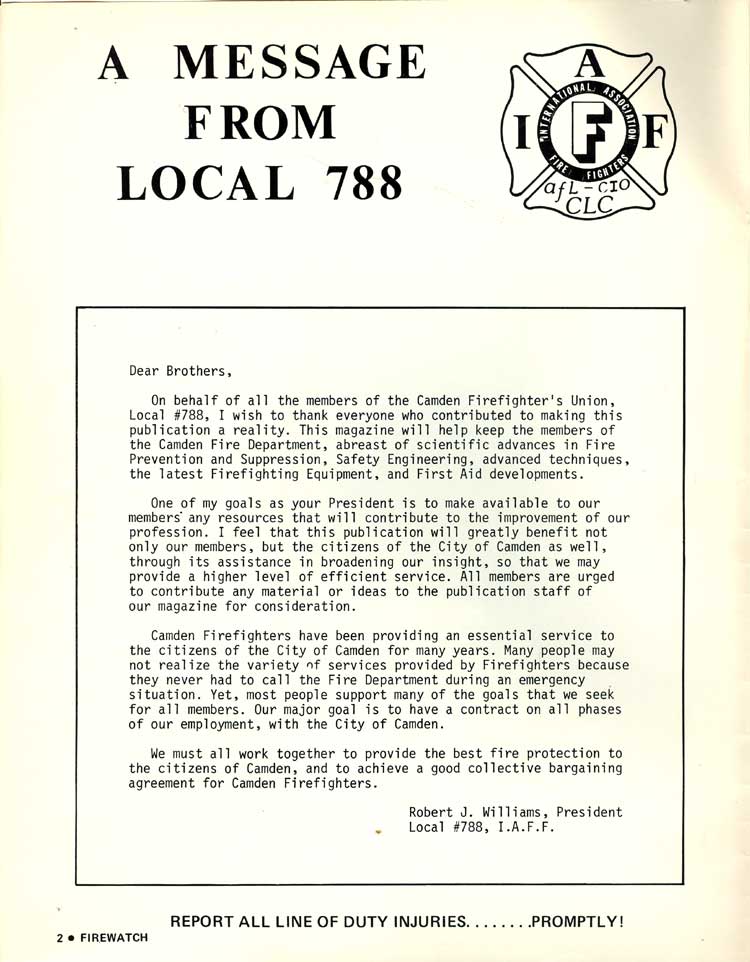
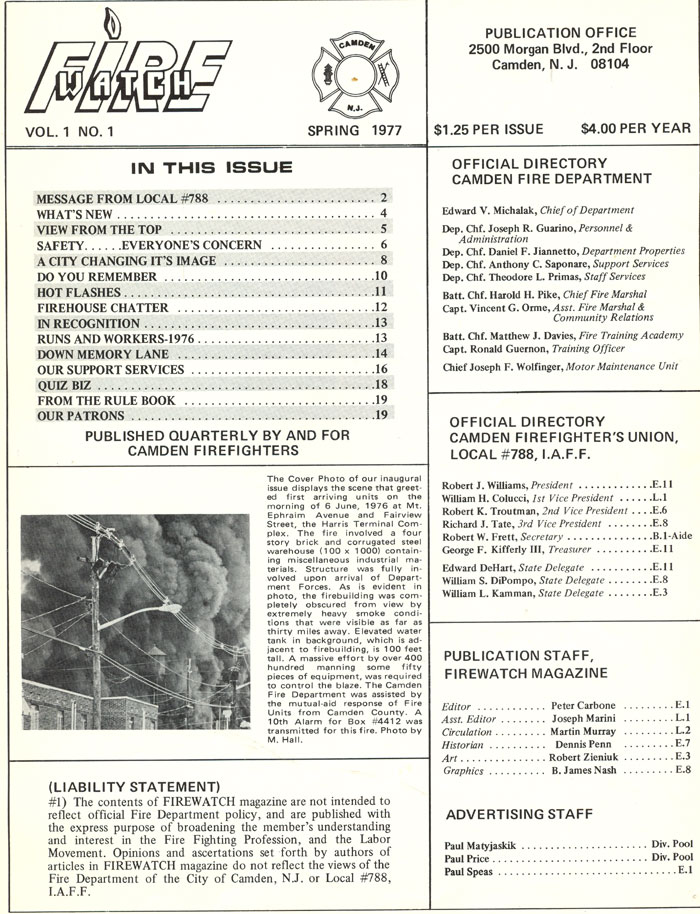
Inside cover and page 1.
Official Directory — Camden Fire Department
| Edward V. Michalak | Chief of Department |
| Deputy Chief Joseph R. Guarino | Personnel & Administration |
| Deputy Chief Daniel F. Jiannetto | Department Properties |
| Deputy Chief Anthony C. Saponare | Support Services |
| Deputy Chief Theodore L. Primas | Staff Services |
| Battalion Chief Harold H. Pike | Chief Fire Marshal |
| Captain Vincent G. Orme | Assistant Fire Marshal & Community Relations |
| Battalion Chief Matthew J. Davies | Fire Training Academy |
| Captain Ronald Guernon | Training Officer |
| Chief Joseph F. Wolfinger | Motor Maintenance Unit |
Official Directory — Camden Firefighter's Union, Local 788, I.A.F.F.
| Robert J. Williams | President | E.II |
| William H. Colucci | 1st Vice President | L.I |
| Robert K. Troutman | 2nd Vice President | E.6 |
| Richard J. Tate | 3rd Vice President | E.8 |
| Robert W. Frett | Secretary | B.I-Aide |
| George F. Kifferly III | Treasurer | E.II |
| Edward DeHart | State Delegate | E.II |
| William S. DiPompo | State Delegate | E.8 |
| William L. Kamman | State Delegate | E.3 |
Publication Staff, Firewatch Magazine
| Editor | Peter Carbone | E.1 |
| Assistant Editor | Joseph Marini | L.1 |
| Circulation | Martin Murray | L.2 |
| Historian | Dennis Penn | E.7 |
| Art | Robert Zieniuk | E.3 |
| Graphics | B. James Nash | E.8 |
Advertising Staff
| Paul Matyjasik | Div. Pool |
| Paul Price | Div. Pool |
| Paul Speas | E.I |
Photos
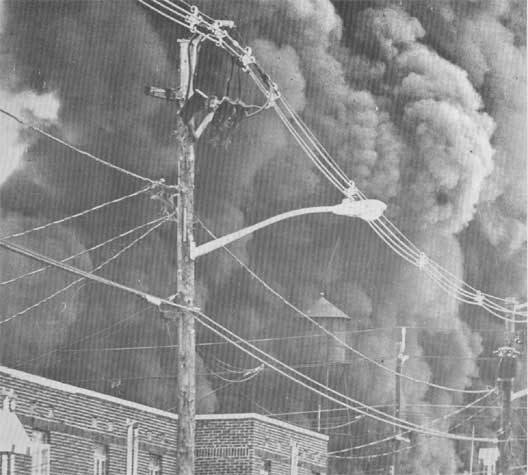
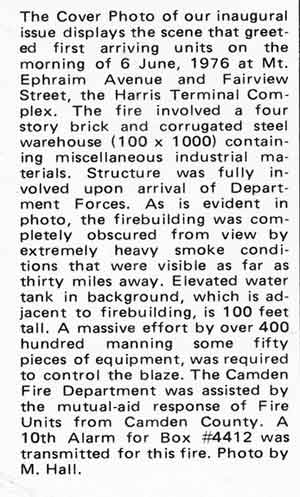
Fire Watch Magazine, Spring 1977 — page 3.
New Apparatus
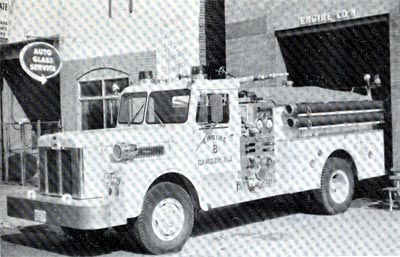

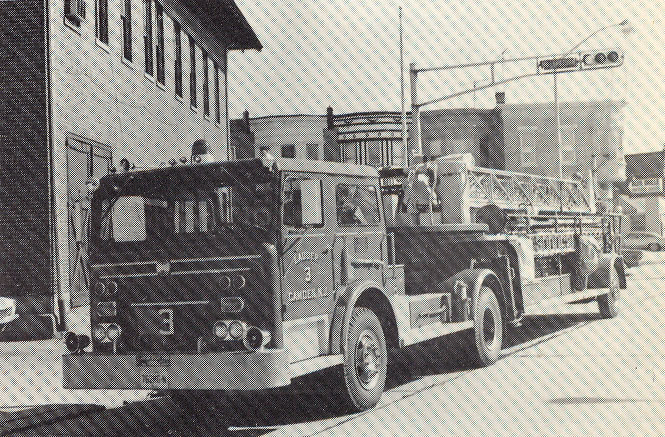
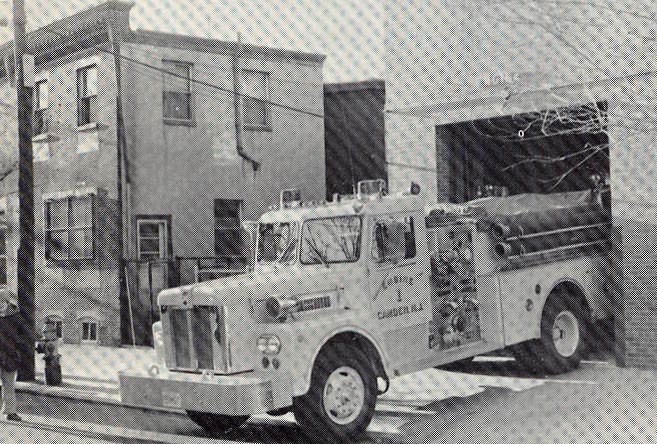
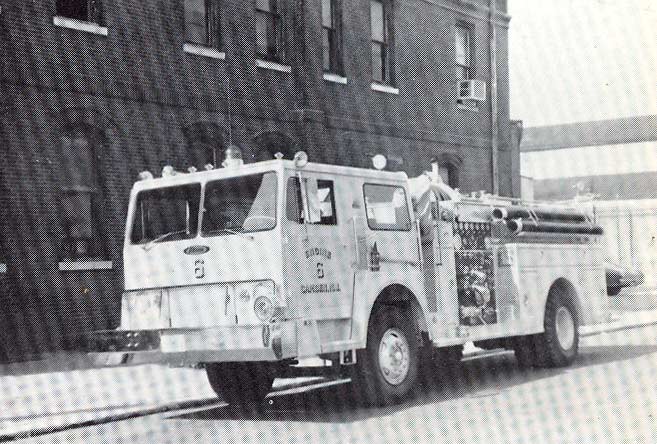
Engine #8 — 617 Kaighn Avenue. Engine #11 — 27th Street & Hayes Avenue. Ladder #3 — 27th & Federal Street. Engine #1 — 409 Pine Street. Engine #6 — Front & Linden Street.
Engines 1 and 8: 1976 Maxim, 1250 G.P.M. Pumpers, 500 gallon booster tanks. Engines 3, 6, 10, and 11: 1976 Pierce, 1000 G.P.M. Pumpers, 500 gallon booster tanks, with Stang Multiversal with T.F.T. Ladder 3: 1976 Maxim, 100 foot aerial ladder, cab-over model, with semi-automatic outriggers.
View From the Top
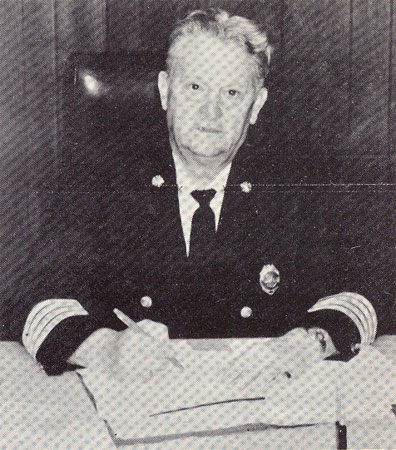
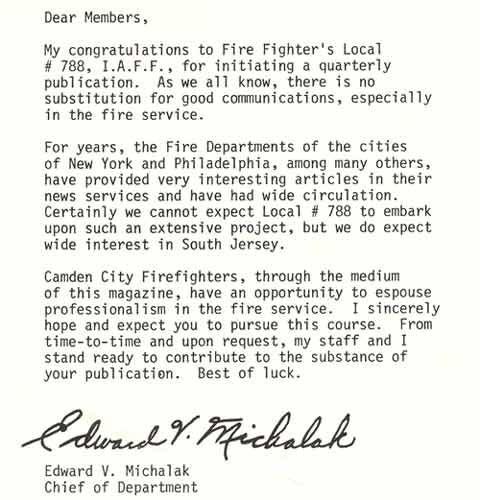
View From the Top — Fire Watch Magazine, Spring 1977.
Safety: Everyone's Concern
Alertness to Hazards While Operating in Vacant Buildings
Safety: Everyone’s Concern — Fire Watch Magazine, Spring 1977.
Fighting fires in vacant buildings is particularly dangerous because of the special hazards that fire fighters encounter in such structures. In many cases, derelicts, vandals, looters, and even children enter these buildings and create hazards for fire fighters.
These trespassers may open up the building so that fire will spread more rapidly, or they may tear out parts of the building so that it is more likely to collapse during a fire. In times of civil strife, booby traps may be set before torching off a vacant building.
Although there are all types of vacant buildings throughout most cities, most fires occur in unboarded, vacant dwellings. The major hazards in vacant dwellings will be discussed in this article, but the principles used to locate these hazards and avert injury to personnel are applicable to all vacant buildings.
Stairs Can Be Dangerous
Stairways are dangerous because not only treads, but the entire stairway or part of it may be weakened or missing.
Don’t trust any stairways or banisters. Use a light to visually inspect stairs, and before putting your weight on a wooden stairway, kick it hard with the heel of your boot or strike it with a tool. If a stairway feels weak, don’t trust it. Wait for a ladder to be placed over it or find another way to get to the upper floor.
Place your weight gradually on one step at a time and keep close to the wall. Truckmen should use tools to test steps in front of them. Don’t bunch up on stairs, platforms and landings. On marble and metal stairways, beware of cracked or missing marble treads and landings. If treads are out, walk on the metal risers, placing the arch of your foot on the narrow metal riser. Don’t rely on any balustrade, banister or newel post. Use your light going up and down stairs.
Holes in Floors
Holes in floors are found in all sections of a building, including the entrance. Sometimes these holes are camouflaged with paper, linoleum, furniture, doors or cardboard boxes. In many cases, the removal of bathroom fixtures from all floors creates a shaft through which men can fall or fire can travel unchecked. In factory buildings, there may be holes where heavy machinery has been removed.
Use your light to spot holes and probe the floor with tools. Be suspicious of doors, paper, or cardboard boxes on the floor or furniture that may conceal a hole. Engine company men should keep a firm grip on the hose and hang on if they should fall. Don’t enter bathrooms until you can see the floor or feel with tools or your hands that it is intact and solid. In heavy smoke, crawl on the floor, using tools and hands to feel in front of yourself.
Wall Openings
Sometimes walls, or parts of them, have been removed between apartments and even between attached buildings. When such a condition is involved in a fire, two engine companies can work against each other without being aware of it and both companies will take a lot of punishment.
Holes in party walls between attached buildings are usually just large enough for a person to squeeze through. The holes usually are made by dope pushers or addicts, or others with criminal intent, as means of escape from the police. In some cases, such holes connect three to four buildings and create a serious exposure hazard during a fire.
When engine companies are working in adjacent apartments and neither is making headway because of what seems to be an abnormal amount of heat and smoke, the officers should communicate with one another. Their companies may be driving the heat and smoke against each other through a missing or partially missing wall. One company should be backed out to see if the other company can advance more readily.
Breach Wall to Hit Fire
Another method is to take a charged line into an uninvolved apartment to a point opposite the main body of fire. Then breach the lath and plaster wall and hit the fire through the hole while the first line remains at apartment entrance with door to public hallway closed.
Truckmen must be alert to advise engine companies of such situations and also to alert chief officers of any holes in the walls between buildings so that they can be covered by hand lines.
Gas, Electric, Water Service
Vacant buildings also have problems associated with utilities. Broken pipes can flood a cellar to a dangerous depth, especially to a fireman who falls from the floor above and is stunned or unconscious. On upper floors broken pipes can create an ice condition in apartments which might last all winter.
Use your light in cellars and listen for running water. Don’t step into cellars without looking or feeling with tools. If you have to enter a flooded cellar, be careful. Watch for holes, such as oil burner pits and house trap pits. Go slowly, feeling with a tool, and always make certain another fire fighter knows you are in the cellar.
In frigid weather, be careful about ice on upper floors. There may be ice where you don’t expect it. Broken or open gas meters or pipes may cause gas to accumulate in cellars. In some cases, meters are in kitchens or bathrooms on upper floors and may not be shut off or may be broken. Your senses of smell and hearing are important in these situations; use them. Don’t rely on an AGO marking. Pipes may be broken or the meter or main entry pipe may have been torn off the wall.
All wires should be treated as though they were live, without exception and especially in cellars containing water.
Missing Doors
The removal of doors to apartments increases the problem of fire spread because open doorways enable fire to spread upward and laterally quicker. Caution should be exercised by men working above a burning apartment when doors are missing.
A good procedure for a company waiting for water in such a situation is to remove a door from an apartment below the fire and hold the door over the entrance to the burning apartment. This will help contain the fire until the water arrives. When doors are missing and there is a good body of fire present, don’t work in the hall or on stairs above the burning apartment.
Accelerants
If accelerants have performed their function and three or four rooms are involved, you will know on arrival that you have a sizable fire and will operate accordingly. However there are times when you arrive before the accelerants have burned completely and you may see only a wisp of smoke or a small fire.
If you smell anything strange, or anything similar to the odor of gasoline or oil, move cautiously. Don’t pass by or go above a small fire. The accelerant may be spread over an entire apartment and out into the public hall. If it is, the entire area can light up instantaneously and trap you in a room or above the fire. Any suspicion of the use of an accelerant must be reported to the officer in command for transmittal to the fire investigation bureau or the fire marshal.
Working on Roofs
When roof operations are involved, all the hazards of an occupied building are also present in a vacant building. These hazards include open shafts, wires, antennas, ice and snow in the winter, darkness at night and unfamiliarity with the roof, and these will be compounded by the fact that the building is vacant. Parapets may be destroyed, and TV antennas may be broken and strewn around the roof. Also, there may be accumulations of rubbish, garbage and even furniture. There may be holes in the roof as a result of vandalism or previous fires.
Your eyes will be your major asset in daylight. Be alert and don’t walk backwards. In smoke, feel your way with a tool, or crawl and use your hands to feel ahead. Remember that ladder companies may have cut holes in the roof during previous fires. At night, your hand light is necessary. Avoid working near the edge of a roof at all times. Proceed slowly; orient yourself so you can leave safely if smoke blocks your vision.
Fire Escape Hazards
Fire escapes are another source of hazards. The entire fire escape may be weakened, or steps may be missing or loose. Railings can be loose or missing, and the gooseneck ladder to the roof may be unsecured at the top. Test a fire escape from a window before putting all your weight on it. At night, use your light to check all steps, and before using a gooseneck ladder, pull on it and see if it is loose. If there is any doubt about the stability of a fire escape, don’t use it.
Danger of Collapse
So far, we have discussed hazards in various parts of a vacant building, but remember, the entire building or major parts of it may be unsafe. The walls may be cracked or leaning, floors may lack proper support, or the entire building may be unsafe because of age, vandalism or previous fires. One or more previous fires can weaken floor beams, bearing partitions and brick walls. These conditions may not be apparent when you arrive, so you must keep an eye out for spongy floors, leaning walls, beams pulled out of walls, and missing interior partitions and columns. Any of these structural defects should be reported to the officer in command immediately.
When officers have doubts about the structural stability of a building, they must immediately inform the chief in charge and notify all fire fighters in the danger area. This action can avert many injuries. Remember, the watchword for operations in vacant buildings is “Caution.”
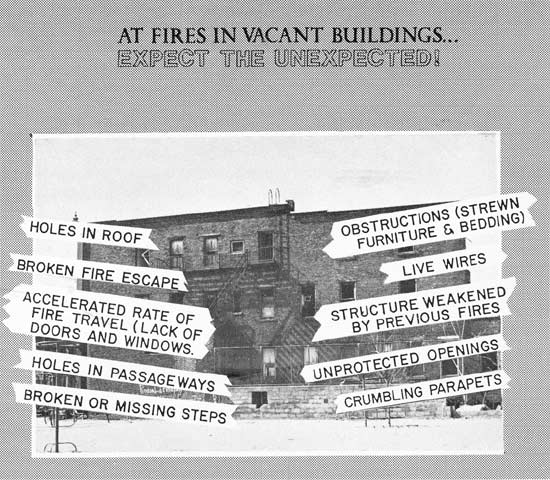
Safety illustration — Fire Watch Magazine, Spring 1977.
A City Changing Its Image — Camden's New Fire Administration Building

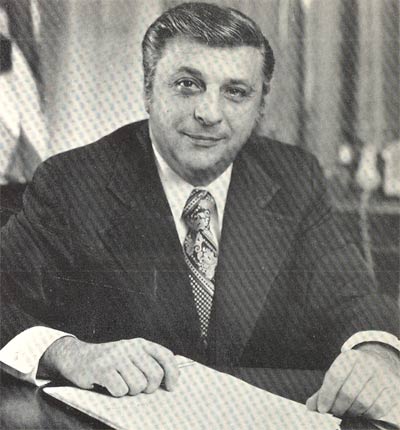
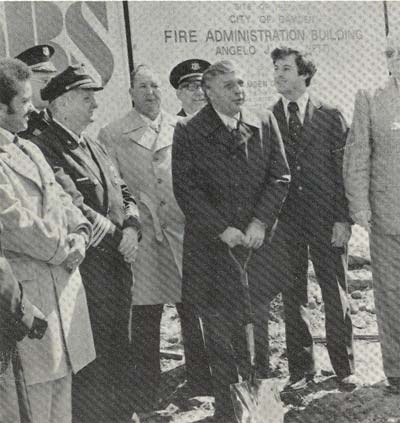
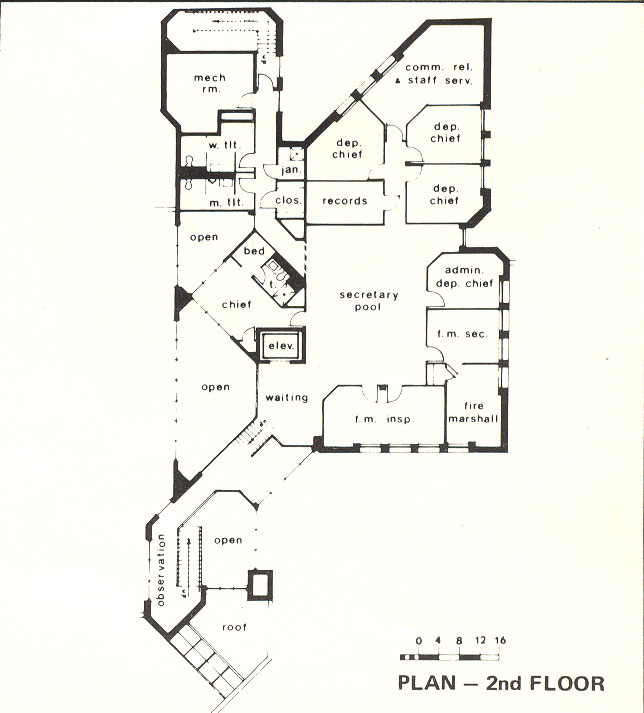
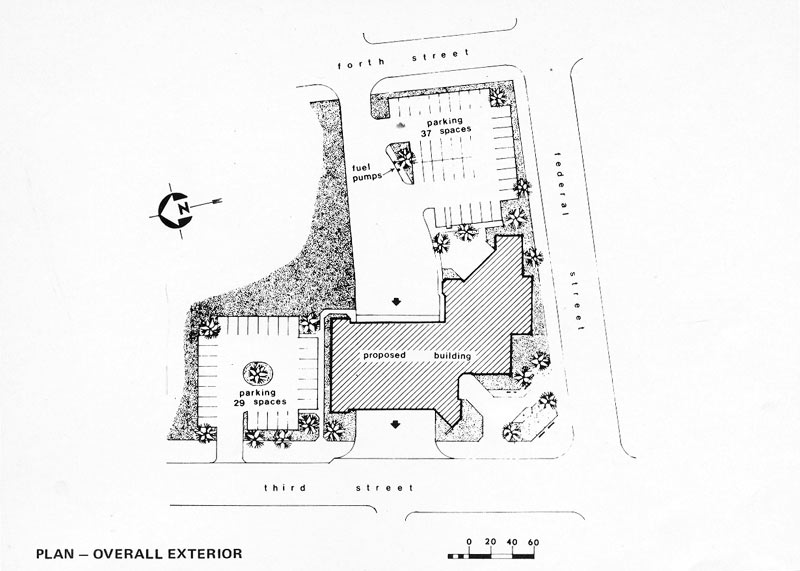
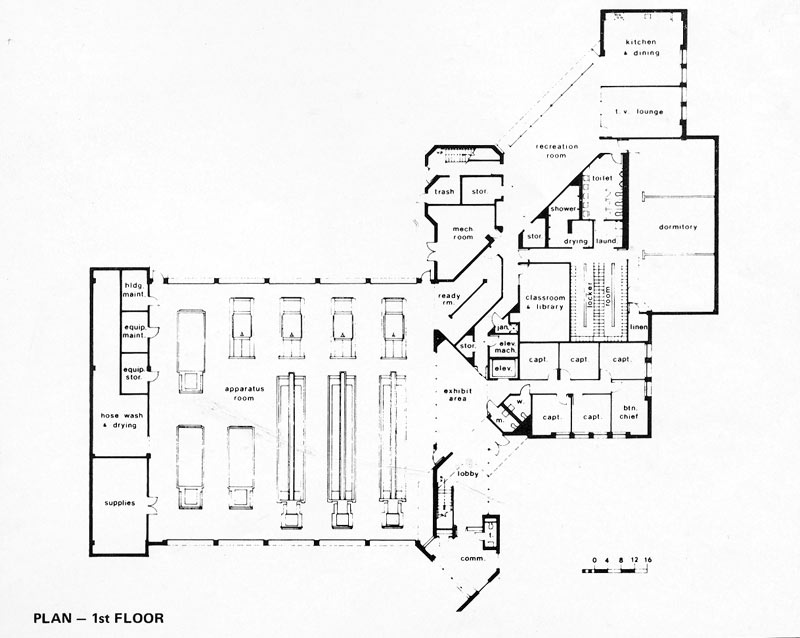
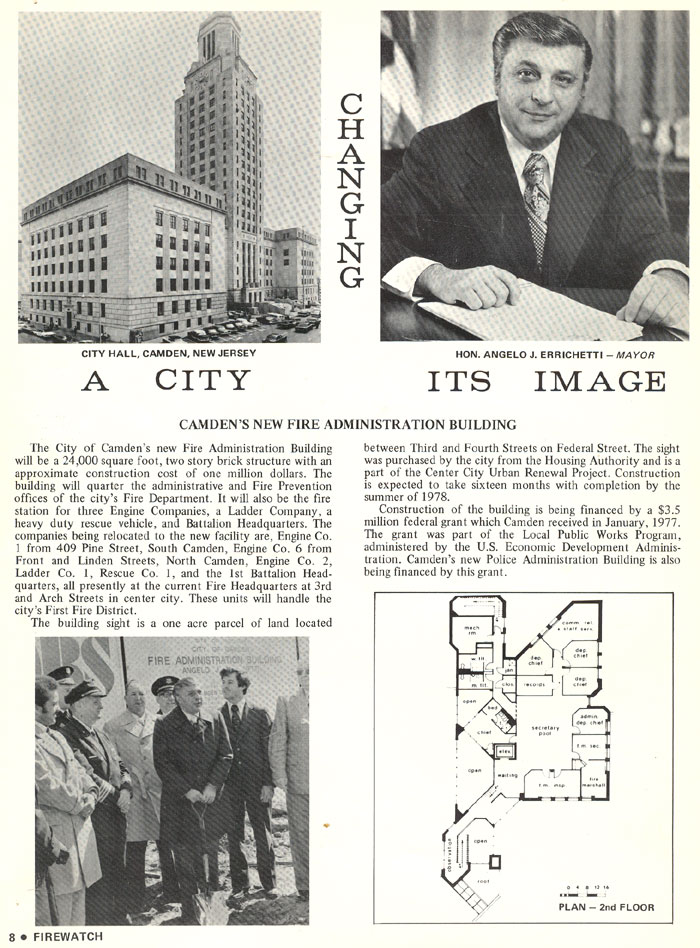
Camden City Hall and Mayor Angelo Errichetti. Groundbreaking and building plan for the new Fire Administration Building, 1977.
The City of Camden’s new Fire Administration Building will be a 24,000 square foot, two-story brick structure with an approximate construction cost of one million dollars. The building will quarter the administrative and Fire Prevention offices of the city’s Fire Department. It will also be the fire station for three Engine Companies, a Ladder Company, a heavy-duty rescue vehicle, and Battalion Headquarters. The companies being relocated to the new facility are Engine Co. 1 from 409 Pine Street, South Camden, Engine Co. 6 from Front and Linden Streets, North Camden, Engine Co. 2, Ladder Co. 1, Rescue Co. 1, and the 1st Battalion Headquarters, all presently at the current Fire Headquarters at 3rd and Arch Streets in center city. These units will handle the city’s First Fire District.
The building site is a one-acre parcel of land located between Third and Fourth Streets on Federal Street. The site was purchased by the city from the Housing Authority and is a part of the Center City Urban Renewal Project. Construction is expected to take sixteen months with completion by the summer of 1978.
Construction of the building is being financed by a $3.5 million federal grant which Camden received in January, 1977. The grant was part of the Local Public Works Program, administered by the U.S. Economic Development Administration. Camden’s new Police Administration Building is also being financed by this grant.
Fire Scenes
Camden fire scenes — Fire Watch Magazine, Spring 1977.

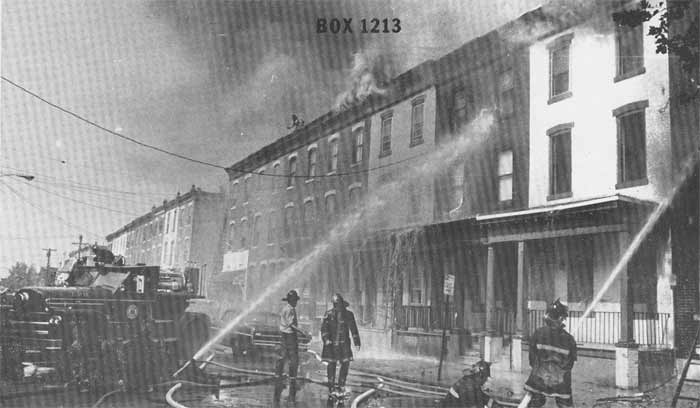
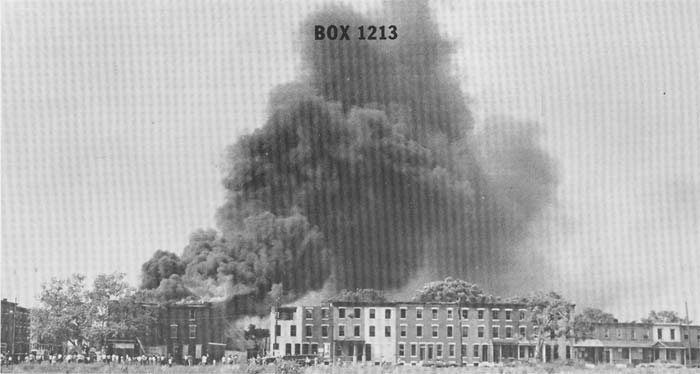
“Master streams from street level go into service on upper floors of fire dwellings, as ‘Truckies’ in background prepare for main ladder service. Units operating at front of properties in above photo are Engine Company 1 and Ladder Company 3. Apparatus appearing in photo is a ‘Reserve series Ladder’ on loan to the Camden Fire Department from the City of Brotherly Love. Fire occurred on 4 July 1972 at 6th and Elm Streets on Camden’s North Side, and damaged ten dwellings before being confined; a Second Alarm for Box #1213 was required to control this worker.” Photo courtesy of R. Bartosz.
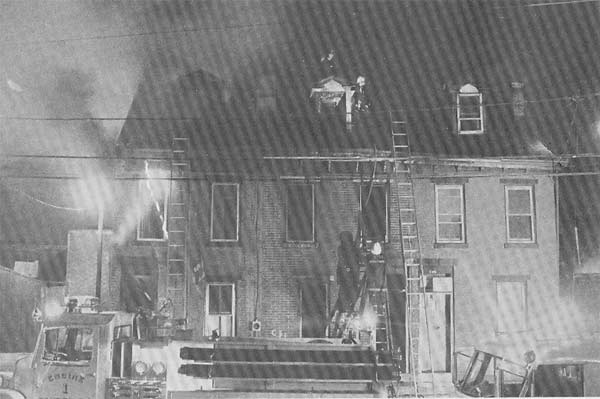
“Above photo clearly illustrates magnitude of fire at rear of properties in the 600 block of Elm Street on 4 July, 1974. A common cockloft and a ‘good start’ were responsible for the above scene, which produced a tough service for all hands involved. Fire resulted in one civilian death and numerous injuries to members.” Photo courtesy of R. Bartosz.
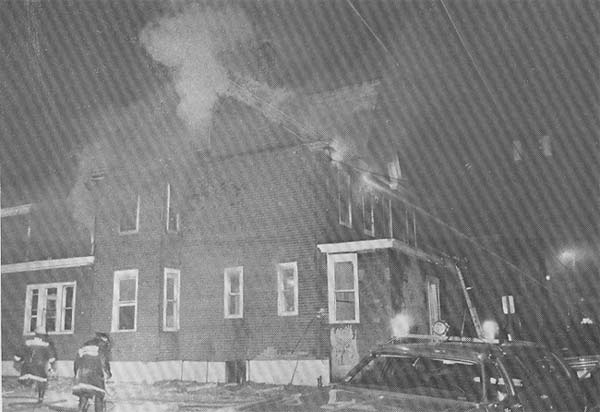
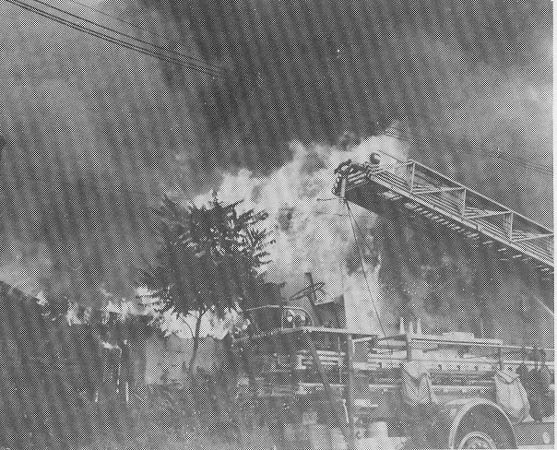
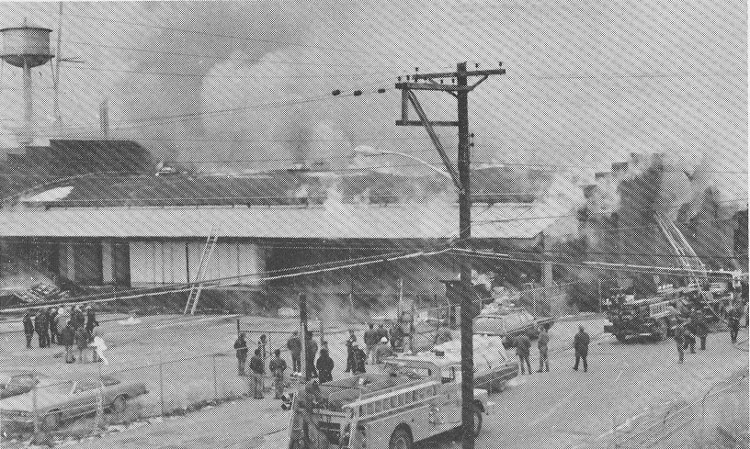
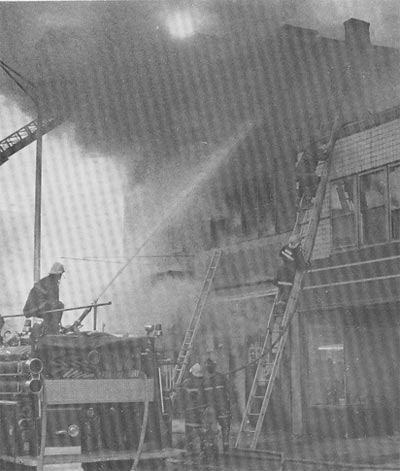
Camden fire scenes — Fire Watch Magazine, Spring 1977.
Firehouse Chatter
“A Tip O’ the Helmet To”… Fr. Chuck Mayo of Ladder Co. 1, for his alertness and quick action in the prevention of serious injury and probable death to a brother member, while operating at 2nd Alarm-Box #1222, transmitted at 0348 hours on 2 January, 1977 for a fire located at 513 Cooper Street. Severely low temperatures and heavy icing conditions made roof level operations extremely hazardous. While working at roof level, atop the three-story fire building, another member slipped on an ice coated peaked roof above Chuck’s position, and began his downward slide toward, and inevitably over the edge. Fr. Mayo’s quick reflexes in grabbing the brother resulted in only a close call instead of a tragedy. A job well done.
All members of the Camden Fire Department have been invited by Commissioner Joseph R. Rizzo of the Philadelphia Fire Department to participate and lend support to a special fund raising venture to benefit the Burn Foundation on June 17, 1977 at the Bala Golf Club. Capt. Vince Orme of the Fire Prevention Unit has been placed in charge of this program for the department.
“A Tip O’ the Helmet To”… Frank (Post-time) McGuckin and Fr. Marty Murray, of Ladder Co. 2, for the fine rescue of a trapped and unconscious child, performed at “all hands-Box #5213,” transmitted at 0945 hours on 26 March, 1977 for a fire located at 1466 Kaighn Avenue. Quick action on the part of all units, and successful mouth to mouth resuscitation applied by Fr. McGuckin resulted in the saving of a life. Units operating at all hands-5213 were Engines 7 and 8, Ladder Co. 2, and the 2nd Battalion under the command of B.C. Bob Dukes. A job well done.
On June 18, 1977, the annual Camden County Hero Scholarship Fund Thrill Show will be held at the Garden State Race Track at Cherry Hill, N.J.
“A Tip O’ the Helmet To”… Fr. Jim Cusick and Capt. Emmitt Smith of Engine 6, and Fr. Ronnie Frank and Fr. Bill Wickward of Engine 2, for the dramatic rescues of four trapped and unconscious children, performed at “all hands-Box #1227,” transmitted at 2101 hours on 26 March, 1977 for a fire located at 628 Willard Street. Professional teamwork on the part of all units, and fast extrication by members, resulted in the saving of three lives. Units operating at all hands-1227 were Engines 6, 2, and 1, Ladder Co. 1, and the 1st Battalion under the command of B.C. Ken Penn. A job well done. A tragic note: One child succumbed to injuries following removal from the firegrounds.
Happy to see Fr. Billy Colucci, Ladder Co. 1, in good health and back on Arch Street following a close call and subsequent back injury, sustained while operating at 2nd Alarm-Box #1231, transmitted at 0815 hours on 2 January, 1977 for a fire located at 4th & Byron Streets.
“A Tip O’ the Helmet To”… Fr. George Abbey and Fr. Denny Penn of Engine 7, and Fr. Jim Nash of Engine 8, for the successful rescue of a trapped and unconscious woman at “all hands-Box #5212,” transmitted at 2337 hours on 27 March, 1977 for a fire located at 1440 Sheridan Street. Hustle on the part of all units resulted in the saving of a life and the quick confinement of fire. Fr. Denny Dowhy of Ladder Co. 2 was also responsible for saving the life of a man’s best friend. Units operating at all hands-5212 were Engines 7 and 8, Ladder Co. 2, and the 3rd Battalion under the command of B.C. John Letts. A job well done.
Sorry to hear about Capt. Bill Winstanley, Engine 3, concerning his injury sustained following operations at 2nd Alarm-Box #2322, transmitted at 1539 hours on 23 March, 1977 for a fire located at Broadway & Pine Streets. With a broken hand on the mend, we wish him a speedy recovery and return to the “Big 3.”
“A Tip O’ the Helmet To”… all the brothers who turned out for blood donorship for Capt. Bob Davenport, Ladder Co. 3. Within twenty-four hours, following the notification throughout the department, the response was so great that the hospital blood bank had to turn away members stating that they had sufficient quotas to cover Bob’s needs. Once again, a demonstration of the true brotherhood within the fire service. Capt. Davenport is preparing to undergo open heart surgery to correct a heart valve. Our prayers are with him in hoping for a successful operation and speedy recovery.
“Firewatch Magazine” would like to convey their appreciation to the clerical staff at Fire Headquarters for their valuable assistance to the publications staff in the research of material. Sincere thanks to Capt. John Moore, Fr. Bill Harring, Mrs. Antoinette Smith, Mrs. Sue Gellura, and Mrs. Lorraine Bumbrey.
Glad to hear of Capt. Mike LaFrance’s return to duty at Engine 10, following a back injury sustained on the line while operating under icing conditions that resulted in a nasty spill. Welcome back.
Further good news heard from the “East Side” with Fr. Angelo (Pups) Borghero, Engine 9, and Fr. Ernie Newkirk, Ladder Co. 3, back in quarters following injuries in the line of duty.
In Recognition — Anniversary Dates
Members as listed have anniversary dates which fall during the first quarter.
| Name | Service |
|---|---|
| Fr. Howard G. Brickner #5 | 26 Years |
| Fr. Harvey J. Fisher #186 | 26 Years |
| Capt. James W. Smith | 26 Years |
| Dep. Chf. Anthony C. Saponare | 35 Years |
| Fr. Andrew H. Foreman #183 | 26 Years |
| Fr. William J. Stibi #120 | 26 Years |
| Batt. Chf. Robert E. Dukes | 30 Years |
| Fr. Henry S. Keubler #34 | 26 Years |
| Fr. William M. Stone #29 | 26 Years |
| Insp. Fr. George C. Hennessy #21 | 30 Years |
| Fr. Joseph J. Lesniewski #50 | 26 Years |
| Capt. William G. Winstanley | 26 Years |
| Dep. Chf. Daniel F. Jiannetto | 30 Years |
| Fr. Phillip MacDonald #71 | 26 Years |
| Fr. Adolph S. Zubrzycki #62 | 26 Years |
| Dep. Chf. Theodore L. Primas | 30 Years |
| Fr. Joseph J. McTaggart #26 | 26 Years |
| Batt. Chf. John J. Giuliano | 21 Years |
| Fr. Eugene F. Alston #7 | 29 Years |
| Batt. Chf. John J. Mogck | 26 Years |
| Insp. Fr. Alfred D. Nigro #76 | 21 Years |
| Batt. Chf. Biaggio P. Ardire | 29 Years |
| Capt. John E. Moore | 26 Years |
| Fr. Leon Puszczykowski #100 | 21 Years |
| Fr. William R. Harring #69 | 29 Years |
| Capt. Robert P. Olesiewicz | 26 Years |
| Fr. John L. Sterner #73 | 21 Years |
| Fr. William E. Hinch #151 | 29 Years |
| Capt. Anthony T. Orme | 26 Years |
| Fr. Francis P. Stibi #143 | 21 Years |
| Capt. Herbert J. Schott | 28 Years |
| Fr. Ralph H. Palmer #46 | 26 Years |
| Fr. Carl R. Szalkowski #95 | 21 Years |
| Batt. Chf. Charles A. Bates | 26 Years |
Promotions & Fire Fighters Farewell
Promotions — Congratulations To:
Fr. 1st Grade, E. John DeFrancisco #16, Engine Co. 10, promoted to the rank of Captain on 21 January, 1977 and assigned to Division Pool, 2nd Battalion.
Captain George C. Kurtyan, Engine Co. 3, promoted to the rank of Battalion Chief on 1 March, 1977 and assigned to the 3rd Battalion.
Fr. 1st Grade, Herbert Leary #202, Engine Co. 6, promoted to the rank of Captain on 1 March, 1977 and assigned to Division Pool, 2nd Battalion.
Fire Fighters Farewell — Best of Luck To:
Battalion Chief Joseph A. Gfrorer, 3rd Battalion. Appointed on 14 April, 1937 and assigned to Ladder Co. 2. Promoted to the rank of Captain on 17 November, 1948 and assigned to Engine Co. 7. Promoted to the rank of Battalion Chief on 12 July, 1968 and assigned to the 2nd Battalion. Retired on 28 February, 1977.
Fr. 1st Grade, Richard L. Sorensen #119, Engine Co. 8. Appointed on 3 November, 1969 and assigned to Engine Co. 1. As a result of injuries sustained in the performance of duty, retired on 1 February, 1977.
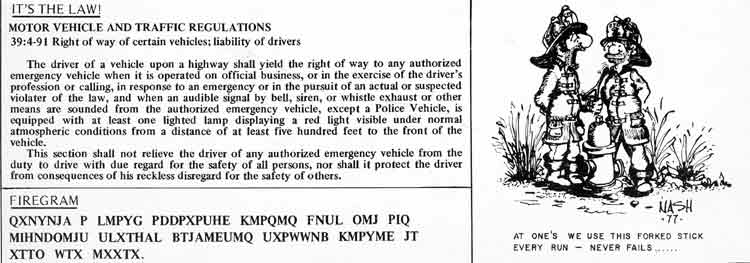
Fire Watch Magazine, Spring 1977 — page 12.
Photos
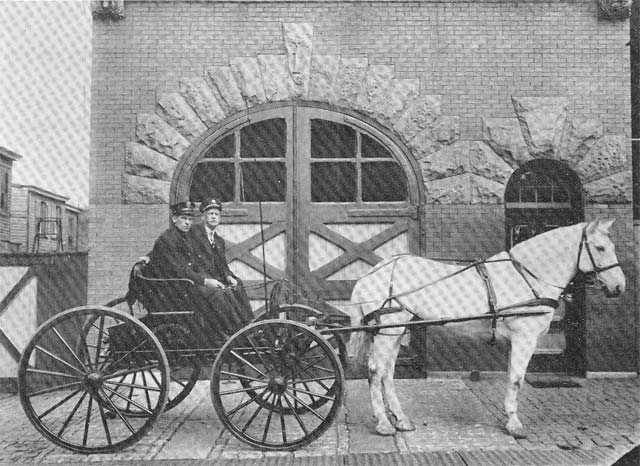
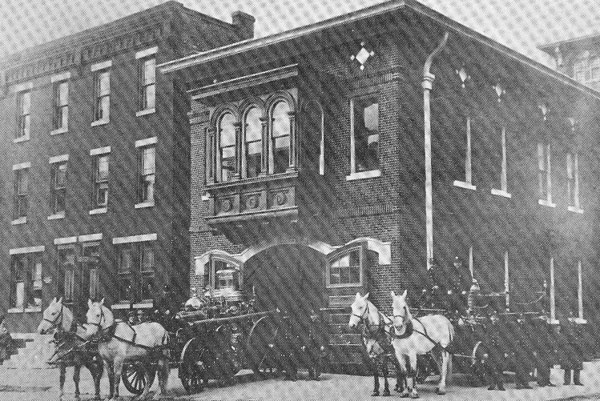
Fire Watch Magazine, Spring 1977 — page 13.
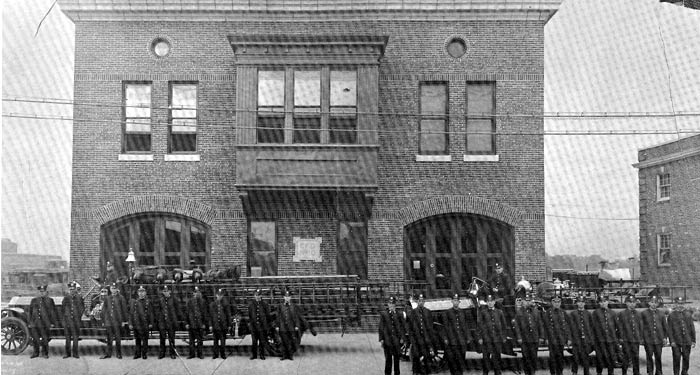
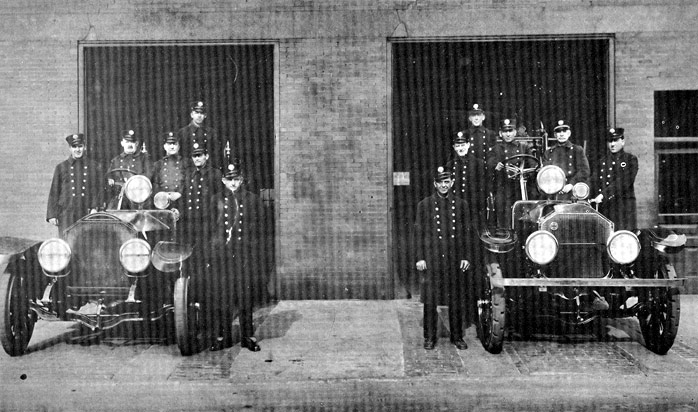
Engine Company 10 — Engine Company 8 and Ladder Company 2.
Our Support Services — Fire Communications Center
By Lieutenant Alvin Thompson, Administrative Unit, Fire Communications Center

Camden County Fire and Ambulance Communications Center.
Our new central office, the Camden County Fire and Ambulance Communications Center became operational on 15 October, 1973. It became our new Fire Alarm Room on 7 February, 1977. It is quartered in Building #16 of the Camden County Municipal Complex, Old Egg Harbor Road, Lindenwold, N.J. The main radio tower, located at the center, is 200 feet high. There is a remote site in Pine Hill, N.J. with a second tower which is also 200 feet high on an elevation of 185 feet. To encompass the Fire Department of the City of Camden, an antenna was erected on the top level of Camden City Hall (25th floor) with the transmitter and receiver located on the 19th floor. Transmission and reception is passed from Lindenwold to Camden via a multiple lead of Bell Telephone lines.
The Alarm Room monitors and services nine separate radio frequencies. The F-1 Band is mainly used to dispatch County Fire Units. The F-2 and F-3 Bands are mainly used for County fireground operations. The F-4 Band is currently used by County Fire Coordinators, County Fire Marshals, Civil Defense, and Communications Center Personnel. The central office also carries the hospital and ambulance frequencies, the South Jersey Fire Network, and the New Jersey State Forest Fire Service. There are four operational consoles in the Alarm Room, each one capable of handling any of the nine frequencies, plus a command supervisor’s console.
The center’s telephone system is of the new dimensional type. The extensions off of this system are located in each County Fire Installation, Police Station, Hospital Emergency Room, area U.S. Coast Guard Bases, and Civil Defense Installations. The three-digit exchange prefix appears in lights on a visual display board indicating what section of the County the call is originating from. In order to encompass the City of Camden, the center has also been equipped with the new Camden City Bell Centrex System (the Municipal Telephone System) as well as an interface capability for “Emergency 9-1-1.”
The Communications Center also provides mobile emergency communications service in the form of a Field Communications Vehicle, known as “Field Comm.” The purpose of Field Comm service is to provide an at-the-scene mobile command post with communications capabilities that are relatively comparable to that of the main central office. On the scene of a major fireground operation, or any type of extended service, Field Comm also serves as a buffer to the main Fire Communications Center itself, in so far as relieving the central office dispatchers of the heavy radio traffic so often produced by a multiple alarm operation. The Camden Fire Department will receive an automatic response from Field Comm on all third-alarms.
The Fire Communications Center is under the command of Chief James Stewart (former Battalion Chief of this department, now retired) and Assistant Chief Stanley Kulikowski. Captain Frank Lonsdale and Lieutenant Alvin Thompson are attached to the center’s administrative unit. The operations room is staffed by fourteen fire dispatchers and four supervisors, plus an administrative aide. There are a minimum of four members on duty at all times. Thirty-two of Camden County’s thirty-seven municipalities are dispatched from the center.
Our new Fire Alarm Room is one of the most modern and operationally advanced systems of its type in the country.
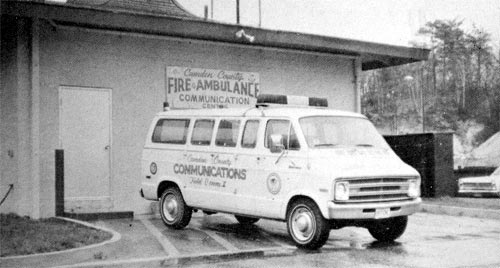
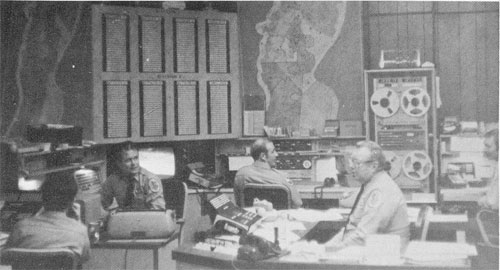
Field Communications Unit #2 — Fire Communications Center Operations Room.
Photos

Fire Watch Magazine, Spring 1977 — page 17.

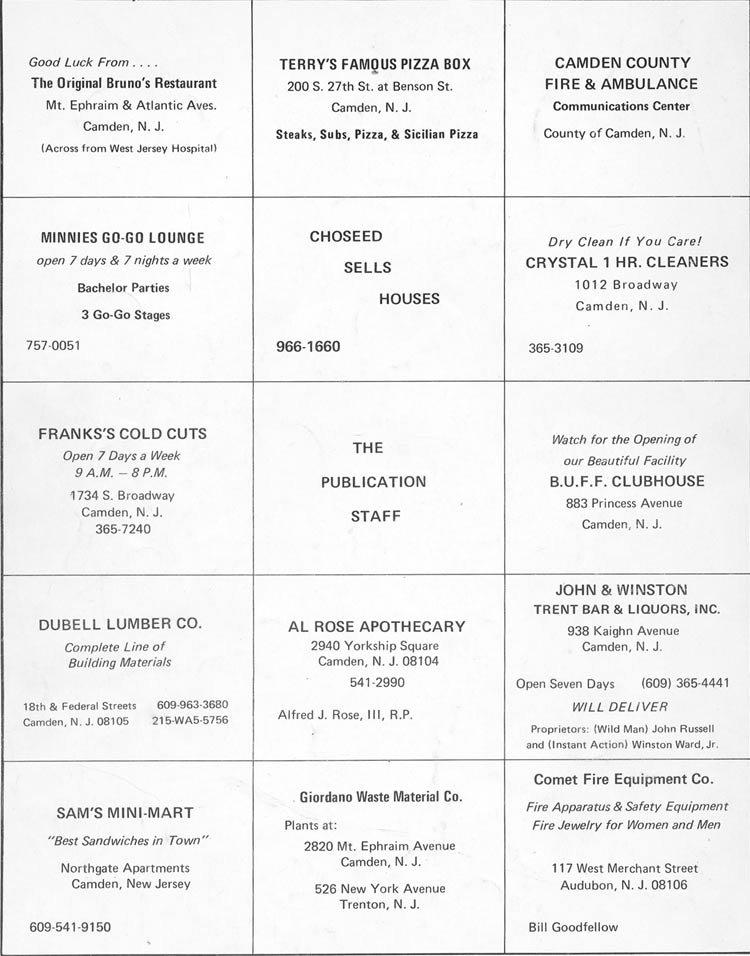
Named: Fire Watch Magazine, Spring 1977, pages 18, and 20..