Introduction
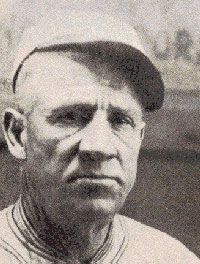
Kid Gleason, manager of the Chicago White Sox, 1919
WILLIAM J. “KID” GLEASON JR. was born October 26, 1866 in Camden NJ to William Gleason and his wife, the former Ellen Mars Ivins. He was one of ten children born to the Gleasons. His father was a Civil War veteran who worked for the Pennsylvania Railroad as a foreman on the railroad’s Camden docks. The Gleason family lived at 646 John Street in the 1870s, this street was later renamed Locust Street. The Gleasons were living at 404 North Front Street, near the northwest corner of Front and Linden Street when the Census was taken in 1880.
William J. Gleason’s father worked as a foreman with the Pennsylvania Railroad, which operated trains out of the Market Street Ferry Terminal, near the Gleason home, which by 1887 was at 212 Bridge Avenue, where they lived through 1888. He had also served with the Camden Fire Department from 1872 to 1874, and would serve again from 1872 to 1877, as did his uncle Alfred Ivins. His mother’s brothers-in-law Barton Lane, James M. Lane, and John Streeper all served at various times with the Fire Department as well, Streeper and James M. Lane both with much longer times in public service outside of the Fire Department.
In the early 1880s, still a teenager, William J. Gleason played for a number of semi-pro clubs, including the Young Merritt club, a youth version of sorts for the Merritt Baseball club, which was sponsored by Camden businessman and one-term state senator Albert Merritt. Another young man from the same neighborhood was Bill Eagan, both would go on to play major league baseball. Sadly, Eagan’s problems with alcohol derailed his career and life. The Merritt club was disbanded after the 1883 season. Another player who was often a teammate of William Gleason was J. Wesley Sell, a crack third baseman who went on to be Camden County Sheriff and county treasurer.
William Gleason appeared in Camden newspapers in 1885, for baseball and for two barroom fights where both he and Bill Eagan were involved, one in April, the other in September. Gleason pitched for at least two teams that season, the Kenney club, sponsored by bar-owner John P. Kenney of 18 South 5th Street, and the Howard team, owned by druggist J. Griffith Howard.
After playing ball in and around Camden, he went with another Camden ballplayer, Charles Alcott, to Williamsport in the Pennsylvania State Association league in 1887. Both men later played for the Scranton team in the same league later in the same season. At season’s end he returned to Camden and played for the Camden club alongside of Bill Eagan.
William Gleason reached the major leagues in 1888 as a pitcher for the Philadelphia Phillies. Nicknamed Kid in part because he was 5’7” but mostly for his enthusiasm, Gleason would go on to play 22 seasons in the majors, and remained in the game as a coach and manager until his death in 1933.
Kid Gleason’s first eight years in the big league were spent mostly as a pitcher, although he made occasional appearances in the outfield and at second base. He began as a pitcher with the Phillies. His best season on the mound was 1890. After two losing seasons, he blossomed in 1890 when desertions to the Players’ League stripped the Phillies of their regular starters. During the 1890 season he started 60 games, running up a record of 38 wins and 17 losses, with an Earned Run Average of 2.63 for the Phillies. His 38 wins is the Phillies single season record, one which will never be broken. He never approached that level again, although he twice more topped 20 wins. He won 24 and lost 22 for Philadelphia in 1891, and was sent to St. Louis before the 1892 season. He continued as a pitcher, although with reduced effectiveness until 1894, when he was sent to the Baltimore Orioles during the middle of the season. When the distance from the mound to the plate was increased in 1894, he was basically through as a major league pitcher.
The Orioles won the pennant that year, and would for the next two seasons as well. Manager Ned Hanlon recognized Gleason’s talent in the field and at the plate, and made him the Orioles’ starting second-baseman for the 1895 season. He responded by hitting .309, scoring 90 runs, with 14 doubles, 12 triples and 19 stolen bases for the Orioles. Traded to the New York Giants for Jack Doyle in 1896, he remained with New York until 1900. While with the Giants, where he was named team captain. According to some reports, he was the first to order an intentional base on balls as a way to bypass a strong hitter. In 1897 he had his best offensive year, hitting .319 with 106 RBI.
After the 1900 season, Kid Gleason was involved in a strange incident. Gleason and the Giants, along with the Brooklyn Dodgers, took a boat to Cuba for a series of exhibition games. On the boat trip over, Outfielder Tom O’Brien and Gleason were told that if they drank enough sea water they would be sick, but would then be cured of any sea sickness. Both O’Brien and Gleason became violently ill following the prescription, but O’Brien was so affected that all his internal organs were damaged, and he never recovered, passing away in Phoenix AZ on February 28, 1901.
In 1901 Kid Gleason jumped to Detroit in the new American League. He played there for two years, returning to the Phillies in 1903, where he for all intents and purposes finished his career as an everyday player in 1907. He appeared in two games as a replacement for the Phillies in 1908. Kid Gleason spent 1908, 1909, and 1910 for the most part as a minor league player-manager. In 1911 he took a job as a coach with the Chicago White Sox, and appeared in one game as a player in 1912. When the White Sox won the American League pennant and the World Series in 1917, he was given much credit for the achievement.
Kid Gleason was out of baseball during the 1918 season. He was named manager for the 1919 season, and won the pennant by four games with an 88 and 52 record. The White Sox were a fine team with many great players, but there was a cancer in the clubhouse. Upset by the low pay and meanness of owner Charles Comiskey, several White Sox players, when approached by gamblers, agreed to throw the 1919 World Series.
Kid Gleason took the White Sox through the 1920 season, finishing second by three games to the Cleveland Indians. Talk of a possible fix in the 1919 Series had continued through the winter months into the 1920 season. In July, Gleason ran into gambler Abe Attell at a New York bar. Attell confirmed Gleason’s suspicions about the fix. “You know, Kid, I hated to do that to you,” Attell told Gleason, “but I thought I was going to make a bundle, and I needed it.” Attell revealed that Arnold Rothstein was the big money man behind the fix. Gleason went to the press with the story, but was unable to convince anyone—because of fear of libel suits—to print it.
The Black Sox, as it was called, scandal broke wide open in September of 1920. Team owner Comiskey suspended the compromised players with a few games left in the season. The Sox lost these games, and the pennant. Gleason was absolved of any guilt in the affair, and continued as White Sox manager until 1923. His teams however, stripped of many of their better players, did not fare well, and Gleason’s White Sox would not be better than a .500 ball club after 1920. He was let go as manager after the 1923 season. After two seasons away from the major leagues, Kid Gleason was offered a position as a coach with Connie Mack’s Philadelphia Athletics. He would return to the World Series with the A’s in 1930 and 1931. Seriously ill during most of 1932, Kid Gleason passed away from a heart ailment in Philadelphia on January 2, 1933. He was buried at Northwood Cemetery in Philadelphia PA.
Kid Gleason’s younger brother, Harry Gleason, played parts of five years in the major leagues as well, for Boston and St Louis in the American League, from 1901 through 1905. Another brother, Isaac “Ike” Gleason, was well known as a player, manager, and especially as an umpire in local baseball circles.
Kid Gleason was inducted into the South Jersey Baseball Hall of Fame in 1993.
The Camden Baseball Club, 1885
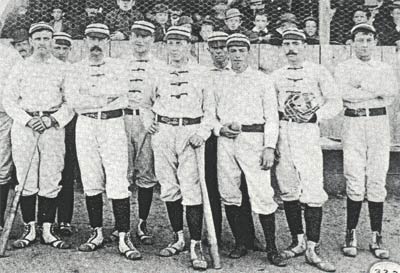
The Camden Baseball Club, 1885. Kid Gleason is 4th from left.
Career Statistics
Career Baseball Statistics
Complete career statistics for Kid Gleason (William J. Gleason), Camden-born Major League pitcher and second baseman, 1888–1912.
Pitching Statistics
| Team ↕ | W ↕ | L ↕ | Pct ↕ | Era ↕ | G ↕ | Gs ↕ | Gf ↕ | Cg ↕ | Sho ↕ | Sv ↕ | Ip ↕ | Bfp ↕ | H ↕ | Er ↕ | R ↕ | Hr ↕ | Bb ↕ | Ibb ↕ | So ↕ | Wp ↕ | Hbp ↕ | Bk ↕ |
|---|---|---|---|---|---|---|---|---|---|---|---|---|---|---|---|---|---|---|---|---|---|---|
| 1888 Quakers | 7 | 16 | .304 | 2.84 | 24 | 23 | 1 | 23 | 0 | 0 | 199.2 | 855 | 199 | 63 | 112 | 11 | 53 | - | 89 | 11 | 12 | 0 |
| 1889 Quakers | 9 | 15 | .375 | 5.58 | 29 | 21 | 7 | 15 | 0 | 1 | 205.0 | 902 | 242 | 127 | 177 | 8 | 97 | - | 64 | 14 | 9 | 0 |
| 1890 Phillies | 38 | 17 | .691 | 2.63 | 60 | 55 | 5 | 54 | 6 | 2 | 506.0 | 0 | 479 | 148 | 253 | 8 | 167 | - | 222 | 11 | 0 | 1 |
| 1891 Phillies | 24 | 22 | .522 | 3.51 | 53 | 44 | 9 | 40 | 1 | 1 | 418.0 | 0 | 431 | 163 | 237 | 10 | 165 | - | 100 | 17 | 0 | 0 |
| 1892 Cardinals | 20 | 24 | .455 | 3.33 | 47 | 45 | - | 43 | 2 | 0 | 400.0 | 0 | 389 | 148 | - | 11 | 151 | - | 133 | - | - | - |
| 1893 Cardinals | 21 | 22 | .488 | 4.61 | 48 | 45 | - | 37 | 1 | 1 | 380.1 | 0 | 436 | 195 | - | 18 | 187 | - | 86 | - | - | - |
| 1894 Cardinals | 2 | 6 | .250 | 6.05 | 8 | 8 | - | 6 | 0 | 0 | 58.0 | 0 | 75 | 39 | - | 2 | 21 | - | 9 | - | - | - |
| 1894 Orioles | 15 | 5 | .750 | 4.45 | 21 | 20 | 1 | 19 | 0 | 0 | 172.0 | 0 | 224 | 85 | 111 | 3 | 44 | - | 35 | 3 | 0 | 0 |
| 1895 Orioles | 2 | 4 | .333 | 6.97 | 9 | 5 | 4 | 3 | 0 | 1 | 50.1 | 0 | 77 | 39 | 51 | 4 | 21 | - | 6 | 1 | 0 | 0 |
Batting Statistics
| Team ↕ | G ↕ | Ab ↕ | H ↕ | 2b ↕ | 3b ↕ | Hr ↕ | R ↕ | Rbi ↕ | Bb ↕ | Ibb ↕ | So ↕ | Sh ↕ | Sf ↕ | Hbp ↕ | Gidp ↕ | Avg ↕ | Obp ↕ | Slg ↕ |
|---|---|---|---|---|---|---|---|---|---|---|---|---|---|---|---|---|---|---|
| 1888 Quakers | 24 | 83 | 17 | 2 | 0 | 0 | 4 | 5 | 3 | - | 16 | - | - | 0 | - | .205 | .233 | .229 |
| 1889 Quakers | 30 | 99 | 25 | 5 | 0 | 0 | 11 | 8 | 8 | - | 12 | - | - | 0 | - | .253 | .308 | .303 |
| 1890 Phillies | 63 | 224 | 47 | 3 | 0 | 0 | 22 | 17 | 12 | - | 21 | - | - | 0 | - | .210 | .250 | .223 |
| 1891 Phillies | 65 | 214 | 53 | 5 | 2 | 0 | 31 | 17 | 20 | - | 17 | - | - | 2 | - | .248 | .318 | .290 |
| 1892 Browns | 66 | 233 | 50 | 4 | 2 | 3 | 35 | 25 | 34 | - | 23 | - | - | 0 | - | .215 | .315 | .288 |
| 1893 Browns | 59 | 199 | 51 | 6 | 4 | 0 | 25 | 20 | 19 | - | 8 | - | - | 2 | - | .256 | .327 | .327 |
| 1894 Browns | 9 | 28 | 7 | 0 | 1 | 0 | 3 | 1 | 2 | - | 1 | 0 | - | 0 | - | .250 | .300 | .321 |
| 1894 Orioles | 26 | 86 | 30 | 5 | 1 | 0 | 22 | 17 | 7 | - | 2 | 4 | - | 0 | - | .349 | .398 | .430 |
| 1895 Orioles | 112 | 421 | 130 | 14 | 12 | 0 | 90 | 74 | 33 | - | 18 | 6 | - | 5 | - | .309 | .366 | .399 |
| 1896 Giants | 133 | 541 | 162 | 17 | 5 | 4 | 79 | 89 | 42 | - | 13 | 10 | - | 2 | - | .299 | .352 | .372 |
| 1897 Giants | 131 | 540 | 172 | 16 | 4 | 1 | 85 | 106 | 26 | - | - | 5 | - | 3 | - | .319 | .353 | .369 |
| 1898 Giants | 150 | 570 | 126 | 8 | 5 | 0 | 78 | 62 | 39 | - | - | 4 | - | 6 | - | .221 | .278 | .253 |
| 1899 Giants | 146 | 576 | 152 | 14 | 4 | 0 | 72 | 59 | 24 | - | - | 8 | - | 0 | - | .264 | .293 | .302 |
| 1900 Giants | 111 | 420 | 104 | 11 | 3 | 1 | 60 | 29 | 17 | - | - | 10 | - | 2 | - | .248 | .280 | .295 |
| 1901 Tigers | 135 | 547 | 150 | 16 | 12 | 3 | 82 | 75 | 41 | - | - | 15 | - | 2 | - | .274 | .327 | .364 |
| 1902 Tigers | 118 | 441 | 109 | 11 | 4 | 1 | 42 | 38 | 25 | - | - | 11 | - | 3 | - | .247 | .292 | .297 |
| 1903 Phillies | 106 | 412 | 117 | 19 | 6 | 1 | 65 | 49 | 23 | - | - | 20 | - | 3 | - | .284 | .326 | .367 |
| 1904 Phillies | 153 | 587 | 161 | 23 | 6 | 0 | 61 | 42 | 37 | - | - | 35 | - | 2 | - | .274 | .319 | .334 |
| 1905 Phillies | 155 | 608 | 150 | 17 | 7 | 1 | 95 | 50 | 45 | - | - | 43 | - | 3 | - | .247 | .302 | .303 |
| 1906 Phillies | 135 | 494 | 112 | 17 | 2 | 0 | 47 | 34 | 36 | - | - | 31 | - | 1 | - | .227 | .281 | .269 |
| 1907 Phillies | 36 | 126 | 18 | 3 | 0 | 0 | 11 | 6 | 7 | - | - | 10 | - | 2 | - | .143 | .200 | .167 |
| 1908 Phillies | 2 | 1 | 0 | 0 | 0 | 0 | 0 | 0 | 0 | - | - | 0 | - | 0 | - | .000 | .000 | .000 |
| 1912 White Sox | 1 | 2 | 1 | 0 | 0 | 0 | 0 | 0 | 0 | - | - | 0 | - | 0 | - | .500 | .500 | .500 |
Fielding Statistics
| Team ↕ | Pos ↕ | G ↕ | Gs ↕ | Innouts ↕ | Tc ↕ | Tc/g ↕ | Po ↕ | A ↕ | E ↕ | Dp ↕ | Fld% ↕ | Rf ↕ | Zr ↕ |
|---|---|---|---|---|---|---|---|---|---|---|---|---|---|
| 1888 Philadelphia Quakers | P | 24 | 23 | 599 | 44 | 1.8 | 6 | 31 | 7 | 1 | .841 | 1.67 | - |
| 1889 Philadelphia Quakers | P | 29 | 21 | 615 | 65 | 2.2 | 12 | 44 | 9 | 1 | .862 | 2.46 | - |
| 1890 Philadelphia Phillies | P | 60 | 55 | 1,518 | 127 | 2.1 | 24 | 95 | 8 | 4 | .937 | 2.12 | - |
| 1891 Philadelphia Phillies | P | 53 | 44 | 1,254 | 106 | 2.0 | 22 | 73 | 11 | 2 | .896 | 2.05 | - |
| 1892 St. Louis Browns | P | 47 | 45 | 1,200 | 152 | 3.2 | 42 | 100 | 10 | 4 | .934 | 3.19 | - |
| 1893 St. Louis Browns | P | 48 | 45 | 1,141 | 129 | 2.7 | 30 | 87 | 12 | 3 | .907 | 2.77 | - |
| 1894 St. Louis Browns | P | 8 | 8 | 174 | 26 | 3.2 | 7 | 16 | 3 | 0 | .885 | 3.57 | - |
| 1894 Baltimore Orioles | P | 21 | 20 | 516 | 40 | 1.9 | 15 | 21 | 4 | 1 | .900 | 1.88 | - |
| 1895 Baltimore Orioles | 2B | 85 | - | - | 506 | 6.0 | 205 | 250 | 51 | 32 | .899 | 0.00 | - |
| 1896 New York Giants | 2B | 130 | - | - | 774 | 6.0 | 329 | 397 | 48 | 38 | .938 | 0.00 | - |
| 1897 New York Giants | 2B | 129 | - | - | 757 | 5.9 | 309 | 395 | 53 | 43 | .930 | 0.00 | - |
| 1898 New York Giants | 2B | 144 | - | - | 889 | 6.2 | 366 | 468 | 55 | 57 | .938 | 0.00 | - |
| 1899 New York Giants | 2B | 146 | - | - | 918 | 6.3 | 403 | 465 | 50 | 60 | .946 | 0.00 | - |
| 1900 New York Giants | 2B | 111 | - | - | 695 | 6.3 | 321 | 326 | 48 | 51 | .931 | 0.00 | - |
| 1901 Detroit Tigers | 2B | 135 | - | - | 855 | 6.3 | 334 | 457 | 64 | 67 | .925 | 0.00 | - |
| 1902 Detroit Tigers | 2B | 118 | - | - | 711 | 6.0 | 320 | 349 | 42 | 66 | .941 | 0.00 | - |
| 1903 Philadelphia Phillies | 2B | 102 | - | - | 538 | 5.3 | 236 | 280 | 22 | 30 | .959 | 0.00 | - |
| 1904 Philadelphia Phillies | 2B | 152 | - | - | 894 | 5.9 | 379 | 463 | 52 | 44 | .942 | 0.00 | - |
| 1905 Philadelphia Phillies | 2B | 155 | - | - | 868 | 5.6 | 365 | 457 | 46 | 49 | .947 | 0.00 | - |
| 1906 Philadelphia Phillies | 2B | 135 | - | - | 605 | 4.5 | 215 | 358 | 32 | 39 | .947 | 0.00 | - |
| 1907 Philadelphia Phillies | 2B | 26 | - | - | 142 | 5.5 | 72 | 67 | 3 | 8 | .979 | 0.00 | - |
| 1908 Philadelphia Phillies | 2B | 1 | - | - | 2 | 2.0 | 1 | 1 | 0 | 0 | 1.000 | 0.00 | - |
| 1912 Chicago White Sox | 2B | 1 | - | - | 2 | 2.0 | 1 | 1 | 0 | 0 | 1.000 | 0.00 | - |
When Gleason Wore Curls
Charles L. McKeone, Camden Courier —
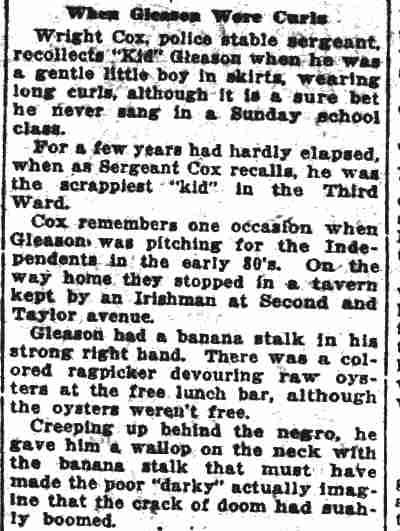
When Gleason Wore Curls
Wright Cox, police stable sergeant, recollects “Kid” Gleason when he was a gentle little boy in skirts, wearing long curls, although it is a sure bet he never sang in a Sunday school class.
For a few years had hardly elapsed, when as Sergeant Cox recalls, he was the scrappiest “kid” in the Third Ward.
Cox remembers one occasion when Gleason was pitching for the Independents in the early 80’s. On the way home they stopped in a tavern kept by an Irishman at Second and Taylor Avenue.
Gleason had a banana stalk in his strong right hand. There was a colored ragpicker devouring raw oysters at the free lunch bar, although the oysters weren’t free.
Creeping up behind the negro, he gave him a wallop on the neck with the banana stalk that must have made the poor “darky” actually imagine that the crack of doom had suddenly boomed.
Photos
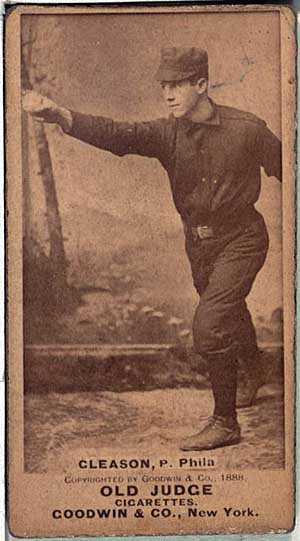
Kid Gleason with the Philadelphia Phillies, 1888
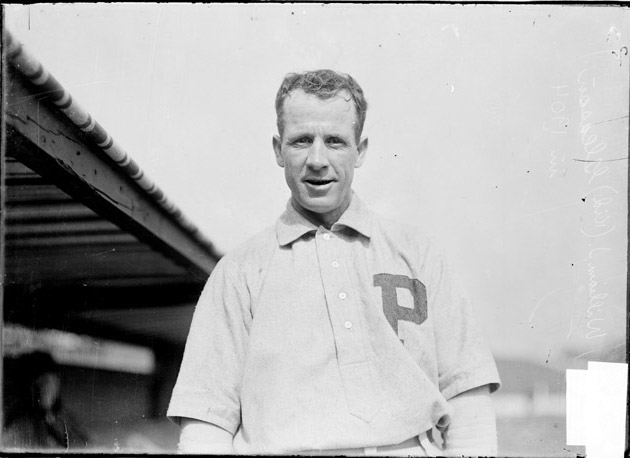
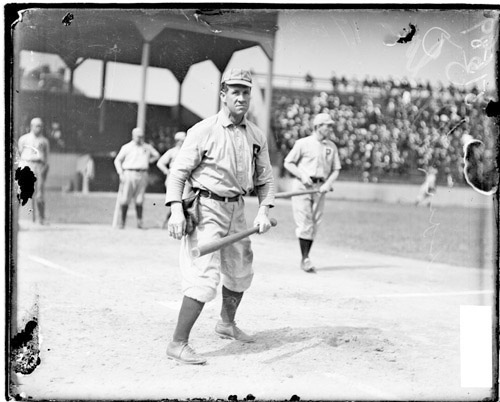
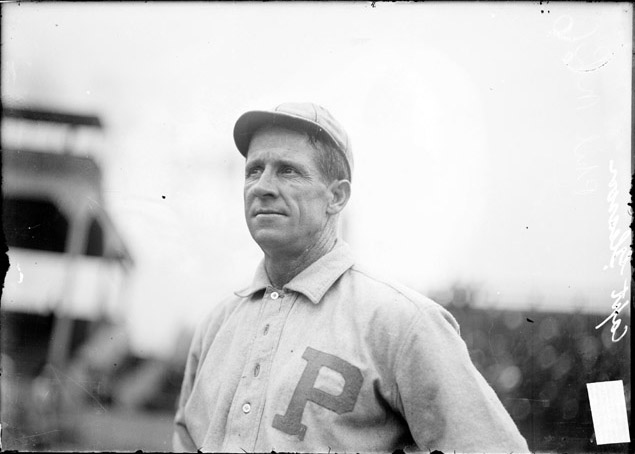
Kid Gleason with the Philadelphia Phillies in Chicago, 1904
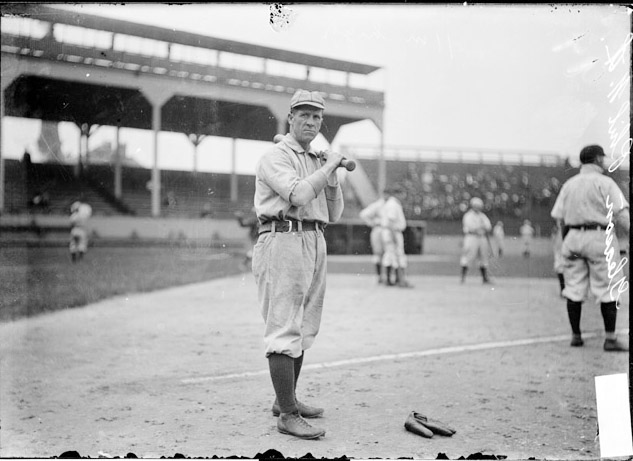
Kid Gleason with the Philadelphia Phillies in Chicago, 1905
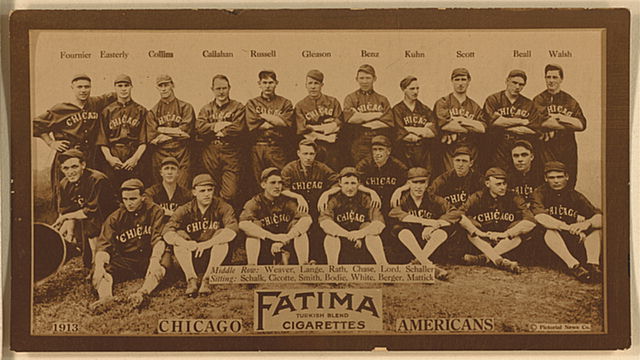
Kid Gleason as a coach with the Chicago White Sox, 1913. Top row, 6th from left.
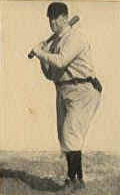
Kid Gleason as a coach with the Chicago White Sox, 1916
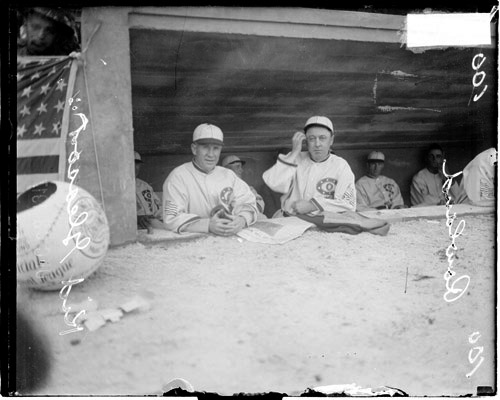
Kid Gleason (left) with Pants Rowland, Manager of the Chicago White Sox, 1917
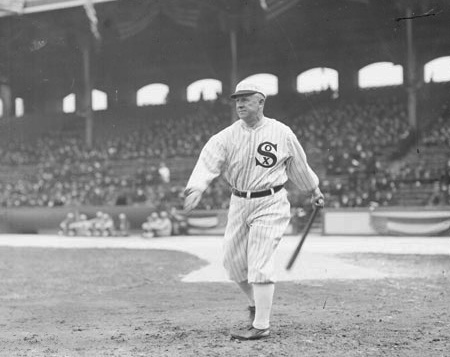
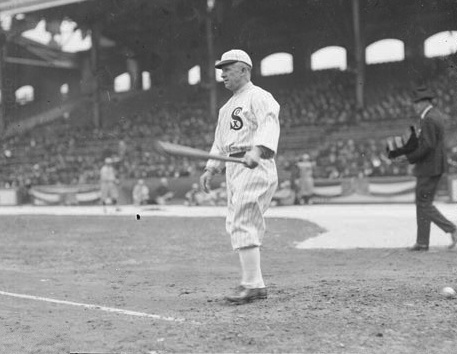
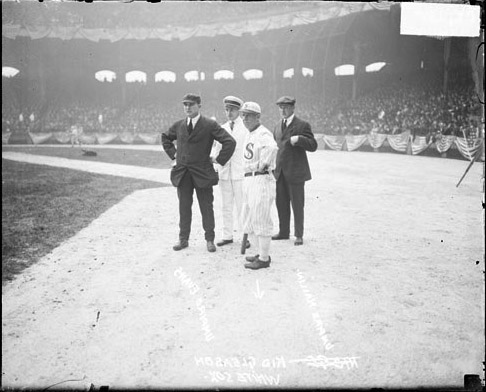
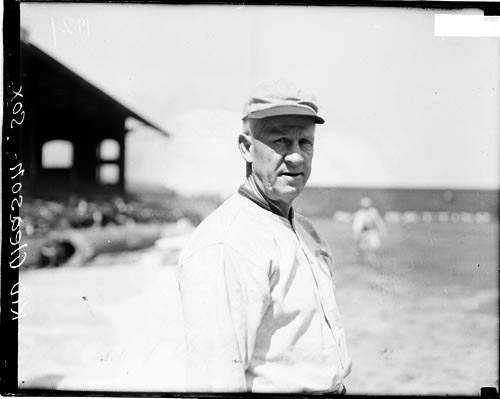
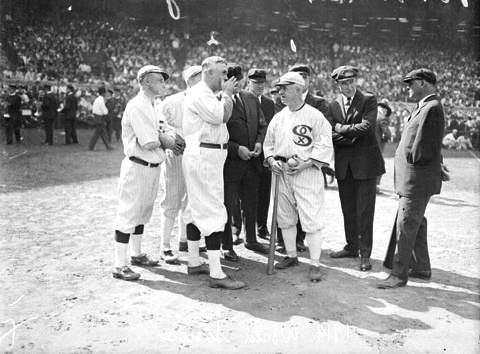
Kid Gleason during the 1919 World Series
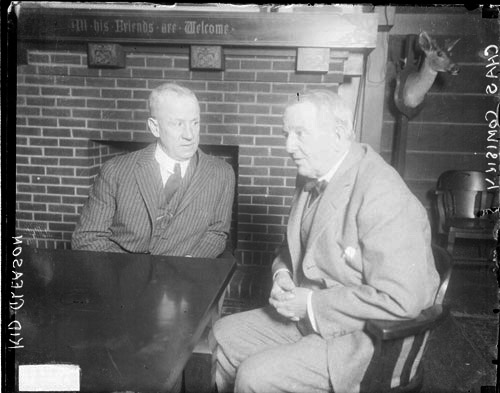
Kid Gleason (left) with White Sox owner Charles Comiskey, 1920
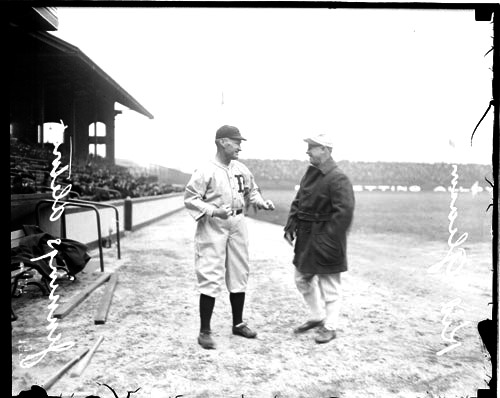
Kid Gleason (right) with Hughie Jennings, 1920
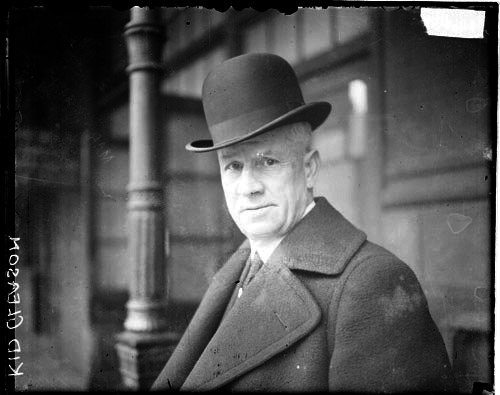
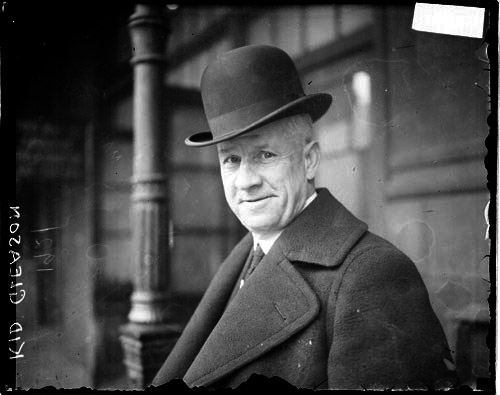
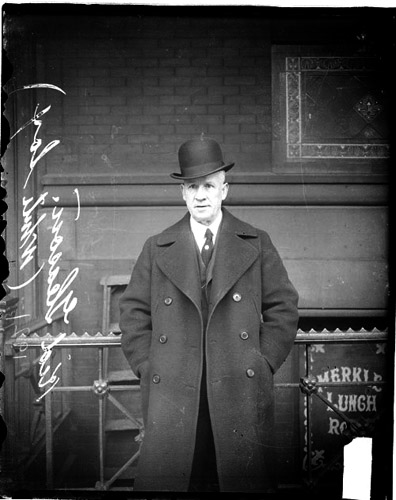
Kid Gleason, 1921
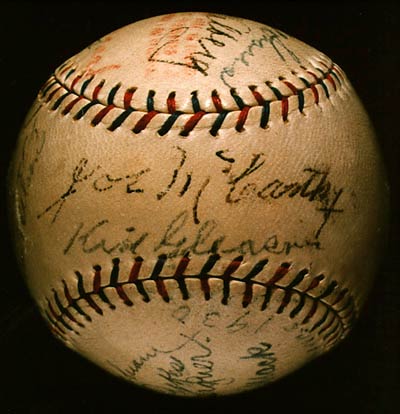
Kid Gleason autographed baseball, 1930
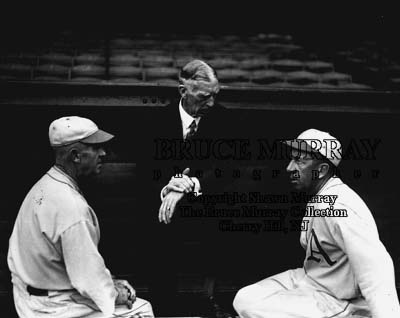
Three of the greatest minds in baseball: Coach Kid Gleason, Manager Connie Mack, and Coach Eddie Collins discussing strategies, 1930. These Hall-of-Fame legends led the Athletics to three consecutive pennants and back-to-back World Championships.
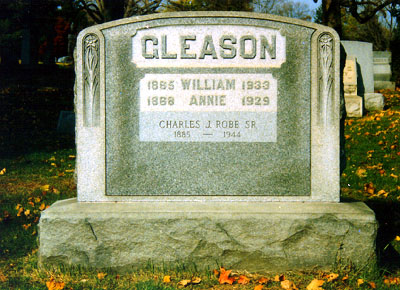
Kid Gleason, 1933
Philadelphia Inquirer — April 17, 1894
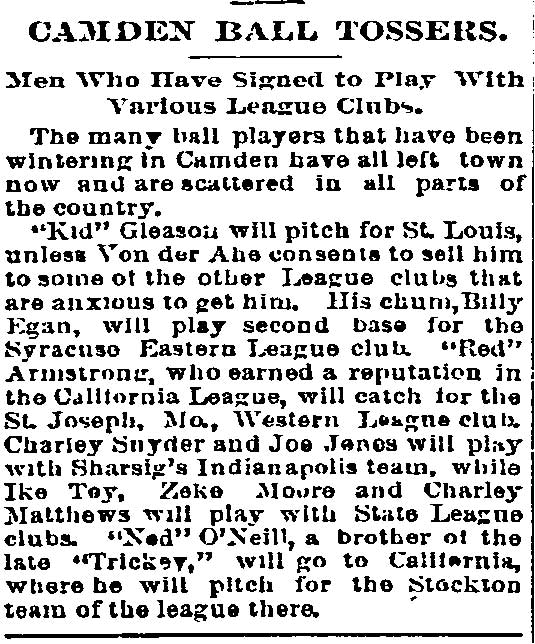
Camden Ball Tossers.
Men Who Have Signed to Play With Various League Clubs.
The many ball players that have been wintering in Camden have all left town now and are scattered in all parts of the country.
“Kid” Gleason will pitch for St. Louis, unless Von der Ahe consents to sell him to some of the other League clubs that are anxious to get him. His chum, Billy Egan, will play second base for the Syracuse Eastern League club. “Red” Armstrong, who earned a reputation in the California League, will catch for the St. Joseph, Mo., Western League club. Charley Snyder and Joe Jones will play with Sharsig’s Indianapolis team, while Ike Toy, Zeke Moore and Charley Matthews will play with State League clubs. “Ned” O’Neill, a brother of the late “Trickey,” will go to California, where he will pitch for the Stockton team of the league there.
Philadelphia Inquirer — October 17, 1906
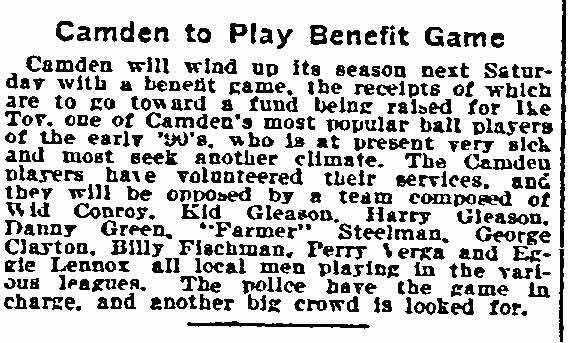
Camden to Play Benefit Game
Camden will wind up its season next Saturday with a benefit game, the receipts of which are to go toward a fund being raised for Ike Toy, one of Camden’s most popular ball players of the early ’90’s, who is at present very sick and must seek another climate.
Philadelphia Inquirer — October 19, 1906
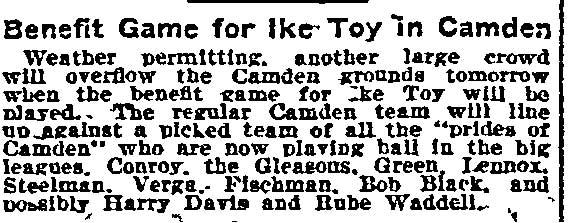
Benefit Game for Ike Toy in Camden
Weather permitting, another large crowd will overflow the Camden grounds tomorrow when the benefit game for Ike Toy will be played. The regular Camden team will line up against a picked team of all the “prides of Camden” who are now playing ball in the big leagues. Conroy, the Gleasons, Green, Lennox, Steelman, Verga, Fischman, Bob Black, and possibly Harry Davis and Rube Waddell.
Philadelphia Inquirer — October 24, 1906
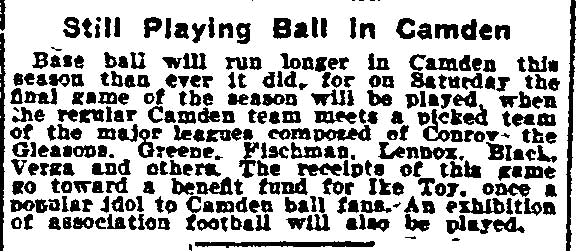
Still Playing Ball in Camden
Base ball will run longer in Camden this season than ever it did, for on Saturday the final game of the season will be played, when the regular Camden team meets a picked team of the major leagues composed of Conroy, the Gleasons, Greene, Fischman, Lennox, Black, Verga and others. The receipts of this game go toward a benefit fund for Ike Toy, once a popular idol to Camden ball fans. An exhibition of association football will also be played.
Philadelphia Inquirer — July 28, 1907

The release of Kid Gleason from the Phillies to the Jersey City team is much regretted by the Camden fans, as the Kid is a native of Camden, and every day that the Phillies played a large delegation crossed the river to see him play.
Managerial Record
| Year | League | Team | G | W | L | WP | Finish |
|---|---|---|---|---|---|---|---|
| 1919 | American Lg | Chicago W | 140 | 88 | 52 | .629 | AL 1 |
| 1920 | American Lg | Chicago W | 154 | 96 | 58 | .623 | 2 |
| 1921 | American Lg | Chicago W | 154 | 62 | 92 | .403 | 7 |
| 1922 | American Lg | Chicago W | 155 | 77 | 77 | .500 | 5 |
| 1923 | American Lg | Chicago W | 156 | 69 | 85 | .448 | 7 |
| Total | 759 | 392 | 364 | .519 |
I think they’re the greatest ball club I’ve ever seen. Period.
During the 1919 “Black Sox” scandal, while on the witness stand after an exhaustive cross examination addressing cheating among ballplayers which culminated with the question, “Well. What do you think of these players of yours NOW, Mr. Gleason?”
Kid Gleason Dead; Noted in Baseball
The New York Times —

Kid Gleason Dead; Noted in Baseball
Veteran Succumbs in Philadelphia From Heart Ailment —In 68th Year.
Began Career on Mound
Managed White Sox at Time of 1919 World Series Scandal— Later Coached Athletics.
PHILADELPHIA, Jan. 2.—William (Kid) Gleason, former major league baseball star and manager and in his later years coach of the Philadelphia Athletics, died in his sleep tonight at his residence here after a long illness. Suffering from a heart ailment, he had been in bed since last October and his life was despaired of several weeks ago. Only his great vitality carried him into the new year.
Born in Philadelphia sixty-seven years ago, Gleason spent nearly all of his adult life in major league baseball. He was always in demand, even after his active playing days were over, because of his personality and his knack of teaching others. During his years with the Athletics, Manager Connie Mack gave him free rein as coach.
Gleason is survived by a daughter, Mrs. Mamie Robb of this city, with whom he had made his home since the death of his wife five years ago; by a sister, Mrs. Marion Supplee, and five brothers, Walter, John, Ike, Theodore and Harry Gleason.
Started as Pitcher.
The Athletics’ coach was Kid to everybody in baseball. The nickname came to him when he joined the Phillies as a pitcher in 1888, two years after he had had his first professional engagement with the Williamsport (Pa.) team as a right-handed pitcher. He later developed into a second baseman and finally quit pitching to play regularly in the infield.
Before he assumed the managership of the Chicago White Sox in 1919, Gleason played with Baltimore, the New York Giants, the Detroit Tigers and the Phillies. He went to Baltimore as a pitcher in 1894 and ended his two-year career there as a second baseman. At the end of the 1895 season he was sent to the Giants in a trade and remained with them until 1900.
When the American League took the field the next year Gleason jumped to Detroit and played with the Tigers for two seasons, after which he went back to the Phillies to remain until 1908.
Gleason’s previous association with the Phillies had been from 1888 to 1891. After an injury ended his active playing career in 1908, he was out of baseball for several seasons, but when Jimmy Callahan became manager of the Chicago White Sox one of his early moves was to appoint Gleason assistant manager and coach.
Named Rowland’s Successor.
Clarence Rowland replaced Callahan as manager and the White Sox won the pennant in 1917, much of the credit going to Gleason, who stayed out of baseball the next year. When Chicago slipped out of the championship class, President Comiskey removed Rowland and appointed Gleason as manager late in 1918 and he remained in the post from the start of the 1919 campaign through the season of 1923.
After the revelations of the 1919 world’s series between the White Sox and the Cincinnati Reds reached the public, the shock of that scandal which involved his players kept Gleason on a sick bed for a long period. His life was despaired of more than once.
The Shibes and Connie Mack offered Gleason the post of coach of the Athletics in 1926 and he held it up to his death, although inactive during last season. Wearing an old Athletic uniform he often went to the bench to watch the infield practice. His final illness started shortly after the last world’s series.
Despite his small stature Gleason became one of the most picturesque figures in baseball. In his long career he was spiked scores of times but he refused to leave the field. He was an exception to the old type of baseball player who guarded his knowledge of the game as if it were a trade secret, but imparted his ideas to hundreds of rookies and developed many into stars.