Isaac Walter Budd
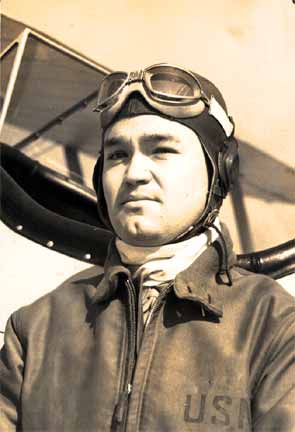
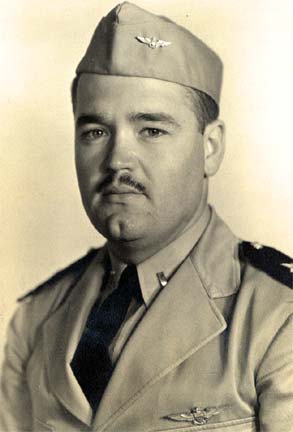
Left: Seaman 2nd Class Isaac W. Budd, Philadelphia PA, March 1941, with Stearman N2S-3 Navy Trainer in background. Right: Lt. Isaac Budd, December 1942.
Lieutenant Isaac Walter Budd was born in Camden NJ in 1918 to Hiram Epright and Margaretta Budd of 1407 Baird Boulevard. His father was the president of the City Line Brick and Lumber Company, founded in 1890 by his great-uncle Hiram and grandfather Isaac W. Budd. Prior to founding the brick business the Budd brothers had worked as stone masons, operated a feed and grain business, and were connected, through Isaac’s brother-in-law Frank, to a successful lumber business in Camden, William C. Scudder and Son Lumber, at Front and Arch Streets. The brick business prospered, and the Budds built two of the first houses in Parkside, at 1401 and 1407 Baird Boulevard, the corner of Baird and Kenwood Avenues, early in the 20th century.
Isaac Budd, “Ike” to family and friends, was one of six children, and he grew up and went to school in Camden. Besides Isaac there was older stepbrother Harry, and the younger children, Geraldine, William, Margaretta, and Hiram. Isaac graduated from Camden High School. He attended Wenonah Military Academy in Wenonah NJ, and was a graduate of Swarthmore College in Swarthmore PA.
Isaac W. Budd entered the Navy prior to Pearl Harbor. He trained as a pilot, and part of his training included take-offs and landings from Camden’s Central Airport. After he was commissioned and awarded his wings, he served as a flight instructor at Miami FL. On January 19, 1943, he married Miss Jeanne Coleman. Isaac Budd was also stationed at Whidbey Island and Pasco in the state of Washington prior to being sent to the Pacific for duty as a naval fighter pilot in November 1943. A member of Fighter Squadron VF-39, flying Grumman F6F Hellcats, he was shot down while strafing Japanese forces at Mili Island on March 7, 1944. His plane crashed into the sea, and neither Lt. Budd nor the plane were recovered.
Isaac Budd was survived by his mother, siblings, and his wife, Jeanne Coleman Budd, all of the 1407 Baird Boulevard address. All of his brothers were serving in the Navy at the time. Isaac Budd was related by marriage to the Hineline, Wilson, and Haines families. His Aunt Alberta Budd was married to Frank J. Hineline, president of the Camden Lime Company. His first cousin, Frank B. Hineline, was married to Elizabeth Haines, daughter of Dr. Rowland Ivins Haines and niece of Admiral Henry B. Wilson and banker Philip Wilson; their father was H. B. Wilson Sr., for whom a school in Camden was named.
Lieutenant Isaac Walter Budd is memorialized at the Tablets of the Missing, Honolulu Memorial, Honolulu, Hawaii. He was awarded the Purple Heart.
1407 Baird Boulevard
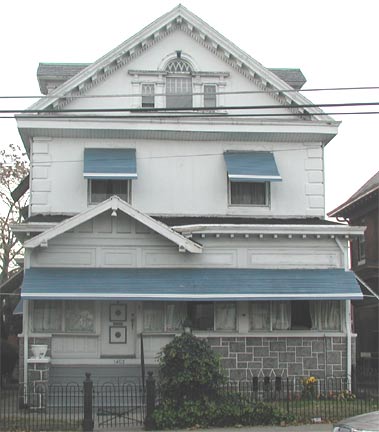
1407 Baird Boulevard, home to the Budd family, Camden NJ.
The Mili Airbase
In the late 1930s Japan began to fortify its Marshallese possessions contrary to the Covenant of the League of Nations. These fortifications were centered on Kwajalein, Maloelap, and Wotje. Any development of Mili Atoll, however, was not part of the grand strategic scheme.
Mili during World War II. In order to create a suitable defense system at its perimeter, the Japanese navy decided to develop some of the atolls of the Marshall Islands into bases for seaplanes, for naval surface units, submarines, and, with the advent of long-range land-based bombers, as airfields. Mili was only to become a small lookout, radio direction finding, and weather station. After the beginning of the war and the Japanese occupation of Kiribati, however, the strategic concepts changed. The development of Mili air base began in autumn 1942 when the Korean and Marshallese labor force building the seaplane base on Majuro was transferred.
However, as the base was begun very late in the war, when Japanese resources were being stretched and when Japanese shipping was under attack by U.S. submarines, the base development is characterized by a relative absence of large concrete structures, such as command buildings, power stations, or bunkers. In a very short time, between late 1942 and late 1943, the Japanese had constructed an airfield with three runways (4,750 ft, 4,550 ft, and 4,400 ft), two hangars, and a service apron. By the end of 1943 there were also several hundred buildings, mainly of wooden construction, a wooden pier, and several repair shops.
There was one radar set (range 50 miles) on the island, giving the air wing some 10 minutes warning. During the war two squadrons of planes were temporarily stationed here, many of which were destroyed on the ground. A large number of plane wrecks, mainly Zero-fighters (Mitsubishi A6M) and Betty-bombers (Mitsubishi G3M), are scattered about on the island.
The perimeter of the island, especially the ocean side, bristled with guns, which were a mixture of British and Japanese manufacture: 8 6-inch and 3 14cm coastal defense guns, 4 127mm dual purpose guns, 2 10cm mortars, 35 heavy and over 70 light anti-aircraft guns, as well as an assortment of small guns.
Between mid-1943 and August 1945, U.S. aircraft dropped 3,350 tons of bombs and U.S. ships fired 450 tons of shells onto Taroa. While the first attacks were carrier-based and irregular, daily attacks were started after Majuro and Kwajalein had fallen to the U.S. At the same time, all supply lines to Mili were cut off, and the Japanese garrison was left to starve. Of the originally 5,100-strong Japanese garrison (2,600 Navy, 2,500 Army), only 2,500 (50%) survived. Casualties occurred from air raids, diseases, accidents, and suicides, but mainly from starvation.
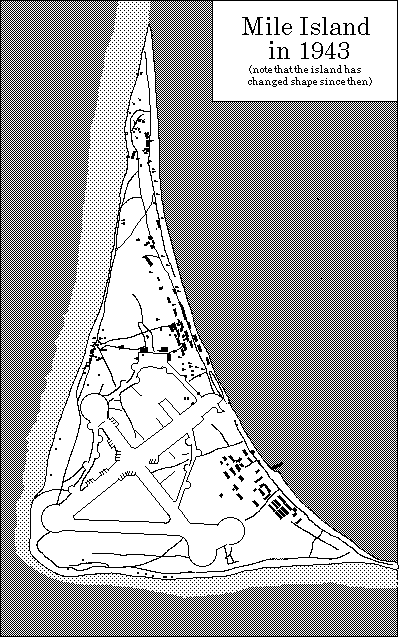
Plan of the Japanese airbase on Mili Island, Mili Atoll.
1940 Stearman N2S-3 'Kaydet' Trainer Biplane
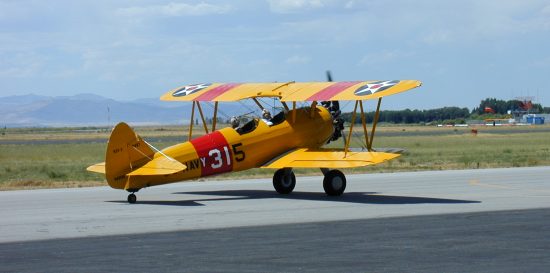
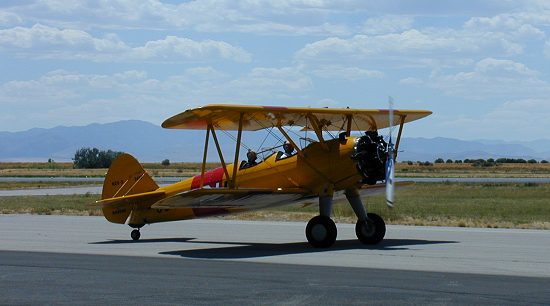
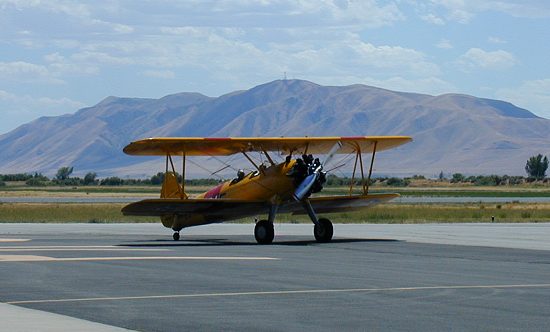
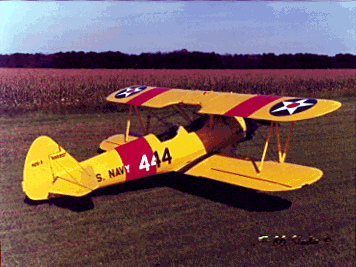
The Stearman N2S-3 “Kaydet” trainer biplane, used for primary Navy flight training during World War II.
The N2S-3 traces its roots to the Stearman Model 70, built as a private venture to meet a 1934 U.S. Army Air Corps request for a new plane to replace its aging primary trainer fleet. Re-engined with a Wright J-5 Whirlwind, the design was first ordered by the U.S. Navy in 1935 as the NS-1. Using a Lycoming R-680-5 radial engine and known as the Model 75, the Air Corps ordered the type into production as the PT-13 in 1936. With a variety of engines and designations, the Model 75 went on to become one of the most widely produced and used primary trainers in U.S. military service.
The Model 75 biplane featured a fabric-covered, welded steel tube fuselage and spruce wing construction, and enjoyed a reputation as a simple, cost-effective design. Student pilots occupied the front cockpit, while the instructor sat in a rear cockpit with identical controls. Its rugged, forgiving nature made it an excellent primary trainer, providing a relatively safe introduction for pilot trainees into military flight.
Boeing bought the Stearman Company in the middle 1930s, and continued production of the Model 75 for the military. Although built by Boeing, the Model 75 continued to be known as the “Stearman.” In 1940 a Continental R-670-5 engine was fitted to the design to create the PT-17, of which over 3,500 were eventually ordered for U.S. Army service. The plane also enjoyed large Navy use as the N2S, and in 1942 both services adopted an interchangeable version known as the N2S-5/PT-13D. Stearman demand at the outbreak of World War II outstripped engine supply, so another powerplant, the Jacobs R-755-7, was used on the airframe to create the PT-18.
Several countries bought Stearmans, including Canada, which employed 300 PT-27s under a Lend-Lease agreement with the United States. The PT-27 differed from the PT-17 in having a canopy over both cockpits, a crankcase cowl and landing lights in the lower wings, as well as heat and electrical systems. Thousands made their way to the civilian market after World War II as crop sprayers, light transports, and sport planes; several hundred were still flying over fifty years later.
| Engine | Continental R-670-4 7-cylinder radial |
|---|---|
| Horsepower | 220 hp |
| Top Speed | 135 mph |
| Curb Weight | 2,625 lb |
| Length | 24 ft 9 in |
| Width | 32 ft 2 in |
1401 Baird Boulevard
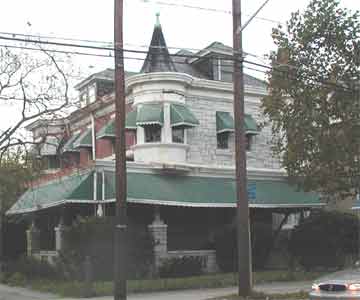
1401 Baird Boulevard, Budd family home, Camden NJ.
3 South Jersey Men Are Killed in Action
Camden Courier-Post —
Four Listed as Missing; Unreported Flier Now Found Prisoner
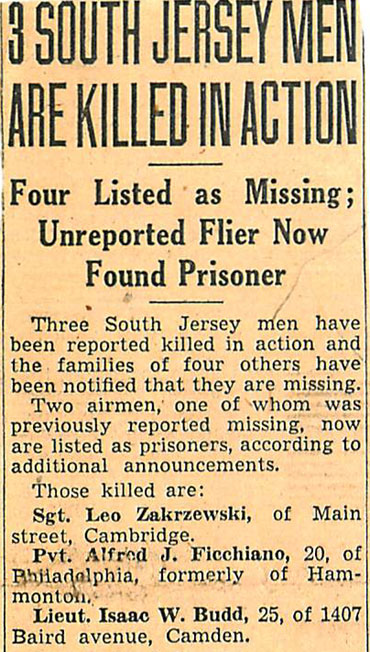
Three South Jersey men have been reported killed in action and the families of four others have been notified that they are missing. Two airmen, one of whom was previously reported missing, now are listed as prisoners, according to additional announcements. Those killed are:
Sgt. Leo Zakrzewski, of Main street, Cambridge.
Pvt. Alfred J. Ficchiano, 20, of Philadelphia, formerly of Hammonton.
Lieut. Isaac W. Budd, 25, of 1407 Baird avenue, Camden.
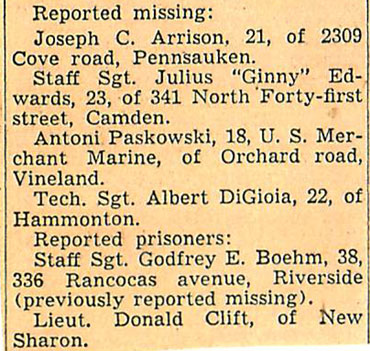
Reported missing: Joseph C. Arrison, 21, of 2309 Cove road, Pennsauken. Staff Sgt. Julius “Ginny” Edwards, 23, of 341 North Forty-first street, Camden. Antoni Paskowski, 18, U.S. Merchant Marine, of Orchard road, Vineland. Tech. Sgt. Albert DiGioia, 22, of Hammonton.
Reported prisoners: Staff Sgt. Godfrey E. Boehm, 38, 336 Rancocas avenue, Riverside (previously reported missing). Lieut. Donald Clift, of New Sharon.
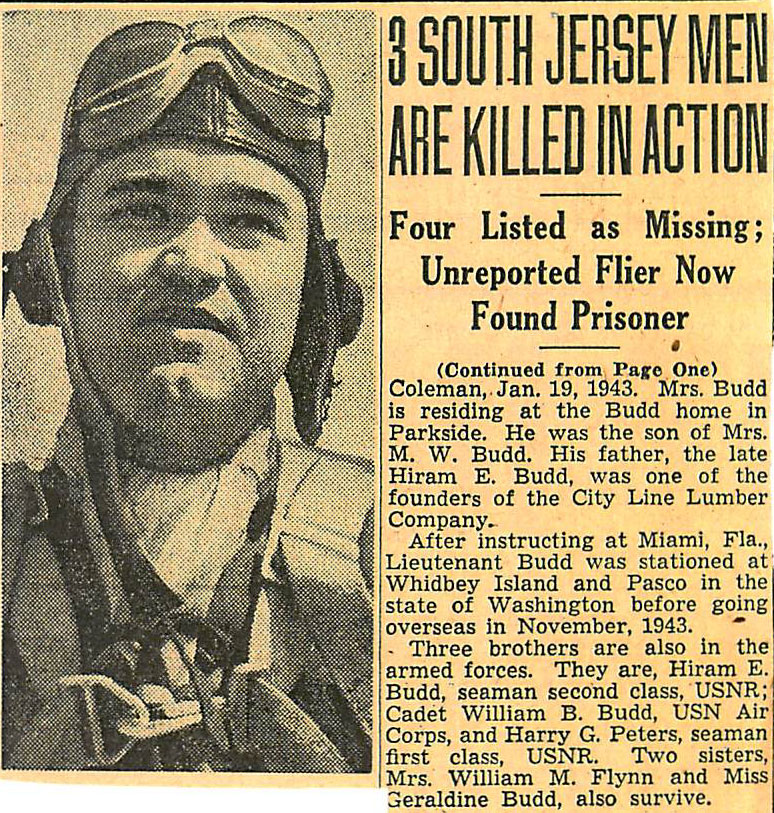
Coleman, Jan. 19, 1943. Mrs. Budd is residing at the Budd home in Parkside. He was the son of Mrs. M. W. Budd. His father, the late Hiram E. Budd, was one of the founders of the City Line Lumber Company.
After instructing at Miami, Fla., Lieutenant Budd was stationed at Whidbey Island and Pasco in the state of Washington before going overseas in November, 1943.
Three brothers are also in the armed forces. They are, Hiram E. Budd, seaman second class, USNR; Cadet William B. Budd, USN Air Corps, and Harry G. Peters, seaman first class, USNR. Two sisters, Mrs. William M. Flynn and Miss Geraldine Budd, also survive.