Introduction
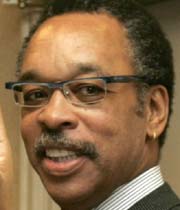
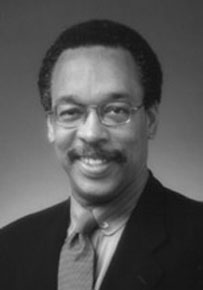
Bruce S. Gordon was born February 15, 1946 in Camden NJ, and raised with four siblings by parents who were teachers and active in the civil right movements. His father, Walter Gordon, was principal at Cooper B. Hatch Junior High School in Parkside. The Gordon family lived on Langham Avenue in Parkside through at least 1959, and by 1970 had moved to the 1500 block of Baird Boulevard. After receiving his primary and high school education in Camden, he attended Gettysburg College in Gettysburg PA, where he received his Bachelor of Arts degree, and the Massachusetts Institute of Technology as an Alfred P. Sloan Fellow, receiving a Master of Science Degree.
Bruce Gordon began as a management trainee at Bell of Pennsylvania in 1968. After 35 years he retired as head of Verizon’s biggest division, retail markets, which had 34,000 employees and did $25 billion in sales. Prior to the merger of Bell Atlantic Corporation and GTE, which formed Verizon in July 2000, Mr. Gordon fulfilled a variety of positions at Bell Atlantic Corporation, including Group President, Vice President, Marketing and Sales, and Vice President, Sales. He also directed corporate advertising and brand management. Bruce Gordon joined the Board of Directors of the Southern Company in 1994, of Tyco International in 2003, and has been a Director for Office Depot.
Bruce Gordon was named Executive of the Year by Black Enterprise in 1998; named among ‘‘50 Most Powerful Black Executives’’ by Fortune in 2002.
In June of 2005 Bruce Gordon was selected by unanimous vote to serve as president of the NAACP. He succeed Kweisi Mfume, a Democrat politician and one-time U.S. representative from Maryland who resigned abruptly in December of 2004. Mfume had replaced Benjamin Chavis, who had taken organization funds for personal use.
Bruce Gordon is the first person from the business world to head the organization, and is seen as a force who can restore integrity and direction. “I think he’s a godsend,” said Leroy Warren, a board member from Silver Spring, Md., minutes after the NAACP board voted on Gordon’s appointment. “We need to get back to real civil rights and economic development. … He has the intelligence to move forward.”
Upon his appointment, Bruce S. Gordon made it immediately clear that, though he had profound respect for the organization’s venerable history, his focus is squarely on taking the NAACP down new roads. He said his first priorities were to improve the organization’s finances, whose its expenses had exceeded its income in 2003 and 2004, by working to build an endowment, by increasing membership and by pushing for more efficiency in operations. He said that his civil rights goals include working toward greater economic equality.
Citing strain with the board of the NAACP, Bruce S. Gordon resigned in March 2007. He stated “I did not step into the role to be a caretaker, to be dictated to,” Gordon said. “I stepped into the role to understand as best I could the needs of the African American community and then to propose strategies and policies and programs and practices that could improve conditions for African Americans… The things I had in mind were not consistent with what some — unfortunately, too many — on the board had in mind.”
Gordon said that although the NAACP is an advocacy organization, his vision was to focus more on finding practical solutions to black America’s problems. This, apparently, did not sit well with Julian Bond and other more politically motivated members of the NAACP board. Several analysts believe that Gordon’s moves to depoliticize the NAACP and mend the rift that formed under Bond (also a Democrat politician) and former president Mfume with the White House are the real reasons that led to his departure.
Camden native resigns as NAACP head
Camden Courier-Post —
By ERIN TEXEIRA, Associated Press
When Camden native Bruce S. Gordon was appointed president of the NAACP 19 months ago, some observers said it wasn’t a good fit. Now the civil rights organization must look for someone new to lead it in the wake of Gordon’s sudden resignation.
Dennis C. Hayes, the group’s general counsel, will serve as interim president. Hayes filled the same role after Kweisi Mfume resigned the presidency in 2004.
In a phone interview with The Associated Press from Los Angeles, Gordon cited as reasons for his stepping down his clashes with board members over management style and differing opinions over the organization’s mission.
I believe that any organization that’s going to be effective will only be effective if the board and the CEO are aligned and I don’t think we are aligned, Gordon said Sunday.
I don’t view this as I’m right and they’re wrong. I view this as I see things one way and they see things a different way. That misalignment between the CEO and the board is unhealthy.
Gordon grew up in Camden’s Parkside section. His father, the late Walter L. Gordon, was a school principal who co-founded the Camden chapter of the NAACP. He graduated from Camden High School in 1964 and went on to become a top executive in Bell Atlantic and Verizon Communications before retiring. He was named one of Fortune magazine’s 50 most powerful black executives in 2002.
Julian Bond, chairman of the board of the Baltimore-based National Association for the Advancement of Colored People, said Gordon tried to quit just six weeks after taking the job in August 2005, but Bond convinced him to stay.
There were occasions where it seemed just not to be a perfect fit, Bond said. But he had many, many great qualities, and he exhibited those qualities when he worked for us. I’m disappointed that it came to this.
Gordon said that although the NAACP is an advocacy organization, his vision was to focus more on finding practical solutions to black America’s problems.