William E. Aron
First Lieutenant, U.S. Army Air Forces
O-721323
318th Fighter Squadron
325th Fighter Group
Born: 1923
Died: April 22, 1945
Po River valley, Italy
Missing in Action
Tablets of the Missing
Florence American Cemetery
Florence, Italy
Awards: Distinguished Flying Cross, Air Medal with 8 Oak Leaf Clusters, Purple Heart
Introduction
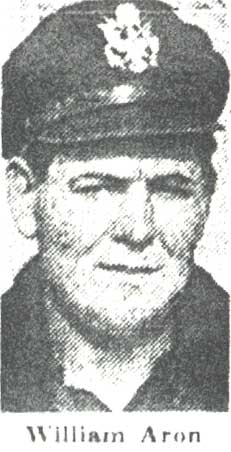
First Lieutenant William E. Aron
William E. Aron was born in New Jersey in 1923. He was the son of Emil Aron and Harriet Aron, of 28 West Beechwood Avenue, Oaklyn, New Jersey. The Arons had lived in Pennsylvania, where older sister Henrietta was born, before moving to Oaklyn, to the home of father-in-law Robert Gleason. By 1930, the elder Aron was a Sergeant on the Oaklyn police force, and a younger brother, Donald Aron, had joined the family. Two other children were born, Edward, who died while an infant, and David, born in 1935. Emil Aron and his brother David were also well known as baseball umpires in the late 1920s.
William Aron graduated from Collingswood High School in 1941. Nicknamed Will, his hobbies were hunting and fishing, and raising and racing homing pigeons. He had hoped to become a chemical engineer.
William Aron enlisted in the Army Air Force on October 17, 1942 and was activated on January 30, 1943. Prior to his activation he had learned to fly at Central Airport just outside Camden in Pennsauken, New Jersey, where he received instruction from a female pilot who lived in nearby Haddon Township. Once he reported for active duty, William E. Aron was sent to Atlantic City, New Jersey, and then to Butler University in Indianapolis, Indiana. After Butler University he received training at the Aviation Cadet Center in San Antonio, Texas, and at three other Texas airfields, Bruce Field, Perrin Field, and Foster Field, where he graduated as a fighter pilot on April 15, 1944. He then saw duty at Harding Field in Baton Rouge, Louisiana, and at Brunning, Nebraska, where he was trained on the P-47 Thunderbolt fighter. A brief spell was spent at Pierre, South Dakota, where he took gunnery training. While in Texas he met his girlfriend Jessie. Once overseas he named his fighter for her, painting the words “Texas Jessie” on the fuselage.
On October 11, 1944 he sailed from Fort Patrick Henry, Virginia, to Bari, Italy, arriving November 9, 1944, and eventually was assigned to the 318th Fighter Squadron, 325th Fighter Group, based in Foggia, Italy. The 318th moved to another base, Lesina Aerodrome, 35 miles north of Foggia, where they remained until March of 1945. During this period in early 1945, William Aron was awarded the Air Medal. The 318th moved again, to Rimini Airdrome at Miramare, Italy, where they remained until April 2, when the squadron moved to the Mondolfo Airdrome.
While stationed at Rimini, on March 14, 1945, Lieutenant Aron and other members of the 318th Fighter Squadron engaged a large group of German Focke-Wulf 190 fighters while escorting heavy bombers on a raid over Nove Zamke, Hungary. The pilots of the 318th destroyed at least 18 enemy fighters, and damaged three more to greater or lesser degree. First Lieutenant Gordon H. McDaniel shot down five of these aircraft himself, thus becoming one of the few American pilots to achieve ace status in a single day. Lieutenant Aron is also credited with having brought down at least one German aircraft.
First Lieutenant William Aron flew a total of 43 missions, flying the North American P-51 Mustang fighter, and was credited with shooting down five Axis aircraft, qualifying him as an ace. On April 22, 1945, his plane, #44-15128, also known as “Texas Jessie,” was shot down over the Po River valley.
First Lieutenant William E. Aron was reported to have been taken alive from his plane, and escorted away by unfriendly villagers. No further information was ever given to his family, and his body was never recovered. The Army declared him dead on April 23, 1946.
William E. Aron’s passing had a profound effect on the Aron family. Emil Aron passed away a mere three years after word of his son was brought to him. His family remained in the area. William E. Aron’s younger brother David went on to become Camden County’s Fire Marshal, serving in that capacity for 23 years.
A cousin, Private First Class Herbert Lokan, was killed in action on June 13, 1944, one week after parachuting into Normandy on D-Day.
Photos
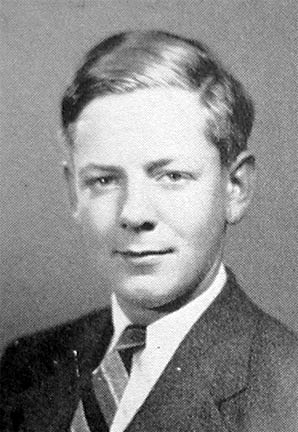
William E. Aron — Collingswood High School, 1941
318th Fighter Squadron, 325th Fighter Group — the Checkertail Clan
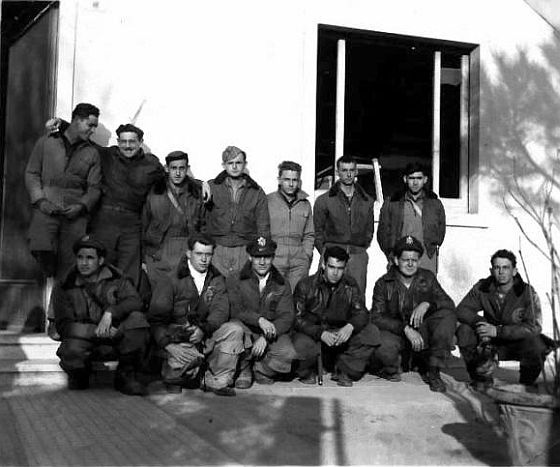
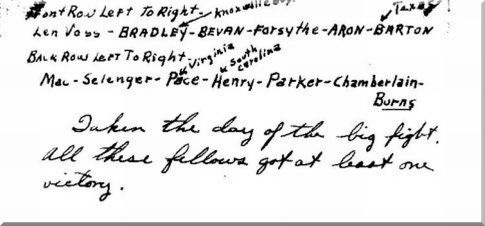
318th Fighter Squadron, 325th Fighter Group
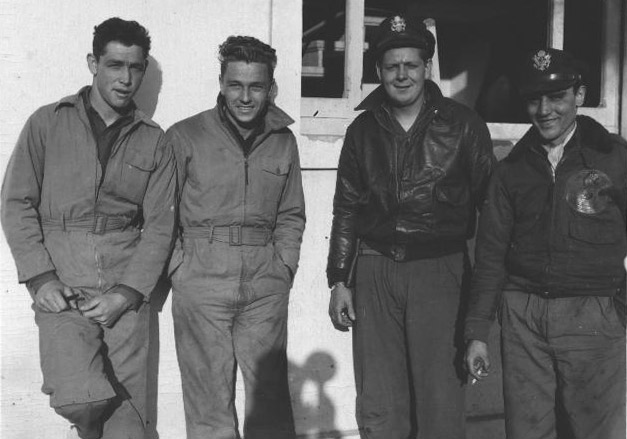
From left: Gordon H. McDaniel, Harry A. Parker, William E. Aron, unknown
Oaklyn Pilot Sends 3 Nazi Planes Crashing in Flames in Sky Battle
Camden Evening Courier —
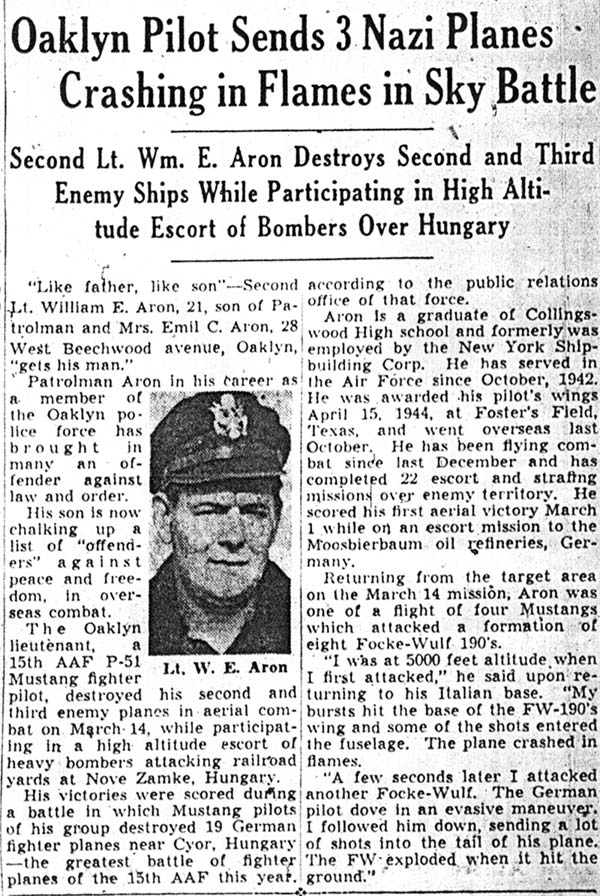
Second Lt. Wm. E. Aron Destroys Second and Third Enemy Ships While Participating in High Altitude Escort of Bombers Over Hungary
“Like father, like son”—Second Lt. William E. Aron, 21, son of Patrolman and Mrs. Emil C. Aron, 28 West Beechwood avenue, Oaklyn, “gets his man.”
Patrolman Aron in his career as a member of the Oaklyn police force has brought in many an offender against law and order.
His son is now chalking up a list of “offenders” against peace and freedom, in overseas combat.
The Oaklyn lieutenant, a 15th AAF P-51 Mustang fighter pilot, destroyed his second and third enemy planes in aerial combat on March 14, while participating in a high altitude escort of heavy bombers attacking railroad yards at Nove Zamke, Hungary.
His victories were scored during a battle in which Mustang pilots of his group destroyed 19 German fighter planes near Cyor, Hungary—the greatest battle of fighter planes of the 15th AAF this year, according to the public relations office of that force.
Aron is a graduate of Collingswood High school and formerly was employed by the New York Shipbuilding Corp. He has served in the Air Force since October, 1942. He was awarded his pilot’s wings April 15, 1944, at Foster’s Field, Texas, and went overseas last October. He has been flying combat since last December and has completed 22 escort and strafing missions over enemy territory. He scored his first aerial victory March 1 while on an escort mission to the Moosbierbaum oil refineries, Germany.
Returning from the target area on the March 14 mission, Aron was one of a flight of four Mustangs which attacked a formation of eight Focke-Wulf 190’s.
“I was at 5000 feet altitude when I first attacked,” he said upon returning to his Italian base. “My bursts hit the base of the FW-190’s wing and some of the shots entered the fuselage. The plane crashed in flames.
“A few seconds later I attacked another Focke-Wulf. The German pilot dove in an evasive maneuver. I followed him down, sending a lot of shots into the tail of his plane. The FW exploded when it hit the ground.”
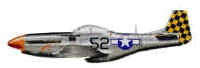
Texas Jessie
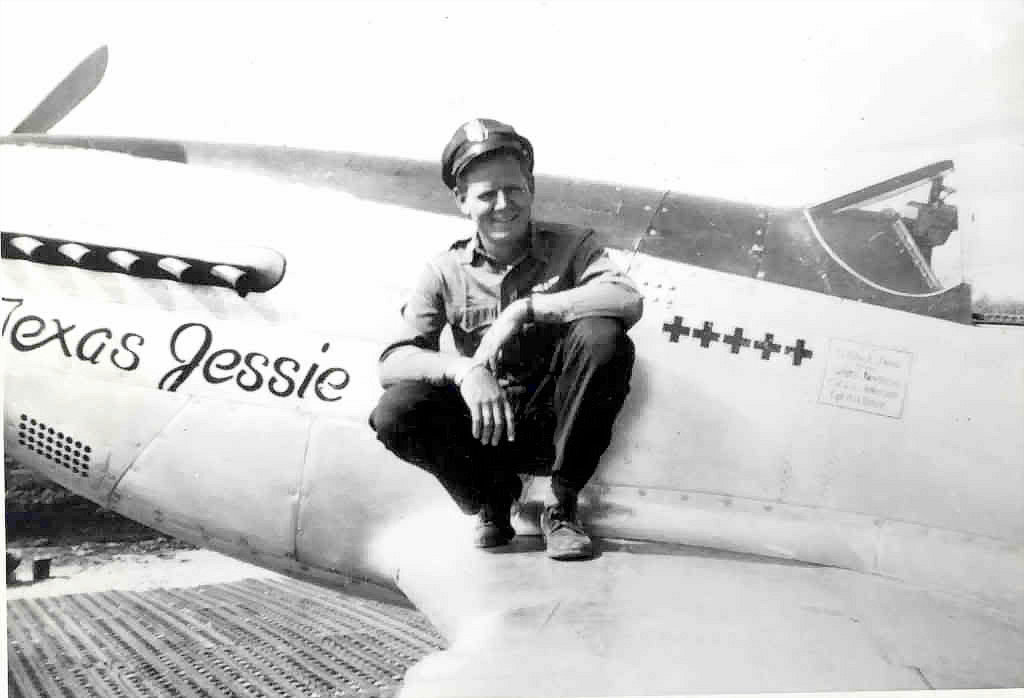
“Texas Jessie” — P-51 Mustang #44-15128, flown by First Lieutenant William E. Aron
External Links
325th Fighter Group WWII “Checkertail Clan” Association
ace1945.com — Another resource about the 325th Fighter Group