American Merchant Marine Memorial
Camden, New Jersey
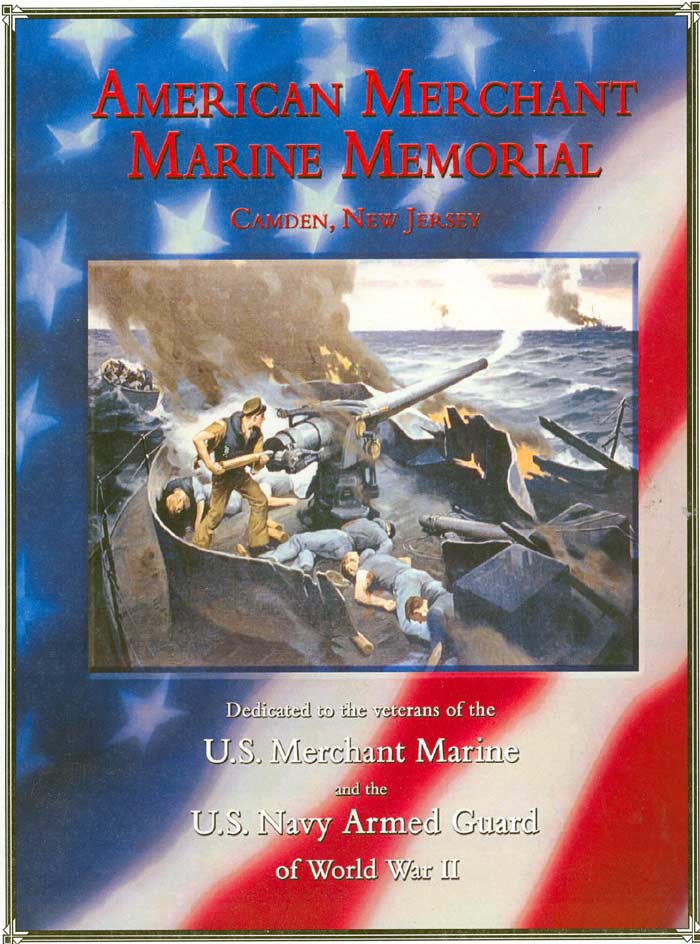
The American Merchant Marine Memorial, dedicated June 11, 2005 on the Camden Waterfront.
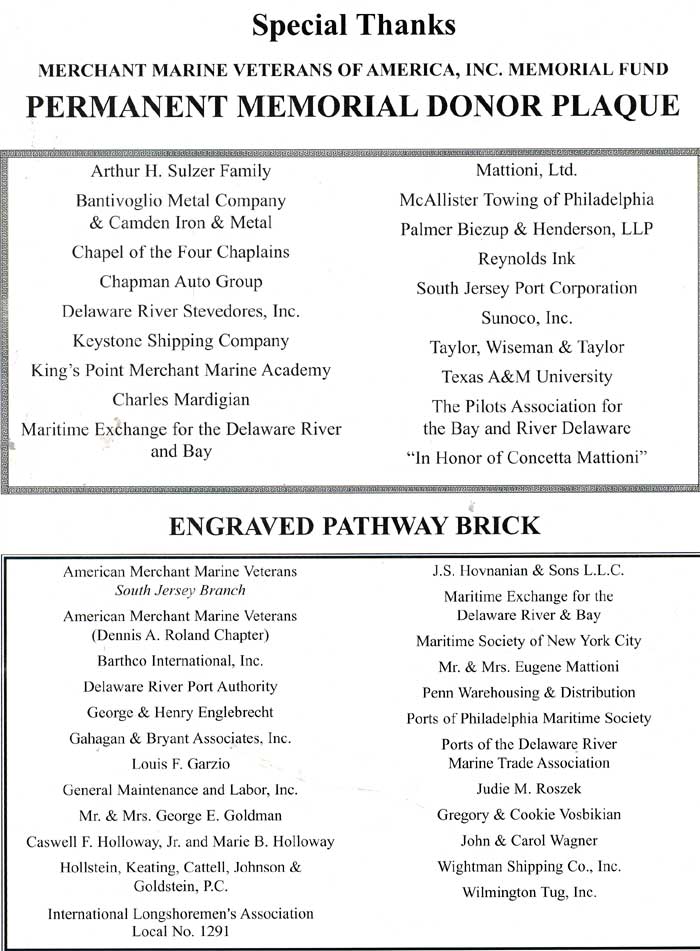
The American Merchant Marine Memorial monument in Camden, New Jersey was dedicated on June 11, 2005. An on-line memorial to the men from Camden, New Jersey and other towns in Camden County who died while serving in America’s Merchant Marine during World War II was first put on the Internet in late 2002, while Charles Mardigian got the ball rolling on having a physical monument placed on the Camden Waterfront around the same time. Neither effort was aware of the other; the two met by phone, through Joe Balzano of the South Jersey Port Corporation, in July of 2005.
SS Stephen Hopkins
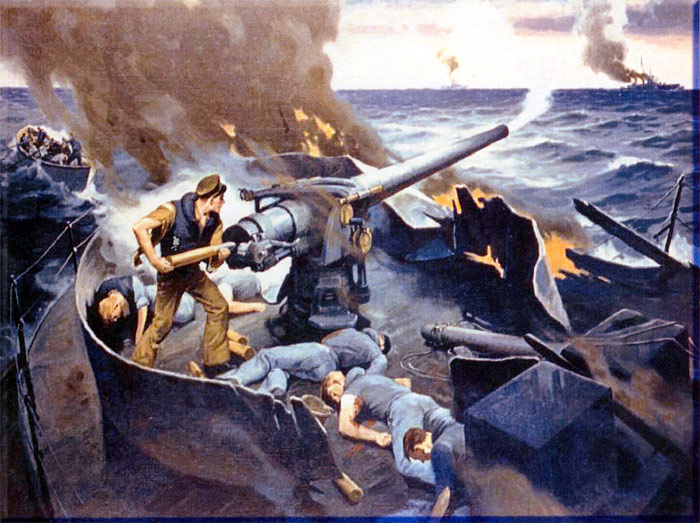
Cover painting by Lieutenant W.N. Wilson, USMS; Courtesy U.S. Merchant Marine Academy. The painting hangs in O’Hara Hall at the U.S. Merchant Marine Academy.
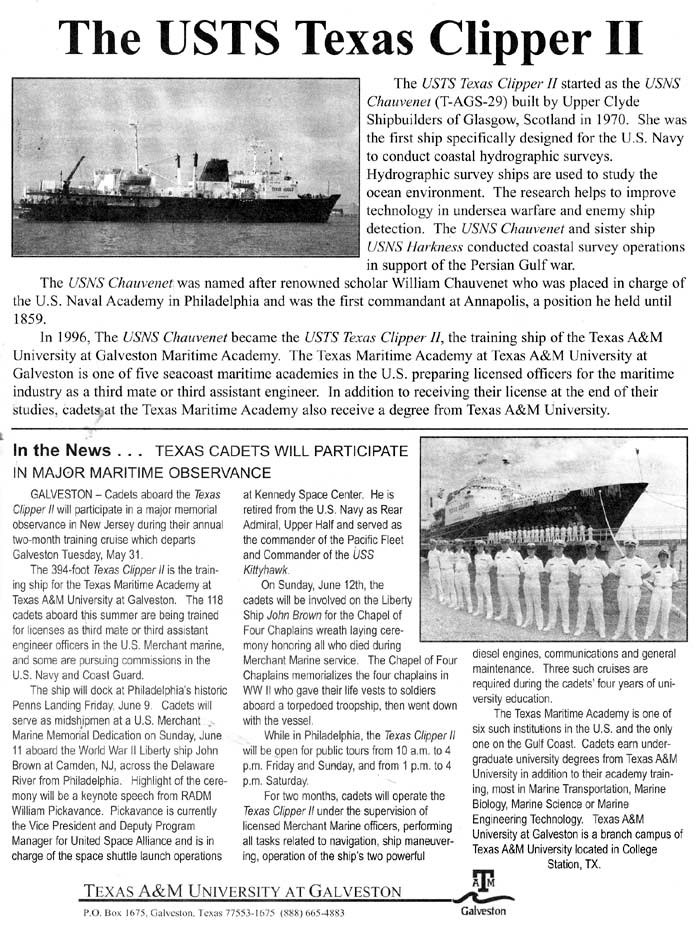
On September 27, 1942, the Liberty Ship Stephen Hopkins encountered the German auxiliary cruiser Stier and her escort, the blockade runner Tannenfels, in the South Atlantic.
The Stier was an armed commerce raider. The Stephen Hopkins carried a crew of forty and a fifteen-man naval armed guard. She was under the command of Captain Paul Buck. Her main firepower was one 4-inch gun and dual 37-mm machine guns mounted on the bow. Refusing to strike his colors, but with German shells on their way, Captain Buck made his decision. He would fight rather than surrender. The Stier had met and sunk 19 other merchant vessels of various Allied nationalities. None of these ships put up any resistance. A gun battle between the Stephen Hopkins and the Stier and Tannenfels ensued reminiscent of the ship-to-ship battles of the War of 1812. The Stier was to follow the Stephen Hopkins to the bottom. The Tannenfels, although damaged, made Bordeaux. Fifteen survivors of the Stephen Hopkins sailed a lifeboat 1,000 miles from the site of the battle to a landing at the small Brazilian fishing village of Barra do Itabopana.
With the Navy gun crew dead or dying about him and the magazine afire below, Cadet Midshipman Edwin J. O’Hara continued firing the Hopkins’ 4-inch shells until he ran out of shells. He was later killed by flying shrapnel. Cadet O’Hara was 18 years of age. He single-handedly manned the 4-inch gun, loading and firing the remaining five rounds, scoring hits on the Stier and Tannenfels. The nation bestowed a whole cluster of posthumous awards on the ship and her heroic company. The Stephen Hopkins herself was awarded a Gallant Ship citation. For extraordinary heroism and conspicuous courage, Ensign Kenneth M. Willett, U.S.N.R., commander of the naval armed guard, was posthumously awarded the Navy Cross. The Merchant Marine Distinguished Service Medals were posthumously bestowed on Captain Buck and Cadet Midshipman O’Hara.
Monument Photos — June 11, 2005
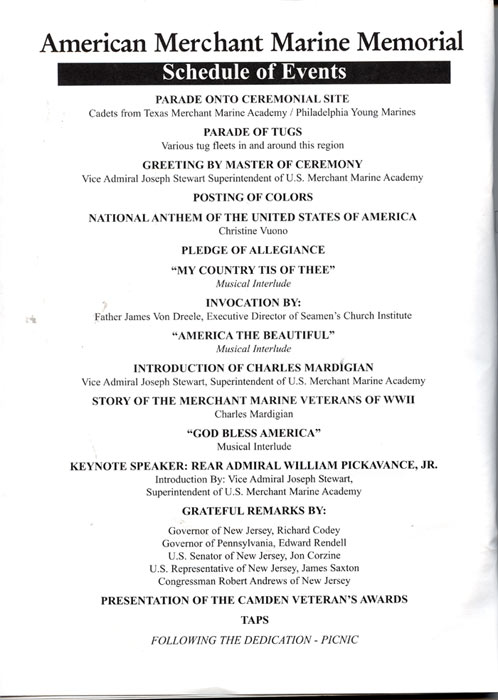
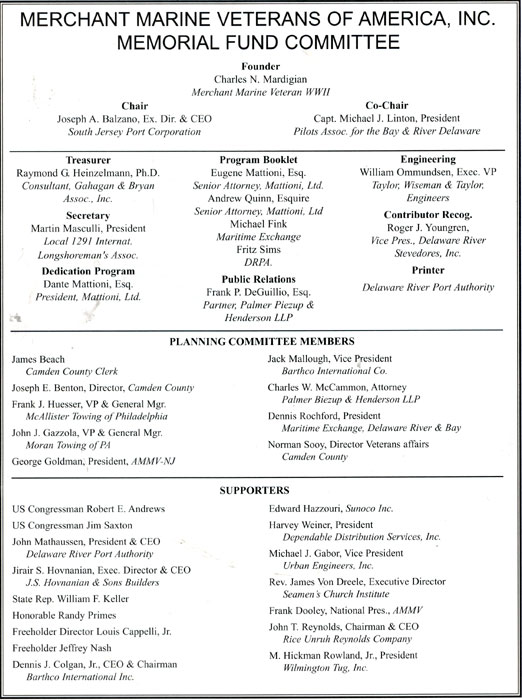
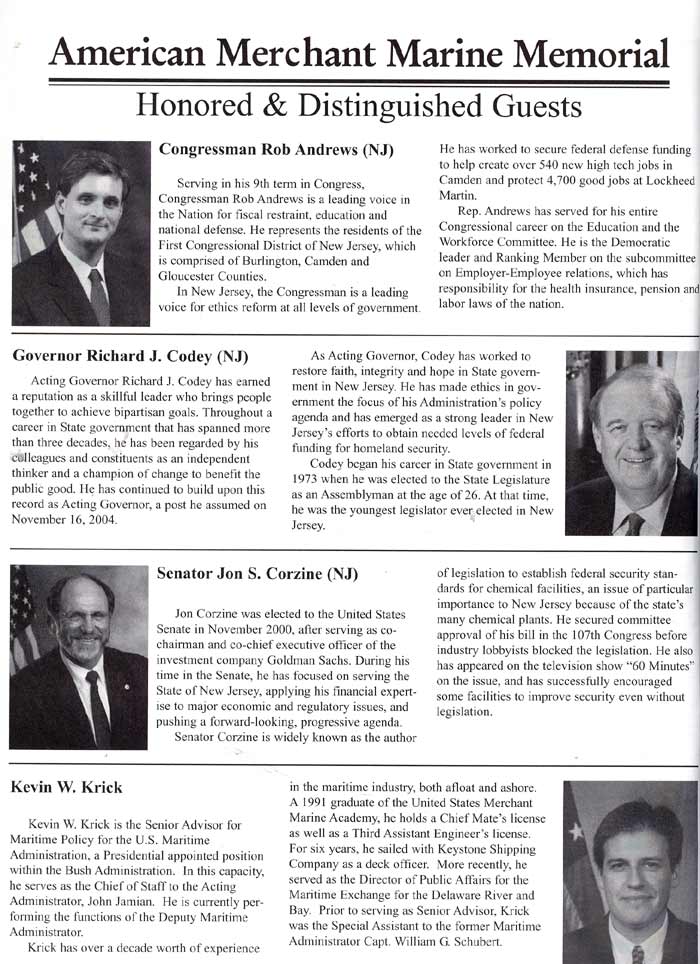
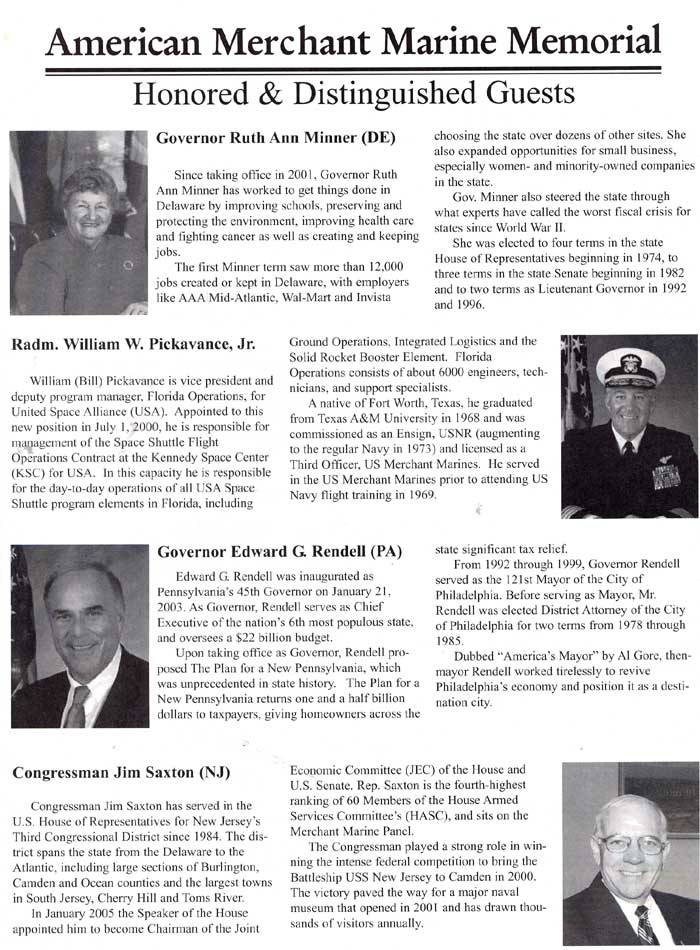
Dedication ceremony for the American Merchant Marine Memorial, Camden, NJ — June 11, 2005.
The American Merchant Marine Memorial on the Camden waterfront.
U.S. Merchant Marine and U.S. Navy Armed Guard
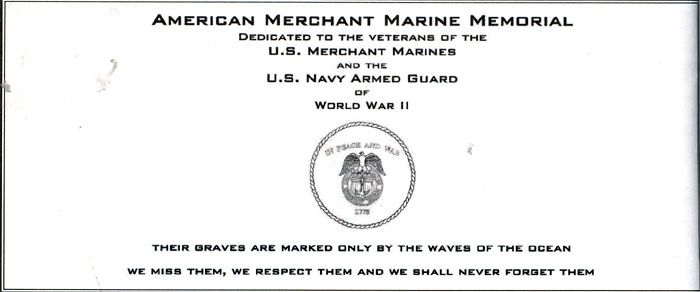
The memorial plaque honoring the U.S. Merchant Marine and U.S. Navy Armed Guard.
The U.S. Merchant Marine was a fleet of government-owned vessels operated by private shipping companies. The Merchant Marine was responsible for transporting fully 85% of the troops, ammunition and supplies used to support the Allied war effort during World War II and is credited with contributing decisively to the ultimate Allied victory. The Merchant Marine suffered more loss of life, by percentage, than any branch of armed service. One in 20 mariners serving aboard merchant ships in World War II died in the line of duty. The Merchant Marine and the U.S. Navy Armed Guard, which manned the guns on merchant ships, are truly the forgotten heroes of World War II.
The men who served the war effort with the U.S. Merchant Marine were all volunteers ranging in age from 16 to 78 years old. No one was drafted into the U.S. Maritime Service. Many of the volunteers were “unfit” for the military due to health or disabilities. They could have stayed home but were eager to help win the war and chose to risk the perils of the sea.
Merchant ships faced danger from submarines, surface ships, aircraft, mines and the elements. It is estimated that over 9,300 mariners were killed and over 12,000 were wounded. The U.S. Navy Armed Guard lost over 2,000 men, and 1,100 were wounded. 600 men were captured and held as prisoners of war. Over 863 ships were lost due to enemy action, 31 ships vanishing without a trace.
Mariners received pay only while serving aboard ship. If a mariner’s ship was sunk, his pay stopped and he was responsible to find his own way home and at his own expense. The U.S. Government finally granted veteran status to the Merchant Marine in 1988.
Excerpts from Gen. Colin Powell’s Commencement Address
Chairman, Joint Chiefs of Staff — U.S. Merchant Marine Academy, Kings Point, June 15, 1992
While the Merchant Marine belongs to the Department of Transportation, there has long been a close association between our merchant marine and the armed services. Since I became Chairman of the Joint Chiefs of Staff a little over two years ago, I have come to appreciate firsthand why our merchant mariners have long considered themselves the nation’s fourth arm of defense.
Because the American seafarer provides an essential service to the well-being of the nation, as was demonstrated so clearly during Operations Desert Shield and Desert Storm. Merchant mariners worked side by side with soldiers, sailors, airmen, marines and coast guardsmen to get the job done.
For too many years, the pivotal contribution of the merchant marine to our victory in World War II has been overlooked. But now the situation has begun to be rectified.
So let there be no doubt among any in this audience, America is eternally grateful to all those who served in our merchant marine over the years — grateful for their efforts, their commitment and their sacrifice in defense for our beloved America. They are second to none.
Wreath Laying Ceremony — Liberty Ship SS John W. Brown
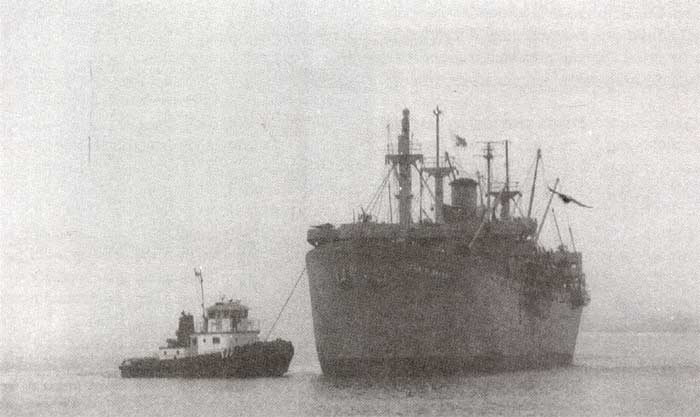
Liberty Ship SS John W. Brown at Penn’s Landing, Philadelphia — June 12, 2005.
One of only two surviving fully operational Liberty ships preserved in the U.S., the John W. Brown is a product of the Emergency Shipbuilding Program that built more than 2,700 liberty ships during World War II. Designed for quick and relatively easy construction, Liberty ships made possible the massive sealift of troops, arms, and material to all theaters of the war. The Brown was built in 56 days by the Bethlehem-Fairfield Shipyard in Baltimore.
The Brown made 13 voyages during and immediately after the war. Those voyages took her to the Persian Gulf, the Mediterranean Sea, and Northern Europe. The Brown was at the Anzio beachhead and was part of the invasion force at Operation Dragoon, the invasion of Southern France in August 1944. The Brown was awarded the Merchant Marine Victory Medal, the Combat Bar, and war zone medals for the Atlantic, the Mediterranean/Middle East, and the Pacific theaters. She has been fully restored and is an operating museum ship and memorial.
The Chapel of Four Chaplains
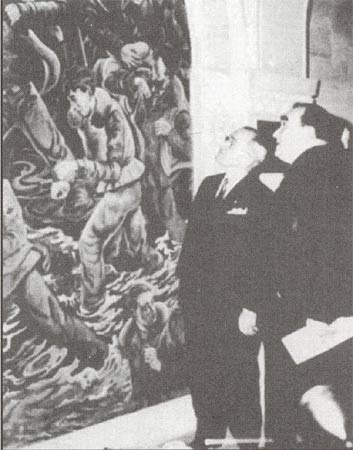
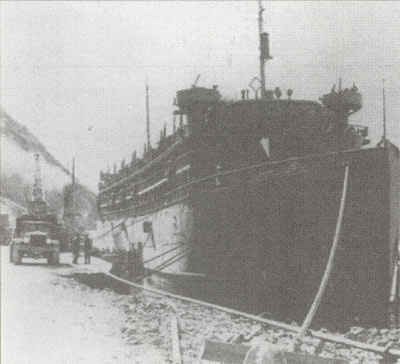
Left: President Harry S. Truman and Dr. Daniel A. Poling at the unveiling of the famous Nils Hogner mural. Right: U.S.A.T. Dorchester.
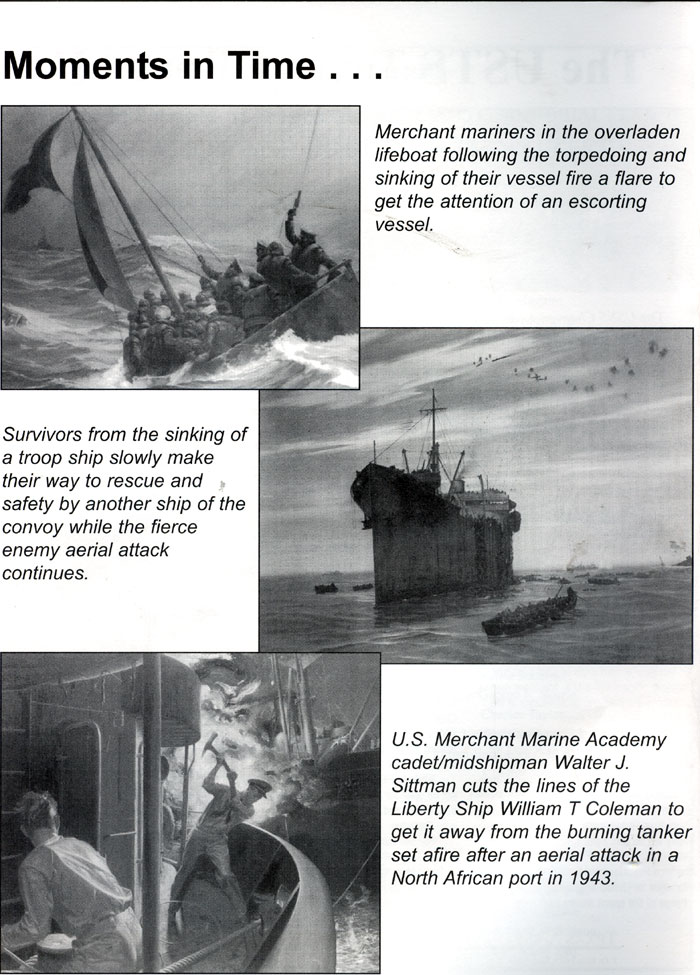
When an enemy torpedo split the sides of the U.S.A.T. Dorchester on February 3, 1943, pandemonium broke out. The Four Chaplains — Father John Patrick Washington, The Reverend Clark Vandersall Poling, The Reverend George Lansing Fox, and Rabbi Alexander David Goode — moved among the men bringing a sense of calm and reassurance. They directed the frightened men to lifeboats and dispensed life jackets to those who had none. After all the life jackets were dispensed, the Four Chaplains noticed four young men who had none. Without hesitation, the Chaplains stripped off their own vests and quickly strapped them on the young servicemen. Then linking arms, the Chaplains calmly united in prayer. Many survivors report that their last sight of the Dorchester before it slipped beneath the surface of the frigid waters was of the Four Chaplains praying together. Six hundred sixty-eight soldiers and sailors perished along with the Four Chaplains.
The Chapel was dedicated on February 3, 1951 by President Harry S. Truman. The Chapel exists to further the cause of unity and understanding among all people. It is a sanctuary for interfaith, interracial cooperation and respect.
American Merchant Marine Veterans — Dennis A. Roland Chapter (NJ)
American Merchant Marine Veterans, Dennis A. Roland Chapter (NJ) — South Jersey Branch.
- Beach, George
- Ciciollo, Joseph
- Cox, Ray
- Eberle, William
- Jones, Joseph
- Nelson, M. Harris
- Reilley, Tom H.
- Sullivan, Pat
- Szymanski, George
- Wagner, Paul
- Zukowsky, John
- Ludwig, Edward L.
- Ludwig, Joseph L.
Photos — October 1, 2005
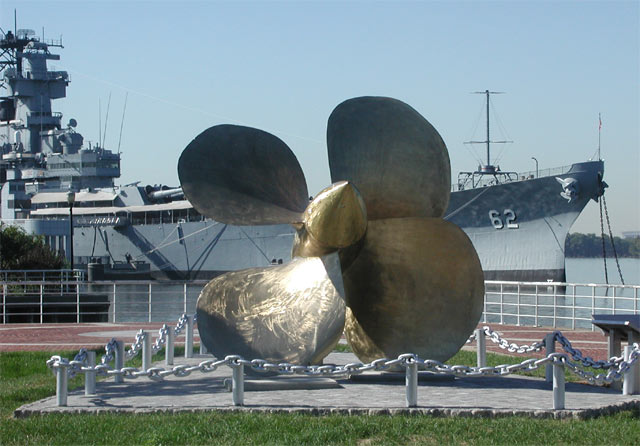
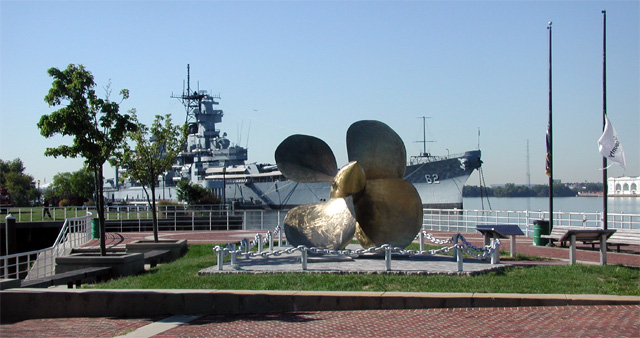
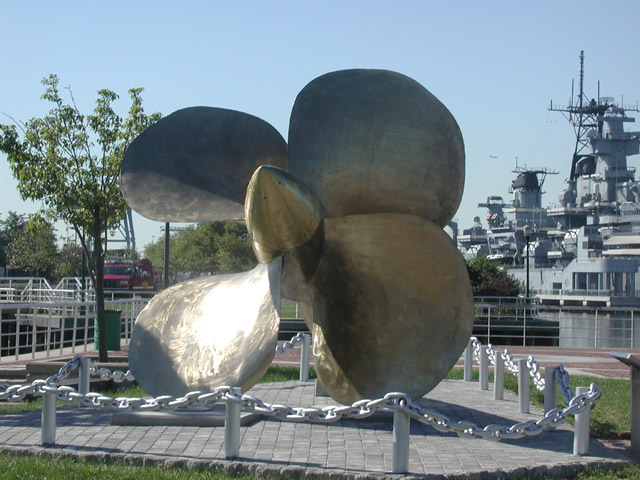
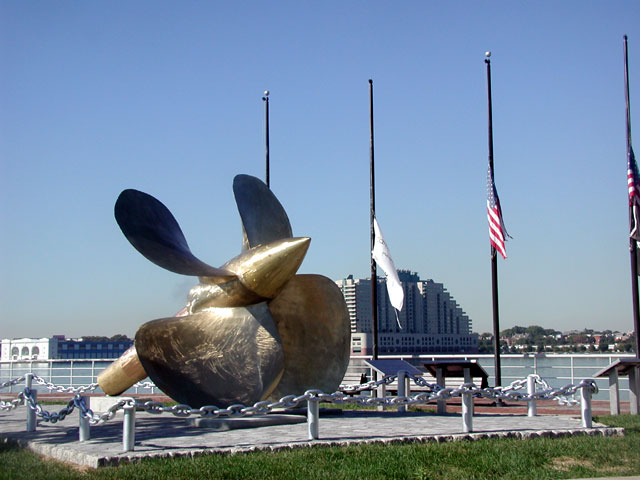
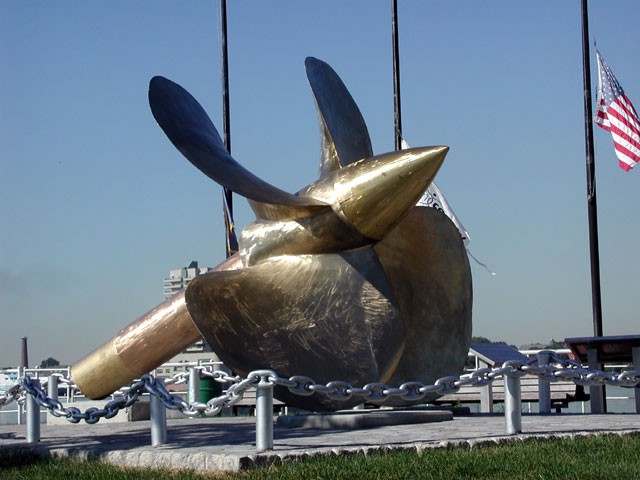
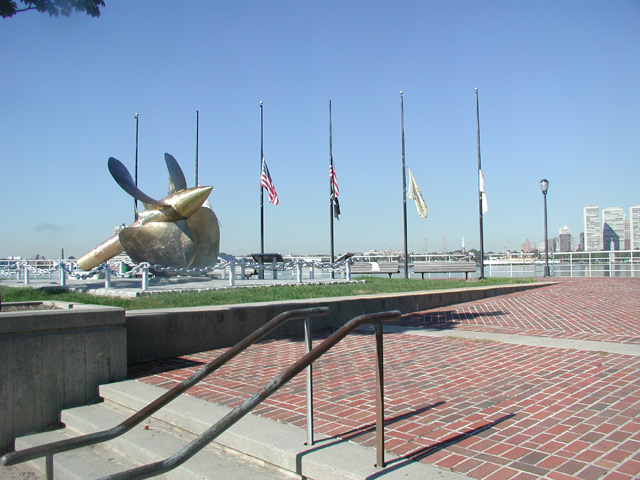
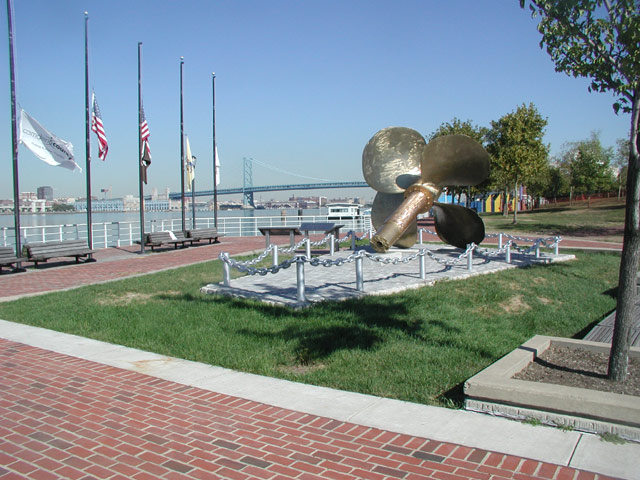
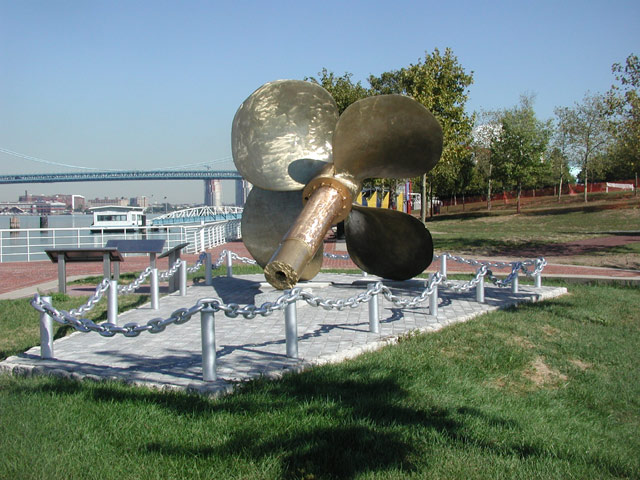
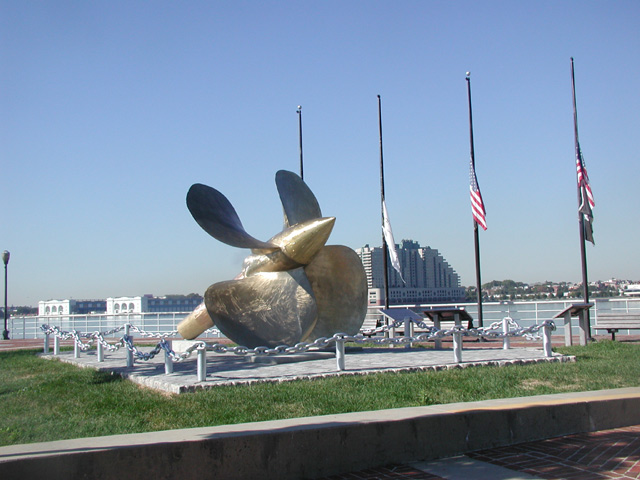
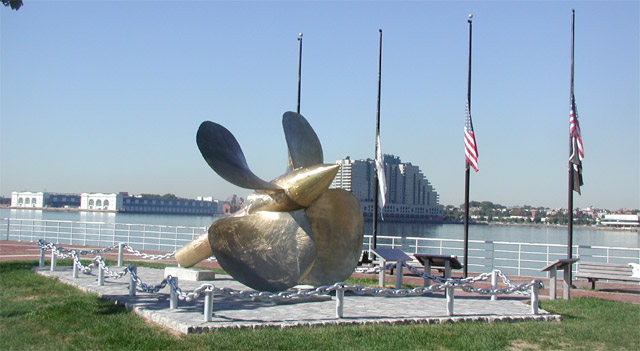
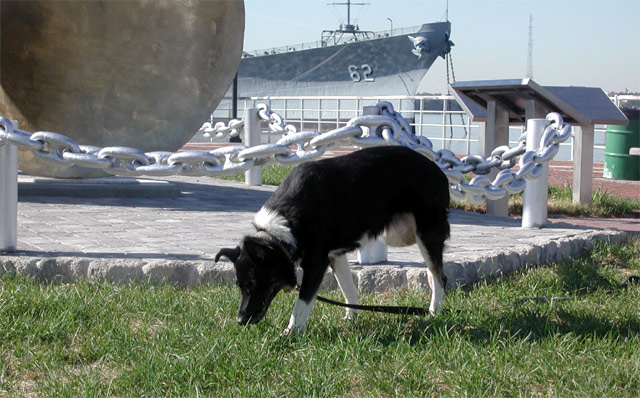
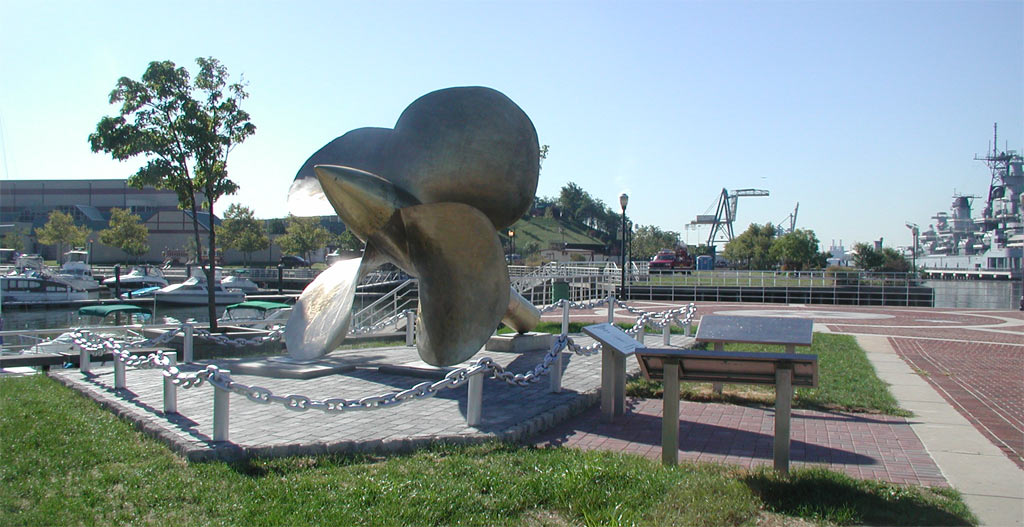
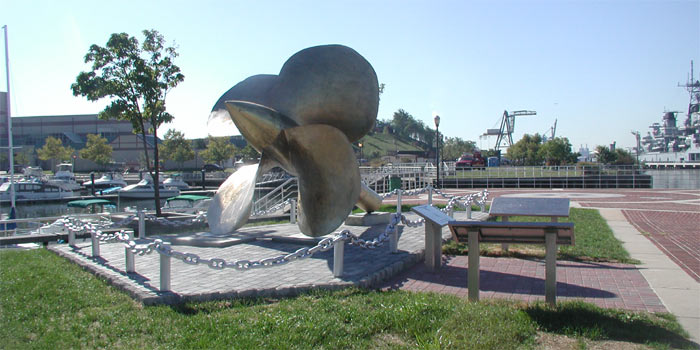
American Merchant Marine Memorial, Camden waterfront — October 1, 2005.