Boeing B-17 Flying Fortress
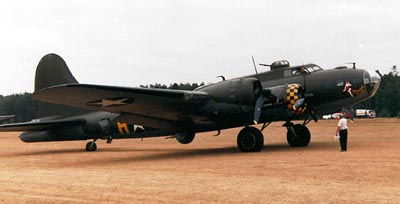
Boeing B-17 Flying Fortress
The B-17 was first flown in 1937, to a specific order placed by the US Army Air Force (USAAF) for a strategic long range bomber.
Entering USAAF service in 1940, a small number were supplied to the RAF for evaluation. This showed that there was a need for better armament, and self sealing fuel tanks. With these and other modifications, the B-17D and E models began to equip USAAF squadrons. Based in the UK from 1942 onwards, the USAAF specialized in daylight bombing raids into Germany, with often horrific losses.
The most widely produced variant, the B-17G, was defended by no less than 12, 0.5 inch machine guns. This feature gave rise to the name “Flying Fortress.”
Compared with RAF heavy bombers of the time, the B-17’s bomb load was small (5,000lb), but this was compensated by the sheer numbers of aircraft taking part in raids. The B-17 carried a crew of 10, operating at heights up to 35,000 feet. Powered by 4 Pratt and Whitney 1200hp engines, the B-17 cruised at a speed of 210 mph. Nearly 13,000 B-17s were built during the War.
The aircraft (Sally B) seen at the Air Fair is the only airworthy example of the B-17 in Europe. Based at Duxford, she flies as a living memorial to the 76,000 young US airmen who gave their lives whilst fighting for freedom in the European skies.