William M. Hernandez
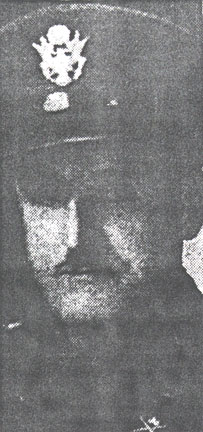
William M. Hernandez of Westmont (Haddon Township), NJ.
Guidon, Headquarters Company, 628th Tank Destroyer Battalion (3-inch SP).
Rank: Lieutenant Colonel, U.S. Army
Serial Number: O-191305
Unit: 628th Tank Destroyer Battalion, 5th Armored Division
Entered service from: New Jersey
Died:
Burial: Brittany American Cemetery, Plot N, Row 4, Grave 18, St. James, France
Awards: Distinguished Service Cross, Purple Heart
Lieutenant Colonel William M. Hernandez was born in 1896 in Virginia. His father had been from Cuba; his mother was a native Virginian. William Hernandez had a military career that went back prior to World War I. He had been a Second Lieutenant in the Virginia National Guard when, in 1916, he was sent to the Mexican border during the confrontation with Pancho Villa’s rebels.
After World War I he married, and a son, William Hernandez Jr., was born in Virginia. Some time after 1923 the family moved to Westmont, NJ, where they bought a home at 205 Ardmore Avenue. At 211 Ardmore Avenue lived the Ralph Neide family; their oldest son, George Neide, was killed while serving with the Army in Italy in April of 1945.
The Census taken in April of 1930 states that William Hernandez was working as a mechanic for the RCA-Victor Talking Machine Company. He later worked as an inspector for the Navy in Philadelphia. Throughout the inter-war years, William Hernandez remained in the National Guard, serving with the 112th Field Artillery, New Jersey National Guard, and later the 108th Field Artillery, Pennsylvania National Guard, with whom he was serving when the Guard was mobilized in 1940. At that point his rank was Major.
Lieutenant Colonel William M. Hernandez, then a Major, came over from the 108th Field Artillery to take command of the 628th Tank Destroyer Battalion in November of 1941. The 628th was a relatively new unit, having been formed earlier in the year. He was instrumental in preparing the men of this unit for the task ahead of them. The 628th went overseas in January of 1944 and continued to train in preparation for the invasion of Europe.
Arriving in France on Utah Beach on July 30, 1944, the 628th, primarily equipped with M10 Tank Destroyers, was quickly put into action. On August 14, while on reconnaissance, Lieutenant Colonel Hernandez’s armored car was fired on by heavy artillery in the vicinity of Bourg St. Leonard, France, at 1345 hours, and at 1500 hours in the vicinity of La Corbette, this vehicle struck a German Tellermine at a curve in the road, injuring the driver and the Battalion Surgeon. Lieutenant Colonel Hernandez escaped injury.
During the breakout from Normandy, the Battalion CP was moved often. On August 19th it moved from Les Bossus north to Cravent, France, arriving there at 1650 hours. Lieutenant Colonel William M. Hernandez, Battalion Commander, went out to contact Company A on August 20, 1944, and while directing indirect fire on enemy tanks was killed at 1630 hours near Douains, France.
The success of the 628th Tank Destroyer Battalion after the death of Lieutenant Colonel Hernandez is a testament to the training and preparation that he instilled in his men.
William M. Hernandez was survived by his wife, Lucille Hernandez; his son, Private William M. Hernandez Jr., who was also serving in France at the time of his father’s death; daughter-in-law Sally Lou Hernandez; and a granddaughter, Lucille Hernandez.
William M. Hernandez is memorialized on the War Memorial on Haddon Avenue in Westmont (Haddon Township), NJ.
Distinguished Service Cross Citation
The President of the United States takes pride in presenting the Distinguished Service Cross (Posthumously) to William M. Hernandez (O-191305), Lieutenant Colonel, U.S. Army, for extraordinary heroism in connection with military operations against an armed enemy while serving with the 628th Tank Destroyer Battalion, in action against enemy forces on 20 August 1944. Lieutenant Colonel Hernandez’s outstanding leadership, personal bravery and zealous devotion to duty at the cost of his life exemplify the highest traditions of the military forces of the United States and reflect great credit upon himself, his unit, and the United States Army.
Headquarters, Third U.S. Army, General Orders No. 59 (1944)
Home Town: Westmont, New Jersey
Photos
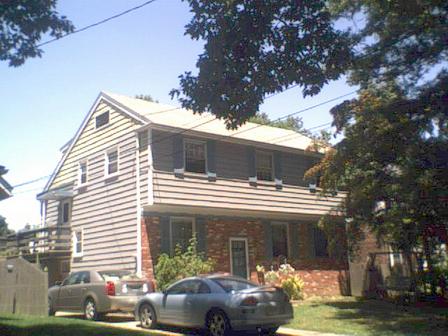
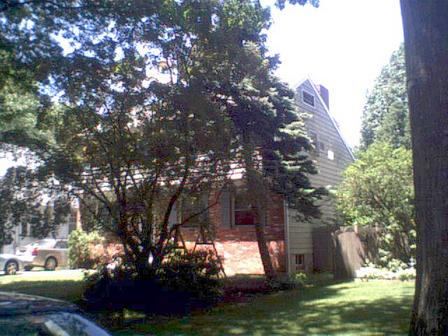
The Hernandez family home at 205 Ardmore Avenue, Westmont (Haddon Township), NJ (July 2004).
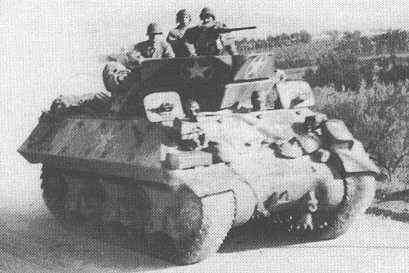
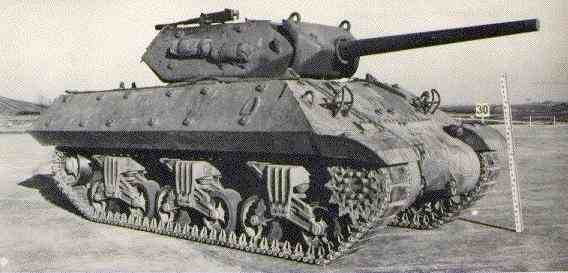
The M10 Wolverine Tank Destroyer.
History of the 628th Tank Destroyer Battalion
Victory TD (1945)

Victory TD — The History of the 628th Tank Destroyer Bn. in Training and Combat, Prepared by and for the Men Who Saw Action with the Battalion in France, Belgium, Luxembourg, Holland, and Germany.
All the material contained in this book has passed through censorship channels and is approved for publication with no restrictions by the SHEAF Combined Field Press Censorship Group. — Capt. James A. Robbins, FA Press Censor, PRESS CENSORSHIP DETACHMENT, P&PW, Ninth U.S. Army, APO-339, 7 June 1945.
As I write this little message to you, my comrades of the 628th, the war in Europe has just ended; and in my heart there is both joy and sadness. There is great joy for those of you who have gotten through this hell, sound of mind and body; but there is deep sadness for our men and officers who have fallen. In all humility, I salute our lads who are no longer with us. In all instances, they died willingly, as do men for a cause that is just and right; and they died bravely as can only an American soldier. We, their buddies who served by their side, shall always remember them with a sweet reverence which can be felt only by comrades in arms. It is my earnest prayer that the peace, for which the Conference at San Francisco strives, will be so lasting and honest, that none of our splendid men shall have died in vain. And I salute, too, those of you who have gone through the many strenuous months of combat with the Battalion. The amazing amount of enemy material and men which you blasted out of the war is but a tribute to your courage and skill at arms. The Break-through in Normandy…the Falaise Gap…Eure-Seine Pocket…Compiegne Forest…Sedan…Wallendorf…Hurtgen…the Ardennes…the Rhineland…the crashing offensive to the very banks of the Elbe River…all these and countless minor battles and campaigns you can, in the years to come, remember with a quiet pride. Whether it is your destiny soon to return to civilian life, or to help finish off our remaining enemy, the Jap, I wish you luck and Godspeed. Believe me, it has been a grand privilege and an honor to have commanded such a fine Battalion in combat. Again, I salute you all…and I shall never forget you.
— William J. Gallagher, Lt. Col., F.A., Commanding, Headquarters 628th Tank Destroyer Battalion, APO No. 758 U.S. Army, 9 May, 1945
“Lest We Forget”
The following officers and men of the 628th Tank Destroyer Battalion gave their lives in service to their country:
| Lt. Col. William M. Hernandez O-191305, F.A. KIA Douains, France Aug. 20, 1944 |
| Pfc. Samuel A. Augustine 33028869, A Co. KIA Werbomont, Belgium 7 Jan. 1945 |
T/5 William Mayers 34385822, B Co. KIA Manhay, Belgium 7 Jan. 1945 |
Cpl. Herman Harth 20315041, C Co. KIA Hurtgen, Germany 30 Nov. 1944 |
T/4 Donald F. Beck 36400303, A Co. KIA Simmerath, Germany 30 Jan. 1945 |
| T/4 William L. Boswell 34173763, Hq. Co. KIA Wallendorf, Germany 19 Sept. 1944 |
Pvt. Thomas W. Bowman 34371375, A Co. KIA Osterath, Germany 15 March 1945 |
T/5 Clyde C. Broom 34386824, A Co. DOW Douains, France 26 Aug. 1944 |
Pvt. Wellington E. Brundage 36400080, B Co. KIA Conde, France 4 Sept. 1944 |
| Cpl. Floyd E. Burge 33034922, A Co. KIA Werbomont, Belgium 7 Jan. 1945 |
Pfc. Randy B. Carpenter 34425461, B Co. KIA Manhay, Belgium 7 Jan. 1945 |
Sgt. George A. De Lia 33161296, B Co. KIA Haute-Bodeaux, Belgium 7 Jan. 1945 |
2nd Lt. John J. Devine Jr. 01822679, A Co. DOW Argentan, France 13 Aug. 1944 |
| T/5 Louis P. Di Orio 20315035, C Co. KIA Hurtgen, Germany 11 Dec. 1944 |
Sgt. Lawrence W. Elmore 20315803, B Co. KIA Manhay, Belgium 7 Jan. 1945 |
Cpl. Henry Goffart 33161233, C Co. KIA Bergstein, Germany 6 Dec. 1944 |
Pvt. Willie B. Greene 34371005, C Co. KIA Hommerdingen, Germany 19 Sept. 1944 |
| Pfc. Earl F. Higley 33161282, C Co. KIA Horsdorf, Luxembourg 23 Sept. 1944 |
Pvt. Charles W. Hill 33161172, B Co. KIA Manhay, Belgium 7 Jan. 1945 |
Cpl. John A. Hydu 33028902, C Co. KIA Horsdorf, Luxembourg 23 Sept. 1944 |
Sgt. Gerald W. Joner 39396408, Recon. Co. KIA Wallendorf, Germany 19 Sept. 1944 |
| Sgt. John Kalis 36015718, B Co. KIA Stockem, Germany 17 Sept. 1944 |
T/5 Peter Kowalchik 33161252, C Co. DOW Bergstein, Germany 6 Dec. 1944 |
Cpl. Chester W. Kuta 26016238, B Co. KIA Manhay, Belgium 7 Jan. 1945 |
Sgt. Stanley J. Lada 32071189, A Co. DOI Kalterherberg, Germany 3 Nov. 1944 |
| Sgt. Martin P. Lally 32084601, C Co. KIA Werbomont, Belgium 7 Jan. 1945 |
Pvt. John I. J. Lawler 33028880, C Co. DOI Hurtgen, Germany 10 Dec. 1944 |
Sgt. Charles A. Leo 35020246, C Co. KIA Bergstein, Germany 6 Dec. 1944 |
Pvt. John P. Loncaric 33161105, Recon. Co. DOW Stockem, Germany 17 Sept. 1944 |
| Cpl. Ashley C. Long 34386198, C Co. KIA Bergstein, Germany 6 Dec. 1944 |
Sgt. James W. Luvender 20317374, C Co. KIA Hurtgen, Germany 6 Dec. 1944 |
Pfc. Mario A. Mastro 33029156, B Co. DOW Odrimont, Belgium 4 Jan. 1945 |
Pfc. James A. McClintock Jr. 34386127, B Co. KIA Begelbach, Luxembourg 21 Sept. 1944 |
| Pfc. Edward Mickacinich 33035715, B Co. KIA Sedan, France 6 Sept. 1944 |
T/4 George F. Morgan 34110685, B Co. DOW France 4 Aug. 1944 |
Pfc. Frank L. Mozina 33161228, C Co. KIA Bergstein, Germany 6 Dec. 1944 |
Pfc. William Nicholson 33161356, Recon. Co. KIA Stockigt, Germany 15 Sept. 1944 |
| T/5 Jesse A. Pannell 34425825, A Co. KIA Osterath, Germany 15 March 1945 |
T/5 Floyd J. Robinson 32046621, A Co. KIA Krefeld, Germany 3 March 1945 |
1st Lt. Ben J. Smith 01824384, C Co. KIA Bergstein, Germany 6 Dec. 1944 |
Pfc. Theodore Spalte 32065342, B Co. KIA Werbomont, Belgium 7 Jan. 1945 |
| Sgt. Doyle E. Swilley 36014268, A Co. KIA Tangermunde, Germany 12 April 1945 |
Pvt. Leo Tovar 39564912, A Co. KIA Werbomont, Belgium 7 Jan. 1945 |
T/5 Thomas Vender Veen 36400270, C Co. KIA Bergstein, Germany 6 Dec. 1944 |
T/Sgt. Nicholas Van Handel 32154633, A Co. KIA Krefeld, Germany 3 March 1945 |
| Pvt. William T. Walden 34370625, Recon. Co. DOW Odrimont, Belgium 4 Jan. 1945 |
T/5 William J. Walters 34386105, B Co. KIA Manhay, Belgium 7 Jan. 1945 |
Pfc. Earl V. Ward 34071761, C Co. KIA Hommerdingen, Germany 19 Sept. 1944 |
Pfc. Michael H. Welsh 33161359, Recon. Co. KIA Neukirchfeld, Germany 4 March 1945 |
| Pfc. Cecil Wilson 34707801, A Co. KIA Osterath, Germany 15 March 1945 |
Sgt. Woodrow W. Woods 34071626, C Co. KIA Bergstein, Germany 6 Dec. 1944 |
Cpl. Casimer A. Wydrzenski 33161329, C Co. KIA Hurtgen, Germany 26 Nov. 1944 |
Pfc. Joseph G. Yakaitus Jr. 31038937, C Co. DOW Bergstein, Germany 6 Dec. 1944 |
| T/5 Arnold B. Zeigler 34425469, A Co. KIA Berbomont, Belgium 7 Jan. 1945 |
Indiantown Gap, Pennsylvania
In 1941 General Drum, then Commanding General, First United States Army, decided to form six provisional anti-tank battalions for experimental purposes to be tested in the First Army Maneuvers held in North and South Carolina in October and November, 1941.
The 28th Infantry Division Pennsylvania’s National Guard, Keystone Division, which had been federalized and on active service at Indiantown Gap Military Reservation since 17 February 1941, was one of six Divisions ordered to form a provisional anti-tank battalion.
General Martin, Commanding General, 28th Infantry Division, issued orders whereby the personnel of the 53rd Field Artillery Brigade Headquarters and several field artillery and engineer regiments were transferred for this purpose. On 10 July, the 28th Division Anti-Tank Battalion (provisional) was formed under the command of then Major Carl L. Peterson, and moved into its first quarters at Tent City, Indiantown Gap, Pennsylvania.
Early in November 1941, Major Peterson left the Battalion, and Major William M. Hernandez, 108th Field Artillery, assumed command. The Battalion was on its way back to the Gap when word was received on Sunday, 7 December 1941, near South Boston, Virginia, that the Japanese had attacked Pearl Harbor and that war had been declared.
After returning to Indiantown Gap, orders were received to reorganize the provisional 28th Division Anti-tank Battalion as of 15 December 1941, into a permanent organization officially designated as the 628th Tank Destroyer Battalion, effective 3 January 1942.
Camp Livingston, Louisiana — Camp Hood and Camp Bowie, Texas
Shortly after the first of the year 1942, the entire 28th Infantry Division moved by motor convoy from Indiantown Gap, Pennsylvania, to Camp Livingston, near Alexandria, Louisiana. In September 1942, the entire Battalion was moved by rail to the newly formed Tank Destroyer Center, Camp Hood, Texas, to undergo advanced unit training in Tank Destroyer tactics. It was here in November 1942, after fifteen months of diligent training, that the Battalion gun crews had their first opportunity to fire live ammunition. Early in December 1942, the Battalion moved to Camp Bowie, Texas, for additional tactical training.
Camp Gordon Johnston, Florida — Camp Rucker, Alabama
On 8 January 1943, the Battalion arrived at Camp Carrabelle (later Camp Gordon Johnston), Florida, for intensive Amphibious Training in the waters of the Gulf of Mexico. After completing amphibious training, the Battalion received its first combat vehicles, 36 M-10 Tank Destroyers, and moved to Camp Rucker, Alabama, in May 1943. Tennessee Maneuvers lasted until 28 August 1943.
Camp Pickett and Camp Dix, New Jersey
Early in October 1943, the Battalion moved to Camp Pickett, Virginia, then to Camp Bradford for amphibious training. In December 1943, the Battalion proceeded to Camp Dix, New Jersey, the last camp before a Port of Embarkation staging area. After final leaves and furloughs over Christmas and New Year, the Battalion moved to Camp Shanks, N.Y., on 17 January 1944, and shipped overseas on the R.M.S. Aquitania, which left New York on 29 January 1944.
Packington Park, England — Sub-Area X, Dorchester
On arrival at Greenock, Scotland on 6 February 1944, the Battalion moved by rail to Packington, England, located midway between Birmingham and Coventry. New M-10s and other equipment were received, and all men and officers were kept busy on all phases of military training. In April 1944, the Battalion moved to Dorchester, England, where it operated Marshalling Camps for the invasion troops of the 1st and 29th Infantry Divisions. On 28 July 1944, the Battalion loaded on Navy LSTs and embarked from England for combat. After three years of training, the Battalion was finally on its way.
Baptism of Fire — Utah Beach, France
Having landed on Utah Beach in Normandy, France, on 30 July 1944, the Battalion was assigned to the 5th Armored Division, XV Corps, Third Army, and given the code name “Victory.” Once tactically committed on 2 August 1944, there were very few days when some members of the organization were not on a combat status in France, Belgium, Luxembourg, Holland, and Germany, until the unconditional surrender on 9 May 1945.
On 4 August 1944, Lieutenant John J. Devine Jr., Platoon Leader, Company A, made the first contact by a member of this Battalion with an enemy force. Lieutenant Devine subsequently died of wounds received at Argentân, France on 13 August 1944.
Falaise–Argentân Gap
On 10 August 1944, the Battalion moved to participate in the attempt to close the Falaise-Argentân Gap. S/Sgt. Koczan of Company A was awarded the first Silver Star Medal presented to a member of this battalion and was subsequently decorated with the Croix de Guerre by the French Government. On 11 August 1944, the Battalion achieved its first direct fire duel with an enemy tank. In all, 56 enemy tanks were ultimately credited to the Battalion.
On 14 August 1944, while on reconnaissance, Lieutenant Colonel Hernandez’s armored car struck a German Tellermine, injuring the driver and Battalion Surgeon; the Battalion Commander escaped injury. Lieutenant Colonel Hernandez was killed on 20 August 1944, while directing indirect fire on enemy tanks near Douains, France. Major William J. Gallagher assumed command of the Battalion at 1700 hours the same date.
Battle of the Seine River
Gun Companies continued to advance generally north, destroying enemy vehicles and personnel fleeing from the Falaise-Argentân Gap trapped between the Eure and Seine Rivers. The Battle of the Seine River was completed by 25 August 1944, and for five days the Battalion rested and prepared equipment for the next mission.
Drive to the Belgium Border
On 30 August 1944, the 5th Armored Division was given the mission of marching directly to the Belgium border. The Battalion passed through the outskirts of Paris, continuing through Senlis, Compiègne Forest, and Valenciennes, arriving at Condé, France on the Belgium border at 2330 hours on 2 September 1944. Orders were then changed; the Division was given a new mission to move south and seize Sedan, France, and then east to capture Luxembourg.
Liberation of Luxembourg
The Battalion left Florenville, Belgium, at 0800 hours on 9 September 1944, arriving in Luxembourg. Plans for the breaching of the Siegfried Line at Wallendorf, Germany, on the Luxembourg border were then started.
First Penetration of the Siegfried Line
On 13 September 1944, the Battalion participated in the assault on the Siegfried Line at Wallendorf, Germany. Company C was the first unit in the Battalion to enter Germany. On 17 September 1944, Lt. Rennebaum, Platoon Leader, was later awarded the Distinguished Service Cross as a result of actions near Wettingen, Germany — the highest award received by any member of this Battalion during its entire period in combat. On 19 September 1944, the highest single-day tank kill total was achieved, with six Mark VI, one Mark V, and four unidentified tanks destroyed. A withdrawal back into Luxembourg became necessary after the German Army moved a greatly superior force to offset the threat.
Battle of the Hürtgen Forest, Germany
After withdrawing from Germany in late September 1944, the Battalion was committed to various road block and indirect artillery missions during October and November. On 1 November 1944, the new M-36 Tank Destroyers equipped with 90mm guns arrived to replace the M-10s. By 25 November 1944, Company C moved to the vicinity of Hürtgen, Germany, for the impending battle of Hürtgen Forest. The Hürtgen Forest battle was by far the most intense period of combat experienced by any unit in this Battalion. On 6 December 1944, Company C destroyed five enemy tanks at Bergstein, Germany.
Battle of the Ardennes
On 16 December 1944, the German Army launched its grand offensive — the Battle of the Bulge. The Battalion was alerted for immediate movement and, upon arrival in Belgium on 24 December 1944, took up defensive positions. On Christmas Day, 2nd Platoon, Company B, allowed an enemy armored column to come to within 25 yards before opening fire, knocking out two Mark V tanks at almost point blank range and forcing the enemy column to withdraw. During the period with the 82nd Airborne Division (1–11 January 1945), fourteen enlisted men were killed and eighteen wounded.
The Roer to the Rhine River
Company B was the first unit of the Battalion to cross the Roer River at Linnich, Germany, on 25 February 1945. All elements of the 5th Armored Division then swung north, capturing numerous German towns and proceeding toward the Rhine River, which was reached by 10 March 1945. On 31 March 1945, the entire Battalion crossed the Rhine over an Engineer pontoon bridge at Wesel, Germany.
The Rhine to the Elbe River
After crossing the Rhine, the Battalion drove northeast through Germany at speed, reaching the western bank of the Elbe River on 11 April 1945. At this point, CCA in Tangermunde was the closest U.S. Army unit to Berlin. Following intelligence that the Von Clausewitz Division was attempting to cut Allied supply lines, Phase 3 found the Battalion moving west to meet the threat. After 266 days of combat, all companies of the Battalion reverted to Battalion control on 25 April 1945.
Victory in Europe
On 26 April, the entire Battalion moved to take up military government duties controlling an area of approximately 230 square miles south of the autobahn from Peine east to Wendezelle. On 8 May 1945, when V-E Day was announced, the combat history of the 628th Tank Destroyer Battalion in the European Theater of Operations came to a close.
Summary of Enemy Losses Credited to the 628th Tank Destroyer Battalion, 2 August 1944 – 8 May 1945
| Category | Count |
|---|---|
| Tanks destroyed (all types) | 56 |
| S.P. Guns | 4 |
| Towed Guns (all types) | 24 |
| Mortars | 7 |
| Half-tracks | 22 |
| General Purpose Vehicles | 68 |
| Machine Guns | 24 |
| Pill Boxes | 58 |
| Observation Posts | 16 |
| Miscellaneous (buildings, bazooka nests) | 54 |
| Airplanes | 4 |
| Trains (locomotives and freight cars) | 9 |
| Prisoners of War captured | 1,516 |
| Estimated enemy casualties | 1,231 |
Charter Members at Meeting of Gold Star Wives
Camden Courier-Post —
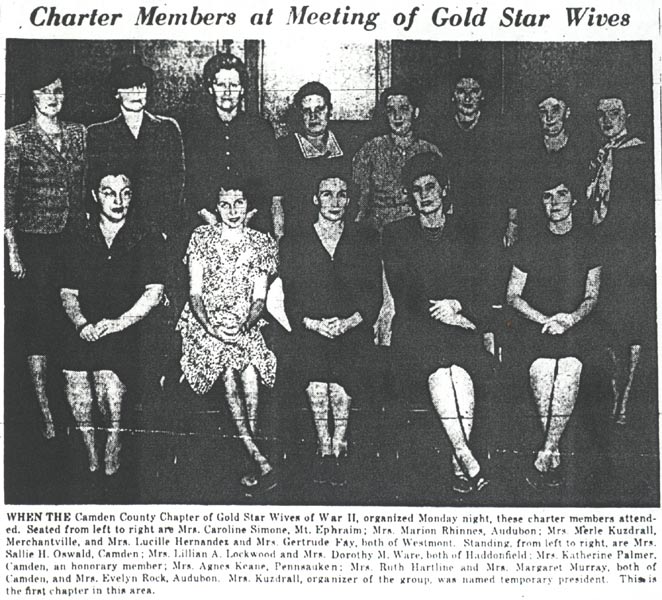
When the Camden County Chapter of Gold Star Wives of World War II was organized Monday night, these charter members attended. Seated from left to right are Mrs. Caroline Smura, Mt. Ephraim; Mrs. Marion Rheinen, Lawnside; Mrs. Marie Madnick, Merchantville; and Mrs. Lucille Hernandez and Mrs. Gertrude Fay, both of Westmont. Standing from left to right are Mrs. Sadie H. Oswald, Camden; Mrs. Lillian A. Lockwood and Mrs. Dorothy M. Ware, both of Haddonfield; Mrs. Katherine Palmer, Camden, an honorary member; Mrs. Agnes Bruce, Pennsauken; Mrs. Beth Hartline and Mrs. Margaret Murray, both of Camden; and Mrs. Evelyn Reck, Audubon. Mrs. Kendall, organizer of the group, was named temporary coordinator of the local chapter in the area.
Mrs. Lucille Hernandez became a charter member of the Camden County Chapter of the Gold Star Wives of World War II in November of 1947.