Private Utah Carl Nichols
Rank: Private, U.S. Army
Unit: Company D, 110th Medical Battalion, 35th Infantry Division
Born: , Oklahoma
Died: , Bakersfield, California
Awards: Bronze Star, Purple Heart, Good Conduct Medal, nine battle stars
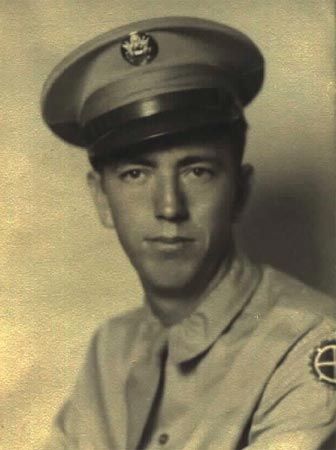
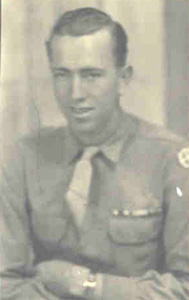
Private Utah Carl Nichols
Utah Carl Nichols was born in Oklahoma on July 4, 1921. His family moved to California, where he entered the service after being drafted on August 6, 1942. After being stationed in Texas, Alabama, and California, he was assigned to Company D of the 110th Medical Battalion.
Private Nichols went overseas with the 110th, and served with them until war’s end, earning the Bronze Star and the Purple Heart. He was discharged in 1945.
Returning to California after the war, Utah Carl Nichols later lived in Bakersfield. He passed away October 13, 1998.
The photographs below were apparently taken by Private Nichols, and are courtesy of his younger brother Clarence E. Nichols, of Napa CA.
In His Own Words
Before then, the War had started, so I knew on my 21st birthday that my days were numbered. On August 6th I wasn’t a person anymore, I was a number and belonged to the Government.
Bill* quit school, Clarence* started, and I went to Texas. Texas looked like the end of the world, until I was sent to Alabama. That state isn’t worth $15. I didn’t get to come home until I was stationed at San Luis Obispo. When Jewel my cousin died, I got a three day pass, then I was shipped to North Carolina. I was in the 35th Infantry Division. I stayed with them until I got out in 1946.
I got to come home on a 14 day pass, but spent 7 days of that traveling on a train. Through all that I was in 38 states, either stationed or went through them. I knew I wasn’t to come home anymore until the War was over. If I didn’t make it, there wasn’t a thing anyone could do about it.
I was in seven countries over there, got nine battle stars — the Purple Heart, and Bronze Star, the Good Conduct Medal, and lots of memories.
When I got out of the Army, I married Jeanovie Hewitt in 1946. We were married until 1952 when we got a divorce.
*Brothers Bill and Clarence Nichols
Photographs from Fort Rucker
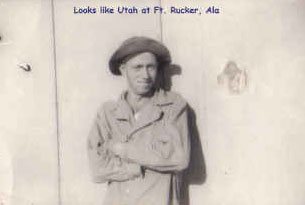
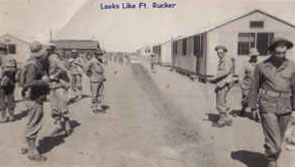
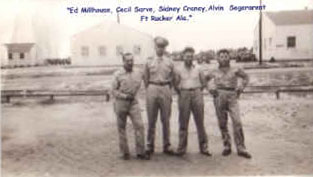
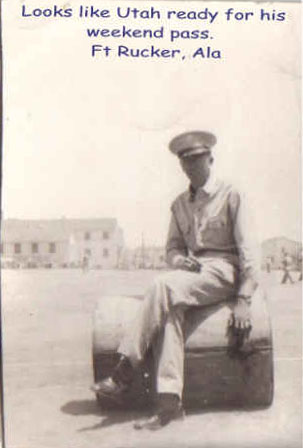
Photographs from Fort Rucker, Alabama. Left to right: Utah at Fort Rucker; Fort Rucker; Utah & Sidney Craney (also Ed Milhouse, Cecil Sarve, Sidney Craney & Alvin Segerarvest); Fort Rucker.
Photographs from the ETO
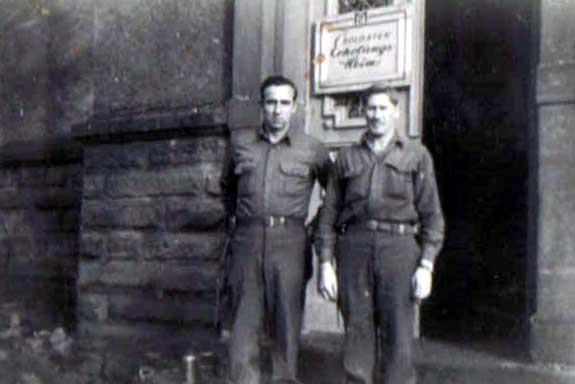
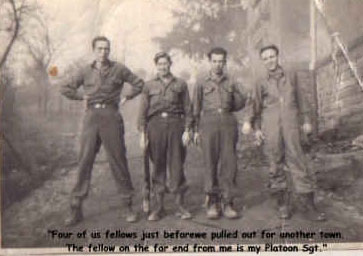
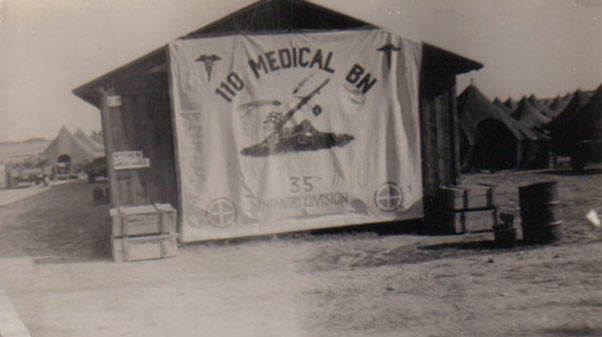
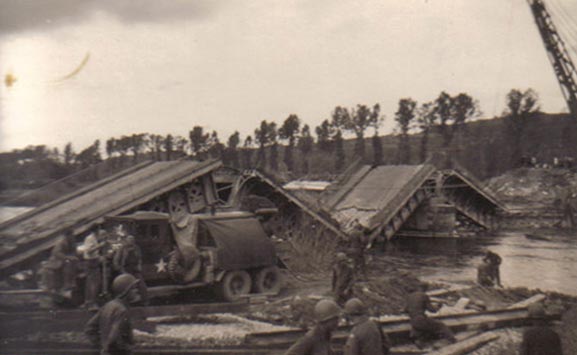
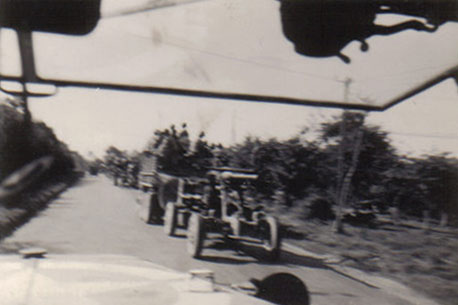
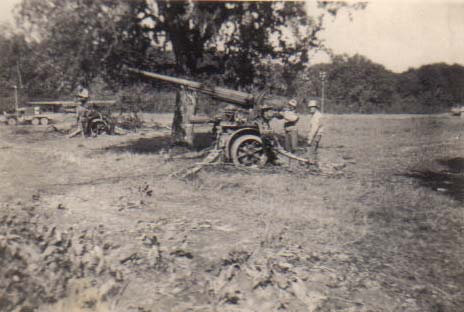
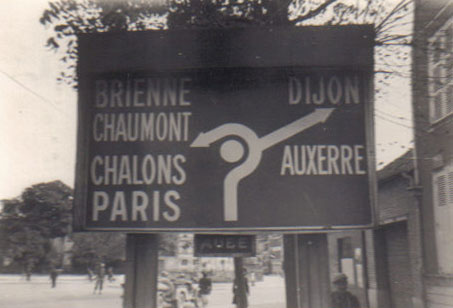
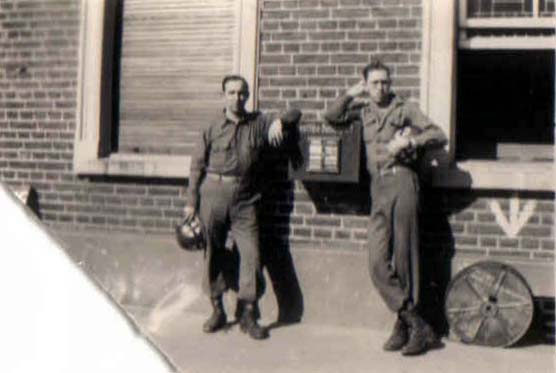
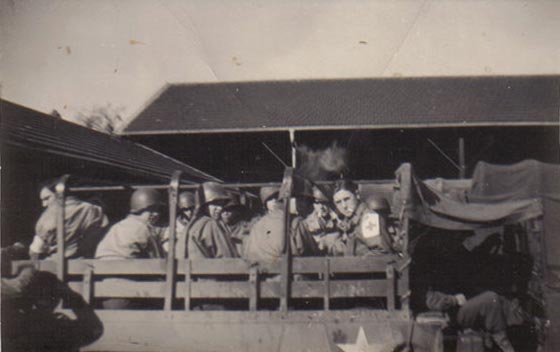
Photographs from the European Theater of Operations, taken by Private Utah Carl Nichols. Top row: Technician 5th Class Charles H. Shipley (New Lexington OH) & Private First Class Fred W. Ingram (Grants Pass OR); “Four of us fellows just before we pulled out for another town. The fellow on the far end from me is my Platoon Sergeant” —Utah Carl Nichols (far left); Welcome to the 110th Medical Battalion. Middle: Engineers at Work; through-the-windshield photograph; a captured German “88”; Somewhere in France… 1944. Bottom: “A Lazy Day” —Utah Carl Nichols.
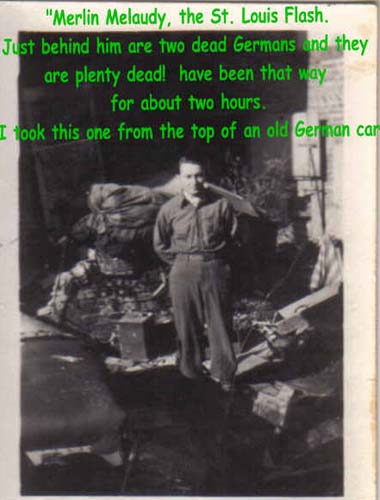
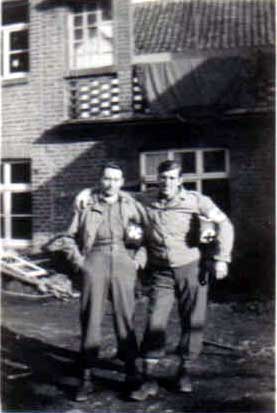
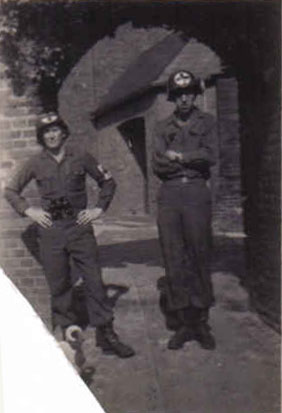
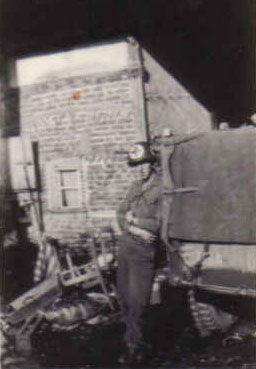
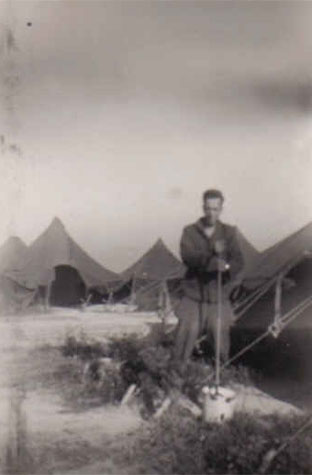
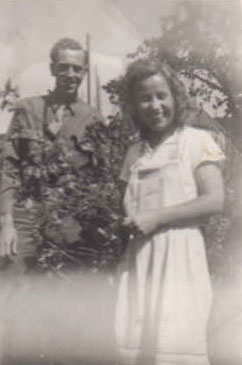
More photographs from the ETO. Private First Class Merlin T. Mallady (St. Louis MO) — “Merlin Melaudy, the St. Louis Flash. Just behind him are two dead Germans and they are plenty dead! Have been that way for about two hours. I took this one from the top of an old German car.” —Utah Carl Nichols. Also: PFC Merlin T. Mallady & PFC Ernest G. Deschenes (Pawtucket RI); Utah Carl Nichols in Europe (three photos); Utah Carl Nichols and a friend, Europe, 1945.
A Brother Remembers
By Clarence Nichols,
When I was older and in the service myself, I asked Utah about his time in the ETO, Normandy, Belgium and so forth. He, like so many others, was pretty closed mouth about that time and the horrors they experienced. The best I ever got was that once they landed at Normandy (which he said was the worst day of his life except for when his beloved wife passed away) and come upon a little village outside St. Lo, where the townspeople (and all others they came across all over Europe) started giving them homemade wine (probably about 18 or 19 proof) and they stayed pretty well drunk until the end of the war so he didn’t remember much of anything about the actions.
For a while after the war and after his first wife ran off with a bartender, he drank pretty heavy, beer mostly, but still a lot. He got remarried to a gal who put up with it for several years but finally put it to him and he never drank another drop for the last 35 years of his life. His second wife had four little ones so he had plenty of kids to raise and drive him nuts. Their own father had disappeared when the last one was born and he ended up adopting them all. He smoked Lucky Strikes until the day he died, though that’s not what killed him. He was a master cabinet maker when he retired and he thought he was making big bucks as the lead guy at $13.00 an hour and lived in a trailer house until my other brother and I moved him to an assisted living place in Bakersfield. Once his wife died he had only about $700.00 a month from SSI and a little from her insurance policy. We had to help him with this, though we lied about what he had to pay at the rest home. When he died he left me the flag used at his burial which I donated to our church and a well written history of our family and the life we lived back in the “good old days.”
He never wanted to be an NCO or officer or bigshot of any kind. He told me once that he’d been offered promotions in the army but he just didn’t want to be the one to send his buddies out to be hurt or killed. He was certainly smart enough and may have made a good staff officer or NCO, but he just didn’t want to play those games. Also he never took advantage of any of the GI Bill benefits after the war. He said it sounded too much like welfare to him. A different way of looking at things, I guess. I think it made the playing field a little more even for everyone and made our country stronger because of it. But he was a proud man and it was his way, I can’t fault anyone for that.