Richard L. Ekiss
First Sergeant, U.S. Army Air Forces
06828735
322nd Fighter Control Squadron
Entered service from: Illinois
Died: November 26, 1943
Mediterranean Sea
Missing in Action
Tablets of the Missing
North Africa American Cemetery
Carthage, Tunisia
Awards: Bronze Star, Purple Heart, Good Conduct Medal, European Theater of Operations Medal, World War II Victory Medal, National Defense Service Medal
Father's WWII Heroism Brings Honor 57 Years Later
The Detroit News —
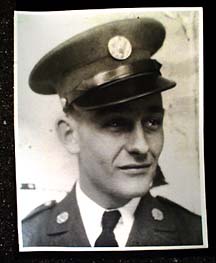
Grateful Son Accepts Bronze Star Medal for Valor
By Tanya Albert / The Detroit News
NORTHVILLE — When 58-year-old John Lane was just a baby, his father and nearly 2,000 other American soldiers shipped out during the height of World War II.
Lane’s father was among more than 50 percent of the soldiers on the ill-fated Rohna who never returned home. German fighters sunk their ship off the African coast in November 1943.
Lane was just a year and nine months old.
But more than half a century later, he’s connecting with the father he was too young to remember going off to war.
Through stories from Rohna survivors, Lane learned his father, 1st Sgt. Richard Ekiss, died a hero the day his ship went down.
And in a solemn ceremony with 15 people earlier this month, Lane accepted the Bronze Star Medal for Valor that his father earned nearly 60 years ago when he lost his own life while trying to save others. Lane’s planning a memorial service and plaque dedication at Arlington National Cemetery for next spring.
“One of my purposes in life was maybe to get recognition for him,” Lane said. “He was a hero.”
Although more lives were lost on the Rohna than were lost on the USS Arizona at Pearl Harbor, it wasn’t talked about for decades.
Because the hit was so big, the American government didn’t talk about it and didn’t release information until a Freedom of Information Act request was filed decades later.
The Rohna sat in the Mediterranean Sea off the Algerian coast when German bombers and fighters attacked it at about 3 p.m. Nov. 26, 1943.
Anti-aircraft fire drove away most of the fighters, but not before the ship was hit by a German remote-controlled, rocket-boosted bomb. It was the first successful air-to-ship missile.
The bomb hit the ship near the waterline, exploded and killed about 300 men instantly.
The ship’s engines and electrical systems were destroyed and a 20-by-60-foot hole through the ship sucked in water.
Men jumped off the ship.
Sgt. Ekiss stayed with his troops, calmed them and made sure they got out of the ship’s hold.
The 29-year-old sergeant made it to safety, but went back to the sinking ship to make one more check for any of his men that may have still been in the hold.
No one saw him again.
He was one of 1,138 U.S. soldiers who died at sea that day. Many died of hypothermia in the water.