Camden’s ‘First Citizens’ — No. 2
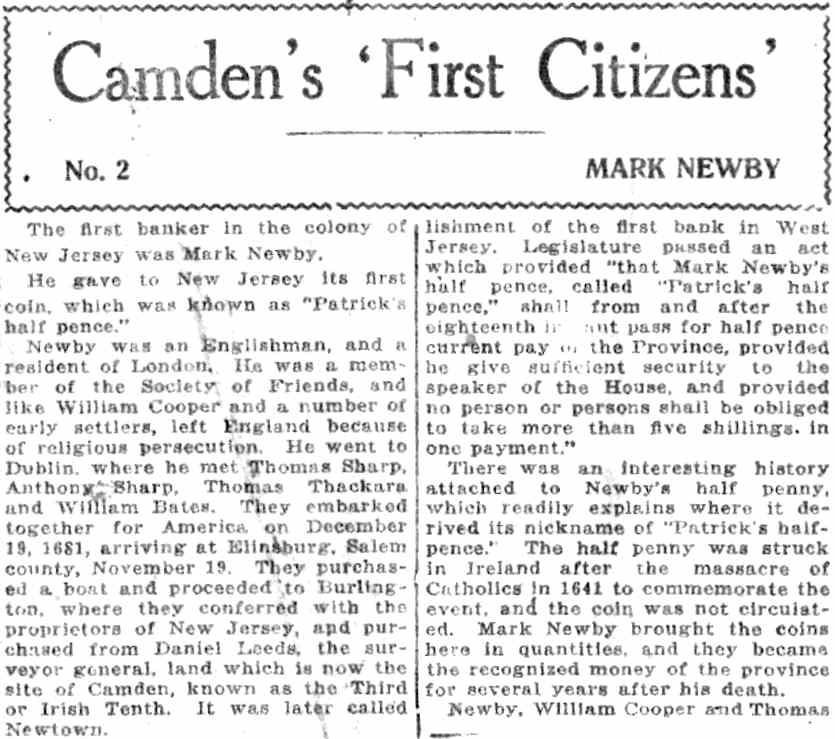
“Camden’s First Citizens” newspaper article, No. 2, featuring Mark Newby’s biography. Mark Newby was the first banker in the colony of New Jersey and introduced “Patrick’s Half-Pence” coin to the province. Newby came to America on December 19, 1681, with fellow members of the Society of Friends including William Cooper, Thomas Sharp, Anthony Sharp, William Bates, and Thomas Thackara, all of whom left England to escape religious persecution.
The first banker in the colony of New Jersey was Mark Newby.
He gave to New Jersey its first coin, which was known as “Patrick’s half pence.”
Newby was an Englishman, and a resident of London. He was a member of the Society of Friends, and like William Cooper and a number of early settlers, left England because of religious persecution. He went to Dublin, where he met Thomas Sharp, Anthony Sharp, Thomas Thackara and William Bates. They embarked together for America on December 19, 1681, arriving at Elinsburg, Salem county, November 19. They purchased a boat and proceeded to Burlington, where they conferred with the proprietors of New Jersey, and purchased from Daniel Leeds, the surveyor general, land which is now the site of Camden, known as the Third or Irish Tenth. It was later called Newtown.
“The first meeting of the Society of Friends was held in the Mark Newby home. Newby did not live long in the new world, but figured extensively in the new colony’s history during his brief life here.
Established Bank in 1682
He petitioned Legislature in May, 1682, for a charter for the establishment of the first bank in West Jersey. Legislature passed an act which provided “that Mark Newby’s half pence, called ‘Patrick’s half pence,’ shall from and after the eighteenth inst pass for half pence current pay of the Province, provided he give sufficient security to the speaker of the House, and provided no person or persons shall be obliged to take more than five shillings. in one payment.”
There was an interesting history attached to Newby’s half penny, which readily explains where it derived its nickname of “Patrick’s half-pence.” The half penny was struck in Ireland after the massacre of Catholics in 1641 to commemorate the event, and the coin was not circulated. Mark Newby brought the coins here in quantities, and they became the recognized money of the province for several years after his death.
Newby, William Cooper and Thomas Thackara were appointed judges of the court for the Irish Tenth in 1682. Newby was also chosen a member of the first New Jersey Legislature with Thackara in May, 1682.
He was also one of the commissioners for the division of land in the province and a member of the committee on ways and means for raising funds for the government.
Newby died in 1683, and his bank went out of business. He was survived by a widow, Hannah, two sons, Stephen and Edward, and two daughters, Rachel and Elizabeth. The family came to this country with their father. His wife married James Atkinson in 1685.
A ‘St. Patrick’s Farthing’
Mark Newby brought these coins to New Jersey with the “St. Patrick’s Pence”
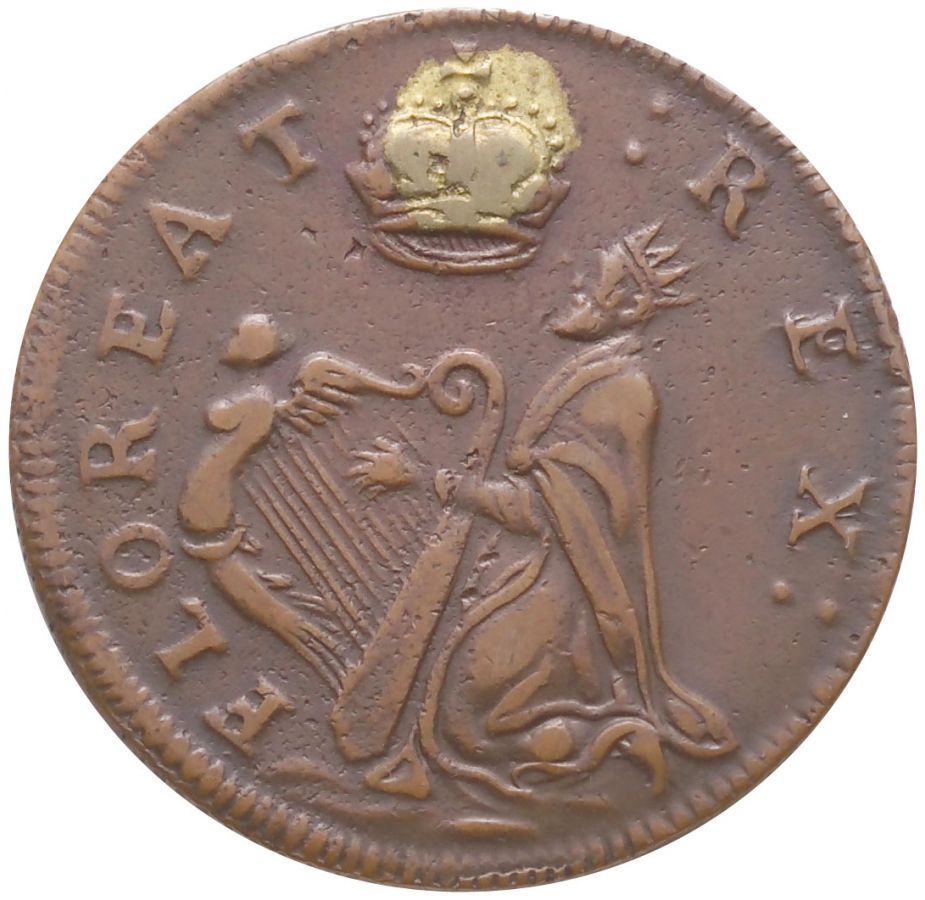
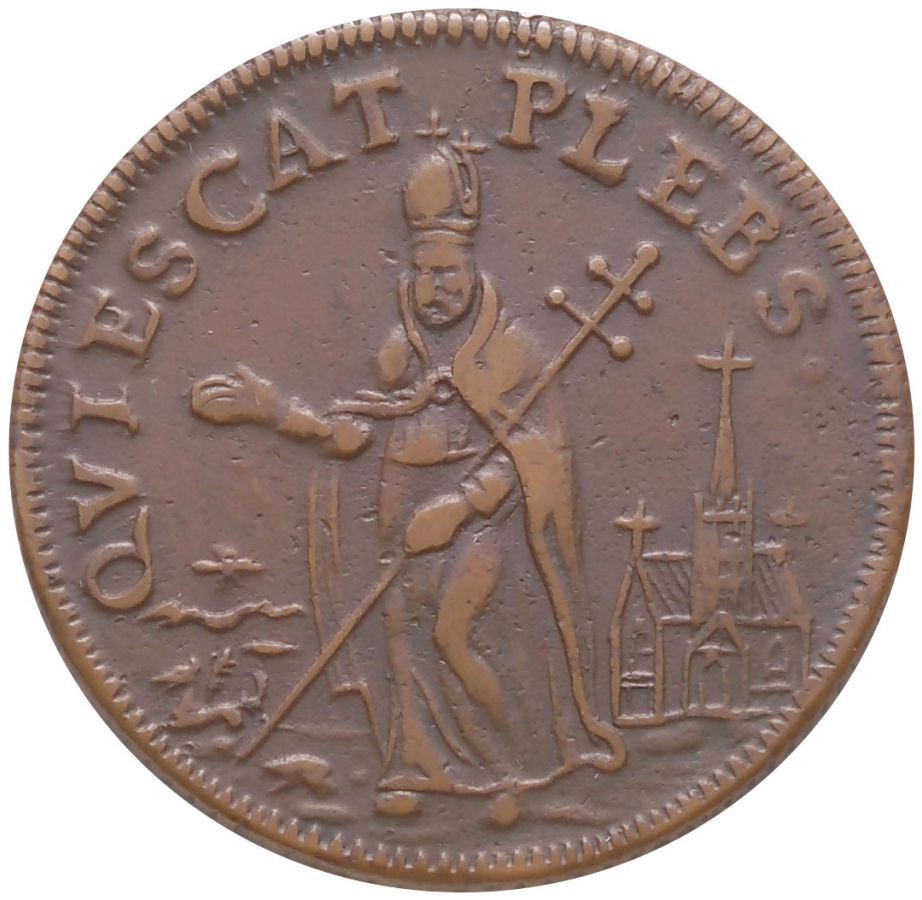
St. Patrick’s Half-Penny — obverse and reverse