Joseph N. Shedloski
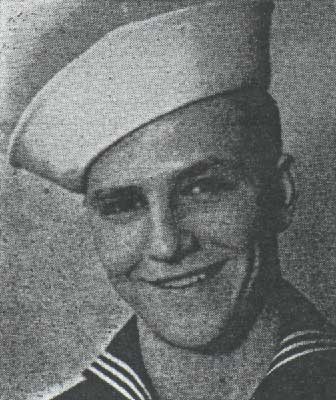
Joseph Narciss Shedloski of Camden, NJ.
Rank: Fireman First Class, U.S. Navy
Serial Number: 02446084
Unit: USS Pompano (SS-181)
Entered service from: Pennsylvania
Died:
Status: Missing in Action or Buried at Sea
Memorial: Tablets of the Missing, Honolulu Memorial, Honolulu, Hawaii
Awards: Purple Heart
Fireman First Class Joseph Narciss Shedloski was a native of Hudson, PA, born on August 6, 1922. As a youth he attended Cotton Avenue School and graduated from Plains High School in Pennsylvania. Shortly thereafter his family moved to Camden, NJ. He soon joined the Navy and was attached to the Submarine Service, serving aboard USS Pompano (SS-181). He was stationed briefly at New London, CT, Maryland, and Pearl Harbor. Joseph N. Shedloski was lost on September 25, 1943, when the Pompano went missing in the waters off Japan. He was survived by his parents, Stanley and Anna Shedloski, a sister, Mary, and three brothers, Walter, Edward, and Leon.
Loss of USS Pompano (SS-181)
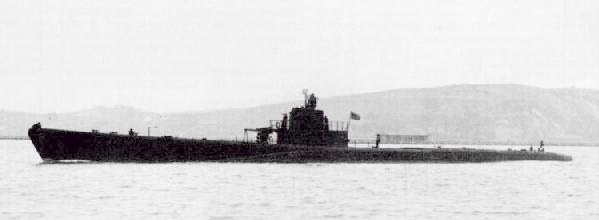
USS Pompano (SS-181).
A Perch-class submarine, USS Pompano was commissioned June 12, 1937, with Lt. Ralph E. Hanson in command. She was built at the Mare Island Naval Shipyard, Mare Island, CA, and carried a crew of 5 officers and 45 enlisted men.
In the years preceding World War II, USS Pompano (SS-181) operated out of Mare Island off the west coast of the United States, training her crew and patrolling in a constant state of readiness.
Although the submarine was awarded a battle star for the Pearl Harbor raid, she had not yet arrived from Mare Island. Reaching port shortly after the disastrous strike, she sailed from Pearl Harbor December 18, 1941, for her first war patrol, devoted mainly to reconnoitering the eastern Marshall Islands for a carrier raid in January. Planes from the flattops bombed the submarine by mistake December 20, but she escaped damage.
Pompano arrived off Wake Island January 1, 1942, to gather intelligence. She sighted several large ships protected by patrol craft in the harbor at Wotje. On January 13, one of the large vessels came out. Pompano fired four torpedoes, scoring two hits, and the vessel broke up. She continued patrolling through the Marshalls, arriving Pearl Harbor January 31.
On her next patrol, undertaken in Japanese home waters, Pompano was able to attack five vessels successfully, sinking a total of 16,500 tons. Leaving Pearl Harbor April 20, 1942, she refueled at Midway and entered her area May 7, patrolling the steamer lanes west of Okinawa and in the East China Sea. She sank a tanker May 25, then a large transport May 30 for 7,983 tons, and a small inter-island steamer June 3. After further engagements she returned to Pearl Harbor June 18.
The submarine sailed from Pearl Harbor again July 19, 1942, for her third war patrol off the coast of Japan. She made multiple attacks, surviving a heavy barrage of depth charges, and returned to Pearl Harbor in September. A Navy Yard overhaul at Mare Island kept the ship in the yard until December 18, 1942.
Sailing back to Pearl Harbor, she departed on her fourth war patrol January 16, 1943, patrolling the Marshalls and Truk area. She damaged two tankers before returning to Midway in February. Her fifth patrol in March brought only limited results in stormy weather.
On June 6, 1943, Pompano was underway from Pearl Harbor for the Nagoya, Japan area. She entered her area June 19, patrolling traffic lanes from Japan. She ended that patrol at Midway July 28.
Pompano left Midway August 20, 1943, bound for the coasts of Hokkaido and Honshu. She was never heard from again. When no transmission was received from her, especially just prior to her expected arrival at Midway on October 5, a search was ordered. By October 15, all hope was abandoned, and Pompano was reported as presumed lost in enemy waters.
Japanese records show that she sank two ships during September: a 5,600-ton cargo carrier on the 3rd, and a 2,958-ton cargo carrier on the 25th. No Japanese attack could conclusively account for her loss. It is considered probable that Pompano met her end by an enemy mine in the heavily mined waters north of Honshu and Hokkaido. Pompano received seven battle stars for service in World War II.