John Robert Adams
Private, U.S. Army
303rd Trench Mortar Battery, 78th Infantry Division
Entered the Service from: New Jersey
Died: November 3, 1918
Buried at: Plot G Row 36 Grave 32, Meuse-Argonne American Cemetery, Romagne, France
Introduction
Private John Robert Adams was born in Canton, Ohio on September 29, 1892. When he registered for the draft in Camden, New Jersey in June of 1917 he was living at 614 Erie Street in North Camden. John R. Adams worked as a motor vehicle clerk at the Bell Telephone Company garage at 11th and Cambria Street in Philadelphia, Pennsylvania. He was inducted into the United States Army on April 26, 1918 at Camden.
According to the book Camden County in the Great War, Private Adams was a member of the 303rd Trench Mortar Battery, 78th Infantry Division, and was drafted and sent to Camp Dix on April 25, 1918. His unit sailed for overseas three weeks later.
Private Adams died of pneumonia on November 2, 1918 in a hospital in France. He was 26 years old, and the son of Mr. and Mrs. William E. Adams, a tool repairer at the Esterbrook Pen factory, of 614 Erie Street, Camden NJ.
World War I Draft Registration Card
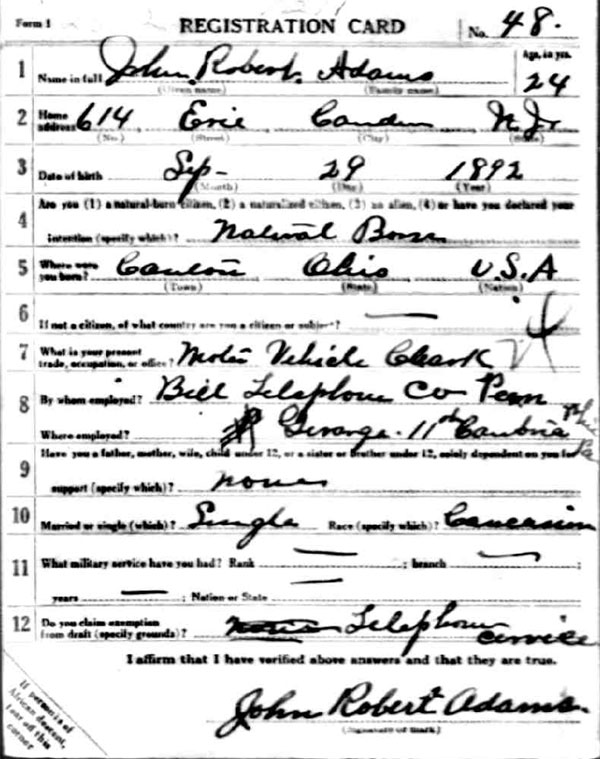
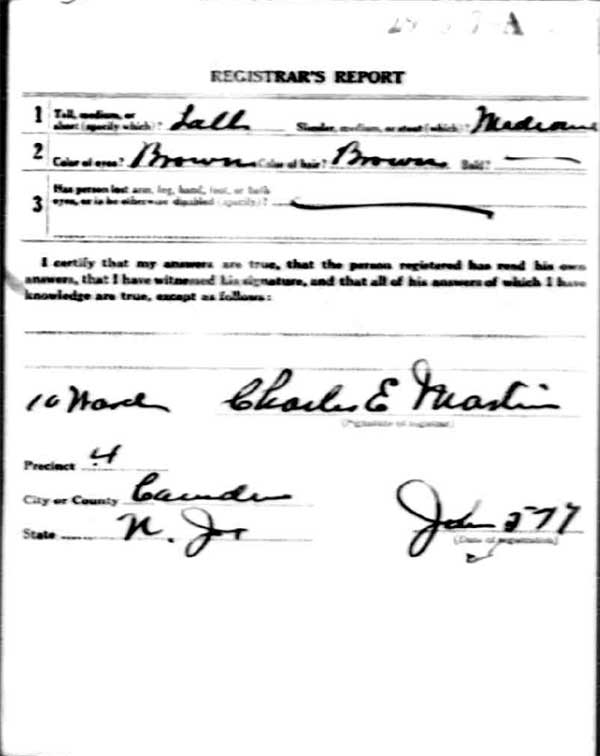
World War I Draft Registration Card
Honor Roll
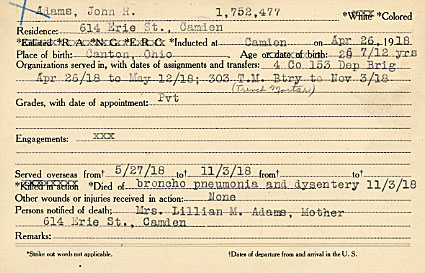
Camden County World War I Honor Roll
Fiancée Loses Suit for War Insurance
Philadelphia Inquirer —
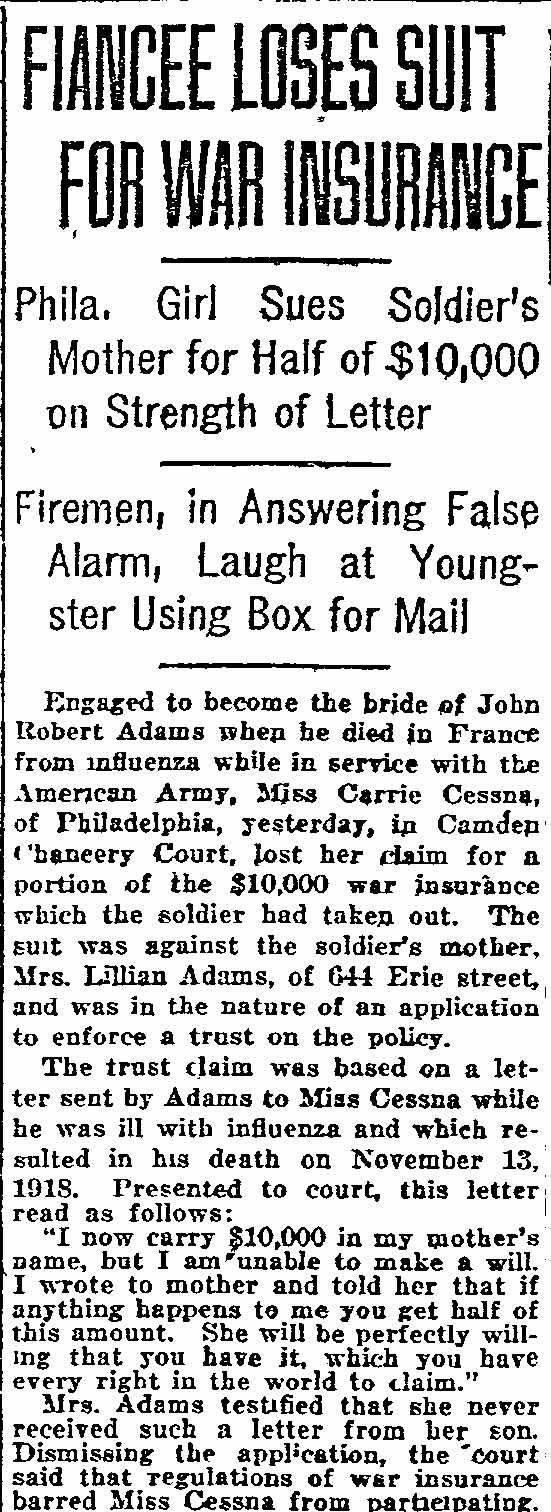
Engaged to become the bride of John Robert Adams when he died in France from influenza while in service with the American Army, Miss Carrie Cessna, of Philadelphia, seeking relief in the Chancery Court, lost her claim for a portion of the $10,000 war insurance which the soldier had taken out. The suit was against his mother, Mrs. Lillian Adams, of 614 Erie Street, who was the beneficiary, on grounds to enforce a trust on the policy.
The plaintiff relied on a letter written by Adams to Miss Cessna while he was ill with influenza and which he wrote while in France. Presented to court, this letter reads as follows:
“Dear Carrie: Well I cannot write so nicely, but I am unable to make a will. About my insurance, if anything happens to me you get half of the $10,000, 5,000. I want you to believe that I love you…”
The Chancery Court ruled against the plaintiff, finding that the letter did not constitute a legally binding transfer of the insurance proceeds.