James Shimel
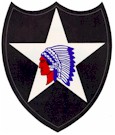
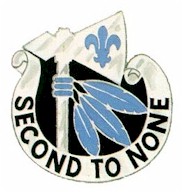
2nd Infantry Division Shoulder Sleeve Insignia and Distinctive Unit Insignia.
Rank: Private First Class, U.S. Army
Serial Number: 32484105
Unit: 23rd Infantry Regiment, 2nd Infantry Division
Hometown: Collingswood, New Jersey
Killed in Action: , Brest, France
Buried: Plot J, Row 9, Grave 16, Brittany American Cemetery, St. James, France
Awards: Purple Heart
Private First Class James Shimel had lived at 130 Richey Avenue in Collingswood, NJ prior to entering the Army. He was assigned to the 23rd Infantry Regiment, 2nd Infantry Division, which, after training in Texas and Louisiana, shipped out of New York on October 8, 1943. After training in Ireland and Wales from October 1943 to June 1944, the 2nd Infantry Division crossed the channel to land on Omaha Beach on D plus 1, June 7, 1944, near St. Laurent-sur-Mer. Attacking across the Aure River, the Division liberated Trevieres, June 10, and proceeded to assault and secure Hill 192, the key enemy strongpoint on the road to St. Lo. With the hill taken July 11, 1944, the Division went on the defensive until July 26. Exploiting the St. Lo breakthrough, the 2nd Division advanced across the Vire to take Tinchebray August 15, 1944. The Division then moved west to join the battle for Brest. PFC James Shimel was killed while serving with the Second Infantry Division on September 2, 1944, in action to capture Hill 105, during the siege of Brest, France.
2nd Infantry Division in France, 1944
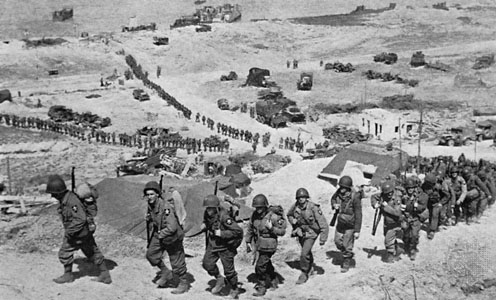
On D plus 1 (June 7), troops of the 2nd Infantry Division file up the bluff from Easy Red sector toward Saint-Laurent-sur-Mer.
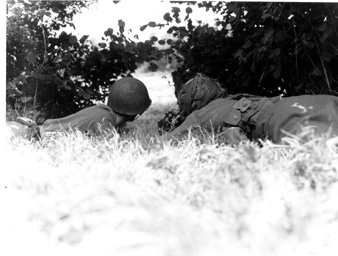
Two G.I.’s of the 2nd Infantry Division operate a .30-caliber light machine gun from under cover of low-hanging trees. They are firing at a hedgerow across a clearing near Vire, France. 12 August 1944.
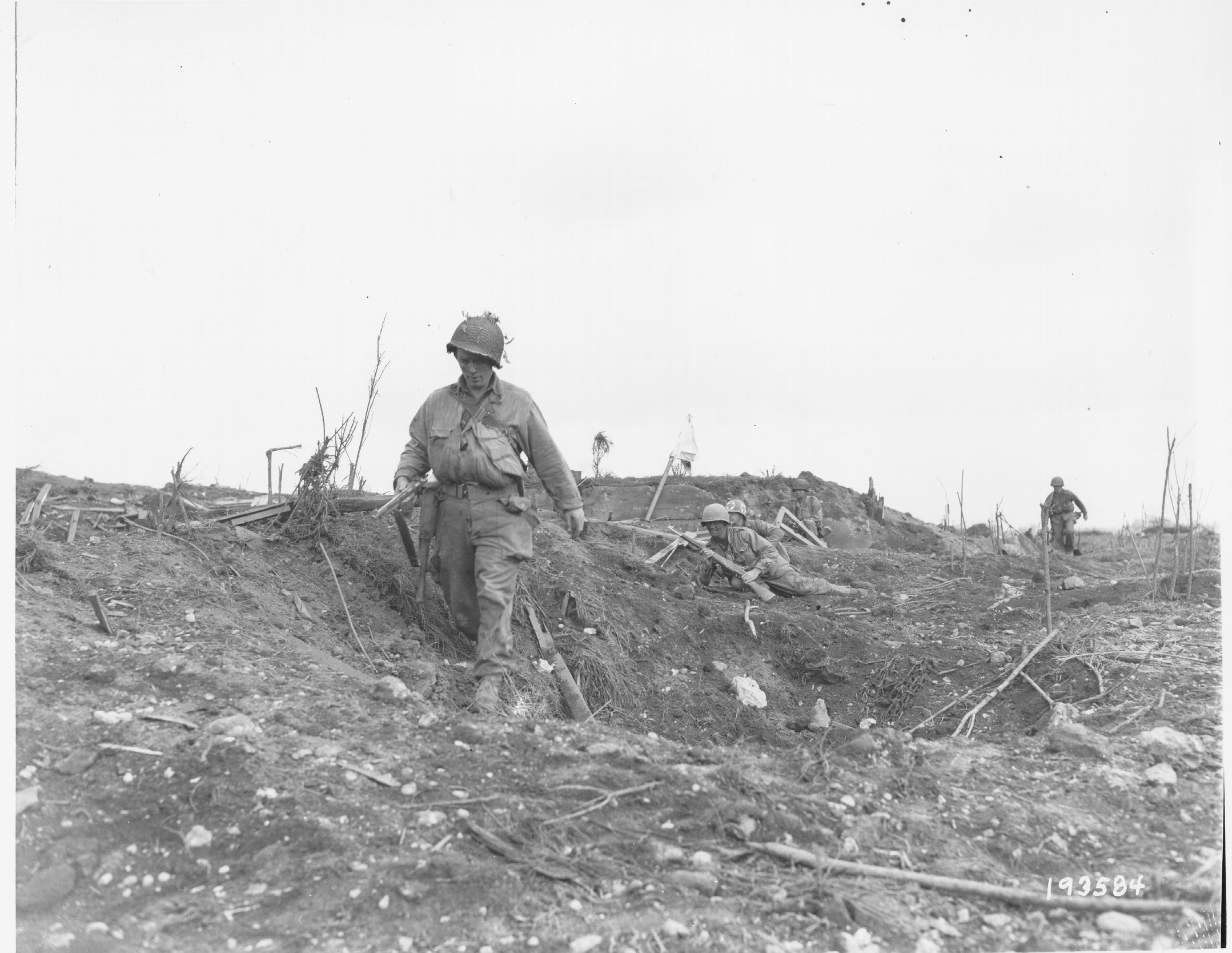
The remnants of Company I, 23rd Infantry Regiment, 2nd Infantry Division, advance through area near Brest, France, where many GIs lost their lives when Germans blew up their own pillboxes to prevent their capture. Many Yanks were buried by the blast, and rocks and debris flew through roofs a mile away. 29 August 1944.