Franklin K. Edginton
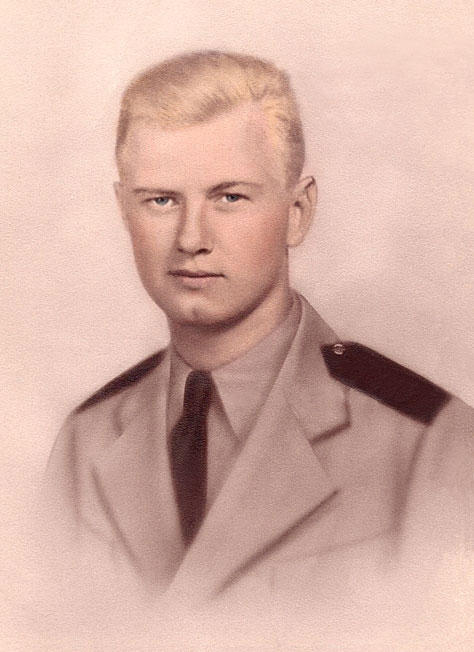
Motor Machinist's Mate Third Class Franklin Kenneth Edginton, USS Herring (SS-233), U.S. Navy
Motor Machinist's Mate Third Class Franklin Kenneth Edginton was born on March 14, 1921. He was the son of Harry Ernest and Sara Edginton. A fine ball-player, he had signed a contract with the Philadelphia Phillies prior to entering the United States Navy. A volunteer for submarine duty, he was assigned to the USS Herring (SS-233).
Franklin Edginton was lost when the USS Herring was sunk on June 1, 1944. He was survived by his parents; brothers Russell, Robert G., and Gary Edginton; and a sister, Marion. The Edginton family was living at 101 Ablett Village in Camden at the time of Franklin K. Edginton's death. He was awarded the Purple Heart. He is memorialized on the Tablets of the Missing at the Honolulu Memorial, Honolulu, Hawaii.
USS Herring (SS-233)
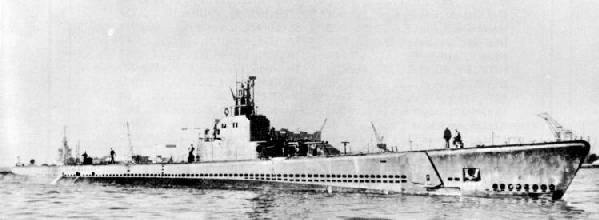
USS Herring (SS-233)
Built at the Portsmouth Naval Shipyard, Kittery, ME, and launched January 15, 1942, the USS Herring was commissioned May 4, 1942, with Lt. Cmdr. Raymond W. Johnson in command. She carried a crew of 6 officers and 54 enlisted men.
After shakedown, the new Gato-class submarine was one of five sent to the Mediterranean to take station off the North African coast prior to Operation Torch, the invasion of North Africa. Reaching her position off Casablanca on November 5, USS Herring (SS-233) remained there spotting but not attacking several targets. On the morning of November 8 as the invasion was launched, the patient sub had her chance, sinking a 5,700-ton cargo ship. Herring returned to Roseneath, Scotland, on November 25, and departed for her second war patrol on December 16, on which targets were scarce. On her third patrol, Herring attacked and sank a marauding Nazi submarine, U-163, on March 21, 1943. The fourth war patrol, an antisubmarine sweep in Icelandic waters, and fifth patrol, which took her back to the States on July 26, 1943, netted Herring no more kills.
Herring departed New London for the rich hunting grounds of the Pacific on August 9, 1943. After intensive training at Pearl Harbor, she sailed November 15, 1943, on her sixth war patrol to join the ranks of the American submarines systematically decimating Japanese shipping and destroying the Japanese economy. She scored two kills for 3,948 tons on December 14 and 6,072 tons to celebrate New Year's Day 1944. Herring's next patrol was a frustrating one as on March 24, 1944, she stalked a large aircraft carrier but was detected and driven deep before she could attack.
Herring's eighth war patrol was to be both her most successful and her last. Topping off at Midway on May 21, 1944, Herring headed for the Kurile Islands patrol area. Ten days later she rendezvoused with USS Barb (SS-220), and was never heard from or seen again. However, Japanese records prove that she sank two ships the night of May 30–31. Herring's exact manner of loss can be determined from these records also. Two more merchant ships were sunk while at anchor in Matsuwa Island, Kuriles, the morning of June 1, 1944. In a counter-attack, enemy shore batteries scored two direct hits on the submarine's conning tower and “bubbles covered an area about 5 meters wide, and heavy oil covered an area of approximately 15 miles.” On her last patrol, Herring had sunk four Japanese ships for a total of 13,202 tons. In all she had sunk six marus totalling 19,959 tons, an Axis cargo ship, and a German U-boat.
Herring received five battle stars for her service in World War II.