Introduction
Ann Pennington was born Anna Pennington on December 23, 1893 in Wilmington, Delaware. Her family appears to have come to Camden around the turn of the century.
Ann Pennington is listed in the 1910 Census as lodging, with her sister Nellie, at 113 Penn Street. Both sisters listed their occupation as Actress. The landlord, Perry Kinikin, listed his occupation as a Stage Carpenter. Nicknamed “Tiny” as she stood only 4’ 11½″, Ann Pennington wore only a size 1½ shoe.
Ann Pennington was very popular and known as the most petite of what was then called the “Shake and Quiver dancers.” Became famous for her rendition of the Black Bottom dance. She stopped the show when she danced for Ziegfeld in his 1913 Follies. While performing in Ziegfeld’s Follies she met Fanny Brice, they would be life-long best friends.
Ann Pennington danced many dances as well as the Black Bottom, such as the Charleston and could tap dance as well as any male performer. Also danced in some of George White’s Shows (Scandals) and was a “Gold Digger Girl.”
Ann Pennington returned to the stage after appearing in six films in 1929. She starred in Cole Porter’s hit musical The New Yorkers, which ran on Broadway for 168 performances ending in May of 1931. She appeared with Jimmy Durante, among others, in this show.
She played a few minor supporting roles on film in the early 1940’s and continued dancing and appearing on stage and vaudeville well into the late 1940s.
Ann Pennington died in New York City NY on November 4, 1971.
Portraits
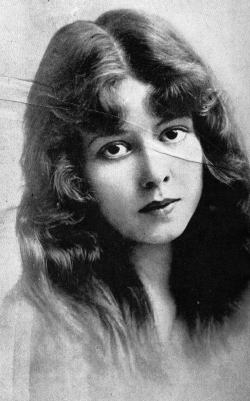
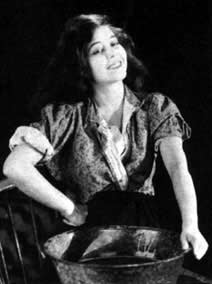

Ann Pennington portraits and signature
Photo
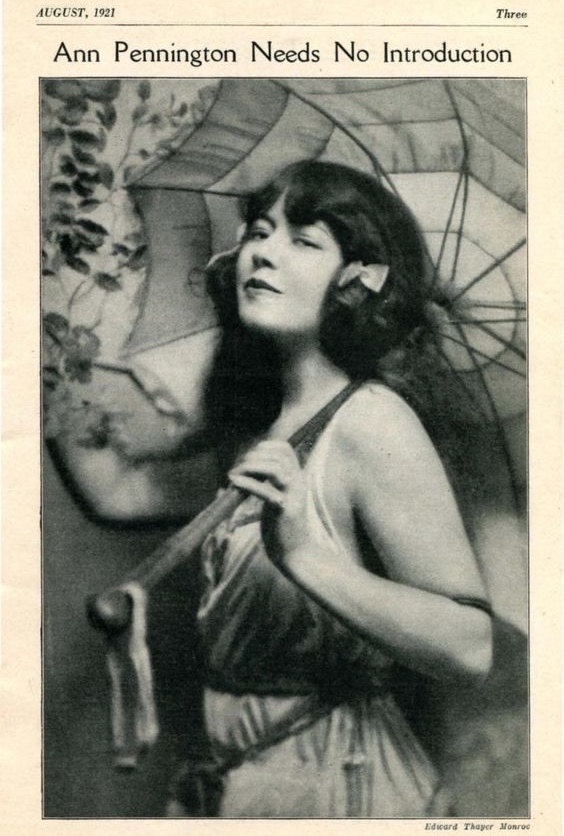
Ann Pennington
Photos
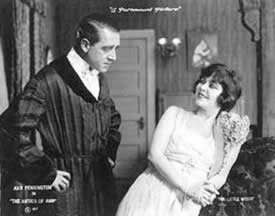
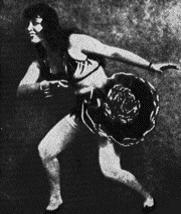
Ann Pennington publicity photos
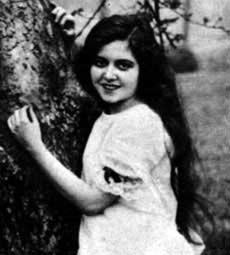
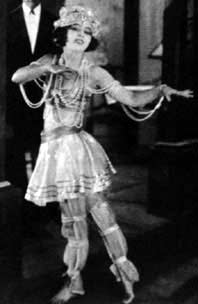
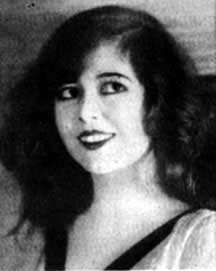
Ann Pennington publicity photos
Video Clips
Ann Pennington and Allen Kearns sing and dance to the 1929 tune “You’re Responsible”
Ann Pennington and Allen Kearns sing and dance to the 1929 tune “You’re Responsible”
Ann Pennington and Allen Kearns sing and dance to the 1929 tune “You’re Responsible”
Ann Pennington performing at the 1939 New York World’s Fair.
The Snake’s Hips number from 1929 performed by Sharon Lynn and danced by famed Ziegfeld Follies dancer Ann Pennington. She was the first to introduce the “Black Bottom” dance in the 1926 edition of George White’s Scandals. Unfortunately, most of her film appearances are lost. Although this copy is incomplete, it is the best copy available, however the cuts are obvious. Also performing, George Olsen and his Music
Pennington Was to Be a Tragedienne
Cleveland Plain Dealer —
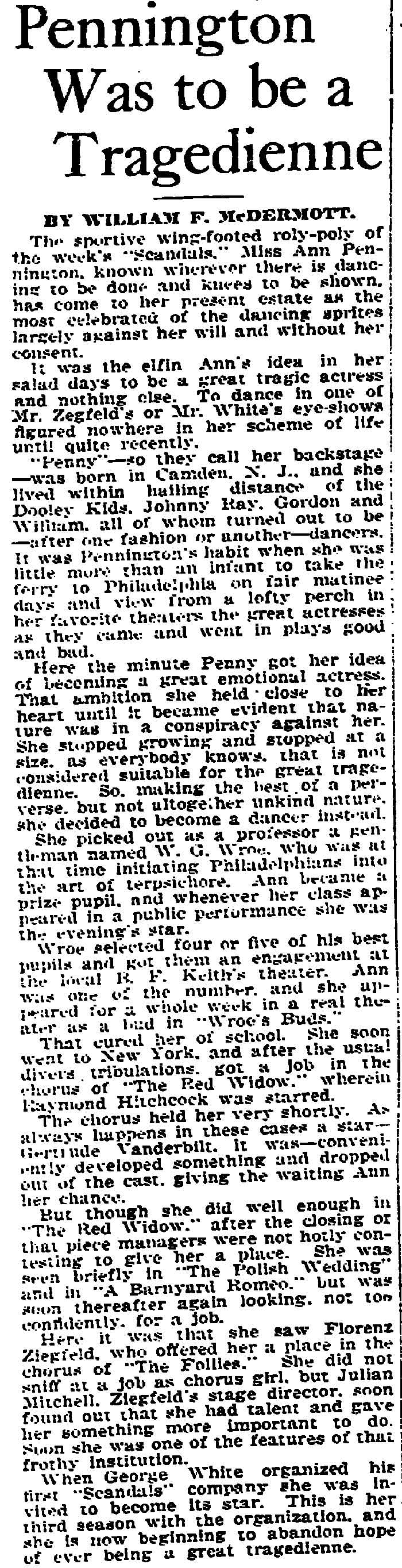
Cleveland Plain Dealer article about Ann Pennington and the Dooley Kids (Johnny Dooley, Ray Dooley, Billy Dooley, and Gordon Dooley).
Is Zat So!
Camden Courier-Post —
YOU can always rely on Camden to bring back the normal balance. The more I see of this city the more it is impressed on me that realism can be found anywhere in the place. Camden is a good antidote for pessimism and cynicism, if you only want to find the cure and are fortunate enough to locate it.
This thought seeped into my ken the other day after I had read one of those kind of magazine articles, that always give me a pain in the neck. It was one of those “expert” articles telling youth how to find its proper sphere in the business world.
The dame who was dishing out the piffle-paffle on that score had the decency to admit that one of her students wanted to “know how he would get a job” rather than listen to all the ballyhoo about how to fill in your own conspicuous niche.
Accompanying the article was the usual honey from personnel managers about openings that their corporation possessed for the paragons who could answer all the requirements. The fact that these personnel managers declared there was always room for such material made me laugh. For, argued the Mackay, if all these positions are crying and begging for men, how come there are 10 million unemployed in this country, according to unemployment census.
Of course the whole business was a lot of guff and meant nothing in the face of the facts. Certainly these positions couldn’t go begging without being filled from the raw material that might be found in the army of 10 million idle workers. That type of hooey is even too tough for an incurable optimist like myself to swallow.
Laughabilities Rise at Detective “Mag”
My laughter increased as I read one of those “true detective” publications. What made me laugh was that every article, factually correct, ended with the admonition that crime does not pay. That suited me all right, too. Until I cast a surreptitious eye over the advertisements in this magazine; only to discover that it was packed from cover to cover with all the gyp and sucker advertisements that one can shake up.
The fact that this magazine was pushing out its message that crime does not pay and then purveying to the lads that trim the suckers whenever the trimming was good was too much for my blood. I began to want to exercise profanity, which is something that intimate friends know is a thing that Mackay rarely uses.
So we went for the domestic hearth in both sorrow and anger, only to bump into Mark Marritz. Mark will never be president of the United States but if Haddon Township remains a G.O.P. citadel it is a fair assumption that Mark will always be solicitor for the township unless he rebels and becomes a Democrat.
Now Mark Marritz is an excellent antidote for skepticism, pessimism and cynicism regarding America and her institutions. Mark was born in Kiev, Russia where he remained until he was 10 years old, when the family migrated to Wilmington.
“You can’t tell me anything about Russia today,” Marritz ventured to the writer. “Because I know how it was before the World War. I was born in Kiev and we were compelled to keep a picture of the Czar in the house, in fact every household in Russia had to display the Czar’s picture.”
“Jewish boys in Kiev, where they had massacres and pogroms against the Jewish people, were not allowed to go to school. They were prohibited from getting an education.”
Had His Fight to Get Ahead
“The only way we Jewish boys—my father was a merchant in Kiev—could get an education was through the rabbi. He couldn’t have a regular school either, he was compelled to teach each boy as a separate pupil.
“I got a good working knowledge of mathematics from the rabbi and also some of the Russian and Jewish culture. Imagine how I felt, too, when my father came to America and we settled in Wilmington. For I had to go into the first class in the lowest grade at school, because I could not speak English.”
“I had to learn the alphabet just like youngsters who were going to a school for the first time. As soon as I mastered English, though, I went ahead more rapidly, for the rabbi’s teaching had given me education along the lines that were necessary to me.”
Marritz is a walking advertisement for the destiny and glories of the melting pot. Energetic, good-looking, personable and with a talent for conversation and a penchant for the law. Mark assuaged some of the indignation that was wrought when we read the hooey that had been printed in those magazines.
Next we get a further advance back to normalcy when we bumped into Pat Iarossi. Pat is a barber but that doesn’t deter him from basking in the sunshine at Miami and thanking his lucky stars that his family moved from San Marco in Italy to Camden years ago.
Pat is another excellent example of the melting-pot. His barber-shop is now located at 600 North Third Street, site having been Pat’s for the past 14 years. Before that he had a shop on Front Street, where he barbered the native sons and daughters for 20 years.
Make no mistake, Pat has carried the tradition of the America that benefited him so much into his own activities. The years of service of his four employees amount to 52.
The oldest employee has been stropping the razors there for 18 years while the baby of the outfit, who is not so old either, has been employed by Pat for 10 years. Two others enjoy terms of 14 and 12 years.
Pat’s greatest memories cluster about Ann Pennington, Camden’s gift to the Follies and the stage, and the Dooleys, a theatrical family which also is a proud Camden possession.
“I used to cut Ann Pennington’s hair when she was a child,” Pat recalled. “And the Dooleys always made my shop their headquarters. Billy Dooley worked for me. The kids, six of them, trained in a patch we called the ‘cow lot.’ Rae and May were the two girls, while Johnny was the big shot of the boys.”
“They used to turn cartwheels right out in the lot there and come into my shop to do a little vocal rehearsing. Ann Pennington was always dancing, you couldn’t keep her feet still. I remember one day Ann, Johnny Dooley and a girl named Moore went over to Lubin’s in Philadelphia, trying to break into the movies.
“Lubin wouldn’t handle them and they all came crying into my shop.” Whereupon Pat produced a post card dated in 1911 showing Johnny Dooley starring in the old Bijou Theatre in Philadelphia.
So Pat has no envy of the thespians or of anybody else. Why should he—Miami is some place to spend the Winter.
Photos
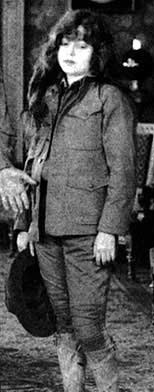
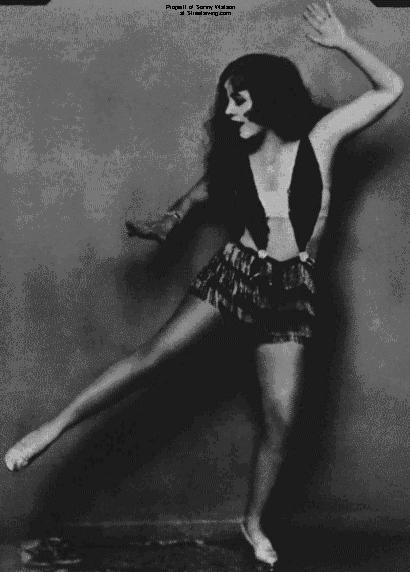
Ann Pennington
Filmography and Stage Appearances
Ann Pennington Filmography and Stage Appearances
Complete film and stage credits
Films (As Herself)
| Title ↕ | Year ↕ | Role ↕ |
|---|---|---|
| Manhandled | 1924 | Herself |
| Pretty Ladies | 1925 | Herself |
| Happy Days | 1930 | Herself |
| Great Ziegfeld, The | 1936 | Uncredited, appeared as herself |
Films (As Actress)
| Title ↕ | Description ↕ | Year ↕ | Role ↕ |
|---|---|---|---|
| Susie Snowflake | When a young girl who has grown up as a music hall entertainer is brought to live in a stodgy New England town, the quiet town life is changed forever. | 1916 | Susie |
| The Rainbow Princess | 1916 | Hope | |
| The Little Boy Scout | 1917 | Justina Howland | |
| The Antics of Ann | 1917 | Ann Wharton | |
| Sunshine Nan | starred opposite Richard Barthelmess | 1918 | Nance Malloy |
| The Mad Dancer | 1925 | Mimi | |
| A Kiss in the Dark | with Adolph Menjou and Kitty Kelly | 1925 | Dancer |
| The Lucky Horseshoe | with Tom Mix | 1925 | Dancer |
| The Golden Strain | 1925 | Lucy Sulter | |
| Madame Behave | Starred opposite female impersonator Julian Eltinge | 1925 | Gwen Townley |
| Night Club | Believed lost, this was a short with musical numbers, several of which were featured in an extra two-reeler more than a year later. | 1929 | |
| Gold Diggers of Broadway | 1929 | Ann Collins | |
| Is Everybody Happy? | This is the story of Ted Lewis, popular band leader and clarinetist. | 1929 | Lena Schmitt |
| Night Parade (also released as Sporting Life) | Filmed in the United Kingdom, Oscar Levant was her unaccredited piano accompanist | 1929 | Dancer Ann Pennington |
| Hello Baby! | A two reel musical short, only the first reel is known to exist | 1929 | |
| Tanned Legs | Starred Arthur Lake, who made a career out of playing Dagwood Bumstead in the Blondie movies and TV show. | 1929 | Tootsie |
| Texas Terrors | A western with Red Barry, Al 'Fuzzy' St. John, and an appearance by singer Jimmy Wakely | 1940 | Dancer |
| Unholy Partners | Directed by Mervyn Leroy, starring Edward G. Robinson, Edward Albert, and Laraine Day. Ann Pennington is uncredited in this film, but appeared as the Telephone Operator | 1941 | Telephone Operator |
| China Girl | Directed by Henry Hathaway, starring Genet Tierney, George Montgomery, Lynn Bari, and Victor McLaglen. Many other fine actors including Sig Ruman, Robert Blake (Baretta) & Philip Ahn (Master Kan on Kung Fu) | 1942 | Sugar Fingers, the Entertainer |
Stage Appearances
| Year ↕ | Production ↕ |
|---|---|
| 1913 | New Amsterdam Theater, New York NY |
| 1913 to 1924 | Ziegfeld Follies |
| 1915 | Passing Show |
| 1917 | Miss |
| 1919 to 1926 | George White Scandals |
| 1925 | Pretty Ladies |
| 1929 | Gold Diggers Of Broadway |
| 1930 | The New Yorker |
| 1931 | Everybody's Welcome / Diaghilev Ballet Company / Tip Toe through The Tulips |
The Black Bottom
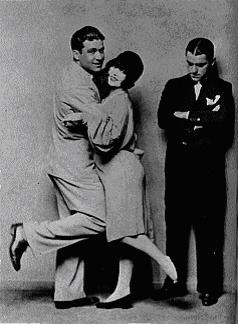
Ann Pennington doing The Black Bottom with Tom Patricola in the George White Scandals of 1926
Tanned Legs Movie Poster
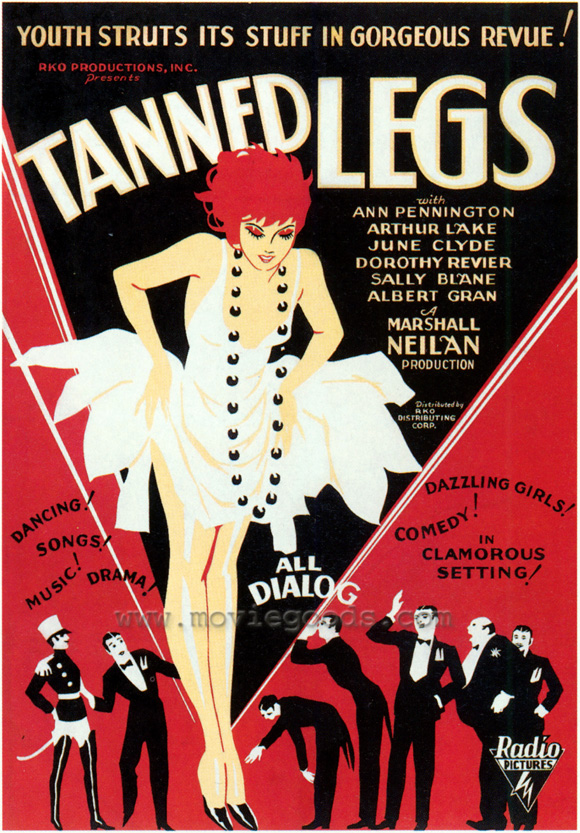
Movie Poster from Tanned Legs, 1929