The Soap Works
The Dobbins Soap Manufacturing Company, founded in 1863, had a factory in Philadelphia at Germantown Ave, Susquehanna Ave, and the southwest corner of Marshall Street which they had remodeled in 1864 and 1865. Owned by the Cragin family, by 1887 the firm had built a factory on the southwest corner of 17th Street and Federal Street, where they operated until 1934. George Cragin was the superintendent from 1887 through 1906, Louis Bresset had the position in 1914, and Alex Macfeat had it in 1924.
The plant was acquired by the Iowa Soap Company, which operated the facility into the late 1940s. At some point after 1959 the Concord Chemical Company moved its operations from 205 South 2nd Street to this building, which it occupied into the late 2000s. The building was then abandoned, and an EPA team did a clean-up in 2010.
On June 19, 2011 the old soap factory, known roughly 50 years as the Concord Chemical factory, was destroyed by fire.
Dobbins Soap Manufacturing Company
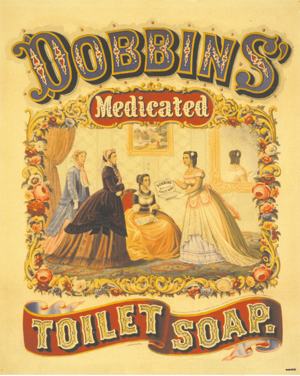
Dobbins Soap Manufacturing Company advertisement, 1869.
The Factory at 17th & Federal Street
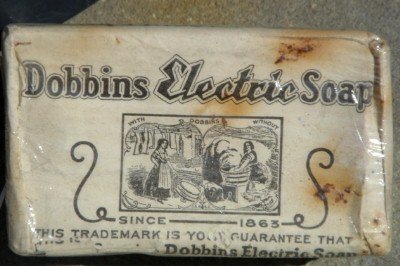
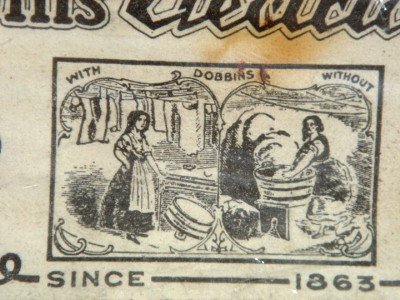
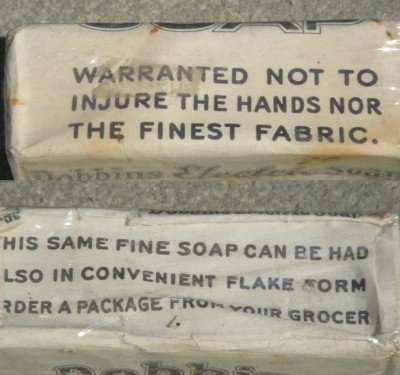
The soap factory at the southwest corner of 17th Street and Federal Street, Camden.
Iowa Soap Company — March 1936
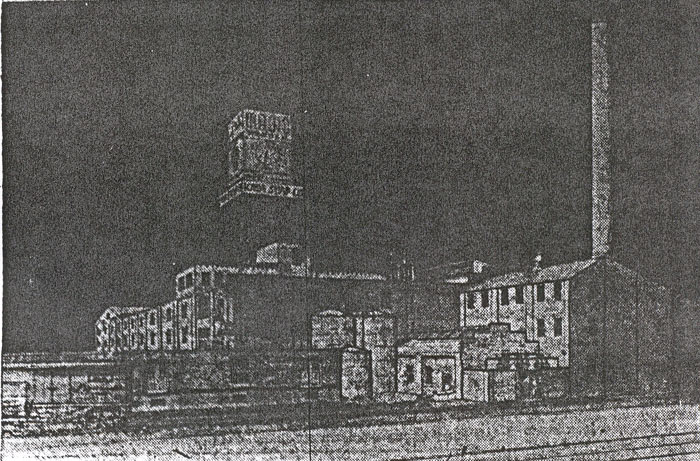
From March of 1936, a photo of the then recently remodeled plant of the Iowa Soap Co., at Seventeenth and Federal Streets. The firm, whose main factory was at Burlington, Iowa, had recently took over the old Dobbins Soap Works.
Concern Supplies Soap to U.S., Mills and Various Cities
Camden Courier-Post —
Iowa Soap Co. Fifth Largest Firm of Its Kind in Country
STARTED HERE IN 1934
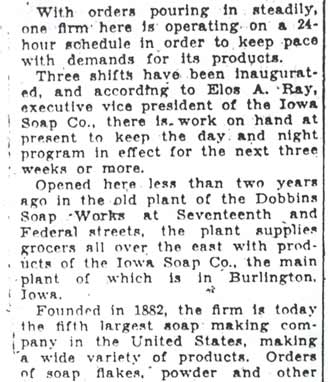
With orders pouring in steadily, one firm here is operating on a 24-hour schedule in order to keep pace with demands for its products.
Three shifts have been inaugurated, and according to Elos A. Ray, executive vice president of the Iowa Soap Co., there is work on hand at present to keep the day and night program in effect for the next three weeks or more.
Opened here less than two years ago in the old plant of the Dobbins Soap Works at Seventeenth and Federal streets, the plant supplies grocers all over the east with products of the Iowa Soap Co., the main plant of which is in Burlington, Iowa.
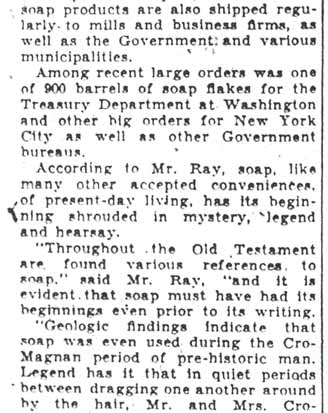
Founded in 1882, the firm is today the fifth largest soap making company in the United States, making a wide variety of products. Orders of soap flakes, powder and other soap products are also shipped regularly to mills and business firms, as well as the Government and various municipalities.
Among recent large orders was one of 900 barrels of soap flakes for the Treasury Department at Washington and other big orders for New York City as well as other Government bureaus.
According to Mr. Ray, soap, like many other accepted conveniences of present-day living, has its beginning shrouded in mystery, legend and hearsay.
“Throughout the Old Testament are found various references to soap,” said Mr. Ray, “and it is evident that soap must have had its beginnings even prior to its writing.
“Geologic findings indicate that soap was even used during the Cro-Magnan period of pre-historic man. Legend has it that in quiet periods between dragging one another around by the hair, Mr. and Mrs. Cro-Magnan were accustomed to cleansing themselves and their offspring with vigorous applications of wood ashes. As the story goes, the family were gathered around watching the hot fat from a tender piece of Ichtyosaurus drop from the spit into the fire. The same ashes being used later for cleansing were found to be unusually effective as dirt removers. Large chunks of crude but actual soap had formed from the natural saponification brought about by the combination of the tallow and soda ash, and were now mixed in the ashes.
“This story of the beginning of soap is as true as any. Let it serve the purpose.”
Homer D. Banta is president of the company. F. Albert Klein is also a vice president. E. O. Matsch is secretary and treasurer. Olen D. Capps is sales manager and Gordon Fromm is factory superintendent here.
The Soap Works at Carman & South 17th Street
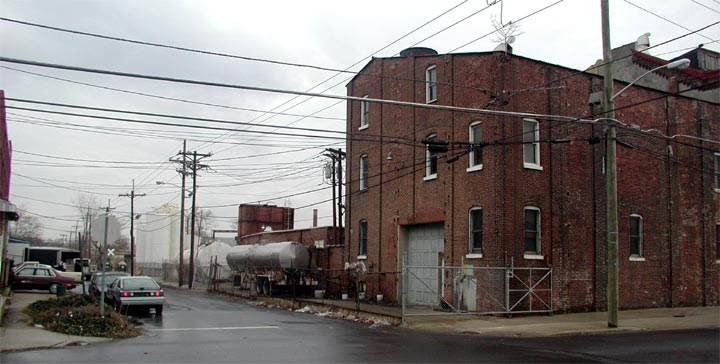
Top: 1600 Block of Carman Street as seen from the southeast corner of South 17th & Carman Streets. The brick factory on the right belonged to the Iowa Soap Company in the 1930s and 1940s.
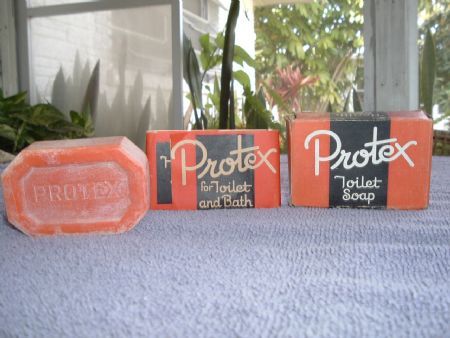
Center: A bar of Protex Toilet Soap, in original wrap & box. Protex Soap was made by Iowa Soap Company, who had factories in Burlington, Iowa & Camden, NJ. The box reads: “The Ideal Family Toilet Soap” and “Clean hands and a clean body are essential to good health. A daily bath with Protex will keep the body sweet, removing body odors and affording protection against the odor of perspiration from all sources. True cleanliness promotes and protects the Health!”
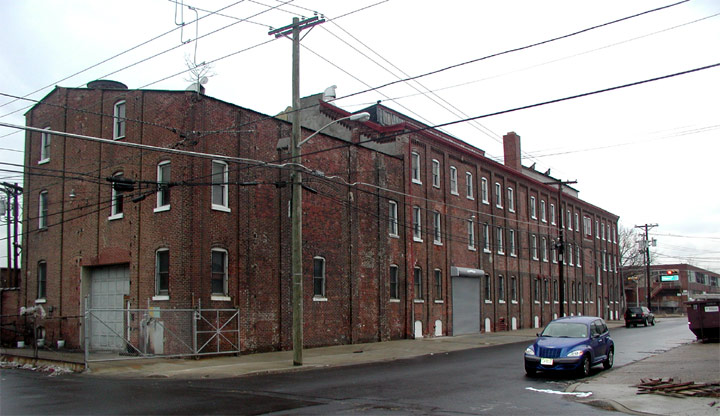
Bottom: Carman & South 17th Street, looking northwest on South 17th towards Federal Street. The building was later acquired by Concord Chemical Corp., who moved their operations there from 205 South 2nd Street at some point after 1959.